
Key Takeaways
- Smaller, incremental pull requests reduce debugging effort, limit blast radius when failures occur, and support faster, more confident delivery.
- Automated checks and code review workflows give developers quick, targeted feedback that fits naturally with incremental commits.
- Fast, granular CI pipelines and a consistently green main branch help teams ship frequent, low-risk changes without constant context switching.
- Autonomous CI tools can handle many build, test, and lint failures directly, turning interruptions into short, automated events instead of long fire drills.
- Teams can use Gitar to automatically fix CI failures on pull requests and keep developers focused on writing code instead of repairing broken builds.
1. Enforce Smaller Pull Requests to Encourage Incremental Code Changes
Small, focused pull requests form the base of agile, low-friction development. Teams with smaller PRs and faster review cycles see stronger delivery performance, revenue growth, and profitability. These metrics highlight how manageable change sizes support higher throughput and more predictable releases.
Large PRs create complex failure scenarios. A 500-line change that breaks CI forces developers to dig through broad surfaces and switch context repeatedly. Smaller changes localize risk and make root cause analysis straightforward, which keeps confidence and momentum high.
Implementation Details: Set PR size guardrails, such as 100–200 changed lines. Add automated checks that warn when changes approach those limits. Use planning practices that slice features into independently releasable units.
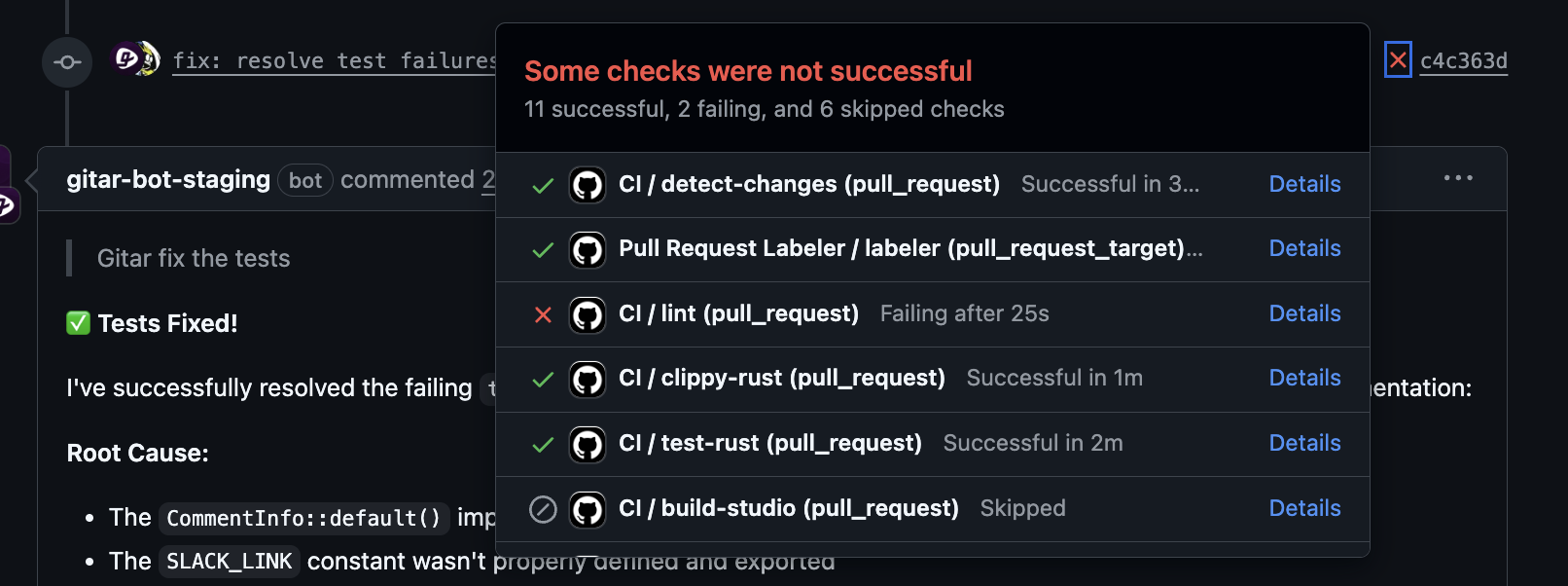
Gitar extends this workflow by resolving many issues that still slip into small PRs. Install Gitar now to automatically fix broken builds and start shipping higher quality software, faster. When incremental changes introduce lint errors, failing tests, or dependency issues, Gitar analyzes the CI logs, generates a fix, and updates the pull request so developers can keep moving.
2. Implement Automated Code Reviews for Instant Feedback on Incremental Commits
Automated checks make incremental commits feel safe and predictable. Teams that pair smaller PRs with strong review practices improve merge rates and team velocity, which reduces cognitive load from long-lived branches.
Automation works best alongside human review. Senior engineers can focus on architecture, edge cases, and product impact, while tools handle formatting, style, and basic security or quality rules. This balance keeps reviews fast without lowering standards.
Implementation Details: Add pre-commit hooks for linting and formatting. Configure CI pipelines with static analysis, security scanning, and dependency checks, tuned to avoid noisy, low-value alerts.
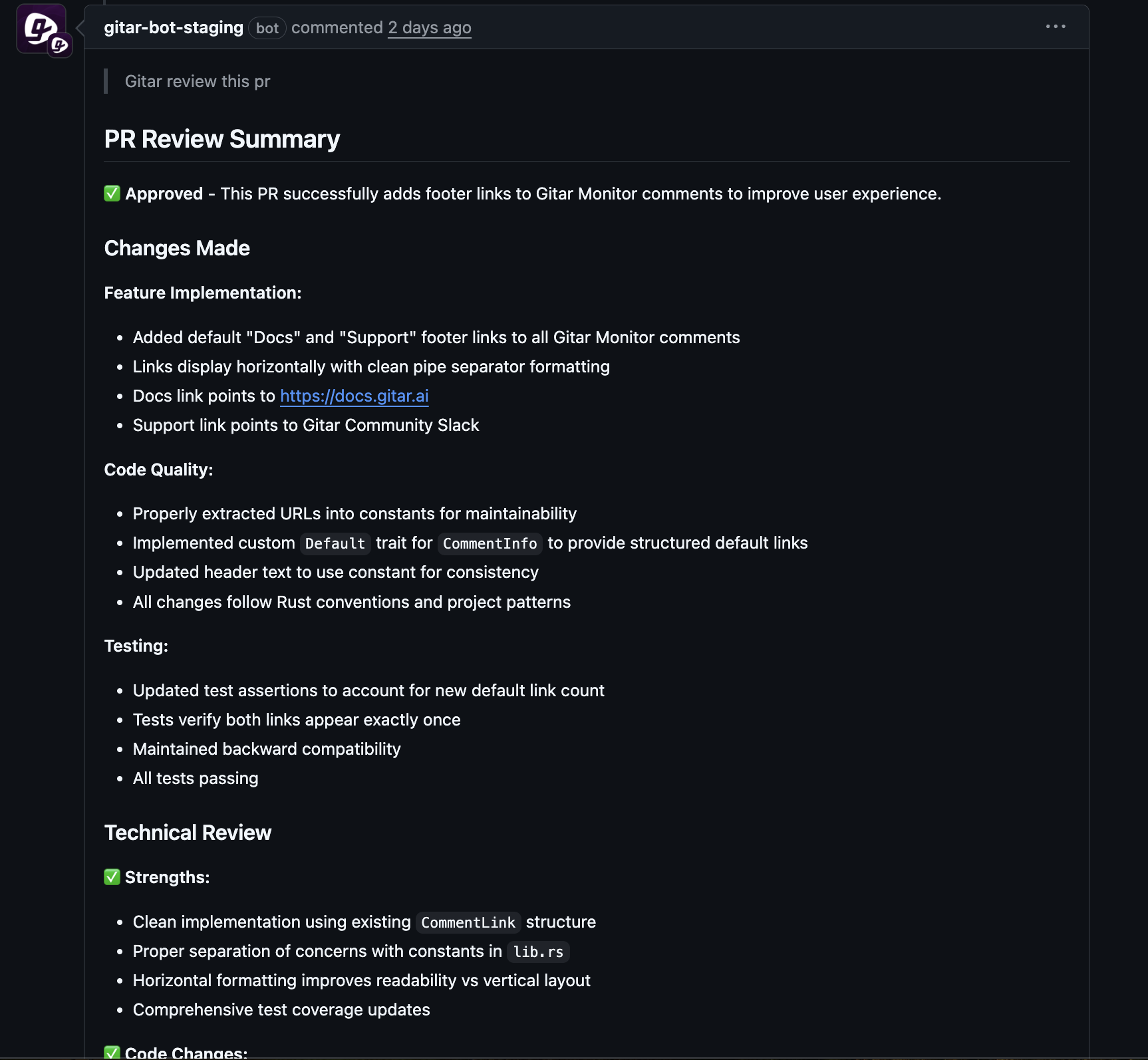
Gitar supports this model as an Intelligent Code Review Assistant. Reviewers can tag Gitar for a summary of a pull request and an assessment of technical tradeoffs. When reviewers leave clear instructions in comments, Gitar can apply the corresponding code changes and push updates, which reduces back-and-forth on incremental PRs.
3. Optimize CI Pipelines for Speed and Granularity to Support Incremental Changes
Fast feedback loops keep incremental work from stalling. Instrumented CI/CD pipelines reveal the build failures and deployment delays that slow teams down. Long-running pipelines push developers into other tasks and increase context switching.
Effective pipelines focus on both speed and relevance. CI should prioritize tests and checks that relate to the code touched by a pull request, then run broader suites afterward. Developers receive useful signals quickly while overall coverage remains high.
Implementation Details: Use dependency caching and incremental builds for affected modules. Add intelligent test selection for changed paths, followed by nightly or scheduled full suites. Parallelize jobs and track CI duration and queue times.
Gitar adds resilience when optimized pipelines still fail. If a dependency update or environment change breaks CI, Gitar inspects the logs, identifies the cause, applies a fix, and reruns checks in an environment aligned with your stack. Teams keep the benefits of fast pipelines without the recurring manual repair work.
4. Cultivate a “Green Main” Branch Policy for Reliable Incremental Releases
Consistently healthy main branches give teams confidence to ship many small changes. Smaller PRs reduce integration risk and context switching, which supports smoother development flow. A stable baseline makes each incremental commit easier to reason about.
Unstable main branches create hesitation and rework. Developers spend time diagnosing whether issues come from their code or from existing breakage, which often leads to larger, batched PRs and slower cycles.
Implementation Details: Enforce branch protection with required status checks and reviews before merge. Use merge strategies that keep history clean, and monitor main branch health with alerts when failures appear. Treat main breakage as a priority issue.
Gitar helps uphold a green main policy by fixing many CI failures before pull requests merge. Automated remediation reduces the odds that broken code lands in main, providing a more reliable base for ongoing incremental changes.
5. Leverage Autonomous CI for Continuous Flow State with Small Incremental Code Changes
High-performing teams limit the impact of inevitable failures. The SPACE framework highlights how experience, satisfaction, and collaboration matter alongside speed metrics, which means recovery from interruptions should feel manageable and low stress.
Traditional AI tools often stop at suggestions. Developers still need to edit code, push commits, and wait for CI again, which disrupts flow. Autonomous CI focuses on end-to-end resolution, from detection through fix and validation.
Implementation Details: Assess tools on their ability to apply and validate fixes across your languages, frameworks, and infrastructure. Start with pilot projects, then expand once workflows feel predictable and trustworthy.
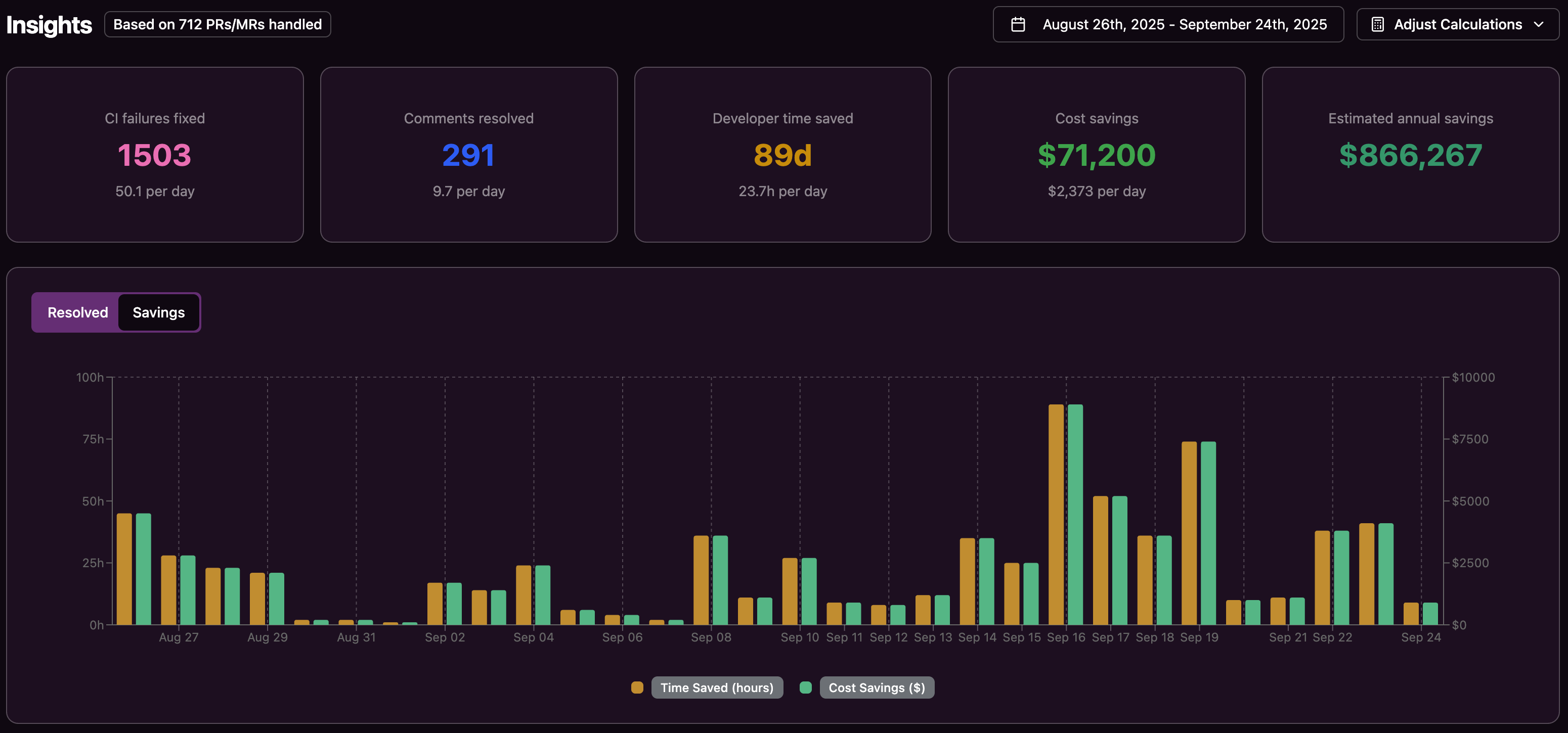
Install Gitar now to automatically fix broken builds and start shipping higher quality software, faster. Gitar acts as a healing engine that analyzes failures, proposes and applies targeted code changes, and reruns CI jobs with configurable trust modes and rollback options.
Traditional CI Resolution vs. Gitar: Optimizing Small Incremental Code Changes
|
Feature |
Manual Debugging |
AI Suggestion Tools |
Gitar Autonomous CI |
|
Developer Flow State |
Severely interrupted |
Partially maintained |
Preserved with automation |
|
Resolution Time |
Hours to days |
Minutes for suggestions |
Minutes for complete fix |
|
Context Switching |
High disruption |
Moderate disruption |
Reduced disruption |
|
Fix Validation |
Manual testing |
Manual implementation |
Automated CI validation |
Transform Your Development Experience Today
Incremental code changes work best when paired with systems that keep CI stable and unobtrusive. Smaller PRs reduce complexity, automated reviews catch issues early, optimized CI shortens feedback loops, green main branches maintain trust, and autonomous fixing turns many failures into self-resolving events.
Teams that align process and tooling gain a smoother day-to-day experience. Install Gitar now to automatically fix broken builds and start shipping higher quality software, faster. Developers can spend more time on product work and less time restarting interrupted sessions to chase CI errors.
Frequently Asked Questions About Small Incremental Code Changes and Autonomous CI
How do small, incremental code changes actually reduce CI build failures?
Small changes limit the number of variables in each pull request, which narrows the search space when a failure occurs. Debugging becomes faster, and automated systems can propose precise fixes. This pattern also lowers integration conflicts with other active branches.
We already use AI reviewers but still experience build failures—how is Gitar different for incremental development?
Most AI reviewers provide comments and suggestions that still require manual edits and new CI runs. Gitar focuses on implementing and validating fixes. When a small change causes a lint error or test failure, Gitar can apply a targeted code change, push it, and verify passing checks.
Is it safe to allow automated fixing of incremental code changes?
Teams can control how Gitar operates through trust modes. A conservative mode offers suggested fixes for review, while a more automated mode commits changes with logging and rollback options. Validation in CI ensures that accepted fixes keep pipelines green.
How does Gitar help distributed teams maintain flow with incremental changes across time zones?
Distributed teams often wait a full day for review feedback. Reviewers can leave comments that address incremental changes, then rely on Gitar to implement those edits. By the next workday, developers see updated code and passing checks instead of pending suggestions.
What metrics should teams track to measure success with incremental changes and autonomous CI?
Helpful leading indicators include PR size, time to first review, and review duration. Teams can also track CI failure rate, average time to resolve failures, and the share of PRs that merge without manual remediation. Over time, these inputs drive improvements in cycle time, deployment frequency, and developer satisfaction.