
Developers lose valuable time each week fixing CI failures and addressing code review feedback, which slows down releases and adds stress. This article explores how AI-driven tools like Gitar improve software development by automating fixes, reducing interruptions, and speeding up the merge process while keeping you in control.
Why Manual CI Fixes Slow You Down
Constant Interruptions Break Developer Focus
Every developer faces this frustration: you submit a pull request, expecting a smooth process, but instead, errors pile up. A build fails over a missing dependency, a test turns flaky, or a linter flags a small style issue. You then spend time decoding error logs, switching back to your local setup, applying a fix, committing, pushing, and waiting for the pipeline to rerun. This cycle doesn’t just eat up time; it disrupts your focus and turns a quick tweak into a major distraction.
After submitting a pull request, you often shift to another task, only to be pulled back by a failure or feedback. These interruptions harm productivity by breaking your concentration. Automated tools can handle common errors to keep developers focused on meaningful work.
The time lost is significant. Up to 30% of a developer’s day can go to resolving CI issues. A 30-minute fix can stretch into an hour when you account for the mental effort of switching tasks and regaining momentum.
High Costs and Delays for Engineering Leaders
CI failures aren’t just a technical hassle for leaders; they stall projects and increase expenses. Delays in code reviews and testing slow down market delivery, potentially costing millions in lost revenue and giving competitors an edge.
The financial burden adds up fast. For a team of 20 developers losing one hour daily to CI and review tasks, the yearly cost of lost productivity can hit $1 million. This estimate uses a rate of $200 per hour across 5,000 hours annually. Combined with constant interruptions, this workload also leads to burnout and lower team morale.
Tools like GitHub Copilot have sped up coding, but they’ve shifted the bottleneck to testing and merging. More code means more pull requests, more tests, and a higher chance of CI failures. The challenge now lies in validating and integrating code efficiently.
Why Teams Hesitate to Trust Automated Fixes
Even with clear time-saving potential, many teams avoid fully automated CI fixes due to concerns over accuracy and risk. This lack of trust is a key hurdle in adopting these systems.
Unreliable tests can make developers skeptical of automated solutions. Past experiences with false positives or incorrect fixes fuel caution about letting AI make direct code changes.
Configuration issues add another layer of difficulty. Environment-specific errors often need detailed understanding that standard automation struggles to provide. These require context that basic tools may miss.
In enterprise settings, the fear of losing oversight is even stronger. A single wrong fix could lead to major issues in production, affecting countless users. Teams need confidence that automation won’t compromise quality or introduce new problems.
How Autonomous CI Fixes Solve These Challenges
Autonomous CI fixing shifts the process from manual troubleshooting to automatic resolution. These tools detect, diagnose, and correct failures without pulling developers away from their work, tackling both productivity loss and trust issues.
The real difference lies in execution. Unlike older AI tools that only suggest fixes for manual application, autonomous fixers handle the entire process: implementing changes, testing them in the full CI environment, and confirming they work before delivery.
Gitar’s Hands-On Fix: From Ideas to Results
Many AI code review tools act as suggestion platforms, identifying issues but leaving the work of applying and testing fixes to developers. This still means time spent on trial and error, with the risk of errors falling on you.
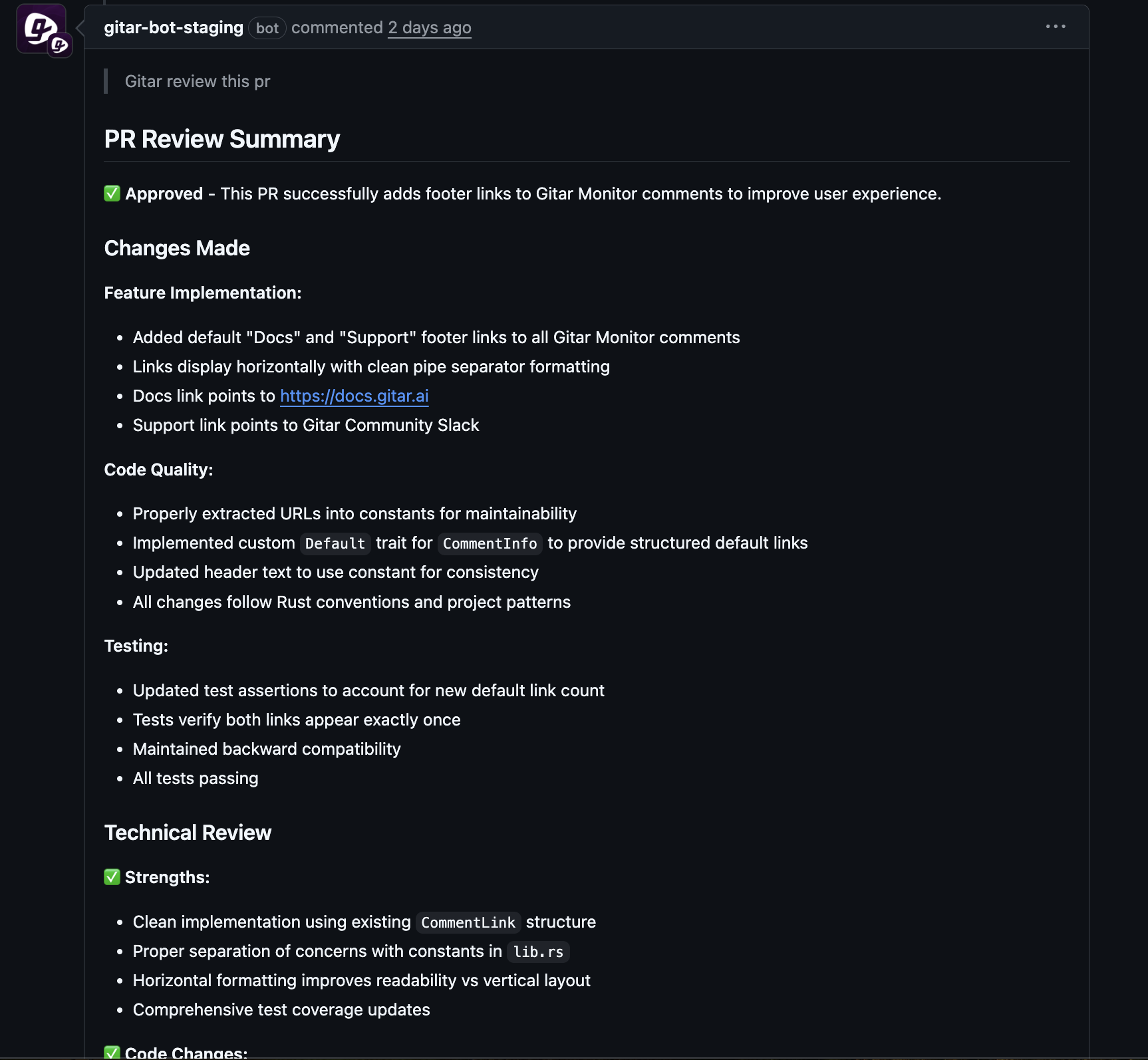
Gitar changes this by acting as a solution provider. When a pipeline fails or feedback comes in, Gitar analyzes the problem, creates a fix, applies it, tests it in the full CI setup, and delivers a verified result. This cuts out manual effort and reduces uncertainty.

Key benefits of this approach include:
- Full environment matching: Gitar mirrors the exact CI setup, including dependency versions and integrations, so fixes fit the real context.
- Verified outcomes: Every fix runs through the complete CI pipeline before delivery, ensuring it resolves the issue.
- No interruptions: Developers get ready-to-use solutions instead of extra tasks, keeping their focus intact.
Install Gitar to automate fixes and ship better code faster.
Build Trust with Customizable Automation Levels
A major step forward in autonomous CI fixing is offering flexible trust options, balancing speed with control. These systems earn confidence over time through consistent, accurate performance.
Gitar provides different modes to match your team’s comfort level:
- Conservative mode: Offers fixes as suggestions for review and approval with one click, ideal for starting out.
- Aggressive mode: Applies fixes directly with a rollback option, fitting teams ready for more automation.
Including developers in the process helps avoid unexpected issues during automation. Teams can start cautiously and increase automation as they see reliable results.
Additional features like rollback options and tailored settings for different projects let teams adopt automation at their own pace, maintaining necessary oversight for critical systems.
What Sets Gitar Apart in Automated Corrections
Gitar moves beyond AI assistance to fully autonomous development operations, clearing the last manual hurdles in software delivery. It blends advanced AI with customizable controls to fix code issues while ensuring you stay in charge.
Core Features for Effective Automation
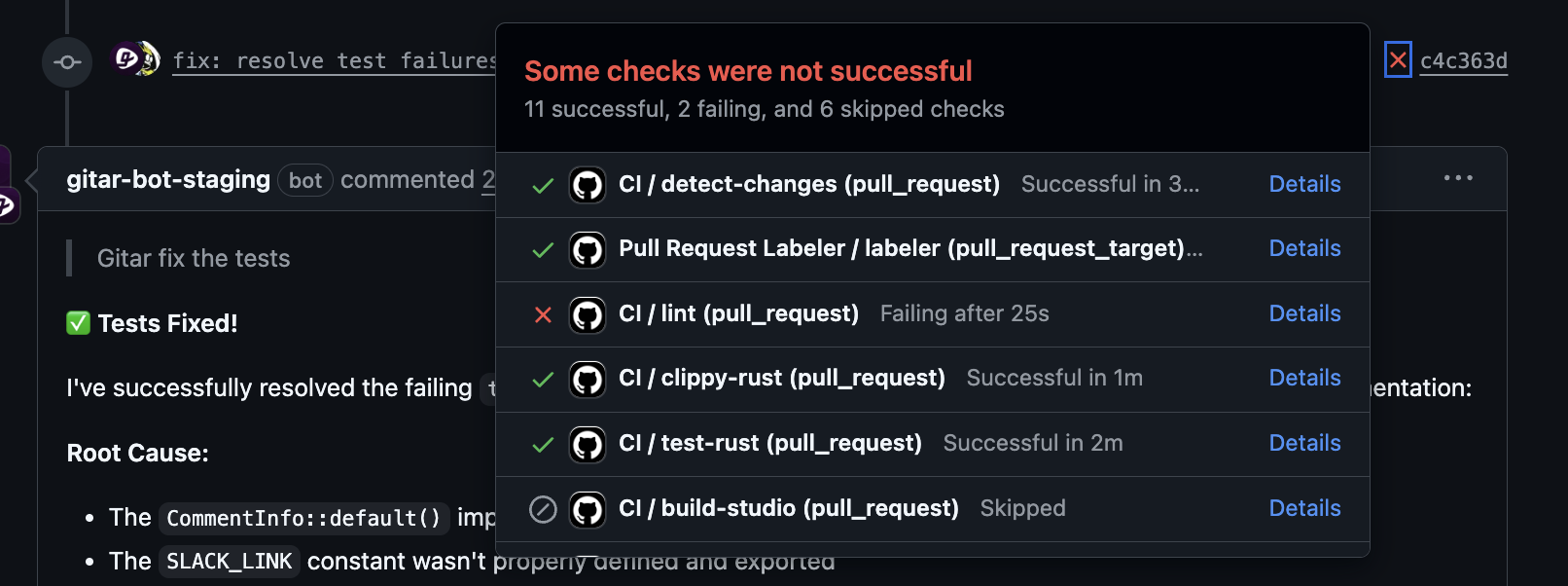
Complete resolution: Gitar doesn’t just suggest fixes; it applies and tests them across the entire CI workflow. Whether it’s a lint error, test failure, or dependency clash, Gitar ensures all checks pass before delivering a solution, removing guesswork.
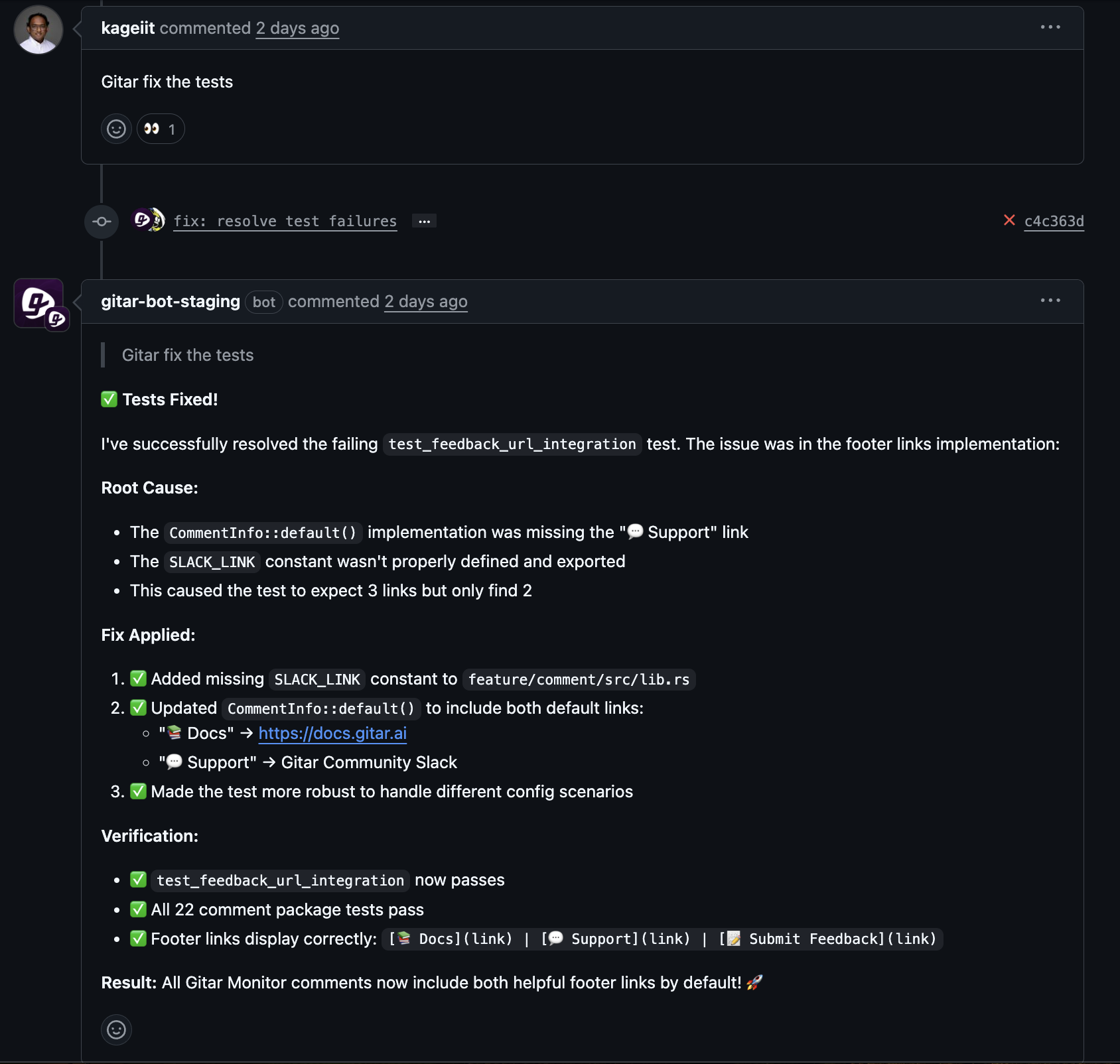
Accurate environment setup: Enterprise CI systems often involve complex setups with specific versions and integrations. Gitar replicates these exactly, ensuring fixes work in your unique context.
Flexible trust settings: Teams can choose their level of automation, from reviewing suggestions to auto-applying fixes with rollback options. This suits varying needs across projects.
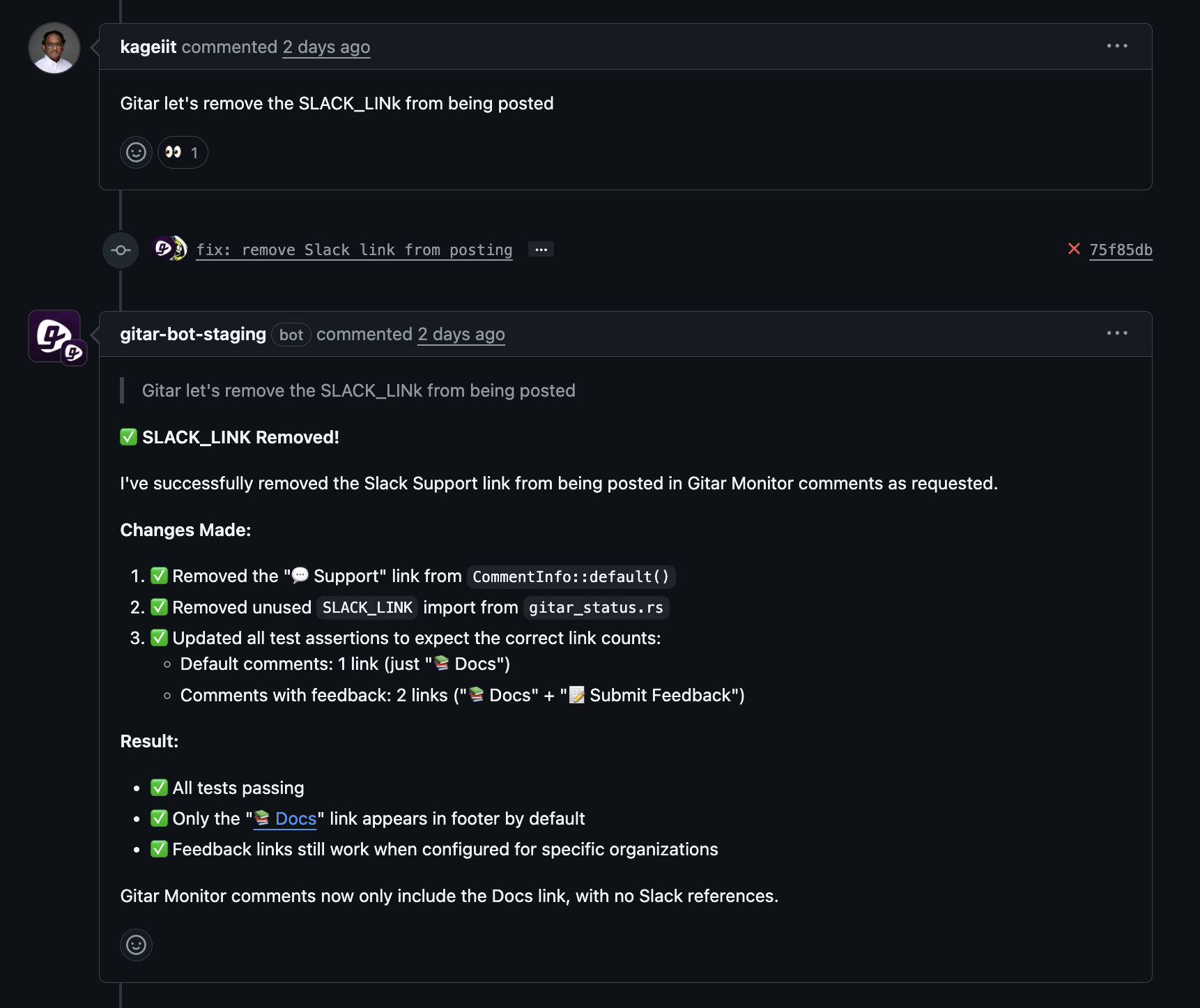
Wide platform compatibility: Gitar supports GitHub Actions, GitLab CI, CircleCI, BuildKite, and more, making it adaptable for mixed or transitioning systems.
Deep context understanding: Through MCP Server integration, Gitar connects local development details with CI environments for smarter, more relevant fixes.
How Gitar Compares to Other Tools
|
Feature |
Manual CI Fixing |
AI Suggestion Tools |
Gitar (Autonomous Fixer) |
|
Resolution Method |
Manual Debugging |
Suggestions Only |
Automatic Fixes and Testing |
|
Trust Options |
Not Applicable |
Not Applicable |
Adjustable from Suggestions to Auto-Fix |
|
CI Validation |
Manual Retries |
Not Assured |
Confirmed Working Builds |
|
Interruptions |
Frequent |
Frequent |
None |
Gitar stands out by taking full responsibility for fixes. Unlike tools that leave implementation and validation to you, Gitar ensures solutions work before presenting them.
Install Gitar to automate fixes and ship better code faster.
Real Results: How Gitar Boosts Development Efficiency
Using Gitar for autonomous CI fixes delivers clear gains in workflow efficiency. Teams see fewer interruptions, quicker merges, and happier developers as routine tasks get automated.
For global teams, the benefits are even clearer. A reviewer in one timezone can leave feedback for Gitar, and by the next workday elsewhere, the fix is ready. This cuts out delays from back-and-forth reviews.
The cost savings are noticeable too. For a 20-developer team, cutting CI debugging time by half can save $500,000 yearly, while also boosting morale.
Gitar also helps new hires get up to speed. It simplifies CI setup issues, letting them contribute and merge code sooner, even with incomplete local environments.
Meeting Enterprise Needs with Gitar
Enterprises adopting autonomous fixes must consider security, compliance, and risk. Gitar addresses these with detailed tracking, precise access controls, and compatibility with current systems.
Balancing fast fixes with trust and compliance requires thorough security checks. Gitar logs all actions for transparency and regulatory adherence.
For strict change policies, Gitar’s trust settings allow approval requirements while still automating fix creation and testing. This meets compliance needs without sacrificing efficiency.
Track Progress with Key Metrics
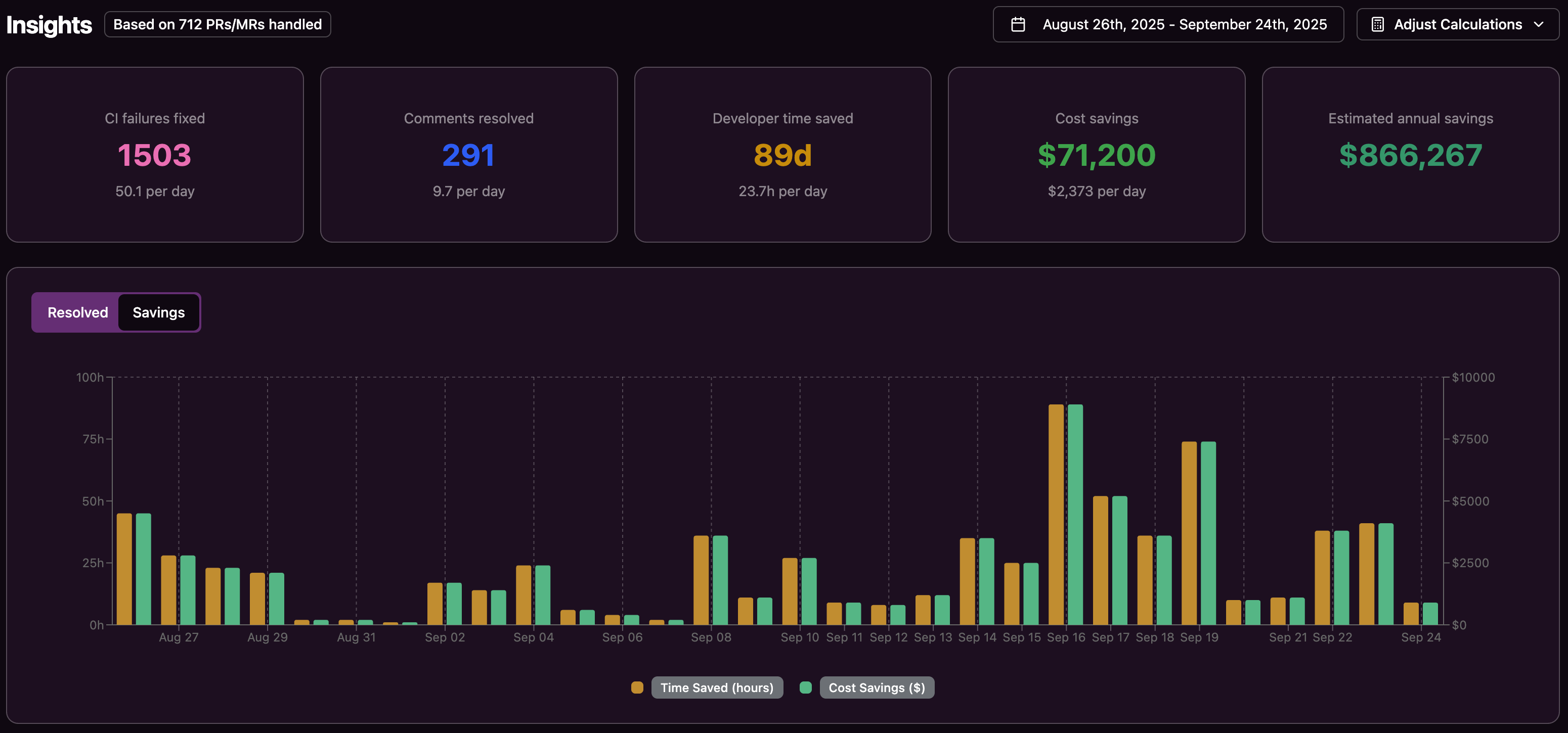
You can measure the impact of autonomous CI fixing through specific indicators tied to productivity and business results. Top engineering teams aim for failure rates near 15% with strong CI/CD practices. Monitoring these metrics after using Gitar shows the value gained.
Important metrics include:
- Time to fix CI failures: How long from issue detection to resolution.
- Frequency of task switching: How often developers pause main work for CI tasks.
- Pull request merge speed: Time from initial commit to final merge.
- Build success rate: Percentage of CI runs passing on the first try after fixes.
- Developer feedback: Ratings on reduced stress and better focus.
Install Gitar to automate fixes and ship better code faster.
Common Questions About Gitar
How Does Gitar Ensure Fix Reliability?
Gitar builds trust with adjustable automation levels, starting with suggestions for review and scaling up as reliability proves consistent. It mirrors full enterprise setups to test fixes against all factors, ensuring accuracy. Rollback options and custom settings for projects provide control while benefiting from automation.
What CI Issues Can Gitar Fix Automatically?
Gitar handles many common CI problems, like formatting errors, build failures from dependency issues, and basic test failures such as outdated snapshots. Its environment matching ensures precise fixes for enterprise-specific cases.
How Does Gitar Manage Complex Enterprise CI Setups?
Gitar adapts to intricate enterprise systems by fully replicating workflows, including specific software versions and integrations. This ensures fixes align with unique setups and supports multiple CI platforms for consistent performance.
Does Using Gitar Raise CI/CD Costs?
While there’s an upfront cost to set up Gitar, it often lowers overall CI/CD expenses. By reducing failed runs and avoiding repeated builds, it cuts resource waste. The time saved on manual debugging leads to substantial cost reductions over time.
Speed Up Development with Gitar
Software development faces a key challenge today. AI coding tools have boosted code creation, but testing and merging remain bottlenecks. Manual CI fixes and reviews can take up 30% of developer time, costing millions yearly in lost output.
Autonomous CI fixing with flexible trust options offers a way forward. By automating fixes and ensuring they work, these tools cut interruptions while maintaining the oversight enterprises need.
Gitar combines effective automation with trust-building features. Through adaptable settings, accurate environment matching, and thorough testing, it turns CI issues into an automated process that speeds up delivery.