
Inefficient parallel processing in CI/CD pipelines slows down software development, costing developers valuable time on manual debugging and context switching. While traditional methods focus on scaling infrastructure or prioritizing tests, they often overlook the core issue of manual fixes for failed jobs. Gitar changes this with autonomous CI fixes, creating a self-healing system that cuts down on debugging, reduces interruptions, and keeps builds running smoothly through smart automation.
Why Inefficient Parallel Processing Hurts CI/CD Pipelines
Engineering teams rely on parallel CI/CD setups to speed up development, but failures in these systems can wipe out efficiency gains. When parallel jobs fail due to flaky tests, dependency issues, or configuration errors, developers must stop their work to debug, breaking their focus and delaying project timelines.
How Constant Context Switching Leads to Developer Burnout
Submitting a pull request should be simple, yet developers often face a cycle of pushing code, moving to other tasks, and getting pulled back by failure alerts. Manual debugging and merge conflict resolution slow down progress and raise costs, especially with heavy parallel workloads. This back-and-forth creates a major drag on productivity.
Switching tasks adds mental strain. Developers need to recall the context of their changes, sift through error logs, pinpoint causes among simultaneous failures, and apply fixes in complex parallel setups. This cognitive load often takes longer than the fix itself, taxing efficiency.
For distributed teams, delays worsen. A developer in one time zone might push a PR, only to face failures when teammates elsewhere review it. These asynchronous hiccups can turn quick fixes into day-long waits.
Install Gitar now to fix broken builds automatically and ship better software faster.
How Delayed Feedback Loops Slow Down Market Delivery
Parallel processing aims to speed up feedback, but poor execution can create delays. Slow deployments and extended feedback cycles reduce productivity, especially when jobs fail to run concurrently. Debugging becomes trickier when multiple jobs fail at once, forcing developers to isolate causes and check for related issues.
These failures create a ripple effect, stalling the entire pipeline. A small linting error in one job can halt a PR, even if other tests pass, slowing down delivery of key features based on the fastest failure.
In fast-moving markets, such delays cost more than time. The gap between spotting a customer need and launching a solution can define success, making efficient CI/CD a critical business priority.
How Flaky Tests and Complex Debugging Erode Trust
Flaky tests damage confidence in automation, leading to wasted time on false positives. Inconsistent test results slow releases by triggering unnecessary checks. In parallel systems, these issues multiply as failures vary across jobs, obscuring patterns or root causes.
Debugging in parallel setups adds further frustration. Tracing failures across multiple logs and dependencies delays resolution. Developers must link issues across jobs, identify race conditions or resource conflicts, and decide if the problem lies in code or setup.
Over time, this can push teams to skip CI checks or use temporary fixes, adding technical debt. Such workarounds undermine the purpose of CI and increase long-term risks.
How Infrastructure Bottlenecks Drive Up CI/CD Costs
Poorly managed parallel processing strains resources and hikes expenses. Overloaded systems slow feedback and frustrate developers with inconsistent performance. Failed jobs waste compute power, and re-runs to bypass unreliable results further inflate costs.
Beyond infrastructure, the real expense lies in developer time. Failed jobs cost not just compute resources but also hours spent diagnosing issues, delayed features, and lowered team morale. For a 20-developer team, this can add up to roughly $1 million yearly in lost productivity.
Resource contention in parallel setups creates unpredictable failures. Multiple jobs vying for the same resources can cause issues hard to replicate or fix, often leading to over-provisioning. This ramps up spending without solving core inefficiencies.
How Autonomous CI Fixes Eliminate CI/CD Bottlenecks
Autonomous CI fixes shift from reactive problem-solving to proactive pipeline management. Instead of just adding more infrastructure or refining test choices, these fixes target the heart of the issue: the manual work needed when parallel jobs fail.
Unlike standard alerts that only flag problems, autonomous systems analyze failures, create solutions, test them in the full CI context, and apply them without human input. This self-healing approach preserves the speed of parallel processing while cutting down on productivity losses.
Effective automation in parallel CI requires deep insight into execution contexts and dependencies. Fixes must match the exact conditions of failed jobs to work reliably across complex scenarios.
How Gitar Enhances CI/CD with Autonomous Fixes
Gitar brings a fresh solution to CI/CD challenges by automatically resolving failures. Acting as an AI agent, it handles issues without developer involvement, ensuring builds stay green across diverse environments.

What Makes Gitar’s Self-Healing CI Stand Out
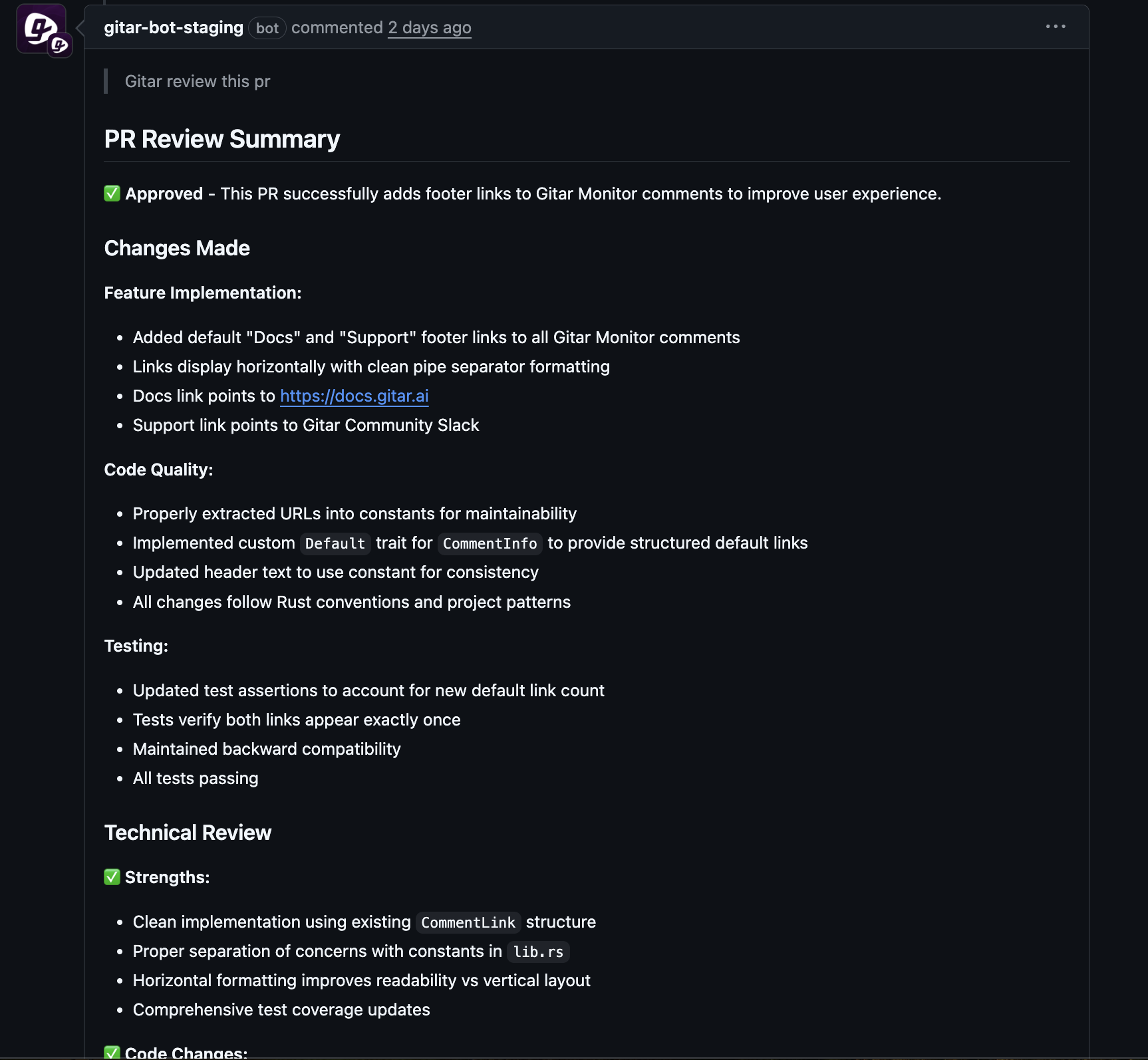
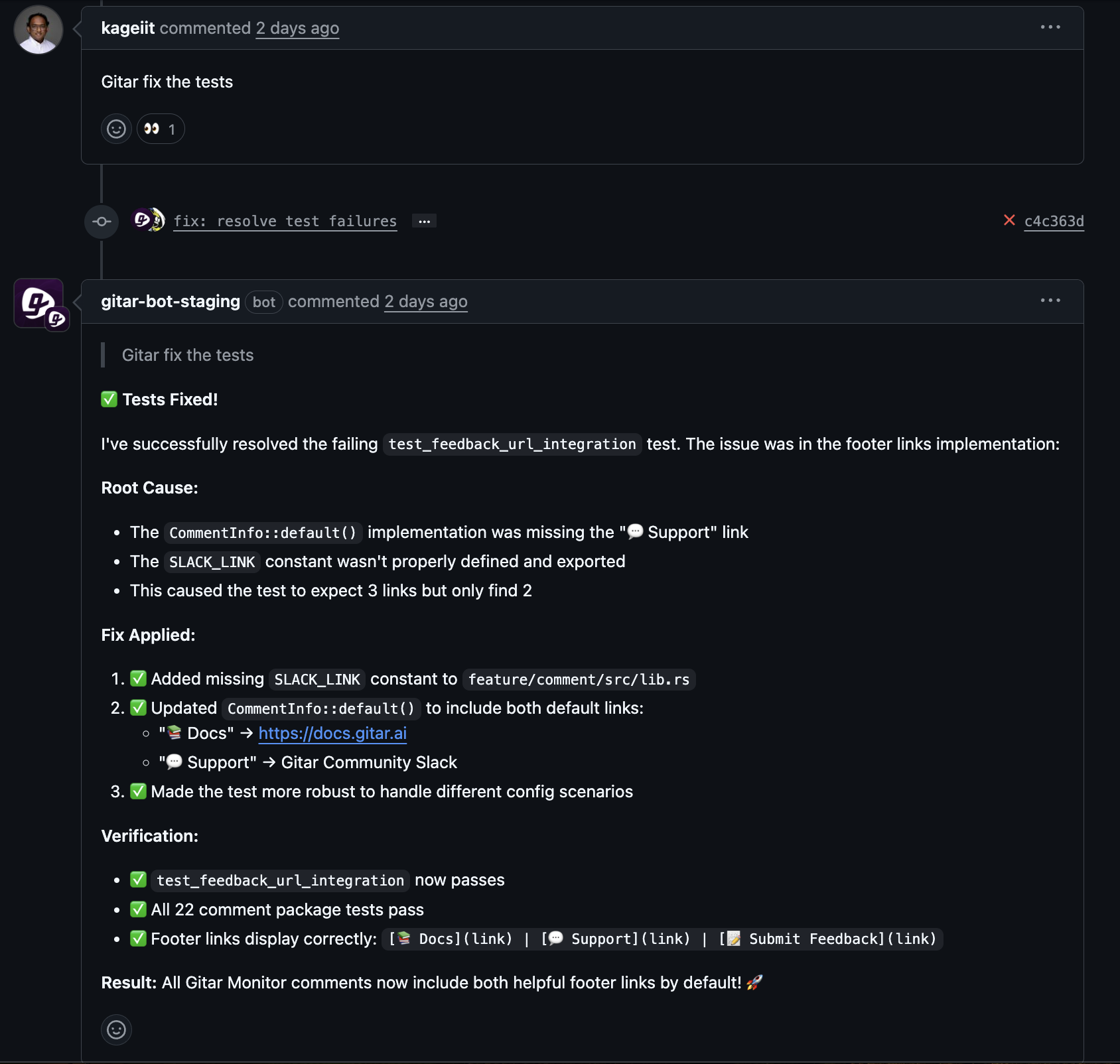
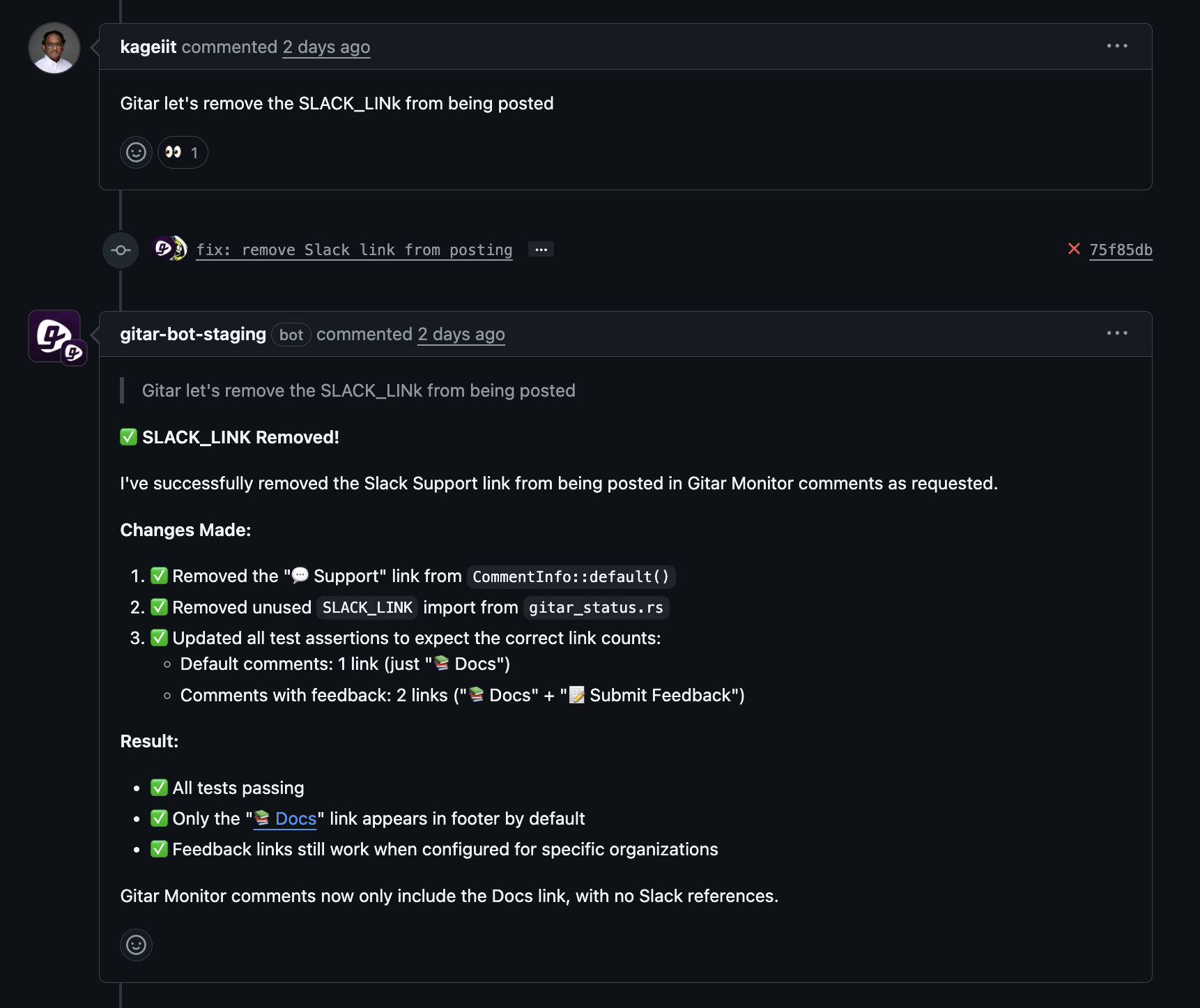
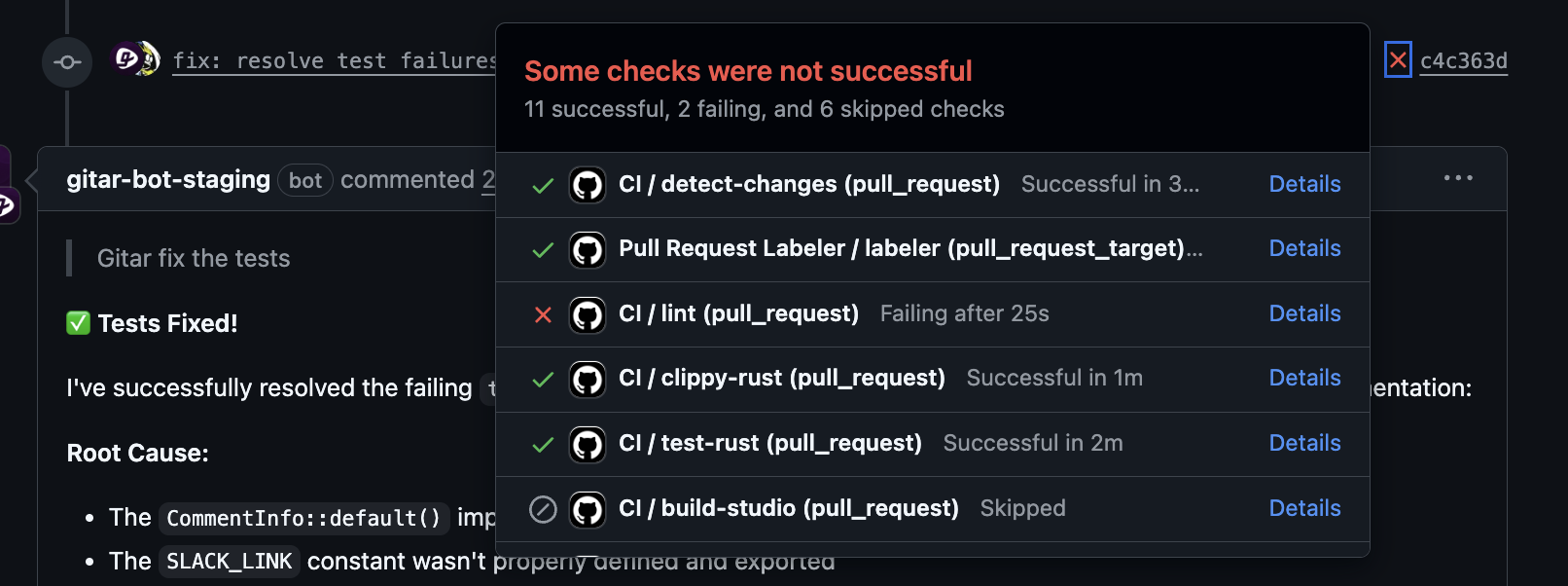
Gitar goes beyond suggestions by fully automating fixes. When failures occur from linting errors, test issues, or dependencies, it identifies the problem, applies a solution, and confirms the result in the CI workflow.
It mirrors complex enterprise setups, managing specific SDKs, multi-language dependencies, and tools like SonarQube or Snyk. This ensures fixes align with real-world conditions.
Teams can choose their comfort level with automation. A cautious mode offers fixes for review with easy approval, while a fully automatic mode commits changes with rollback options for hands-free operation.
Gitar supports various CI platforms like GitHub Actions, GitLab CI, CircleCI, and BuildKite, fitting seamlessly into any infrastructure setup.
Beyond CI fixes, Gitar aids code reviews. Reviewers can request specific changes, and Gitar applies them with full context awareness, cutting delays in distributed teams.
Install Gitar now to fix broken builds automatically and ship better software faster.
Key Benefits of Choosing Gitar for Your Team
Save Developer Time and Minimize Interruptions
Gitar frees developers from constant CI/CD troubleshooting. Manual pipelines or weak automation add mental strain with frequent interventions for test or setup issues. Gitar’s autonomous fixes let developers stay focused on coding while the system resolves problems.
Time savings grow in setups with frequent job failures. Gitar automates analysis and resolution, freeing up hours for meaningful work.
Reducing interruptions also cuts the mental cost of recalling code context. Fewer disruptions mean developers can dive deeper into complex tasks without losing momentum.
Speed Up Merges and Market Delivery
Automated fixes shorten the commit-to-merge cycle by eliminating debugging delays. Pre-merge pipeline delays frustrate developers with extra debugging work. Gitar reduces these waits through quick resolutions.
This speed is critical in setups where failures take hours to fix. Faster merges lead to quicker feature rollouts and bug fixes, boosting overall development pace.
Boost Pipeline Stability and Cut Flaky Builds
Gitar stabilizes CI pipelines by fixing root causes of flaky tests and build failures. This reduces the uncertainty that drives teams to skip checks or rely on risky shortcuts, preventing technical debt.
Reliability extends across the CI setup. Optimized test distribution, dynamic resources, skipping redundant tests, and isolated container execution improve with automated fixes. Consistent results build trust in CI output.
Stable pipelines encourage frequent commits and faster feedback, improving code quality. Fewer flaky builds mean red alerts point to real issues, not system flaws.
Cut Costs and Save Up to $1M Yearly for a 20-Developer Team
Autonomous fixes reduce debugging time, slashing expenses. A 20-developer team spending an hour daily on CI issues could lose $1 million annually. Gitar sharply lowers this loss, offering clear financial returns.
Savings also come from fewer build re-runs, lower support costs, and better team morale. Combined with faster delivery, these benefits add substantial value.
In setups with high parallel job costs, Gitar cuts waste by aiming for first-try success, reducing unnecessary resource use.
|
Feature |
Gitar (Healing Engine) |
AI Code Reviewers (Suggestion Engines) |
Manual Work |
|
Action |
Autonomously applies and validates fixes |
Provides suggestions; manual application |
Manual diagnosis and fix |
|
CI Validation |
Validates fixes against CI workflows |
No inherent CI validation |
Relies on manual re-runs |
|
Context Switching |
Reduces (self-healing CI) |
Requires developer context switch |
High context switching |
|
Environment Awareness |
Full enterprise env. replication |
Limited/No environmental awareness |
Developer’s local environment |
Install Gitar now to fix broken builds automatically and ship better software faster.
Common Questions About Autonomous CI Fixes
How Does Gitar Ensure Reliable Fixes Without New Issues?
Gitar maintains reliability by mirroring enterprise CI setups, including SDKs, dependencies, and integrations. Fixes undergo validation in CI workflows to avoid introducing errors or regressions.
Teams can build trust with a suggestion-only mode, reviewing fixes before moving to full automation. Rollback options add a safety net for any unexpected outcomes.
Can Gitar Work with Complex Enterprise CI/CD Systems?
Gitar fits into intricate setups, supporting platforms like GitHub Actions, GitLab CI, CircleCI, and BuildKite. It handles multi-language projects, complex dependencies, and tools like SonarQube or Snyk, replicating container setups and variables.
For security or compliance needs, Gitar offers on-premise options while maintaining full fix capabilities. It integrates without requiring major changes to existing systems.
How Is Gitar Different from Tools Like GitHub Copilot or CodeRabbit?
Gitar focuses on autonomous fixes in the post-commit CI/CD stage, unlike tools aiding development or offering review suggestions. It acts as a healing engine, applying and validating fixes with full context of the build environment.
Triggered by failures, Gitar addresses specific issues in real conditions, not just offering generic advice.
What Financial Returns Can Teams Expect from Gitar?
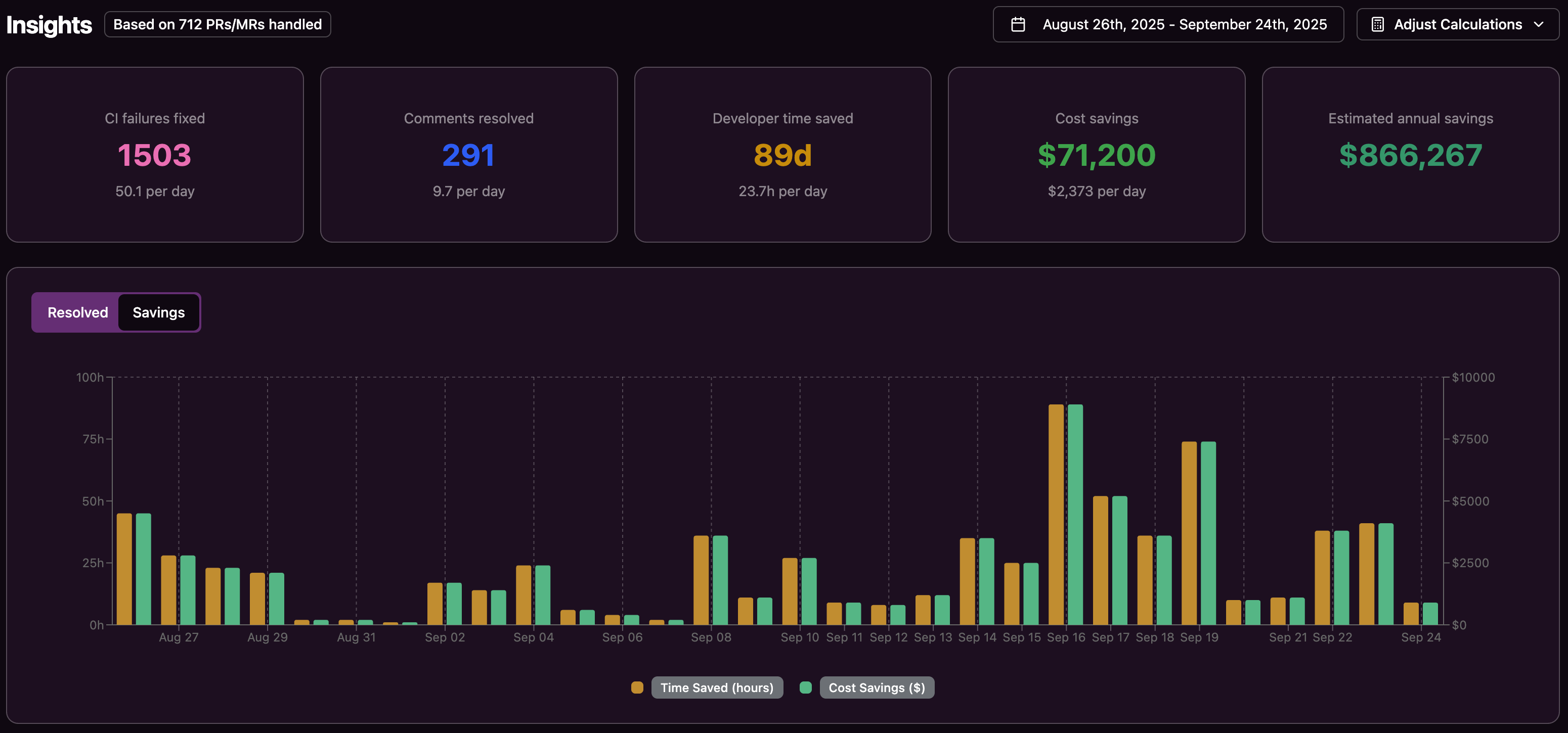
Teams gain measurable value from Gitar, especially with larger groups or complex CI setups. A 20-developer team might lose $1 million yearly to inefficiencies. Gitar cuts much of this through faster debugging and boosted productivity.
Additional returns include better retention, quicker market delivery, and lower infrastructure costs. Enhanced reliability supports bolder CI strategies, adding further gains.
How Does Gitar Handle Security and Compliance Needs?
Gitar ensures fixes meet security and compliance standards through thorough validation. For stricter needs, teams can require approvals for certain changes while automating routine tasks.
It keeps detailed action logs for audits. On-premise options suit regulated setups, and configurable trust settings allow control over automation scope for critical areas.
Stop Wasting Developer Hours: See Gitar in Action
Inefficient CI/CD parallel processing drains productivity and delays projects. Manual debugging and constant interruptions create bottlenecks that more infrastructure can’t fix. For a 20-developer team, this can mean $1 million in yearly losses, plus frustration.
Gitar turns this around with a self-healing system. Its autonomous fixes adapt to complex setups and validate solutions, resolving issues without manual effort.
Teams gain more than just time savings. Faster merges and fewer interruptions allow quicker market responses and support bolder deployment strategies.
Don’t let CI/CD friction hold you back. Discover autonomous pipeline management with Gitar. Request a demo today to see how Gitar tackles your CI/CD challenges.