
Continuous Integration (CI) build failures slow down DevOps processes, waste developer time, and delay software releases. These issues affect engineering efficiency and team morale. In this article, we’ll look at the real impact of CI failures, from lost productivity to delayed timelines, and how autonomous AI, like Gitar, steps in to diagnose and resolve these problems, creating smoother pipelines and boosting developer focus.
Why CI Build Failures Slow Down Your DevOps Workflow
Imagine pushing a pull request, expecting it to pass, only to see a failing build due to a small error, like a missing dependency or a style issue. These minor setbacks create a chain of delays that impact your entire team.
Modern DevOps systems are growing more complex, especially in large-scale or microservices setups. Increased codebase size and interdependencies make manual debugging harder than ever. A simple typo can turn into hours of troubleshooting across multiple environments and configurations.
Developer Frustration and Lost Focus
CI failures don’t just cost time, they disrupt developer focus. Switching from coding to debugging breaks your flow, making it hard to get back into a productive mindset.
Developers can spend up to 30% of their workday on CI and code review issues. After an interruption, it often takes 15 to 30 minutes to refocus, so even a quick fix steals valuable time.
This constant interruption frustrates developers, lowering job satisfaction. Over time, it builds a culture where fixing problems overshadows creating new solutions. For distributed teams, delays grow worse when a failure happens outside a teammate’s working hours, stretching a small issue into days of waiting.
Delayed Projects and Costs for Leaders
CI failures directly impact business goals for engineering leaders. About 60% of companies report project delays due to these issues. The bottleneck slows down product timelines and revenue plans.
For a team of 20 engineers, CI-related productivity losses can cost around $1 million yearly, factoring in salaries, delayed releases, and missed opportunities. These hidden costs, like reduced morale and slower market delivery, often go unnoticed by executives until they become major problems.
With AI coding tools increasing pull request volume, the CI bottleneck only gets tighter. Teams write code faster, but merging it takes longer due to frequent failures.
Unstable Pipelines and DevOps Challenges
DevOps teams carry the weight of managing complex CI/CD systems. Common failure causes include environment errors, flaky tests, and inefficient resources, beyond just coding mistakes.
Enterprise setups add more layers, with multiple dependencies, security scans, and custom configurations. Each layer brings new risks of failure, requiring deep expertise to fix. Failed builds also waste cloud resources, driving up costs, sometimes by tens of thousands of dollars monthly in large organizations.
Onboarding new engineers becomes tougher in these environments. They need to learn intricate build systems before contributing, slowing their impact and burdening senior team members with extra support tasks.
Ready to end these delays? Install Gitar to fix broken builds and speed up software delivery.
Meet Gitar: Autonomous AI to Resolve CI Failures
Traditional fixes for CI issues focus on symptoms, not the root problem of manual troubleshooting. Suggestion tools and AI reviewers help identify issues, but developers still need to apply fixes and recheck builds manually.
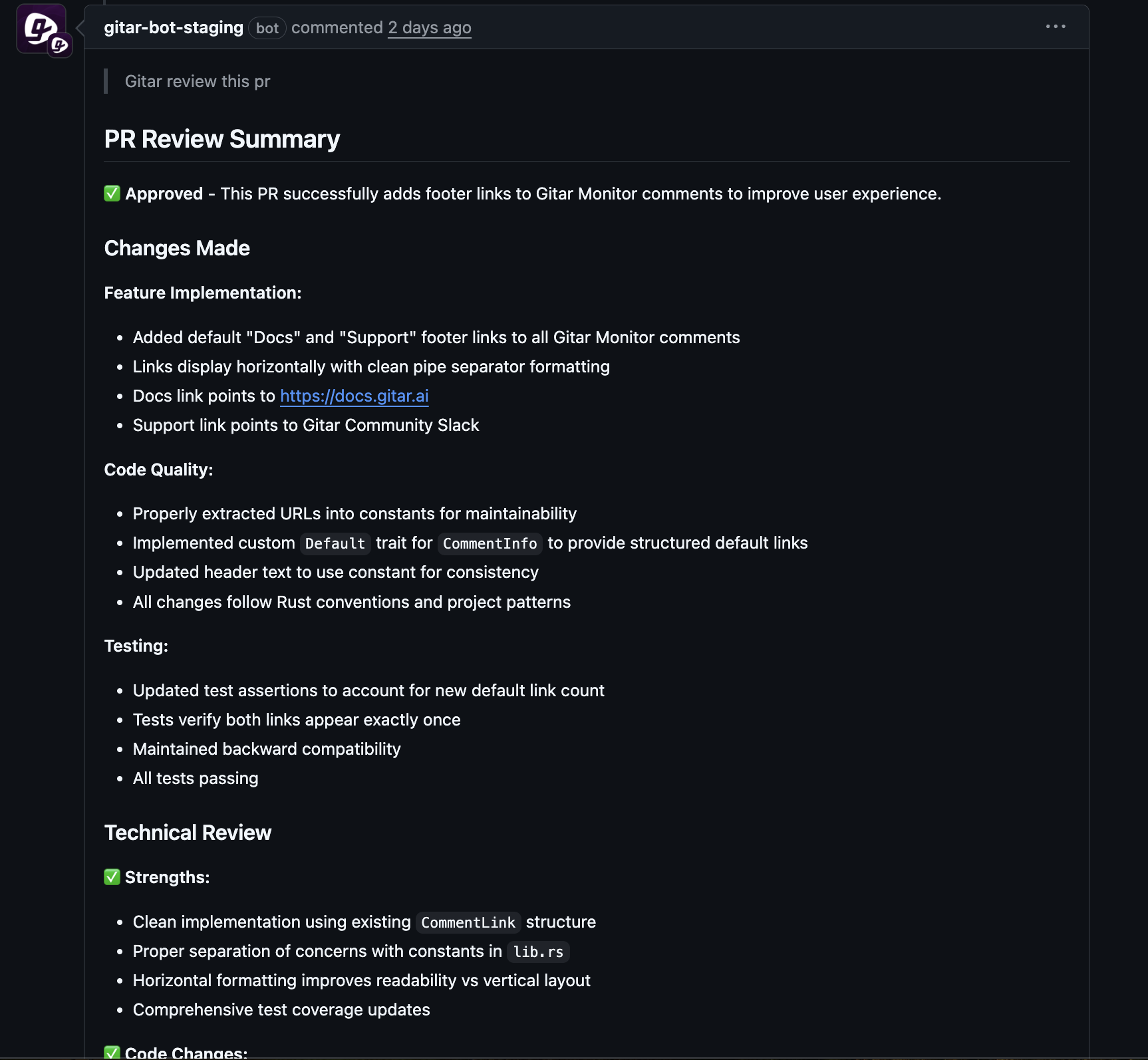
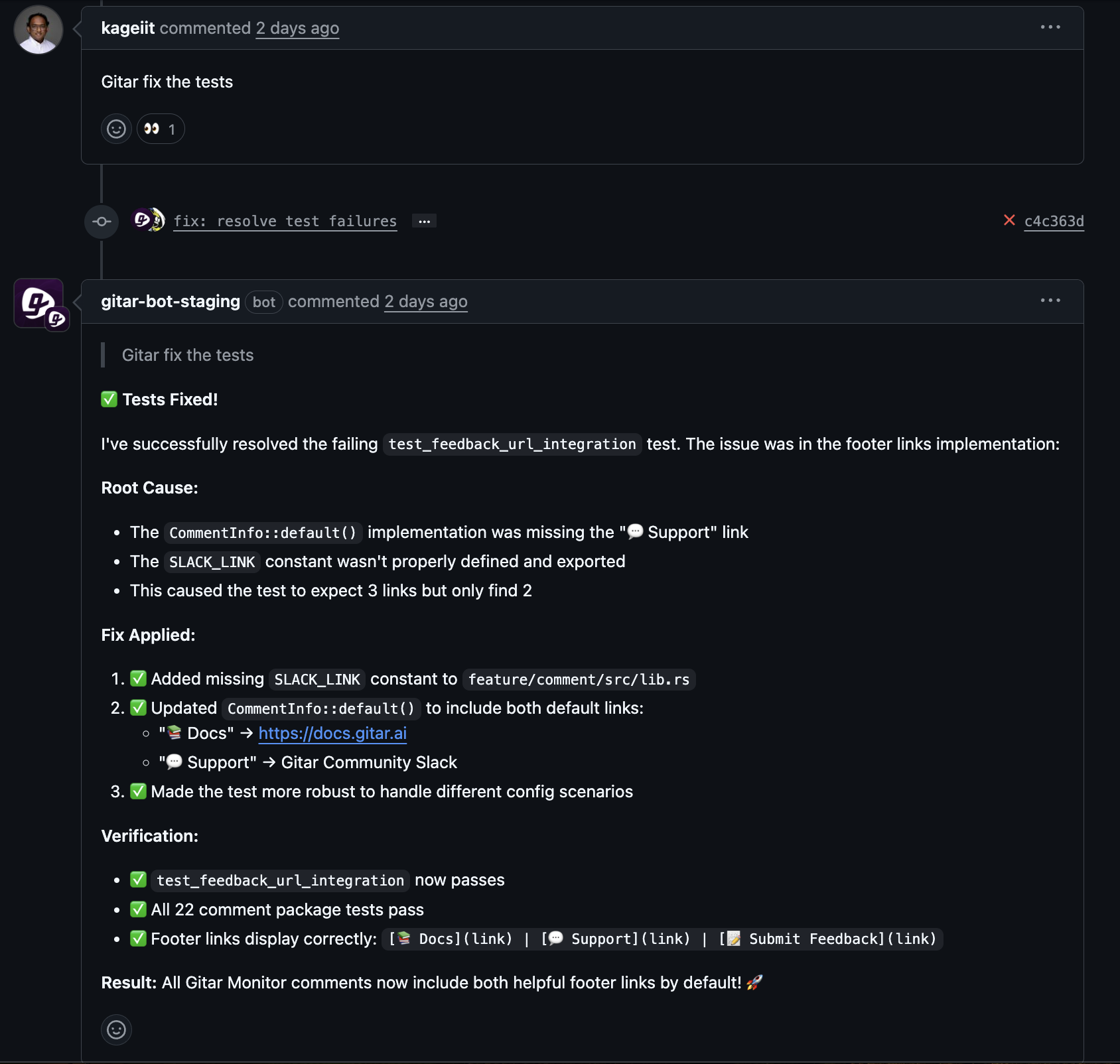
Gitar changes this approach by autonomously handling the entire process. It detects CI failures, crafts precise solutions, tests them in your exact environment, and commits fixes, all without pulling developers away from their work.

How Gitar Stands Out from Other Tools
Gitar goes beyond suggesting fixes, unlike typical AI reviewers. It acts as an independent agent, managing the full cycle of detecting and resolving CI issues.
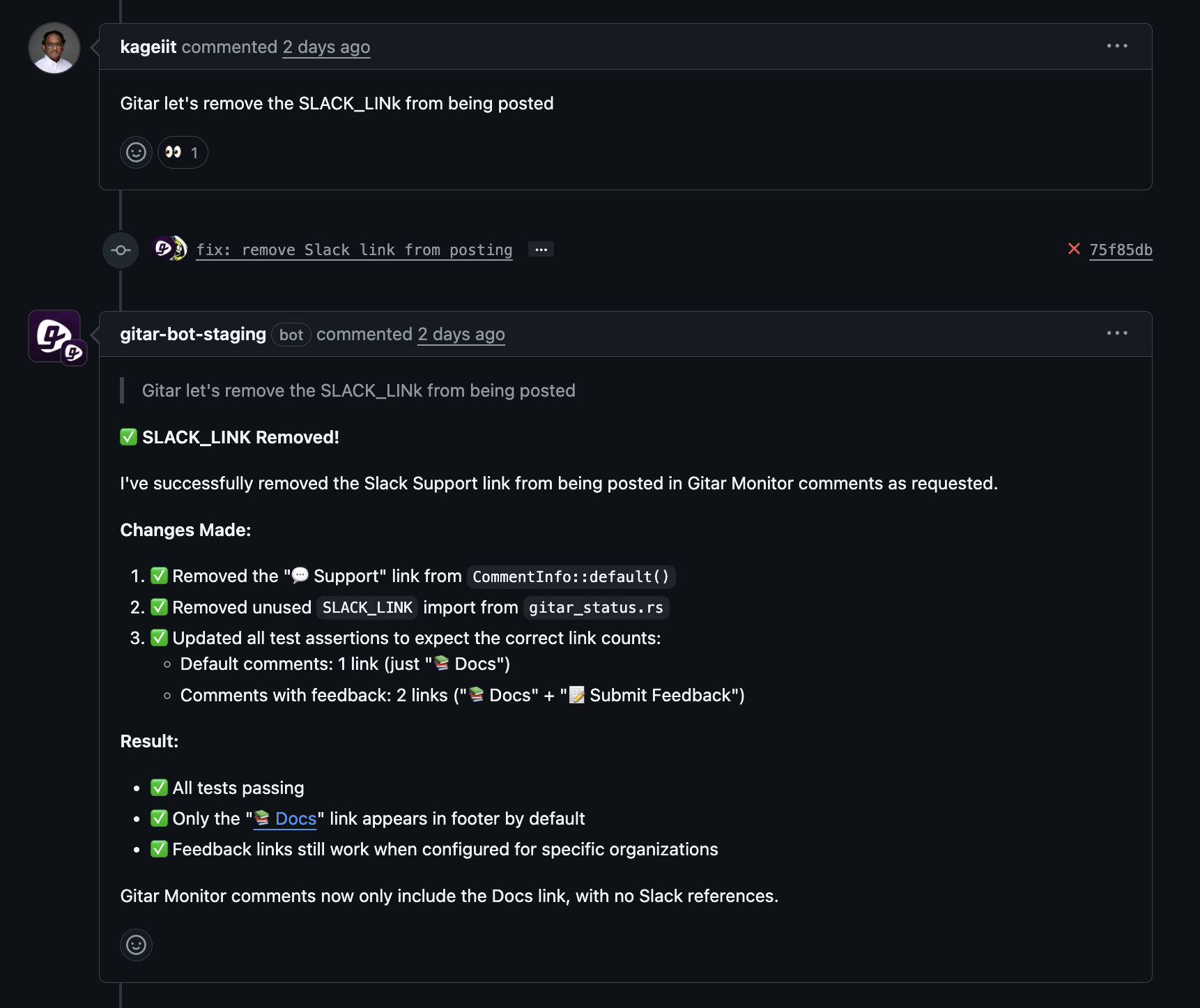
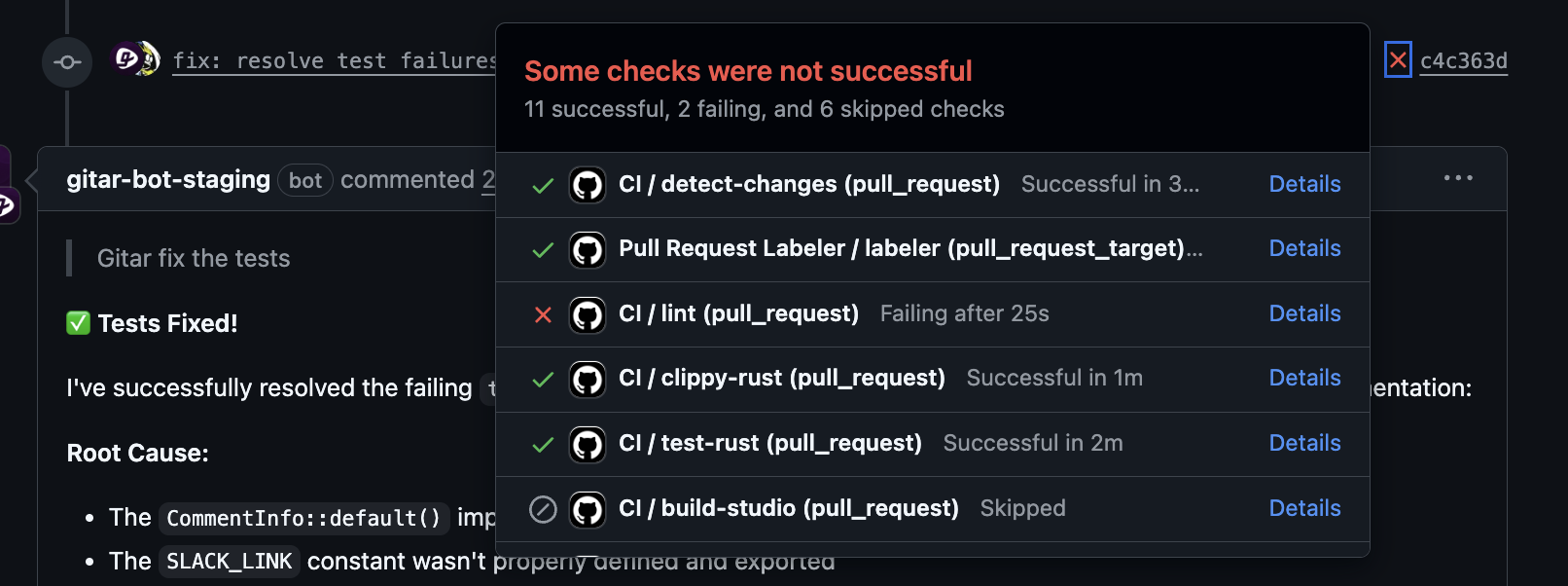
When a build fails due to a lint error or test issue, Gitar analyzes logs with full context of your setup. It creates tailored fixes, tests them against your CI pipeline, and commits changes directly to the pull request, ensuring the build passes.
This complete automation saves developers from follow-up tasks. You push a commit, move to your next project, and later find your pull request passing CI checks, ready for review, without the usual cycle of fixing and retesting.
Key Benefits for Self-Healing Pipelines
Gitar offers specific features to tackle CI challenges effectively. Here’s what helps teams build reliable workflows:
- Full Environment Matching: Gitar mirrors your exact CI setup, including SDK versions, dependencies, security tools, and custom scripts, ensuring fixes work in your real conditions.
- Adjustable Trust Settings: Start with a cautious mode where Gitar suggests fixes for review. As trust grows, switch to automatic commits, with options to undo changes if needed.
- Smart Review Support: Gitar acts on reviewer feedback, making requested changes and explaining updates, which helps distributed teams stay in sync across time zones.
- Broad Platform Support: Gitar works with GitHub Actions, GitLab CI, CircleCI, BuildKite, and more, fitting into diverse CI setups without forcing tool changes.
Curious to see it in action? Book a demo with Gitar to experience autonomous CI fixes.
How Gitar Improves Your Engineering Process
Autonomous CI fixes with Gitar bring benefits beyond saving time on individual tasks. They increase team speed, improve morale, and help deliver products faster. AI-driven pipelines use predictive insights for self-healing CI systems, marking a step toward fully automated development workflows.
Keep Developers Focused and Merging Faster
Developers gain uninterrupted focus with Gitar. CI failures no longer pull you out of coding. Instead, Gitar fixes issues behind the scenes while you work on what matters.
You push a commit and keep going. Later, you check back to see a passing build with clear notes on any fixes applied. This cuts down the time from writing code to merging it, streamlining the process significantly.
Increase Team Speed and Save Costs
For leaders, Gitar boosts overall team output. Time once spent on CI troubleshooting now goes to building features and meeting goals. For a 20-person team, this can mean substantial yearly savings in regained productivity.
Morale also improves. Developers dislike debugging CI issues, so reducing this frustration leads to happier teams. Plus, with fewer delays from failures, release schedules become more predictable for planning.
Strengthen CI Reliability for DevOps Teams
DevOps engineers get relief from constant CI emergencies. Gitar’s fixes cut down on urgent requests, freeing up time for long-term system improvements. Fewer failed builds also mean lower cloud costs by reducing unnecessary CI runs.
Onboarding becomes easier too. New hires start contributing faster with Gitar handling CI hiccups, even if they’re still learning the setup. For enterprises, Gitar ensures consistent standards across projects, aligning with security and quality rules automatically.
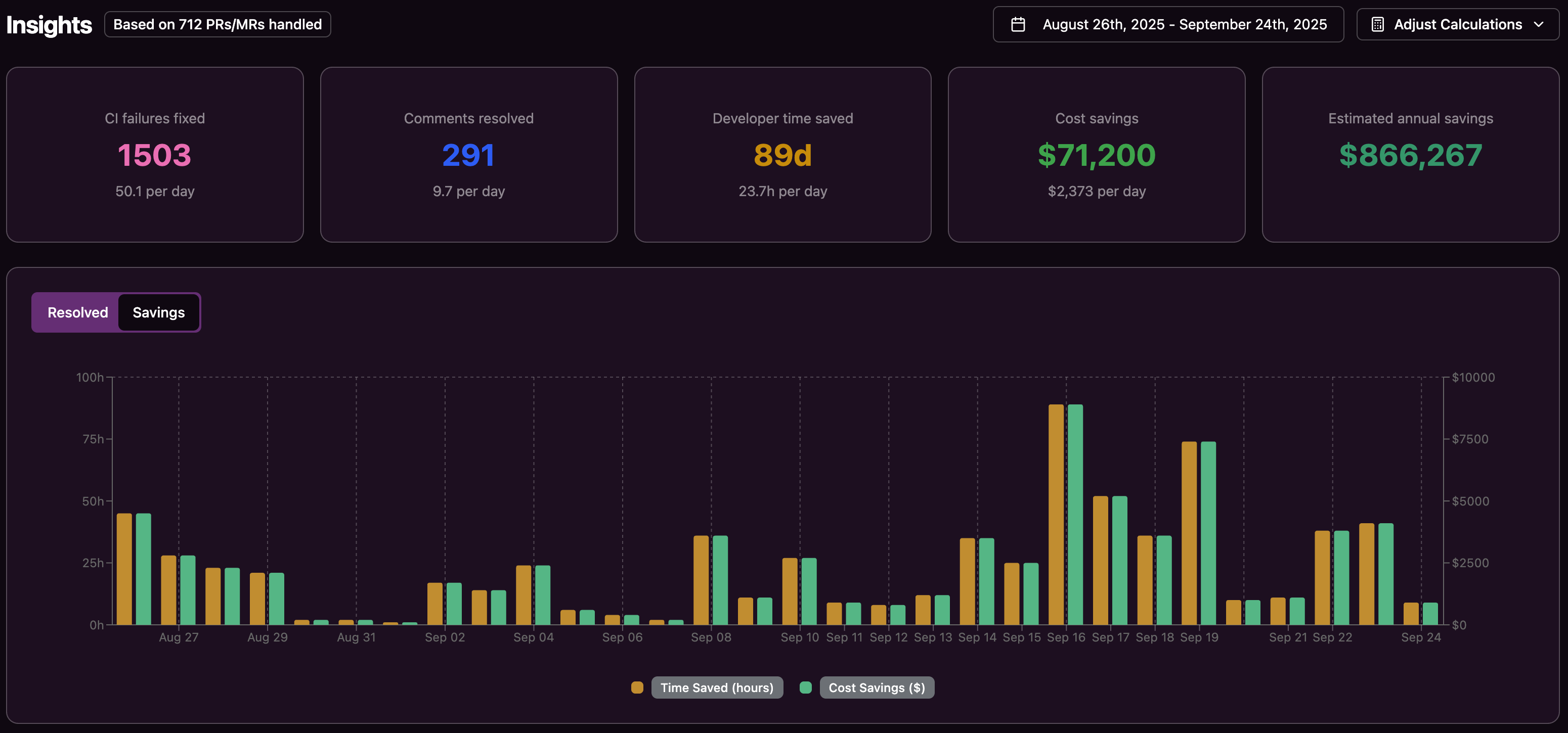
Gitar vs. Other Tools: Why Autonomous Fixes Win
Comparing Gitar to other solutions shows why autonomous AI stands out. Traditional tools and suggestion-based systems have clear limits that Gitar overcomes with full automation.
|
Feature |
Gitar (Autonomous AI Fixing) |
AI Suggestion Tools |
Manual Troubleshooting |
|
CI Failure Handling |
Detects, fixes, tests, and commits automatically |
Offers fix ideas, needs manual action |
Requires full manual effort |
|
Developer Effort |
Minimal, with optional auto-commits |
Needed for applying and checking fixes |
High, with frequent interruptions |
|
Environment Awareness |
Matches full enterprise setup |
Limited understanding of CI context |
Depends on developer knowledge |
|
Time-to-Merge Effect |
Speeds up, clears bottlenecks |
Varies based on follow-up |
Slows with repeated debugging |
Gitar completes the automation loop, unlike suggestion tools that leave the final steps to developers. It also offers ready-to-use support for various CI platforms, saving teams from building custom integrations.
Common Questions About Autonomous CI Fixes
How Does Gitar Differ from AI Code Reviewers?
Gitar focuses on action, not just advice. Unlike tools that suggest code changes for developers to apply, Gitar automatically fixes issues and confirms they work within your CI system, reducing manual effort.
What If My Team Hesitates to Trust Automated Fixes?
Gitar builds trust gradually with adjustable settings. Start in a mode where fixes appear as suggestions for approval. As confidence grows, enable automatic commits for certain projects, with rollback options always available.
Can Gitar Manage Complex Enterprise CI Setups?
Gitar handles sophisticated CI environments well. It accounts for varied dependencies, security tools, and custom rules, creating fixes that match your specific setup while respecting security and compliance needs.
How Does Gitar Help New Developers?
Gitar simplifies onboarding. New engineers contribute sooner since Gitar fixes CI issues and explains solutions, reducing the learning curve and helping them understand team standards through applied changes.
Conclusion: Boost Your Team with Autonomous CI Solutions
CI build failures remain a major drag on software development, interrupting productivity despite advances in code generation. Gitar’s autonomous AI shifts the process from manual fixes to automatic resolutions.
This change speeds up development, lifts team spirits, and improves release timing. Gitar fits into existing CI tools, follows your policies, and adjusts automation to match your comfort level.
Don’t let CI failures waste more time. Request a demo of Gitar today to improve productivity and streamline your DevOps pipeline. See how autonomous AI turns frustrating build issues into smooth operations, letting your team focus on innovation over maintenance.