
Key Takeaways
- Intelligent automation in DevOps now centers on self-healing pipelines that reduce time spent on CI failures and code review iterations.
- Manual CI and review work can consume up to 30 percent of developer time, which converts directly into high and often hidden engineering costs.
- Teams that invest in strong developer experience and automated feedback loops see marked improvements in speed, quality, and engagement metrics.
- A phased rollout with clear ROI tracking and configurable trust controls helps organizations adopt autonomous agents safely in complex environments.
- Gitar provides an autonomous CI agent that fixes failing builds and reviews feedback automatically, and teams can get started at Gitar and book a demo.
Why Intelligent Automation is Essential for DevOps Cost Savings
Intelligent automation has become a key lever for controlling DevOps costs in 2026. Manual CI and review workflows scale poorly as AI-assisted coding tools generate more changes and pull requests.
About two-thirds of developers do not believe their company’s productivity metrics accurately reflect their work, which can erode motivation and make it harder to justify new investments in tooling.
AI coding assistants now generate a large share of code in many organizations. This accelerates feature work but also increases downstream load. Nearly half of all code is estimated to be AI-generated, yet 46% of developers distrust AI outputs. As a result, teams review more changes and chase more CI failures while feeling less confident in the underlying suggestions.
Developer experience has a direct link to business performance. Teams with strong Developer Experience perform four to five times better on speed, quality, and engagement metrics. These outcomes show up as faster time-to-market, fewer incidents, and lower attrition.
Install Gitar to automatically fix broken builds and ship software faster.
Navigating the Evolution of DevOps Automation
DevOps automation has shifted from basic pipeline scripting to systems that can detect, diagnose, and fix issues with limited human input. Earlier tools focused on surfacing problems and suggesting improvements. Newer platforms aim to complete more of the work autonomously.
Modern measurement practices now combine system telemetry with workflow analytics to uncover bottlenecks like recurring CI failures. The focus is moving from faster alerts to automated remediation.
Time lost to CI and code review has a clear financial weight. Many teams report that developers spend up to 30 percent of their day dealing with pipeline issues, flaky tests, and feedback changes. For a 20-developer team, this can total about 5,000 hours of lost productivity each year, which is roughly $1 million in fully loaded engineering cost at $200 per hour.
Introducing Gitar: Autonomous AI Agent for DevOps Cost Savings
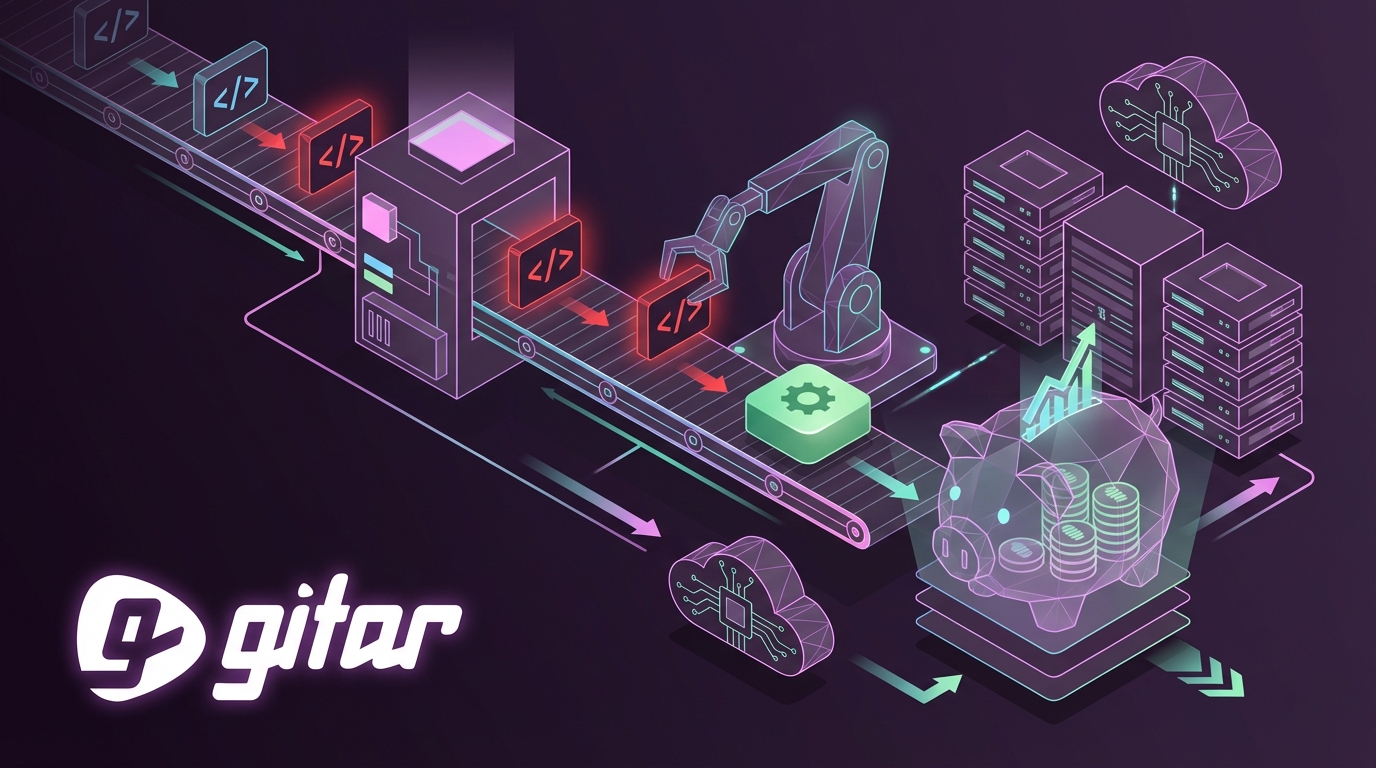
Gitar is an autonomous AI agent that fixes failing CI pipelines and implements code review feedback. The goal is to remove the daily friction of getting changes through CI and review checks so developers can focus on feature work.
Key capabilities that distinguish Gitar include:
- End-to-end autonomous fixing that applies and validates changes to restore green builds across your CI pipeline
- Full environment replication for complex enterprise setups, including multi-SDK builds, dependency pinning, and third-party scans such as SonarQube and Snyk
- A configurable trust model that supports modes from suggestion-only to auto-commit with rollback, based on team comfort
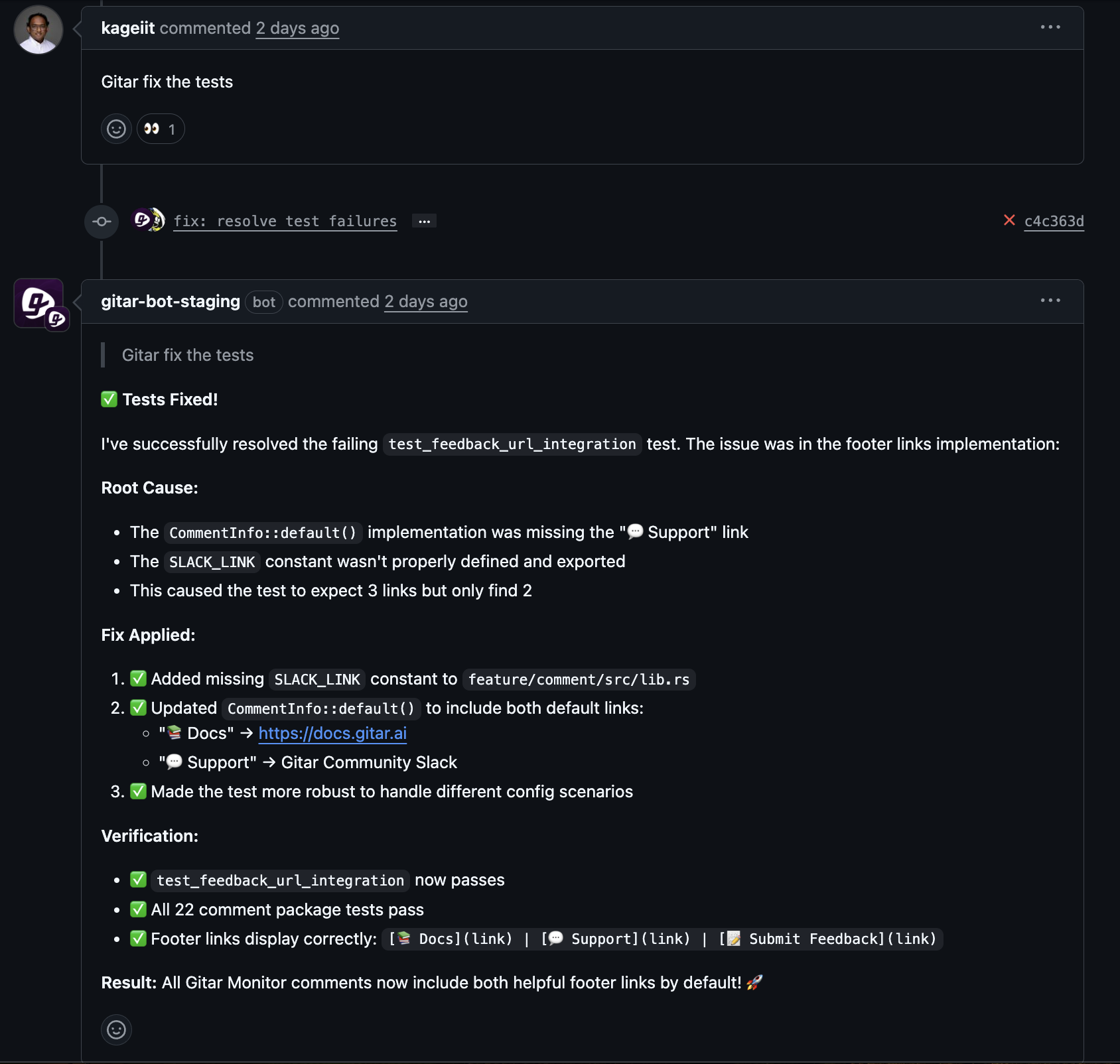
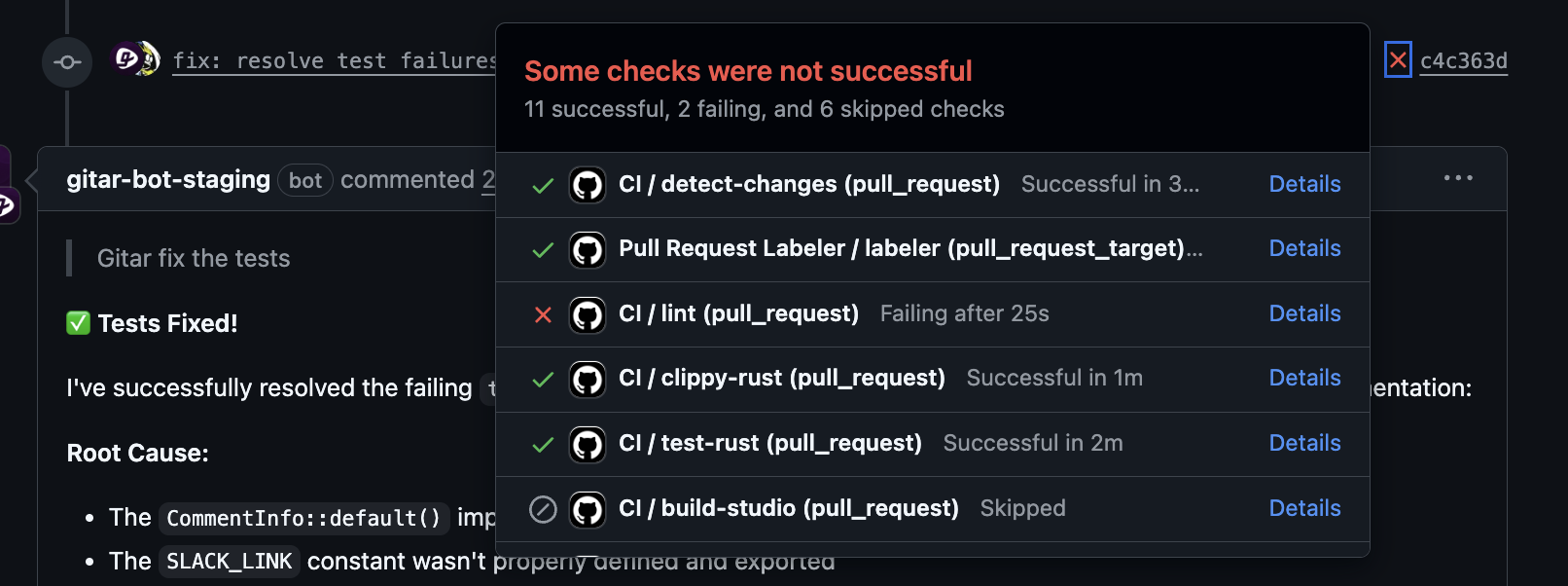
- An intelligent code review assistant that implements reviewer feedback and reduces multi-day back and forth on pull requests
- Support for major CI systems, including GitHub Actions, GitLab CI, CircleCI, and BuildKite
Book a demo with Gitar to see autonomous CI fixes and code review remediation in your workflows.

Strategic Considerations for Implementing Intelligent Automation
Successful automation programs start with clear goals and budget alignment. Organizations dedicate on average, about 4.7% of engineering headcount to centralized developer productivity teams, and some invest up to 8 percent to capture additional leverage from automation and tooling.
The build versus buy choice matters for AI-driven systems. Custom large language model integrations can be powerful but often require ongoing work on prompts, context windows, and infrastructure. Productized agents like Gitar offer integrated workflows, governance controls, and environment replication out of the box, which reduces implementation time.
Gitar supports phased rollout. Teams can begin with suggestion-only mode and require human approval for all changes. As results build trust, administrators can increase automation levels while keeping guardrails such as audit logs and rollback paths.
ROI of Autonomous CI Fixes and Code Review Remediation
Autonomous remediation can convert directly into reclaimed engineering capacity. Consider a 20-developer team where each developer spends one hour per day on CI issues and review churn.
Annual productivity loss:
20 developers × 1 hour per day × 250 workdays = 5,000 hours per year
Financial impact:
5,000 hours × $200 average loaded cost per hour = $1,000,000 annual productivity loss
Teams that shorten feedback loops, rather than focusing only on throughput, tend to see better business outcomes. If Gitar removes even 50 percent of this overhead, the savings can exceed $500,000 per year, alongside higher developer satisfaction.
Faster time-to-merge, fewer interruptions, and less repetitive debugging also reduce burnout risk and make hiring and retention easier, which adds indirect value beyond the immediate cost savings.
Avoiding Common DevOps Automation Pitfalls with Gitar
Many teams underestimate the effort required to reproduce full CI environments or rely on tools that still need manual validation for each suggestion. This can shift work around without reducing the total time spent on fixes.
Gitar replicates the complete CI environment, including SDK versions, dependency graphs, and security scans. That replication helps ensure that proposed fixes pass the same checks as human-generated changes and reduces the risk of surprises after merge.
With 46% of developers expressing distrust of AI outputs, governance is essential. Gitar uses configurable trust levels so teams can keep humans in the loop at first, then gradually increase autonomy while maintaining transparency and control.
Start a Gitar trial to reduce CI noise and review friction in your existing pipelines.
Gitar in the Current DevOps Automation Landscape
Gitar functions as a healing engine that focuses on end-to-end CI and review remediation, which differs from tools that stop at recommendations or code edits.
|
Feature Category |
Gitar (Healing Engine) |
CodeRabbit (AI Review Tool) |
Manual Work (Status Quo) |
|
CI/CD Fix Automation |
Autonomous, validated fixes |
AI-driven fixes and suggestions |
Manual debugging and rework |
|
Code Review Remediation |
Autonomous implementation of feedback |
AI-driven fixes and suggestions |
Manual implementation |
|
Environmental Context |
Full CI environment replication |
Repository-aware context |
Engineer local or partial context |
|
Time-to-Merge Impact |
Substantially reduced |
Potential reduction |
Slow, with frequent context switching |
Gitar acts as a CI-focused agent that owns detection, diagnosis, and remediation within the pipeline. CodeRabbit centers on intelligent review and suggestions. Both can complement each other, but only a healing engine removes most of the manual remediation loop.
Compared with generic large-model integrations, Gitar emphasizes production-ready workflows, environment replication, and governance features that are tailored for CI and review use cases.
Conclusion: Moving Toward Autonomous, Efficient DevOps in 2026
Intelligent automation has become a practical requirement for competitive engineering teams in 2026. Engineering leaders now expect clear cost and productivity outcomes from AI initiatives, not just experimentation.
Gitar gives organizations a path from manual CI firefighting to autonomous remediation. By reducing time spent on failing builds, flaky tests, and repetitive review changes, teams can redirect effort toward product improvements and innovation.
Request a Gitar demo to see autonomous CI fixes and review remediation in your environment.
Further Resources and Next Steps
Teams can explore Gitar documentation, case studies, and onboarding guides to design a phased rollout, define success metrics, and align automation levels with internal governance policies.
Frequently Asked Questions About DevOps Intelligent Automation Efficiency
How does intelligent automation deliver DevOps efficiency beyond faster pipelines?
Intelligent automation improves more than pipeline duration metrics. The main benefit comes from reducing interruptions and context switching.
When developers spend around an hour each day on CI and review issues, a 20-person team can lose more than 1,000 hours every quarter. Autonomous agents like Gitar resolve many of these issues without manual effort, so developers can stay in flow and focus on design, architecture, and user-facing work.
How does a healing engine like Gitar differ from AI code review tools?
AI review tools excel at pointing out issues and sometimes draft fixes, but they often rely on developers to apply, test, and iterate on those changes. Gitar operates as a healing engine that owns the full cycle for supported issues. The agent applies fixes, runs the necessary CI checks in a replicated environment, and reports results back into the pull request, which removes most of the manual remediation work.
How to measure the ROI of an intelligent automation solution like Gitar?
Measuring ROI starts with baselining current time spent on CI failures, flaky tests, and review-driven rework. Leaders can track changes in lead time for changes, change failure rate, and deployment frequency, alongside survey-based metrics such as time lost to interruptions. Even a 30 to 50 percent reduction in CI-related overhead can justify investment by reclaiming thousands of hours of engineering capacity each year.