
Key Takeaways
- Developer productivity in GitLab often stalls on CI failures and code reviews, not on writing code.
- Self-healing pipelines use AI agents to diagnose and fix CI issues automatically, reducing context switching and delivery delays.
- Developer workflow acceleration platforms differ from basic AI suggestion tools by applying and validating fixes inside real GitLab CI environments.
- A structured rollout with clear metrics, trust safeguards, and change management enables safe adoption of autonomous CI for enterprise teams.
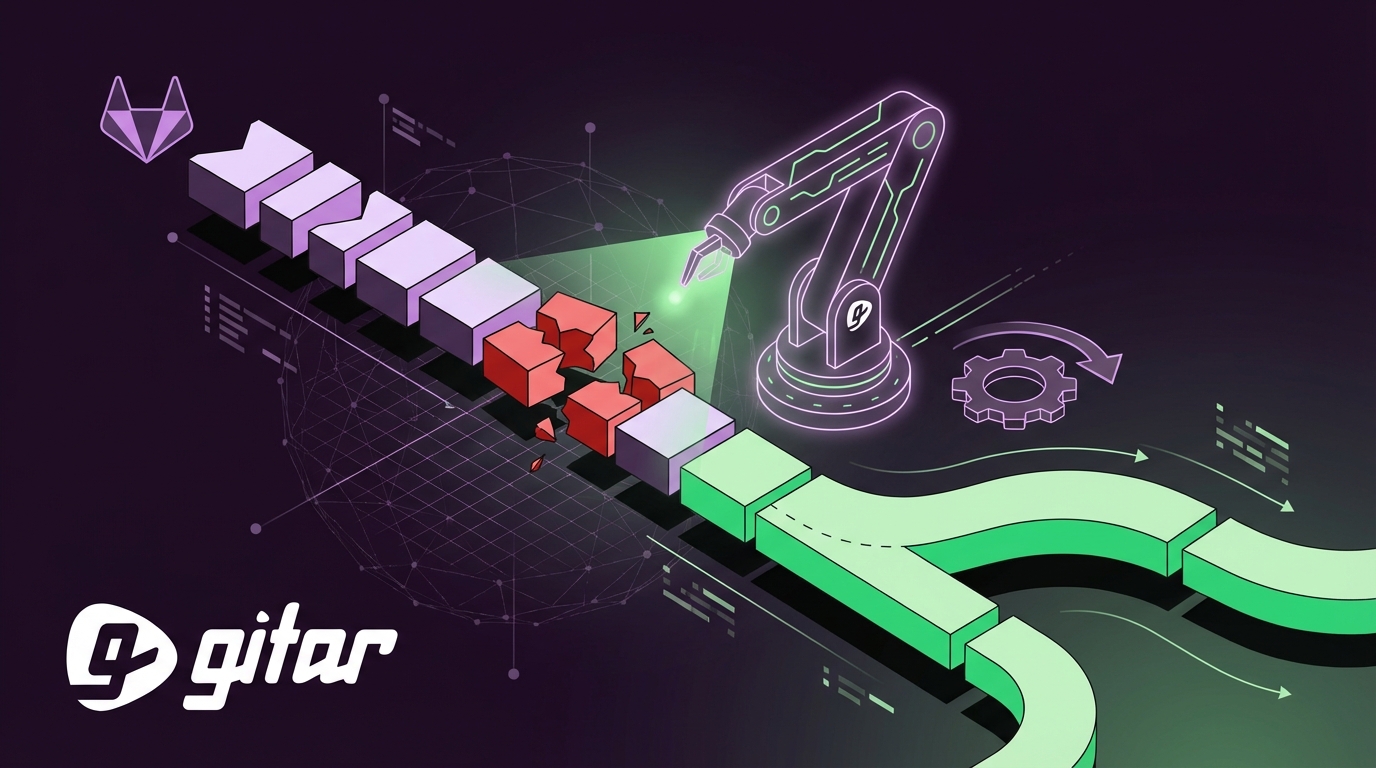
- Gitar automatically fixes broken GitLab CI builds and review feedback so developers can ship faster with fewer interruptions.
The Evolving Landscape of GitLab CI: Why Acceleration Is Key for 2026
The Developer Productivity Crisis in GitLab
Modern GitLab teams face a growing productivity drain from constant context switching. Developers push merge requests, start new work, then get pulled back by CI failures or review comments. Each interruption breaks focus, so a quick fix often consumes far more time than the issue suggests.
Faster code generation with tools like GitHub Copilot creates many more merge requests and CI runs. Developers can spend up to 30 percent of their time on CI and review issues, which can cost about one million dollars per year for a 20-developer team. The main bottleneck has shifted from writing code to validating and merging it.
Industry Trends Driving Demand for Self-Healing CI
High-performing GitLab teams now operate with aggressive delivery expectations. Elite teams ship multiple times per day with lead times under one day, which requires consistent automation and rapid feedback.
Modern pipelines increasingly rely on AI. AI-assisted workflows support automated testing on every integration, fast feedback, and automatic alerts. Machine learning now supports predictive test selection and automated failure diagnosis in CI pipelines. At the same time, expectations for quality and reliability have risen, turning robust CI/CD into a core requirement. Gitar fits into this shift by automatically fixing broken GitLab builds so teams keep velocity without sacrificing quality.
Defining Developer Workflow Acceleration Platforms: The Shift to Autonomous Resolution
Beyond Traditional CI/CD Tools
Developer workflow acceleration platforms mark a shift from detection to resolution. Traditional CI/CD tools report what is broken and notify the team. The actual fix still depends on manual effort, which introduces delays and context switching.
The idea of self-healing CI aligns with DevOps trends that emphasize AI agents to scale delivery safely and efficiently. These platforms not only recommend changes but also implement, validate, and commit fixes automatically, turning reactive maintenance into proactive resolution.
Key Capabilities That Accelerate GitLab CI
End-to-end fixing keeps developers focused on feature work. Advanced platforms propose code changes, apply them, run the full GitLab CI workflow, and surface ready-to-merge branches.
Accurate environment replication gives autonomous agents the same context a human would use. Complex GitLab setups include language runtimes, SDK versions, monorepo builds, and external integrations. Effective platforms emulate this environment, so fixes match real-world conditions.
Cross-platform flexibility with deep GitLab integration matters for teams that use multiple CI systems. These platforms support GitHub Actions or CircleCI while still integrating deeply with GitLab merge requests, approvals, and collaboration flows.
Gitar: Autonomous AI for Self-Healing GitLab CI Pipelines
How Gitar Creates Self-Healing CI for GitLab
Gitar focuses on the work that slows GitLab teams the most: fixing CI failures and addressing review feedback. The platform acts as an autonomous agent inside GitLab merge requests, turning many manual clean-up tasks into background automation.
Instead of stopping work to debug a red pipeline, developers see Gitar identify failures, apply fixes, and validate them in the existing GitLab CI workflow. The result is a GitLab experience that feels self-healing instead of reactive.
How Gitar Works Inside Your GitLab CI Pipeline
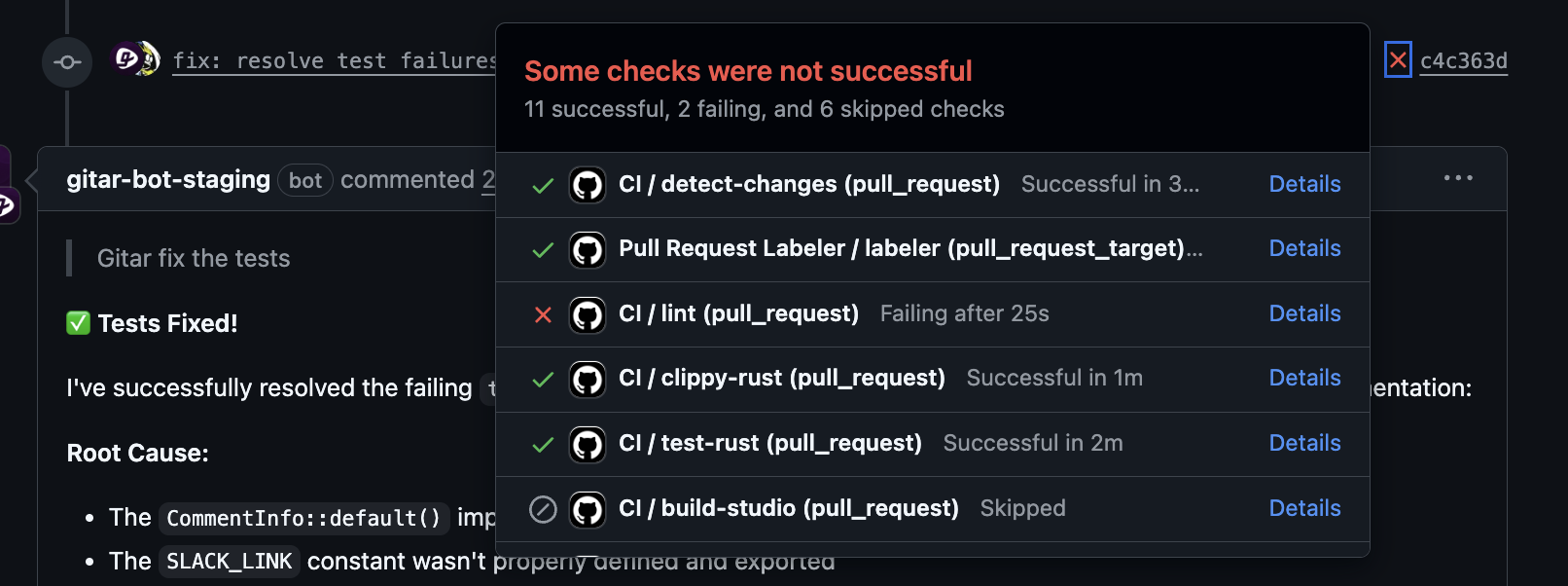
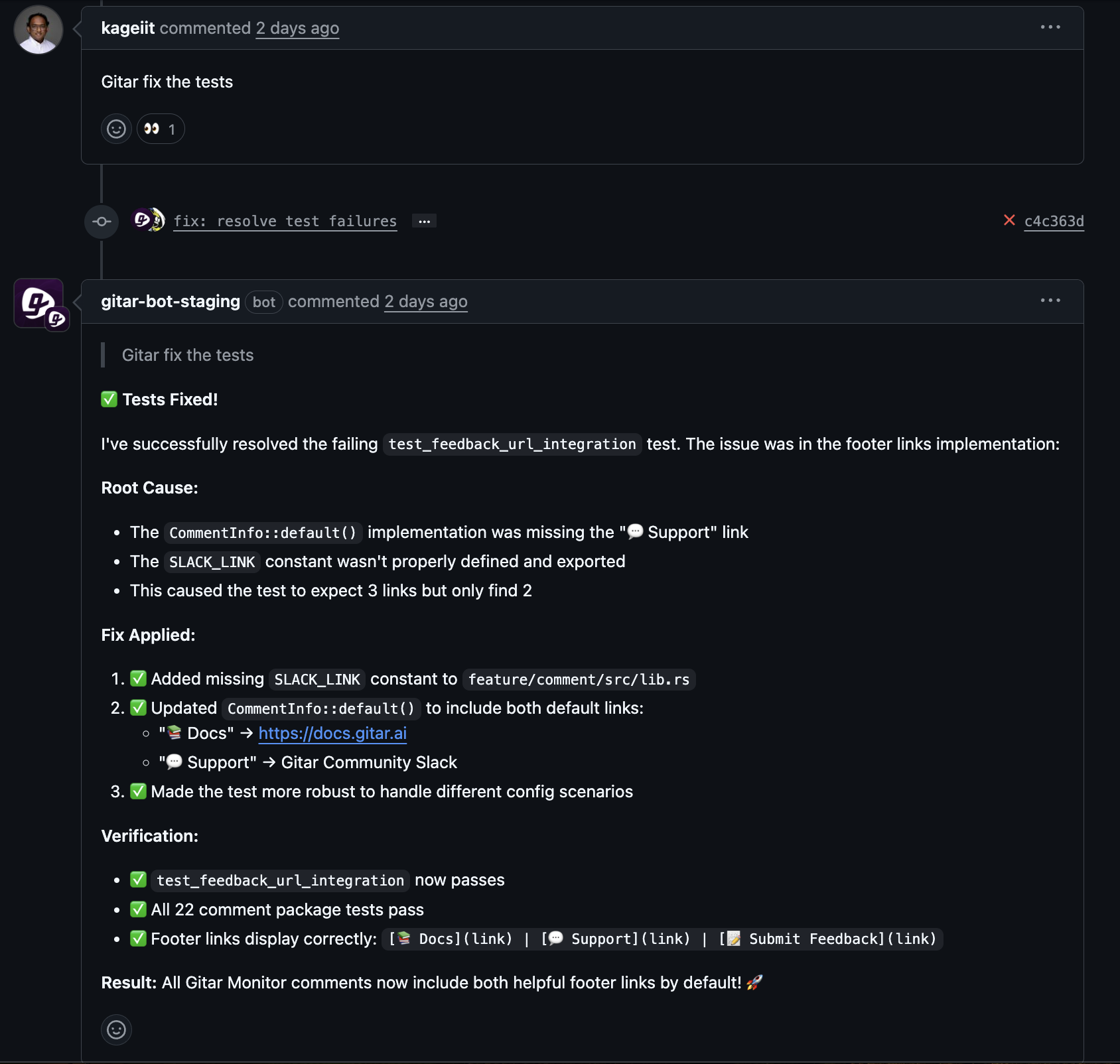
When a GitLab CI check fails because of lint errors, tests, or build problems, Gitar analyzes logs to locate the root cause. The agent proposes precise code changes, commits them to the merge request branch, and runs the pipeline again to confirm the fix.
This workflow covers frequent GitLab CI issues such as formatting violations, broken assertions, outdated snapshots, dependency conflicts, and script errors. Many failures are resolved before the developer revisits the merge request.
Key Features for GitLab Teams
Automated CI fixing removes much of the repetitive toil. Gitar edits code to resolve linting, formatting, build, and test errors directly in GitLab merge requests.
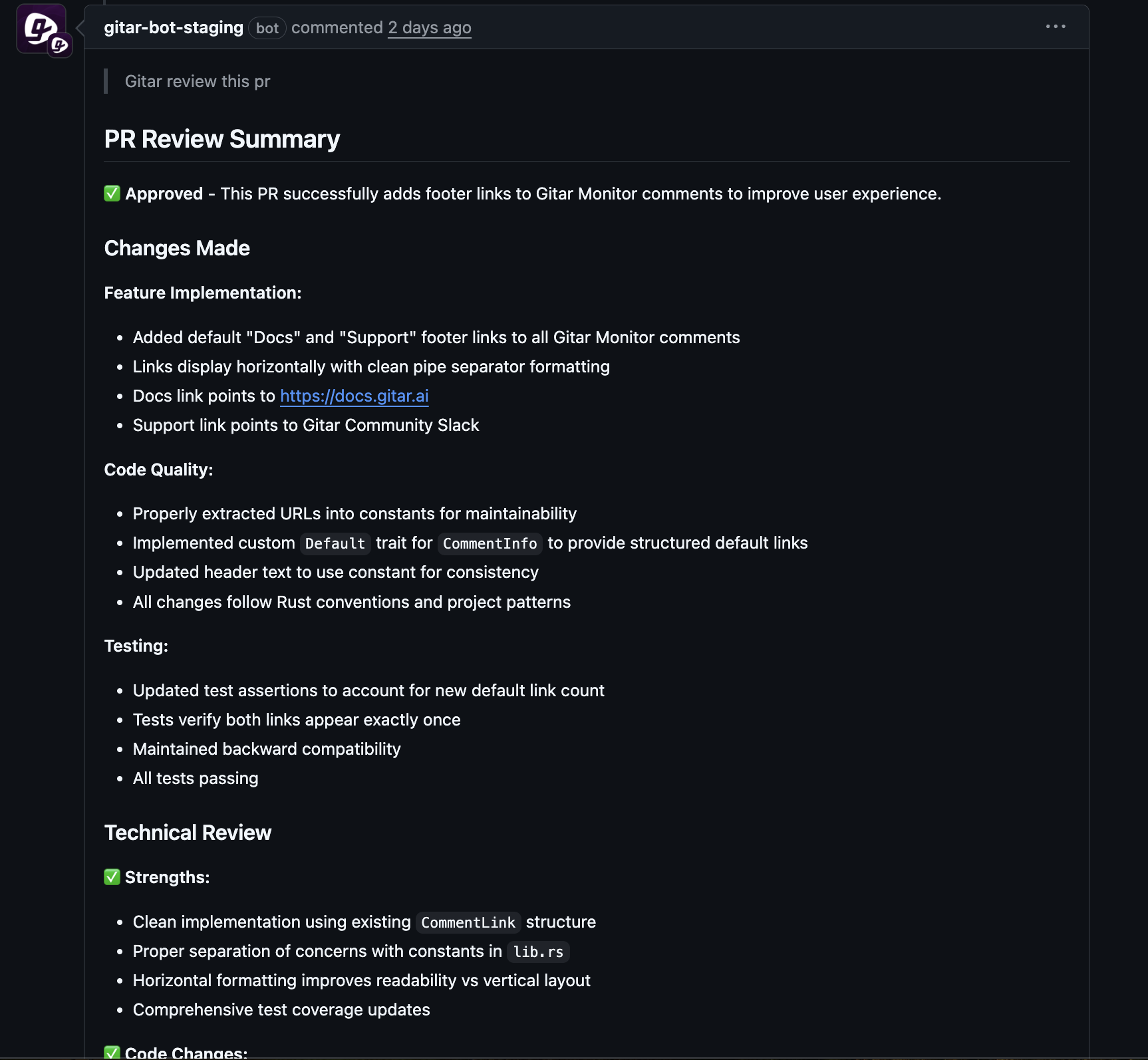
Intelligent code review assistance supports reviewers. Team members can mention Gitar for an initial AI review or leave comments that instruct Gitar to apply specific changes and push commits.
A configurable trust model lets teams control automation. Teams can start with suggestion-only behavior, move to one-click approvals, then adopt auto-commits with rollback as trust grows.
Strategic Considerations for Integrating Workflow Acceleration into GitLab
Build vs. Buy for GitLab CI Automation
In-house AI agent development demands skills that most product teams do not want to staff. Teams must design agent orchestration for many pipelines and users, handle events that arrive out of order, and coordinate work across parallel stages.
State management, memory, and real-time event processing add still more complexity. For many organizations, a dedicated platform purpose-built for GitLab CI automation offers lower risk and faster value than building a custom system.
Managing Organizational Change for Autonomous CI
Autonomous code changes affect trust, ownership, and review practices. Effective CI/CD programs depend on close collaboration among development, operations, and security teams, so alignment is essential.
Teams that succeed usually start in a conservative mode. Developers review suggestions, approve small fixes, and gain confidence from real examples. Over time, teams expand automation to more repositories and failure types.
Measuring Success and ROI in GitLab
Concrete metrics keep the program grounded. Deployment frequency, lead time for changes, change failure rate, and mean time to recovery provide a clear view of CI health.
Teams can also track time lost to CI-related context switching, merge request cycle times, and developer satisfaction. Many organizations see immediate improvements in flow and long-term gains in throughput and morale.
Implementation Roadmap: Moving to Autonomous GitLab CI with Gitar
Phase 1: Installation and Trust Building
Rollout starts with a simple setup. Gitar is authorized as an application in GitLab and connected to existing CI configurations. Teams choose conservative defaults that keep developers in full control of code changes.
During this phase, teams define project-level rules for the kinds of failures Gitar should address and how it should respond. The Gitar dashboard then helps fine-tune the scope by repository and error type.
Phase 2: First Wins and Scaling Confidence
Many teams experience a clear turning point the first time Gitar silently fixes a lint error or flaky test and pushes a passing commit. That small win shows how much time automation can return to the team.
As successful fixes accumulate, some repositories shift to auto-commit for low-risk changes, while critical services retain manual review. This approach lets teams match automation levels to risk tolerance.
Phase 3: Advanced Workflows for GitLab-Centric Teams
Mature rollouts connect Gitar deeply into the review process. Senior engineers can leave structured comments that describe the desired change, then rely on Gitar to implement and validate the update.
Distributed teams benefit in particular. Reviewers can leave feedback at the end of their day and find fixes already applied and validated when they return, which reduces delays from time zones and handoffs.
Comparing Developer Workflow Acceleration Options for GitLab CI
Tools in this space fall into two broad categories: suggestion engines that help humans decide what to change, and healing engines that complete the entire fix-and-validate loop within CI.
|
Feature |
Gitar (Healing Engine) |
AI Code Reviewers |
On-Demand AI Fixers |
|
Core functionality |
Automatically fixes and validates issues |
Provides review suggestions with partial automation |
Generates fix suggestions on request |
|
GitLab CI integration |
Replicates the full GitLab CI environment |
Focuses on code review with limited CI insight |
Runs as manual jobs or scripts in GitLab CI |
|
Fix application |
Commits and re-runs pipelines |
May apply some fixes, but often needs manual action |
Requires developers to apply changes |
|
Automation level |
High, self-healing behavior |
Moderate, assists reviewers |
Low, triggered case by case |
Healing engines like Gitar close the loop from detection to validated fix. Developers spend less time chasing red pipelines and more time on meaningful work.
Strategic Pitfalls to Avoid in GitLab CI Acceleration
Skipping Organizational Readiness Work
Teams that introduce autonomous CI without clear expectations often see pushback. Success depends on transparent guidelines, communication, and opt-in paths that let teams gain confidence gradually.
Relying Only on Suggestion Engines
AI code suggestions still require human effort to implement and validate changes. That approach can leave the context-switching problem largely intact.
Ignoring Environment Complexity
Enterprise GitLab CI setups include intricate dependencies and integrations that generic AI tools struggle to handle. Platforms that cannot mirror the real environment often produce noisy or incorrect fixes.
Prioritizing Speed Over Reliability
Pipeline acceleration must respect security and compliance needs. Autonomous capabilities work best when they embed security and governance into the workflow. Ignoring reliability in the name of speed usually increases long-term risk.
Frequently Asked Questions (FAQ) about Accelerating GitLab CI
How does Gitar handle complex enterprise GitLab CI environments?
Gitar emulates the complete GitLab environment, including language runtimes, SDK versions, dependencies, and third-party tools. This context allows Gitar to propose fixes that match the behavior of the real pipeline instead of generic code samples.
How is Gitar different from AI code reviewers for GitLab?
AI code reviewers focus on commenting and suggesting improvements. Gitar operates as a healing engine that applies fixes, re-runs GitLab CI, and surfaces passing merge requests whenever possible, which reduces manual clean-up work.
How can engineering leaders measure the ROI of workflow acceleration in GitLab?
Leaders can watch standard GitLab CI metrics such as deployment frequency, lead time, change failure rate, and mean time to recovery. They can also measure time spent on CI firefighting and context switching. For many teams, automated fixing represents a large, measurable productivity gain.
What options exist if a team does not yet trust fully automated fixes?
Gitar supports multiple automation levels. Teams can start with suggestion-only behavior in merge requests, require human approval for all fixes, and adopt more autonomous modes only after they see consistent, high-quality results.
How does Gitar align with existing GitLab security and compliance practices?
Gitar works inside standard GitLab merge requests and CI workflows. It respects existing approvals, security scans, and compliance checks, so any fix must still pass the same gates as a human change.
Conclusion: Moving GitLab CI Toward Self-Healing Pipelines
GitLab teams now operate in an environment where automation and AI are central to delivery performance. Modern CI/CD platforms already highlight efficiency with built-in dashboards and metrics, and AI in data and software pipelines has shown significant productivity gains.
Self-healing CI turns common GitLab failures into background tasks handled by autonomous agents. Teams that adopt developer workflow acceleration platforms reduce manual toil, shorten feedback loops, and improve reliability without burning out developers. Install Gitar to evolve your GitLab CI into a self-healing pipeline and free your developers to focus on the work that moves your product forward.