
Key Takeaways
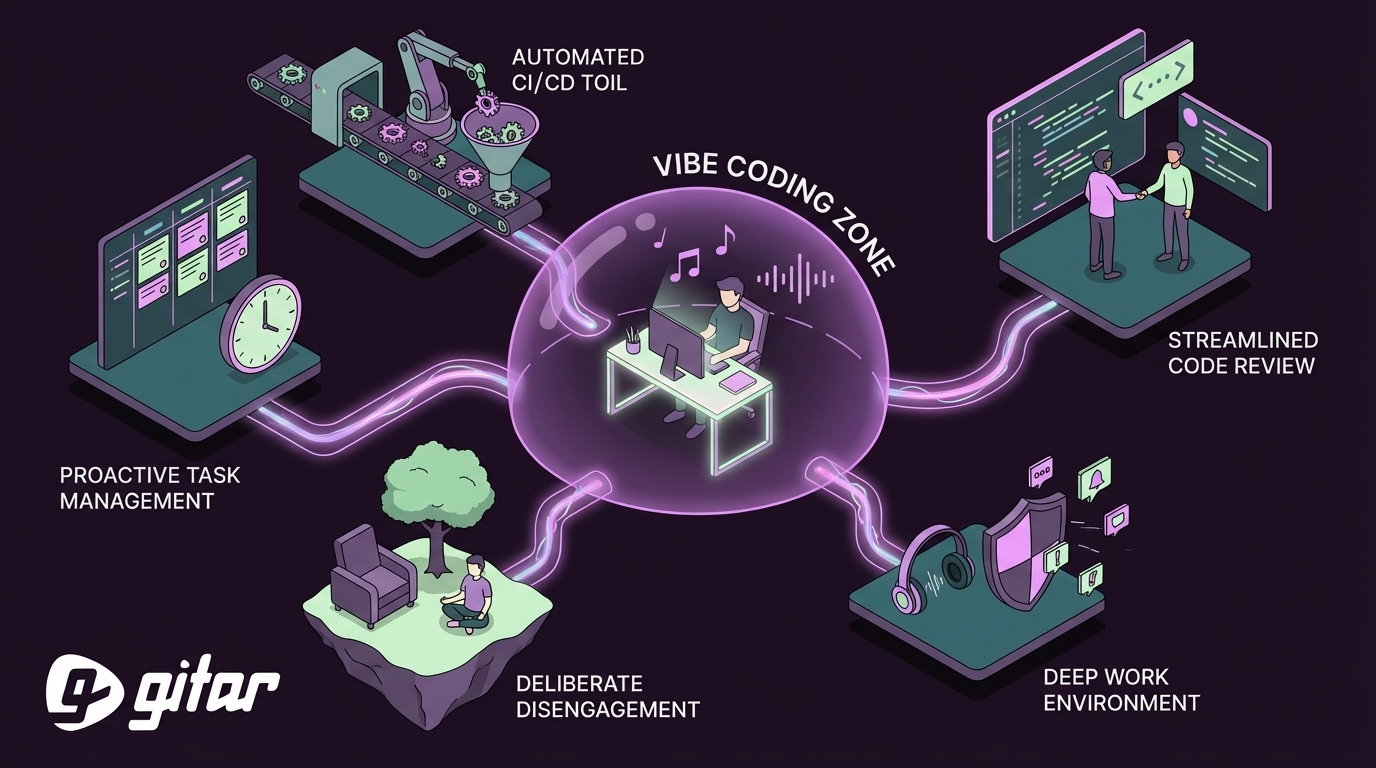
- Context switching from CI issues and code reviews drains developer focus and can prevent sustained “vibe coding” sessions.
- Structured task management and intentional deep-work blocks help reduce mental fragmentation and preserve cognitive resources.
- Automation in CI/CD, especially for repetitive failures and minor fixes, protects developer attention for more complex work.
- Deliberate breaks and an environment designed for focus reduce burnout risk and support consistent performance over time.
- Teams can conserve mental energy and keep builds green by using autonomous tools like Gitar; install Gitar to automatically fix broken builds.
The Hidden Cost: Why Developer Mental Energy Conservation Is Critical for Vibe Coding
Frequent context switching from inefficient CI/CD pipelines, unclear ownership, and fragmented deployments forces developers to bounce between code, configs, logs, and builds. Each shift creates a context switching tax that makes refocusing harder.
It can take about 23 minutes to regain focus after a single interruption, and developers switch tasks 59% of the time, with 29% of interrupted tasks never resumed. This pattern fragments work, increases fatigue, and lowers code quality. Reducing these interruptions is central to protecting mental energy and maintaining a stable “vibe coding” flow.
5 Developer Mental Energy Conservation Techniques for Vibe Coding
Technique 1: Use Proactive Task Management To Limit Context Switching
Developers protect their attention when they reduce unplanned jumps between tasks. Frequent switching fragments work and accelerates fatigue, and the brain must recalibrate with each change.
Tactical implementation:
- Group similar tasks into blocks, such as dedicated windows for code reviews, planning, or email, instead of reacting in real time.
- Schedule deep-work intervals with time-blocking or simple timers so coding sessions stay uninterrupted.
- Use clear priorities in tools like Jira or Asana to define scope and reduce the need to reevaluate work throughout the day.
- Set “Do Not Disturb” periods and share them with your team to lower the risk of mid-flow interruptions.
Technique 2: Automate Repetitive CI/CD Toil To Protect Cognitive Load
Repeated CI failures break coding flow by sending developers into loops of debugging minor issues, rerunning pipelines, and parsing logs. Routine problems like lint errors or flaky tests consume attention that could go toward complex work.
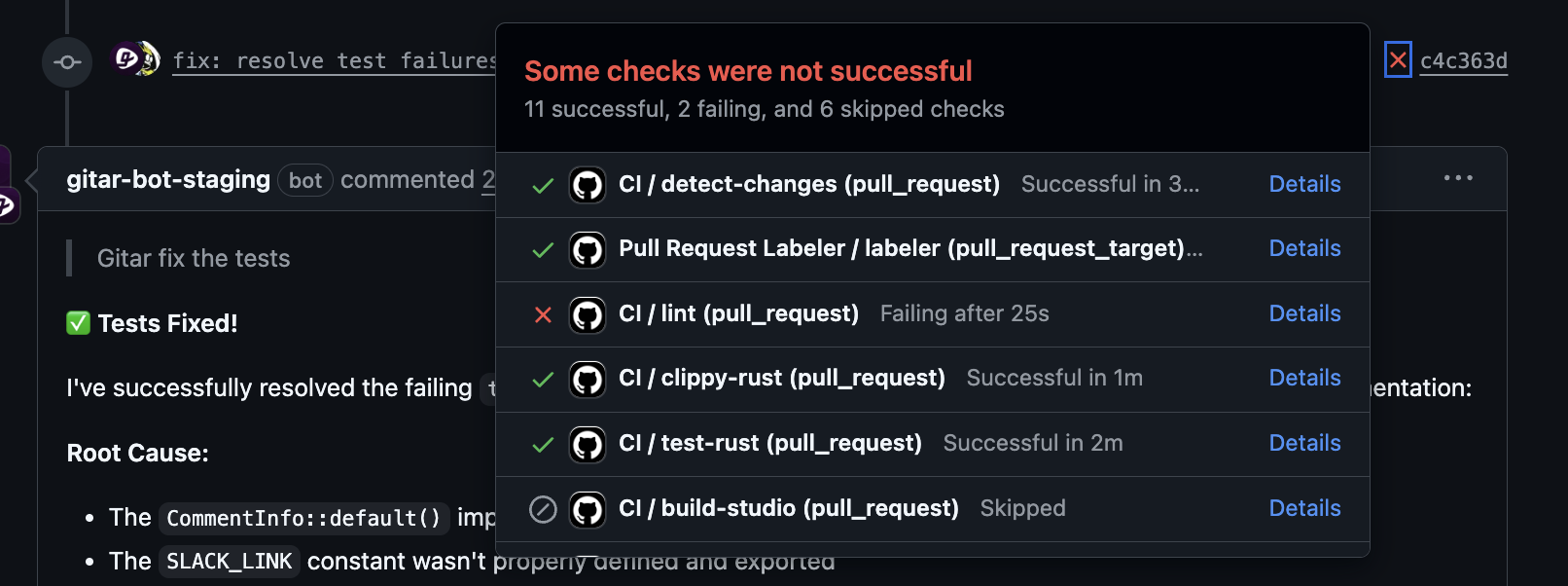
The autonomous AI agent Gitar analyzes CI logs, identifies issues such as formatting problems or certain failing tests, generates code fixes, and commits them directly to the PR branch. Developers can then stay focused on feature work instead of chasing small build breaks.
Tactical implementation:
- Apply automated linting and formatting in pre-commit hooks or CI to handle style issues without manual edits.
- Use Gitar as a self-healing layer in CI so common failures are diagnosed and fixed without developer intervention.
- Automate routine snapshot test updates and basic dependency checks so these tasks do not interrupt active coding sessions.
Technique 3: Streamline Code Review Workflows To Reduce Fragmentation
Code reviews are vital but often introduce delay, back-and-forth changes, and small fixes that disrupt focus. Distributed teams experience even longer cycles, which stretches a simple change over several days.
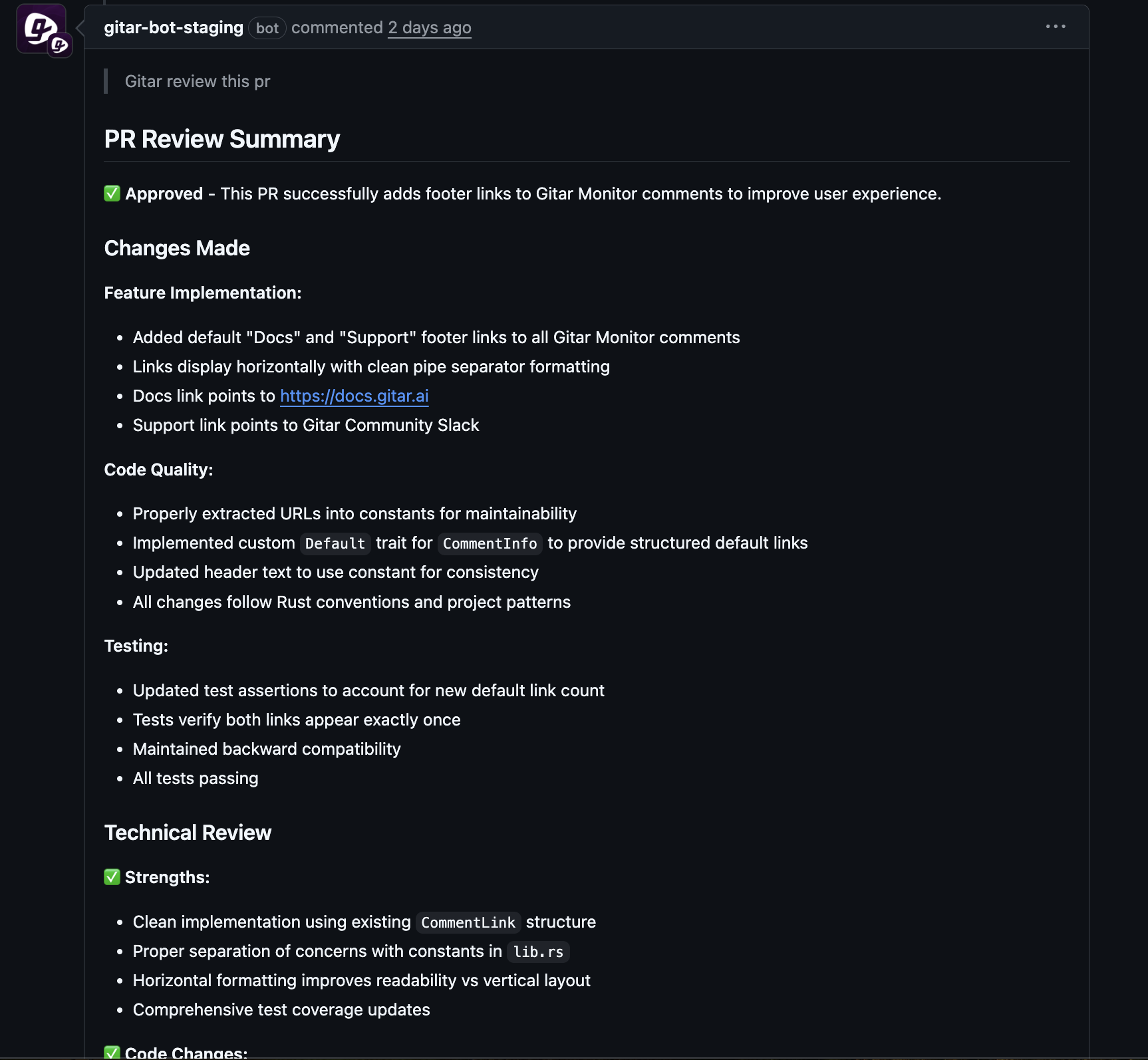
Clear, asynchronous workflows and targeted automation reduce the cognitive load of reviews. Gitar can support both reviewers and authors by summarizing changes, suggesting improvements, and applying requested edits.
Tactical implementation:
- Request specific, actionable comments instead of general feedback that requires meetings to clarify.
- Use AI assistants for first-pass review summaries and initial issue detection.
- Ask Gitar to implement review suggestions directly on the PR so developers do not need to revisit small, mechanical edits.
Technique 4: Use Deliberate Disengagement To Recharge Mental Energy
Continuous work, especially with frequent context switching, reduces mental energy and slows delivery. Developers who skip breaks face higher burnout risk and reduced creativity.
Deliberate disengagement means planning recovery time so the brain can reset between demanding tasks.
Tactical implementation:
- Insert short breaks every 60–90 minutes to stand, stretch, or briefly shift attention.
- Take a real lunch away from the desk and add light movement where possible.
- Use basic mindfulness or breathing exercises to clear residual thoughts before returning to complex work.
- Set boundaries on after-hours messages so personal time supports full recovery.
Technique 5: Design an Environment That Supports Deep Work
Developers who juggle multiple tasks can lose 20% productivity from focus shifts, and loss per task can reach 40%. A noisy or cluttered environment increases this load by forcing constant filtering of distractions.
An environment that supports deep work removes avoidable stimuli and clarifies communication expectations, which lowers mental overhead.
- Silence nonessential notifications during focus blocks and rely on status indicators to signal availability.
- Keep the workspace clean and organized to reduce visual noise.
- Use noise-canceling headphones or neutral background sound for consistent audio conditions.
- Set team norms on channels and response times so developers can plan uninterrupted coding windows.
- Add Gitar to handle CI failures in the background and reduce surprise interruptions from broken builds.
Comparison: Boosting Developer Mental Energy in CI/CD Workflows
|
Feature |
Manual Fixing (Status Quo) |
Suggestion Engines (e.g., CodeRabbit) |
Gitar (Autonomous CI Fixer) |
|
CI Failure Resolution |
Developers investigate logs, debug, and write fixes by hand. |
Tool suggests fixes; developers still apply and validate changes. |
Agent analyzes logs, generates fixes, and validates them in CI. |
|
Code Review Feedback |
Reviewers write comments and authors manually implement them. |
Tool proposes edits and optional assisted changes. |
Agent applies requested changes on instruction and updates the PR. |
|
Developer Context Switching |
Very high, with frequent returns to past branches and builds. |
Moderate, with some in-IDE help but ongoing manual follow-up. |
Low, because many failures resolve without developer action. |
|
Mental Energy Conservation |
Low, due to constant reactive work. |
Moderate, with partial automation. |
High, with routine CI toil offloaded to automation. |
Frequently Asked Questions (FAQ)
Q: How much productivity do developers lose to context switching and CI issues?
A: Refocusing after an interruption can take more than 20 minutes, so each context switch carries a noticeable cost. When CI failures and review delays stack up, teams can lose a meaningful share of weekly capacity to rework and pipeline babysitting instead of feature delivery.
Q: How is Gitar different from typical AI code review tools for mental energy conservation?
A: Many AI tools act as suggestion engines that highlight issues and propose fixes, but they still rely on developers to apply changes and rerun CI. Gitar acts as a healing engine that applies fixes, runs the pipeline, and keeps builds green, which reduces manual toil and the need to return to old branches.
Q: Does using autonomous CI fixes remove developer control?
A: Gitar uses a configurable trust model so teams can choose how much autonomy to grant. Teams can start with suggestion-only mode, review changes, and then move toward auto-commit workflows once they are comfortable. Developers keep oversight while benefiting from reduced manual maintenance work.
Conclusion: Use Automation To Protect Developer Vibe Coding
Interruptions from CI failures and drawn-out code reviews steadily drain developer mental energy and make consistent “vibe coding” difficult. Structured task management, deliberate breaks, and an environment built for deep work all help reduce that load.
A stronger effect comes from removing repetitive CI and review toil with automation. Gitar turns many routine failures into background tasks instead of urgent context switches, which frees attention for design and problem-solving.
Install Gitar to automatically fix broken builds and help your team conserve mental energy in 2026.