
Broken CI pipelines cost organizations money every minute they remain unresolved. Failing tests lead to $61 billion in annual losses for the enterprise software market, and software bugs have caused $2.6 trillion in damages over the past 25 years. Beyond technical issues, these numbers highlight a critical financial challenge in a competitive environment where development speed often defines success.
Manual CI/CD processes create hidden expenses that go beyond developer wages. A failed pipeline delays product launches, frustrates customers, misses revenue goals, and exhausts engineering teams. These disruptions don’t just affect current work; they build up over time, creating inefficiencies that slow down business growth.
This article explains how automating CI pipeline fixes with AI tools like Gitar cuts financial risks for engineering teams. You’ll see the real costs of manual CI/CD processes, learn how self-healing CI approaches address these issues, and uncover data showing how less downtime leads to clear financial gains and better business results.
The Cost of Manual CI/CD Downtime: A Financial Burden
Lost Developer Productivity: Breaking the Workflow
Manual CI fixes drain resources far beyond the time spent debugging. Developers spend 26% of their time reproducing and fixing failing tests, which leads to significant value loss for organizations each year. This isn’t just about hours lost; it delays innovation and weakens competitive standing.
Context switching adds to the expense. When developers stop focused work to fix CI failures, productivity drops for longer than the actual repair time. A team of 20 developers losing one hour daily to CI issues can face losses near $1 million yearly, based on a $200 hourly rate including benefits. This only covers direct time costs, not the reduced code quality, missed innovation, or features left undeveloped.
The mental strain also affects finances. CI failures disrupt focus, lower creativity, and reduce job satisfaction. Teams may shy away from bold projects as a result, limiting growth potential for the organization.
Ready to cut financial risks from CI downtime? Install Gitar now to fix broken builds automatically and ship software faster.
Delayed Market Entry: Losing Revenue and Edge
Delays in reaching the market pose a sharp financial risk with manual CI processes. Around 60% of companies face project setbacks due to CI issues, directly hitting revenue and market position. In a fast-paced tech world, missing a key feature launch can hand market share to quicker rivals.
These delays affect more than just immediate sales. Marketing plans get pushed back, customer trust needs rebuilding, and sales teams lose drive. Over half of organizations could release software 1-2 days faster if test reproducibility wasn’t a barrier, showing how technical delays turn into missed business opportunities.
For distributed teams, delays grow worse. Time zone differences can turn quick CI fixes into days of waiting, slowing project delivery. This coordination challenge multiplies the financial impact of every failure.
Unreliable Pipelines: The Price of Flaky Tests
Untrustworthy CI pipelines damage the entire development process. About 59% of developers deal with flaky tests at least monthly, wasting time on debugging and shaking confidence in automation. Without trust in CI systems, teams fall back on manual methods that don’t scale and raise costs.
Another issue is test suite reliability. 83% of surveyed teams struggle to keep test suites passing, spending an average of 13 hours to resolve one failure. This shows a deep reliability problem in modern engineering setups. Accepting test failures as normal leads to workarounds that build technical debt and increase upkeep costs.
The impact reaches beyond engineering. Unreliable pipelines hurt developer motivation and overall output. Companies with shaky CI/CD setups also face higher hiring costs and staff turnover, adding to financial strain.
Solving Downtime with Gitar: Self-Healing CI in Action
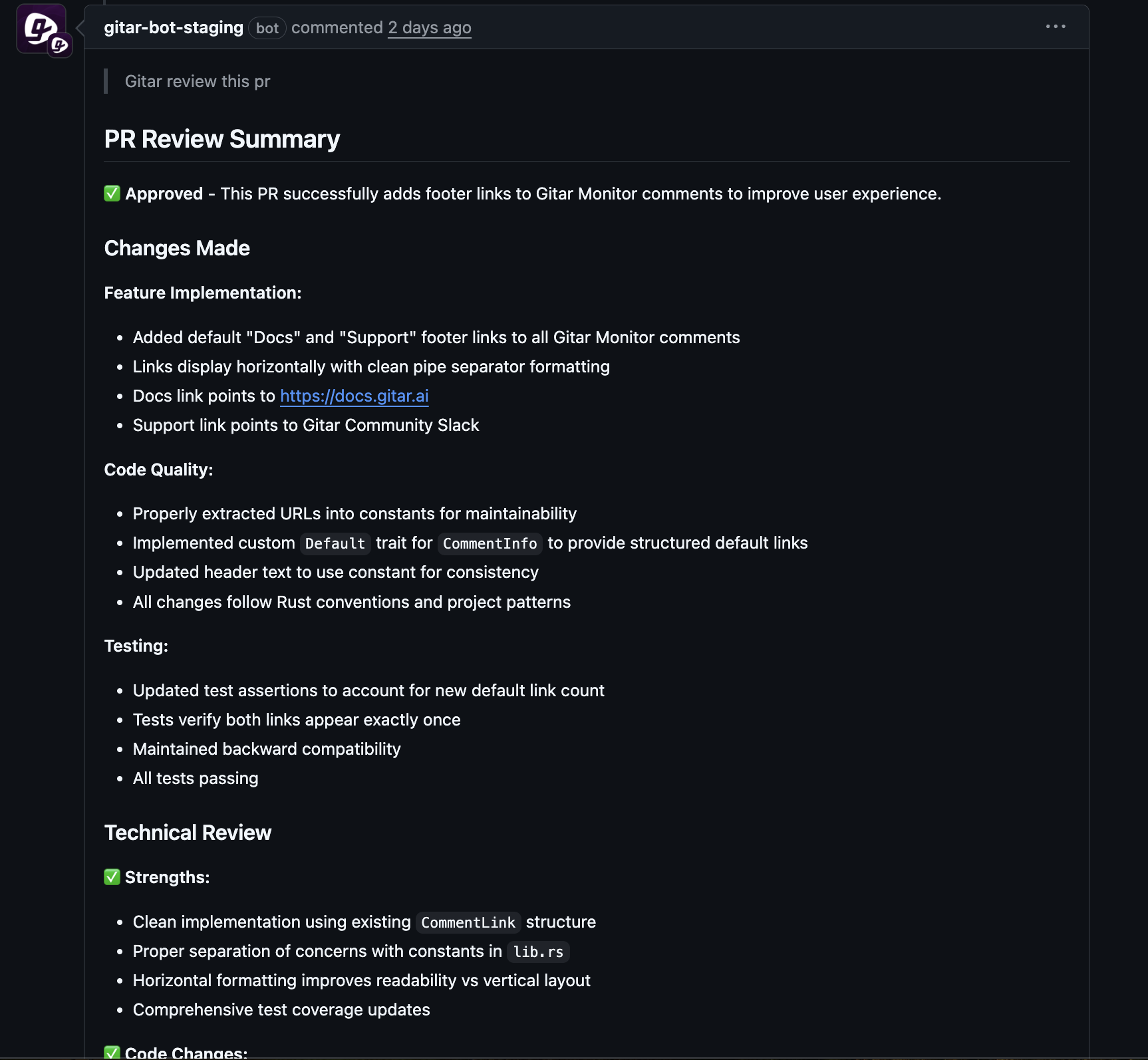
Gitar changes CI pipeline management by acting as an AI agent that automates fixes instead of leaving them to manual effort. Unlike tools that just flag issues, Gitar resolves problems with full awareness of the environment, cutting financial risks tied to downtime.

Key features of Gitar include:
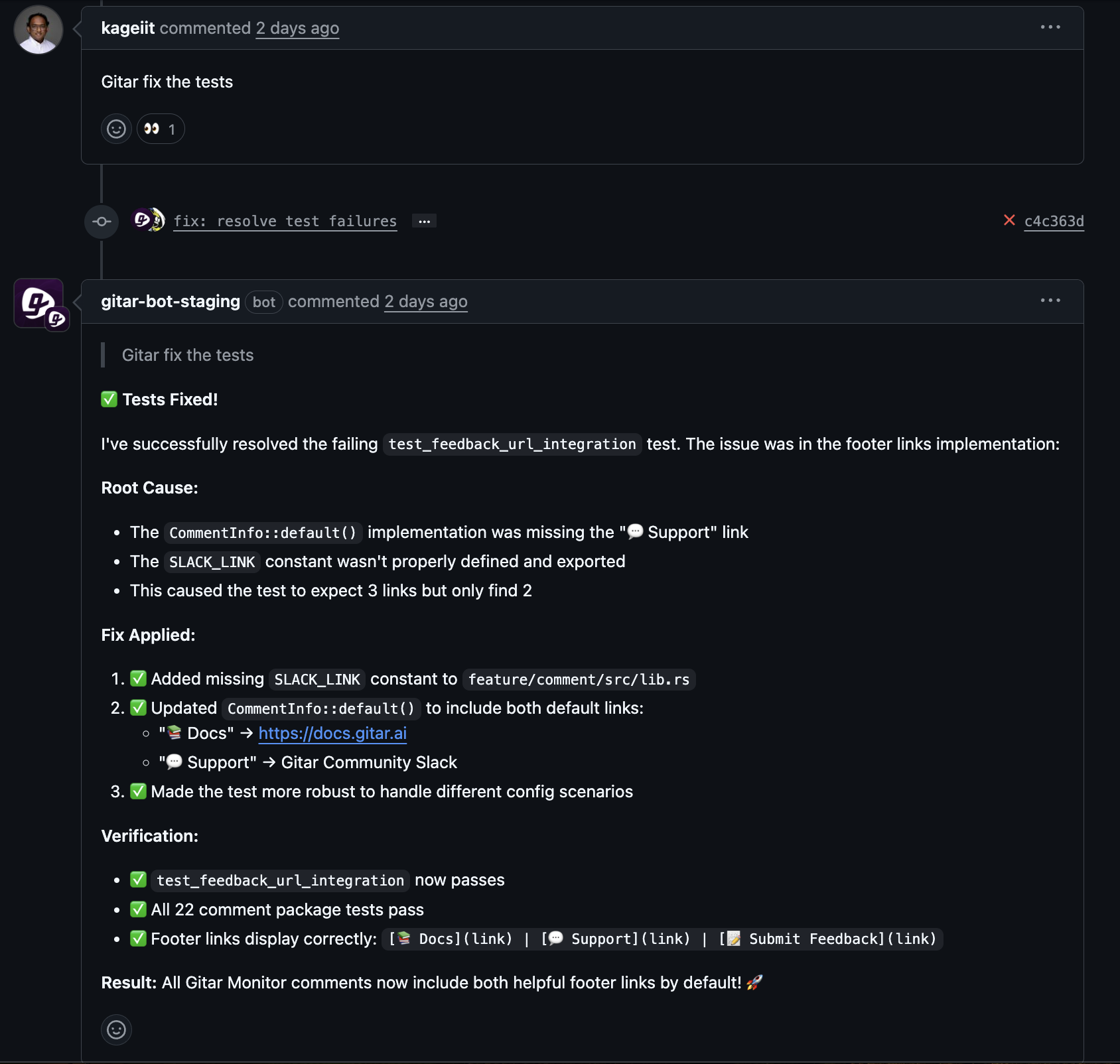
- Complete Fix Automation: Gitar applies fixes, tests them across full CI workflows, and ensures all jobs pass before delivering completed pull requests, reducing manual work.
- Environment Matching: It mirrors complex enterprise setups, handling specific JDK versions, multi-SDK dependencies, and third-party tools like SonarQube or Snyk for accurate fixes.
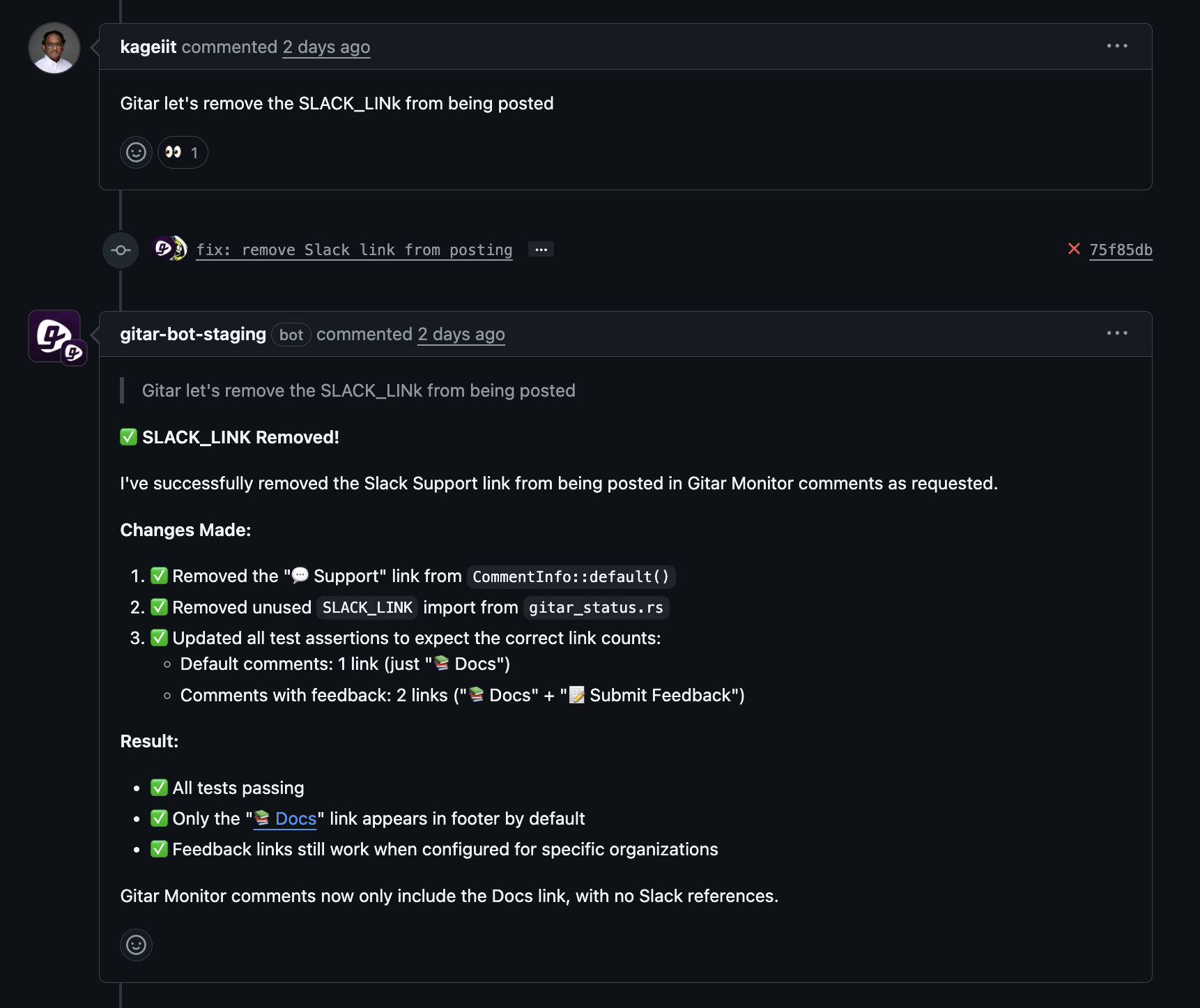
- Code Review Support: Gitar handles feedback directly, speeding up resolutions and easing delays for distributed teams by acting on reviewer instructions.
- Adjustable Trust Settings: Teams can start with fix suggestions for approval and move to full auto-commits with rollback options, building trust at their own pace.
- Platform Compatibility: Gitar works with GitHub Actions, GitLab CI, BuildKite, CircleCI, and more, supporting varied tech stacks.
Gitar targets the main cause of CI financial risks: the delay between spotting a failure and fixing it. By shortening this gap, organizations keep development moving and cut costs from manual debugging and workflow interruptions.
Improve your CI pipeline reliability now. Install Gitar to fix broken builds automatically and ship software faster.
Clear ROI from Gitar: How Less Downtime Saves Money
Boosting Developer Focus on Core Work
Gitar automates fixes for CI failures and code review comments, freeing developers from repetitive debugging that can take up to 30% of their day. This lets them stay focused on high-impact tasks that drive growth.
The financial benefit is easy to calculate. A 20-developer team spending one hour daily on CI or review issues could save about $500,000 yearly with 50% automation effectiveness. This assumes just one hour lost per day; many teams spend much more.
These time savings also support bigger goals. With CI issues handled, developers can tackle architectural upgrades, reduce technical debt, and build features that sharpen competitive advantage.
Speeding Up Market Delivery for Better Revenue
Gitar’s self-healing pipelines cut delays from initial commit to final merge, speeding up feature delivery. This matters since 60% of companies report CI problems slowing down projects and affecting income.
The speed gain builds over time. Automated CI fixes allow more frequent deployments, helping teams react quickly to market needs and customer input. Faster integration means business agility, with shorter cycles to counter competitors.
Improving Pipeline Stability to Cut Costs
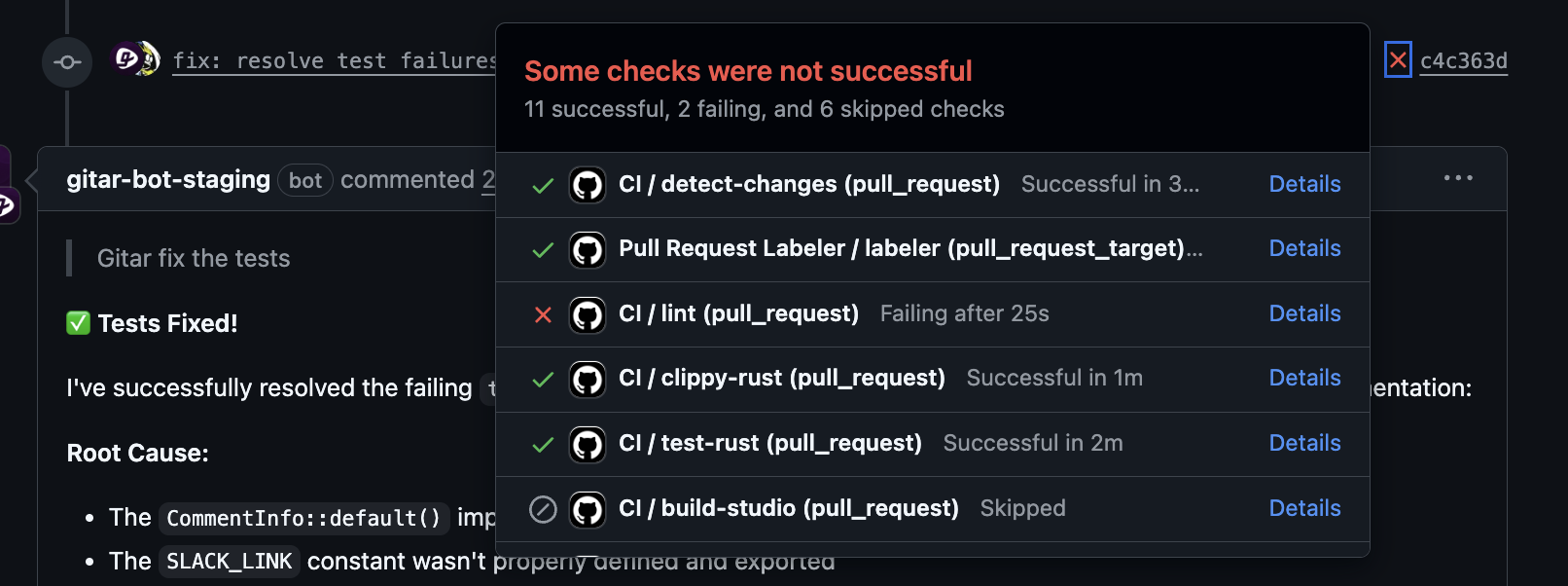
Gitar maintains passing builds, preventing the expensive cycle of failed CI runs and retries that strain budgets. Its immediate, tested fixes strengthen pipeline reliability.
Cost savings go beyond computing resources. Reliable pipelines allow more automation, reducing manual tasks. In larger setups, a single shared library failure can stall multiple teams, amplifying financial impact across groups.
Stable pipelines also optimize resources. Teams manage smaller technical debt backlogs and shift focus to forward-thinking projects instead of constant fixes.
Lifting Developer Morale to Avoid Burnout
Reliable CI systems improve team morale, which ties to financial benefits through better retention and hiring. Smooth, automated CI processes make companies more appealing to talent.
Removing tedious debugging reduces burnout, letting developers engage creatively with challenges. This often leads to smarter choices and better code quality, strengthening the organization’s technical base over time.
Building Agility and Innovation with Self-Healing CI
Automated CI systems offer more than cost savings; they change how teams approach development. Self-healing pipelines let engineering groups adopt bold strategies and adapt to market shifts quickly.
These systems ease the friction of infrastructure updates and tech adoption. Teams can upgrade dependencies or test architectural changes with confidence, knowing CI failures get fixed automatically.
This confidence supports frequent refactoring and debt reduction. Over time, codebases become easier to maintain. Companies with dependable CI keep development pace even as projects grow.
Unlock your team’s potential today. Install Gitar to fix broken builds automatically and ship software faster.
Gitar Compared: Healing vs. Suggestion Tools
The difference between self-healing CI systems and suggestion-based tools affects downtime costs. While many CI tools provide ideas for fixes, Gitar’s autonomous healing delivers solutions that cut delays directly.
|
Feature |
Manual CI Fixes (Current Norm) |
AI Suggestion Tools (e.g., CodeRabbit) |
Gitar (Autonomous Healing) |
|
Time to Fix |
Hours or days with workflow disruption |
Quick suggestions, manual follow-up needed |
Minutes with tested solutions |
|
Developer Disruption |
High, needs constant attention |
Depends on fix implementation |
Low, operates independently |
|
Cost Reduction |
Minimal, ongoing time loss |
Varies with automation level |
Significant, cuts downtime expense |
|
Environment Accuracy |
Relies on human knowledge |
Depends on tool features |
Matches full enterprise setups |
The key difference is automation level. Suggestion tools lessen the mental load of finding fixes but often need human input to apply them. Gitar implements solutions and tests them against the full CI process before committing, ensuring issues are fully resolved.
Common Questions About Gitar
How Soon Can We See Financial Gains from Gitar?
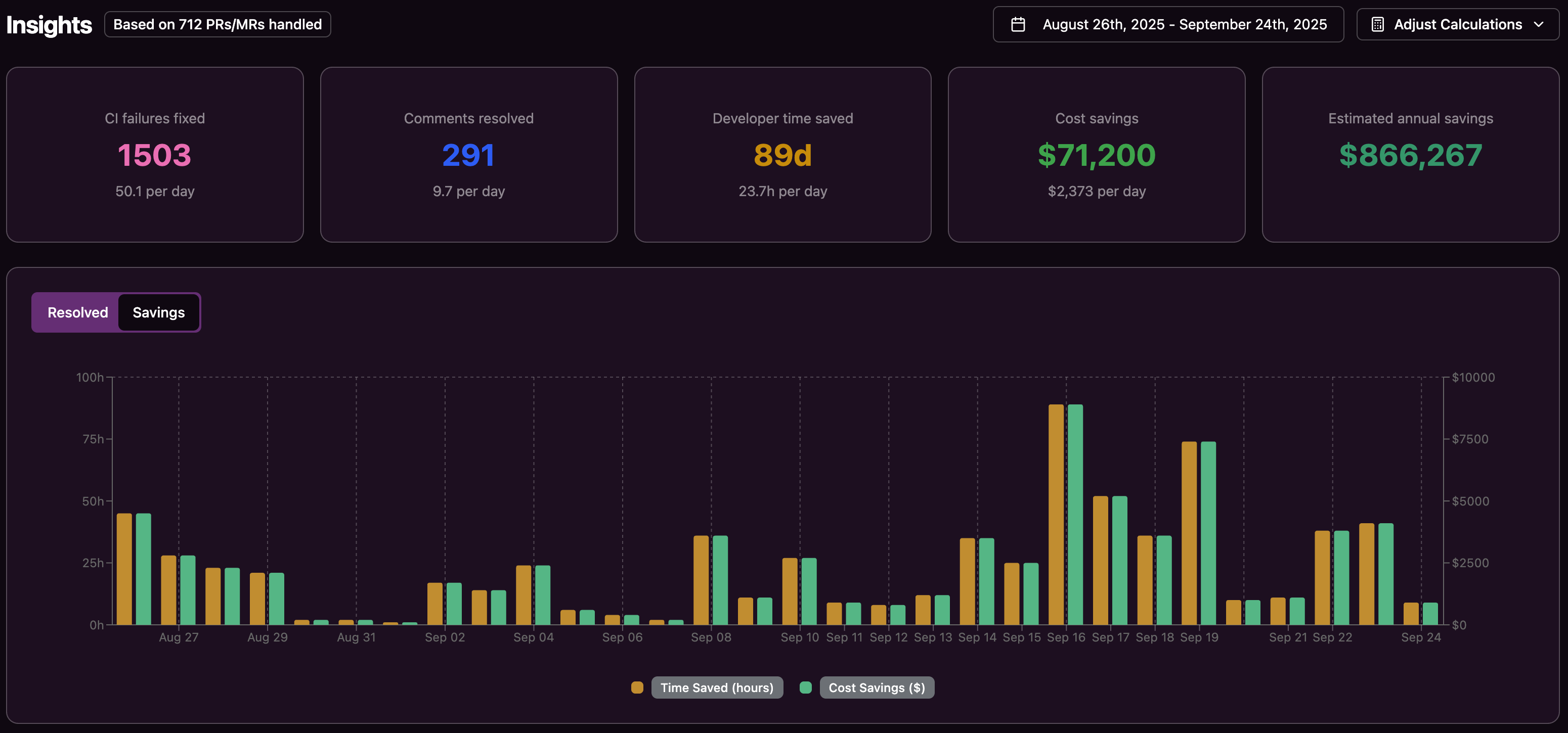
Teams often notice better productivity within a week of using Gitar, with financial benefits clear as build times drop and engineers spend less effort on CI problems. For a 20-developer team, savings can reach $500,000 yearly at 50% effectiveness, reducing financial risk through efficiency.
What CI Issues Does Gitar Fix Automatically?
Gitar resolves many common CI failures, including linting errors, formatting issues, test problems like snapshot updates or broken assertions, and build errors from dependencies or scripts. This broad coverage helps keep pipelines healthy with less manual effort.
How Does Gitar Ensure Trust in Automated Fixes?
Gitar offers adjustable trust settings, letting teams start with fix suggestions for approval before moving to full auto-commits with rollback options. This gradual approach builds confidence while keeping control over changes and minimizing risks.
Can Gitar Work with Complex Enterprise CI Setups?
Yes, Gitar replicates full enterprise environments, supporting specific SDK versions, multi-language dependencies, and third-party scans like SonarQube or Snyk. Fixes align with production conditions, avoiding downstream expenses.
How Does Gitar Help Distributed Teams Save Time?
Gitar cuts delays from time zone differences by handling code review feedback instantly. When a reviewer leaves comments, Gitar applies changes right away, so fixes are ready for approval as other team members start their day.
Protect Your Organization from CI Downtime Costs
Manual CI/CD processes carry financial risks beyond basic operating costs. Software errors cause delays, revenue drops, and trust issues that grow over time and hurt competitiveness.
Tools like Gitar shift from reactive fixes to proactive risk reduction. By shortening the time between finding and fixing failures, organizations maintain development speed and lower overhead.
The financial benefits of less downtime include faster market delivery, happier developers, and the strength to compete in changing markets. Companies adopting automated CI healing gain these advantages.
Moving to self-healing CI is both an operational upgrade and a strategic move for capability. As development speeds up and market demands grow, reliable processes become a key factor for success.
Stop letting CI downtime drain resources. Install Gitar now to fix broken builds automatically and ship software faster.