
Written by: Ali-Reza Adl-Tabatabai, Founder and CEO, Gitar
Key Takeaways
- AI code generation accelerated shipping but pushed PR review times up 91% in 2026 because reviewers cannot keep pace with larger pull requests.
- Consolidated PR summaries, automated CI triage, and contextual security scanning cut manual review effort and reduce reviewer fatigue.
- Gitar’s auto-fix engine heals CI failures and applies review feedback autonomously instead of leaving teams with suggestion-only comments.
- Teams reclaim 45–60 minutes per developer each day by reducing CI firefighting and review friction, especially on AI-generated pull requests.
- Start your 14-day Team Plan trial to unlock full auto-fix access and see PR cycle reductions in your own repos.
Why PR Review Times Exploded 91% in 2026
AI accelerated code creation and created a review capacity crisis at the same time. AI tools for code review reached 79% adoption among engineering teams in March 2026, yet teams still report worsening review bottlenecks.
Volume asymmetry drives this problem. AI generates larger and more frequent pull requests, while human reviewers still move at human speed. Analysis of 1,154 developer posts shows severe reviewer burden from AI slop pull requests, including one team handling 30 PRs per day across 6 reviewers. This imbalance turns reviewers into unpaid prompt engineers.
AI-generated code also introduces new quality pitfalls. Common AI slop patterns include using setTimeout as a band-aid, casting to “any” to silence type errors, and deleting methods instead of fixing them. These issues demand deeper reasoning than traditional code review tools provide, which stretches review cycles even further.
For a 20-developer team, this dynamic can translate to roughly $1M annually in lost productivity from developers spending 45–60 minutes every day on CI failures and review friction.
Core Strategies to Slash PR Cycles with AI
Teams cut PR cycle times fastest when they combine three specific AI strategies.
1. Consolidated PR Summaries: Replace scattered inline comments with a single, comprehensive dashboard summary. Gitar consolidates all important information in one living “Dashboard” comment that stays up to date, appears only when meaningful, and moves down the activity timeline as changes land. This approach removes notification spam while preserving review depth.
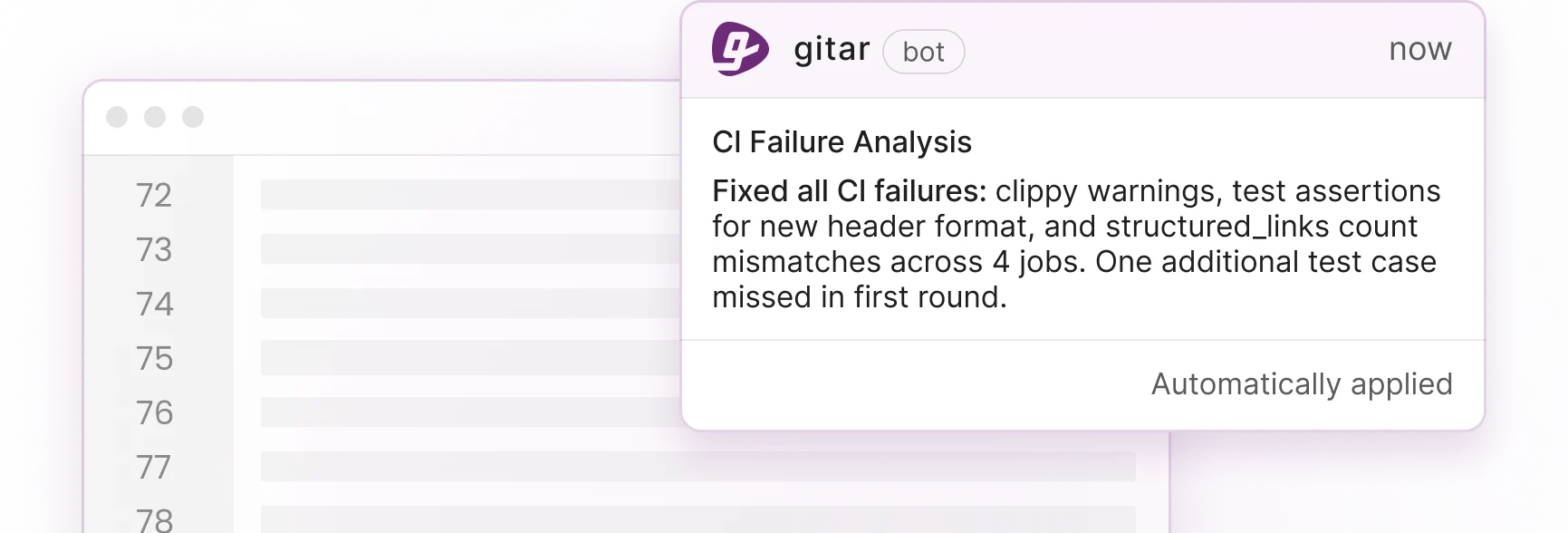
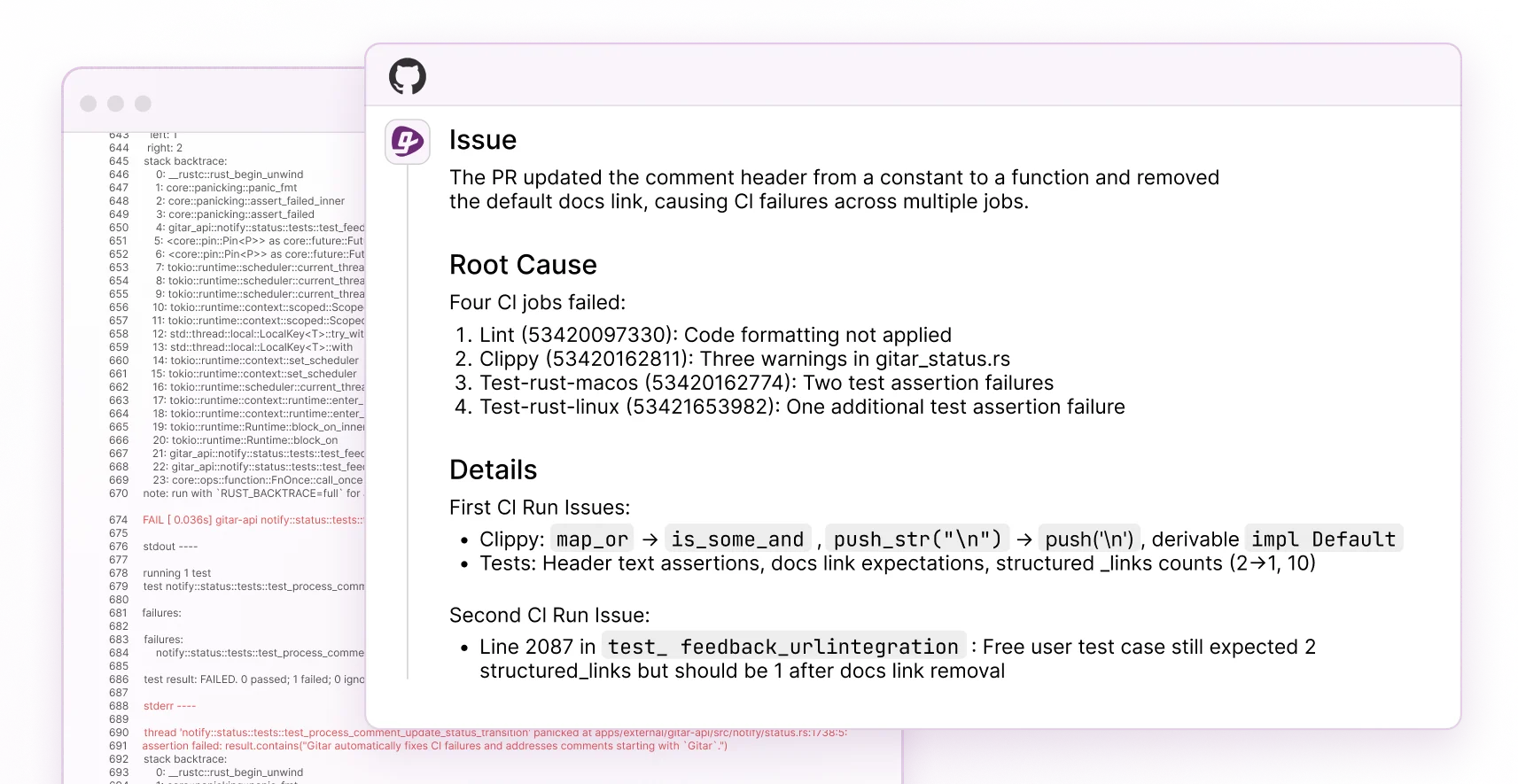
2. Automated CI Triage: Use intelligent failure analysis that separates code bugs from infrastructure issues. Gitar’s CI Failure Analysis deduplicates failures across jobs and pipelines, surfaces root causes without log digging, and keeps information current in real time. Developers avoid chasing unrelated failures and regain focused coding time.
3. Contextual Security Scanning: Apply AI-powered security analysis that understands code context instead of matching raw patterns. Modern tools reach over 90% logic-flaw detection with under 5% false positive rates, which sharply reduces security review overhead.
These strategies deliver the strongest results when paired with auto-remediation that applies fixes, validates them, and closes the loop instead of leaving developers with a backlog of suggestions. Try Gitar’s auto-fix capabilities free for 14 days to see these strategies working on your own pull requests.
How to Use AI to Review a Pull Request
Now that the core strategies are clear, you can roll out AI-driven pull request reviews through a simple, trust-focused sequence.
Step 1: Install the AI review platform across your repositories. Modern tools connect with GitHub, GitLab, and major CI systems within minutes.
Step 2: Start a 14-day Team Plan trial to access full auto-fix capabilities without seat limits or feature restrictions. Review the Gitar documentation for detailed setup guidance.
Step 3: Begin in suggestion mode to build team confidence. Review and approve automated fixes before you enable autonomous commits so everyone sees how the system behaves.
Step 4: Monitor auto-fix success rates as the system runs. Gitar added CI failure analysis on October 2, 2025, which automatically analyzes failures, posts insights in the dashboard comment, and updates them as new commits arrive.
Step 5: Configure single-comment consolidation to cut notification noise. Gitar reserves inline comments for the most critical or actionable lines, enforces a threshold to prevent excess, and allows teams to disable inline comments entirely.
Step 6: Add natural language automation rules so you can customize workflows without complex YAML. Examples include “Enhance the PR description” or “Link relevant Jira tickets” on every push.
Gitar Setup: 7 Steps for Fast 50%+ PR Time Cuts
Teams that follow this rollout path usually see immediate PR cycle time improvements.
Step 1: Platform Integration – Install Gitar’s GitHub App or GitLab integration. The platform supports GitHub Actions, GitLab CI, CircleCI, and Buildkite with zero configuration. See the Gitar documentation for integration details.
Step 2: Trial Activation – Activate your 14-day Team Plan trial to unlock auto-fix, custom rules, and unlimited repositories.
Step 3: Trust Building – Enable suggestion mode initially to keep full control over automated changes. By watching Gitar fix lint errors, test failures, and build breaks while you approve each change, your team builds confidence before turning on autonomous commits.
Step 4: Rule Configuration – Define custom checks and automations in natural language, such as “Enhance the PR Description” or “Link relevant Jira tickets,” and run them on every push.
Step 5: Integration Setup – Connect Jira, Slack, and Linear for richer context. Gitar enhances PR descriptions in place without losing the original by pulling in linked tickets and related pull requests.
Step 6: Auto-Fix Enablement – Turn on autonomous commits gradually for trusted fix types such as linting, formatting, and straightforward test corrections.
Step 7: Analytics Monitoring – Track cycle time improvements, fix success rates, and team velocity gains through Gitar’s analytics dashboard.
Beyond Suggestions: Auto-Fix CI Failures and Review Feedback
Gitar stands apart from suggestion-only tools by focusing on autonomous remediation. When CI fails, Gitar analyzes failure logs, generates validated fixes, and commits them automatically instead of leaving a to-do list for developers.
This healing engine approach contrasts sharply with traditional tools. The following comparison shows how Gitar’s autonomous capabilities differ from suggestion-only platforms in four critical areas.
|
Capability |
CodeRabbit/Greptile |
Gitar |
|
PR summaries |
Yes |
Yes |
|
Auto-apply fixes |
No |
Yes |
|
CI failure analysis |
No |
Yes |
|
Validate fixes against CI |
No |
Yes |
Real-world results highlight this difference. Devin Review reaches a 70% resolution rate by auto-fixing 7 of 10 bugs it flags after approval, using agentic AI to reason and implement changes. This autonomous pattern removes the manual implementation loop that slows suggestion-based tools.
The impact compounds over time. Teams report fewer context switches, fewer review ping-pong cycles, and more time for architectural decisions instead of mechanical corrections.
Tame AI Slop and Notification Spam
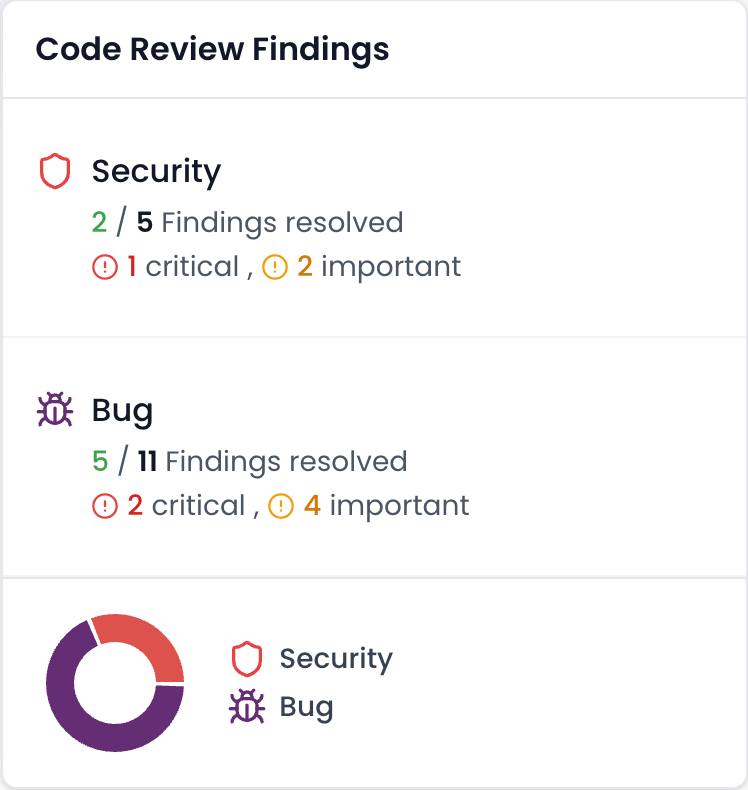
AI-generated code often floods reviewers with noisy findings. Gitar’s Code Review highlights the most important issues, surfaces critical bugs first, and summarizes resolved findings from earlier reviews. This prioritization keeps teams focused on high-value feedback.
The consolidated dashboard approach described earlier directly addresses notification fatigue by eliminating comment spam that overwhelms reviewers. Teams experience lower cognitive load compared with tools that post dozens of separate comments.
Context integration further improves signal quality. By connecting Jira tickets and Slack conversations, Gitar understands the business context behind code changes, which enables more relevant feedback and reduces false positives on intentional design decisions.
Measure Your ROI and Scale AI Code Review
Teams that quantify AI code review ROI track both time savings and quality improvements. Atlassian’s Rovo Dev cut internal median PR cycle time by 45% since early 2025, saving more than a full day per pull request through automated first reviews and instant feedback.
The financial impact scales significantly, as shown in the time and cost savings outlined here.
|
Metric |
Before AI Automation |
After Implementation |
|
Daily CI/review time per developer |
1 hour |
15 minutes |
|
Annual cost (20-dev team) |
$1M |
$250K |
|
Context switching interrupts |
Multiple daily |
Near-zero |
Leading implementations show similar patterns. Shopify reported 33% more PRs merged per developer after adopting Graphite Agent, with 75% of PRs now processed through it. Asana engineers using Graphite Agent saved 7 hours weekly, shipped 21% more code, and reduced median PR size by 11%.
Scale AI review gradually by starting with low-risk repositories, measuring cycle time improvements, and then expanding to critical systems as confidence grows. Start measuring your own cycle time gains with a 14-day Team Plan trial.
Frequently Asked Questions
Does Gitar work on GitLab?
Gitar supports GitLab and GitHub with native integrations for GitLab CI, merge request analysis, and automated fix commits. The platform also works with CircleCI, Buildkite, and other major CI systems so teams can keep their existing pipelines.
How does Gitar handle complex CI environments?
Gitar emulates your full CI environment, including SDK versions, multi-dependency builds, and third-party security scans. The Enterprise tier runs agents inside your own CI pipeline with access to secrets and caches so fixes behave correctly in production environments, not just in simplified tests. This approach prevents fixes that pass in staging but fail after deployment.
Can I trust automated commits to my codebase?
Gitar provides configurable trust levels that match your risk tolerance. You can start in suggestion mode, approve every fix, and then enable auto-commit for specific failure types such as linting, formatting, or simple test corrections. You keep full control over aggression levels, and every automated change includes a detailed explanation and can be reverted easily.
How much time does Gitar actually save development teams?
Gitar automates CI failure fixes, consolidates review feedback into a single dashboard comment, reduces context switching, and removes manual fix implementation cycles. Most teams see meaningful impact within the first week of the trial period.
What makes Gitar different from other AI code review tools?
Gitar’s healing engine implements fixes and validates them against CI instead of only posting comments that developers must apply manually. The platform includes a comprehensive 14-day trial with full auto-fix capabilities, single dashboard comments that reduce noise, and natural language rule configuration. This autonomous approach removes the manual work loop that limits suggestion-only tools.
Conclusion: Transform Your Development Velocity
The 91% spike in PR review times from AI code generation requires more than incremental tweaks. Suggestion-based tools that leave developers with manual implementation work do not solve the core bottleneck and often charge premium prices for partial help.
Gitar’s healing engine delivers autonomous code review that fixes issues, validates solutions, and keeps builds green. The platform consolidates findings into clean dashboard comments, integrates with existing workflows, and scales across GitHub, GitLab, and major CI systems.
Teams that adopt this model reclaim significant time, reduce annual productivity losses, and eliminate much of the context switching that fragments developer focus. Developers then spend more energy on architecture and business logic instead of mechanical corrections.
Experience autonomous code review with a 14-day Team Plan trial. See the difference between AI that only suggests and AI that actually ships working code.