
CI/CD pipeline inefficiencies create hidden costs, like wasted developer time, high infrastructure expenses, and delayed feature releases, leading to significant annual productivity losses for many organizations. This article explores the financial impact of poor CI/CD practices and highlights how autonomous AI tools, such as Gitar, address these issues by enabling self-healing pipelines and smart code review support, ultimately saving costs and speeding up delivery.
Understanding the Issue: Hidden Costs in Your CI/CD Pipeline
Developer Time Loss: Every Hour Costs Money
CI/CD pipeline issues go beyond failed builds and error alerts, directly impacting developer productivity. Developers often spend over 17 hours weekly on maintenance tasks, such as debugging pipeline issues, instead of building new features. For a team of 50 developers, this adds up to over 40,000 hours lost yearly, costing millions in salaries for non-productive work.
Context switching makes this problem worse. When a pipeline fails, developers lose focus as they shift from creative tasks to fixing issues. A quick five-minute fix, like resolving a linting error, can steal an hour of productivity due to the time needed to refocus and adjust. Many teams face this disruption several times daily, creating a chain of productivity setbacks that standard metrics often overlook.
Financially, the impact is clear. A senior developer earning $150,000 a year, spending just one hour daily on CI issues, loses about $18,750 in productivity annually. For a team of 20 developers, this could mean over $375,000 in direct costs, not counting the missed opportunities from delayed features or slower market response.
Pipeline Overload: A Quiet Budget Drain
CI/CD systems often become overloaded with unnecessary tools, plugins, and old scripts, increasing maintenance needs and cloud costs. This stack bloat slows down workflows and drives up expenses with longer build times and resource waste. Over time, these complex setups demand more developer effort and inflate operational budgets.
Every extra minute in a sluggish pipeline adds to cloud bills and delays feedback. Builds that should take 10 minutes can drag on for 30 due to inefficiencies, piling up costs. Even small improvements in workflow speed can save thousands of engineering hours each year, directly boosting productivity.
Key costs tied to stack overload include:
- Higher cloud expenses from extended job runtimes
- Developer time spent managing intricate toolsets
- Slower feedback loops, prolonging debug cycles
- Increased training time for new team members
- Fees for redundant or overlapping software licenses
Want to cut CI/CD waste and boost developer focus? Install Gitar now to fix broken builds automatically and ship quality software faster.
Strategic Delays: Missing Market Opportunities
Slow CI/CD pipelines create delays that hurt more than just immediate output. Long feedback cycles from pipeline failures increase wait times and manual fixes, raising organizational costs. While teams struggle with these bottlenecks, competitors might deliver value to customers faster and capture market share.
Delays build on each other. A 20-minute wait for build feedback forces developers to switch tasks, often leading to merge conflicts or integration issues that slow things down further. This creates a cycle of setbacks, where:
- Late feedback raises the risk of rework and conflicts
- Task switching lowers code quality and increases errors
- Extended review times slow down feature releases
- Frustrated teams might skip quality checks, adding technical debt
In fast-moving markets, these delays can cost a company its competitive edge, as speed to market often determines success.
Solution in Focus: Gitar, AI for CI/CD Cost Savings
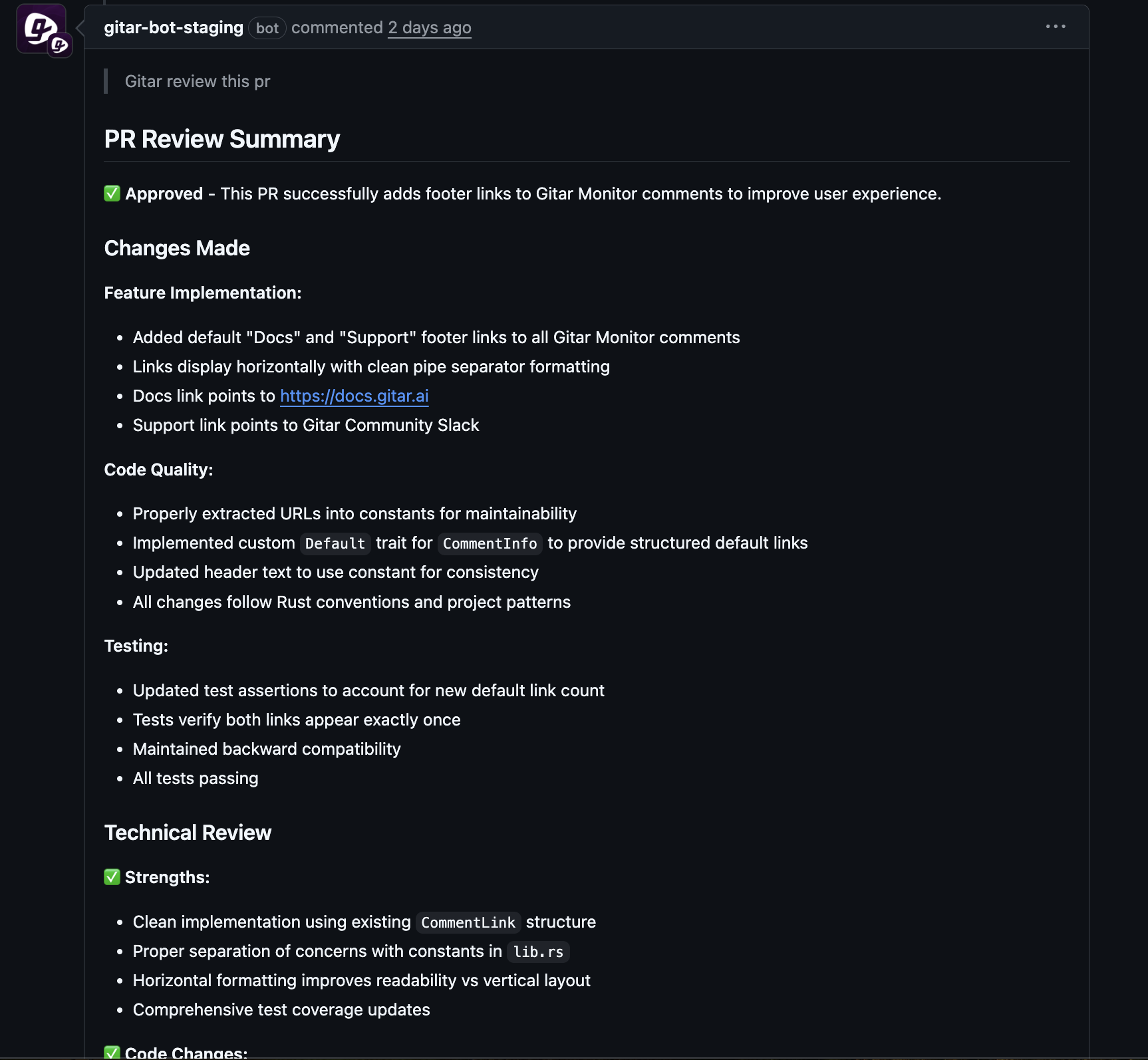
Gitar changes how teams handle CI/CD issues by moving from manual fixes to automated resolutions. Unlike tools that only suggest changes, Gitar acts as a self-healing system, identifying problems, applying fixes, and verifying results without needing developer input.

Core Features Driving CI/CD Efficiency
Gitar offers practical tools to cut costs and streamline workflows:
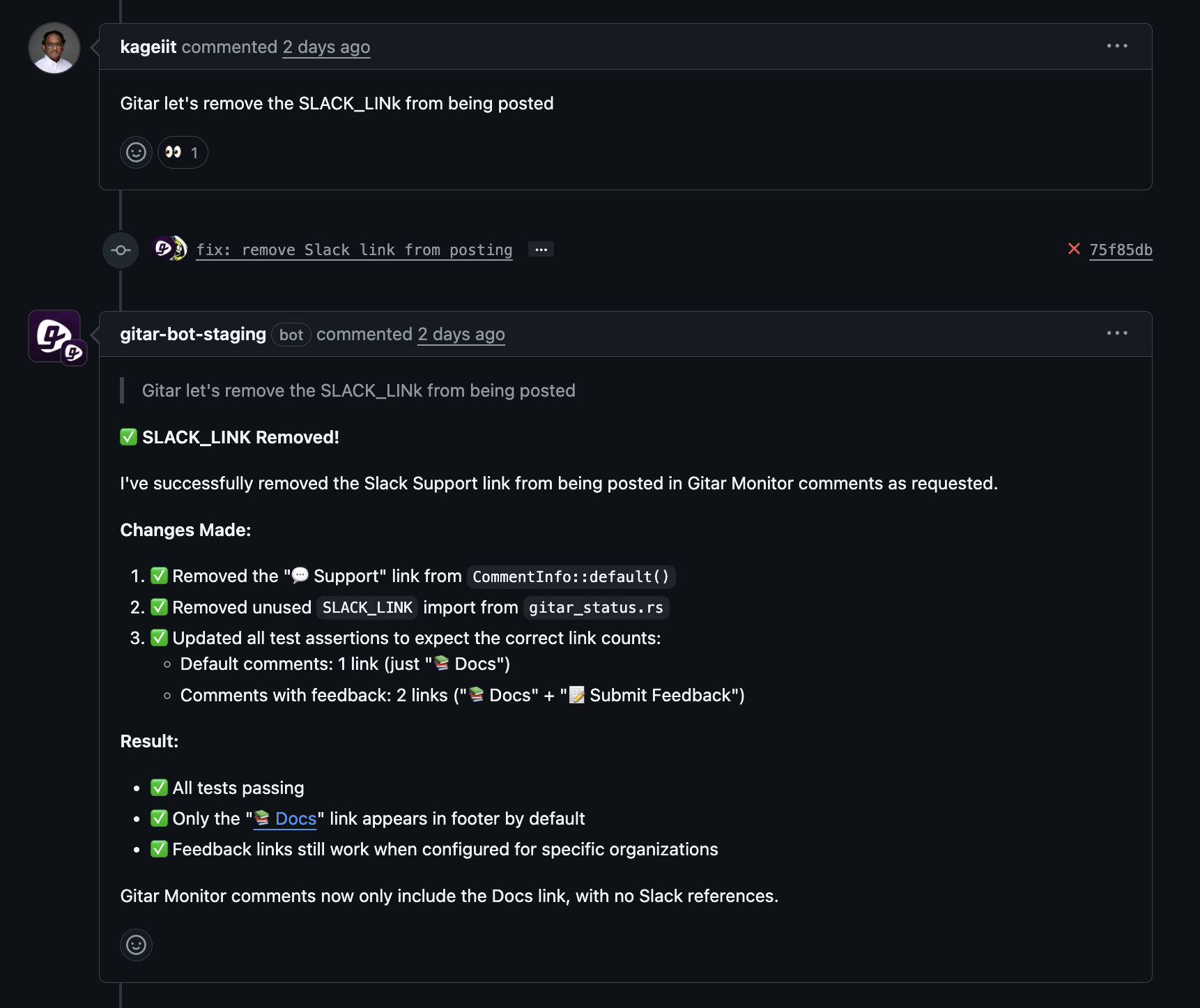
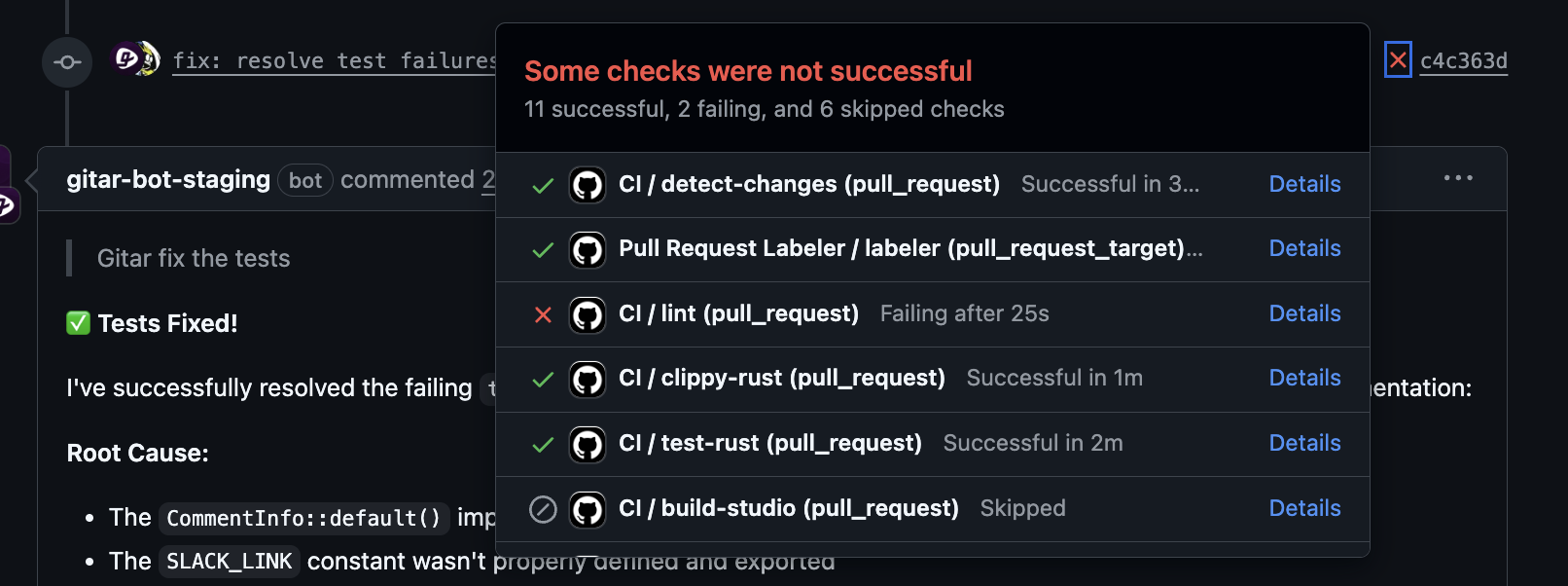
- Automated CI Fixes: Gitar scans failure logs, pinpoints root causes, and commits fixes for issues like lint errors or test failures, saving developers hours of manual troubleshooting.
- Smart Code Review Support: Gitar acts on reviewer feedback by making requested changes and pushing updates, cutting delays, especially for teams across time zones.
- Environment Matching: It mirrors enterprise setups, including SDKs and tools like SonarQube, ensuring fixes align with specific quality standards.
- Adjustable Automation Levels: Teams can start with suggestions only and move to full auto-commits as they gain confidence, balancing control with efficiency.
- Wide Platform Compatibility: Gitar works with GitHub Actions, GitLab CI, CircleCI, and more, supporting varied tech setups without issue.
Ready to streamline your CI/CD pipeline with self-healing automation? Install Gitar now to fix broken builds automatically and deliver quality software faster.
How Gitar Boosts CI/CD Cost Efficiency
Cutting Manual Debugging to Lower Expenses
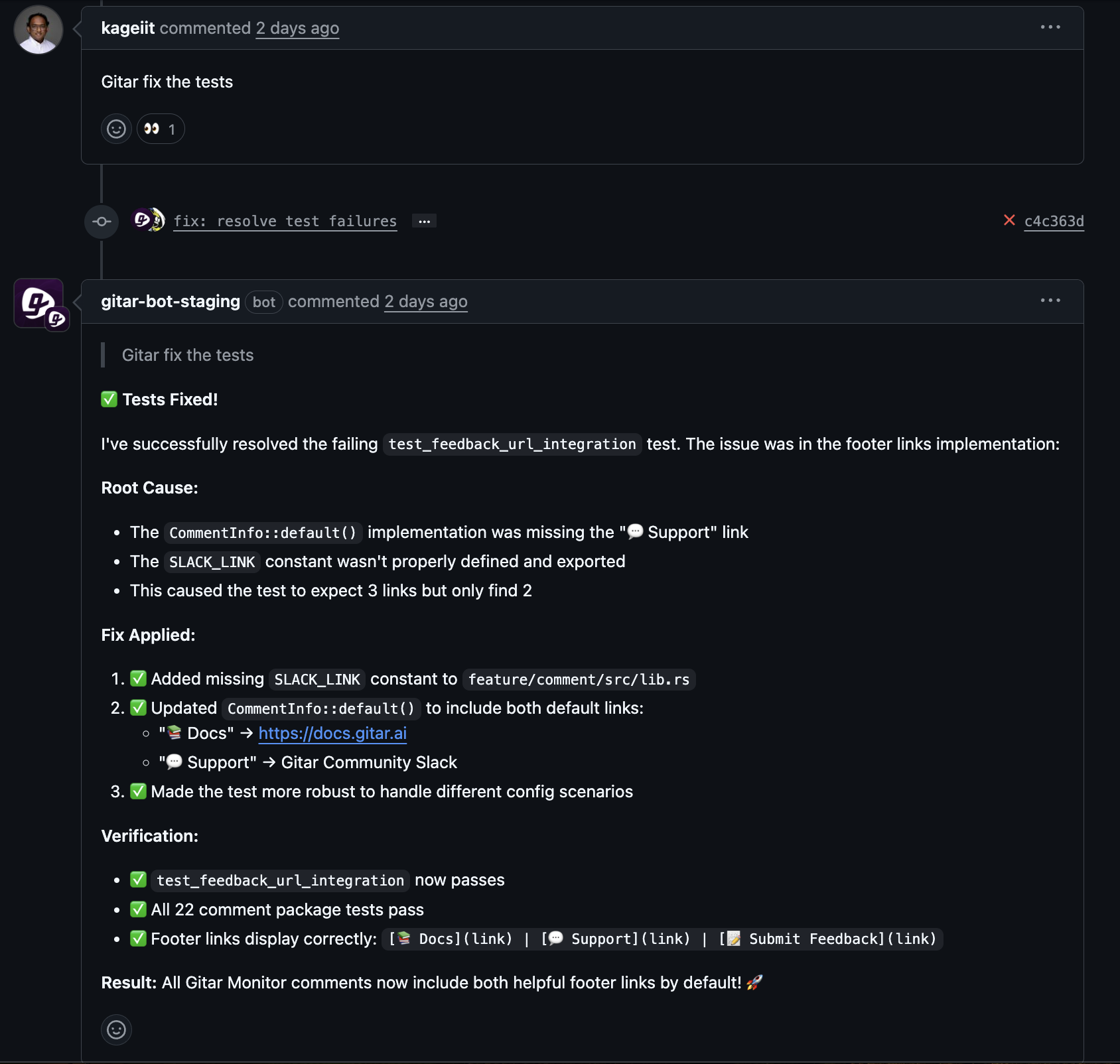
Gitar reduces the time developers spend on debugging pipeline failures. Typically, fixing issues involves stopping work, checking logs, recreating problems locally, applying solutions, and testing them, a cycle that eats into productive hours.
By automating these steps, Gitar helps lower operational costs through:
- Savings on developer time spent debugging
- Reduced cloud costs from fewer failed pipeline runs
- Less disruption from task switching
- Lower technical debt with consistent, automated fixes
For a team of 20 developers, automating just half of these tasks could save around $500,000 yearly in productivity, offering a clear return on investment.
Speeding Up Market Delivery
Gitar shortens the time from initial commit to final merge by delivering fast, verified fixes that reduce review delays. Standard review cycles can last days, especially for remote teams dealing with time zone gaps.
This speed comes from several gains:
- Quick application of fixes cuts review time
- Automated checks ensure changes meet quality standards
- Progress continues regardless of time zones
- Faster integration reduces merge conflicts
These improvements help teams deliver features sooner, respond to customer needs faster, and stay competitive.
Improving Developer Focus and Morale
Gitar helps developers stay focused by handling routine CI failures and review tasks. This lets them prioritize creative work over repetitive fixes, enhancing productivity.
Benefits go beyond just saving time:
- Uninterrupted focus leads to better code quality
- Less frustration from repetitive tasks improves satisfaction
- Quicker feedback supports iterative development
- Removing mundane work frees time for strategic projects
Teams often notice higher job satisfaction after using Gitar, as developers can concentrate on meaningful challenges instead of maintenance.
Handling Complex CI setups with Precision
Enterprise CI environments, with their intricate dependencies and compliance needs, pose unique challenges. Gitar adapts to these by fully replicating build setups, ensuring fixes fit the context.
This adaptability helps through:
- Accurate modeling of dependencies and environments
- Support for third-party tool integrations
- Compliance with internal quality standards
- Fixes that pass all validation checks
For large organizations, this precision matters, as incorrect fixes can trigger bigger issues. Gitar focuses on reliable automation for such complex setups.
Ready to tackle complex CI challenges with automated fixes? Install Gitar now to resolve pipeline issues and ship better software faster.
Comparison: Gitar’s Automation vs. Suggestion Tools and Manual Work
How Gitar Stands Out for Cost Efficiency
|
Feature / Benefit |
Gitar (Autonomous AI) |
AI Code Reviewers |
Manual Processes |
|
Root Cause Fixing |
Automated & Applied |
Suggestions Only |
Manual Debugging |
|
Context Switching |
Minimal |
Some Reduction |
Frequent |
|
Time-to-Merge |
Faster |
Some Improvement |
Slow |
|
Build Validation |
Verified Fixes |
Not Always Checked |
Manual Retesting |
Gitar differs from other tools by focusing on complete automation. While some AI tools offer suggestions or partial fixes, Gitar applies and tests solutions independently, reducing the need for manual effort and delivering real cost savings.
Common Questions About CI/CD Cost Savings
How Does Gitar Lower CI/CD Expenses?
Gitar cuts costs by automating fixes for pipeline failures and review feedback, tackling a major source of lost developer time. For a team of 20 developers, this can mean substantial yearly savings based on typical engineering salaries. It also reduces cloud expenses by limiting failed runs and speeds up feature delivery by shortening review cycles.
What Makes Gitar Different from Other AI Review Tools?
Many AI code reviewers offer useful insights but still require developers to manually apply and verify fixes, creating extra work. Gitar acts independently, implementing and testing solutions within your CI setup, saving more time. Its ability to mimic complex enterprise environments further ensures accurate fixes.
Can Gitar Work with My Complex CI/CD Setup?
Gitar is built for intricate enterprise systems, matching specific dependencies, SDK versions, and tools like SonarQube. This ensures fixes meet your quality standards. In complex setups, where debugging is costly, Gitar’s automation offers even greater cost-saving potential.
How Does Gitar Help Prevent Developer Burnout?
Burnout from repetitive debugging and context switching costs organizations through turnover and lost productivity. Gitar eases this by automating tedious tasks, like fixing minor errors, allowing developers to focus on creative work. This boosts job satisfaction and reduces turnover expenses.
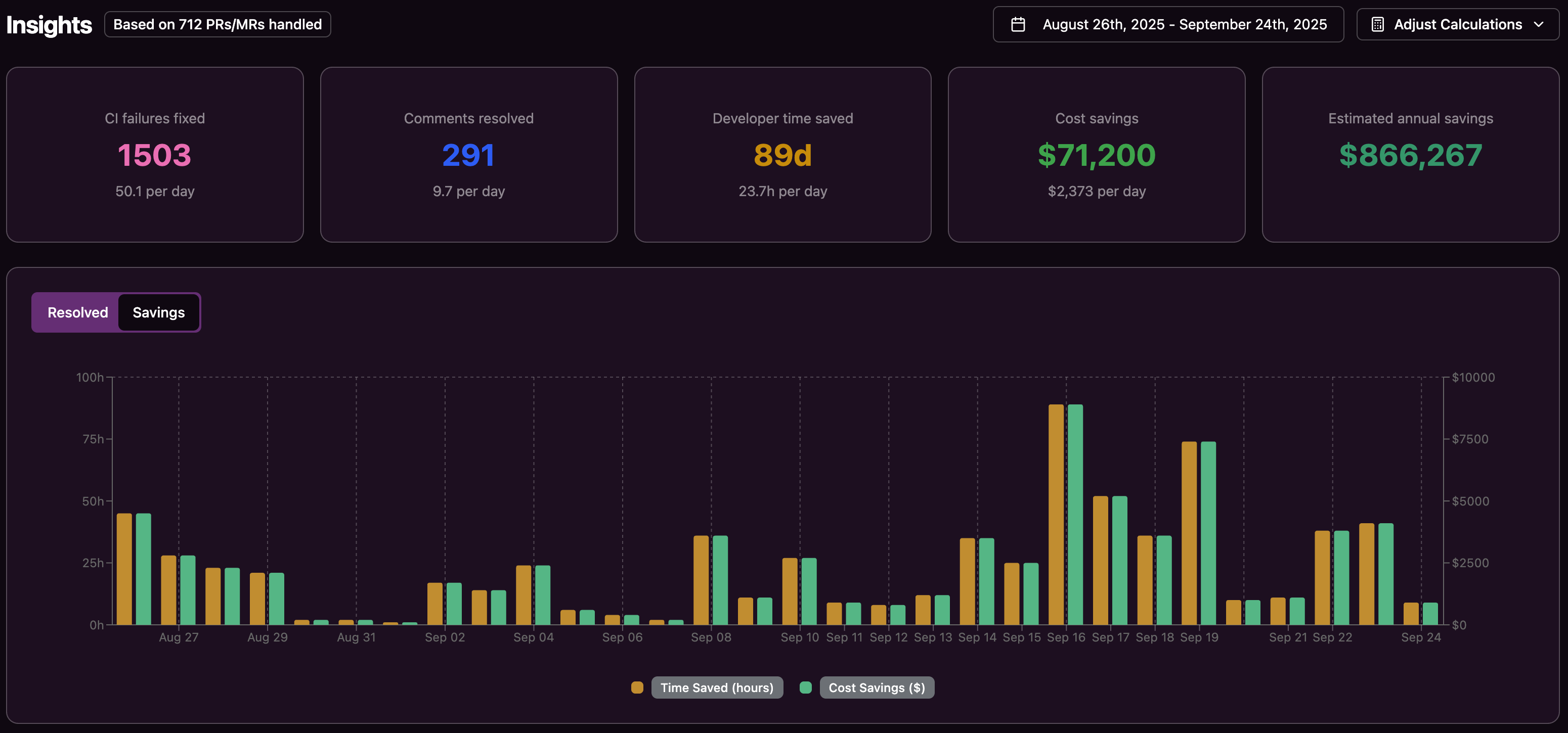
Looking Ahead: Autonomy Shapes CI/CD Cost Efficiency
AI is set to redefine CI/CD practices in the coming years. By 2025, over 80% of companies may adopt AI-driven CI/CD, achieving up to 40% faster deployments and 25% less time on compliance. Those who embrace this shift could gain an edge with quicker market delivery and lower costs.
AI tools are becoming central to cost management in CI/CD. They offer predictive insights for spotting bottlenecks, automate decisions, and resolve errors efficiently. Moving from reactive fixes to proactive automation marks a significant change in development workflows.
Gitar stands at the forefront, providing a self-healing solution that cuts costs while improving delivery speed and team morale. Its automated approach helps recover lost productivity. The potential savings, combined with faster cycles and better code quality, can create lasting value for businesses.
Curious about how Gitar can improve your CI/CD costs and team output? Install Gitar now to automate fixes and experience efficient, self-healing pipelines.