
CI pipeline failures waste an average of one hour per developer each day, draining productivity and costing engineering teams millions yearly. Autonomous AI agents offer a solution by learning from past test failures to create self-healing pipelines. These systems analyze historical data and resolutions to prevent issues before they happen, reducing developer effort and speeding up software delivery.
Why CI Failures Hurt Productivity and Cost You Time
CI failures disrupt workflows, turning a simple pull request into a frustrating delay. Developers often spend hours switching from focused coding to decoding error logs, fixing problems, and waiting for pipeline reruns.
These issues go beyond basic build errors. Common CI failures include environment mismatches, configuration errors, test flakiness, dependency issues, resource limits, and tool integration gaps. They range from missing libraries to memory timeouts and misconfigured setups.
Advanced failures add more complexity. CI/CD pipelines often face performance test failures, security scan issues, compatibility problems, resource exhaustion, and errors during rolling deployments. These stem from inefficient code, outdated dependencies, or setup mistakes that manual fixes struggle to address consistently.
The time cost is immense. Around 45% of software failures arise from differences between development, test, and production environments. Developers must manually investigate these environment-specific issues, losing focus and efficiency.
Flaky tests add to the burden. These tests fail unpredictably without code changes, often hiding real problems while wasting time on false positives. Manually identifying and stabilizing them requires deep log analysis and environment isolation.
Manual debugging only tackles symptoms, not patterns. Each fix stands alone, building no shared knowledge to prevent repeat issues. This reactive cycle keeps teams stuck facing the same failures over and over.
|
Feature |
Manual Debugging |
Autonomous AI Fixing (Gitar) |
|
Developer Involvement |
High (identifying, debugging, applying fixes) |
Low or None (AI manages from detection to fix) |
|
Context Switching |
Frequent, disrupts focus |
None, operates in the background |
|
Learning Mechanism |
Relies on individual experience |
AI learns from historical data and fixes |
|
Fix Speed |
Slow, depends on availability |
Fast, often immediate |
|
Error Reduction |
Reactive, prone to mistakes |
Proactive, based on data |
Ready to cut down on manual debugging time? Install Gitar to fix broken builds automatically and ship better software faster.
Meet Gitar: AI That Fixes and Strengthens Your CI Pipeline
Gitar changes the game by moving from reactive debugging to proactive pipeline healing. This autonomous AI learns from past failures to resolve issues instantly and prevent future problems without developer input.

Complete Automation for Fixes
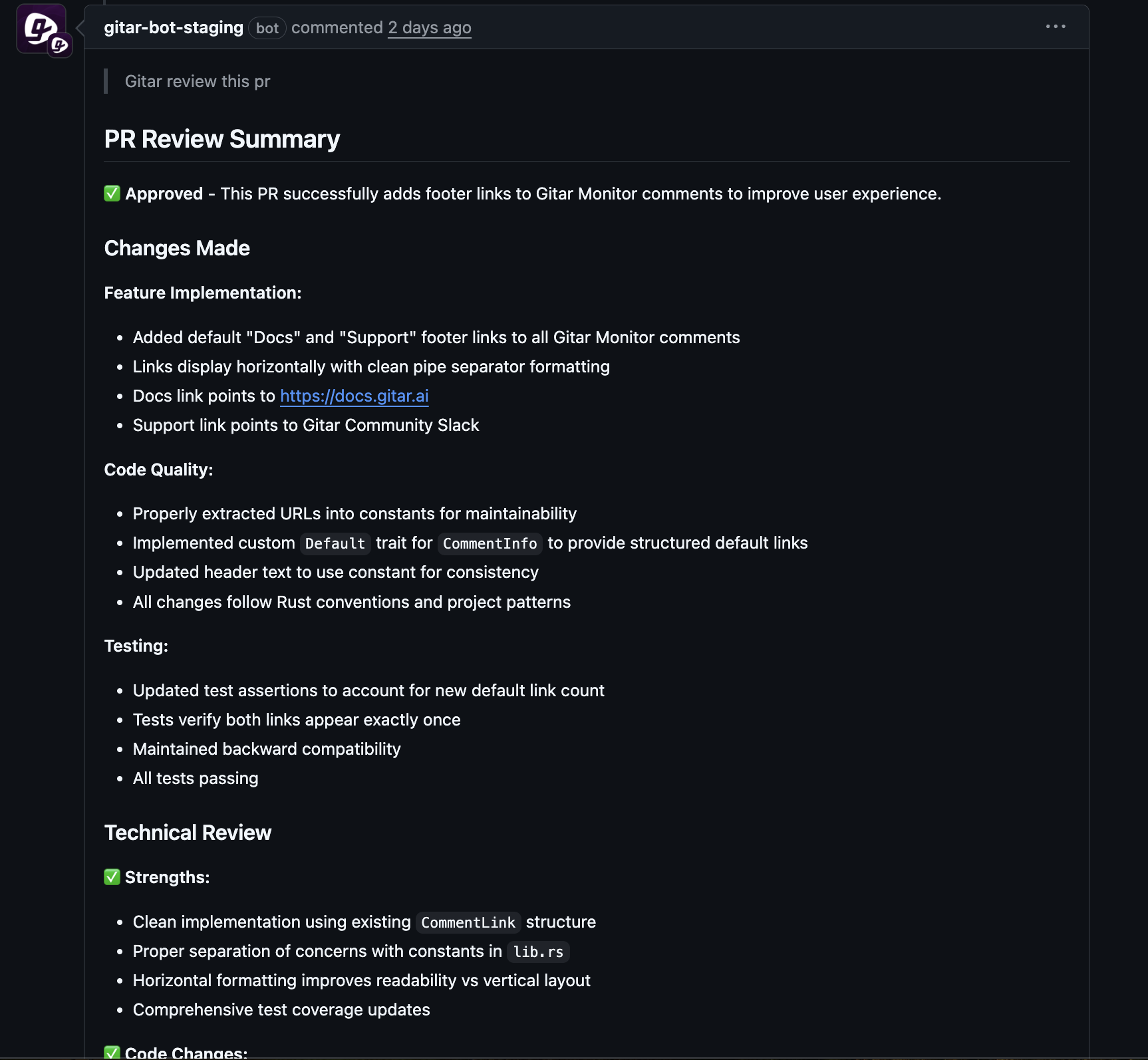
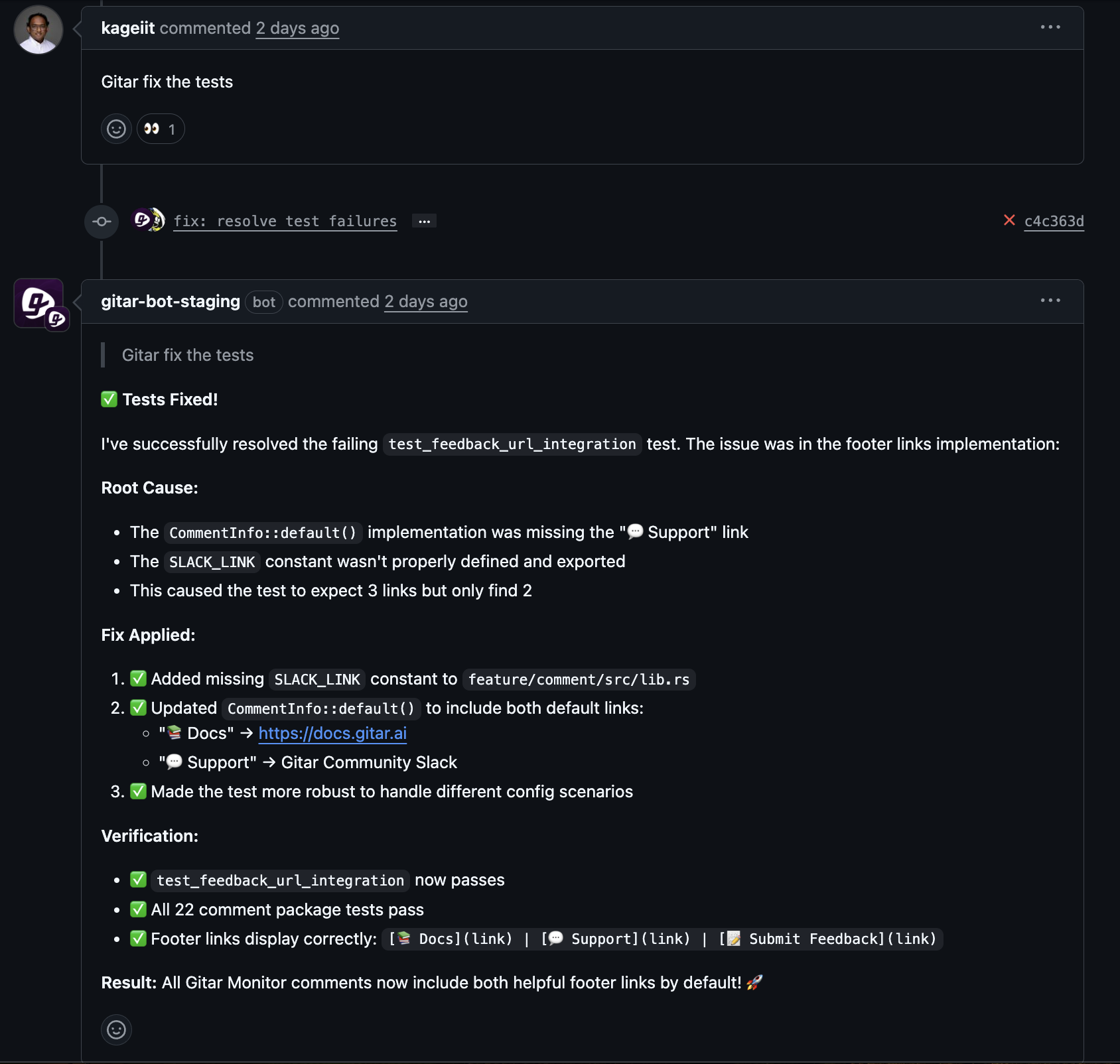
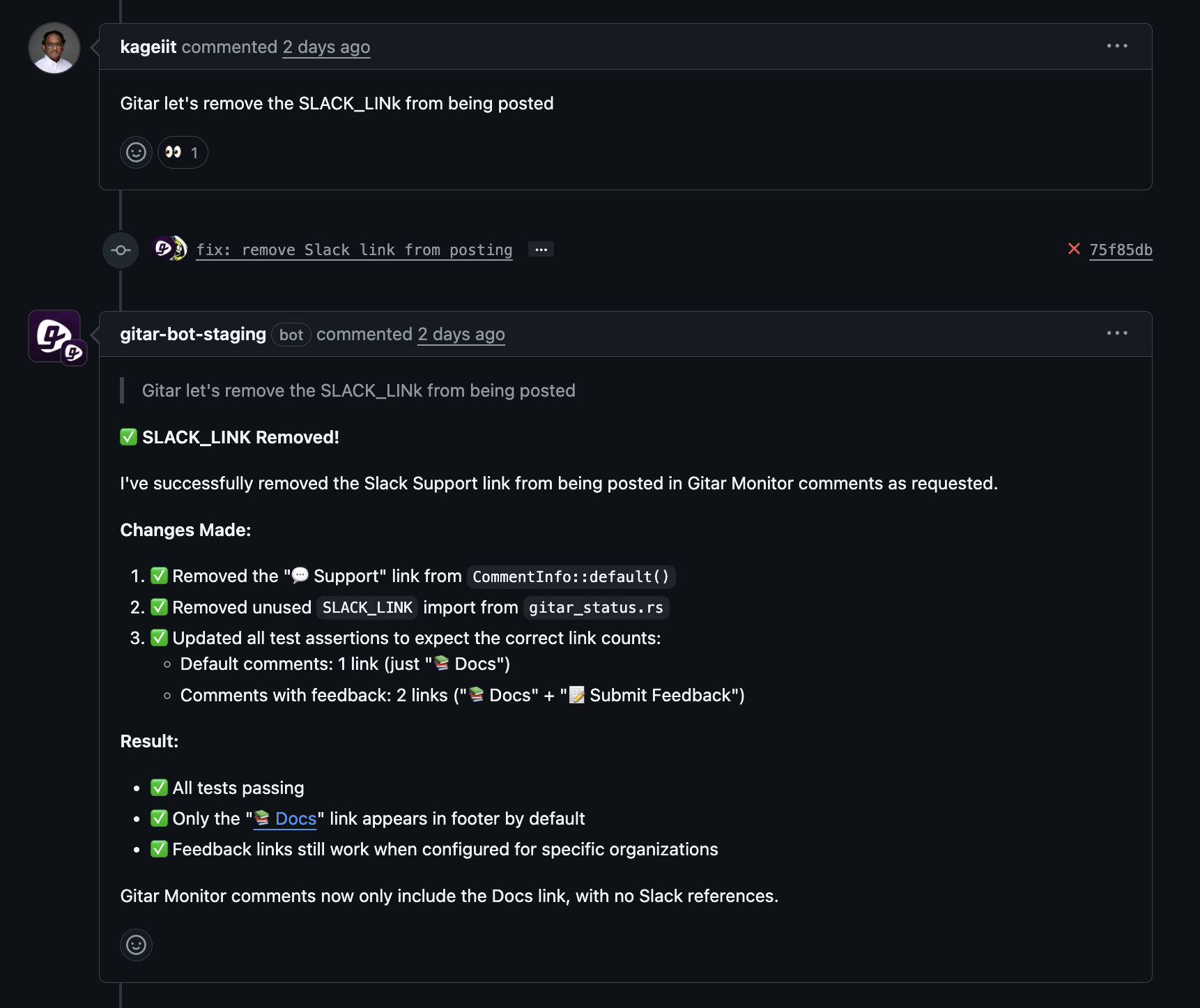
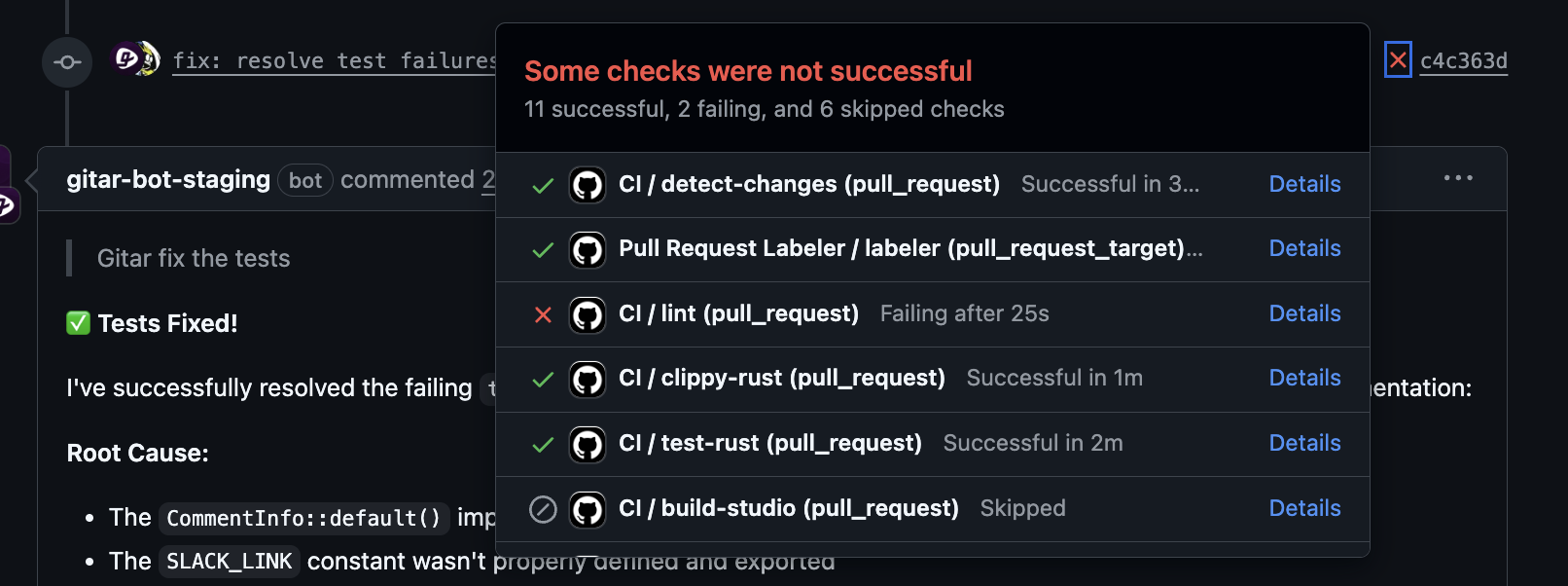
Gitar handles the entire fixing process. When a CI check fails, whether it’s a lint error or complex test issue, the AI analyzes logs, creates a code fix, applies it, validates the solution, and commits it to the pull request branch. Developers get a passing build without lifting a finger.
This system addresses many failure types, from style issues and missing dependencies to intricate test and build errors. By working directly with code, Gitar bridges the gap between spotting a problem and solving it, unlike traditional tools that only offer suggestions.
Accurate Environment Matching
Enterprise CI setups often include specific SDKs, security scans, and complex build rules that generic tools can’t replicate. Gitar solves this by mirroring your exact workflow, covering JDK versions, multi-SDK setups, integrations like SonarQube, and snapshot testing needs.
This precise replication means Gitar’s fixes work in your unique environment, not just in theory. The AI grasps the details of your setup, ensuring reliable solutions tailored to your real-world conditions.
Learning From History to Prevent Issues
Gitar stands out with its ability to learn from past test failures and successful fixes. Instead of treating each issue as new, it builds a knowledge base linking failure types to solutions and contexts.
This learning turns fixes into prevention. As Gitar handles more issues, it gets better at spotting potential problems and addressing them before they disrupt the pipeline. It fixes current errors while reducing future risks.
Flexible Trust Settings for Safe Automation
Gitar offers a trust model you can adjust to ease into automation. Start with a ‘suggestion-only’ mode where the AI recommends fixes for review and approval with one click. This lets you see its accuracy firsthand.
As you gain confidence through consistent results, shift to auto-commit modes where Gitar applies fixes directly. Rollback options provide a safety net, allowing quick reversals if needed. This gradual approach helps overcome hesitation about automated code changes.
Support Across CI Platforms
Gitar works with major CI platforms like GitHub Actions, GitLab CI, CircleCI, and BuildKite, unlike tools tied to specific systems. This broad compatibility fits diverse setups and lets teams keep existing workflows while adding automation.
Its platform-neutral design also protects your CI investment. Teams can switch tools without losing Gitar’s capabilities. Plus, it supports multiple languages and frameworks, fitting varied development environments.
Curious about automation in action? Request a demo to see how Gitar can improve your workflow.
How Learning AI Boosts CI Efficiency and Reliability
AI that learns from test failures offers more than automation. It creates lasting improvement by storing knowledge from every issue and fix, turning CI pipelines into smart systems that prevent problems over time.
Spotting Issues Before They Break Builds
Gitar uses historical data to predict failures before they occur. By reviewing code changes, configurations, dependencies, and past contexts, it identifies risks early.
This means addressing dependency conflicts or setup mismatches before they cause failures. Instead of fixing broken builds, Gitar applies preventive steps based on learned patterns, especially for recurring issues, making pipelines more dependable.
Deeper Root Cause Insights
Unlike manual debugging focused on quick fixes, Gitar excels at finding root causes. It examines failures in full context, including recent changes, dependency shifts, and past similar issues.
This thorough analysis spots underlying problems, like a dependency version causing repeated failures, that humans might overlook. Each fix improves Gitar’s ability to diagnose complex issues, building sharper problem-solving skills over time.
Keeping Up With Changing Codebases
Development environments evolve with new tools and practices. Static debugging can’t keep pace, but Gitar adapts by learning from new failure patterns and fixes as they appear.
It also tailors solutions to team-specific styles. By observing feedback and successful fixes, Gitar aligns its approach with your practices, staying relevant as your codebase grows.
Reducing Flaky Test Disruption
Flaky tests fail inconsistently, often due to race conditions or unstable environments. Identifying them requires analyzing logs and isolating causes. Gitar recognizes flakiness patterns, distinguishing real issues from false positives.
By studying failure rates and conditions, Gitar suggests or applies stability fixes. It also learns environmental triggers for flaky behavior, proactively addressing factors like resource limits or timing issues.
Saving Resources and Cutting Costs
Failed CI runs waste compute resources and developer time. Gitar reduces these costs by preventing failures and quickly resolving issues when they happen.
Fewer failed runs mean lower infrastructure expenses. For teams with many daily CI jobs, this adds up. Developer time savings are even bigger. A team of 20 saving one hour daily gains 5,000 hours yearly, worth about $1 million in productivity.
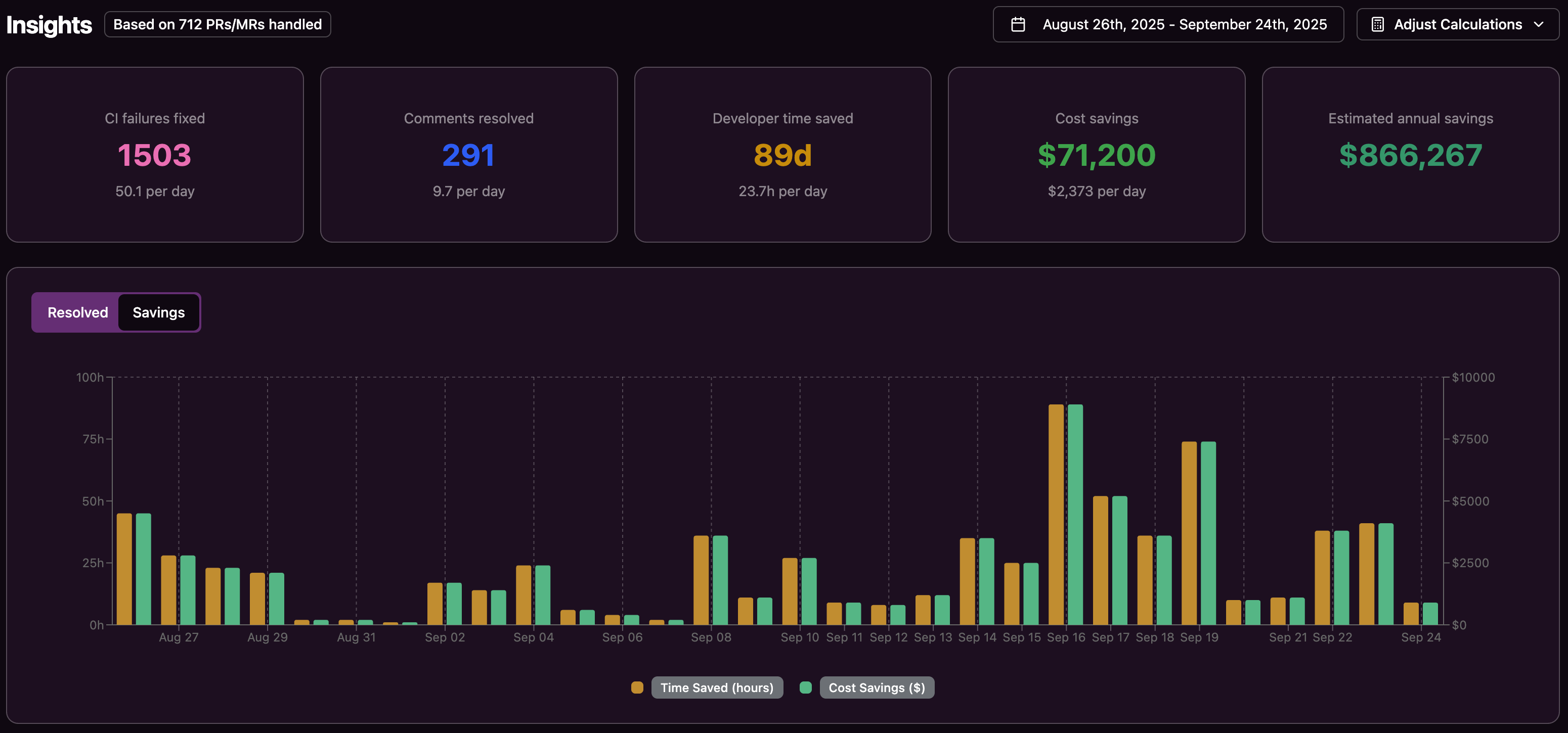
Want to see savings right away? Install Gitar to fix builds automatically and boost productivity.
Key Questions About AI-Driven Self-Healing CI
How Does Gitar Learn From Past Failures?
Gitar’s AI reviews data from every CI run, including logs, code updates, configurations, and contexts of both successes and failures. It builds a knowledge base mapping issues to solutions, refining its approach with each fix. This process helps it predict and solve similar problems more effectively over time.
What CI Failures Can Gitar Fix on Its Own?
Gitar handles a wide range of issues autonomously, starting with linting errors, dependency conflicts, and build failures. Over time, it learns to address unit test issues, environment mismatches, security scan failures, performance problems, and resource limits. Its capabilities grow with exposure to your specific failures.
How Does Gitar Manage New or Unique CI Issues?
For unfamiliar failures, Gitar starts cautiously by offering detailed analysis and suggested fixes for review. Developer approvals or custom fixes become learning data, helping Gitar handle similar issues independently later. This cycle ensures it improves even with novel problems.
Is It Safe for AI to Make Code Changes?
Gitar includes safety features like adjustable automation levels. Begin with ‘suggestion-only’ mode to review fixes, then move to auto-commits as trust builds. Rollback options, detailed logs, and environment validation reduce risks. Its learning improves accuracy over time for safer automation.
How Does Learning AI Improve CI Compared to Manual Methods?
Learning AI shifts CI from reactive fixes to proactive prevention. Unlike manual debugging, which doesn’t stop repeat issues, Gitar builds knowledge to spot and prevent problems early. It adapts to changes automatically, maintaining reliability as environments evolve.
Build a Self-Healing CI Pipeline With Gitar
CI failures remain a major drag on developer productivity, consuming time and focus needed for innovation. Quickly addressing failing tests is vital to avoid frustration and delays. Manual debugging can’t solve recurring issues or build lasting knowledge.
Gitar’s AI learns from past failures to heal pipelines proactively. By studying patterns and contexts, it creates a system that improves continuously, reducing the need for constant human input.
Teams using Gitar see faster development with less interruption, lower costs from fewer failures, better pipeline stability, and happier developers freed from tedious tasks.
This shift from manual fixes to autonomous healing changes software delivery. CI failures don’t have to slow you down. With a learning system, teams gain steady productivity improvements.
Stop losing time to debugging. See how Gitar can redefine your CI/CD process. Book a demo with Gitar today.