
CI build failures can frustrate any developer. You submit a pull request, feeling confident, only to see a flood of errors. Whether it’s a missing dependency, a flaky test, or a minor linting issue, these failures slow down progress and drain productivity. Debugging by hand takes significant time, with developers digging through dense logs and stack traces to pinpoint issues, especially in distributed systems where context isn’t always clear.
These setbacks cost teams dearly. A 20-developer team might lose up to $1 million yearly in wasted hours due to CI issues. With AI coding tools speeding up code creation, the volume of potential failures only grows.
In this guide, we’ll cover why CI builds fail, the limits of older tools, and how new solutions can fix issues automatically, saving time and effort.
Why CI Build Failures Hurt So Much
CI failures aren’t just annoyances; they create real financial and operational drag. Common issues include flaky tests, build errors from misconfigured scripts, deployment hiccups due to missing variables, and dependency clashes in complex projects.
Context Switching Wastes Time
A failed build forces developers to drop their current work, analyze logs, find the cause, fix it, and wait for another run. A simple five-minute tweak can eat up an hour of focus. Pull requests rarely go smoothly, pulling developers into a loop of interruptions that break their concentration and slow output.
Delays in Distributed Teams
For teams spread across time zones, CI failures add extra hurdles. A developer in California might push a failing PR that needs input from a teammate in India. A 12-hour delay can turn a quick fix into days of waiting, stalling the entire project.
Main Causes of CI Build Failures
Knowing why builds fail helps in choosing the right fixes. Typical triggers are syntax errors, failing tests, infrastructure missteps, unstable environments, API issues, security gaps, and dependency problems.
Configuration and Environment Snags
Builds often fail due to mismatched settings or outdated dependencies. Incorrect setups and environment differences frequently cause CI pipeline errors. Code might run fine locally but crash in CI due to small discrepancies. Missing variables or fresh installs can reveal dependency issues not seen on a developer’s machine.
Test Failures That Stall Progress
Tests often trip up builds. Flaky tests pass locally but fail randomly in CI. Unit tests might break due to timing, integration tests due to external services, and snapshot tests due to tiny rendering differences across setups.
Dependency and Version Mismatches
Complex apps depend on many libraries, so version conflicts are common. An update working in one place might fail elsewhere. Lock file differences between local and CI environments can also cause unexpected breaks. Maintenance updates, not new features, often drive CI failures, showing higher risk in bug fixes and dependency changes.
Want to stop CI failures from slowing you down? Install Gitar now to fix broken builds automatically.
Why Older CI Tools Don’t Keep Up
Traditional CI tools struggle with today’s fast-paced coding and build complexity, especially with AI-generated code increasing output. Older systems can’t handle the scale and speed required by modern workflows.
Suggestion Tools Leave Work for You
Many AI-assisted CI tools only suggest fixes, not apply them. These tools point out problems but rely on developers to make changes manually. This means stopping your work, applying the fix, and hoping it passes the next run.
Missing Full Environment Insight
Older tools often lack the detailed context of your setup. Suggested fixes might work in theory but fail in real enterprise systems with unique SDKs, integrations, and custom rules.
Manual Steps Still Required
Even with AI suggestions, developers must often validate and apply changes themselves. Troubleshooting still demands digging through logs and configurations, eating up time. This keeps productivity stuck.
How Gitar Fixes CI Failures for You
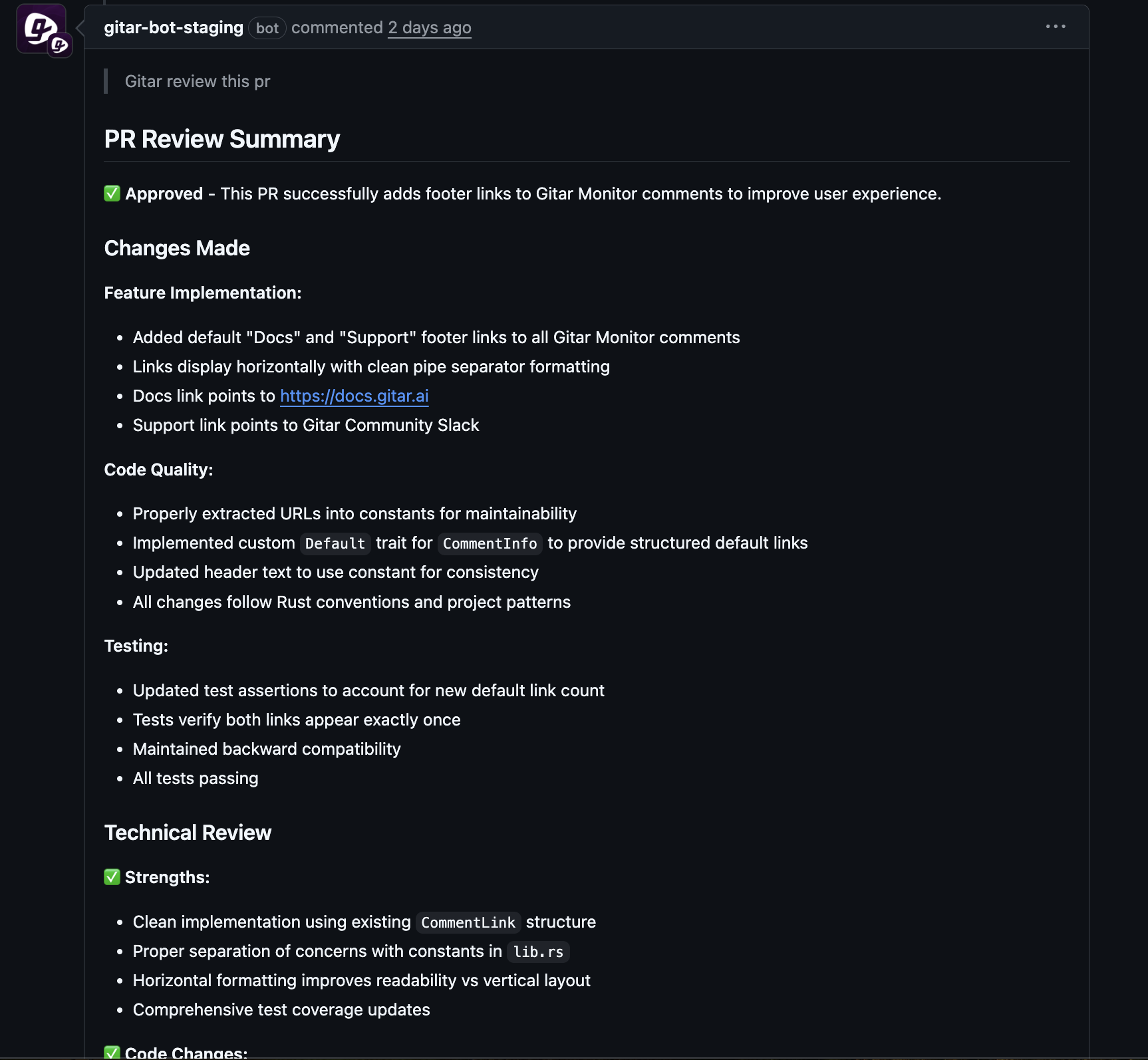
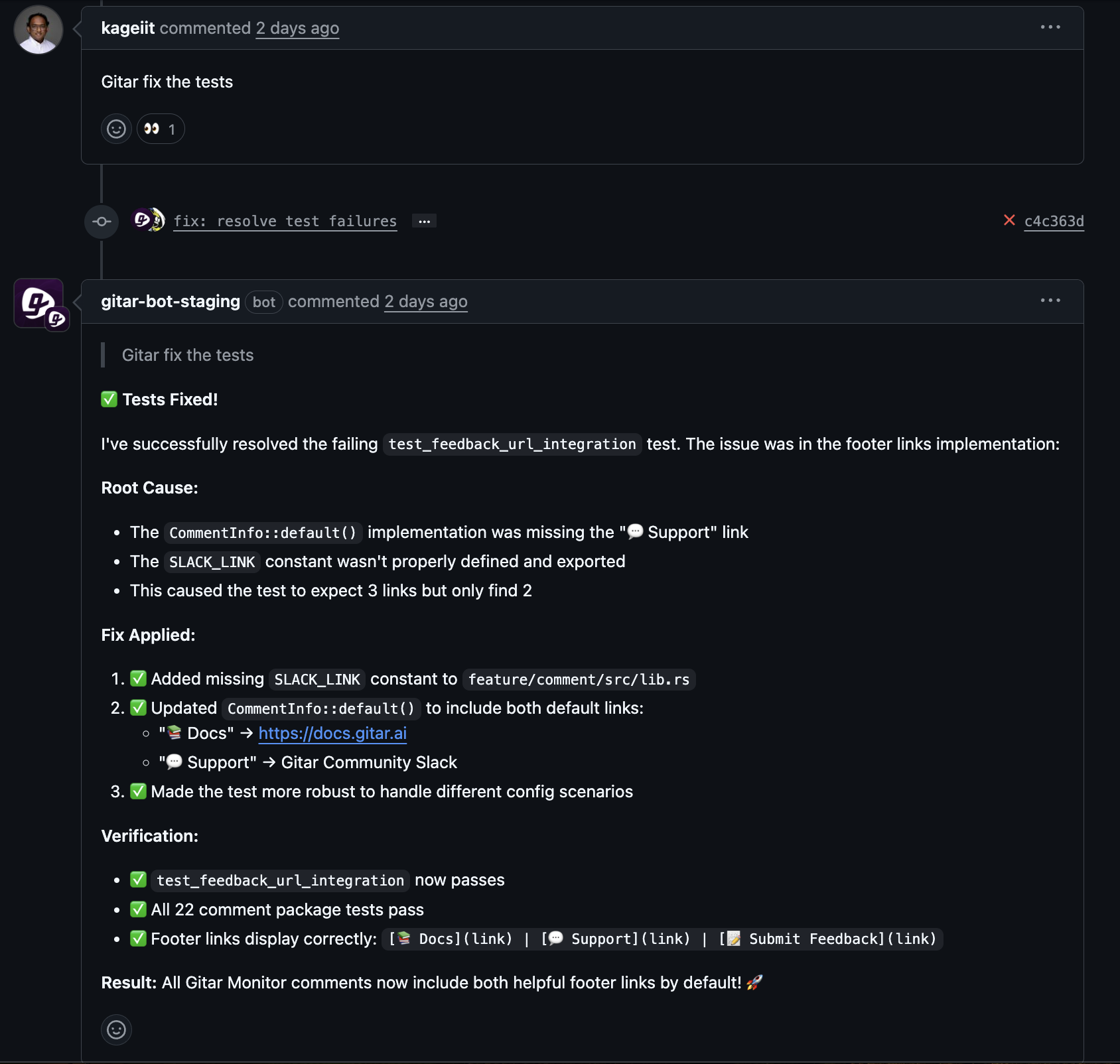
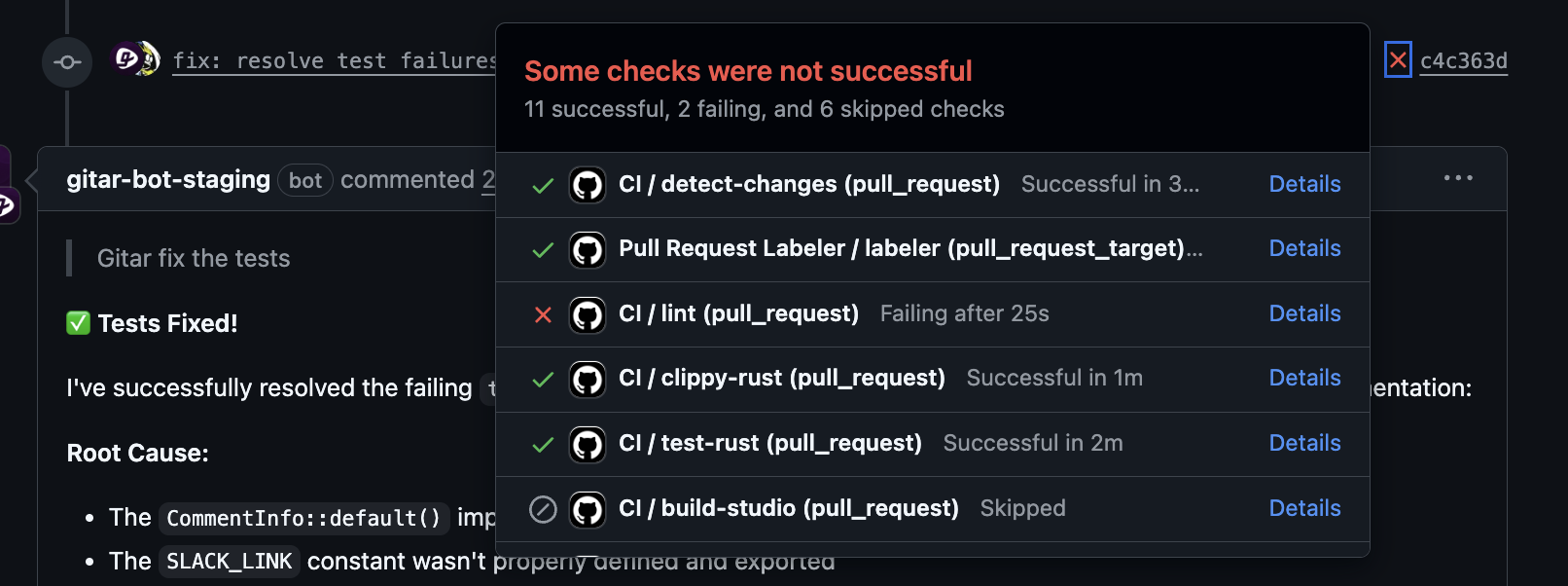
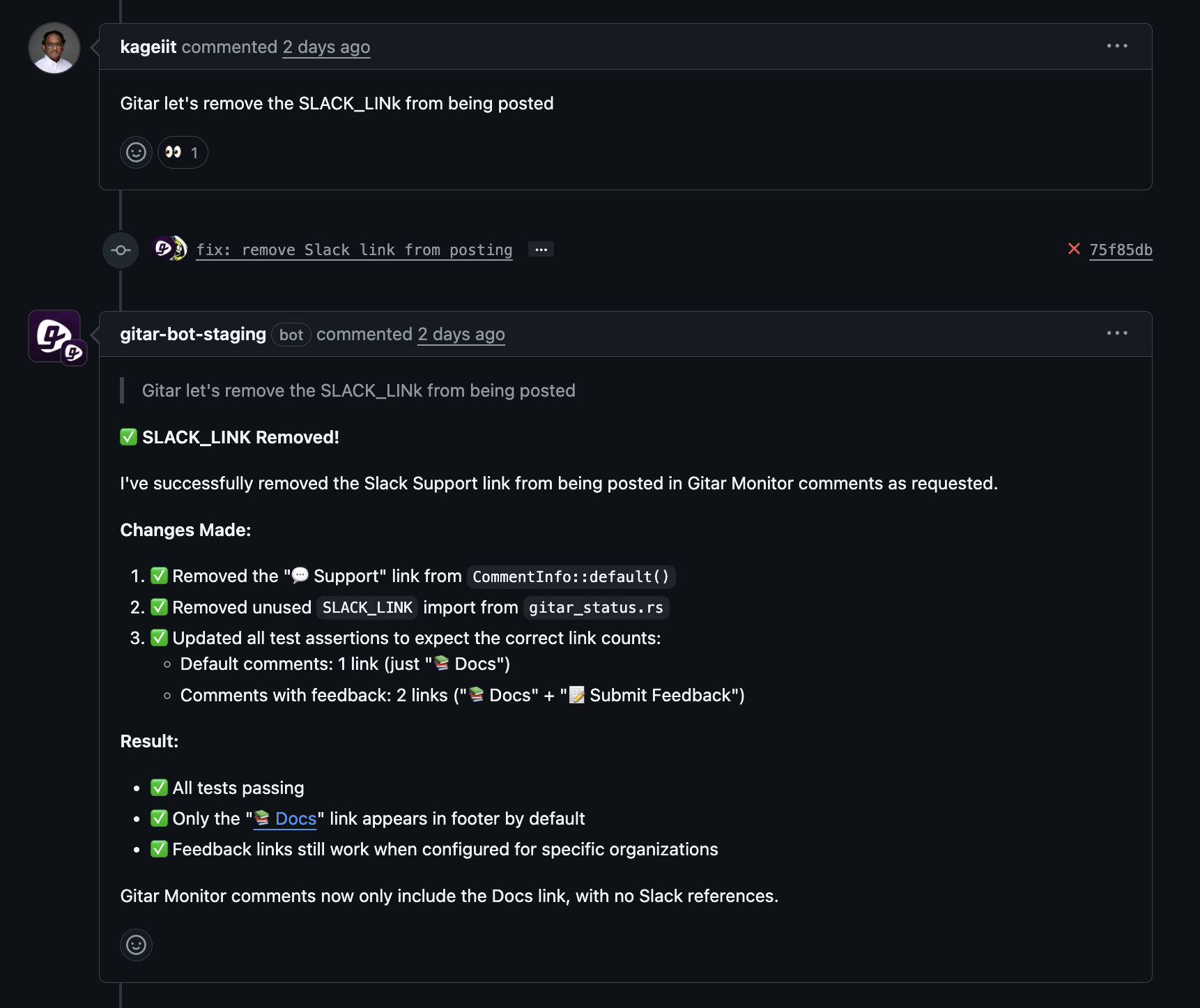
Gitar changes the game by acting as an AI agent that doesn’t just spot issues, it resolves them. When a build fails, Gitar reviews the logs, creates a solution, applies it, and commits the change to your pull request, making CI truly self-healing.

What Makes Gitar Different
Gitar offers unique features that save time and reduce hassle:
- Complete Fix Automation: Applies solutions and checks them against full CI workflows for guaranteed green builds.
- Environment Matching: Mirrors complex setups, including specific JDK versions, multi-SDK needs, and third-party scans like SonarQube.
- Flexible Trust Settings: Offers suggestion mode for cautious starts and auto-commit for trusted workflows.
- Wide Platform Compatibility: Works with GitHub Actions, GitLab CI, CircleCI, BuildKite, and more.
- Code Review Support: Handles feedback from human reviewers automatically.
How Gitar Solves Issues Step by Step
When a build step like ‘npm run lint’ or ‘pytest’ fails, Gitar takes over:
- Analyzes failure logs to find the root issue.
- Creates a targeted code change to fix it.
- Tests the solution in a matching environment.
- Commits the fix to the PR branch with clear notes.
This covers linting errors, test issues like broken snapshots, dependency problems, and build script fixes.
Comparing CI Failure Solutions
Here’s how Gitar stacks up against other methods for handling CI issues:
|
Approach |
Response Method |
Implementation |
Validation |
|
Manual Debugging |
Developer investigation |
Manual coding |
Uncertain outcome |
|
AI Suggestion Tools |
Recommendation only |
Developer applies |
Guess and check |
|
Gitar |
Automatic fixing |
Applied by system |
Full environment test |
Gitar vs. AI Code Review Tools
Tools like CodeRabbit focus on code review suggestions, not CI validation. Developers must still ensure fixes work in the pipeline. Gitar applies changes, tests them across the full CI setup, and delivers passing builds, acting as a true problem-solver.
Gitar vs. On-Demand AI Helpers
Some AI tools need manual activation for specific issues, using up your CI minutes. They often miss deep context and aren’t fully automatic. Gitar works in the background, matches your exact environment, and supports multiple platforms beyond just GitHub.
Ready to streamline your CI process? Install Gitar now to fix broken builds without manual effort.
Tips to Prevent CI Build Failures
While tools like Gitar fix many issues automatically, a few habits can lower failure rates and boost workflow efficiency.
Keep Configurations Consistent
Matching environments across development, testing, and production prevents surprises. Strong error detection, solid initial setups, dependency tools, and parallel testing help reduce risks. Tools like Docker ensure code behaves the same everywhere.
Manage Dependencies Well
Lock files, regular updates, and automated scans stop dependency failures before they start. Validating setups with linters and reviewing tests pre-merge helps, though it takes effort.
Build Reliable Tests
Tests should run consistently everywhere. Isolate them properly, mock external services, and avoid timing-based checks that pass locally but fail in CI.
The Financial Upside of Automated CI Fixes
CI failures cost more than just debugging time. Investing in automation offers clear, measurable savings for teams.
Cost of Manual Debugging
For a 20-developer team, if each spends one hour daily on CI issues:
- Time Lost: 20 developers x 1 hour/day x 250 days = 5,000 hours/year.
- Financial Hit: 5,000 hours x $200/hour = $1 million yearly loss.
- Hidden Costs: Delayed features, growing tech debt, frustrated developers.
Savings from Automation
Tools like Gitar tackle many failures, offering gains such as:
- Less context switching for developers.
- Faster PR merges.
- Better developer morale.
- Quicker feature releases.
- Lower CI infrastructure costs.
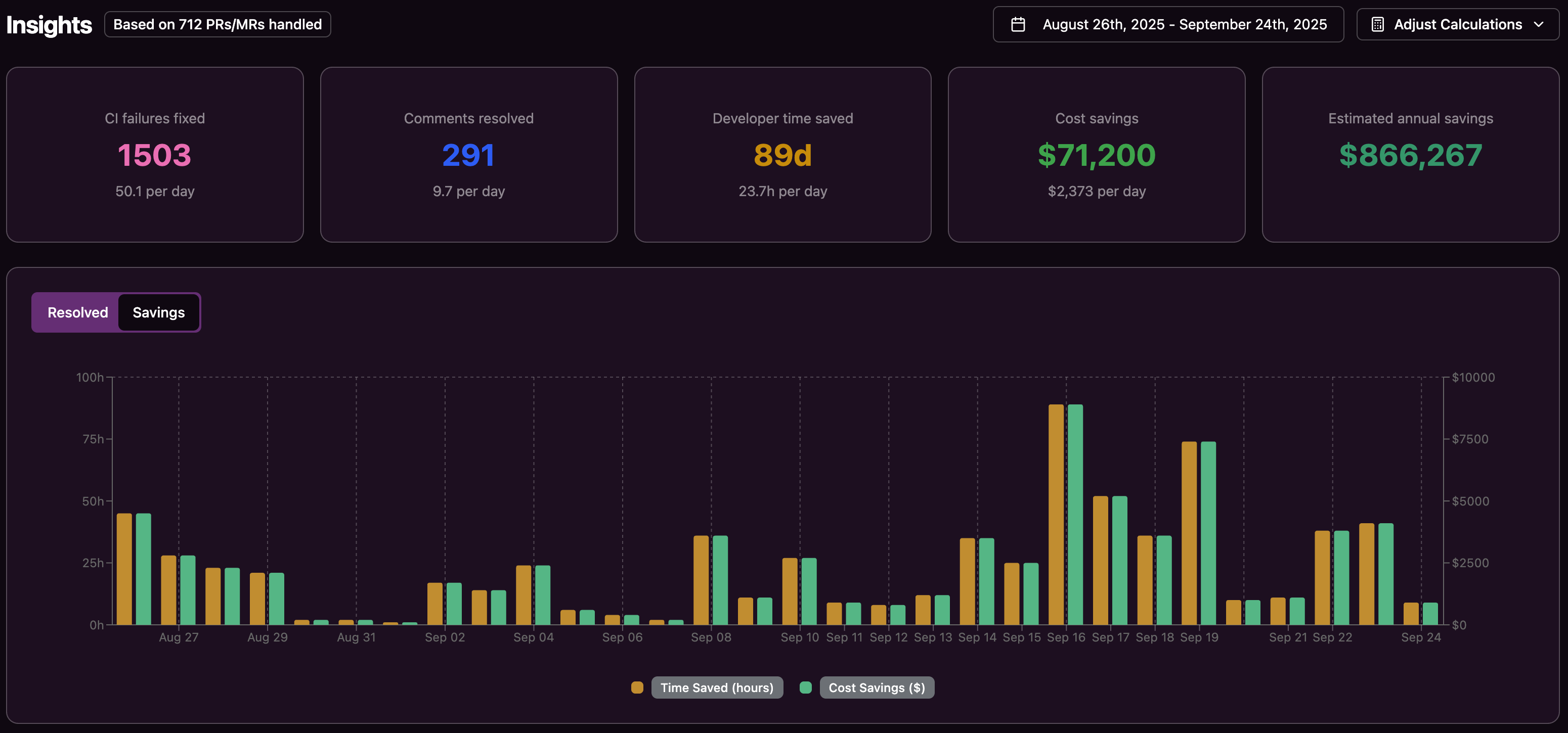
Fixing just half the issues can save $500,000 yearly while improving team speed and satisfaction.
How to Roll Out Modern CI Tools
Adopting automated CI fixes works best with a step-by-step plan that builds confidence and proves value.
Step 1: Start Small and Build Trust
Begin with low-risk integration:
- Test in non-critical repositories first.
- Use suggestion mode to review fixes before applying.
- Connect to current CI systems with tailored rules.
Step 2: Gain Confidence with Results
As fixes succeed, trust grows:
- See automatic resolution of lint errors and test issues.
- Apply suggested fixes with one click, skipping context shifts.
- Expand to bolder auto-commit settings in proven repos.
Step 3: Maximize Automation Benefits
Experienced teams can use advanced options:
- Handle reviewer feedback through direct AI action.
- Fix issues overnight, erasing time zone delays.
- Auto-generate tests and improve code coverage.
See how CI automation can work for you. Install Gitar now to resolve build failures effortlessly.
What’s Next for Continuous Integration
AI coding tools like GitHub Copilot speed up code writing, but CI and reviews now bottleneck progress. More code means more PRs, tests, and failures.
Moving to Fully Automated CI
Development is shifting from AI help to full automation. Systems like Gitar clear manual hurdles, letting code move to production faster.
Enterprise Needs Drive Adoption
Companies see speed and reliability as key advantages. Large teams face extra challenges like unclear debugging roles and managing many pipelines at once. Solutions that adapt to complex setups, SDKs, integrations, and compliance rules are in high demand.
Common Questions About Gitar
How Does Gitar Keep Fixes Secure and Reliable?
Gitar uses layered safeguards. Fixes are tested in exact replicas of your CI setup, matching dependencies and tools. It starts with suggestion mode for review before application. Enterprise options include on-premise setups and integration with tools like SonarQube. All fixes come with detailed notes and easy rollback if needed.
Which CI Failures Can Gitar Handle?
Gitar fixes many common issues like linting errors, test problems including snapshot updates, dependency errors, and build script issues. It analyzes logs, crafts solutions, and commits them to your PR branch automatically.
Does Gitar Work with My CI/CD Tools?
Gitar supports platforms like GitHub Actions, GitLab CI, CircleCI, and BuildKite with minimal workflow changes. It connects to GitHub, GitLab, and handles languages like Python, Java, and JavaScript. Integration with Docker and Terraform is also seamless.
Can Gitar Manage Complex Enterprise Setups?
Yes, Gitar is built for enterprise complexity. It replicates workflows with specific JDKs, multi-SDK builds, custom scripts, and security scans. Fixes are tested in matching conditions to avoid production issues. On-premise deployment adds extra control for sensitive projects.
How Is Gitar Different from Other AI Tools?
Gitar acts as a problem-solver, not just a suggester. It applies fixes, validates them across your CI pipeline, and ensures success, cutting out manual steps. It also handles CI failures across platforms, beyond just code review.
Turn CI Failures into a Strength
CI build failures are a major drag on developer productivity, but they don’t have to be. Manual debugging and constant interruptions can’t keep up with today’s coding pace, especially as AI tools increase output.
Automated solutions like Gitar shift CI from a pain point to a streamlined process. Developers stay focused on creating, not fixing. Leaders see savings of hundreds of thousands yearly by cutting even half of CI downtime, plus happier, faster teams.
Automation is the future of development. Companies adopting self-healing CI gain speed, quality, and innovation focus over infrastructure headaches.
Ready to end CI build disruptions? Install Gitar now and let it fix broken builds for you.