
CI build failures quietly drain time and energy from engineering teams, slowing down software delivery. Let’s talk about why these failures hurt so much, the real impact they have, and how autonomous tools like Gitar can step in to fix issues without the usual hassle.
Why CI Build Failures Slow Down Your Team
CI failures disrupt workflows in frustrating ways. You push a pull request, expecting it to sail through, only to see it fail over a small issue like a missing dependency or a formatting error. Then comes the grind: reading error logs, switching back to your local setup, making a tiny fix, and waiting for the pipeline to rerun, sometimes repeatedly.
How Context Switching Hurts Productivity
Submitting a pull request rarely means you’re done. Often, you move to another task, only to get pulled back by a failed build or review feedback. This constant back-and-forth breaks your focus. High CI failure rates directly reduce developer efficiency due to time lost on debugging and retries.
A quick 30-minute fix for a CI issue can easily steal an hour of your day when you account for losing your mental momentum. That deep focus where you solve tough problems slips away, and each interruption means starting over mentally.
Install Gitar today to fix broken builds automatically and keep your focus on coding.
Delays That Push Back Releases
CI failures don’t just affect one developer, they delay entire projects. Features get stuck, sprints miss targets, and release schedules slip. In a fast-moving industry, shipping software on time isn’t optional, it’s critical.
Manual debugging drags out timelines and slows down how often teams can deploy. These delays pile up across teams, turning small glitches into major roadblocks. When competitors ship while your team debugs, you lose ground.
Frustration and Burnout from Repetitive Fixes
Constant CI failures take a toll on morale. Developers spend hours on mundane tasks like deciphering error logs instead of solving meaningful challenges. These failures disrupt workflows as engineers juggle logs and dashboards.
Engineers want to build, not debug syntax errors or fix formatting. When too much time goes to repetitive tasks, job satisfaction drops. This can lead to burnout, lower morale, and even higher turnover.
The Real Cost of Lost Time
CI failures hit budgets hard. For a 20-person engineering team, if each developer loses just one hour daily to CI issues, that’s around $1 million in lost productivity yearly, based on a $200 hourly rate including overhead.
Beyond that, there’s wait time. Developers often wait for builds to rerun after fixes, especially on complex pipelines. This idle time adds inefficiency, whether they switch tasks or sit waiting. Plus, failed builds burn compute resources on cloud CI platforms, adding direct costs with each retry.
Meet Gitar: Autonomous Fixes for CI Failures
Manual debugging or even AI suggestions still demand your attention to analyze and apply fixes. That’s not enough. What teams need is a tool that handles CI failures on its own. Gitar steps in as an autonomous agent, detecting issues, creating fixes, applying them, and updating pull requests without needing your input.

What Gitar Does to Clear CI Roadblocks
Gitar offers practical solutions that save time and reduce frustration. Here’s how it helps:
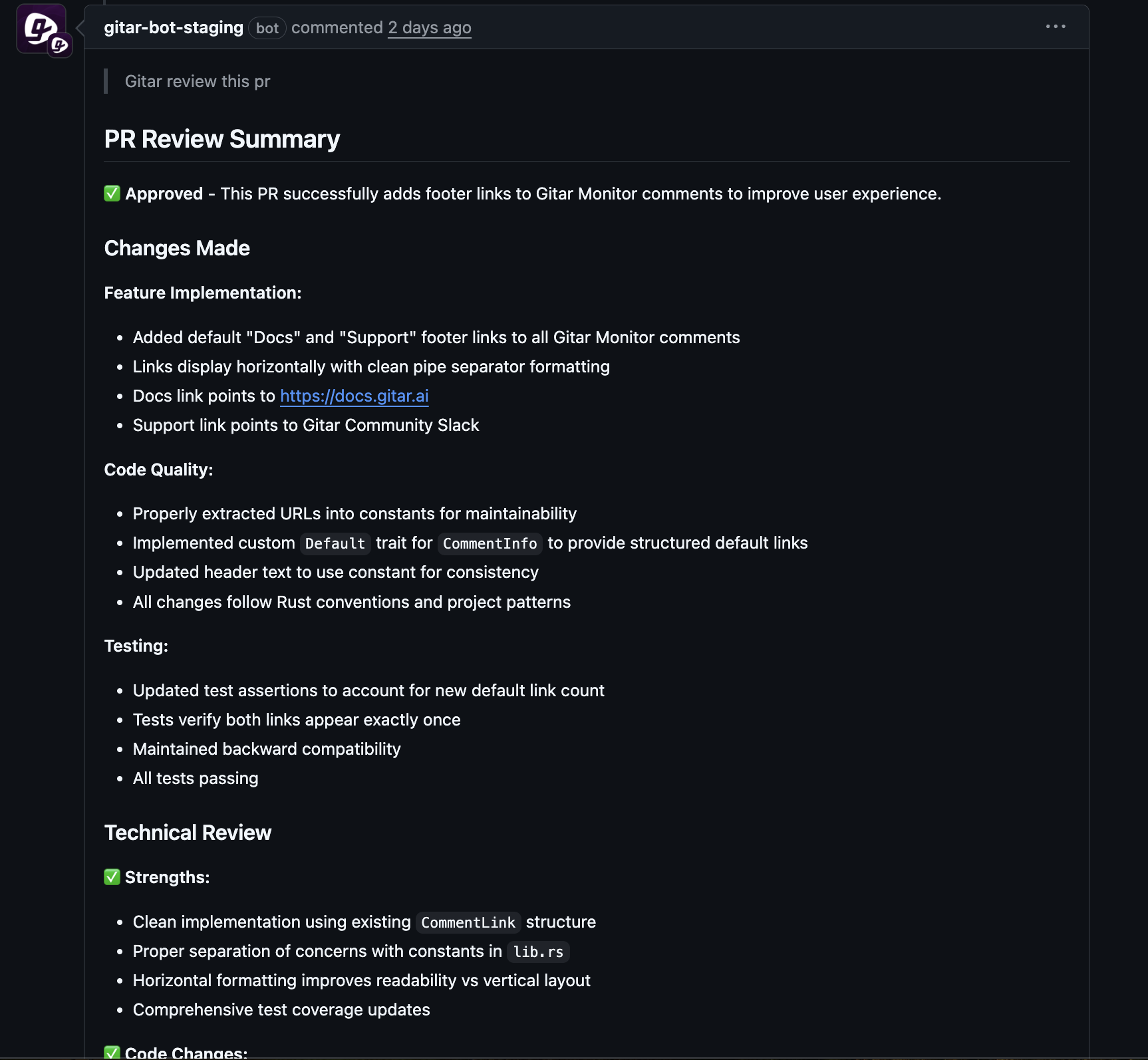
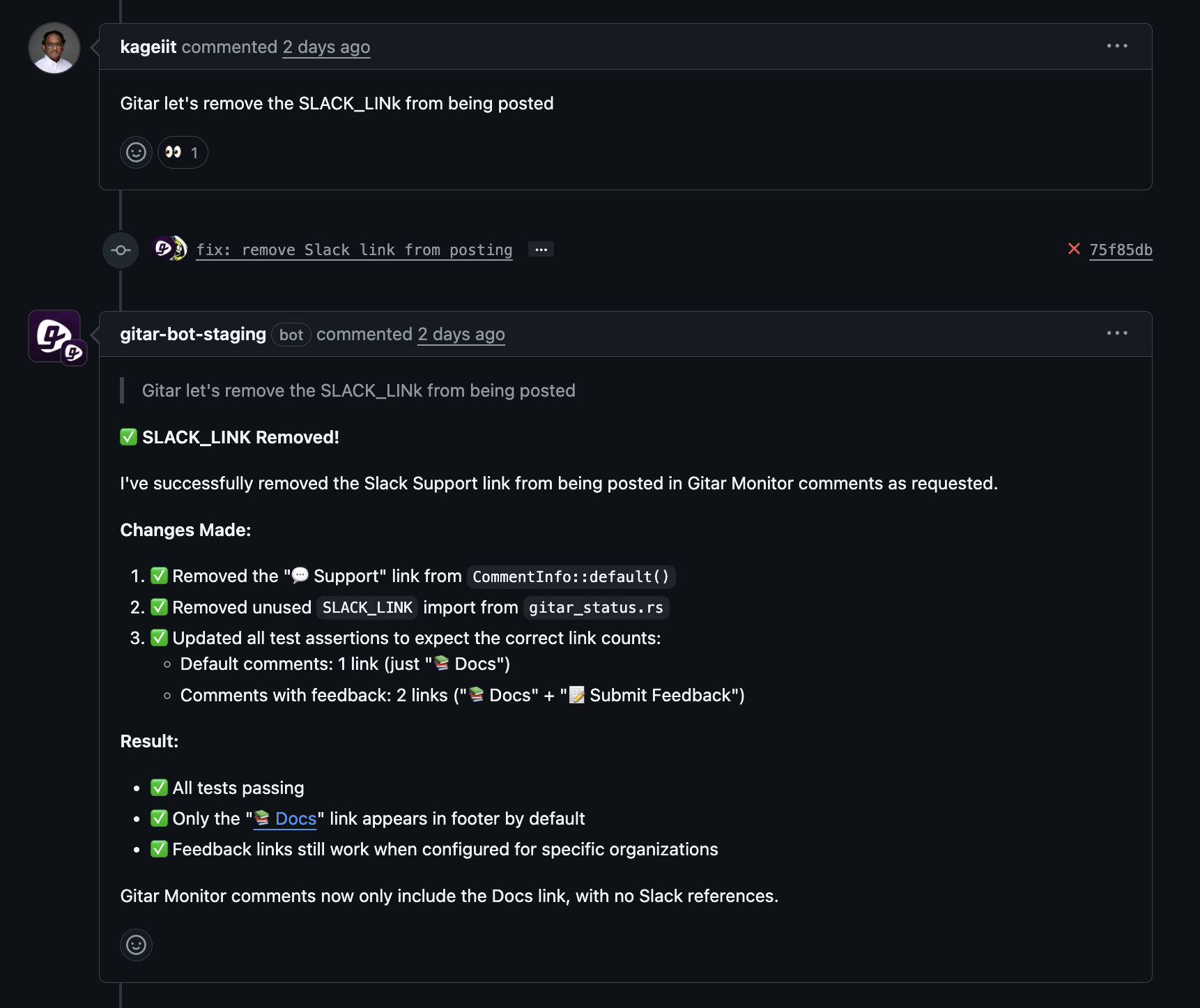
- Complete Fix Automation: When a CI check fails, whether it’s a linter issue or a test error, Gitar analyzes logs, finds the cause, generates a fix, and commits it to the pull request. No manual steps needed.
- Environment Matching: CI pipelines often fail due to complex, interdependent stages. Gitar replicates your exact setup, including JDK versions and dependencies, to ensure fixes fit your workflow.
- Code Review Support: Beyond CI issues, Gitar handles feedback from reviewers, applying requested changes directly to speed up review cycles, especially for distributed teams.
- Flexible Trust Options: Teams can start with a cautious mode where fixes appear as suggestions for approval. Once comfortable, switch to full automation with rollback options if needed.
- Wide Platform Compatibility: Gitar works across various CI tools, fitting into your existing systems without disruption.
Ready to save time and ship faster? Install Gitar now to automate CI fixes.
How Gitar Tackles Specific CI Failures
Gitar’s ability to handle common CI issues saves developers from tedious debugging. Here’s a look at how it addresses specific problems.
Fixing Syntax and Formatting Issues
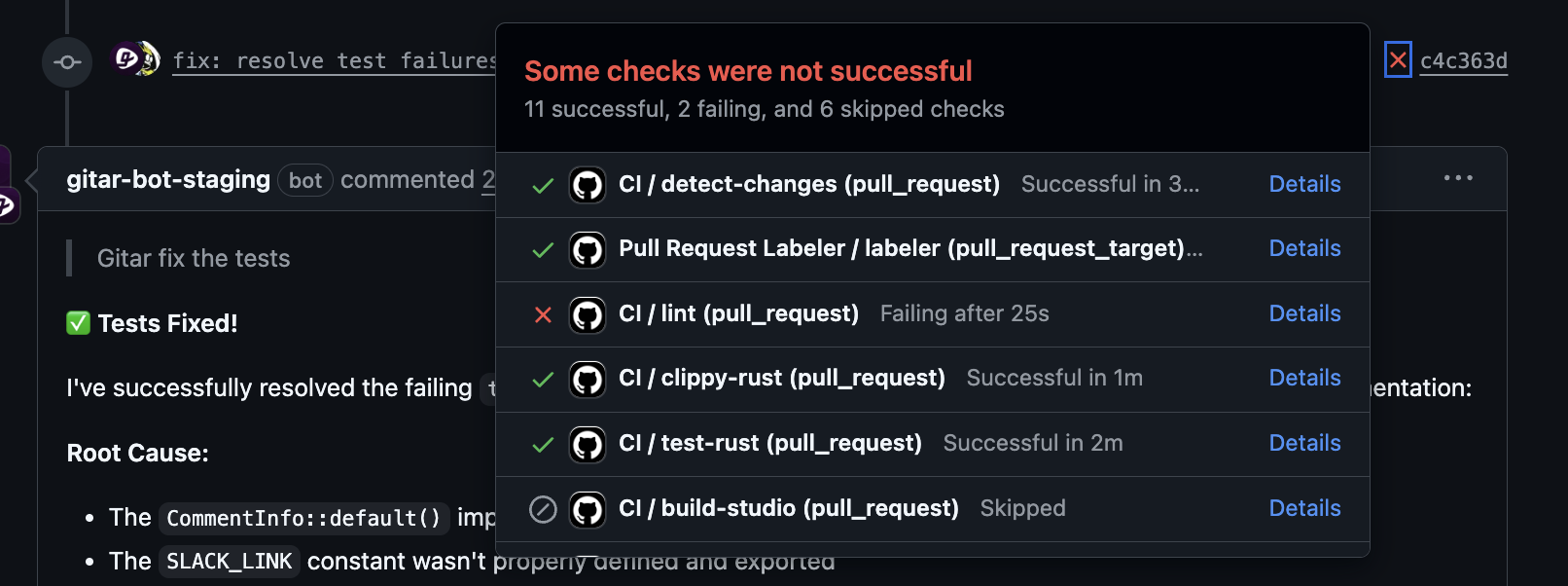
Many CI failures come from small errors like syntax mistakes or style violations. Syntax and linter errors are among the top reasons builds fail. Gitar spots issues like missing semicolons or incorrect spacing and corrects them based on your project’s rules, preventing failed builds over minor details.
Resolving Dependency and Build Errors
Dependency issues often trip up builds due to complex relationships. Missing dependencies or configuration errors frequently cause failures. Gitar checks files like package.json, identifies gaps, and applies fixes. It also corrects build tool errors to keep pipelines running smoothly.
Handling Test Failures
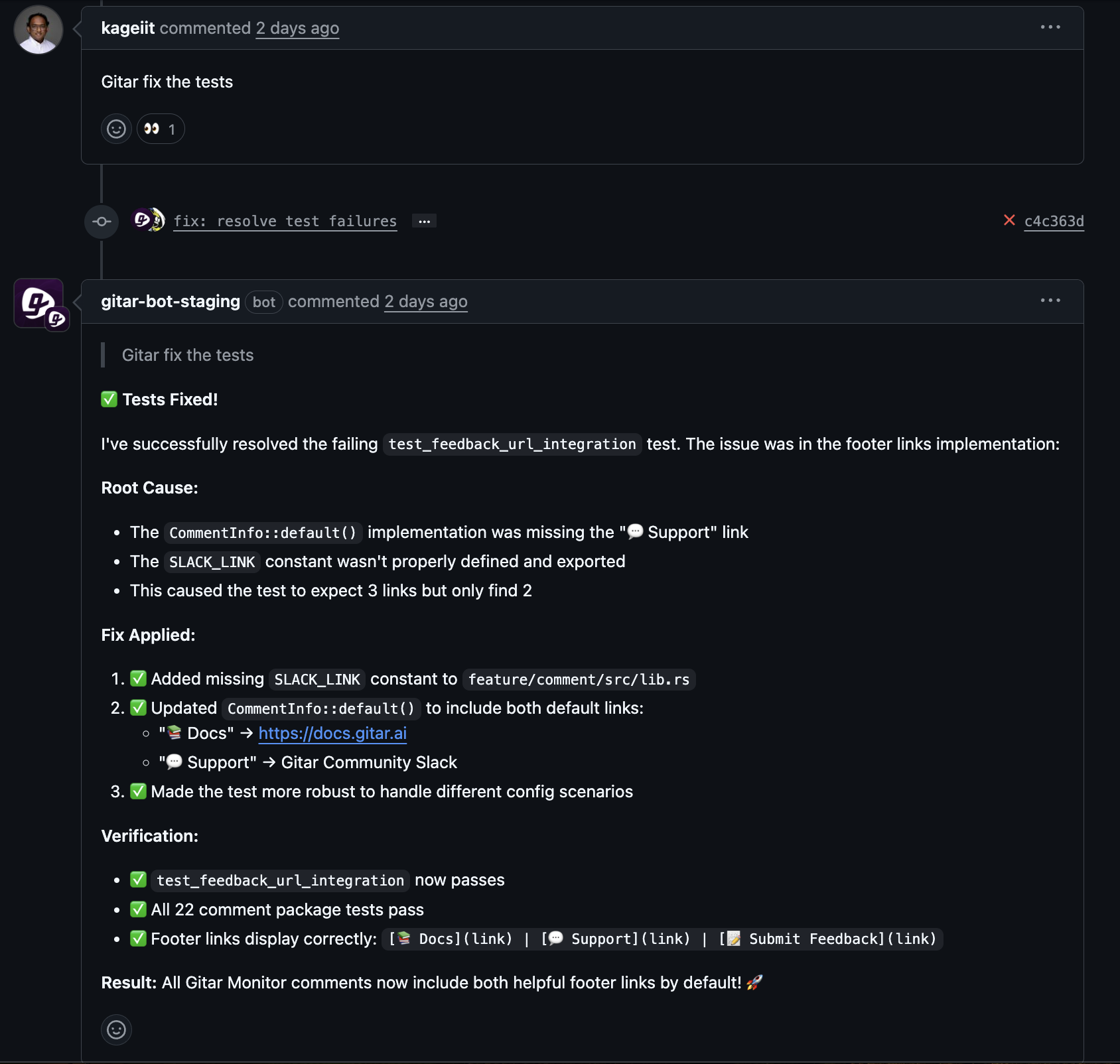
Test failures, like outdated snapshots or broken assertions, waste time on mechanical fixes. Gitar updates these elements to match recent code changes when suitable, cutting down maintenance effort for test suites.
Why Gitar Beats Manual and AI-Assisted Fixes
Gitar’s autonomous approach stands out when compared to traditional debugging or suggestion-based tools. See how it stacks up.
Comparing Gitar to Other Methods
|
Feature |
Gitar (Autonomous Fixes) |
Manual Debugging |
AI Suggestion Tools |
|
Problem Resolution |
Fixes and Validates Automatically |
Fully Manual Process |
Offers Suggestions Only |
|
Context Switching |
None, Runs in Background |
High and Disruptive |
Still Required |
|
Merge Speed |
Faster with Automation |
Slow and Repetitive |
Depends on Manual Action |
|
Environment Fit |
Matches Your Setup |
Relies on Human Effort |
Often Too Generic |
|
Validation |
Checks Fixes Against CI |
Manual Build Retries |
No Validation Included |
|
Developer Effort |
Minimal |
Very High |
Still Noticeable |
|
Deployment Rate |
Higher with Automation |
Limited by Delays |
Minimal Improvement |
Unlike tools that just suggest fixes, Gitar handles the entire process. AI assistants can highlight CI errors but still need developer action to apply fixes. Gitar implements solutions and validates them, often before you even notice the issue.
How Fixing CI Failures Boosts Your Business
Automating CI fixes does more than help individual developers. It creates ripple effects that benefit the whole organization.
Speeding Up Market Delivery
Getting features out quickly matters in competitive fields. When CI failures stop holding up deployments, teams maintain momentum. Customers get updates sooner, and your business can react faster to market needs.
Cutting Costs and Using Resources Better
Failed builds waste compute resources. Fixing them quickly lowers cloud CI costs. For a 20-person team, cutting just 30 minutes of daily debugging saves about $500,000 yearly in labor costs, money that can fund new projects or hires.
Improving Team Morale
Developers feel better when they focus on real challenges instead of endless fixes. Reducing CI friction boosts satisfaction, cuts burnout, and helps keep your team engaged.
Managing Complexity at Scale
As companies grow, CI issues get trickier. Dependency mismatches and configuration errors become more common in larger setups. Gitar handles complex enterprise needs, ensuring reliability as your operations expand.
Install Gitar now to automate fixes and ship software faster.
Common Questions About Gitar and CI Fixes
How Does Gitar Help Distributed Teams Avoid Delays?
Gitar applies fixes as feedback or failures happen, cutting delays from time zone differences. A reviewer can comment, and Gitar updates the code, so it’s ready when the developer logs in, keeping projects moving.
Can Gitar Work with Complex Enterprise Setups?
Yes, Gitar supports intricate environments by matching your exact workflow, including specific versions and dependencies, to deliver accurate fixes.
What If My Team Hesitates to Trust Automated Fixes?
Gitar lets you start with suggestions for approval, easing into automation. Full autonomy comes with rollback options and clear explanations of changes, building confidence over time.
How Is Gitar Different from Other AI Tools?
Unlike tools that only suggest fixes during coding, Gitar automates the full process. It applies and validates solutions for CI failures, updating pull requests without your input.
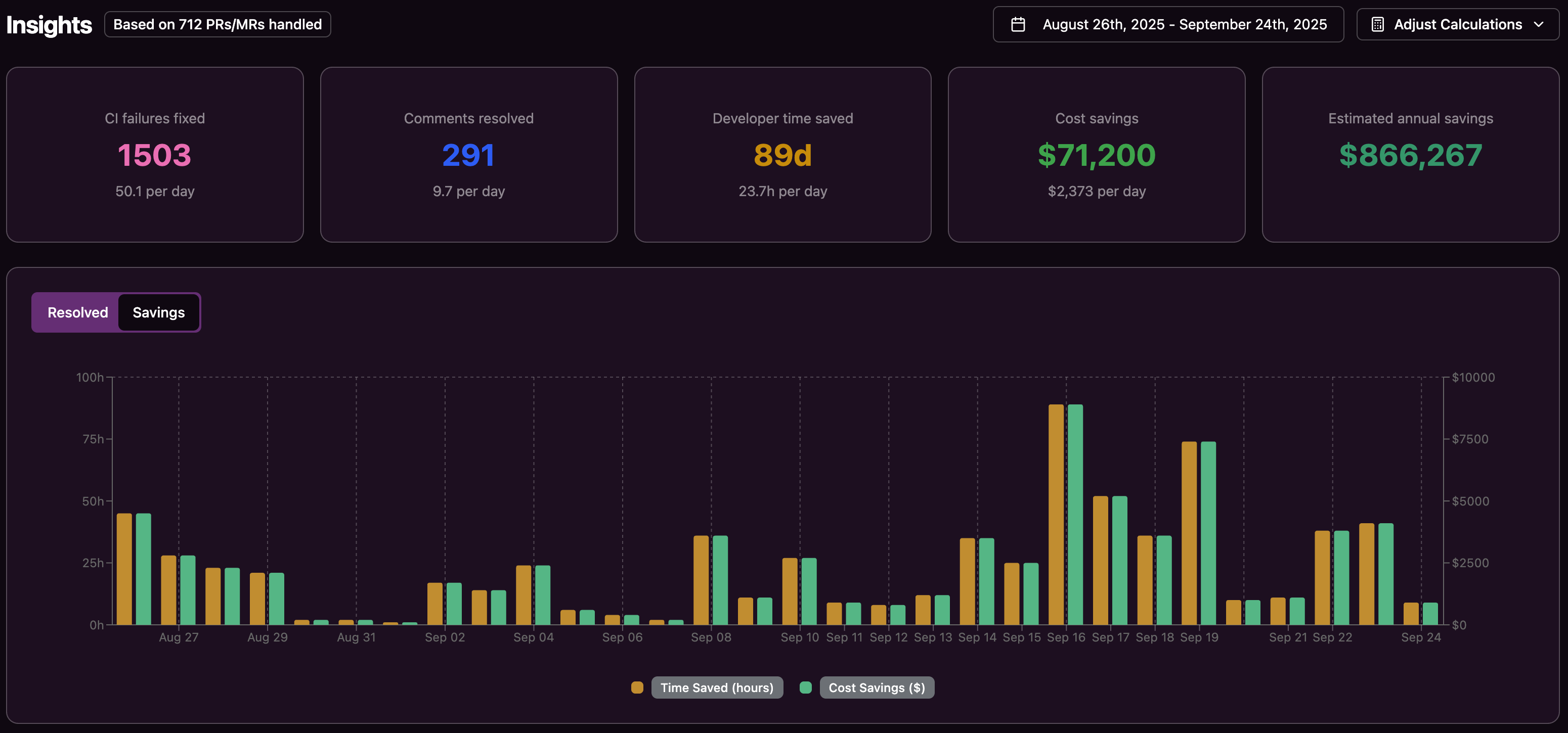
Final Thoughts: Save Time and Ship Faster with Gitar
CI build failures sap productivity with constant interruptions and delays. Manual debugging or suggestion tools don’t fully solve the problem. Gitar changes the game by automating fixes, letting your team focus on creating value instead of fixing errors.
Embracing autonomous CI tools like Gitar can lift your team’s efficiency and satisfaction. Stop spending hours on builds. Start delivering results. Install Gitar now to automate CI fixes and boost your pipeline.