
CI build failures slow down developers, delay releases, and drive up costs. This article looks at why these issues happen and how autonomous automation tools can solve them. We’ll focus on Gitar, a tool that doesn’t just point out problems but fixes them for you, helping your team move faster and save hours.
Why CI Build Failures Hurt Your Team
Lost Productivity: How Failures Break Developer Focus
CI failures disrupt developers’ workflow. You submit a pull request, expecting a smooth process, only to see a failed build. Suddenly, you’re pulled away from your task to dig through error logs, fix a linting issue, or figure out why a test broke.
This interruption cuts into productivity. Up to 30% of developer time can be lost to CI/CD issues due to context switching. A quick fix that should take 5 minutes often stretches into an hour as you struggle to refocus afterward.
Common causes include flaky tests, dependency conflicts, and differences between environments. These small issues add up, pulling you away from meaningful work.
Business Delays: Slower Releases and Higher Costs
CI failures don’t just frustrate developers, they slow down entire projects. Teams with faster pipelines deploy code twice as often. When builds fail, features get delayed, affecting your ability to deliver on time.
For a team of 20 developers, spending just one hour daily on CI issues adds up to 5,000 hours a year. At standard rates, that’s around $1 million in lost productivity. Add in pipeline issues like flaky tests or single-point failures, and releases grind to a halt.
Team Stress: Frustration and Burnout Risks
Constant CI failures wear developers down. They contribute to frustration, lower morale, and increase burnout. Debugging the same issues over and over feels like a waste of time, especially when it pulls you away from solving real problems.
For remote or distributed teams, the problem worsens. A quick fix can turn into days of back-and-forth across time zones. Developers may start over-testing locally to avoid breaking builds, slowing innovation and creating a cautious mindset.
How Autonomous CI Tools Solve the Problem
Instead of manually debugging every failure, autonomous CI tools step in to fix issues automatically. These systems don’t just detect problems, they analyze, resolve, and validate solutions without needing your input.
Unlike older tools that stop at identifying errors or suggesting fixes, autonomous tools handle the entire process from detecting a failure to committing a working fix. If a build fails due to a linting error or test issue, the tool applies the fix, checks it works, and updates the codebase for you.
This shift turns CI from a hurdle into a background process, letting developers focus on coding while the system manages itself.
Meet Gitar: Your Solution for Automatic CI Fixes
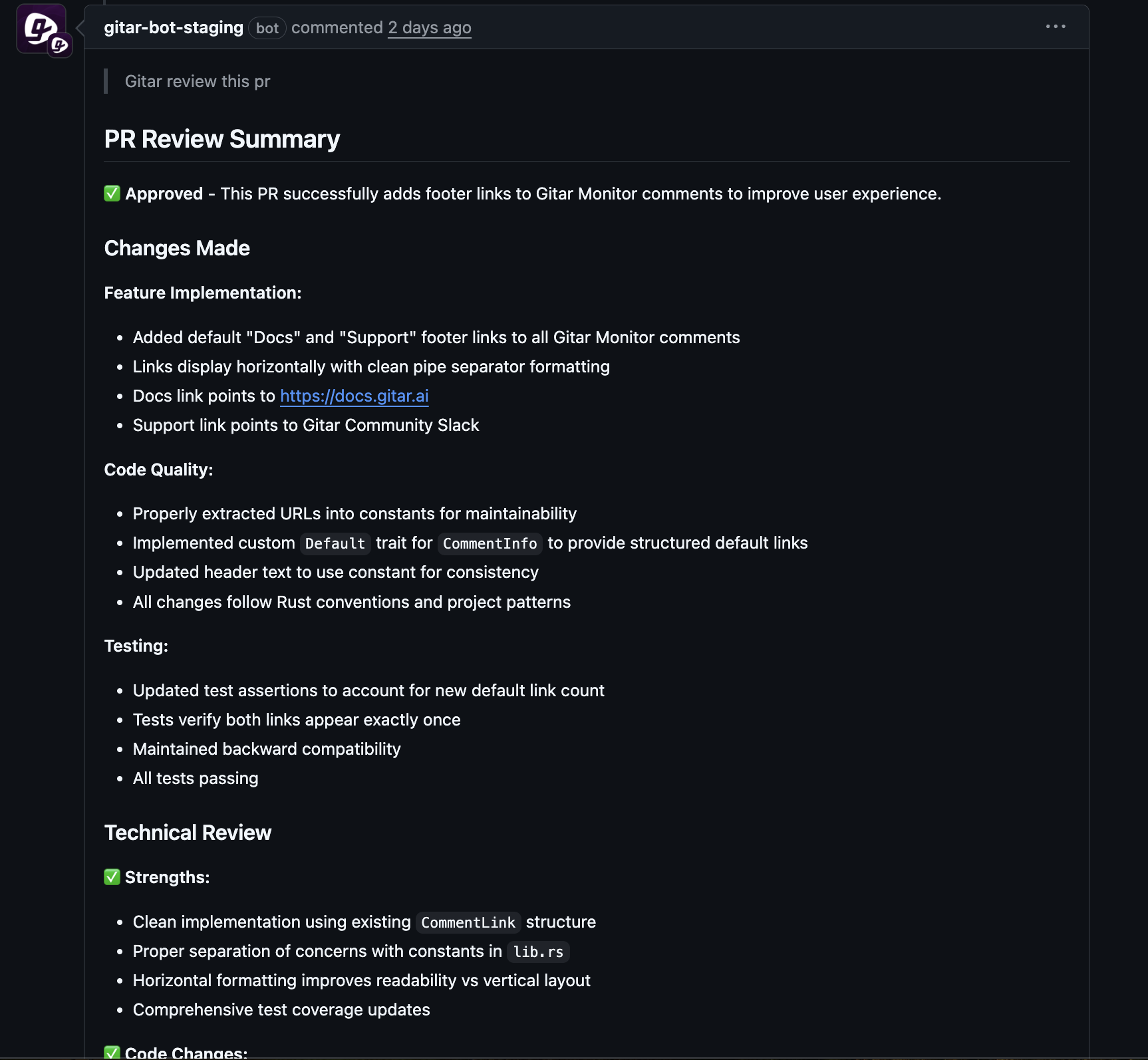
Gitar is an AI tool designed to fix CI failures and handle code review feedback on its own. It acts as a problem-solver, taking care of issues from start to finish, so your team doesn’t have to.

Here’s how Gitar helps:
- Complete Fix Process: When a build fails, Gitar spots the issue, creates a solution, applies it, and commits the change to your pull request branch. You come back to a green build.
- Accurate Environment Matching: Gitar mirrors your exact setup, including specific software versions and third-party tools like SonarQube. Fixes fit your system perfectly.
- Code Review Support: Reviewers leave comments, and Gitar makes the requested changes. This is ideal for teams across time zones, keeping work moving.
- Customizable Settings: Start with suggested fixes for review, then shift to full auto-commits as you build trust in the system.
- Works with Your Tools: Gitar supports GitHub Actions, GitLab CI, CircleCI, BuildKite, and more, fitting into your existing workflow.
Ready to stop debugging and start delivering? Install Gitar now to fix broken builds and ship software faster at https://gitar.ai/fix.
Key Ways Gitar Improves Your CI/CD Process
Save Developer Time and Increase Focus
Gitar frees up hours spent on debugging. Manually sorting through logs and testing fixes eats into valuable coding time. With Gitar, developers stay focused on building features instead of fixing builds.
This time savings grows over time. Developers commit more often and iterate faster when they’re not bogged down by CI issues.
Speed Up Releases and Market Delivery
Faster builds mean quicker merges. Automation can cut build failures and pipeline delays by over 50%. Features and fixes reach production sooner, keeping your team competitive.
Shorter cycles also mean quicker user feedback, helping you improve continuously and respond to market needs faster.
Cut Costs and Reduce Resource Waste
CI failures cost money through wasted time, repeated builds, and delayed innovation. Autonomous tools lower expenses by reducing debugging hours and infrastructure use.
For a 20-developer team, cutting CI debugging by half could save over $500,000 a year. That’s a direct return on redirecting focus to development.
Improve Code Consistency and Pipeline Stability
Gitar applies fixes that match your standards, tested in your full environment. This keeps code quality high. It also tackles legacy issues and outdated dependencies systematically.
By addressing failure patterns early, Gitar prevents recurring problems across your codebase.
Boost Team Morale and Prevent Burnout
Removing repetitive debugging tasks lifts team spirits. Autonomous tools reduce frustration by handling tedious fixes. Developers focus on creative work, leading to better job satisfaction and retention.
What Makes Gitar Different from Other Tools?
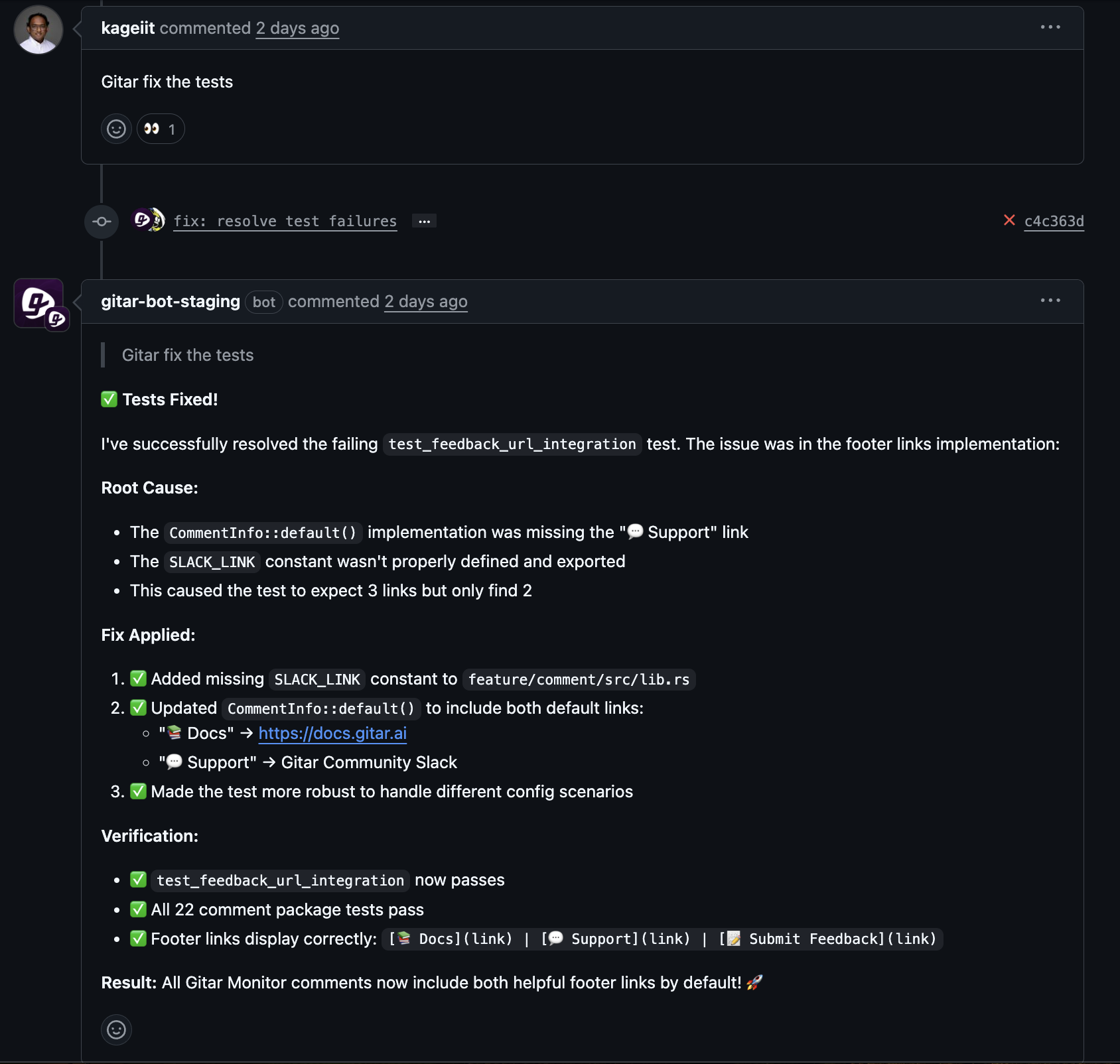
Many tools suggest fixes for CI issues, but Gitar goes further by fully handling the process. It doesn’t just propose solutions, it applies and validates them for you.
Suggestion-based tools still need developers to step in, test, and commit changes. Gitar cuts out these steps, fixing builds and ensuring they pass before you even notice a problem.
|
Feature / Tool |
Gitar (Autonomous CI Fixer) |
AI Code Reviewers (e.g., CodeRabbit) |
On-Demand AI Fixers (General Example) |
Manual Debugging (Status Quo) |
|
Action Type |
Fixes, Validates, Commits |
Suggests, Analyzes |
Suggests (requires manual trigger) |
Manual Diagnose, Fix, Commit |
|
CI Impact Guarantee |
Ensures Green Builds |
No Guarantee (manual validation) |
No Guarantee (manual validation) |
Dependent on Developer Skill |
|
Environmental Context |
Full Replication |
Limited (PR-centric) |
Limited (needs prompt engineering) |
Developer’s Local Env |
|
Autonomy Level |
Fully Autonomous |
Suggestion-Based |
Manual Trigger Required |
Zero Autonomy |
|
Interruptions & Context-Switch |
Minimal to None |
Frequent |
Frequent |
Constant |
|
Supported CI/CD Platforms |
Cross-Platform (GitHub, GitLab, CircleCI, BuildKite, etc.) |
Varies by Tool |
Varies by Tool |
N/A |
|
Developer Effort Required |
Very Low |
Varies by Tool |
Moderate (trigger, apply & validate) |
High |
|
Time Zone Optimization |
Yes (auto-resolve feedback) |
No |
No |
No |
Autonomous tools like Gitar mark a step forward in CI/CD. They deliver results without pulling developers away from their work.
Install Gitar now to fix broken builds and ship software faster at https://gitar.ai/fix.
Common Questions About CI Failures and Fixes
What Causes Most CI Build Failures?
CI builds often fail due to flaky tests, dependency conflicts, and environment mismatches. Flaky tests create unpredictable failures, while dependency issues arise from incompatible library versions. Environment differences between local setups and CI systems add another layer of problems.
Pipeline design flaws, like monolithic builds or overuse of end-to-end tests, also cause delays. Outdated or unsupported dependencies can break builds unexpectedly, especially after years of stability.
How Does Gitar Differ from AI Reviewers or Manual Fixes?
Gitar stands out by automating the entire fix process. Unlike AI reviewers that only suggest solutions or manual debugging that requires hands-on effort, Gitar identifies issues, applies fixes, validates them, and commits changes directly to your codebase.
This cuts down on interruptions, letting developers stay focused while Gitar handles the heavy lifting.
Can Gitar Work with Complex Enterprise Systems?
Yes, Gitar is built for enterprise environments. It replicates your specific setup, including software versions, custom dependencies, and tools like SonarQube. This ensures fixes work within your unique system, no matter how complex.
How Can We Track the Value of Tools Like Gitar?
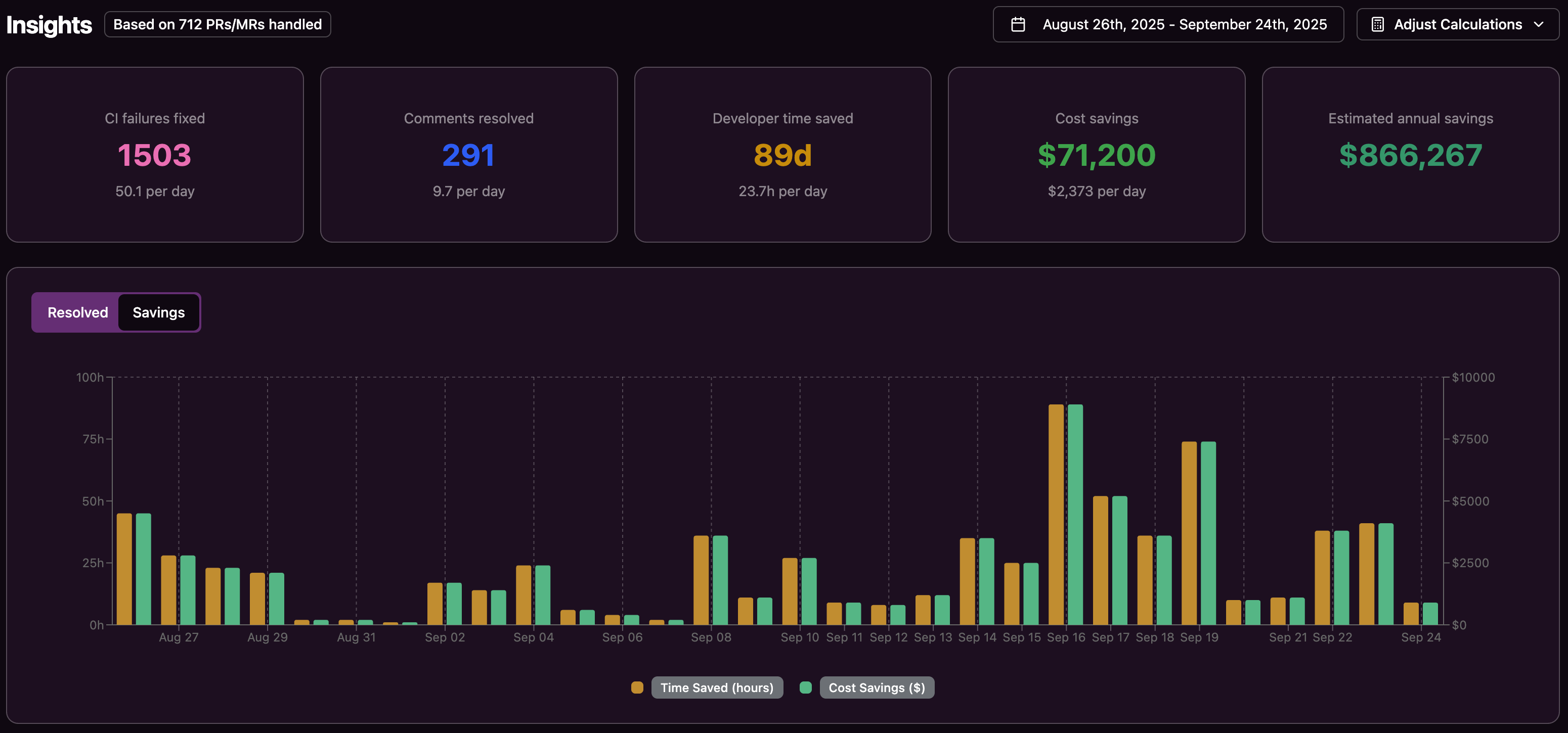
Measure the impact by looking at time saved on build fixes, fewer failed builds, and faster deployments. For a 20-developer team spending an hour daily on CI issues, that’s 5,000 hours a year, or $1 million at $200 per hour. Cutting that by 50% saves $500,000 annually.
Also track infrastructure savings from fewer build retries and quicker feature releases. These metrics show clear financial and operational benefits.
Stop Fixing Builds Manually: Start Delivering with Gitar
CI build failures drain time and energy from engineering teams. Tools like Gitar change the game by automatically handling issues, from spotting errors to committing fixes. This saves hours, speeds up releases, lowers costs, and reduces stress.
For teams looking to improve velocity and morale, autonomous CI tools offer a practical way forward. They shift focus from debugging to development, helping you deliver value faster.
Ready to cut down on CI failures and boost your team’s output? Install Gitar now to fix broken builds and ship software faster at https://gitar.ai/fix.