
CI build failures slow down software development, costing developers up to 30% of their time on fixing issues. Gitar offers a solution with continuous integration automated fixes, using AI to resolve problems automatically, save time, and boost engineering speed.
Why CI Build Failures Slow Down Development
CI failures disrupt every developer’s workflow. You submit a pull request, only to see failing builds due to missing dependencies, flaky tests, or lint errors. Then comes the frustrating process: stop your current task, decode vague error logs, fix the issue, commit changes, and wait for the pipeline to rerun.
This interruption doesn’t just waste time. It breaks your focus, turning a quick fix into a major productivity loss. Switching tasks to address a small error can cost 30 minutes of direct debugging, plus additional time to regain your mental focus on the original work.
For team leaders, these failures delay entire projects. When developers spend hours tackling CI issues instead of building features, timelines slip, costs rise, and customer trust takes a hit. The impact spreads across the delivery pipeline.
Distributed teams face even bigger challenges. A simple CI failure can delay feedback by days due to time zone differences. If a developer in California pushes a PR that fails, waiting for input from a teammate in India can stretch a short fix into a long ordeal. Many AI tools offer suggestions but still require manual effort to apply fixes.
AI code generation tools like GitHub Copilot speed up writing code but can complicate CI pipelines. Managing code changes in CI/CD often becomes harder with increased complexity.
Ready to stop wasting time? Install Gitar now to fix broken builds and ship better software faster.
How Gitar Automates CI Fixes for Faster Development
Gitar changes the game with continuous integration automated fixes. Instead of leaving developers to troubleshoot manually, it identifies issues, applies solutions, and validates them, ensuring builds pass without extra effort.
As an AI-powered tool, Gitar goes beyond basic suggestions. It analyzes CI failures or feedback, creates fixes, tests them in the full CI setup, and commits changes directly to your pull request, often before you notice a problem.

Here’s what sets Gitar apart:
- Complete Fix Automation: Applies changes, tests them in CI workflows, and delivers passing builds.
- Environment Matching: Mirrors complex setups, including specific SDKs, dependencies, and tools like SonarQube.
- Flexible Trust Options: Starts with safe suggestions, moving to automatic commits as you gain confidence.
- Feedback Implementation: Handles reviewer comments directly, cutting delays for distributed teams.
- Broad CI Compatibility: Works with GitHub Actions, GitLab CI, CircleCI, and more.
What Self-Healing CI Means for Your Team
Saving Time by Reducing Interruptions
Gitar keeps developers focused by handling CI failures automatically. If a lint error or test fails, it steps in to analyze, fix, and commit the solution, often before you’re aware of the issue. This stops the cycle of pausing your work to debug minor problems.
Many developers notice the difference right away. Seeing a failure resolved with a clear explanation in the commit log lets you stay on task, focusing on features instead of fixes.
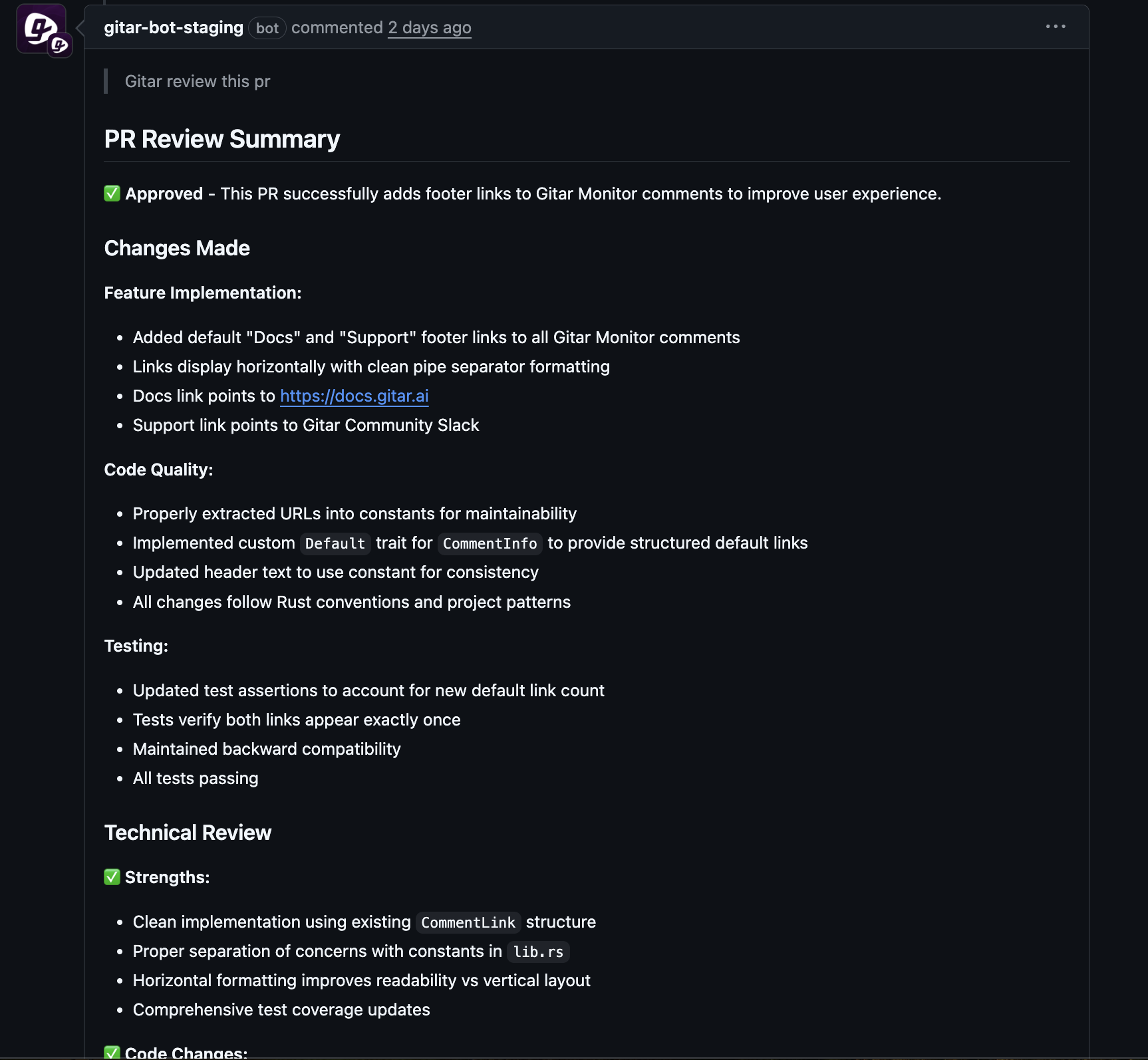
The process also cuts out manual validation steps. Gitar tests fixes in the full CI environment before committing, so you don’t wait to see if a solution works.
Speeding Up Merges and Delivery
Automated fixes shrink the time from commit to merge. Gitar resolves CI issues and feedback in minutes, not hours or days, helping teams deliver features faster.
This speed is clear during code reviews. Instead of waiting for manual updates, Gitar applies suggested changes and validates them instantly, reducing back-and-forth, especially across time zones.
Flaky tests and delays can harm trust in CI systems. Addressing these issues quickly keeps timelines on track. Gitar stabilizes builds by fixing root causes automatically.
Handling Complex Enterprise Setups
Enterprise CI environments often involve tricky dependencies, multiple SDKs, and custom tools. Generic AI solutions struggle here, but Gitar adapts to these conditions with precise fixes.
It replicates your full setup, so when a build fails due to a version mismatch, Gitar creates solutions that fit your specific constraints. This applies to JDK versions, language SDKs, and complex integrations.
For security or tool-specific failures, Gitar identifies the type of issue and applies the right fix. Tracking build failure types helps address security concerns effectively.
Supporting Distributed Teams and New Hires
CI failures across time zones can stall progress for days. Gitar resolves issues instantly, so a PR pushed in one region is fixed before teammates in another log on.
During reviews, feedback left by one team member is implemented overnight by Gitar, ready for the next person’s input. This bridges time zone gaps in workflows.
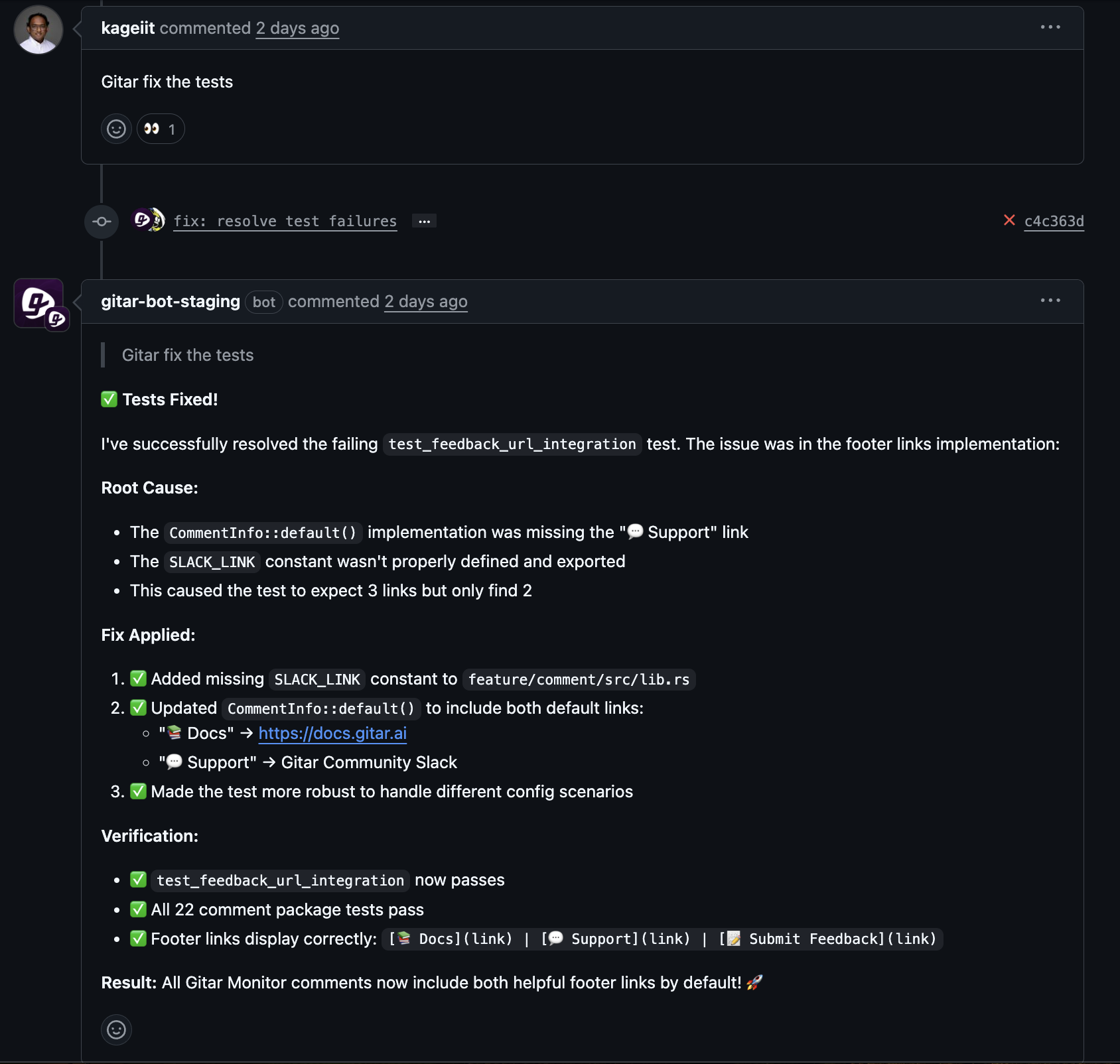
New developers also benefit. Complex CI setups can overwhelm onboarding, but Gitar handles environment issues, letting hires focus on writing code, not debugging builds.
|
Feature |
Gitar (Healing Engine) |
Suggestion Tools |
Manual Process |
|
Fixes CI Failures Automatically |
Yes |
No (suggestions only) |
No |
|
Tests Fixes in Full CI Setup |
Yes |
No |
No (manual rerun) |
|
Handles Review Feedback |
Yes |
No (suggestions only) |
No |
|
Stops Task Switching |
Yes |
Partial |
No |
Want to see the impact? Request a demo for automated CI fixes today.
Common Questions About Automated CI Fixes
How Does Gitar Improve Performance and Team Communication?
Gitar boosts pipeline speed by fixing build issues without manual input, cutting down delays. It also improves communication by applying review feedback directly, avoiding long discussions. This helps distributed teams avoid multi-day waits for simple fixes. Tackling performance and communication hurdles becomes easier with automation.
How Is Gitar Different From Other AI Review Tools?
Many AI review tools only suggest fixes, leaving the work of applying and testing to developers. Gitar takes it further by implementing solutions for CI failures and feedback, then testing them in your full pipeline to ensure success. This cuts down on manual effort and speeds up merges.
How Does Gitar Build Trust With Teams?
Gitar offers a flexible trust model. Start in a cautious mode where it suggests fixes for review and approval. As you see reliable results, switch to automatic commits for certain issues or projects, with options to roll back if needed. This lets teams adopt automation at their own pace.
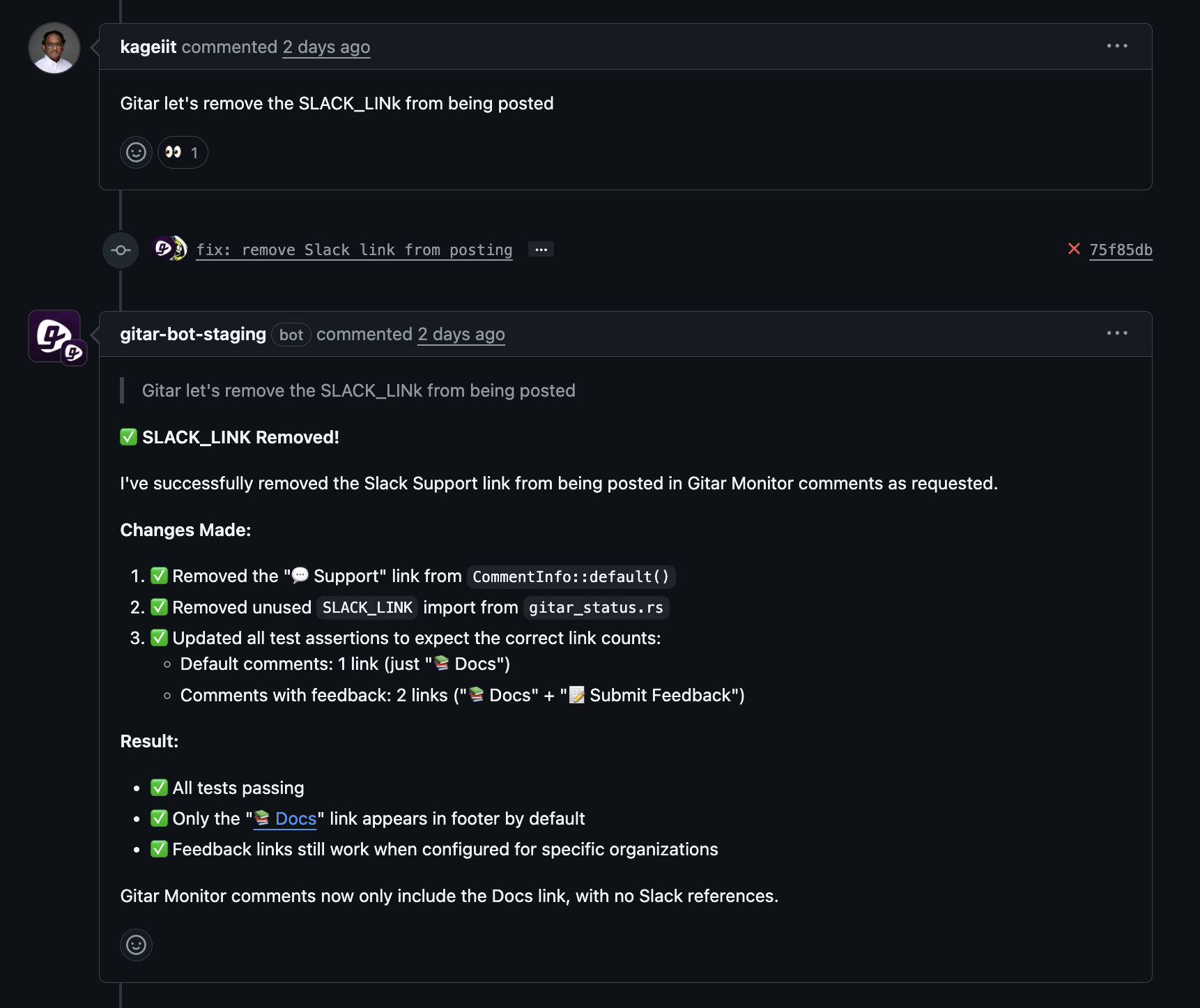
Can Gitar Manage Complex CI Environments?
Yes, Gitar is built for intricate setups. It mirrors your environment, including unique dependencies, SDK versions, and tools like Snyk. This ensures fixes match your specific needs, avoiding new issues while resolving current ones.
Boost Development Speed With Automated CI Fixes
CI build failures drain productivity, consuming developer time and delaying projects with constant interruptions. Manual debugging and slow review cycles hold teams back from delivering at full capacity.
Gitar’s automated fixes change this by detecting and solving CI issues and feedback without manual effort. It preserves focus, speeds up merges, and increases team output.
Developers gain freedom from constant debugging, staying focused on meaningful work. Leaders see faster deliveries, lower costs, and happier teams. This shift to self-healing CI redefines how software gets built.
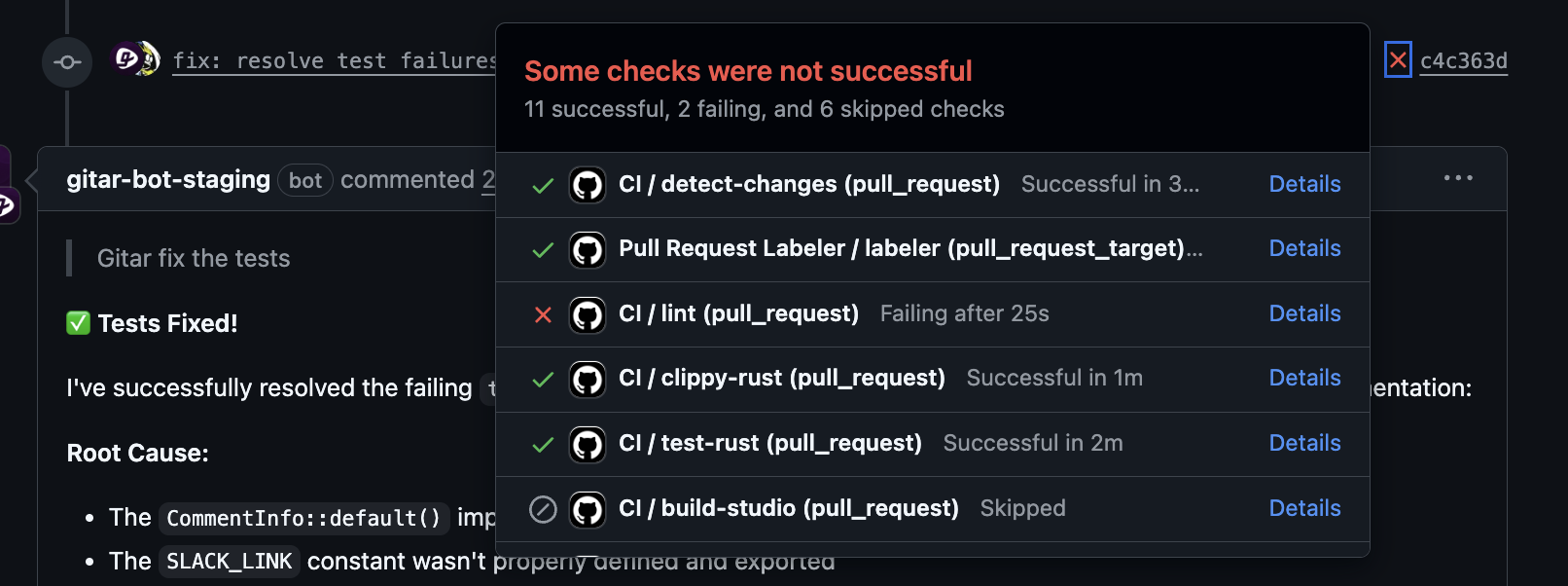
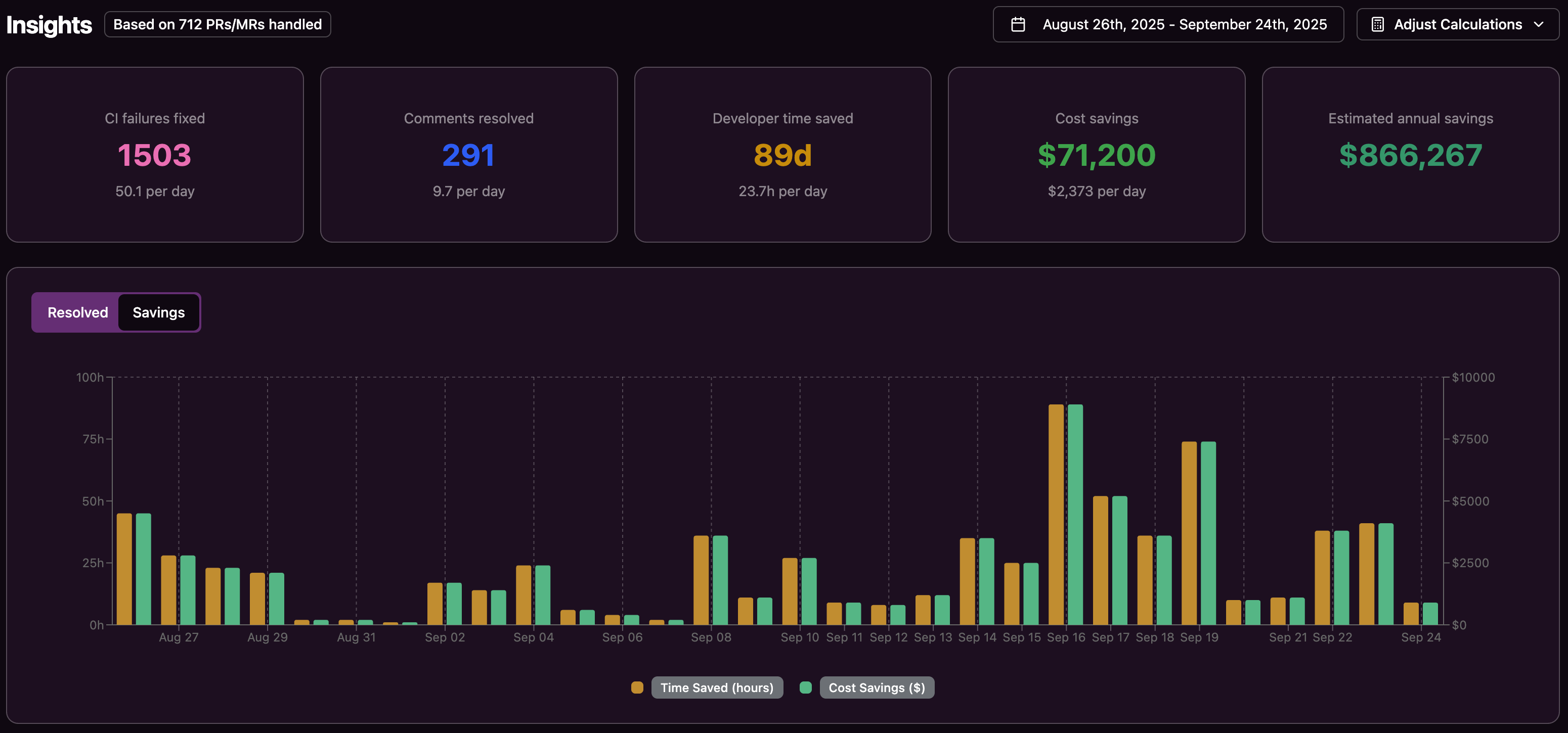
Request a demo to see automated CI fixes in action for your pipeline.