
CI build failures and manual debugging eat up your team’s time, slowing down feature releases and frustrating developers. Each failed build means hours of context switching and lost momentum. What you need is a solution that doesn’t just point out problems but fixes them automatically. Gitar’s AI-driven technology handles CI issues on its own, cutting down developer workload and speeding up delivery.
Why CI Failures Hurt Your Team’s Output
CI build failures create a hidden drag on your engineering team’s productivity. Developers can lose up to 30% of their time dealing with CI and code review issues. This isn’t a small hiccup; it’s a major resource sink that impacts your entire organization.
Every failed pipeline pulls developers away from coding. They have to stop, dig through error logs, replicate issues, fix problems, and wait for new builds. These interruptions break their focus, making complex tasks and creative work much harder.
For engineers, switching tasks means losing the mental framework they’ve built while coding. Even quick fixes take time to recover from. Managers see team progress slow as developers get stuck in debugging loops instead of delivering features.
DevOps teams face added pressure with infrastructure costs and reliability risks from failing builds. These failed runs waste resources, increase expenses, and can lower team morale while affecting customer trust and business results.
Common CI Challenges That Slow You Down
CI failures come in many forms, each disrupting workflows. Issues like automated test failures, build errors, deployment hiccups, dependency clashes, and misconfigured settings are frequent culprits. Each problem chips away at productivity.
Here are some specific challenges teams face:
- Flaky tests fail inconsistently due to timing issues or external factors, hard to replicate and often leading to repeated build attempts.
- Build errors crop up from outdated tools or mismatched dependencies, working fine locally but failing in CI environments.
- Monolithic pipelines cause widespread delays when one part fails, stalling entire release cycles.
- Dependency conflicts and misconfigured variables create tricky debug scenarios, often tied to subtle version mismatches.
How Autonomous CI Auto-Fix Solves Build Issues
Moving from manual debugging to autonomous CI auto-fix changes how teams manage build reliability. Unlike older methods or suggestion-based tools that still need human input, this technology resolves issues on its own, creating pipelines that heal themselves.
Self-healing CI systems track failures as they happen, pinpoint root causes with AI, and apply fixes without needing a developer to step in. This turns a reactive process into one that actively solves problems before they escalate.
The impact benefits everyone. Developers stay focused on their work. Leaders see faster, more reliable delivery schedules. DevOps teams spend less time on maintenance and gain better system stability.
Install Gitar now to fix broken builds automatically and ship software faster. This approach not only saves time on fixes but also keeps the creative energy flowing for better code quality.
Meet Gitar: Your AI-Powered CI Healing Tool
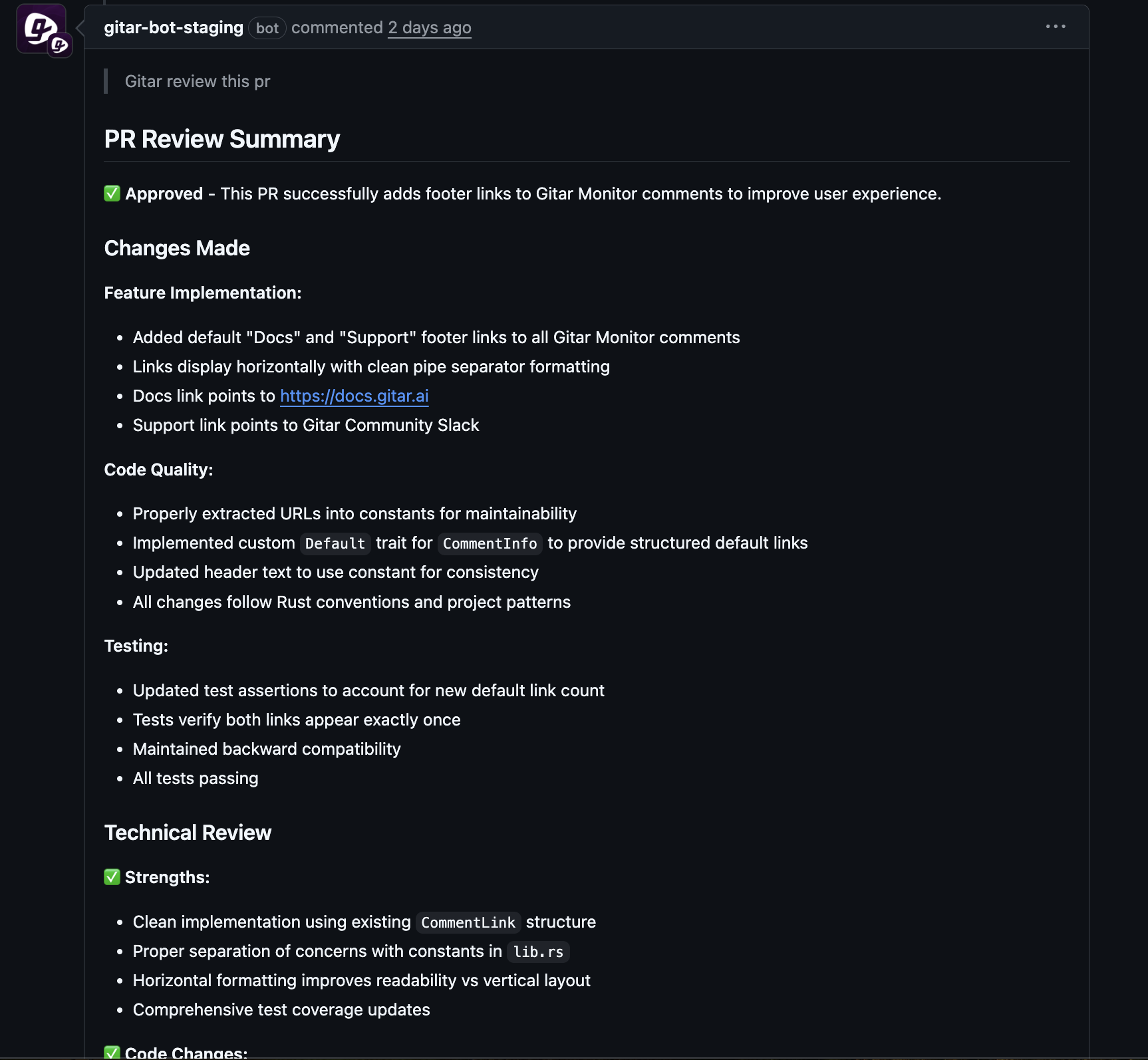
Gitar works as an autonomous CI healing engine, changing how teams tackle build failures with smart automation. Instead of just suggesting fixes, Gitar applies solutions and checks them against full build environments.

Here’s what makes Gitar stand out:
- Complete fix application, validating solutions so CI jobs pass before developers even see the results.
- Accurate replication of complex setups, matching SDK versions, tools like SonarQube, and detailed dependency chains.
- Adjustable automation levels, from suggestions to direct commits with easy rollback options.
- Smart code review support, acting on feedback instantly, even across different time zones.
- Wide platform compatibility, working with GitHub Actions, GitLab CI, CircleCI, BuildKite, and more.
Gitar closes the gap between spotting a problem and fixing it. By managing the entire process, from detection to validation, it removes manual steps that slow down delivery.
Book a demo to see Gitar’s healing engine stop CI build failures in their tracks.
How Gitar Improves Your CI/CD Workflow
Cut Developer Stress with Automatic Fixes
Gitar changes the game by removing the frustration of build failures. When a CI pipeline breaks, Gitar’s AI steps in, analyzes the issue, and applies a fix without pulling developers away from their tasks.
This keeps developers in their zone, focusing on meaningful work instead of debugging minor issues like lint errors. Gitar handles the busywork behind the scenes, letting your team stay productive.
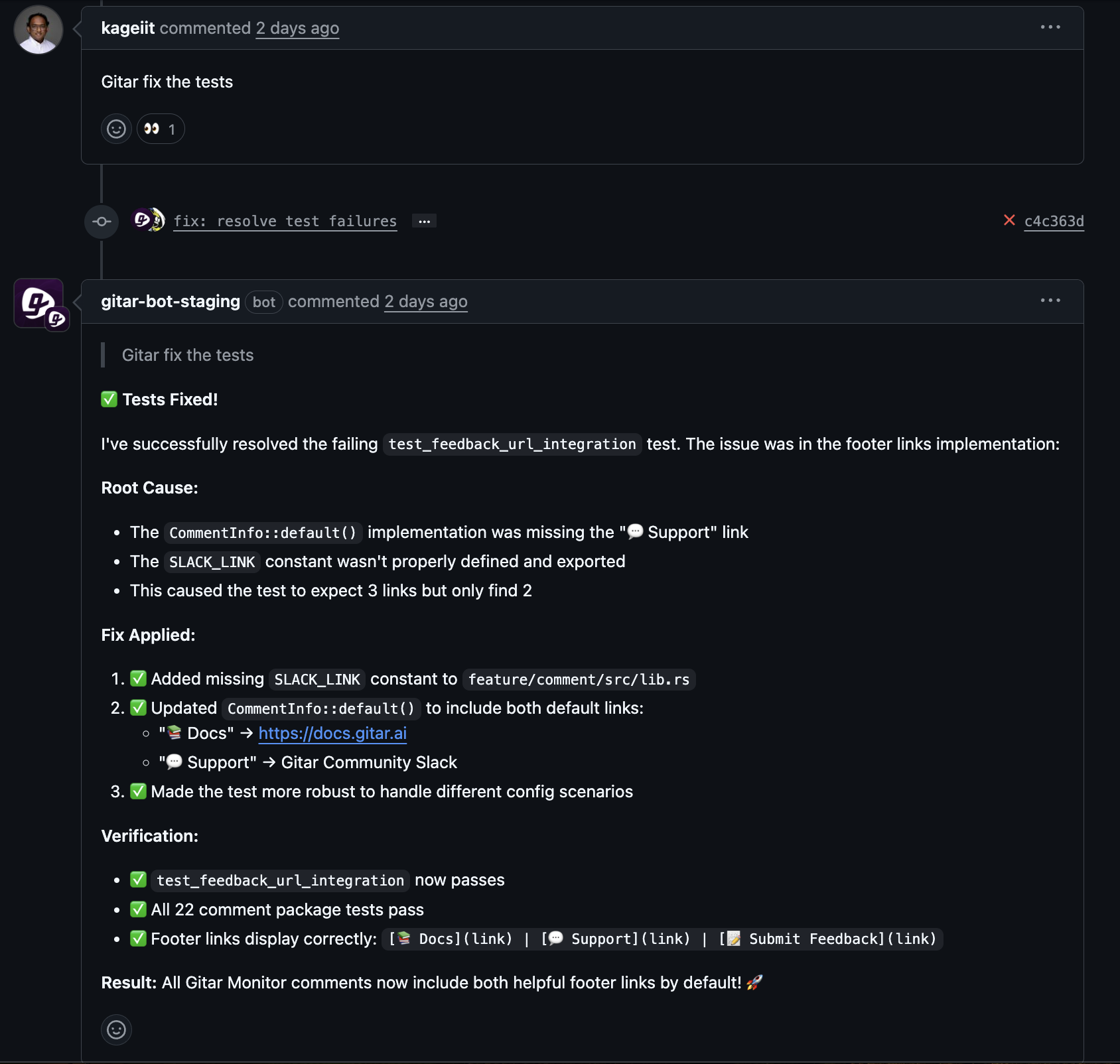
For distributed teams, Gitar ensures progress around the clock. A build failing overnight gets fixed before the team logs in, avoiding delays common in global setups.
Speed Up Merges and Team Progress
Automatic CI fixes don’t just save time for individuals; they speed up the entire development cycle. Gitar ensures pull requests pass checks quickly, shortening the gap between submission and integration.
Managers gain more predictable planning. With fewer CI hiccups, teams can forecast delivery dates with confidence, improving resource allocation and communication with stakeholders.
Over time, these gains build momentum. Fewer interruptions mean happier developers and consistent productivity. Steady, successful builds encourage frequent updates and rapid iterations.
Maintain Reliability for Large-Scale CI/CD
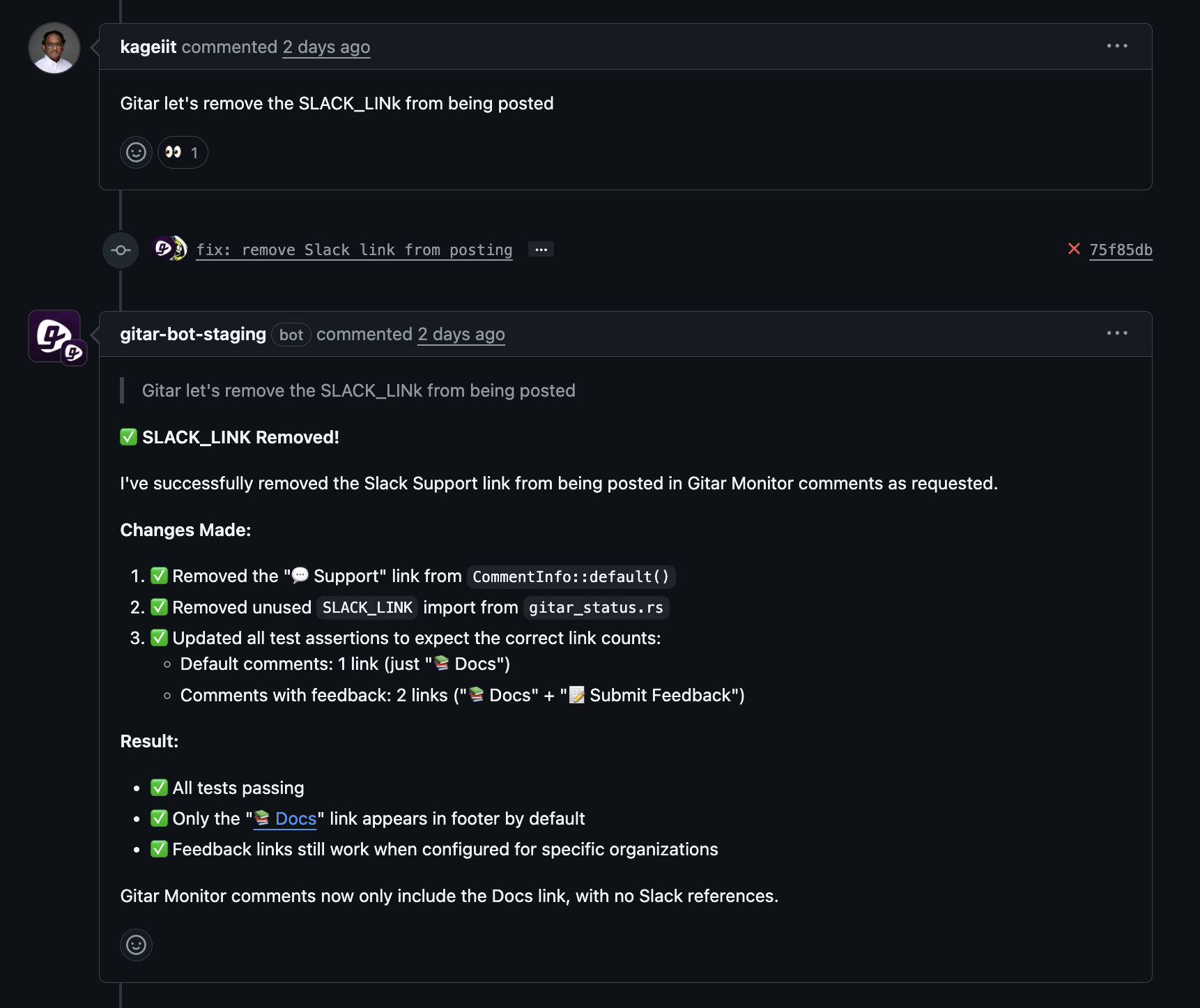
Enterprise setups bring extra complexity with dependencies, SDK versions, and third-party tools. Gitar replicates these environments fully, ensuring fixes fit your specific context.
It handles unique build setups, like specific JDK versions or integrations with SonarQube and Snyk. This precision means fixes won’t cause new issues when deployed.
DevOps teams get relief from routine tasks like dependency updates. Gitar frees them to focus on bigger infrastructure goals instead of constant problem-solving.
Cost savings follow too. Fewer failed runs and debug cycles lower CI expenses while boosting build reliability and developer satisfaction.
Install Gitar now to fix broken builds and experience reliable CI at enterprise scale.
Why Gitar Beats Traditional CI Tools
|
Feature / Tool |
Manual CI Debugging |
AI Code Reviewers (e.g., CodeRabbit) |
Gitar (Autonomous CI) |
|
Issue Resolution |
Manual |
Suggestions with Some Automation |
Autonomous Fixes & Validation |
|
Environment Context |
Local/Limited |
Context-Aware |
Full Replication & Awareness |
|
Developer Toil |
Very High |
Varies by Tool |
Minimal (eliminates manual fixing) |
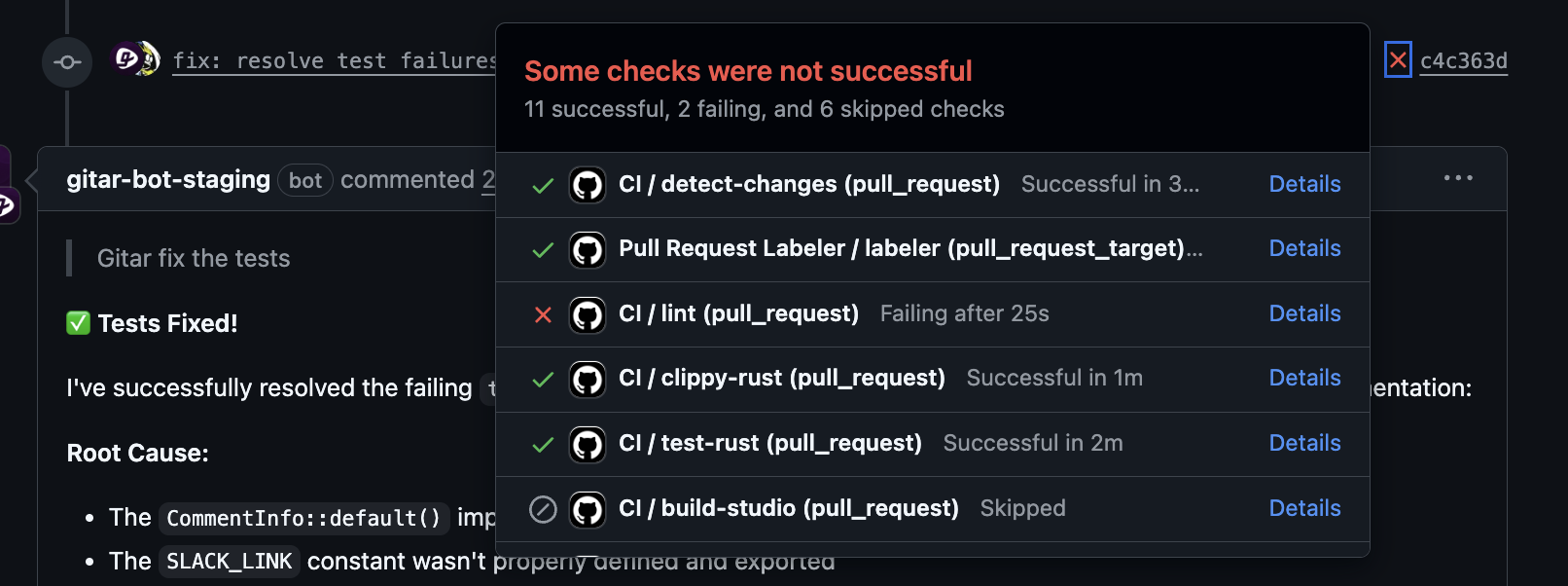
Gitar stands out with its full automation. Manual debugging and even AI reviewers often need human input to finalize fixes. Gitar takes care of everything, from spotting issues to validating solutions in full build environments.
Its deep understanding of complex setups is key for enterprises. Unlike tools limited to basic contexts, Gitar matches your exact environment for dependable fixes.
Platform support adds flexibility. While many tools are tied to one system, Gitar works across GitHub Actions, GitLab CI, CircleCI, BuildKite, and others, fitting diverse toolsets.
Answers to Common Questions About Autonomous CI Auto-Fix
How Does Gitar Differ from Other AI Review Tools?
Many AI code reviewers offer suggestions or partial automation, but they often still need developers to step in for final implementation or validation. Gitar focuses on complete autonomy, applying and testing fixes against your full CI setup. This cuts out manual effort entirely.
Can Gitar Handle Our Complex CI Environment?
Gitar is built for intricate enterprise systems. It mirrors your specific build environment, including SDK versions, multi-language dependencies, and tools like SonarQube or Snyk. This ensures fixes align with your unique setup, unlike generic tools that may fall short.
How Does Gitar Build Trust with Automated Fixes?
Gitar offers control through a customizable trust model. Start with a cautious mode where fixes are suggestions for review. As confidence grows, shift to full automation with direct commits and rollback options. Every change comes with clear explanations, keeping you informed.
How Does Gitar Lower CI Costs?
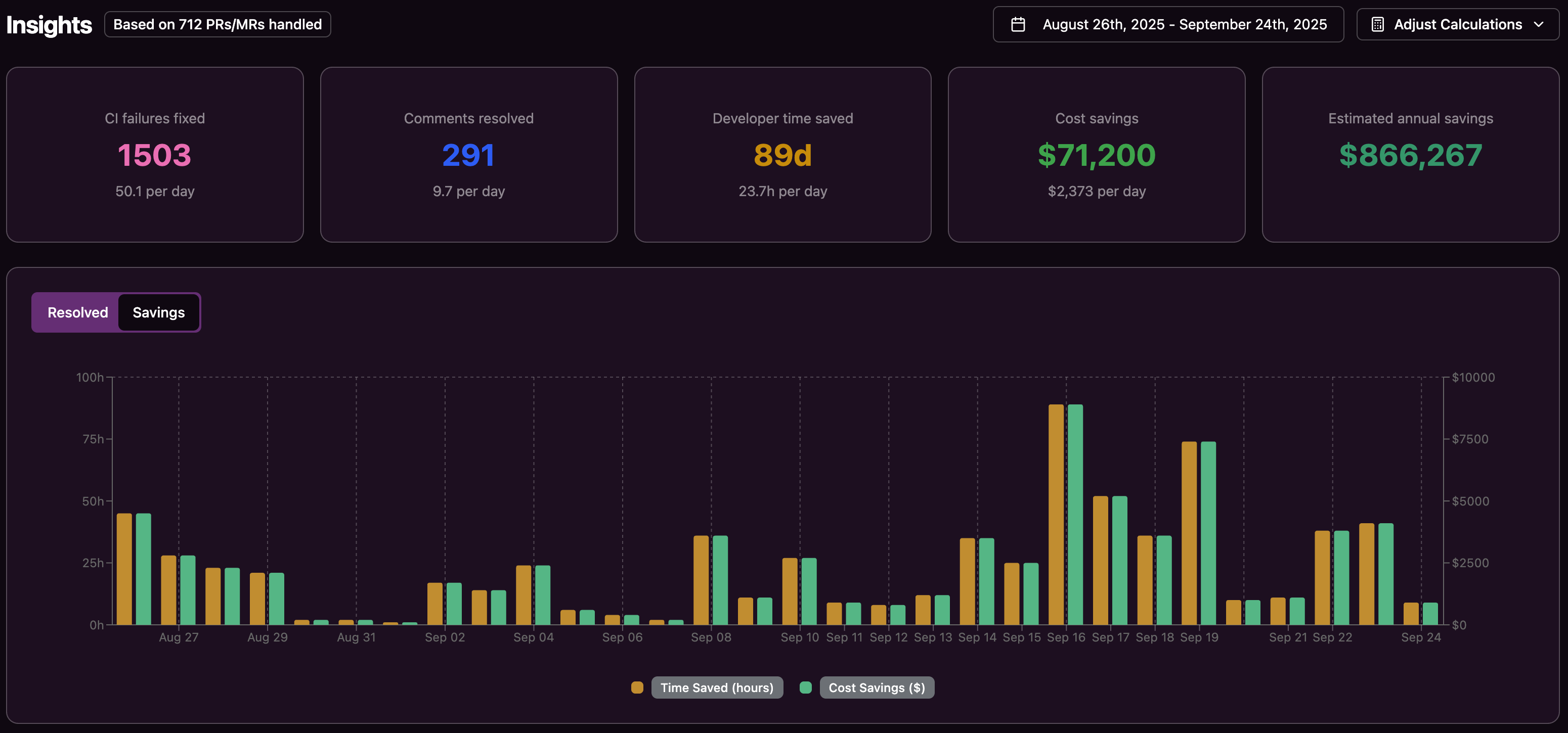
Gitar saves money in key ways. It cuts developer time spent on debugging, potentially saving a 20-person team significant annual costs. It also reduces infrastructure expenses by stopping failed builds and retries, while speeding up feature delivery through faster CI cycles.
How Does Gitar Fit into Our Current Workflow?
Gitar connects easily to your existing tools like GitHub, GitLab, and CI platforms such as CircleCI or BuildKite. It monitors pipelines quietly, stepping in only for issues. Updates appear as pull request comments or commits, fitting right into your team’s communication style without disruption.
Conclusion: Autonomous CI with Gitar Is the Way Forward
Manual CI debugging and ongoing build failures are becoming a thing of the past. As development speeds up and teams face pressure to deliver quickly without errors, autonomous CI auto-fix technology is now a must-have.
Gitar’s healing engine moves CI/CD from simply flagging issues to solving them. By cutting out manual steps, it lets developers focus on creating features instead of fixing builds.
Teams adopting autonomous CI fixing gain an edge with better productivity, quicker delivery, and efficient workflows. Sticking to old manual methods will only hold you back as the industry moves to AI-driven solutions.
Request a demo with Gitar today to eliminate CI build failures and increase your team’s output.