
Key Takeaways
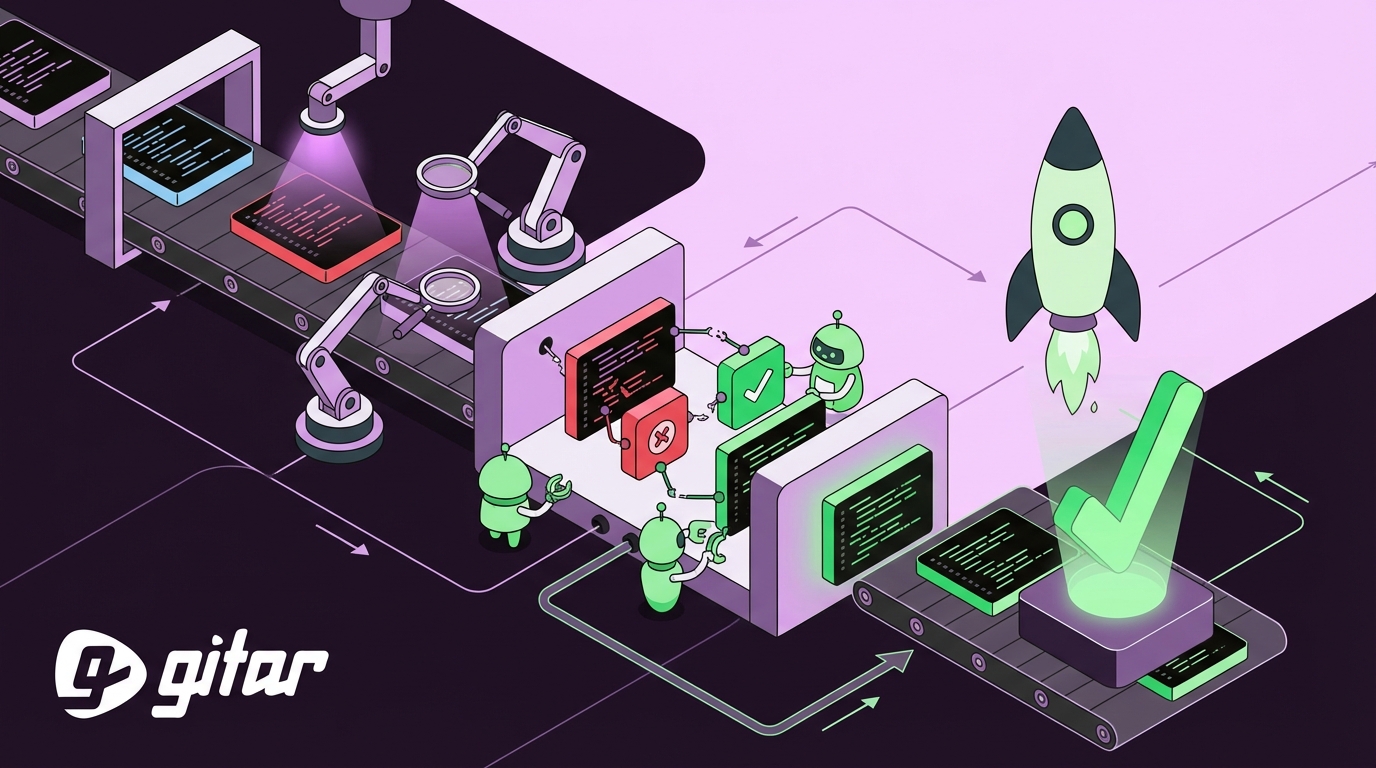
- AI code generation has overwhelmed PR review capacity. GitHub now processes 43.2M pull requests monthly, and teams face 91% longer review times, which costs about $1M annually for a 20‑developer team.
- Gitar leads as the top free continuous integration AI code review solution. It auto-fixes CI failures for guaranteed green builds, while many competitors only provide suggestions.
- Competitors like CodeRabbit ($15-30/dev) and Greptile ($30/dev) offer limited auto-fix features. Codacy, SonarQube, and Snyk still require manual fixes.
- Gitar connects to GitHub Actions in 7 simple steps, supports unlimited repos and users for free, and scales to more than 50M lines of code with enterprise security.
- Teams report $750K or more in annual savings with Gitar. Install Gitar free today to automate CI fixes and increase delivery speed.
How We Ranked 2026 Continuous Integration AI Code Review Tools
We evaluated platforms using six criteria: auto-fix capabilities, CI failure resolution, pricing transparency, GitHub Actions integration ease, scalability to more than 50 million lines of code, and enterprise security features. Our analysis drew on vendor documentation, DevOps community feedback, and 2026 user benchmarks from G2. Gitar ranked first because its healing engine guarantees green builds instead of only suggesting improvements.
Top 7 AI Code Review Automation Tools for CI/CD Pipelines
1. Gitar provides free AI code review with auto-fixing of CI failures and cross-platform support for GitHub Actions, GitLab CI, and CircleCI. It delivers guaranteed green builds through automated analysis, fix generation, and validation.
2. CodeRabbit is a premium platform ($15-30/developer) that offers PR summaries and inline suggestions with limited auto-fix support for basic CI issues.
3. Greptile targets enterprises at $30 per developer and focuses on codebase context understanding, but it still relies mainly on suggestion-based workflows.
4. Codacy is a static analysis platform with CI/CD integration. It does not provide auto-fix functionality, so teams must manually implement all suggestions.
5. Graphite is a GitHub-native tool that supports PR stacking and offers limited auto-fix capabilities for specific failure types.
6. SonarQube is a broad code quality platform with deep CI integration, yet it only suggests changes and does not apply fixes automatically.
7. Snyk focuses on security and vulnerability detection. It still requires manual remediation of issues it finds.
Why Gitar’s Healing Engine Delivers Guaranteed Green Builds
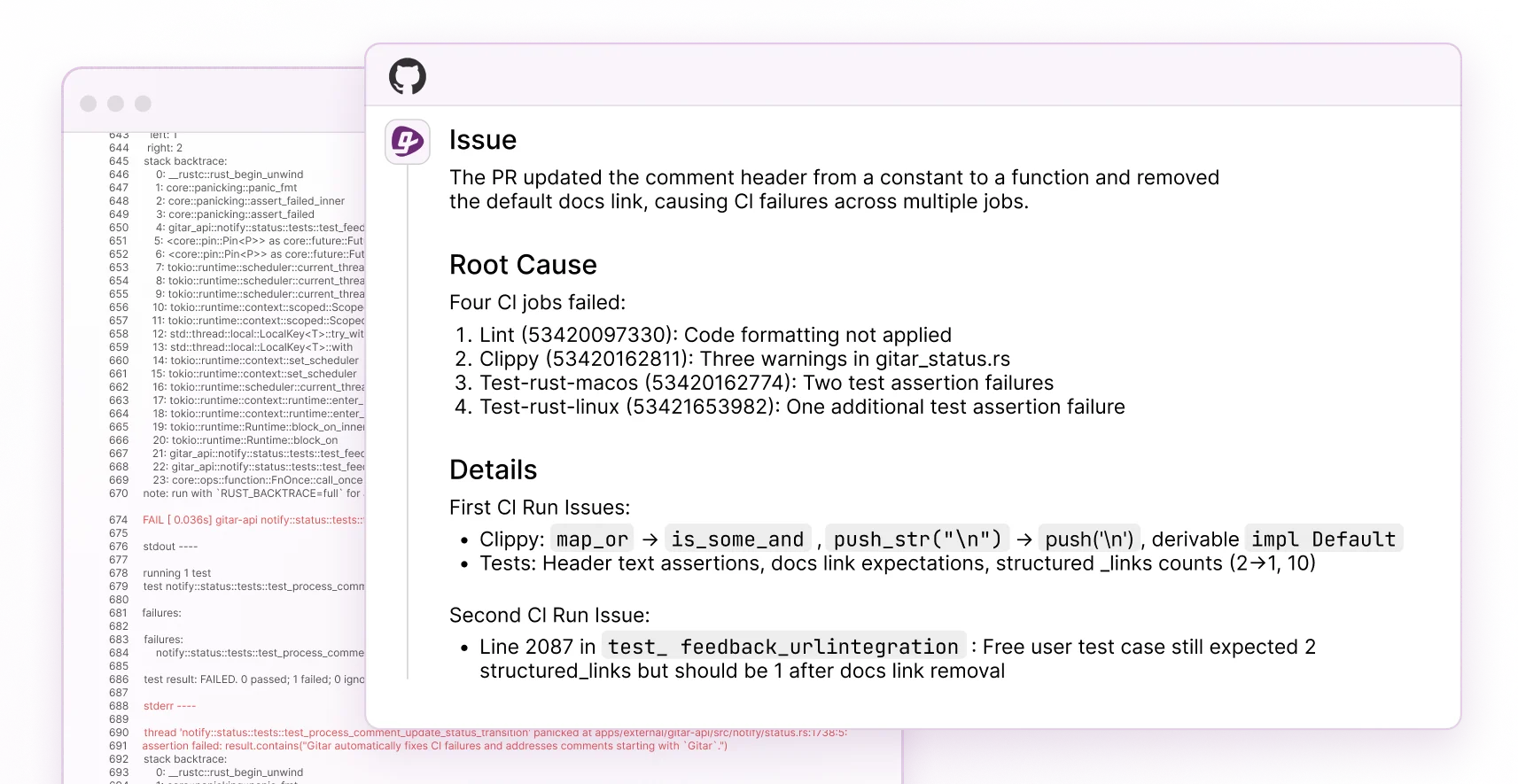
Gitar stands out by offering comprehensive free code review with unlimited repositories and users, plus a 14-day free trial of auto-fix capabilities. When CI checks fail, whether from lint errors, test failures, or build breaks, Gitar analyzes failure logs, generates context-aware fixes, validates solutions against the full codebase, and commits working code directly to pull requests.
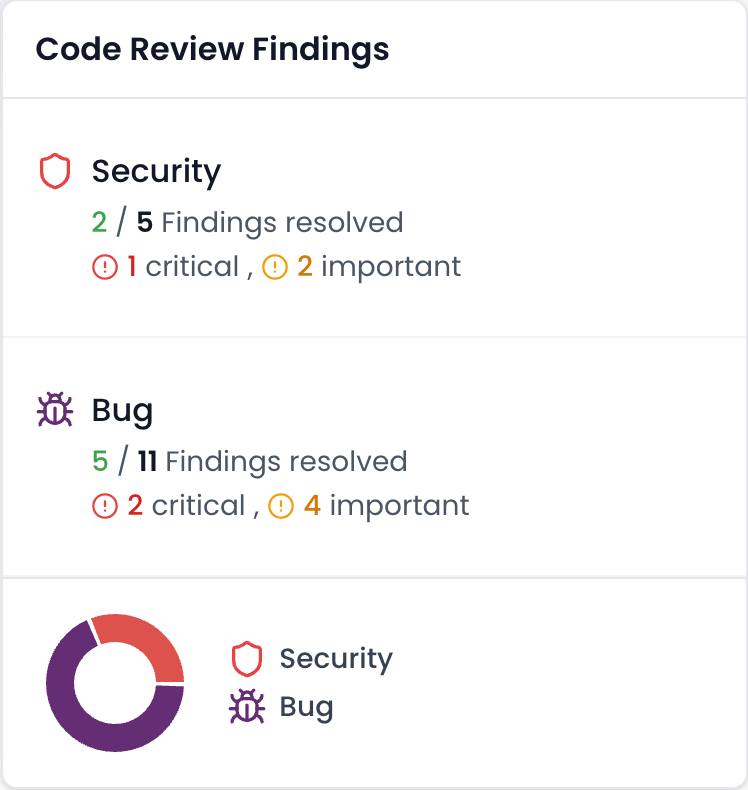
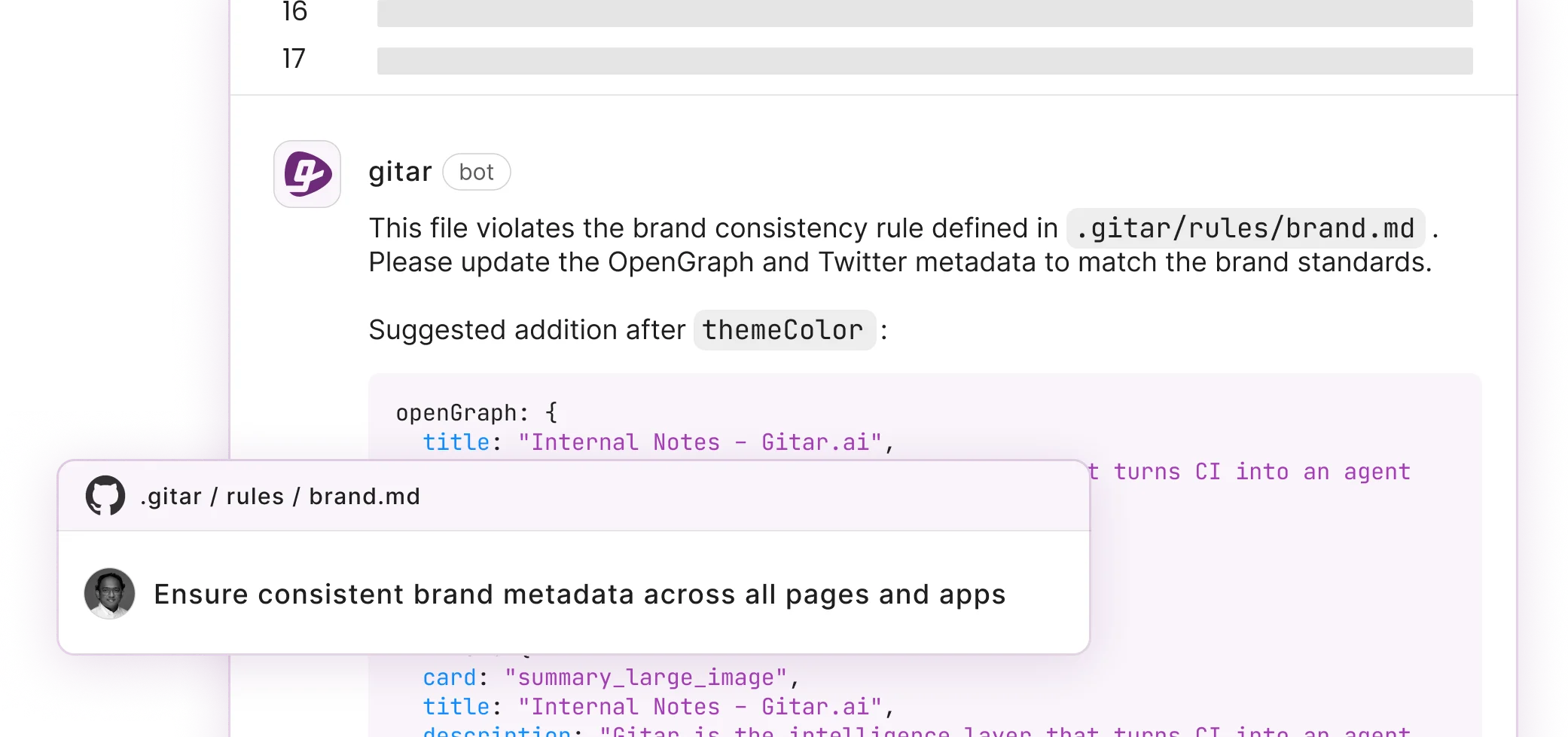
The platform consolidates all findings into a single, updating dashboard comment instead of scattering notifications across diffs. This structure lowers cognitive load and still gives full visibility into review status, CI analysis, and automated fixes. Gitar’s natural language rule system lets teams automate workflows without complex YAML configuration, and enterprise-grade security includes SOC 2 Type II certification and zero data retention policies.
Gitar also supports Pinterest-scale deployments with more than 50 million lines of code and thousands of daily pull requests while keeping core review functionality free, unlike competitors that charge premium prices for basic suggestions.
Install Gitar now for continuous integration AI code review automation and experience guaranteed green builds.
How Gitar Compares to CodeRabbit, Greptile, Codacy, Graphite, SonarQube, and Snyk
CodeRabbit delivers strong PR analysis and inline suggestions but charges $15-30 per developer for features that still require manual fixes. G2 reviews show a 78% success rate for basic auto-fixes, while complex dependency issues remain difficult.
Greptile offers strong codebase context understanding at $30 per developer. However, benchmarks show only 65% auto-fix resolution for common CI failures, and that rate drops to 40% for complex issues.
Codacy remains suggestion-based with no auto-fix capabilities. Users report only 30-40% manual implementation rates for suggested fixes, which creates persistent CI bottlenecks even with comprehensive static analysis.
Graphite excels at GitHub integration and PR stacking but focuses on workflow management rather than full CI failure resolution.
SonarQube and Snyk provide extensive analysis but require manual implementation of all recommendations, which limits their impact in high-velocity development environments.
Side-by-Side Comparison of AI Code Review Tools for CI Automation
| Tool | Auto-Apply Fixes | CI Failure Auto-Fix | Green Build Guarantee | Pricing |
|---|---|---|---|---|
| Gitar | Yes (14-day free trial) | Yes (14-day free trial) | Yes (14-day free trial) | Free code review |
| CodeRabbit | Limited | Partial | No | $15-30/dev |
| Greptile | No | Partial | No | $30/dev |
| Codacy | No | No | No | Paid |
7-Step Gitar Tutorial for GitHub Actions AI Code Review
Gitar keeps continuous integration AI code review automation setup simple and fast.
1. Install the Gitar GitHub App from the marketplace with one-click authorization.
2. Start in suggestion mode so you can review and approve fixes.
3. Configure repository permissions to allow automated commits.
4. Keep your existing GitHub Actions YAML files unchanged.
5. Create natural language rules in .gitar/rules/*.md for custom automation.
6. Connect Slack and Jira integrations for cross-platform notifications.
7. Monitor dashboard analytics to track CI failure patterns and resolution rates.
This streamlined setup contrasts with competitors that require complex configuration, API key management, and extensive YAML changes.
ROI, Tradeoffs, and 2026 Trends in AI Code Review for CI/CD
A 20-developer team gains substantial returns from effective AI code review automation. Traditional workflows cost about $1 million each year in lost productivity from CI failures and review delays. Gitar’s free platform with auto-fix capabilities cuts this to roughly $250,000, which creates about $750,000 in annual savings and removes monthly tool costs of $450-900 from paid competitors.
AI-native development teams now expect platforms that deliver working fixes instead of suggestions that still need manual validation. Gartner predicts AI-native teams will release twice as fast with agents automating PRs and QA. Auto-fix capabilities therefore become essential for competitive engineering velocity.
FAQs About Continuous Integration AI Code Review Automation
What is the best free AI code review tool for CI/CD pipelines?
Gitar offers the most complete free AI code review platform with unlimited repositories, users, and PR analysis. Competitors often charge $15-30 per developer for basic suggestions, while Gitar includes full code review at no cost and adds a 14-day free trial of auto-fix features that resolve CI failures instead of only flagging them.
How does Gitar automatically fix GitHub Actions failures?
When GitHub Actions workflows fail, Gitar analyzes the full failure logs to identify root causes. It then generates context-aware code fixes using complete codebase understanding, validates those fixes against your environment and dependencies, and commits working changes directly to the pull request. This process runs without human intervention and includes a single dashboard comment that explains what changed and why.
How does Gitar compare to CodeRabbit for CI automation?
CodeRabbit charges $15-30 per developer for suggestion-based reviews, while Gitar provides free code review plus real auto-fixing capabilities. CodeRabbit requires developers to apply suggested changes manually. Gitar instead applies, validates, and commits working fixes. For CI failure resolution, Gitar’s healing engine targets guaranteed green builds, while CodeRabbit’s suggestions may still fail after implementation.
What are the steps to integrate AI code review with existing CI pipelines?
Integration starts with installing the Gitar GitHub App or GitLab integration and configuring repository permissions for automated commits. You then add minimal workflow triggers to your existing CI configuration and optionally create natural language rules for custom automation. The full setup usually takes under 30 seconds and does not require a credit card, unlike competitors that depend on complex API configurations and large YAML changes.
What ROI can a 20-developer team expect from AI code review automation?
A typical 20-developer team loses about $1 million each year to CI failures and review bottlenecks. Effective AI code review automation reduces this to around $250,000 by shortening resolution times and cutting context switching. Teams also save $450-900 monthly by using Gitar’s free platform instead of paid tools, which creates total annual savings above $750,000 while improving development velocity.
Conclusion: Restore Engineering Velocity with Gitar
The AI coding wave now requires continuous integration AI code review automation that fixes problems instead of only pointing them out. While many tools charge premium prices for suggestion-only workflows, Gitar delivers comprehensive free code review and guarantees green builds through automated CI failure resolution.
Teams that adopt Gitar see faster development cycles, fewer context switches, and no tool license costs, while still meeting enterprise security and scalability needs. The platform’s healing engine model represents the next stage of AI code review, moving from suggestions to real problem resolution.
Install Gitar now to automatically fix broken builds and start shipping higher quality software faster. Experience the difference between AI that only comments on your code and AI that actually fixes it.