
Key Takeaways
- Developer experience (DevEx) automation in 2026 focuses less on writing code and more on clearing bottlenecks in CI, reviews, and approvals.
- Suggestion-only tools improve visibility, but self-healing systems that apply and validate fixes create larger productivity gains.
- Build-vs-buy decisions for DevEx automation depend on agent complexity, integration depth, and the long-term cost of maintaining custom workflows.
- Effective DevEx automation scales across complex, multi-SDK, multi-team environments while supporting configurable trust and security models.
- Gitar provides self-healing CI that automatically fixes failures and review comments, helping teams reduce manual toil and improve delivery speed; learn more at Gitar’s autonomous CI fixing page.
Why Developer Experience (DevEx) Automation Matters in 2026
Developer time now often disappears into CI failures and review rework instead of product work. Many teams see up to 30% of developer capacity spent on broken pipelines, log triage, and minor code review changes, which can reach roughly $1 million in annual productivity loss for a 20-developer team.
Context switching magnifies this loss. A single failed pipeline can interrupt deep work, forcing a developer to stop current tasks, analyze logs, patch code, and wait for another run. What should be a quick correction often stretches into an hour or more, especially in distributed teams where time zones add further delay.
AI-assisted coding tools now generate more pull requests and code changes. This shift moves the bottleneck from writing code to validating, fixing, and merging code through organizational quality gates.
Strategic DevEx automation helps reduce operational cost, improve morale, shorten cycle times, and scale teams without matching growth in coordination overhead. Organizations that do not automate these friction points increasingly struggle to keep pace in velocity-driven markets.
How DevEx Tools Evolved from Suggestions to Self-Healing CI
Developer experience tooling now spans engineering analytics, workflow platforms, observability, and AI assistants across the entire delivery lifecycle. Within this ecosystem, a key divide has emerged between suggestion engines and healing engines.
Suggestion engines include AI code reviewers, engineering analytics platforms, and on-demand AI fixers that wait for a manual trigger. Tools such as LinearB and Code Climate Velocity focus on continuous measurement and prescriptive insights that still require manual implementation. These tools surface problems and propose fixes, but developers must apply and validate the changes.
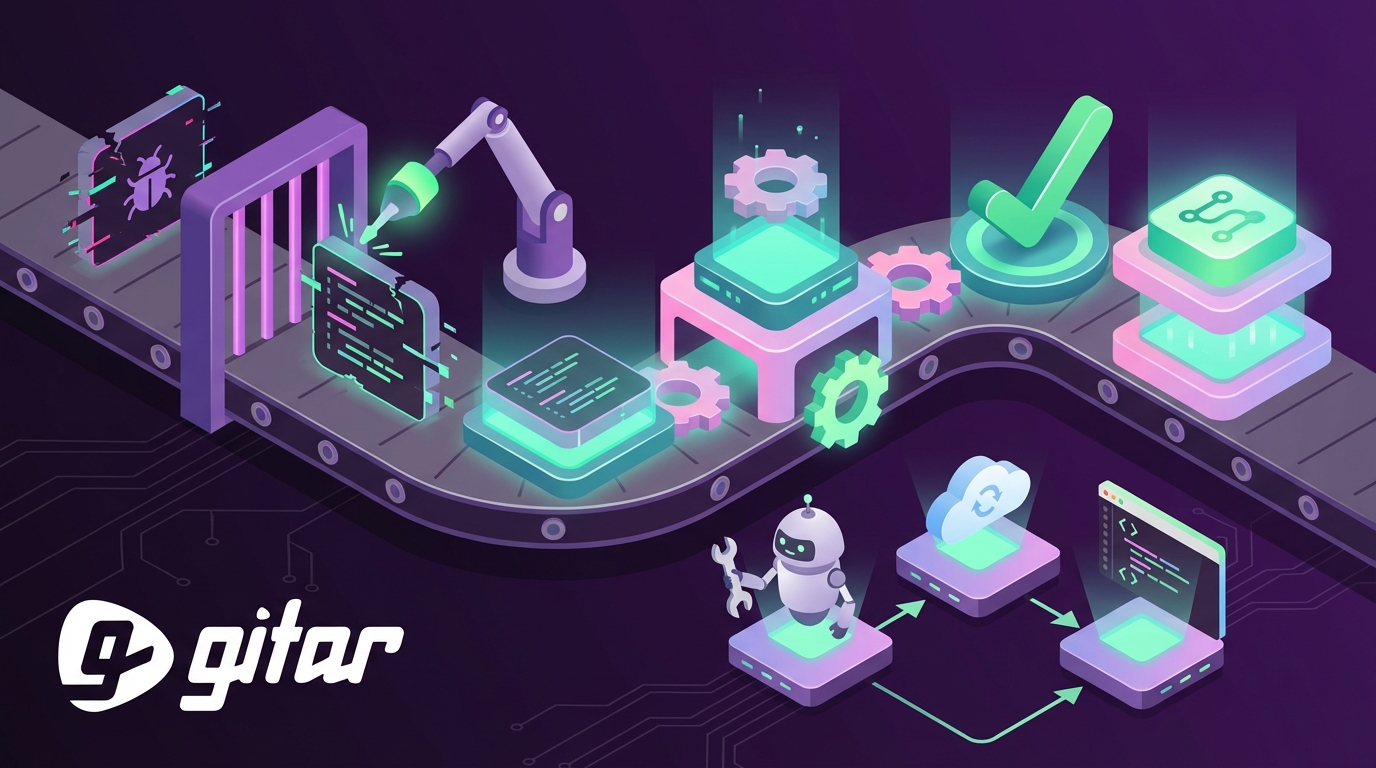
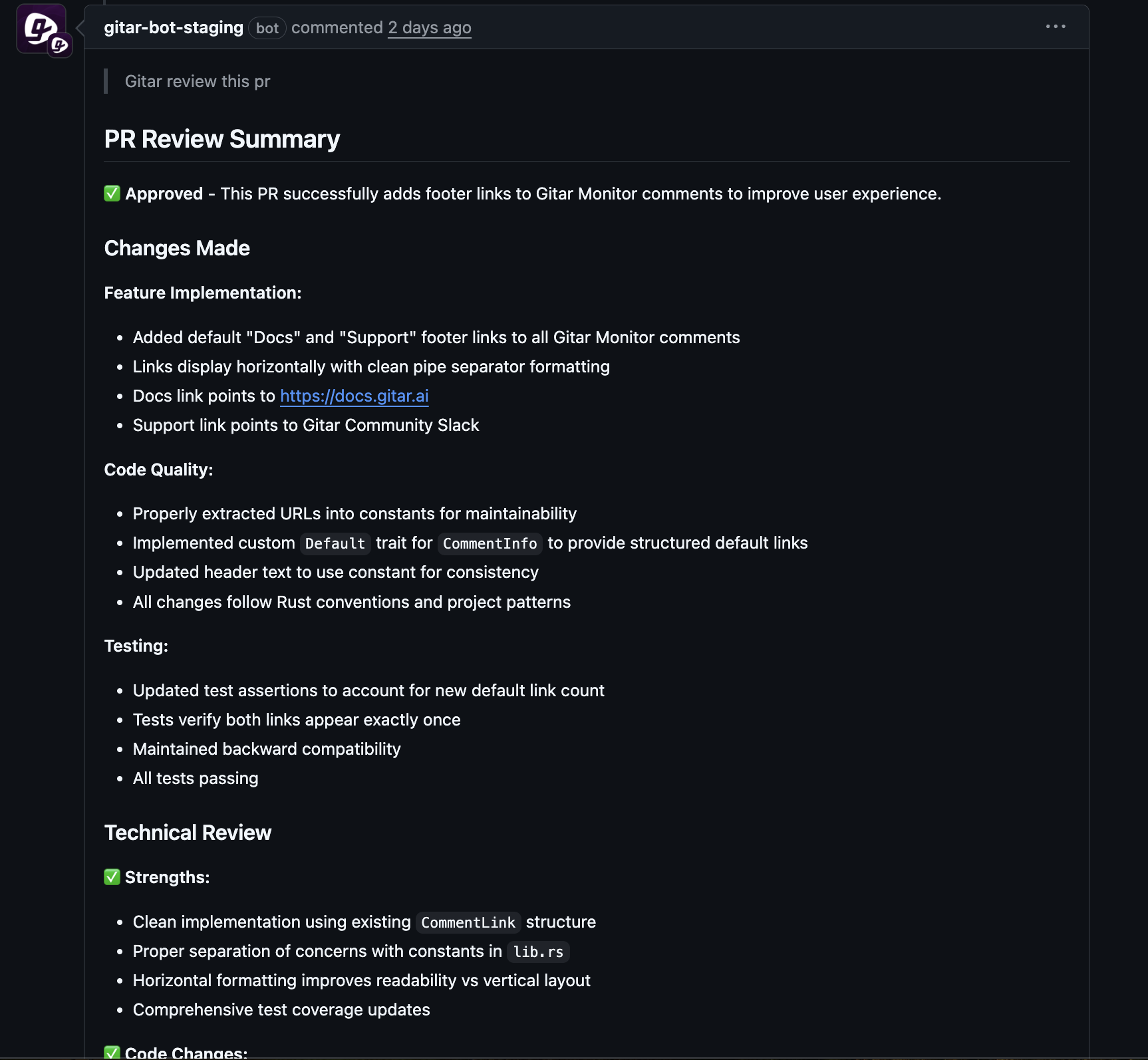
Healing engines extend this model. These systems detect issues, apply fixes, and validate them against the full CI workflow before developers need to intervene. Gitar operates in this category, closing the gap between recommendation and resolution and reducing CI from an interruption source to a background service that keeps builds healthy.
This shift requires different architecture. Suggestion tools mainly analyze code or process data. Healing engines manage long-running agents, complex build states, concurrent operations, and events across distributed CI systems with full environment awareness.
Evaluating DevEx Automation for Your Organization
Build vs. Buy for DevEx Automation
Build-vs-buy choices for DevEx automation depend on complexity, available talent, and opportunity cost. Implementing self-healing CI in-house requires agent orchestration, reliable state management, sandboxed environment replication, and deep CI, SCM, and security tool integrations.
Low-code AI workflow tools reduce some orchestration work but still leave teams responsible for production-grade reliability and maintenance. Custom CI automation must handle edge cases, evolving platforms, security reviews, and ongoing updates, often pulling senior engineers away from product work.
Many teams find that purchasing a mature DevEx automation platform offers faster time-to-value and lower long-term risk than building and maintaining a bespoke system.
Calculating ROI for DevEx Automation
Effective ROI models account for both direct and indirect impact. Direct gains include:
- Time saved on CI failures and flaky tests
- Reduced context switching during incident resolution
- Shorter time-to-merge and fewer stalled pull requests
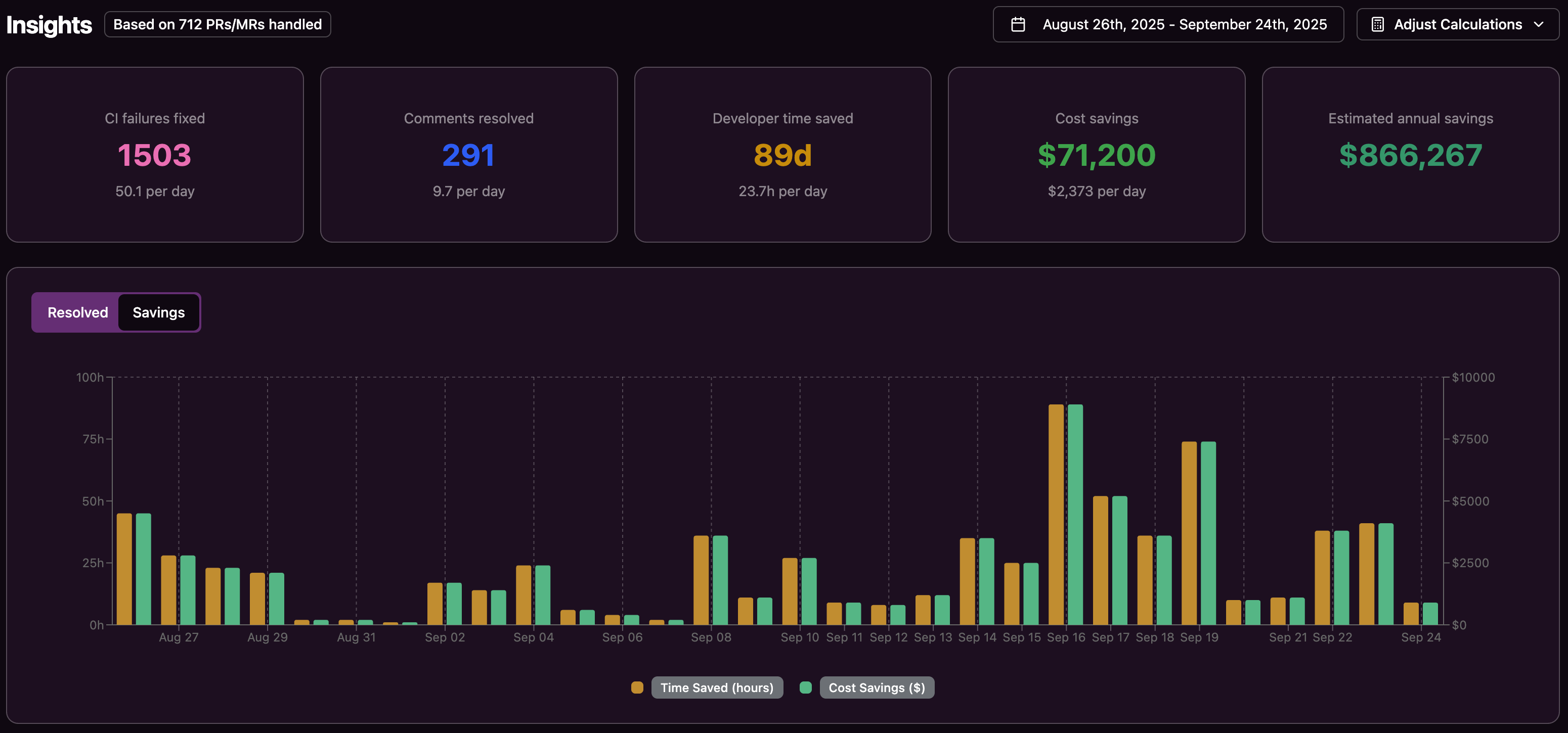
For a 20-developer team, saving roughly an hour per developer per day can reclaim around 5,000 hours annually, often valued at nearly $1 million in loaded costs.
Indirect effects matter as much. Teams that reduce manual toil typically see higher morale and retention, fewer project delays, more consistent code quality, and greater capacity for feature work. Trust models also influence ROI: teams often start with suggestion-only automation, then move stepwise toward autonomous fixes as confidence grows.
Integration and Scalability in Enterprise Environments
Enterprise DevEx automation must fit complex stacks. Typical environments include multi-SDK builds, strict dependency and tool versions, third-party security scanning, and multi-step approval workflows. Comparisons of test frameworks highlight how maintainability, scalability, and collaboration patterns shape long-term automation value.
Successful platforms integrate with GitHub Actions, GitLab CI, CircleCI, Buildkite, and similar systems while mirroring production-like environments. They connect with SCM, issue trackers, observability, and chat tools without forcing teams to rebuild existing workflows or approval paths.
Scalable DevEx automation also supports concurrent operations across many teams, strong security controls, and options such as on-premise or VPC deployment. Adaptive logic that learns from the codebase and past runs reduces the need for constant manual tuning.
Comparing Leading DevEx Automation Approaches
|
Feature/Tool Type |
AI Code Reviewers |
On-Demand AI Fixers |
Gitar (Self-Healing CI) |
|
Core Function |
Code suggestions, summaries |
Invoked fixes (single-threaded) |
Autonomous issue detection and resolution |
|
Fix Validation |
No |
Limited, often manual |
Full CI pipeline validation, only ships green builds |
|
Automation Level |
Suggestions, manual apply |
Manual trigger, partial automation |
Autonomous with configurable modes |
|
Enterprise Readiness |
Limited on-prem options |
DIY infrastructure |
Enterprise-focused with advanced deployment options |
This comparison shows that AI code reviewers and on-demand fixers primarily support analysis and assisted editing. Developers still invest time to apply suggestions, rerun pipelines, and handle failures that surface only in CI.
Gitar takes a different path by continuously monitoring pipelines, reproducing failures in dedicated environments, and committing validated fixes. The system coordinates across multiple issues and repositories without consuming the team’s CI minutes or attention.
Common DevEx Automation Pitfalls to Avoid
Many teams rely on suggestion engines and assume they have automated DevEx. In practice, they have automated only the analysis, while developers still carry the burden of implementation and validation.
Trust missteps often block adoption. Teams that switch immediately to full autonomy without a staged rollout may encounter resistance. Gradual introduction, starting with suggestions and progressing to auto-applied fixes, typically produces better results and clearer guardrails.
Environmental complexity frequently gets overlooked. Generic AI tools that work for simple projects can struggle with multi-language monorepos, legacy dependencies, and many third-party integrations. Framework evaluations emphasize that maintainability and collaboration patterns strongly influence automation success.
Context switching also remains underestimated. Metrics often capture time spent debugging but omit the lost focus and ramp-up cost when developers bounce between incidents, reviews, and feature work. DevEx automation that resolves issues in the background protects focus time and reduces this hidden tax.
Distributed teams face amplified delays when automation still depends on synchronous developer actions. Systems that can fix CI failures or apply straightforward review suggestions asynchronously help keep work moving across time zones.
Frequently Asked Questions About DevEx Automation
Our team already uses AI reviewers like CodeRabbit. How is Gitar different?
AI reviewers highlight issues and suggest changes, but typically leave execution to the developer. Gitar acts as a healing engine that detects failures, applies fixes, and validates them in CI before the team needs to act, which reduces manual follow-up work.
How can a team build trust in automated code fixes?
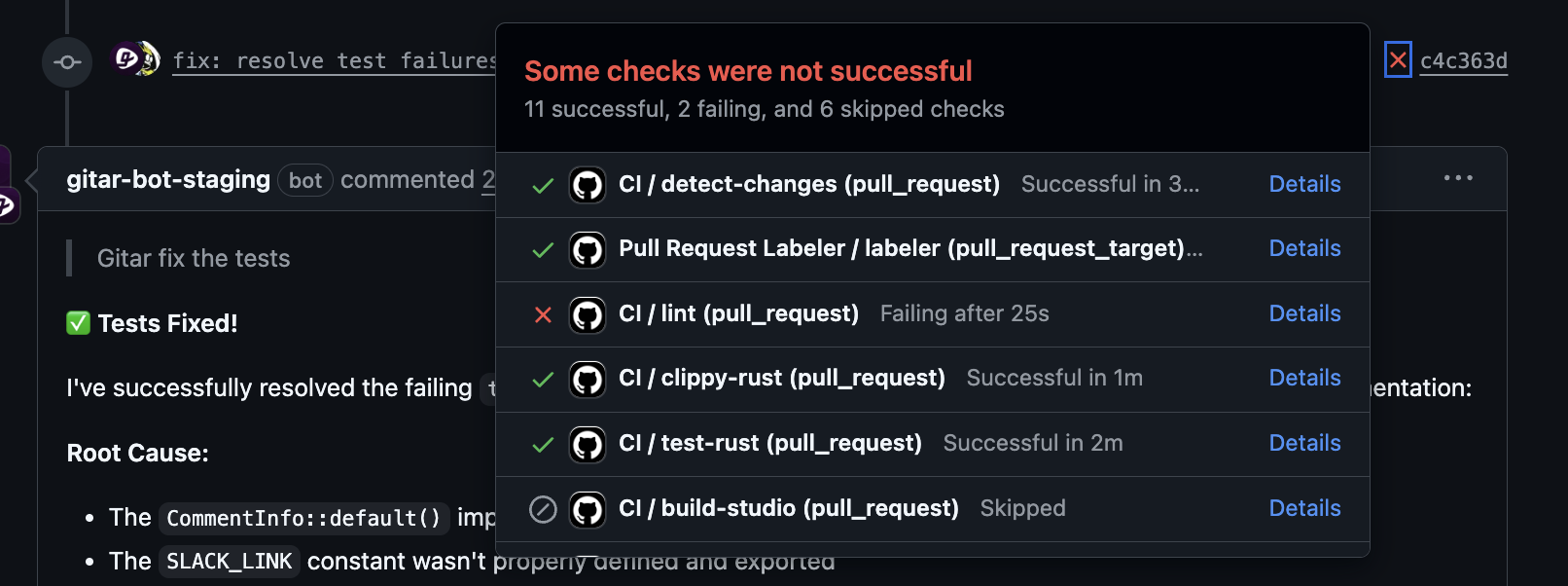
Teams often start with conservative settings where Gitar posts changes as suggestions. Developers can inspect and accept these with a click. As accuracy proves reliable, teams can move to more autonomous modes while still retaining clear audit trails and rollback options.
Can Gitar handle complex CI setups with multiple SDKs and third-party tools?
Gitar is designed for complex CI environments. The platform mirrors your build settings, language, and SDK versions, and integrations with tools such as SonarQube or Snyk, so that fixes respect your actual pipeline behavior.
How does DevEx automation, like Gitar affect productivity and ROI?
Automation that removes repetitive CI and review work often saves significant time per developer each day. For mid-sized teams, these hours compound into meaningful annual savings, shorter project timelines, and better developer experience.
How does DevEx automation differ from traditional CI/CD optimization?
Traditional CI/CD optimization focuses on making pipelines faster and more efficient. DevEx automation focuses on reducing human effort around those pipelines by handling fixes, triage, and minor review work so developers spend more time on product tasks.
Conclusion: Moving Your Team Toward Self-Healing CI
Self-healing CI shifts automation from surface-level suggestions to outcome-focused resolution. Systems that detect, fix, and validate issues reduce interruptions, shorten feedback loops, and return time to engineering teams.
Engineering leaders who adopt healing engines alongside existing analytics and review tools give their teams a clearer path to sustainable productivity gains. This approach limits infrastructure firefighting and keeps developers focused on solving customer problems.
Teams that implement self-healing CI report faster delivery cycles, lower operational overhead, and higher satisfaction among developers who spend less time on repetitive pipeline work.
Leaders who want to explore this model can review how Gitar fits into their stack and workflows at Gitar’s autonomous CI fixing overview.