
Key Takeaways
- AI code generation has increased PR review time by 91%, costing teams about $1M annually in lost productivity, so autofix tools now feel essential.
- Gitar offers free, unlimited AI code review with true autofix that automatically commits validated fixes across GitHub, GitLab, and CircleCI.
- Competitors like CodeRabbit ($15-30 per developer) and Greptile ($30 per developer) provide suggestions that still require manual fixes and lack CI healing.
- Healing engines like Gitar cut daily CI and review time from 1 hour to 15 minutes per developer, saving $750K+ yearly for 20-developer teams.
- Teams using AI coding tools can try Gitar’s free tier today for automated fixes and consistently green builds.
How We Evaluated AI Code Review and Autofix Tools
Our analysis focuses on four criteria: autofix and CI healing capabilities, pricing and scalability for teams managing 50M+ lines of code, user experience and noise reduction, and security scanning with enterprise support. We evaluated tools using product documentation, real-world benchmarks from companies like Pinterest that handle thousands of daily PRs, and feedback from engineering teams at Tigris and Collate.
The main distinction we found separates true healing engines that automatically commit validated fixes from suggestion engines that only leave comments. This difference determines whether a tool actually removes the post-AI bottleneck or simply adds another stream of notifications.
Automated AI Code Review Tools Compared: Features & Pricing 2026
| Tool | Key Features | Pricing | Autofix & Platforms |
|---|---|---|---|
| Gitar | PR analysis, CI healing, single comment UI, workflow automation | Free unlimited (Team/Enterprise paid) | Yes, GitHub/GitLab/CircleCI/Buildkite |
| CodeRabbit | PR summaries, inline suggestions, security scanning | $15-30/developer | No, GitHub only |
| Greptile | Codebase context, code understanding, suggestions | $30/developer | No, GitHub/GitLab |
| SonarQube | Static analysis, security rules, quality gates, AI CodeFix | $10-150/developer | AI fix suggestions, multi-platform |
Gitar: Free AI Code Review with True Autofix Healing
Gitar shifts teams from suggestion-based tools to a healing engine that actually fixes code. When CI failures occur, such as lint errors, test failures, or build breaks, Gitar analyzes failure logs, generates validated fixes, and automatically commits them to PRs. Pinterest already runs Gitar on more than 50 million lines of code with thousands of daily PRs.
The platform uses a single updating comment to cut notification spam. Instead of scattering inline comments across diffs, Gitar consolidates all findings into one dashboard-style comment that updates in place. Teams report that this creates “more concise summaries than Greptile/Bugbot” and reduces cognitive load during review.
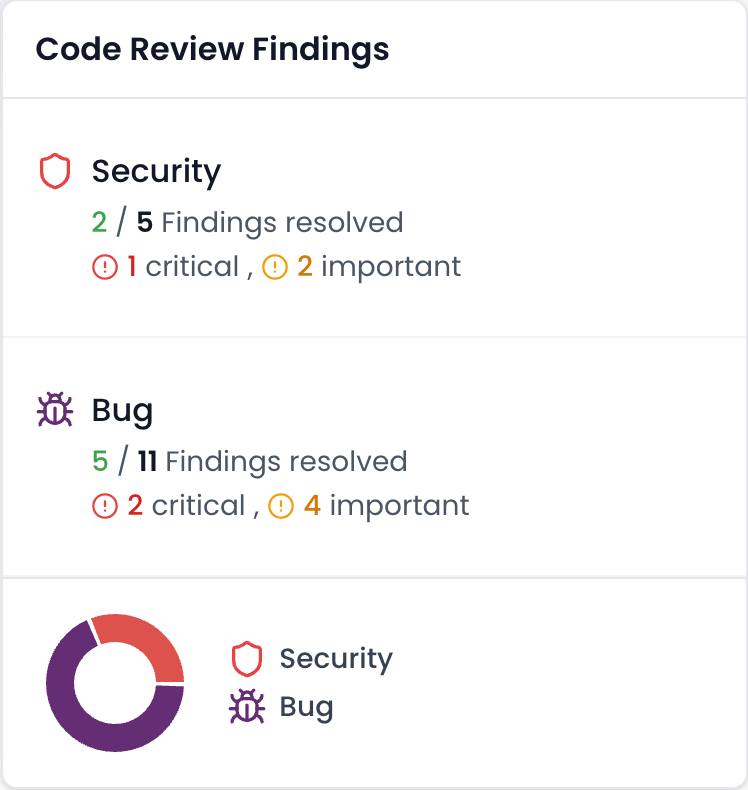
Gitar’s pricing model supports this platform approach. Comprehensive code review stays free with unlimited repositories and users. A 14-day autofix trial lets teams experience healing capabilities before they move to paid tiers. Revenue comes from advanced features like enterprise CI agents and custom workflow automation, not from basic review.
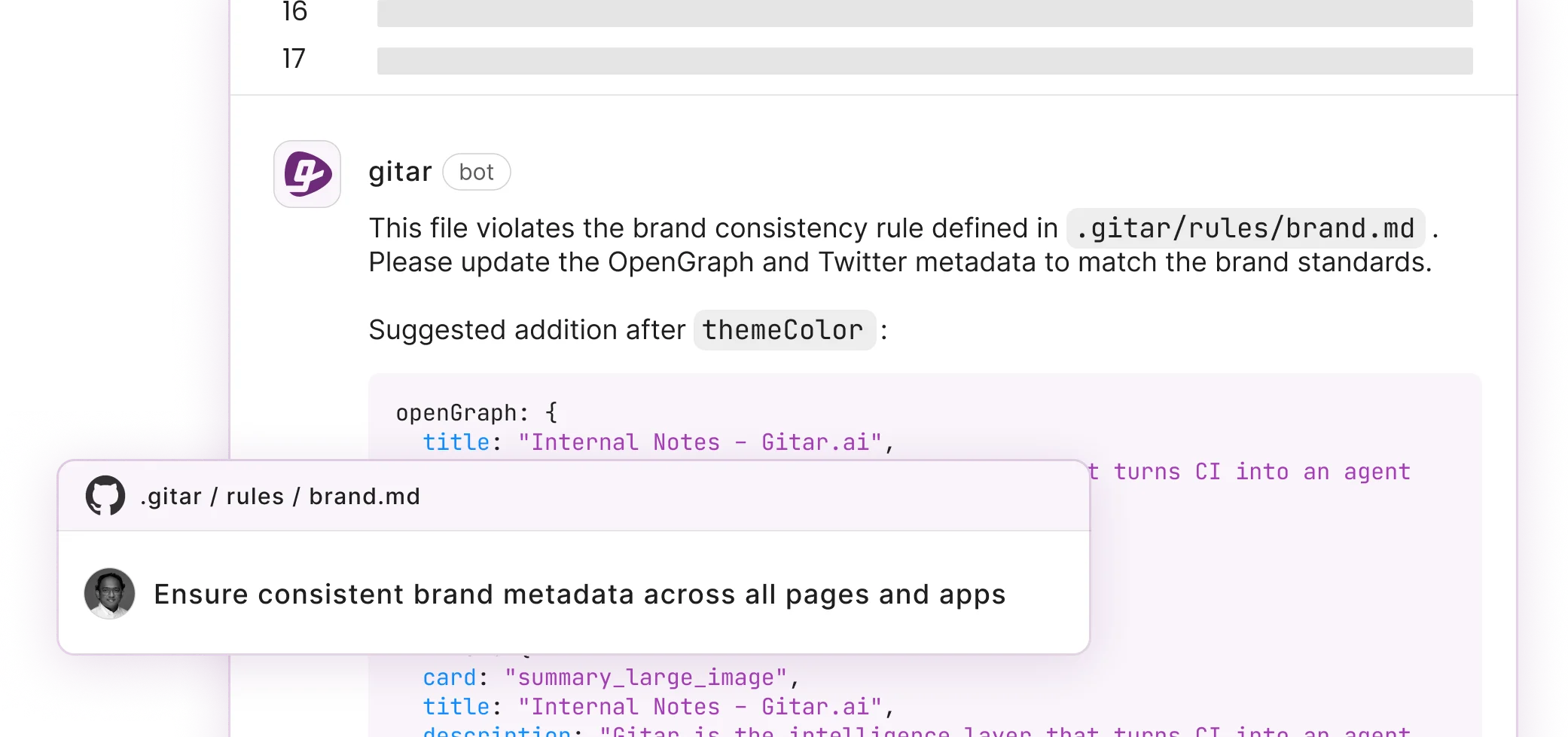
Key differentiators include hierarchical memory that maintains context per line, per PR, and per repository. Natural language workflow rules replace complex YAML configurations. Integration with Jira, Slack, and Linear keeps context inside the tools where teams already work. See Gitar documentation for automated CI healing that helps teams maintain green builds.
CodeRabbit: GitHub-Centric AI Suggestions Without Autofix
CodeRabbit delivers AI-powered PR analysis with inline suggestions and security scanning for GitHub-focused workflows. The tool generates detailed PR summaries and flags potential issues through static analysis, but developers must still implement every suggested fix manually.
Pricing ranges from $15-30 per developer each month depending on team size and feature set. CodeRabbit offers solid analysis and tight GitHub integration, yet it does not include CI healing or autofix. Teams still face a manual bottleneck as they read recommendations, apply changes, and wait to see whether fixes pass CI.
The platform’s strength comes from its GitHub depth and established user base. For teams dealing with a 91% increase in PR review time from AI code generation, a suggestion-only model does not remove the core productivity constraint.
Greptile: Deep Codebase Context Without CI Validation
Greptile focuses on deep codebase context and understanding, with pricing at $30 per developer monthly for advanced comprehension features. It performs well when analyzing large codebases and surfacing contextual insights about relationships and dependencies.
Greptile still shares the main limitation of suggestion engines. It identifies issues but does not fix them. Without CI integration or validated fix application, teams continue to carry the manual implementation burden. The higher price reflects strong context capabilities, yet the absence of autofix keeps productivity gains modest.
Teams that prioritize code understanding over automation can gain value from Greptile. For organizations overwhelmed by AI-generated PRs, suggestion-only workflows do not resolve the velocity problem. See Gitar documentation for automated fixes that directly address CI failures.
SonarQube and Legacy Static Analysis in Post-AI Workflows
Traditional static analysis tools like SonarQube provide broad code quality metrics and security scanning, along with AI CodeFix suggestions. These platforms were built primarily for analysis and governance rather than full CI healing in AI-heavy development environments.
SonarQube pricing ranges from $10-150 per developer depending on deployment model and feature set. The tool remains valuable for quality gates, compliance, and AI-assisted fixes, but it often stops short of fully automated fix commits. Teams that rely heavily on AI code generation now look for platforms that deliver end-to-end workflow automation.
Choosing Between Free and Paid AI Code Review in 2026
Free vs Paid AI Code Review Tools 2026
The pricing landscape shows a clear split between suggestion engines that charge premium rates and platforms that keep core review free. For small teams, Gitar’s free unlimited model delivers full review capabilities without per-seat fees. Enterprise teams can add SOC 2 compliant CI agents that run inside their own infrastructure.
Total cost of ownership looks very different across tools. A 20-developer team pays $450-900 each month for CodeRabbit or Greptile suggestions, while Gitar’s free tier supports unlimited repositories and users. Even after adding paid autofix features, the return on investment still favors healing engines over suggestion-only tools.
Autofix AI Code Review ROI
| Metric | Before Autofix | After Gitar |
|---|---|---|
| Daily CI/review time per developer | 1 hour | 15 minutes |
| Annual productivity cost (20 devs) | $1,000,000 | $250,000 |
| Tool cost monthly | $450-900 | $0 |
Autofix tools that keep builds green remove context switching and manual fix work that drain developer time. Even if autofix only resolves half of all issues, teams still save about $375,000 annually while avoiding suggestion-only tool costs.

Frequently Asked Questions
What are the best free AI code review tools in 2026?
Gitar leads the free AI code review space with unlimited repositories, full PR analysis, security scanning, and CI integration at no cost. The platform’s autofix capabilities come through a 14-day free trial so teams can test healing before upgrading. Most competitors charge $15-30 per developer for basic suggestion features.
How does CodeRabbit pricing compare to alternatives?
CodeRabbit charges $15-30 per developer each month for suggestion-based review, so a 30-person team pays $450-900 monthly for comments that still require manual work. Gitar offers equivalent review coverage for free and adds autofix that resolves issues automatically. The cost gap widens as team size grows.
Which AI code review tools offer GitHub autofix capabilities?
Gitar stands out as the primary tool with true autofix and GitHub integration, automatically analyzing CI failures and committing validated fixes. CodeRabbit and Greptile only provide suggestions that developers must implement. Gitar’s healing engine also supports GitLab, CircleCI, and Buildkite, which makes it a broad autofix option.
What are the best Greptile alternatives for automated code review?
Gitar is a leading Greptile alternative, combining strong codebase context through hierarchical memory with autofix capabilities that Greptile does not include. While Greptile charges $30 per developer for suggestions, Gitar offers free comprehensive review plus automated CI healing. Natural language workflow rules and cross-platform integration give Gitar a wider range than Greptile’s narrower scope.
How do you measure autofix ROI for AI code review tools?
Teams measure autofix ROI by tracking time saved from reduced manual work and more reliable green builds. Helpful metrics include daily time spent on CI failures, PR review cycle length, and context switching interruptions. Most teams see a sharp drop in CI-related developer time. The most meaningful metric is the number of validated fixes that pass CI, not the volume of suggestions.
Conclusion and Next Steps for Your Team
The 2026 AI code review landscape now clearly favors autofix platforms over suggestion engines. Tools like Gitar that heal code and keep builds green deliver measurable ROI, while expensive suggestion tools keep the manual bottleneck in place. The free entry point, broad integrations, and proven scale make healing engines a practical choice for teams facing post-AI development pressure.
Start with Gitar’s free comprehensive code review to see the difference between suggestions and real fixes. The 30-second installation needs no credit card, and unlimited repositories let your entire organization benefit right away. Install Gitar now to automatically repair broken builds and move from reactive suggestions to proactive healing in your development workflow.