

Key Takeaways: Why Gitar Beats CodeRabbit
- CodeRabbit charges $12-30 per user each month for suggestion-only reviews, while Gitar offers unlimited free PR analysis, security scanning, and inline suggestions.
- Gitar’s 14-day autofix trial delivers validated code healing that automatically resolves CI failures, unlike CodeRabbit’s manual implementation workflow.
- Teams with 30 developers save $5,400-10,800 per year by switching to Gitar’s zero-cost model with full review feature parity.
- Gitar reduces notification fatigue with a single updating comment and scales better to enterprise codebases with 50M+ lines than suggestion-only tools.
- Teams gain unmatched value and automation by installing Gitar today as the leading free CodeRabbit alternative.
Pricing Showdown: CodeRabbit vs Gitar AI
The pricing gap between CodeRabbit and Gitar reflects two very different product philosophies. CodeRabbit charges per developer for suggestion-only reviews, while Gitar delivers full PR analysis, security scanning, and autofix capabilities at zero cost.
| Plan | CodeRabbit | Gitar | Key Difference |
|---|---|---|---|
| Free Tier | 14-day trial only | Unlimited forever | No restrictions |
| Basic Plan | $12-15/user/month | $0 | Full PR analysis free |
| Pro Features | $24-30/user/month | $0 + 14-day autofix trial | Healing vs suggestions |
| 30-Dev Team Cost | $450-900/month | $0 | $5,400-10,800/year savings |
This comparison focuses on pricing transparency, autofix capabilities, CI integration depth, notification management, ROI, and cross-platform scalability, where the tools differ sharply.
Gitar AI Pricing: Free Review, Paid Only for Autofix
Gitar’s pricing model starts from a simple belief: code review should be a free baseline capability. The free tier includes unlimited repositories, unlimited users, comprehensive PR summaries, inline suggestions, and security scanning, with no credit card, no seat limits, and no trial deadline.
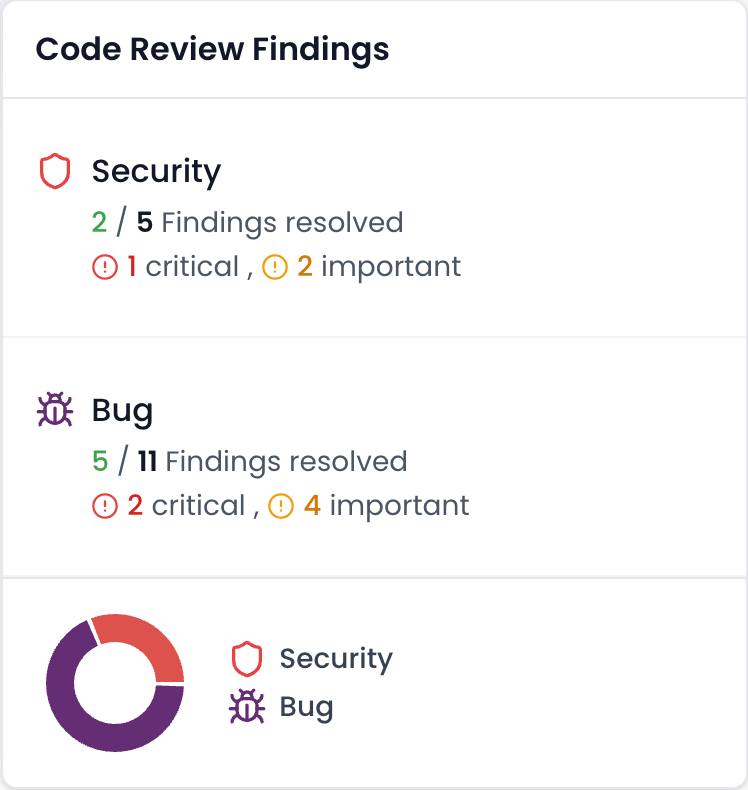
The 14-day autofix trial unlocks Gitar’s healing engine with automatic CI failure resolution, review feedback implementation, and validated fix commits. Competing tools often charge $450-900 each month for a 30-developer team, while Gitar removes the financial barrier to advanced AI code review.
This structure makes Gitar a natural fit for teams overwhelmed by AI-generated PRs and constrained budgets. When developers merged 43 million pull requests monthly in 2025, free comprehensive review shifted from nice-to-have to core infrastructure.
CodeRabbit Pricing: Paid Suggestions at Scale
CodeRabbit follows a traditional SaaS ladder with four tiers: Free (14-day trial), Lite ($12-15/user/month), Pro ($24-30/user/month), and Enterprise (custom pricing). The Lite plan offers unlimited PR reviews and customizable learning, while Pro adds SAST, Jira integration, and richer IDE support.
CodeRabbit delivers fast review turnaround and supports GitHub, GitLab, and Azure DevOps. However, the basic plan starts at $10-20 per user monthly, which compounds quickly as teams grow.
The core limitation stays the same: CodeRabbit produces suggestions without validating fixes. Teams pay premium prices for comments that still require manual implementation, context switching, and extra CI runs, which recreates the bottleneck introduced by AI coding tools.
Feature Comparison: Gitar’s Healing vs CodeRabbit’s Suggestions
The feature comparison highlights why Gitar moves beyond traditional code review. CodeRabbit focuses on fast analysis, while Gitar’s healing engine supports the entire development loop.
| Core Capability | CodeRabbit | Gitar | Impact |
|---|---|---|---|
| PR Summaries | Yes (paid) | Yes (free) | Zero cost barrier |
| Inline Suggestions | Yes (paid) | Yes (free) | Complete feature parity |
| Auto-Apply Fixes | No | Yes (trial) | Removes manual work |
| CI Failure Analysis | No | Yes | Root cause resolution |
| Integration Feature | CodeRabbit | Gitar | Advantage |
|---|---|---|---|
| GitHub Support | Native | Native | Equivalent |
| GitLab Support | Yes | Yes | Cross-platform parity |
| CI Auto-Healing | No | Yes | Gitar exclusive |
| Single Comment UI | No | Yes | Reduces notification spam |
CodeRabbit delivers 2-5 minute review turnaround and 40-50% manual review time reduction, which works well for suggestion-based flows. Gitar’s healing model removes the implementation step entirely and ships validated fixes that pass CI.
For Pinterest-scale codebases with more than 50 million lines and thousands of daily PRs, Gitar’s architecture supports enterprise volume while keeping the free tier. The single updating comment pattern cuts notification fatigue, which matters as PRs per engineer increased 113% with AI adoption.
Why Gitar Wins on Value and ROI
Gitar reshapes both development velocity and cost structure. A 20-developer team sees compounding gains across productivity, tooling spend, and focus.
| Metric | Before Gitar (CodeRabbit) | After Gitar | Annual Savings |
|---|---|---|---|
| CI/Review Time | 1 hour/day/dev ($1M loss) | 15 min/day/dev ($250K) | $750K productivity |
| Tool Costs | $450-900/month | $0 | $5,400-10,800 |
| Context Switching | Multiple daily interrupts | Near-zero | Immeasurable focus gain |
| Total ROI | Negative | $375K+ annually | Transformative |
The 2026 development environment supports this ROI picture. With annual commits reaching 1 billion with 25% year-over-year growth and AI-generated PRs containing 75% more logic bugs, teams need healing automation instead of expensive suggestions.
Customer feedback reinforces these numbers. Tigris engineering reports that Gitar’s PR summaries are “more concise than Greptile/Bugbot,” and Collate’s team credits “unrelated PR failure detection” with saving “significant time” by separating infrastructure flakiness from code bugs, which sits outside CodeRabbit’s capabilities.
Install Gitar now, automatically fix broken builds, start shipping higher quality software, faster
Autofix vs Suggestions: The 2026 AI Review Divide
AI code review in 2026 splits into two camps: healing engines and suggestion engines. Gitar’s autofix engine inspects CI failures, generates validated fixes, and commits working solutions automatically, which tackles the main bottleneck directly. Sixty-six percent of developers spend more time fixing “almost-right” AI-generated code, and Gitar targets that pain.
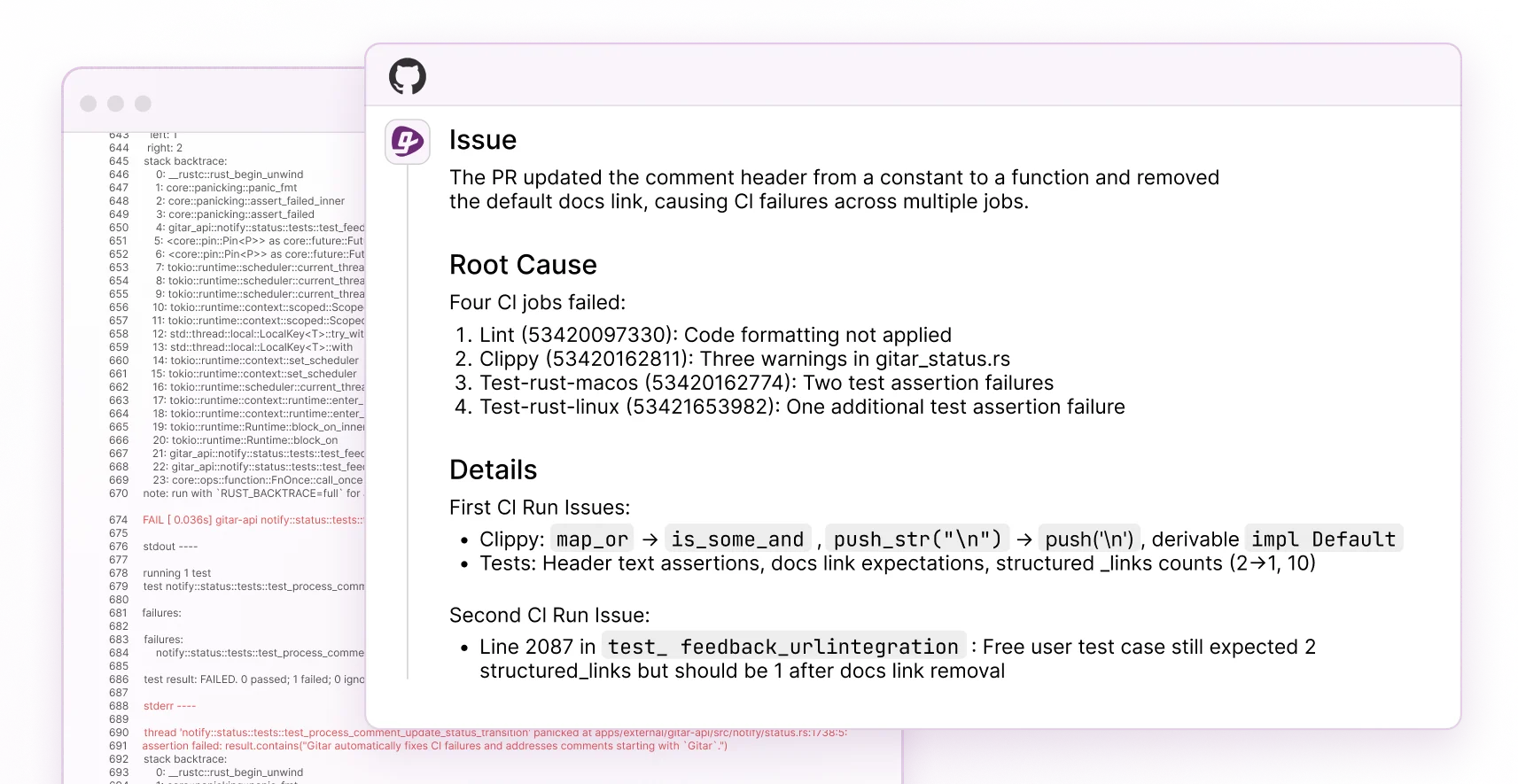
CodeRabbit’s suggestion model keeps teams in the manual work loop. Even with 40-50% manual review time reduction, developers still apply fixes, push commits, and wait for CI, hoping for green builds. Gitar replaces that cycle with validated automation.
Alternatives such as Qodo and CodeAnt AI, which sell weaker paid tiers without autofix, stay in the suggestion category. Gitar’s free healing engine represents a step change, because validated commits, not comments, decide whether teams escape the AI coding bottleneck.
Gitar’s Free Platform Vision for AI Code Review
Gitar’s free review strategy supports a broader platform vision that extends beyond basic comments on diffs. While competitors monetize core review features, Gitar treats review as a commodity and builds a development intelligence layer on top, including automated workflows, deep analytics, natural language CI rules, and cross-platform integration.
This platform approach meets enterprise needs with hierarchical memory systems, Jira and Linear context integration, and configurable automation levels. Internal case studies show real impact, such as automated code migrations that save substantial engineering time for teams handling complex refactors.
This vision positions Gitar as infrastructure rather than a narrow tool. Code review becomes the entry point to a full development intelligence platform, and the free tier makes sense because value comes from platform expansion, not feature gating.
CodeRabbit Alternatives Beyond Gitar
The broader CodeRabbit alternative market includes Greptile ($30 per user), Qodo, and CodeAnt AI. These tools keep the suggestion-only model and similar pricing. Greptile offers deep codebase context with strong bug detection accuracy but still lacks autofix.
This landscape exposes a clear gap. Established tools charge premium prices for marginal gains over manual review, while Gitar delivers free, transformative automation. For most teams, the decision becomes simple: pay for suggestions or receive healing at no cost.
Install Gitar: Best free CodeRabbit alternative for AI code review pricing value
Decision Matrix: When to Choose Gitar or CodeRabbit
The decision matrix below clarifies where each tool fits, although Gitar’s strengths cover nearly all common scenarios.
| Decision Criteria | Winner | Why Gitar Wins | CodeRabbit Edge Cases |
|---|---|---|---|
| Cost Optimization | Gitar | $0 vs $450-900/month | None |
| Autofix Requirements | Gitar | Healing engine vs suggestions | None |
| CI Integration Depth | Gitar | Failure analysis and auto-commit | None |
| Review Speed Priority | CodeRabbit | 2-5 minute turnaround | Speed-only requirements |
Most engineering teams facing the 2026 AI coding bottleneck gain more from Gitar’s free comprehensive review, validated autofix, and extensible platform. CodeRabbit mainly suits teams that value raw review speed above automation depth.
Frequently Asked Questions
What is the best AI code review tool in 2026?
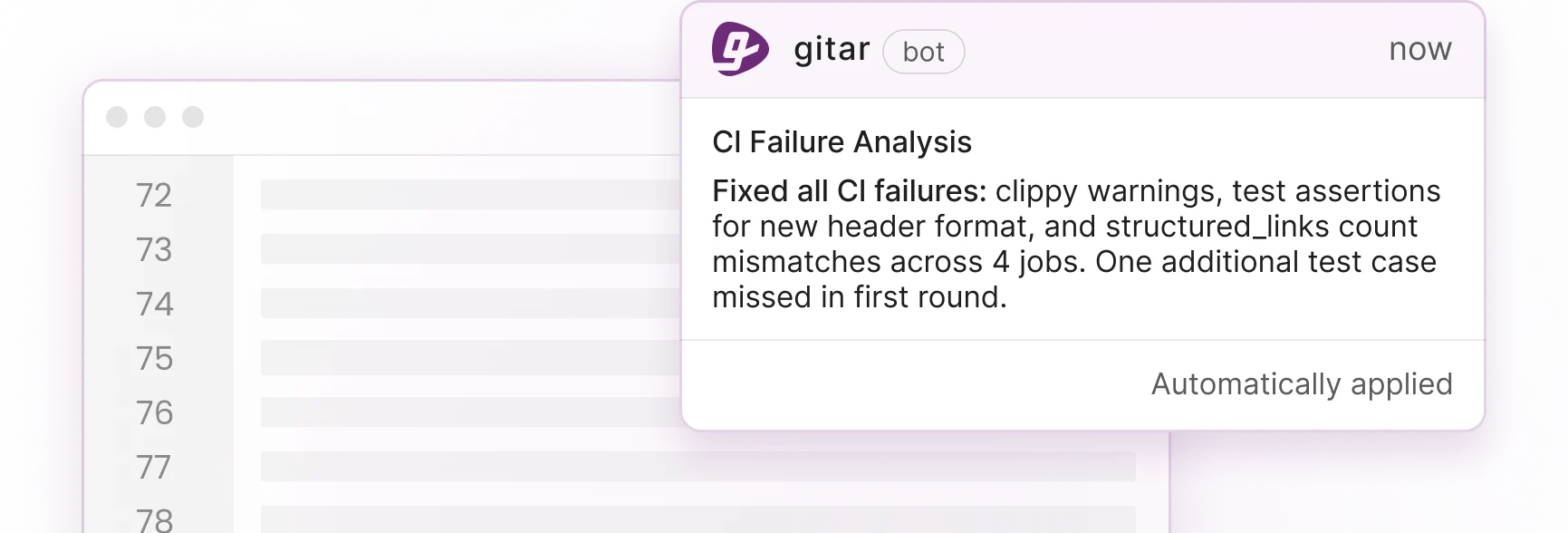
Gitar stands out as the leading AI code review tool in 2026 because it combines free comprehensive review with autofix healing that resolves CI failures automatically. CodeRabbit offers fast suggestions and broad platform support but charges $15-30 per developer each month and still requires manual fix implementation. Gitar’s healing engine validates fixes against CI, commits working solutions, and removes the manual work trap that suggestion-only tools create. The mix of zero cost, unlimited users, and deep automation makes Gitar the clear choice for teams dealing with AI-generated PR overload.
Are AI code reviews good for development velocity?
AI code reviews can significantly improve development velocity when teams pick the right approach. Organizations using AI review tools report a 24% cycle time reduction and a 113% increase in PRs per engineer with full rollout. Suggestion-only tools like CodeRabbit cut manual review time by 40-50% but still depend on developers to apply fixes. Gitar’s autofix model removes that bottleneck by resolving CI failures and applying review feedback automatically, which delivers step-change velocity gains instead of small improvements.
What model does CodeRabbit use for code analysis?
CodeRabbit relies on proprietary AI models tuned for code review, with diff-based analysis and contextual learning from repository patterns. The platform focuses on speed and broad language coverage across GitHub, GitLab, and Azure DevOps. This architecture, however, limits output to suggestions without fix validation. Gitar uses an agentic harness designed for CI environments, with context management, memory systems, and validated fix generation that produces working solutions instead of theoretical advice.
How much does CodeRabbit cost compared to alternatives?
CodeRabbit charges $12-15 per user monthly for Lite and $24-30 per user monthly for Pro, which totals $450-900 each month for a 30-developer team. Costs scale linearly with headcount, which strains budgets as teams grow. Gitar offers equivalent review capabilities for free, supports unlimited users and repositories, and includes a 14-day autofix trial. Other tools such as Greptile charge $30 per user, while Qodo and CodeAnt AI follow similar paid models. Teams save $5,400-10,800 annually by moving from CodeRabbit to Gitar and gain stronger autofix features.
Can AI code review tools handle enterprise-scale codebases?
Modern AI review tools can support enterprise-scale codebases, but effectiveness varies. CodeRabbit works with large repositories and enterprise CI/CD pipelines, although it focuses on diff-based analysis instead of full codebase context. Gitar demonstrates enterprise readiness by handling Pinterest-scale codebases with more than 50 million lines and thousands of daily PRs while still offering a free tier. Gitar’s agentic harness manages complex CI environments, concurrent operations, and real-time event coordination, while suggestion-only tools struggle with the validation and automation demands of enterprise workflows.
Conclusion: Switch to Gitar for Unbeatable Value
The 2026 AI code review market presents a straightforward choice. Teams can keep paying $15-30 per developer each month for suggestion-only tools that preserve manual work, or they can adopt Gitar’s free healing engine that resolves CI failures and applies review feedback automatically. With 84% AI adoption driving 91% longer review times, teams need automation that closes the loop, not partial shortcuts.
Gitar outperforms across every major criterion: zero cost versus premium pricing, validated autofix versus manual suggestions, deep CI integration versus surface-level analysis, and platform vision versus narrow tooling. The ROI is decisive, with more than $375K in annual gains for a 20-developer team and capabilities that CodeRabbit does not match.
Code review should be free. Autofix should be standard. The platform should power complete development intelligence. Gitar delivers that model today while competitors charge premium prices for yesterday’s approach.
Install Gitar now, automatically fix broken builds, start shipping higher quality software, faster