
Key Takeaways
- AI coding tools like Copilot speed up code generation 3-5x but create PR review bottlenecks, with AI PRs waiting 4.6x longer for review.
- CodeRabbit and similar tools charge $15-30 per developer for suggestions that still require manual fixes and do not guarantee green builds.
- Gitar leads as the free alternative with a healing engine that auto-fixes CI failures, validates changes, and supports GitHub, GitLab, and CircleCI.
- Other alternatives like Aikido and CodeAnt.ai offer partial auto-fixes but lack Gitar’s comprehensive CI guarantees and free unlimited reviews.
- Teams that switch to Gitar get automatic build fixes, remove $450-900 in monthly tool costs, and save around $1 million annually in productivity.
1: Gitar as the Free Standout with Healing Engine and CI Guarantees
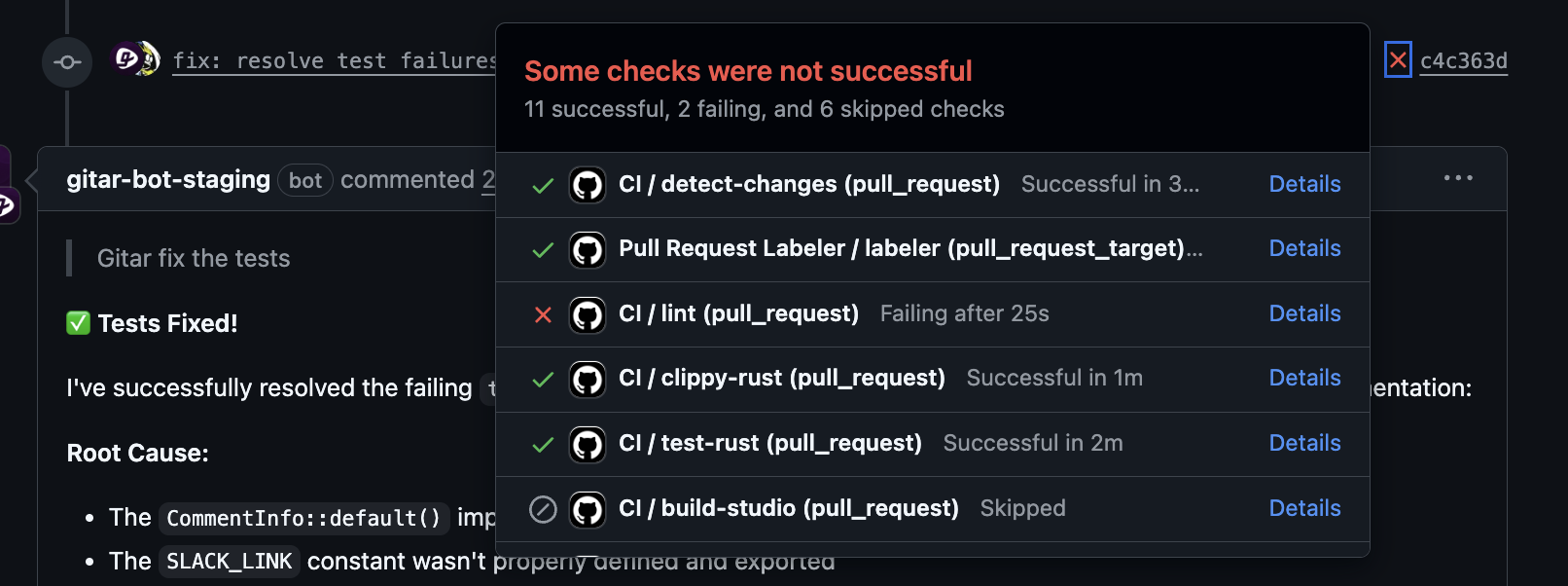
Gitar stands out as the free AI code review platform that actually fixes code and resolves CI failures automatically. The platform handles review feedback, security scanning, and bug detection for unlimited repositories at no cost. Teams get unlimited PR analysis with no seat limits and no credit card required. Autofix features are available through a free 14-day trial.
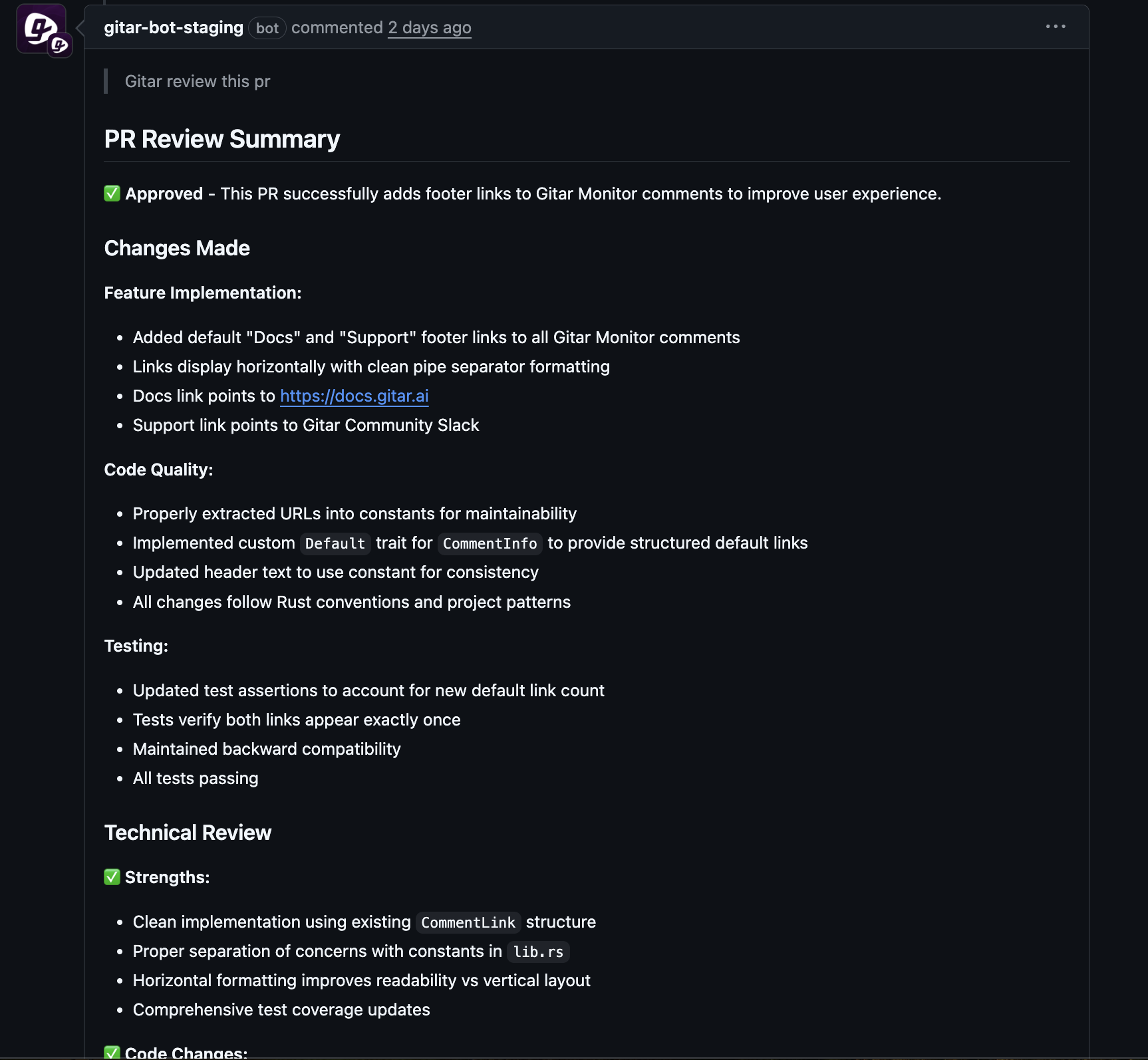
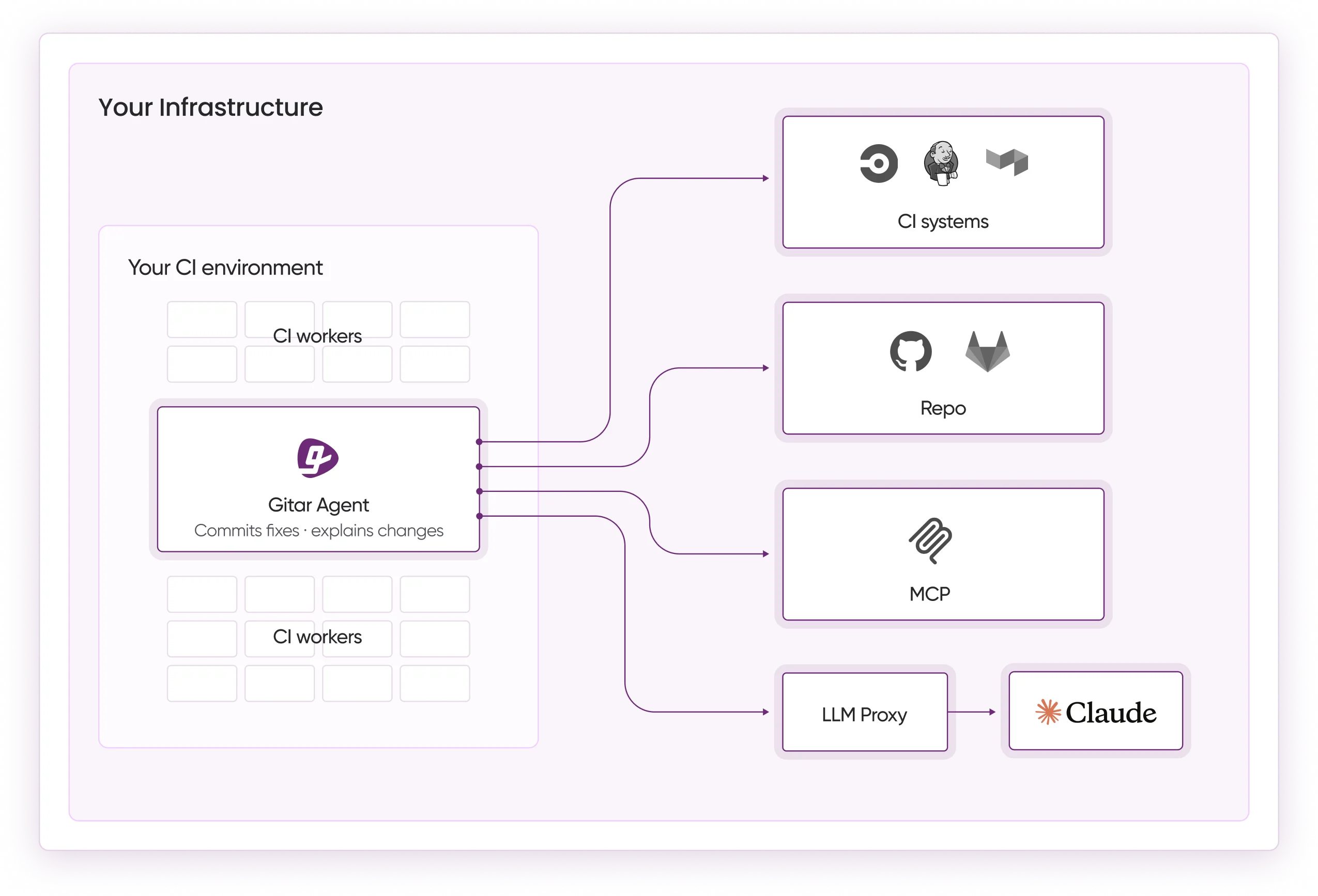
The healing engine analyzes CI failures, generates validated fixes, and commits them directly to pull requests. When lint errors appear, tests fail, or builds break, Gitar identifies the issue and then resolves it. The platform validates each fix against your CI environment and focuses on delivering green builds instead of untested suggestions.
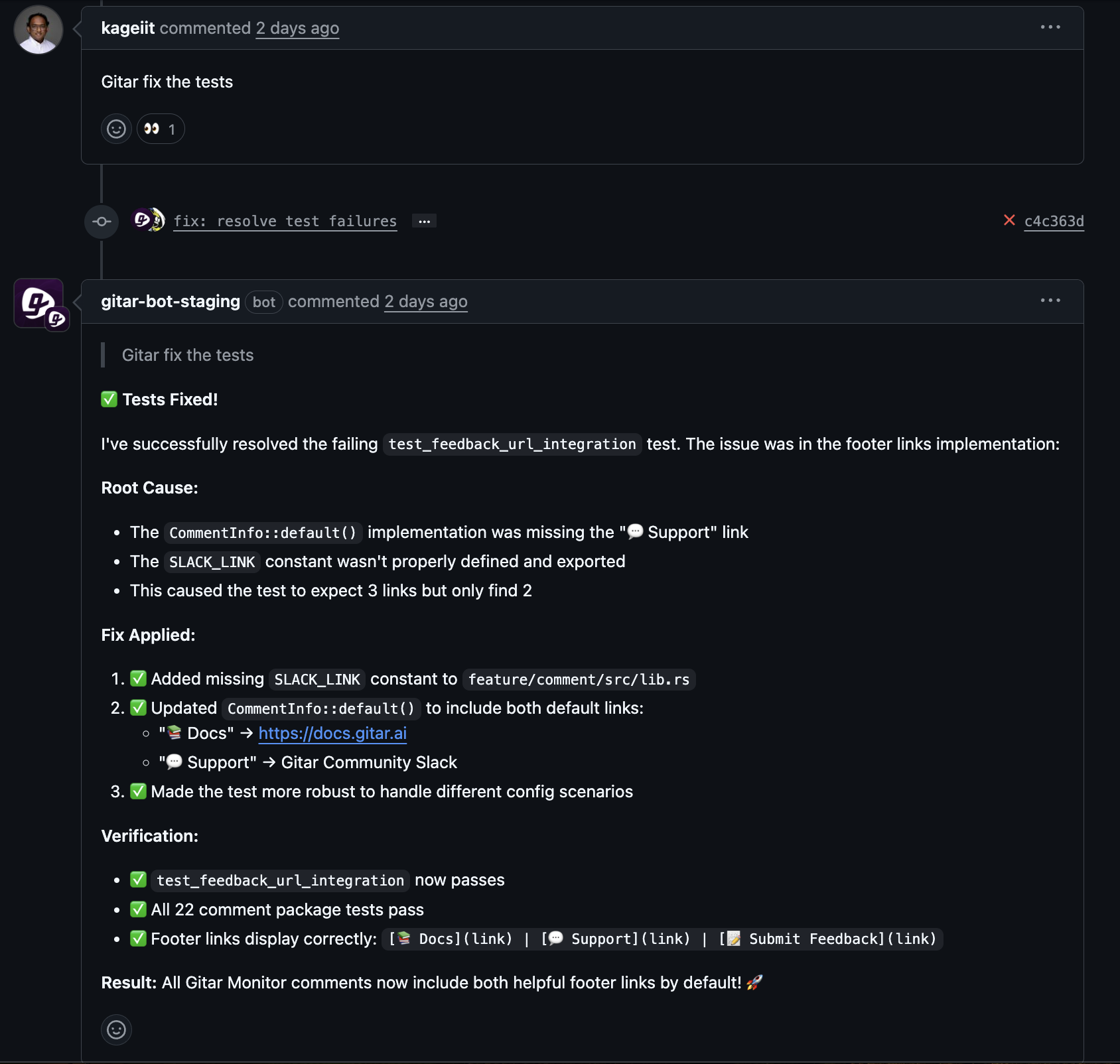
Gitar integrates with GitHub, GitLab, CircleCI, and Buildkite and uses a single updating comment to reduce notification noise. The roadmap includes natural language workflow rules, Jira and Slack integrations, and deep analytics for engineering leaders. Enterprise deployments already support Pinterest-scale codebases with more than 50 million lines of code.
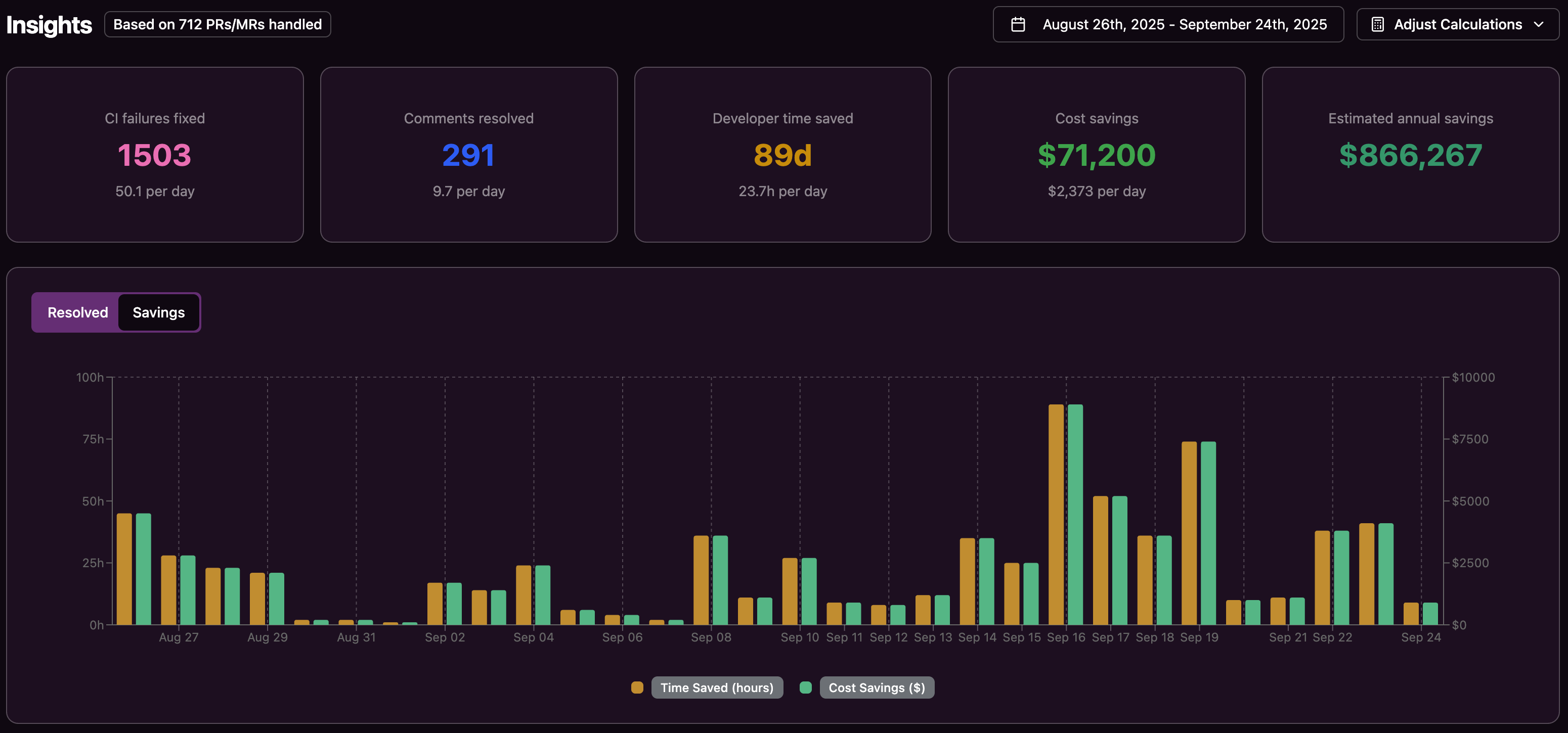
The ROI is clear for most teams. Gitar removes manual fix implementation, reduces context switching, and replaces suggestion-only tools that cost $450-900 per month. A 20-developer team can save roughly $1 million per year in productivity by shifting to automated fixes.
Quick Overview of the Other Top 6 CodeRabbit Alternatives
The CodeRabbit alternative landscape includes several strong options, each with a specific focus and tradeoffs.
- Aikido focuses on security-first auto-fixes with SAST and Infrastructure-as-Code coverage, IDE plugins, and paid plans.
- CodeAnt.ai offers real-time bug detection with CI/CD integration and automated suggestions, starting at $10 per user each month.
- Astronuts provides line-by-line PR analysis with configurable review depth and summary generation for teams that want detailed reviews.
- Greptile delivers full codebase context analysis and can detect up to three times more bugs than manual reviews, at $30 per developer.
- Sourcery gives advanced contextual feedback with low false positive rates and integrates with GitHub and GitLab.
- Qodo supports multi-repo context and team-aligned workflows with moderate auto-fix capabilities.
Detailed Breakdowns of Top CodeRabbit Alternatives
Aikido: Security-First Auto-Fixes for Vulnerabilities
Aikido Security excels in SAST and Infrastructure-as-Code auto-fixes and integrates directly into developer workflows through IDE plugins. The platform focuses on security vulnerabilities and provides automated remediation for common issues. Aikido runs on paid tiers and does not provide full CI failure guarantees outside its security scope.
CodeAnt.ai: Real-Time Quality and CI Monitoring
CodeAnt AI unifies review, security, and quality with automated suggestions and integrates with GitHub, GitLab, and Bitbucket at $10 per user each month for the Basic plan and higher tiers. The platform monitors code continuously and ranks issues by severity to guide teams toward the most critical fixes. CodeAnt.ai does not match Gitar’s level of CI integration and validation, so it cannot guarantee that every suggested fix results in a passing build.
Other Notable Alternatives for AI Code Review
Astronuts focuses on configurable PR summaries and line-by-line analysis for teams that want detailed review coverage. Greptile provides full codebase context analysis and can detect up to three times more bugs than manual reviews, but it charges a premium price of $30 per developer. Sourcery and Qodo emphasize contextual feedback and offer moderate auto-fix capabilities, although they do not provide comprehensive CI integration or green build guarantees.
Side-by-Side Comparison Table: Gitar vs. CodeRabbit Alternatives
|
Tool |
Auto-Apply Fixes |
CI Auto-Fix/Validation |
Pricing (per dev/mo) |
|
Gitar |
Yes |
Yes (Guarantees Green) |
Free |
|
CodeRabbit |
No |
No |
$15-30 |
|
Aikido |
Partial (SAST) |
Partial |
Paid |
|
CodeAnt.ai |
Yes (Bugs) |
Yes (CI/CD) |
$10+ |
|
Greptile |
No |
No |
$30 |
|
Sourcery |
Partial |
No |
Paid |
|
Qodo |
Partial |
Partial |
Paid |
How to Choose a CodeRabbit Alternative for Code Quality
Different roles inside an engineering organization need different outcomes from code review automation. Software engineers want tools that reduce context switching and remove repetitive manual fixes. Engineering leaders look for measurable gains in team velocity and clear financial returns from automation investments.
Platform and DevOps engineers prioritize self-healing CI capabilities that cut infrastructure costs and reduce maintenance work. The main tradeoff usually sits between free and paid solutions, because many paid tools still focus on suggestions that require manual effort. Multi-platform support also matters for teams that rely on GitLab, CircleCI, or Buildkite instead of GitHub-only workflows.
Frequently Asked Questions
What is the best Free CodeRabbit Alternative That Auto-Fixes Code?
Gitar stands out as the free AI code review platform that auto-fixes code instead of only suggesting changes. The platform offers unlimited code review at no cost with no seat limits and no credit card required. Gitar’s healing engine resolves CI failures and applies review feedback, with autofix features available through a free 14-day trial. The system supports enterprise-scale codebases without sacrificing performance.
How does CodeRabbit compare to Gitar for Code Quality Automation?
CodeRabbit works as a suggestion engine that flags issues but leaves developers to implement fixes manually, at $15-30 per developer each month.
Gitar operates as a healing engine that applies fixes automatically, validates them against your CI, and focuses on delivering green builds at no cost. CodeRabbit often generates notification noise through many inline comments, while Gitar uses a single updating comment that consolidates all findings in one place.
How can Teams measure ROI from Automated Code Review Tools?
Teams can measure ROI by tracking time saved on CI failures and review cycles across the organization. A typical 20-developer team can lose about one hour per day per developer to CI and review issues, which can reach $1 million in annual productivity costs. Automated fix tools can cut this time to around 15 minutes per day, which creates more than $375,000 in yearly savings. Free platforms like Gitar also remove direct tool subscription costs.
What are CodeRabbit Alternatives That Integrate with GitHub Actions and GitLab CI?
Gitar integrates with GitHub, GitLab, CircleCI, and Buildkite, and uses full CI pipeline context for accurate fixes. CodeAnt.ai supports GitHub, GitLab, and Bitbucket with CI/CD integration for continuous checks.
Aikido connects to GitHub and GitLab and focuses on security automation for code and infrastructure. Many alternatives center primarily on GitHub, so Gitar’s broader cross-platform coverage benefits teams with diverse environments.
What are the Security Considerations for Automated Code Commits from AI Tools?
Modern automated code review platforms include configurable security controls to protect production code. Gitar lets teams start in suggestion mode so developers can approve fixes before they are applied. Teams can then enable auto-commit for specific trusted fix types as confidence grows.
Enterprise deployments include SOC 2 Type II compliance and options to run agents inside customer CI environments for maximum control. Teams keep full authority over automation levels and can audit every change.
Conclusion: Choose Gitar as the Free Auto-Fix Platform for 2026
The post-AI coding world needs tools that fix code directly instead of only suggesting edits. Gitar addresses this need with free unlimited code review, automatic CI failure resolution, and guarantees around green builds. Competing tools often charge premium prices for suggestion-only features, while Gitar delivers a complete auto-fix platform at no cost.