
Key Takeaways
- Gitar ranks as the top free AI code review tool that automatically fixes CI failures and keeps builds green across GitHub, GitLab, and CircleCI.
- Most CodeRabbit alternatives like Qodo Merge, Ellipsis.dev, and Greptile charge $20-30 per developer monthly and still lack full CI validation.
- Each tool has a niche strength, such as Aikido for security fixes and Cursor Bugbot for IDE logic bugs, but few deliver full auto-apply with build guarantees.
- The Fix Power Score compares tools on auto-apply, CI integration, pricing, and platforms, and highlights Gitar’s stronger free value.
- Teams can save more than $750K annually on review bottlenecks—try Gitar free for unlimited repos and auto-fixes.
How We Rank Tools With the Fix Power Score
The Fix Power Score compares each tool across five criteria that affect real-world outcomes. It evaluates auto-apply capabilities, CI validation, pricing accessibility, platform integrations, and user experience for notifications. Data sources include 2026 vendor documentation, GitHub star counts, Reddit and Hacker News feedback, and ROI estimates for a 20-developer team that can save up to $1M annually through automated fix resolution.
Top CodeRabbit Alternatives Ranked by Fix Power
1. Gitar: Free Healing With Guaranteed Green Builds
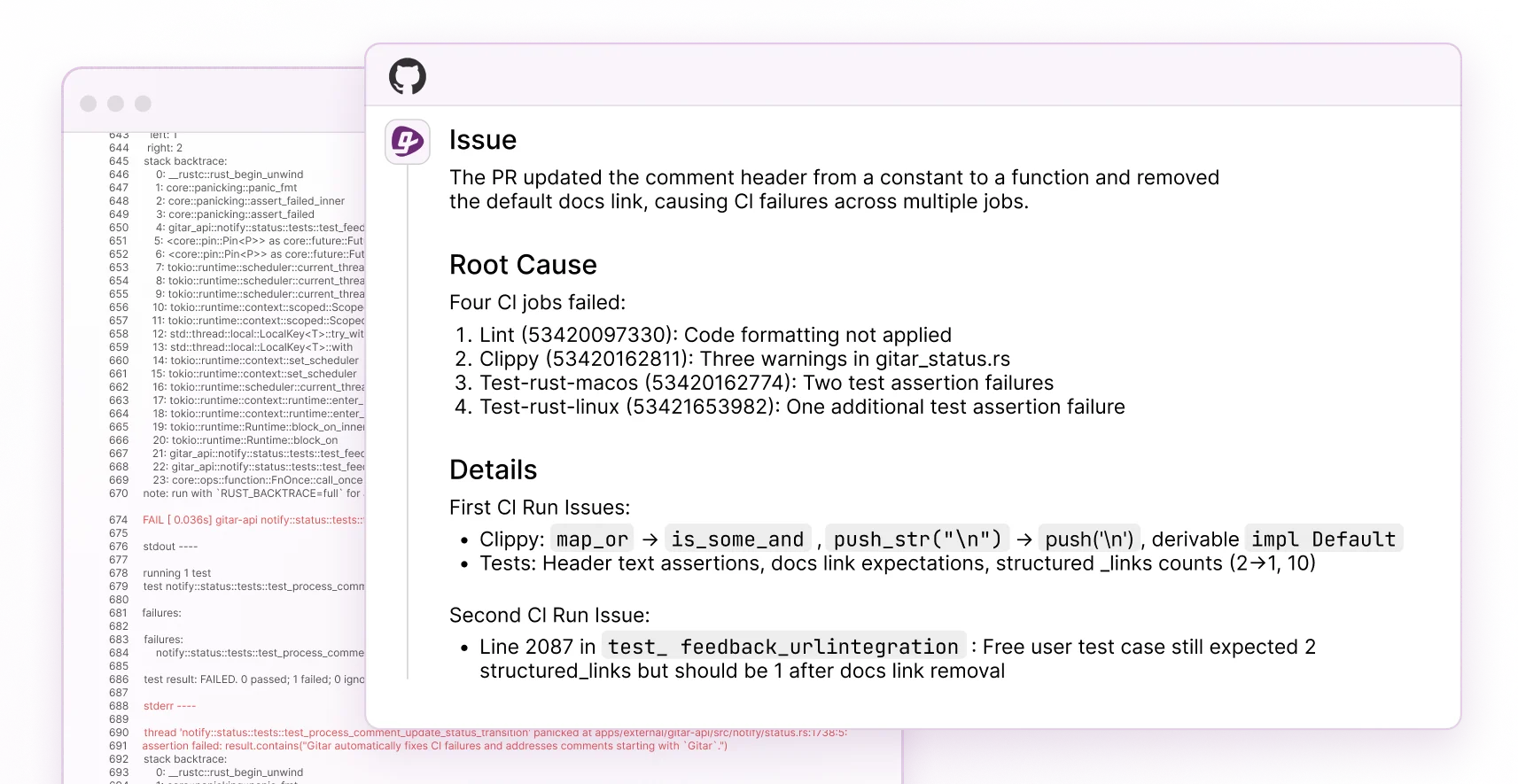
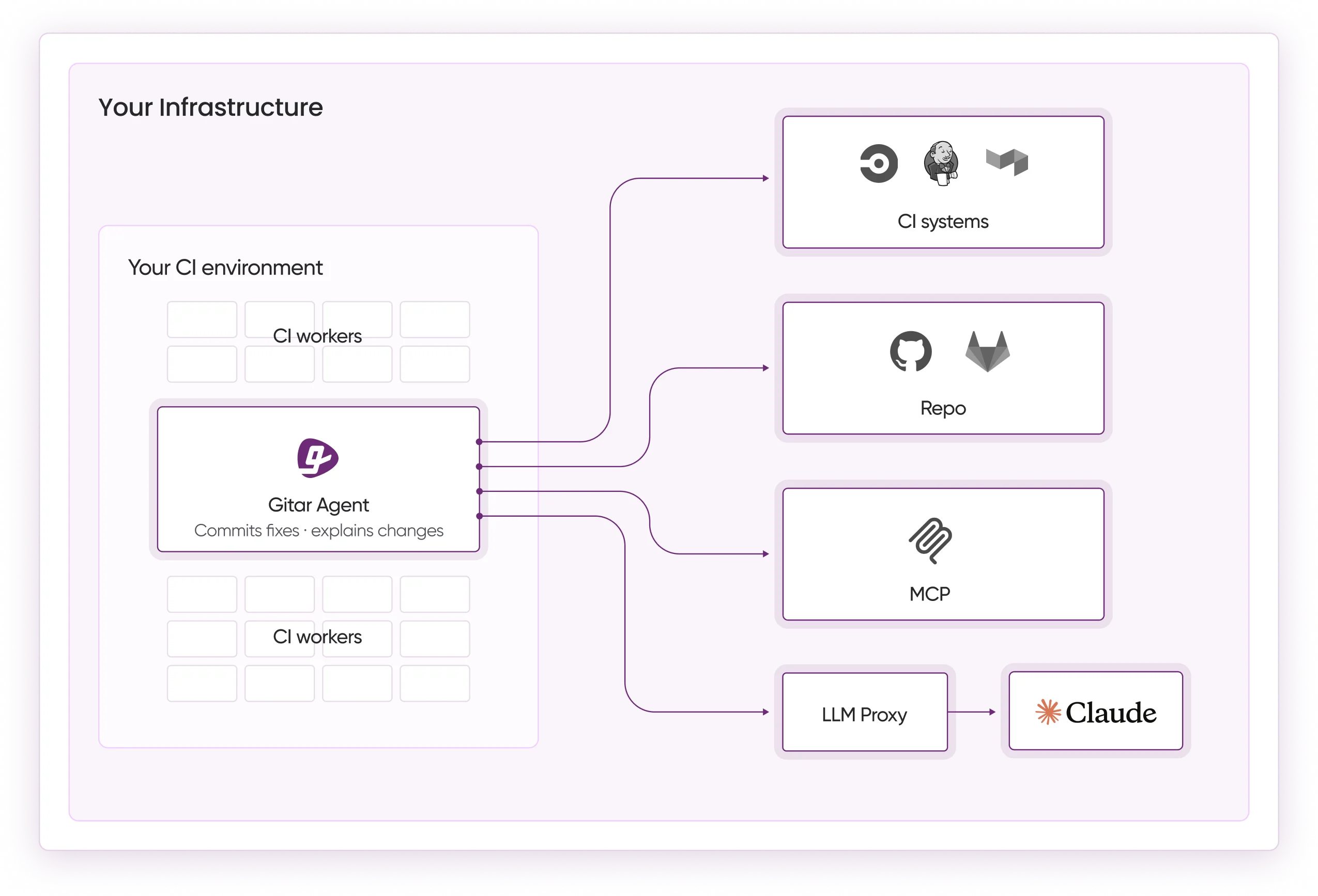
Gitar stands out as the only free AI code review platform that fixes code instead of only suggesting changes. When CI fails from lint errors, test failures, or build breaks, Gitar analyzes the failure logs, generates a targeted fix with full codebase context, validates the change, and commits the solution directly to your PR.
Key strengths include unlimited free code review for public and private repositories, a 14-day free trial of auto-fix features, and cross-platform support for GitHub, GitLab, CircleCI, and Buildkite. A single updating comment interface reduces notification noise, and hierarchical memory maintains context per line, per PR, and per repository while learning your team’s patterns.
Competitors often charge premium prices for basic suggestions, while Gitar’s healing engine validates every fix against your actual CI environment. Teams report more than 50 percent velocity improvements with no subscription costs for core code review.
Install Gitar now to fix broken builds automatically and ship higher quality software faster
2. Qodo Merge: Paid Agentic Multi-File Fixes
Qodo Merge (formerly Codium AI) delivers agentic multi-file fixes with support for GitHub, GitLab, and Bitbucket. The platform offers lightweight, context-aware suggestions and a self-hosted option for teams that need strict data residency control.
Strengths include open-source availability, unlimited PRs for self-hosted deployments, and broad Git support. The main drawback is the lack of free CI validation and a $30 per developer monthly price for team features, with only limited free options.
3. Ellipsis.dev: Automated PR-Level Fixes
Ellipsis implements automated fixes directly in pull requests and focuses on bug resolution and coding standards. The platform charges $20 per developer monthly and integrates with major Git platforms.
Ellipsis performs well at enforcing coding standards and applying reviewer feedback automatically. However, its strengths center on GitHub, with limited GitLab support and no deep CI failure analysis beyond PR-level fixes.
Try Gitar’s full CI healing for free instead of paying $20 per month for narrow PR fixes
4. Greptile: Deep Code Context Without Auto-Apply
Greptile uses RAG-based analysis to understand entire repository graphs, which suits large monorepos. Pricing starts at $30 per developer monthly with no free tier.
Greptile offers strong codebase understanding and handles complex, interconnected projects well. It still functions as a suggestion engine without auto-apply or CI validation, so developers must implement every recommended fix manually.
5. Aikido: Security-Focused AutoFix
Aikido Security runs AI-powered security scans with remediation and includes a forever free tier for small teams. The platform focuses on vulnerability detection and one-click security fixes.
Aikido excels at SAST and automated security remediation. Its scope remains security specific and does not cover general CI failure resolution or broad code review beyond security issues.
Use Gitar for full code review coverage and pair it with security scanning for free
6. Cursor Bugbot: In-IDE Logic Bug Fixes
Cursor Bugbot detects logic bugs and applies fixes directly inside the Cursor IDE. Access requires a Cursor Pro subscription at $20 per user monthly through Max mode.
Cursor Bugbot offers tight IDE integration, PR-level automation, and a strong focus on logic bugs. Its CI pipeline integration remains limited, so most fixes occur inside the IDE rather than across full build pipelines.
7. CodeAnt: Real-Time Static Analysis
CodeAnt AI performs AST-based static analysis with custom rule enforcement and real-time code quality monitoring. It provides a 14-day free trial, and paid plans start at $10 monthly.
CodeAnt enforces coding standards and offers detailed static analysis. It does not validate fixes in CI and requires manual application of all suggested improvements.
8. Bito: Click-to-Fix PR Suggestions
Bito AI supports click-in-PR fixes with summaries, inline suggestions, and security analysis for GitHub, GitLab, and Bitbucket. The platform includes a free tier and paid plans at $12-15 per developer monthly.
Bito offers broad platform coverage and convenient click-to-fix actions for common issues. Developers still need to apply fixes manually, and the platform does not run automated CI validation to confirm that builds pass after changes.
Side-by-Side Comparison of CodeRabbit Alternatives
| Tool | Auto-Apply Fixes | CI Validation | Pricing | Platforms |
|---|---|---|---|---|
| Gitar | 14-day free trial | Yes | Free code review | GitHub, GitLab, CircleCI, Buildkite |
| Qodo Merge | Yes | No | $30/dev/month | GitHub, GitLab, Bitbucket |
| Ellipsis.dev | Yes | No | $20/dev/month | GitHub, limited GitLab |
| Greptile | No | No | $30/dev/month | GitHub, GitLab |
| Aikido | Yes (security only) | No | Free tier available | GitHub, GitLab |
| Cursor Bugbot | Yes (IDE/PR) | No | $20/user/month | GitHub, Cursor IDE |
| CodeAnt | No | No | $10+/month | GitHub, GitLab, Bitbucket |
| Bito | Manual click required | No | $12-15/dev/month | GitHub, GitLab, Bitbucket |
This comparison highlights a clear market gap, because most competitors charge premium prices for suggestion engines that lack CI validation. Gitar remains the only option that combines auto-apply fixes with CI validation and free code review, which makes it a strong choice for teams that want guaranteed green builds without paying subscription fees for core capabilities.
How to Choose a CodeRabbit Alternative
Your team’s role and goals should guide your choice of CodeRabbit alternative. Individual developers often care most about free tiers and quick setup, while engineering leaders focus on measurable ROI and scalability. DevOps teams need reliable CI integration and low maintenance overhead.
The main tradeoff sits between suggestion engines and healing engines. Tools such as CodeRabbit, Greptile, and CodeAnt provide intelligent analysis with one-click or manual fixes, yet still require extra validation. Gitar’s healing engine validates and applies fixes automatically, which removes the manual bottleneck that keeps teams stuck in long review cycles.
Trends in 2026 point toward agentic CI systems that resolve build failures autonomously. Teams that adopt these capabilities early gain meaningful advantages in development speed and code quality.
Start shipping higher quality software faster with Gitar’s free healing engine
Frequently Asked Questions
Best Free Alternative to CodeRabbit
Gitar offers the most complete free alternative to CodeRabbit and supports unlimited code review for public and private repositories with no seat limits or credit card. Unlike CodeRabbit’s $15-30 monthly pricing, Gitar includes PR summaries, security scanning, bug detection, and performance reviews at no cost. The platform also provides a 14-day free trial of auto-fix features that resolve CI failures and apply review feedback automatically.
How Qodo Merge Compares to CodeRabbit
Qodo Merge delivers agentic multi-file fixes and self-hosting options that CodeRabbit does not provide, which helps teams with strict data residency needs. Qodo charges $30 per developer monthly and does not include free CI validation, while CodeRabbit offers more mature GitHub integration and one-click fixes. Both tools function primarily as suggestion engines instead of healing platforms that guarantee working fixes.
AI Code Review Tools That Fix CI Failures
Gitar is currently the only tool that offers full CI failure analysis with automatic resolution. When builds break, tests fail, or lint errors appear, Gitar reads the failure logs, generates fixes with full repository context, validates them in your CI environment, and commits working code directly to your PR. Other tools such as Bito and Ellipsis provide limited fix features but do not validate fixes in CI to confirm that they work.
Open Source Alternatives to CodeRabbit
Qodo Merge offers an open-source edition with self-hosting, although its free CI healing capabilities remain limited. SonarQube Community Edition supplies free static analysis but does not support auto-fixing. Most full-featured alternatives such as Gitar operate as free SaaS platforms instead of open source, which improves integration and maintenance while avoiding complex setup.
Measuring ROI From AI Code Review
Teams can measure ROI by tracking time saved on CI failures and review cycles. A 20-developer team that spends 1 hour daily on CI and review issues wastes roughly $1M annually in productivity. Tools that resolve these issues automatically can reclaim about 75 percent of that time, which equals $750K in annual value. You should then compare subscription costs, such as CodeRabbit’s $450-900 monthly fees, against Gitar’s free tier to calculate net ROI.
How Gitar Compares to Greptile
Gitar delivers auto-fix capabilities with CI validation at no cost, while Greptile charges $30 per developer monthly for suggestion-only reviews. Greptile shines at deep analysis for large monorepos but still requires manual implementation of every fix. Gitar’s healing engine applies and validates fixes automatically, which guarantees green builds and avoids the manual bottleneck that limits Greptile’s impact.
Conclusion: Why Gitar Leads the Next Wave of Code Review
Modern AI coding workflows require tools that move beyond suggestions and actually fix code. CodeRabbit and many competitors still charge premium prices for comment-based reviews, while Gitar’s free healing engine removes the main bottleneck by resolving CI failures and applying review feedback with guaranteed green builds.
Teams overwhelmed by AI-generated PRs and failing pipelines face a clear decision. They can keep paying $15-30 per developer for suggestions that demand manual work, or they can adopt a healing platform that fixes code and validates solutions automatically. Gitar represents the next stage of code review, shifting from expensive suggestion engines to free healing platforms that materially improve development velocity.