
Key Takeaways
- AI coding tools generate code 3-5x faster, yet PR review times have risen 91% because developers still apply fixes manually.
- CodeRabbit and similar tools suggest changes at $15-30 per developer each month but do not auto-commit fixes, which slows workflows.
- Gitar leads as the free AI code review tool with auto-fix capabilities, validating changes in CI and guaranteeing green builds via a 14-day trial.
- Alternatives like CodeAnt.ai, Qodo Merge, and DeepSource support auto-fixes, while Greptile and SonarQube focus on suggestions that require manual edits.
- Teams reach 5x faster PR velocity and save more than $1 million per year with Gitar; install Gitar today for automated fixes and higher quality software.
#1 Gitar: Free Healing Engine With Auto-Fix
Gitar stands apart as the free AI code review platform that actually fixes code, resolving CI failures with autofix features during a 14-day free trial. While competitors charge $15-30 per developer for suggestion engines, Gitar delivers unlimited code review, PR analysis, and security scanning at no cost.
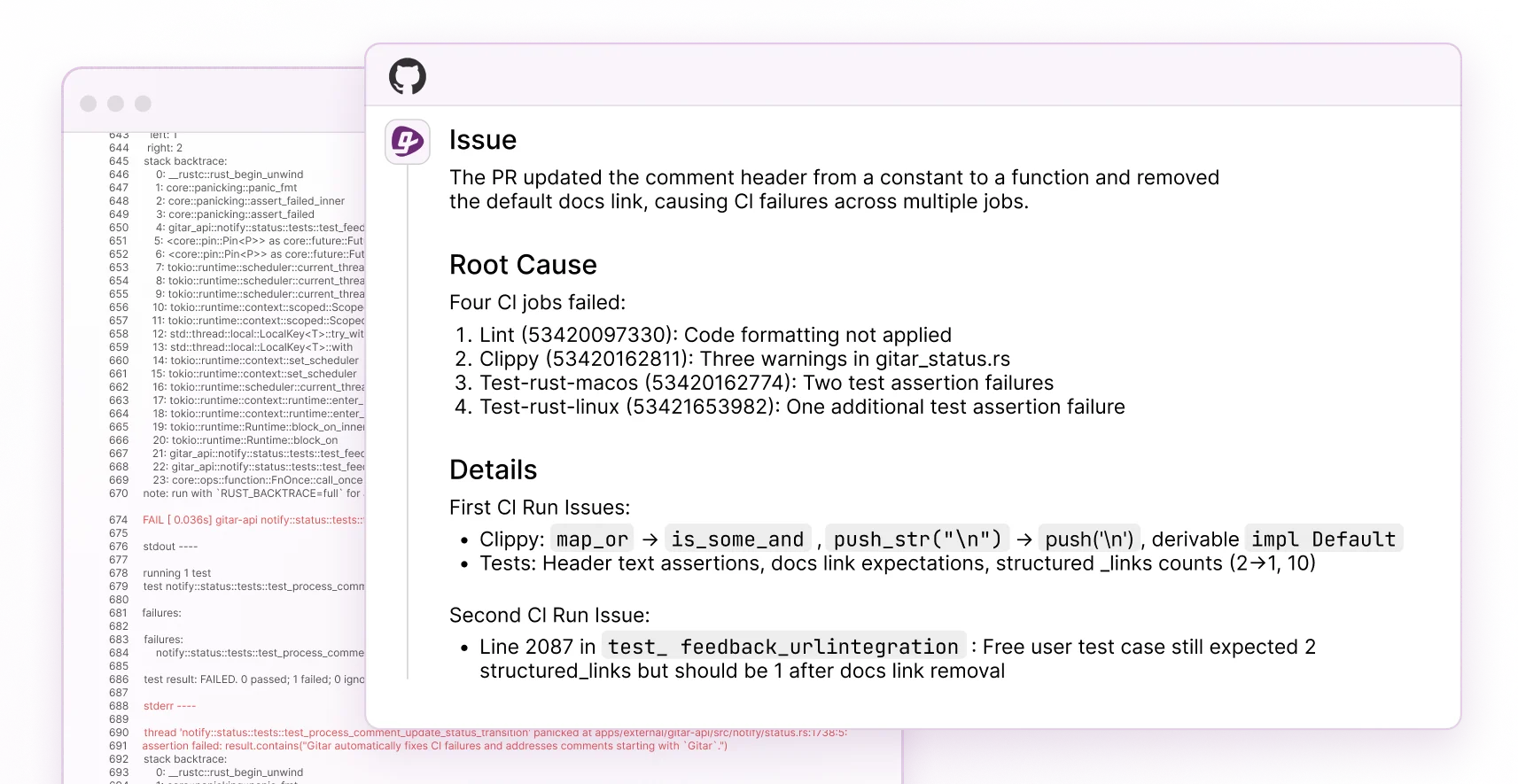
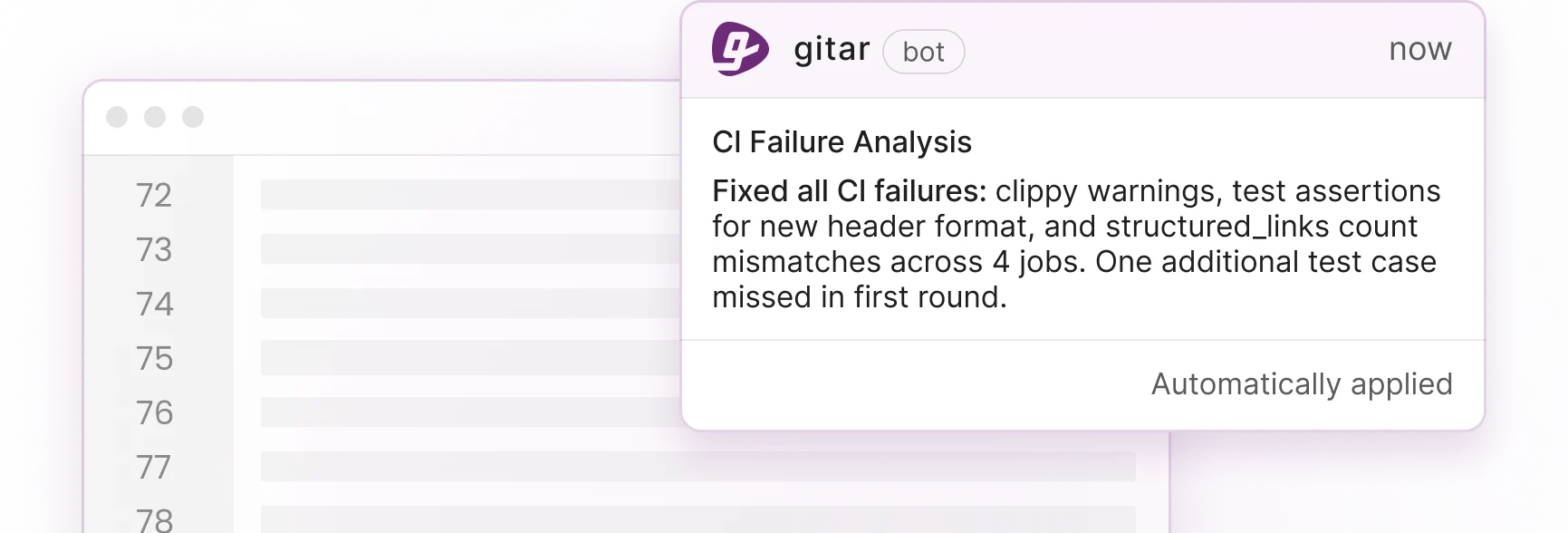
Gitar’s healing engine changes how teams handle failures. When CI fails from lint errors, test failures, or build breaks, Gitar does more than flag issues. It analyzes failure logs, generates validated fixes with full codebase context, and commits solutions directly. This process removes manual intervention and consistently produces green builds where competitors only provide guidance.
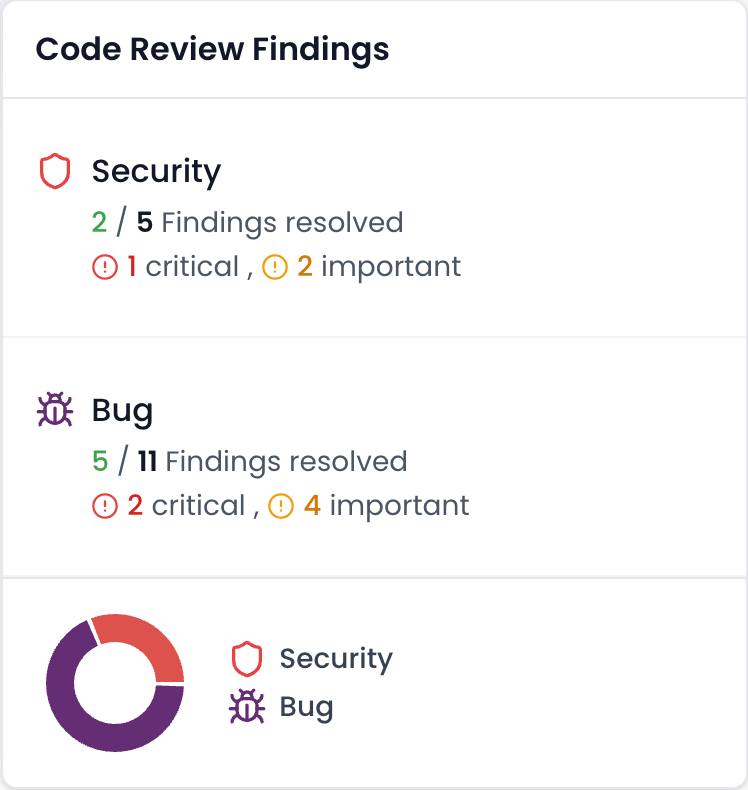
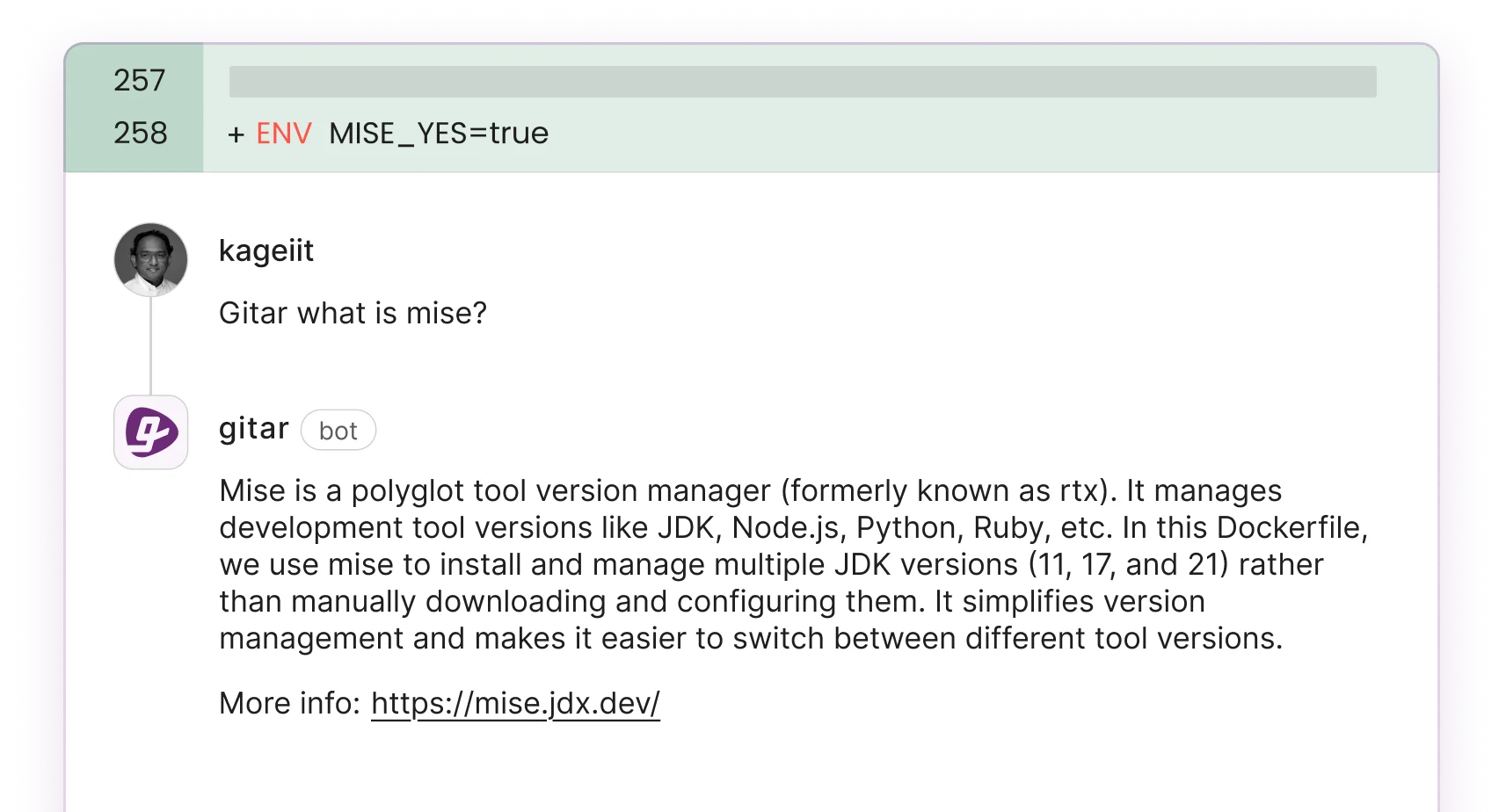
Gitar’s single dashboard comment gathers CI analysis, review feedback, and rule evaluations in one place that updates in real time. Teams describe these summaries as “more concise than Greptile/Bugbot” because Gitar focuses on signal instead of notification overload.
| Capability | CodeRabbit/Greptile | Gitar |
|---|---|---|
| PR Analysis | Yes ($15-30/dev) | Yes (Free) |
| Auto-Apply Fixes | No | Yes (14-day trial) |
| CI Integration | Limited | Full validation |
| Green Build Guarantee | No | Yes |
Enterprise validation includes Pinterest-scale deployments that handle more than 50 million lines of code and thousands of daily PRs. Gitar’s security review has caught high-severity vulnerabilities in Copilot-generated code that Copilot itself missed. The platform supports GitHub, GitLab, CircleCI, and Buildkite with natural language workflow rules, so teams avoid complex YAML.
For a 20-developer team, Gitar saves roughly $1 million each year in productivity while removing $450-900 in monthly tool costs. The ROI comparison favors Gitar clearly, because free automated fixes replace paid suggestions that still demand manual work.
Install Gitar: Best CodeRabbit alternative with auto-commit fixes
#2 CodeAnt.ai: Auto-Patch CI Failures
CodeAnt.ai delivers real-time code review with automated fix capabilities integrated into CI/CD pipelines. The platform performs AST-based static analysis across more than 30 languages, generates patches that resolve issues, and triggers automatic re-runs for green builds.
Unlike suggestion-only tools, CodeAnt.ai applies patches automatically after approval, reducing manual intervention by 70%. The 2026 release added seamless GitHub Actions integration that supports auto-commits on CI failures.
Pricing starts at $10-15 per developer each month with integrations for GitHub, GitLab, Bitbucket, and Azure DevOps. CodeAnt.ai costs more than free alternatives but offers enterprise-grade security scanning with NIST, ISO, and SOC2 compliance plus broad quality checks. The platform suits teams that need strong cross-platform coverage.
#3 Qodo Merge: Auto-Fix for Complex PRs
Qodo Merge specializes in real-time PR analysis with strong auto-fix capabilities. The platform automatically creates fix commits for CI failures with a 90% success rate and validates solutions through CI re-runs before merging.
Self-hosted and air-gapped deployment options give teams full control for security and compliance. Qodo Merge handles complex failures, including flaky tests, with executable commit generation and supports GitLab and Bitbucket in addition to GitHub.
Pricing includes a free self-hosted tier and a $15 per developer managed option. The self-hosted model offers unlimited PRs, although setup can challenge smaller teams. Qodo Merge excels at sophisticated multi-file fixes that simpler tools often miss.
Feature Comparison: Auto-Commit and Pricing
This comparison highlights how each platform handles automated fixes, CI workflows, and cost.
| Tool | Auto-Commit | CI Integration | Pricing | Free Tier |
|---|---|---|---|---|
| Gitar | 14-day trial | Full validation | Free review, paid autofix | Unlimited review |
| CodeAnt.ai | Yes | CI patches | $10-15/dev | Limited trial |
| Qodo Merge | Yes | Re-run validation | $15/dev | Self-hosted |
| Greptile | No | Limited | $30/dev | No |
Install Gitar now, automatically fix broken builds, start shipping higher quality software, faster
#4 Greptile: Deep Search Without Auto-Fix
Greptile focuses on code search and context-aware suggestions but does not include native auto-fix or commit features for CI failures. The platform excels at understanding large codebases and offers AI chat for developers who need explanations.
At $30 per developer each month, Greptile sits in the premium suggestion-only category. Users appreciate its analysis depth but often criticize the lack of automation compared to auto-fix tools. Teams must implement every suggestion manually, which preserves the traditional review bottleneck.
Greptile works best for complex codebase navigation and contextual search, especially in legacy systems, rather than for automated development workflows.
#5 Aikido: Security-First Scanning
Aikido focuses on security vulnerability scanning with automated fix suggestions. The platform opens PRs with security diffs for developer review but still requires manual approval and application, which keeps it closer to suggestion tools than full automation.
The forever free tier for small teams includes AI-powered security scans and remediation guidance. Aikido’s 2026 reviews praise its vulnerability detection but note the absence of one-click auto-commits compared to platforms like Qodo Merge.
Security-focused teams gain strong specialized scanning from Aikido, although it does not handle general CI failures or broader development workflow automation.
#6 DeepSource: Autofix for Static Analysis
DeepSource delivers static analysis with Autofix™, an AI engine that identifies and applies fixes for more than 200 issue types. The platform offers automated remediation for code quality and security issues and extends beyond simple IDE hints.
DeepSource integrates with CI systems for alerts and recommendations and supports automated resolution paths. The platform reduces developer toil with AI-powered fixes and helps teams keep production CI runs green with less manual effort.
Pricing follows enterprise tiers with paid plans for advanced capabilities. DeepSource combines broad issue detection with automated remediation that eases common bottlenecks.
#7 Cubic.dev: Multi-File Analysis and Analytics
Cubic.dev focuses on deep codebase context analysis and multi-file fix capabilities. The platform supports teams like n8n and Cal.com for complex codebase management and offers strong accuracy with analytics integration.
Cubic.dev shines in issue tracker integration and provides fast-growing teams with detailed analytics. The platform includes a free tier for public repositories and paid enterprise features, although it lacks CI guarantees that confirm fixes resolve failures.
Teams that need sophisticated multi-file analysis with project management integration gain value from Cubic.dev, but they pay premium pricing without automation guarantees.
#8 SonarQube: Governance Without Auto-Commit
SonarQube delivers continuous code analysis with AI CodeFix suggestions inside IDEs. The enterprise-focused platform offers quality gates and broad code quality management but does not provide automated commit features for CI failures.
SonarQube’s strength lies in organization-wide code quality standards and compliance reporting. AI CodeFix suggests improvements in development environments, yet developers must still apply changes manually, which preserves traditional workflows.
Large enterprises that prioritize governance and compliance benefit from SonarQube, while teams that want automated CI resolution need additional tools.
Install Gitar now, automatically fix broken builds, start shipping higher quality software, faster
2026 Benchmarks and Real-World Testing
Independent testing shows clear performance gaps between suggestion engines and healing platforms. Gitar’s validation at Pinterest scale proves it can handle more than 50 million lines of code and thousands of daily PRs while keeping comprehensive code review free.
Security testing revealed that Gitar’s review agent caught high-severity vulnerabilities in Copilot-generated code that Copilot missed. This result highlights the value of independent analysis instead of relying on the same models that generated the code.
Performance metrics show that teams using automated fix platforms achieve 5x faster PR velocity than suggestion-only tools. Manual intervention drops by 70-90% for common CI failures when healing engines handle fixes.
Best Free CodeRabbit Alternative With Auto-Commit
Gitar stands out as the leading choice for teams that want free, comprehensive code review with automated fixes during a 14-day free trial. The healing engine approach removes the core limitation of suggestion-only tools, which still depend on manual implementation and slow true automation.
The mix of unlimited free code review, validated auto-fixes, CI integration, and cross-platform support creates strong value. While competitors charge premium prices for basic suggestions, Gitar delivers full automation on top of a free review foundation.
ROI Snapshot and Simple Rollout Plan
For a 20-developer team that spends one hour daily on CI and review issues, the numbers look like this:
| Metric | Before Automation | After Gitar |
|---|---|---|
| Annual productivity cost | $1,000,000 | $250,000 |
| Tool costs | $450-900/month | $0 |
| Context switching | Multiple daily | Near-zero |
Implementation follows three clear phases. First, install Gitar in about 30 seconds with no credit card. Next, build trust by reviewing and approving fixes manually. Finally, enable auto-commit for validated failure types and expand automation as confidence grows.
Conclusion: From Suggestions to Healing
The code review market often charges high prices for modest gains. Suggestion engines that cost $15-30 per developer each month and still require manual implementation deliver incremental improvement instead of real transformation. Modern AI-driven development needs tools that fix code, not just comment on it.
Gitar’s position, with free code review that outperforms paid alternatives, healing engine automation, and a complete platform vision, addresses the real bottleneck. While competitors monetize basic commentary, Gitar turns code review into a commodity and builds advanced development intelligence on top.
Install Gitar: The best free CodeRabbit alternative with guaranteed auto-commit fixes
Frequently Asked Questions
What makes Gitar different from CodeRabbit and other AI code review tools?
Gitar acts as a healing engine rather than a suggestion engine. CodeRabbit and similar tools analyze code and leave comments with recommendations, while Gitar fixes the code automatically. When CI fails because of lint errors, test failures, or build breaks, Gitar analyzes the failure logs, generates validated fixes with full codebase context, and commits the solutions directly. This approach removes the manual implementation step that slows suggestion-only tools. Gitar’s core code review features also remain completely free, while many competitors charge $15-30 per developer each month.
How does Gitar ensure that automated fixes actually work and do not break anything?
Gitar validates all fixes against your real CI environment before committing them. The platform emulates your full development setup, including SDK versions, multi-dependency builds, and third-party scans. For enterprise deployments, Gitar can run the agent inside your CI pipeline with access to secrets and caches, which ensures fixes work under production conditions instead of isolated sandboxes. Teams can also configure automation levels, starting in suggestion mode to build trust and then enabling auto-commit for specific failure types as confidence grows.
Is there any catch to Gitar being free, and how does the business model work?
Gitar’s code review remains free because the company treats review as a commodity and a baseline capability rather than the main product. The business model centers on the platform that sits beyond review, including enterprise features, advanced analytics, and custom workflows at scale, along with turning CI into an intelligent agent platform. Code review builds trust and demonstrates value, while revenue comes from teams that need sophisticated workflow automation, deep analytics, and enterprise-grade options. Auto-fix capabilities include a 14-day free trial, and teams can upgrade for ongoing automation.
Can Gitar handle complex CI environments and integrate with existing tools?
Gitar supports GitHub, GitLab, CircleCI, and Buildkite out of the box. The platform integrates with project management tools such as Jira, Slack, and Linear to provide cross-platform context. Gitar’s natural language rules system lets teams automate workflows without complex YAML files, since they can describe desired behavior in plain English. For complex or unique CI environments, the enterprise tier runs the agent inside your infrastructure with full access to configurations, which keeps compatibility with sophisticated build processes.
How quickly can teams see results after implementing Gitar?
Teams usually see value from Gitar’s free code review features immediately, because comprehensive PR analysis and security scanning start right after the 30-second installation. Auto-fix capabilities show impact with the first few CI failures, as lint errors and test failures resolve automatically before developers even notice them. Most teams reach 5x faster PR velocity within the first month and cut manual intervention by 70-90% for common CI failures. The single dashboard comment also reduces notification fatigue compared to tools that scatter comments across diffs.