
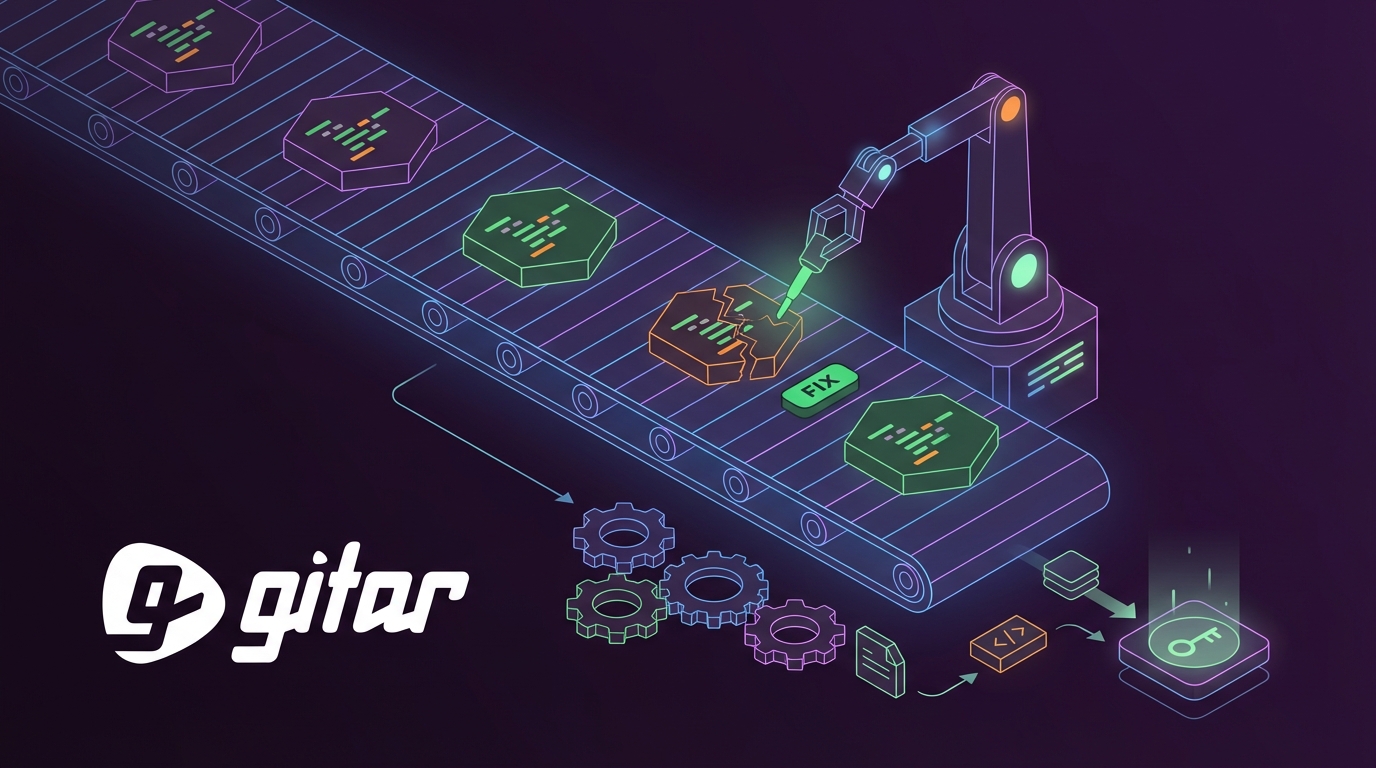
Key Takeaways
- 84% of developers use AI coding tools, yet PR review time has increased 91% because suggestion-only tools like CodeRabbit require manual fixes.
- Gitar is the leading CodeRabbit alternative, automatically analyzing CI failures, generating validated fixes, and committing them directly to PRs with free code review.
- Most alternatives such as Greptile, Qodo Merge, and CodeAnt AI only provide suggestions that require manual implementation and lack true auto-commit CI capabilities.
- Teams lose over $1M annually on CI and review issues, while auto-commit tools like Gitar deliver ROI by removing manual intervention and guaranteeing green builds.
- Switch to Gitar for seamless GitHub, GitLab, and CircleCI integration that automates fixes and accelerates shipping higher quality software.
How We Evaluated CodeRabbit Alternatives in 2026
Our evaluation focused on capabilities that matter most to modern development teams. We compared true auto-commit functionality, including CI analysis, fix generation, validation, and PR commits. We also reviewed pricing and free tiers, integration support across GitHub Actions, GitLab CI, CircleCI, YAML setup simplicity, repository scalability, and documented ROI from time savings.
Teams lose an average of 1 hour per developer daily to CI and review issues, which equals $1M annually for a 20-developer team. Our analysis favors tools that remove manual intervention through automated healing engines instead of suggestion-only approaches.
Top 7 CodeRabbit Alternatives With Auto-Commit Potential in 2026
#1 Gitar: Auto-Commit CI Fixes and Free Code Review
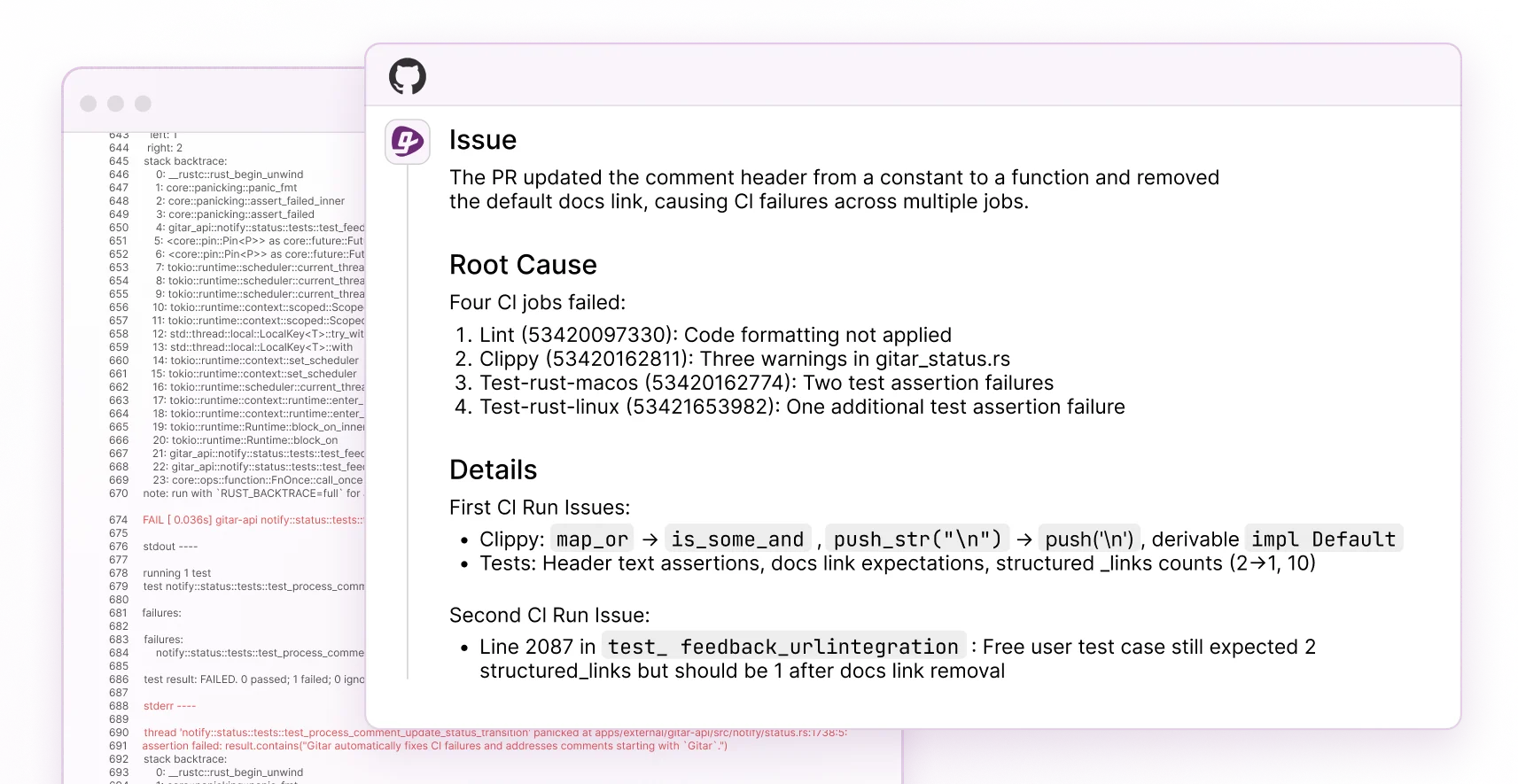
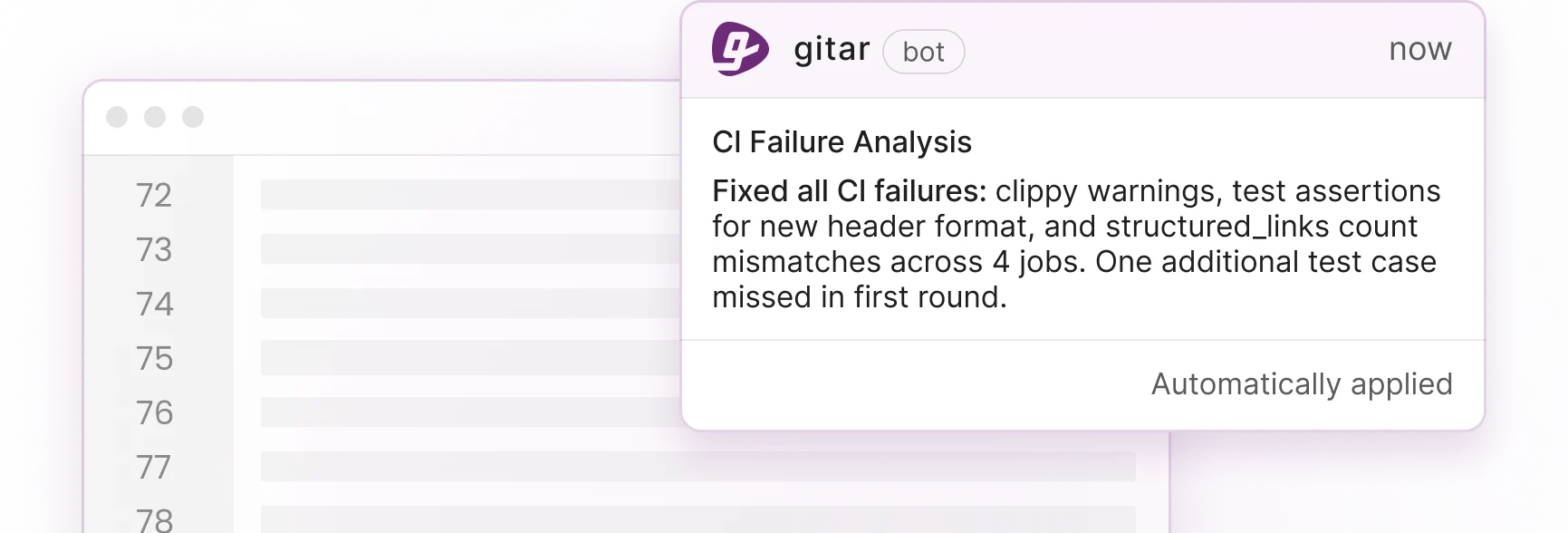
Gitar is a free AI code review platform that automatically fixes code and resolves CI failures. It addresses lint errors, test failures, and build breaks without manual work. When CI fails, Gitar analyzes failure logs, generates context-aware fixes, validates them against your full environment, and commits solutions directly to your PR through a single updating comment.
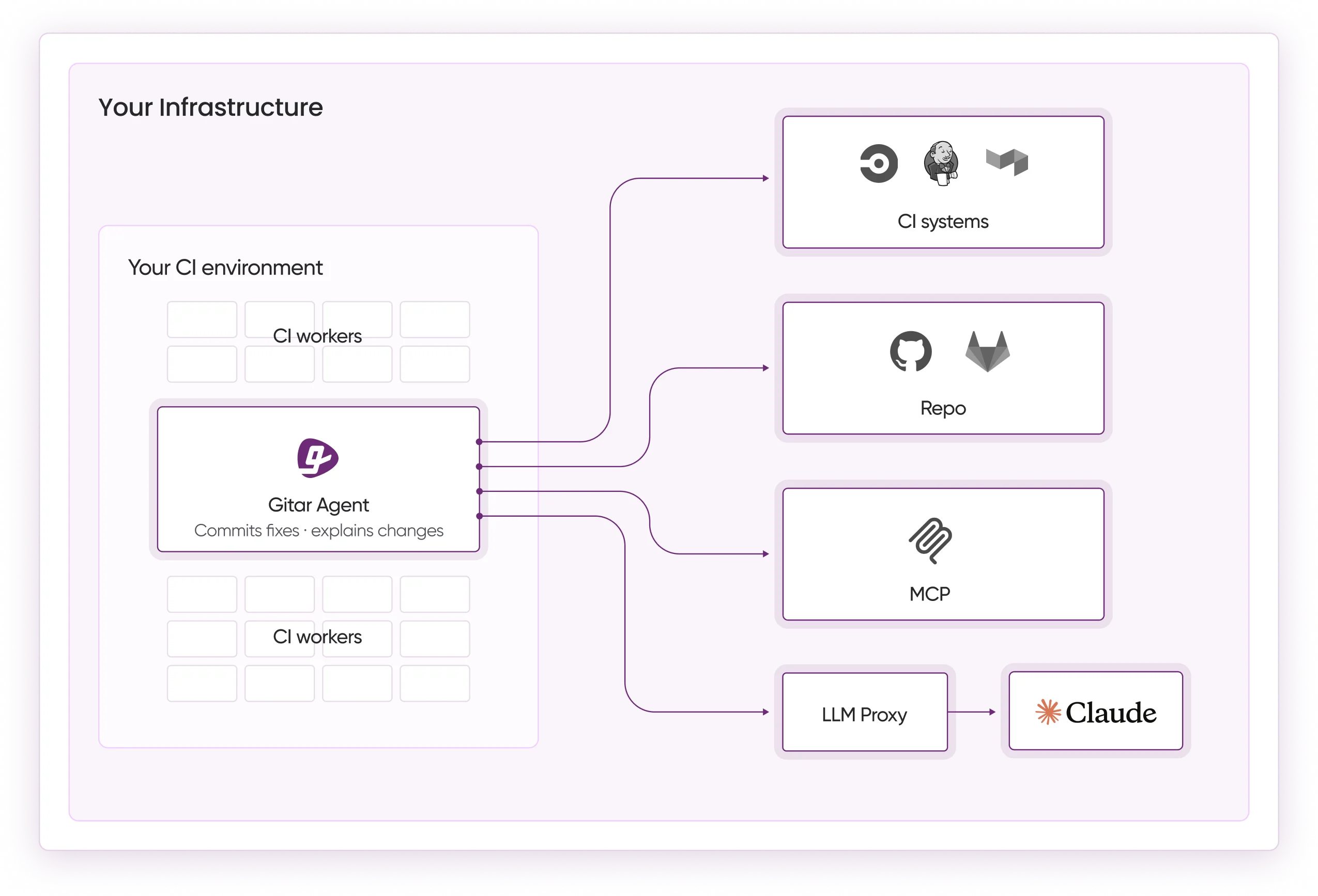
The platform supports unlimited repositories and users with no seat limits for code review, so teams of any size can adopt it. Setup stays simple through the Gitar GitHub App or GitLab integration, with support for GitHub Actions, GitLab CI, CircleCI, and Buildkite.
Elite performers achieve change failure rates of 0-15% while poor CI/CD tooling extends MTTR through manual processes. Gitar addresses this problem by providing automated recovery and validated fixes that shorten incident duration.
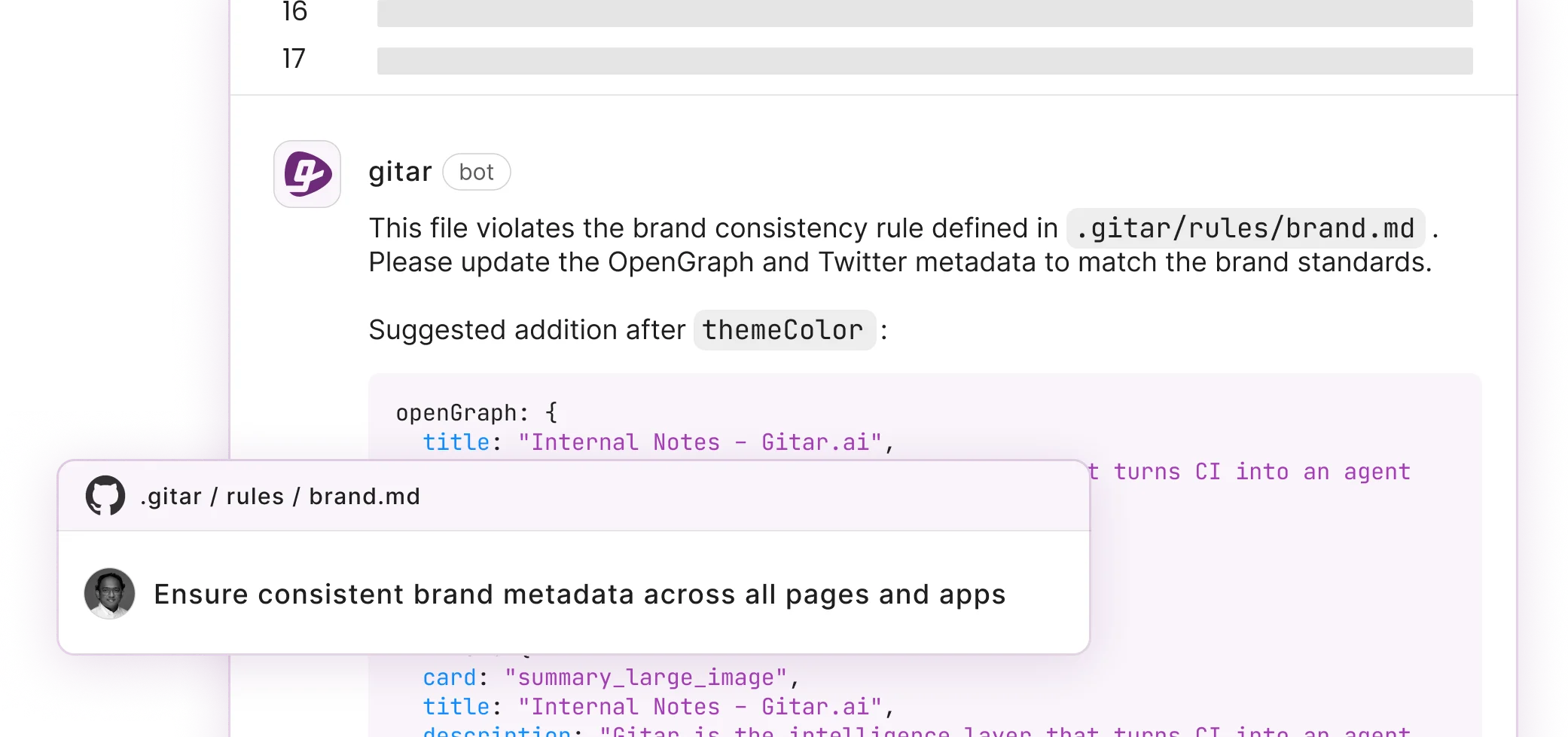
The platform includes natural language workflow rules, Jira and Slack integrations, and hierarchical memory that learns team patterns over time. Enterprise customers such as Pinterest manage 50M+ lines of code and thousands of daily PRs while still benefiting from the free tier. Testimonials report that Gitar catches security vulnerabilities missed by other AI tools and produces more concise summaries than competitors like Greptile.
#2 Greptile: Context-Rich Suggestions Without Auto-Commit
Greptile provides AI-powered code review with full codebase context and cross-file impact analysis. The platform delivers roughly 85% actionable feedback that improves as it learns. Greptile still operates as a suggestions-only tool and does not offer CI auto-commit capabilities.
The platform supports GitHub and GitLab integrations, with pricing at $30 per developer each month. Greptile works well for understanding complex codebases and providing contextual recommendations. Teams must still read suggestions, implement changes, push commits, and validate fixes through CI cycles.
The tool generates multiple inline comments across diffs, which can create notification fatigue. Teams that prefer consolidated feedback may find this noisy compared to single-comment approaches.
#3 Qodo Merge vs CodeRabbit: One-Click Fixes Without CI Healing
Qodo Merge, formerly CodiumAI, offers one-click remediation and automated fix application for issues such as outdated helpers and missing database transactions. The platform can automatically apply fixes like updating helpers across modules and removing sensitive logging. These changes still rely on manual /implement commands in PR reviews instead of true CI auto-commit functionality that analyzes and resolves CI failures.
Qodo integrates into CI/CD pipelines for automated sanity checks at the pull request stage. It does not perform automatic CI failure analysis or commit fixes. The platform offers multi-repo context and more than 15 automated PR workflows and positions itself as stronger than diff-only tools. It still lacks guaranteed CI fix validation that teams need for reliable automation.
#4 CodeAnt AI: Static Analysis Without Automated Commits
CodeAnt AI focuses on code quality and security through AST-based static analysis. The platform supports custom rules for enforcing consistency and real-time code scanning. CodeAnt still operates as a suggestions-based system and does not provide auto-commit CI fixes.
Teams receive recommendations that require manual implementation and validation. This approach helps with policy enforcement but does not remove the manual work that slows CI recovery.
#5 Aikido Security: Security Autofix Without General CI Repair
Aikido Security is a unified security platform that covers code, containers, cloud, and runtime with AI Autofix capabilities. It includes ASPM with SAST, SCA, secrets detection, IaC checks, and code quality analysis. The platform supports CI/CD integration and context-aware security reviews.
Aikido focuses on security vulnerabilities and code quality issues such as bugs and anti-patterns. It does not handle general CI failures like build errors or test failures. Teams still need another solution to guarantee green builds.
#6 Entelligence: PR Agent Without Auto-Commit
Entelligence operates as a PR agent that provides intelligent suggestions and code analysis. The platform emphasizes review quality and developer productivity through AI-powered insights. It still functions as a suggestions-focused tool and cannot automatically commit validated fixes to resolve CI failures.
#7 cubic.dev: Fewer False Positives, Some One-Click Fixes
cubic.dev reports 51% fewer false positives through repository-wide analysis and self-learning from feedback. The platform catches cross-file bugs and architectural issues through continuous codebase scanning and offers one-click fix options for simple issues.
cubic.dev still does not provide fully automated CI fix commits with validation. Teams often need to perform manual steps to implement and verify changes.
Gitar vs CodeRabbit and Others: Auto-Commit Features Side by Side
The difference between true auto-commit tools and suggestion engines becomes clear when you compare core capabilities across platforms.
| Tool | Auto-Commit CI Fixes | Free Tier | Pricing | Integrations |
|---|---|---|---|---|
| Gitar | Yes (14-day free trial) | Code review free; autofix trial | $0 (review); paid plans for autofix | GitHub + GitLab + CircleCI + Buildkite |
| CodeRabbit | No | Limited | $15-30/seat | GitHub-focused |
| Greptile | No | Limited | $30/seat | GitHub + GitLab |
| Qodo Merge | No | Available | Varies | Multiple platforms |
Free CodeRabbit Alternatives With Auto-Commit Potential (Reddit Picks)
Developer communities often express frustration with manual fix implementation after AI review suggestions. 73% of automation projects fail to deliver promised ROI, and 68% are abandoned within 18 months due to maintenance overhead. Reddit discussions highlight the need for tools that resolve issues instead of only identifying them.
Gitar appears as the top free solution that addresses this pain point through automated healing rather than suggestion fatigue.
2026 ROI: Replace Suggestions With Healers and Save $1M Per Year
Infrastructure dysfunction causes average annual losses of $163,674 from downtime, with 35% of teams spending 1-12 hours repairing incidents. A 20-developer team that spends 1 hour daily on CI and review issues at a $100 hourly loaded cost loses $520,000 each year in productivity.
Tool costs of $450-900 monthly for suggestion-only platforms like CodeRabbit or Greptile push total annual costs above $1M. Auto-commit tools like Gitar remove both the productivity loss and most tool fees. Teams gain immediate ROI through reduced context switching and guaranteed fix validation.
Quick Setup for Auto-Fix in GitHub Actions and GitLab CI
Teams can enable auto-commit functionality with minimal configuration across platforms. GitHub Actions support automatic commits through actions like stefanzweifel/git-auto-commit-action for basic file changes.
True CI failure analysis and validated fix generation still require specialized platforms such as Gitar. These tools understand failure context, generate appropriate solutions, and validate fixes before committing. Setup involves adding the Gitar GitHub App or GitLab integration, with no extra YAML configuration required.
Key Factors When Switching From CodeRabbit in 2026
Teams evaluating CodeRabbit alternatives should focus on actual problem-solving ability instead of feature lists. Companies that practice continuous integration report up to 50% fewer critical bugs through automated testing and early issue resolution.
The choice between suggestion engines and healing platforms depends on tolerance for manual work, budget for per-seat pricing, and trust in automated commits. Engineering leaders should weigh total cost of ownership, including developer time, tool fees, and opportunity costs from delayed deployments.
FAQ
Does Qodo Merge auto-commit CI fixes?
Qodo Merge provides one-click remediation for code quality issues and can automatically apply certain fixes such as updating helpers or removing problematic code. It still does not offer true CI failure auto-commit functionality. Qodo focuses on code quality improvements and sanity checks instead of analyzing CI failures, generating fixes, and automatically committing validated solutions for build breaks, test failures, or lint errors.
How does Greptile handle CI failure analysis compared to CodeRabbit?
Greptile and CodeRabbit both lack true CI failure analysis and auto-commit capabilities. Each platform acts as a suggestion engine that analyzes code and provides recommendations through comments. Greptile offers stronger codebase context and cross-file impact analysis than CodeRabbit’s diff-focused approach. Both tools still require manual implementation of suggested fixes and do not guarantee resolution of CI failures.
What are the best free AI code review tools with auto-commit features?
Gitar is a comprehensive AI code review platform with free code review and autofix features available through a 14-day free trial. Other tools may offer free tiers with basic review features, yet they function as suggestion engines that require manual fix implementation. Gitar’s free tier includes unlimited repositories, users, and full PR analysis, security scanning, bug detection, and performance review.
Which tools work best for GitHub Actions auto-fixes?
For GitHub Actions integration, Gitar provides the most complete auto-fix solution with a native GitHub App, automatic CI failure analysis, and validated fix commits. Basic GitHub Actions such as stefanzweifel/git-auto-commit-action can handle simple file commits. They still lack the intelligence to analyze failures, generate contextual fixes, and validate solutions before committing.
Are there CodeRabbit alternatives that automatically commit fixes without manual intervention?
Gitar is the primary CodeRabbit alternative that automatically commits fixes without manual intervention. The platform analyzes CI failures, generates validated fixes, and commits them directly to pull requests through a single updating comment. Other alternatives such as Qodo Merge, Greptile, and CodeAnt AI act as suggestion engines that require manual implementation and validation of proposed changes.
Conclusion: Move From Suggestions to Guaranteed Green Builds
The shift from code generation to code validation bottlenecks requires tools that solve problems instead of only identifying them. CodeRabbit and similar platforms charge premium prices for suggestions, while Gitar provides free, comprehensive auto-commit functionality that guarantees green builds and removes manual toil.