
Key Takeaways
- AI-generated PRs face 4.6x longer review times and 32.7% acceptance rates because review capacity does not match code generation speed.
- Gitar’s free healing engine auto-fixes CI failures and implements review feedback with validated fixes, unlike paid suggestion-only tools.
- Follow the 10-step guide: install Gitar, enable suggestion mode, activate CI auto-fix, set natural language rules, and scale with analytics.
- Gitar guarantees green builds, reduces notification spam with a single updating comment, and can save teams $1M annually in productivity costs.
- Eliminate code review bottlenecks today by installing Gitar to automatically fix broken builds and ship higher quality software faster.
The Problem: Post-AI Code Review Crisis
Half of all developers now use AI coding tools daily, rising to 65% in top-quartile organizations, which creates unprecedented PR volumes. Agentic AI PRs have a pickup time 5.3x longer than unassisted PRs, so review queues grow faster than teams can clear them.
The bottleneck shows up as manual fixes after AI suggestions, confirmation bias, and noisy review tools. AI-generated code can create serious quality and security risks without structured methods. For a 20-developer team, CI and review friction costs about $1M annually in lost productivity, and 60% of projects experience delays from pipeline failures.
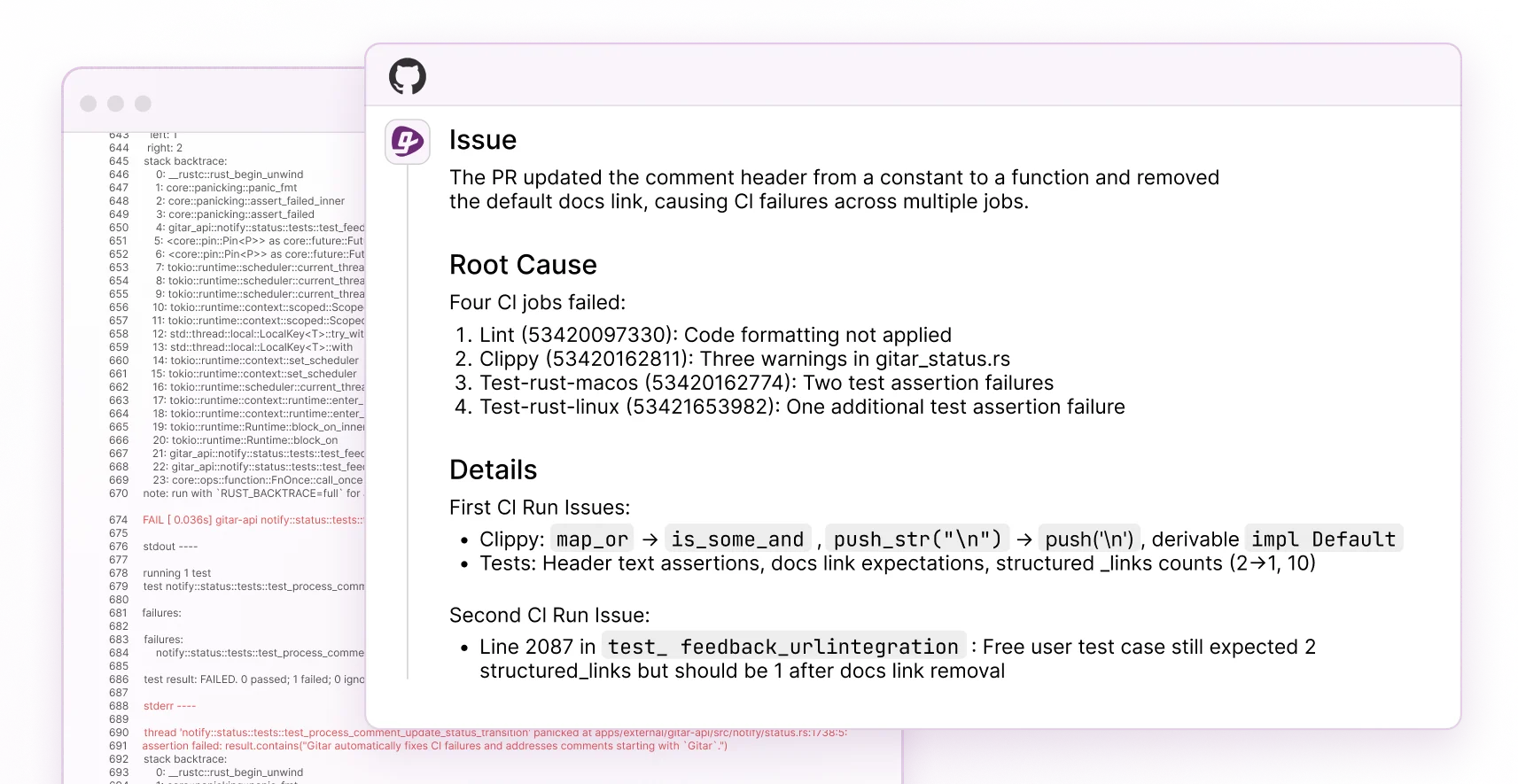
Engineering leaders report that AI shifts code review from line-by-line gatekeeping to higher-level quality control. Existing tools have not kept pace. Teams now need systems that match AI’s speed with automated fixes instead of more suggestions that still require manual work.
Why Suggestion Tools Fall Short for AI-Heavy Teams
Current market leaders charge premium prices for basic commentary. Greptile provides in-line comments, natural language summaries, and actionable feedback, and tools like Graphite have been reported with lower bug catch rates in some benchmarks. Developers still perform the same manual loop: read suggestions, implement changes, push commits, and hope fixes pass CI.
| Capability | CodeRabbit/Greptile | Gitar |
|---|---|---|
| PR summaries/suggestions | Paid ($15-30/dev) | Free |
| Auto-apply/CI fix | No | Yes (14-day trial) |
| Green build guarantee | No | Yes |
| Unlimited repos | Free tier offers unlimited public repos | Yes |
Competitors lack CI context and validation capabilities. They analyze code diffs without understanding build environments, dependency conflicts, or infrastructure issues. Gitar’s single updating comment eliminates notification spam, and teams report our summaries are “more concise than Greptile” because the product focuses on signal instead of noise.
Install Gitar now, automatically fix broken builds, start shipping higher quality software, faster
10 Practical Steps to Automate Code Review with Gitar
Step 1: Assess Current Review and CI Bottlenecks
AI transforms code review processes by increasing both volume and complexity. Audit your PR review times and identify recurring CI failure patterns. Enforce small PR policies so reviewers face a manageable surface area for each change.
Step 2: Install Gitar in 30 Seconds
Install the Gitar GitHub or GitLab app without creating an account or entering a credit card. Gitar immediately posts dashboard comments on new PRs. This creates a foundation for automated review across your repositories.
Step 3: Turn On Suggestion Mode for Trust Building
Start with PR summaries and inline suggestions to build team confidence. Concise comments with code snippets from manually triggered, hunk-level tools are more likely to drive real code changes. Gitar’s single dashboard comment consolidates all findings and keeps notification noise low.
Step 4: Enable CI Auto-Fix with the Healing Engine
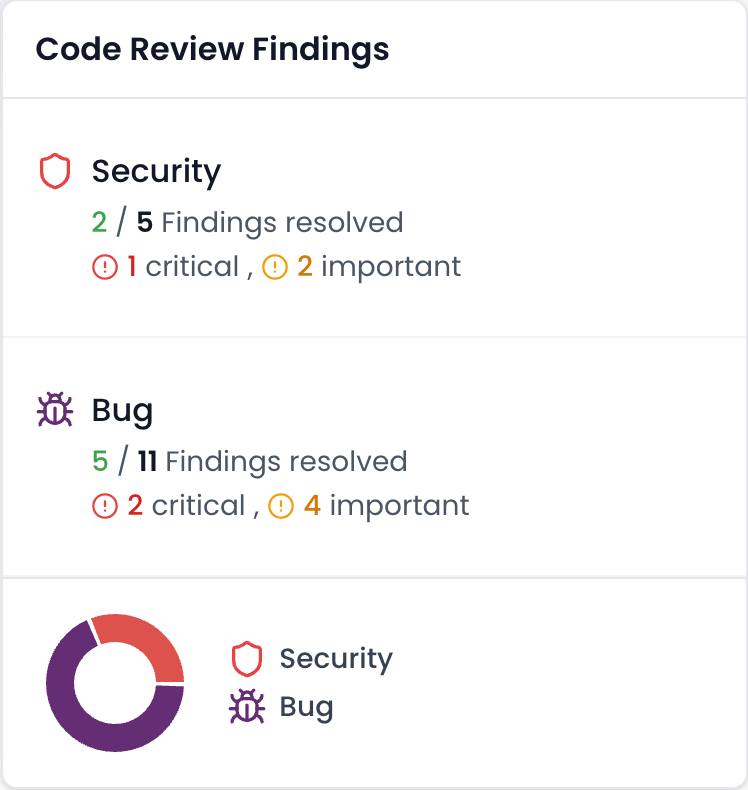
Activate Gitar’s healing engine so it can analyze CI failure logs, generate validated fixes, and commit solutions. Unlike suggestion tools, Gitar understands build contexts and validates fixes against your actual CI environment before applying them. This reduces rework and shortens feedback loops.
Step 5: Auto-Implement Review Feedback with @gitar
Use @gitar commands in review comments to automatically implement requested changes. When reviewers write “@gitar refactor this to use async/await,” Gitar performs the refactor directly. This removes the manual back-and-forth that slows teams down.
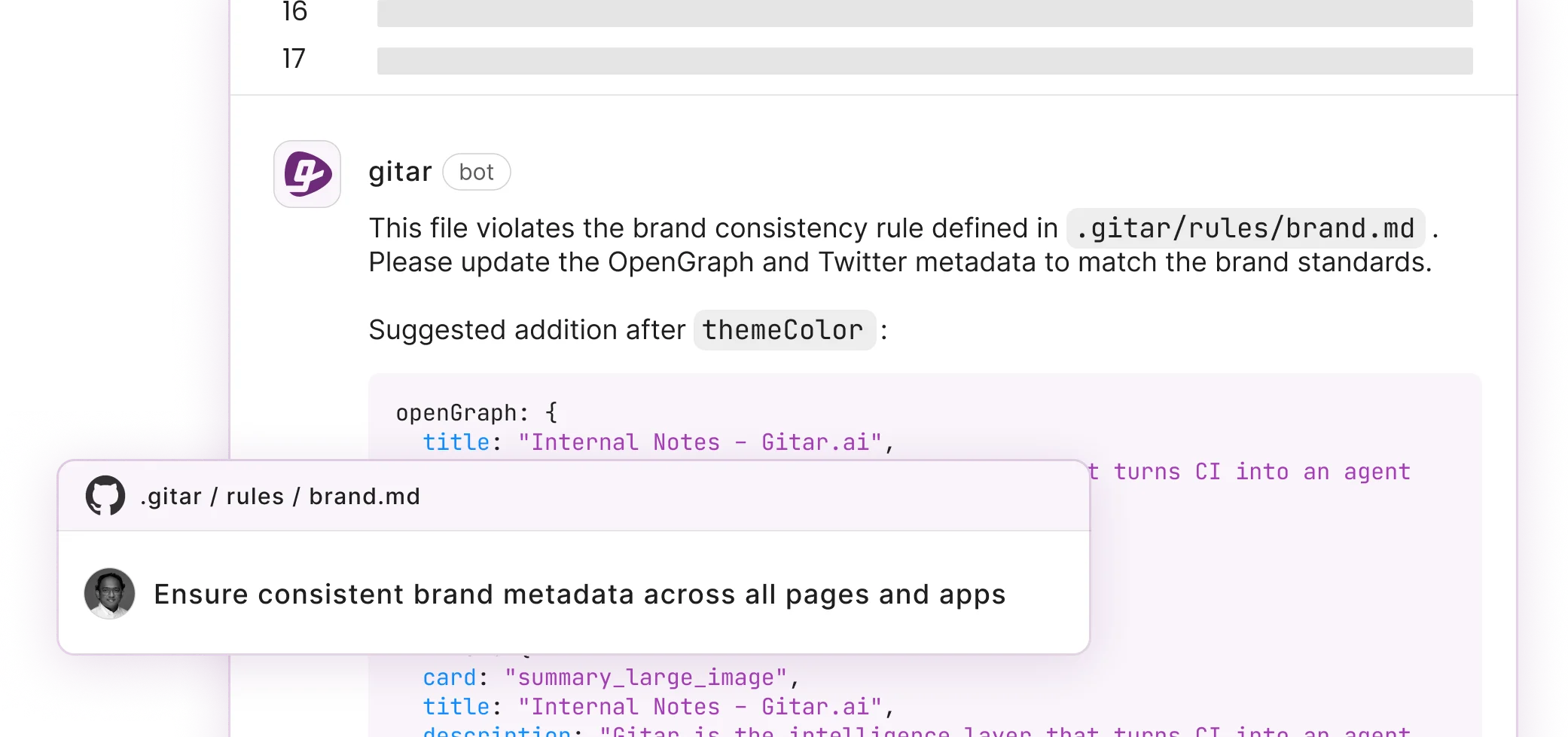
Step 6: Define Natural Language Workflow Rules
Create workflow automation using .gitar/rules/*.md files with natural language descriptions:
--- title: "Security Review" when: "PRs modifying authentication or encryption code" actions: "Assign security team and add label" ---
These rules keep routing and ownership consistent without extra process overhead.
Step 7: Connect Jira and Slack for Context and Alerts
Connect external tools for richer context and targeted notifications. Gitar pulls product context from Jira or Linear to understand the “why” behind changes, not just the code diffs. Slack integration keeps teams informed without flooding channels.
Step 8: Use Analytics to Scale Review Capacity
Use Gitar’s analytics dashboard to spot CI failure patterns and infrastructure issues. Teams managing more than 50M lines of code rely on these insights to refine branching strategies, test coverage, and CI configuration. The data turns anecdotal complaints into measurable trends.
Step 9: Configure Human-in-the-Loop Trust Controls
Configure human-in-the-loop controls for auto-commit behavior. Start conservatively with approval requirements for every fix. Gradually enable automatic fixes for trusted failure types, such as lint errors or flaky tests, as confidence grows.
Step 10: Roll Out Gitar Across Repos and Platforms
AI code review systems improve through continuous human-AI collaboration. Deploy Gitar across all repositories once teams trust the workflow. Then explore advanced features like custom agents and enterprise CI integration.
| Metric | Before Gitar | After Gitar |
|---|---|---|
| Time/Dev/Day | 1 hour | 15 minutes |
| Annual Cost | $1M | $250K |
| Tool Cost | $450-900/month | $0 |
How AI Improves Code Review Quality and Speed
AI speeds up debugging and patch creation, reducing mean time to recovery by 10-20%. Gitar focuses on validated fixes instead of raw suggestions, so teams see fewer broken builds and fewer reverts.
The shift from manual to automated first-pass reviews addresses volume while preserving quality. Leading companies now prioritize faster code review, integration, and release to prevent AI-driven bottlenecks across the software lifecycle.
Gitar’s healing engine adds contextual understanding that catches issues other tools miss, including cross-system bugs, security vulnerabilities, and infrastructure failures. The single comment approach reduces cognitive load while still covering all relevant findings.
Install Gitar now, automatically fix broken builds, start shipping higher quality software, faster
Frequently Asked Questions
Is Gitar really free, and where does it make money?
Gitar’s core code review features are completely free for unlimited repositories and users. The auto-fix capabilities include a 14-day free trial. The business model centers on the broader platform, including enterprise features, advanced analytics, and custom workflows at scale. Code review becomes a commodity layer, while value comes from the development intelligence built on top.
Can we trust automated commits to our codebase?
Gitar offers fully configurable trust levels so you stay in control. Start in suggestion mode and approve every fix until the team feels comfortable. Then enable auto-commit for specific failure types like lint errors or straightforward test fixes.
You control how aggressive automation becomes, and all fixes are validated against your actual CI environment before application. This approach addresses the reality that only about 30% of AI-suggested code typically gets accepted.
Does Gitar handle complex CI environments?
Gitar works well with complex CI setups by emulating your full environment, including SDK versions, multi-dependency builds, and third-party integrations. The enterprise tier runs agents inside your own CI with access to secrets and caches. This ensures fixes work in production-like conditions instead of isolated sandboxes.
How does Gitar improve code quality versus suggestion-only tools?
Gitar validates all fixes against your CI pipeline before applying them, so changes match your specific environment. The platform catches cross-system bugs, security issues, and infrastructure problems that diff-only tools often miss. By consolidating findings into a single updating comment and shipping validated fixes, Gitar reduces noise and manual work while maintaining higher quality standards.
What ROI can teams expect if they already pay for review tools?
Teams paying $15-30 per developer each month for suggestion tools can remove those costs while gaining automation. A 20-developer team saves $450-900 monthly in tool spend alone. The productivity gains from cutting CI and review friction from 1 hour to 15 minutes per developer daily represent about $750K in annual productivity recovery.
Conclusion: Restore Development Velocity with Automated Fixes
The code review bottleneck created by AI-generated code now requires tools that match AI’s speed with automated fixes instead of expensive suggestion engines. Automated code review tools can save 10-person teams 30 minutes per developer per week, which recovers more than 20 hours monthly for feature work.
Gitar’s free healing engine removes review bottlenecks by automatically fixing CI failures, implementing review feedback, and guaranteeing green builds. While competitors charge premium prices for basic commentary, Gitar delivers a complete solution that restores development velocity in the post-AI coding era.
Install Gitar now, automatically fix broken builds, start shipping higher quality software, faster