
Key Takeaways
- AI coding tools boost productivity 3-5x but create CI bottlenecks, with 43M monthly pull requests overwhelming traditional reviews.
- Static code analysis using AST parsing, data flow, and control flow finds bugs and vulnerabilities before production without running code.
- Gitar leads with free AI-powered healing that auto-fixes issues, validates changes, and guarantees green builds, unlike detection-only tools.
- Top tools like SonarQube, Snyk, and Semgrep excel at detection but lack Gitar’s automated remediation, which increases manual work.
- Teams save about $1M per year in productivity; install Gitar free to automate code quality and ship faster.
The Post-AI Bottleneck in Code Quality Enforcement
AI-accelerated development exposes serious gaps in traditional code quality enforcement. Teams see faster code generation from tools like GitHub Copilot and Cursor, yet AI-generated code causes a 4x increase in duplicate code, and up to 30% of AI-generated code contains security vulnerabilities. These issues trigger cascading CI failures and rapid technical debt growth.
Static Application Security Testing (SAST) analyzes code at rest, while Dynamic Application Security Testing (DAST) analyzes running applications. SAST tools plug into every pull request and CI pipeline run, so they become the backbone of automated enforcement. The five pillars of code quality, reliability, security, performance, maintainability, and readability all require constant monitoring as AI-generated code volume explodes.
Traditional code review tools often charge $15-30 per developer each month for suggestion engines that still demand manual fixes. GitClear’s analysis of 153 million lines of code links AI-assisted coding to 4x more code cloning. Detection-only tools no longer keep up with AI output. Teams now require healing engines that apply and validate fixes automatically instead of only surfacing problems.
How Static Analysis Works: From AST Parsing to CI Quality Gates
Modern static code analysis relies on several analytical layers that work together. Rule-based analysis checks coding standards and common patterns. Data flow analysis tracks variable states and uncovers potential security issues. Control flow analysis inspects execution paths to find unreachable code and logic errors. Advanced platforms combine these methods with machine learning models that recognize patterns and cut false positives.
Integration into the Software Development Life Cycle (SDLC) happens at three key stages. IDE-level analysis gives real-time feedback while developers write code. Pull request analysis catches issues before merge. CI pipeline integration enforces quality gates on every run. Best practices recommend wiring static code analysis into CI/CD pipelines early so every commit or PR receives consistent automated checks.
Static analysis scales well for large organizations and can run fully automatically. SonarQube combines SAST with technical debt checks, while tools like Semgrep provide flexible rule-based analysis. In 2026, the main differentiator is whether a tool offers automated remediation in addition to detection.
Top 6 Code Quality Enforcement Platforms in 2026
The 2026 static code analysis market includes tools that focus on different parts of code quality enforcement. This comparison ranks platforms by automation depth, fix capabilities, platform coverage, and cost-effectiveness. Gitar clearly leads by offering free AI-powered analysis with automated fixes. Established vendors follow with strong detection features but limited remediation.
1. Gitar: Free AI Healing and Automated Fixes
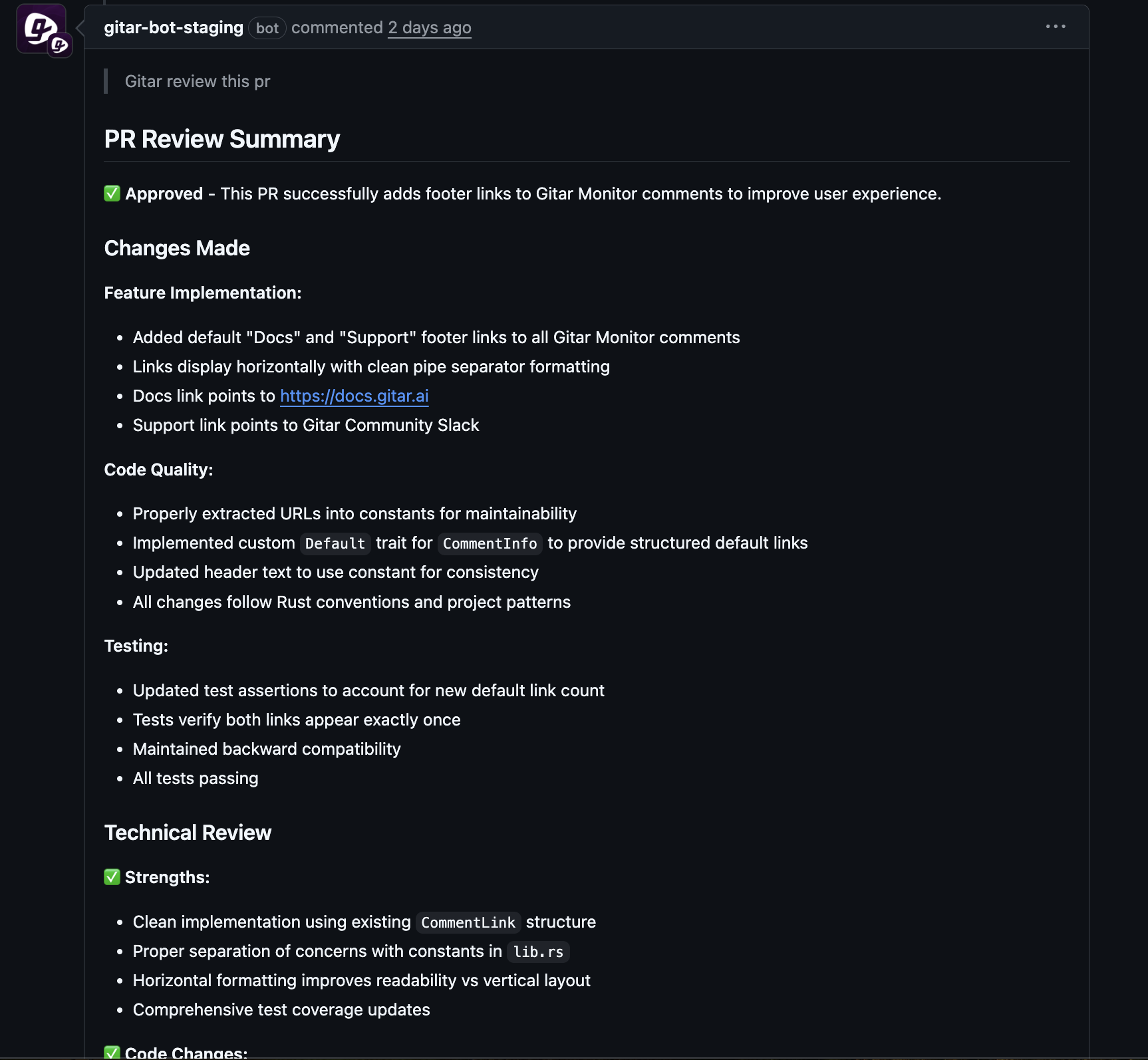
Gitar turns code review into a healing engine instead of a simple detection layer. Competing tools often charge premium prices for suggestions, while Gitar delivers free unlimited code review with automatic fix application and validation.
2. SonarQube: Multi-Language Quality Gates at Scale
SonarQube supports more than 30 languages with over 6,500 rules. It offers both cloud and self-managed deployments for broad SAST coverage and quality gate enforcement.
3. Snyk: Security-Focused Static Analysis
Snyk delivers real-time scanning up to 50x faster with AI-powered remediation that reaches about 80% fix accuracy. The platform centers on security vulnerabilities rather than full-spectrum code quality enforcement.
4. Semgrep: Fast Scans with Custom Rules
Semgrep scans at 20K-100K lines of code per second per rule. It supports simple custom rules that resemble source code, which suits teams that need very specific pattern detection.
5. ESLint: JavaScript and TypeScript Linting Standard
ESLint remains the go-to static analysis tool for JavaScript and TypeScript. It offers deep rule customization and strong IDE integration, although it only covers these language ecosystems.
6. Pylint: Python Code Style and Quality Checks
Pylint delivers detailed Python code analysis with rich quality metrics and coding standard enforcement. It often forms the base layer for Python-focused quality gates.
Install Gitar now to automatically fix broken builds and ship higher quality software faster.
Gitar Deep Dive: Free AI Code Review and Healing
Gitar directly solves the core limitation of most code review tools, which detect issues but do not fix them. CodeRabbit charges about $15 per developer, and Greptile charges about $30 per developer for suggestion engines. Gitar instead offers free unlimited scans with automated healing that keeps building green.
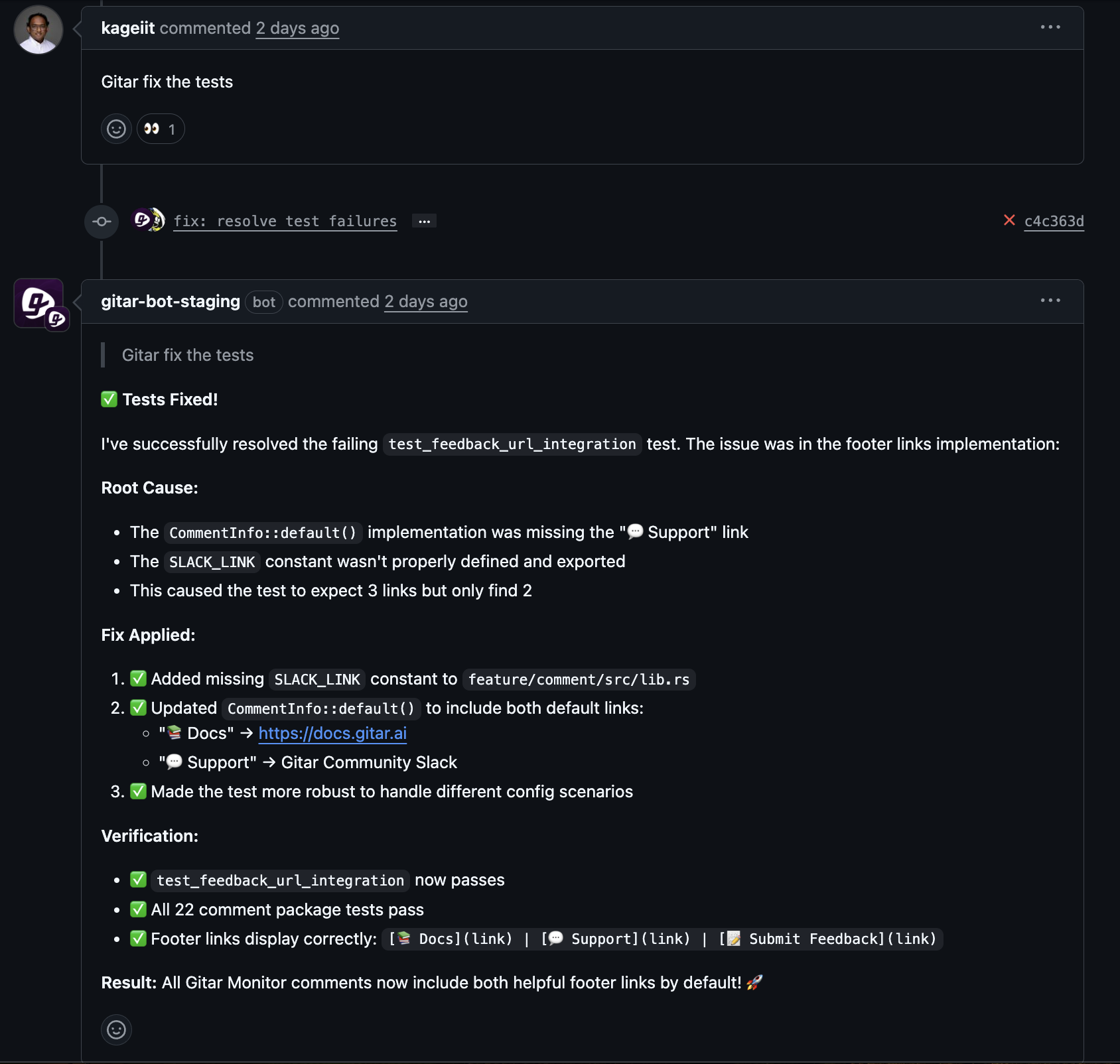
The healing engine reads CI failure logs, creates context-aware fixes, validates them against the full codebase, and commits working solutions automatically. This workflow removes the manual fix loop that slows traditional tools. Teams also benefit from Gitar’s single-comment model, which gathers all findings into one clean, continuously updated dashboard instead of scattering alerts across many threads.
|
Feature |
Gitar |
CodeRabbit |
SonarQube |
|
Auto-fix Application |
Yes |
No |
Limited |
|
CI Context Analysis |
Yes |
No |
No |
|
Pricing |
Free |
$15-30/seat |
Paid tiers |
|
Platform Support |
GitHub, GitLab, CircleCI |
GitHub-focused |
Multi-platform |
Gitar’s architecture supports enterprise workloads, handling more than 50 million lines of code and thousands of daily pull requests while keeping core features free. The natural language rule system (.gitar/rules) automates workflows without complex YAML files, which lowers the learning curve for full quality enforcement.
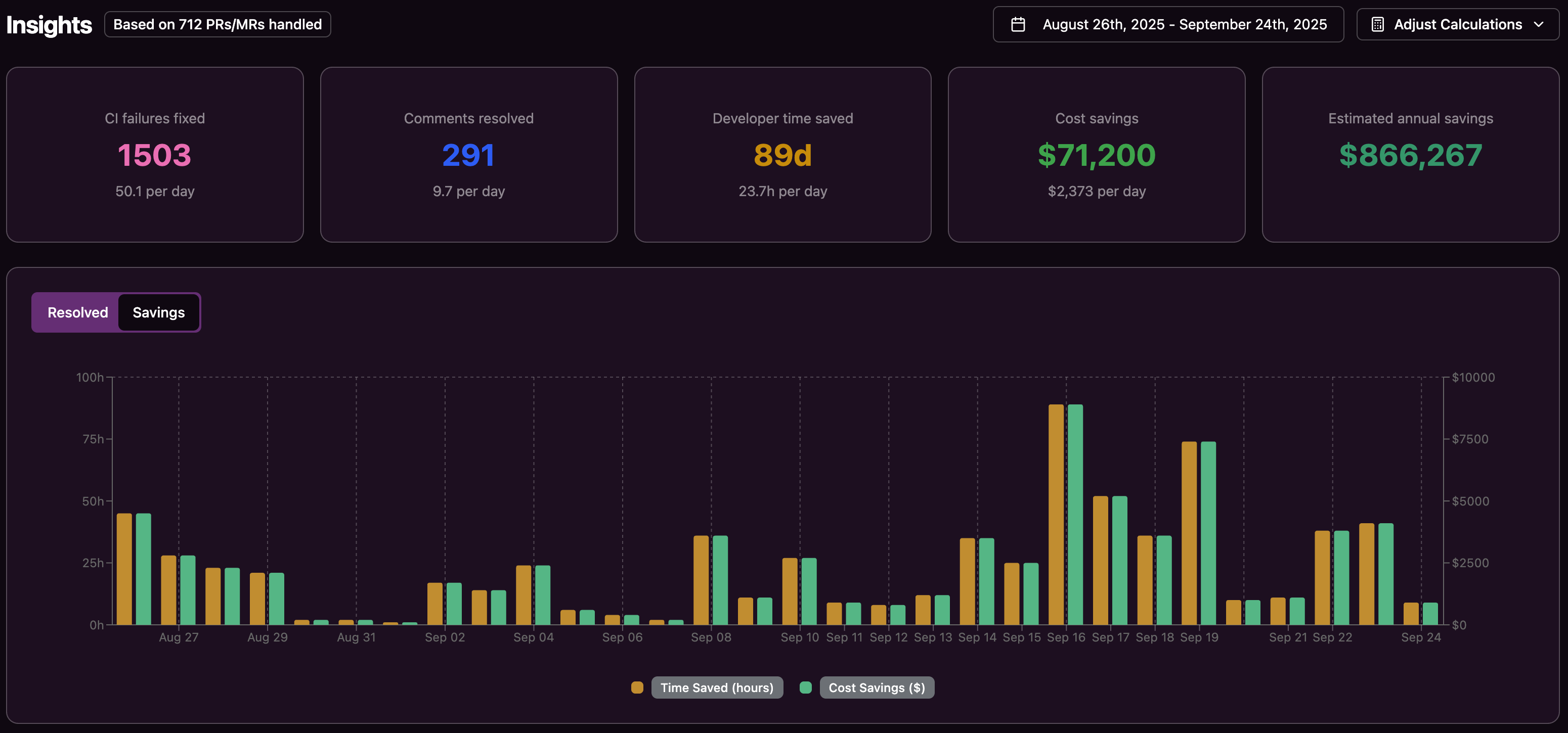
A 20-developer team that spends one hour each day on CI and review issues can save about $1 million per year with Gitar. These gains come from removing manual fix work and cutting context switching. The return improves further when teams remove monthly subscription costs from competing tools.
Install Gitar now to automatically fix broken builds and ship higher quality software faster.
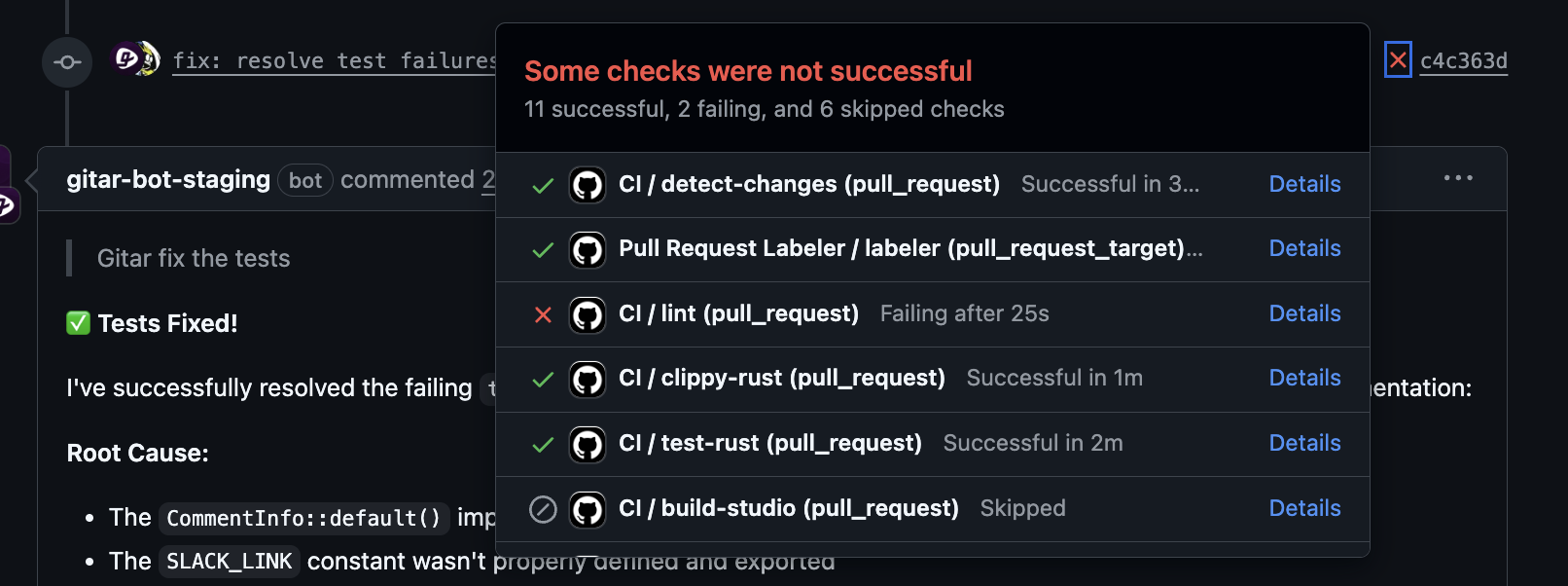
Gitar vs Detection-Only Tools
SonarQube often flags issues that do not represent real problems, so teams must tune rules to reduce noise. Snyk uses techniques like semantic understanding and multi-signal prioritization to keep false positives low. Both platforms still focus mainly on detection, which adds work instead of removing it.
Semgrep delivers major speed advantages, with 20K-100K loc per second per rule compared to SonarQube at about 0.4K loc per second. It still lacks an automated fix application. These tools identify problems but stop short of solving them.
|
Tool |
Automation Depth |
Platform Support |
Scalability |
|
Gitar |
Full auto-fix and validation |
GitHub, GitLab, CircleCI |
50M+ LOC |
|
SonarQube |
Detection with limited fixes |
Multi-platform |
Enterprise-ready |
|
Snyk |
Detection with suggestions |
Multi-platform |
Cloud-native |
|
Semgrep |
Detection only |
Multi-platform |
High-performance |
Engineering leaders who want full automation should favor tools that deliver end-to-end workflows instead of partial coverage. The total cost of ownership for suggestion-only tools includes subscription fees and the ongoing labor required for manual fixes.
Selecting a Static Analysis Tool for Your Team
Tool selection depends on team size, budget, and automation needs. Free platforms like Gitar provide broad functionality without recurring costs. Paid tools can still make sense for narrow, specialized use cases. The central question is whether a tool cuts manual work or quietly adds more of it.
Can static code analysis be fully automated?
Static code analysis can run fully automatically from detection through fix implementation. Gitar demonstrates this by analyzing CI failures, generating targeted fixes, validating them against the entire codebase, and committing working solutions without human input.
What is the leading AI tool for code review in 2026?
Gitar leads AI-powered code review by pairing comprehensive detection with automated fix application. Competing tools often charge premium rates for suggestions, while Gitar offers free unlimited analysis with a healing engine that keeps builds green.
How do false positive rates compare between tools?
Traditional tools often struggle with false positives, which forces teams to adjust rules and triage alerts. AI-enhanced platforms like Gitar rely on contextual analysis and validation to reduce false positives and confirm that applied fixes resolve the original issues.
Which tools integrate best with GitHub and GitLab workflows?
Gitar integrates natively with GitHub, GitLab, and major CI systems such as CircleCI. It supports workflow automation through natural language rules instead of complex configuration files.
What is the ROI of automated code quality enforcement?
Teams usually see immediate productivity gains from less context switching and fewer manual fixes. A 20-developer team can save about $1 million per year by removing the typical hour per day spent on CI and review issues.
Start Automating Code Quality with Gitar
The AI coding era requires tools that match rapid code generation with equally automated quality enforcement. Gitar reshapes code review by offering free, comprehensive analysis with a healing engine that guarantees green builds and removes manual fix work.