
Written by: Ali-Reza Adl-Tabatabai, Founder and CEO, Gitar
Unreliable CI/CD pipelines often lead to flaky tests, build failures, and constant debugging, slowing down developers and delaying software releases. This article highlights the real costs of pipeline issues, from wasted time to delayed projects, and shows how an AI-driven solution like Gitar can keep builds green and teams productive with autonomous fixes.
Unreliable CI/CD Pipelines: The Hidden Costs You Can’t Ignore
Developer Frustration from Constant Context Switching
Picture this: you submit a pull request, expecting a smooth process, only to see it fail due to a missing dependency or a minor linting error. You then dive into logs, switch to your local environment, apply a fix, commit, push, and wait for the pipeline to rerun.
This cycle doesn’t just waste time; it disrupts your focus. Developers can lose up to 30% of their day handling CI issues, which harms morale and productivity. A quick five-minute fix can turn into an hour-long distraction when you account for regaining focus after each interruption.
Constant task switching creates mental fatigue, making it harder to tackle complex coding challenges. Over time, these small disruptions add up, significantly reducing overall output during the development cycle.
Business Delays and Financial Impact
CI/CD failures affect more than just developers; they slow down entire projects. For 60% of companies, pipeline issues cause delayed releases, pushing back features and sometimes entire product launches, giving competitors an edge.
Consider a team of 20 developers. If each spends one hour daily on CI failures or code review issues, that’s 5,000 hours of lost productivity each year. At an average cost of $200 per hour, this equals about $1 million in direct losses, not even counting the broader impact of missed deadlines.
Without real-time visibility into pipelines, teams face longer delays in spotting issues, fixing critical bugs, and recovering from failures, which erodes trust in automation. Many resort to manual workarounds, further complicating the process and making improvements harder.
Common Pipeline Failures and Their Domino Effect
Pinpointing frequent CI/CD failure points helps address issues systematically. Typical problems include inconsistent tests, build errors from misconfigured scripts, deployment issues due to missing variables, dependency conflicts, and errors in configuration files like YAML.
Inconsistent test results, or flaky failures, are especially frustrating since they vary between runs and waste time on unnecessary debugging. These issues often seem valid at first but resolve on their own, adding to confusion.
Overloaded pipelines that run all tests and deployments for every commit slow down feedback and cause widespread failures from a single problem. One failure can halt everything, even for unrelated changes, creating a bottleneck.
This pattern discourages frequent updates, leading to bulkier pull requests that are prone to errors. Teams then add complex fixes, making pipelines even less stable. What should speed up development often becomes the biggest obstacle.
Want to stop the chaos? Install Gitar to fix broken builds automatically and ship software faster.
Meet Gitar: Your AI-Powered Solution for CI Pipeline Health
Traditional CI/CD tools focus on spotting issues and sending alerts, leaving the hard work of fixing problems to developers. Gitar changes this by moving from alerts to action, autonomously resolving issues to maintain pipeline health and deliver clear monitoring.

Fix Issues Automatically with End-to-End Solutions
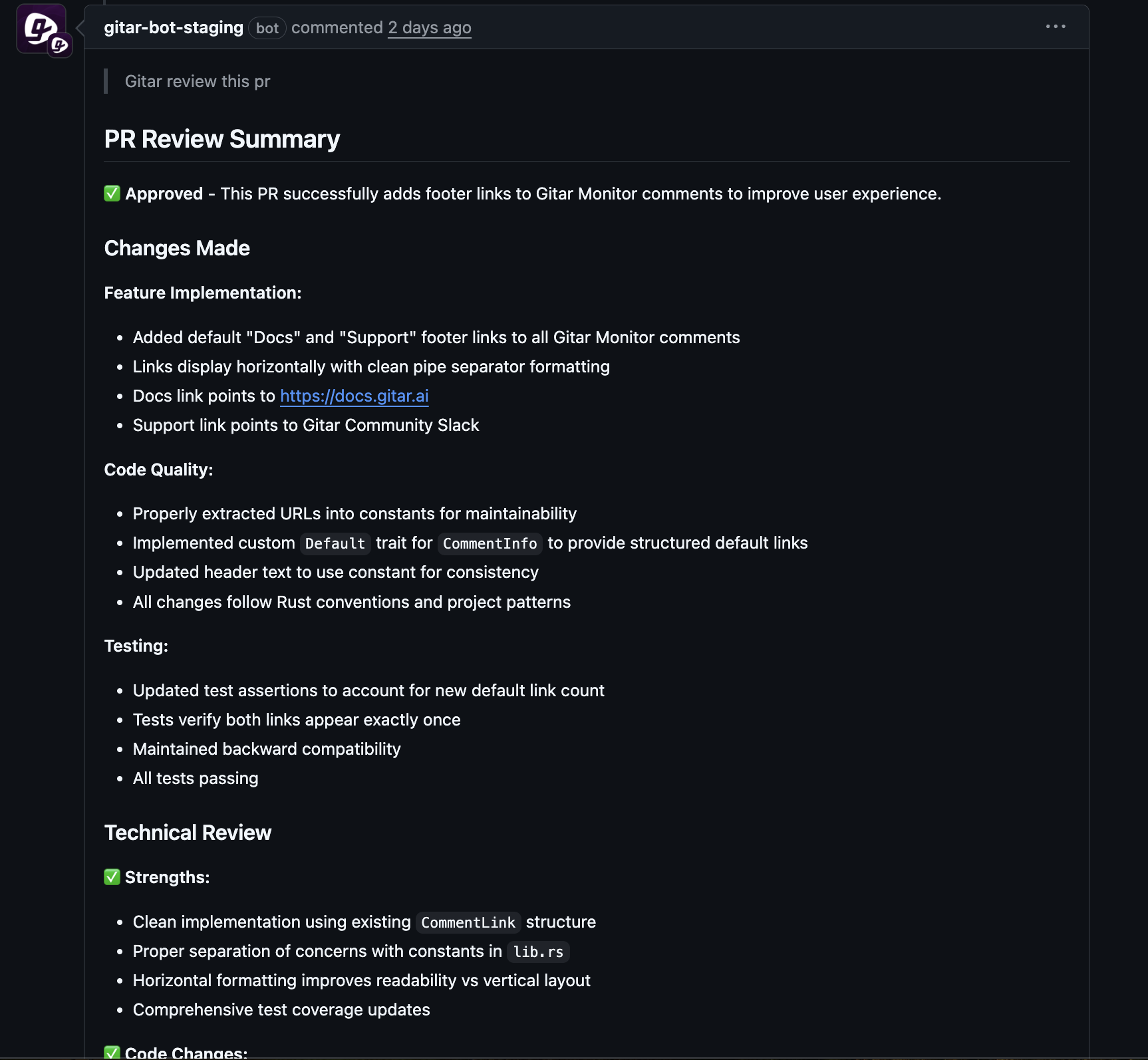
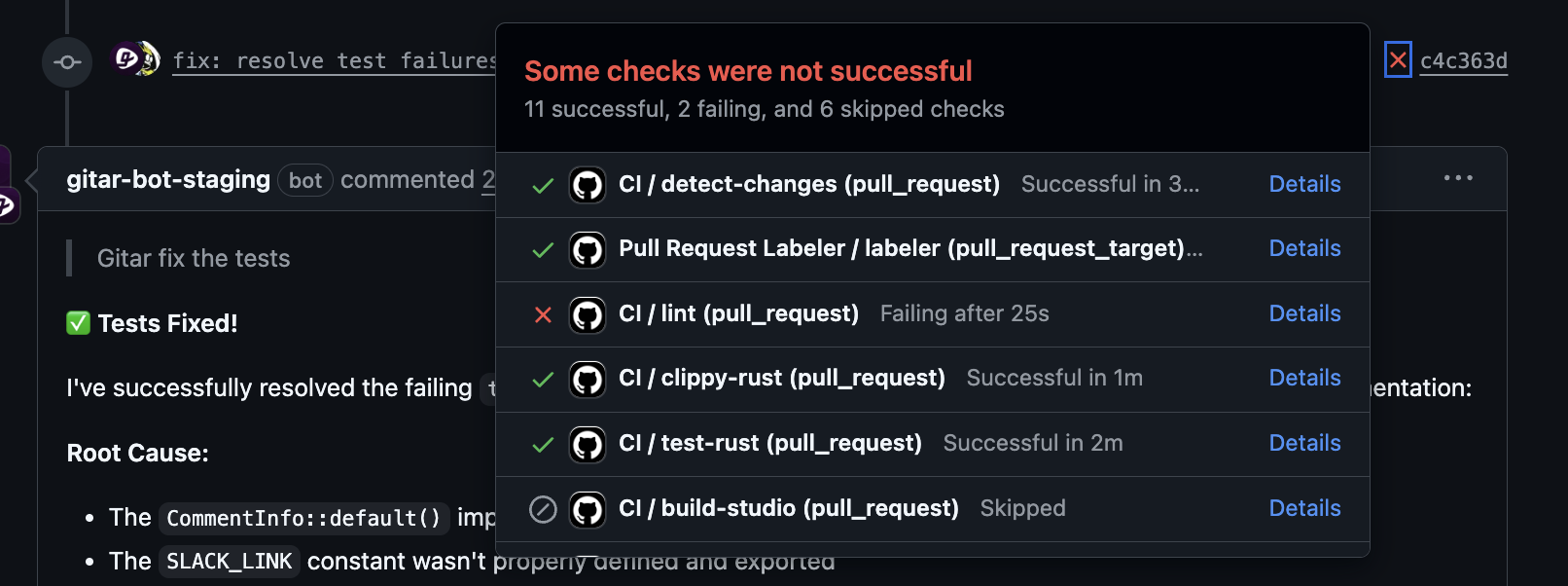
Gitar goes beyond identifying problems; it acts as a full healing engine. When a CI check fails, whether it’s a linting error, test failure, or build issue, Gitar analyzes the logs, identifies the cause, creates a fix, applies it to the codebase, and commits it to the pull request branch.
This covers many common issues, like formatting code for style errors, correcting simple test failures, and fixing build scripts or dependencies. Unlike tools that only suggest solutions, Gitar applies and tests fixes within your CI workflow to confirm builds pass.
Tailored for Complex Enterprise Needs
Enterprise CI/CD setups often involve intricate dependencies, specific SDK versions, multi-language builds, and tools like SonarQube or Snyk. Generic AI solutions may struggle to handle these nuances.
Gitar is built to match enterprise workflows. It accounts for specific JDK versions, manages multi-SDK dependencies, and works with third-party security or quality tools. This ensures fixes fit your unique development environment.
Customizable Automation Levels for Team Comfort
Teams often need time to trust automated systems. Gitar offers adjustable settings to control how much it automates. In a cautious mode, it suggests fixes for developers to review and approve with one click, perfect for those just starting out.
As confidence grows, teams can switch to a mode where Gitar commits fixes directly, with the option to undo changes if needed. This flexibility lets organizations benefit immediately while easing into full automation.
Speed Up Code Reviews with Smart Assistance
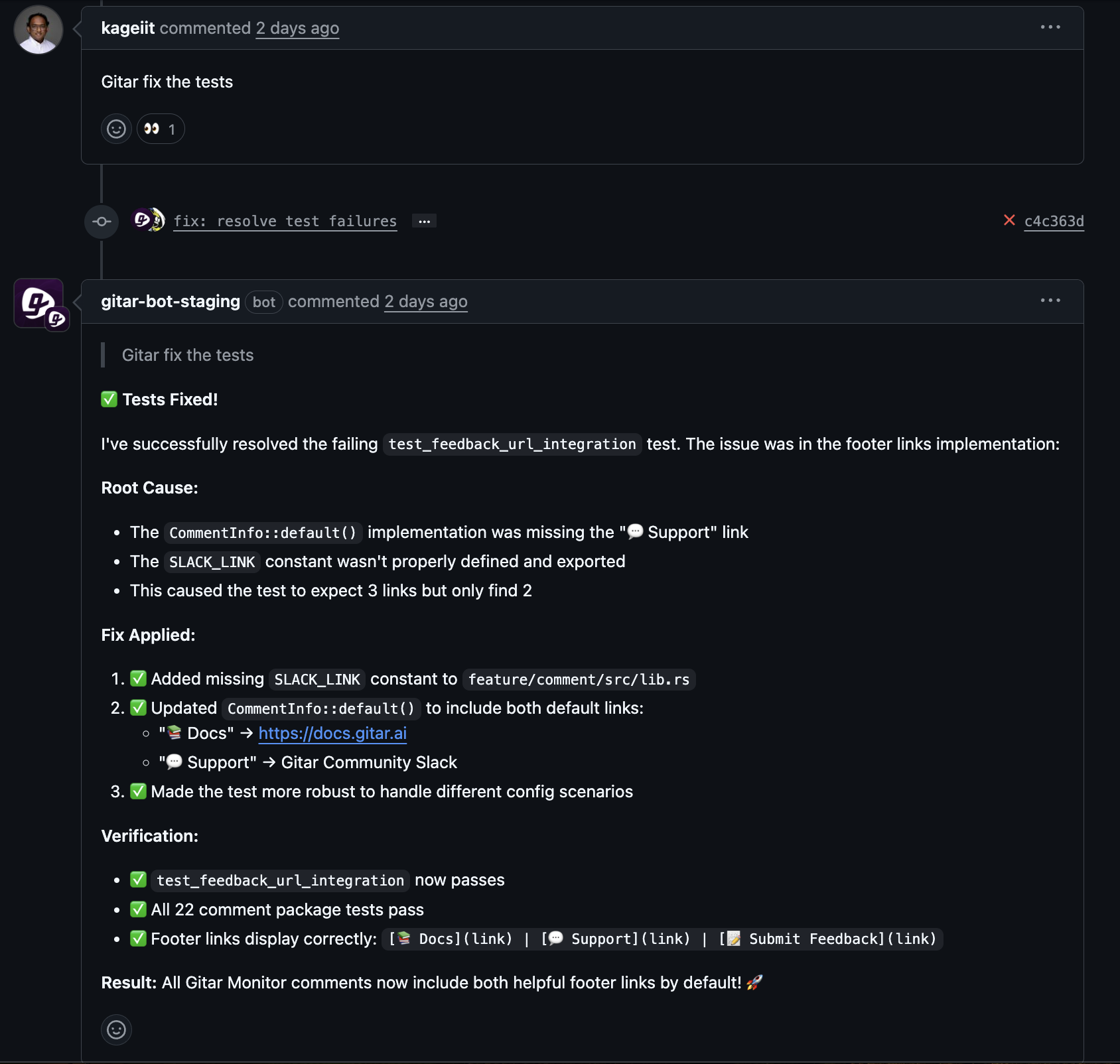
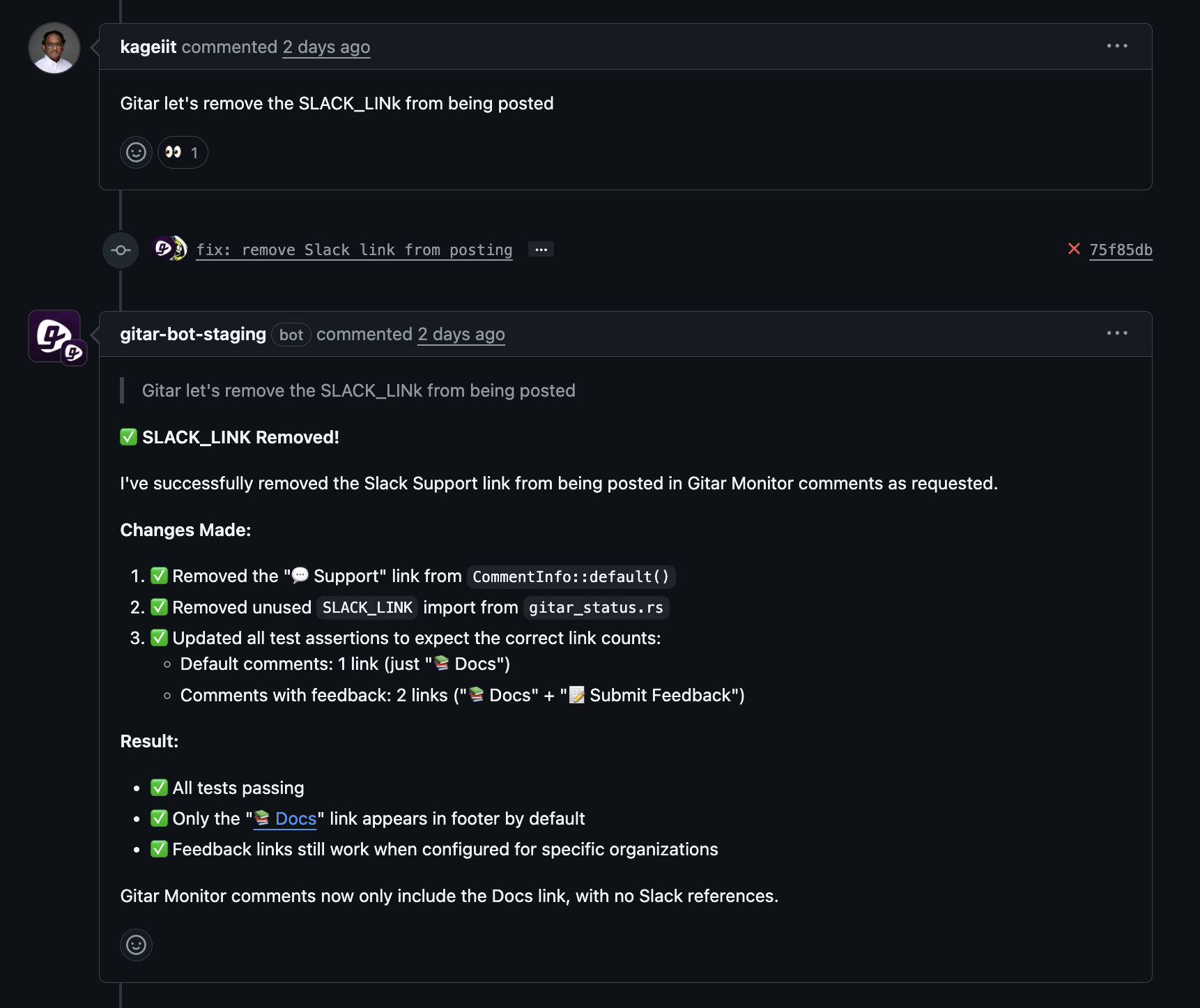
Gitar also streamlines code reviews by acting as a virtual assistant. It can apply feedback from reviewers automatically, which is especially helpful for teams across different time zones facing delays.
Reviewers simply tag Gitar in comments with instructions, and it makes the changes. A reviewer in one region can leave feedback at night, Gitar updates the pull request, and the developer sees it ready for approval the next day. This reduces wait times without sacrificing quality.
Ready to streamline your CI/CD? Install Gitar to fix builds automatically and accelerate software delivery.
Why Autonomous Fixes Improve Pipeline Monitoring
Keep Developers Focused by Reducing Interruptions
Maintaining focus is key for developers, yet CI/CD failures often pull them away from coding to fix minor issues. Every failed build or error disrupts their workflow.
Gitar minimizes these interruptions by handling routine CI problems automatically. Developers can push code knowing many issues will be resolved without their input, letting them stay focused on solving bigger challenges.
Speed Up Merges with Faster Resolutions
Teams with pipelines under ten minutes deploy twice as often. Speed isn’t just about hardware; it’s about cutting time spent on failures.
Normally, fixing issues involves multiple steps: spotting the problem, diagnosing it, testing a solution locally, committing, and waiting for CI results. Gitar shortens this by analyzing failures in context and applying fixes quickly, often within minutes.
Boost Reliability for Growing Teams
As teams and codebases grow, so do potential failure points in CI/CD systems. Keeping builds stable at scale becomes a challenge with traditional, reactive methods.
Gitar takes a forward-thinking approach by fixing issues as they happen, supporting consistent builds. It tackles problems like misconfigurations, dependency mismatches, inconsistent environments, slow deployments, complex pipelines, limited test coverage, weak reporting, and difficult rollbacks. Its ability to match environments ensures fixes work across setups.
Cut Costs and Measure Real Returns
CI/CD issues drain more than developer time; they waste resources, delay projects, and increase maintenance costs. For large organizations, these expenses grow quickly.
Take a 20-developer team. One hour daily per developer on CI or review issues means 5,000 lost hours yearly. At $200 per hour, that’s $1 million in direct costs, ignoring further delays or overhead.
Gitar helps save time and reduce frustration from failed builds. Faster merges mean quicker feature releases. Handling routine fixes also boosts developer morale, while detailed insights track cost savings and productivity gains.
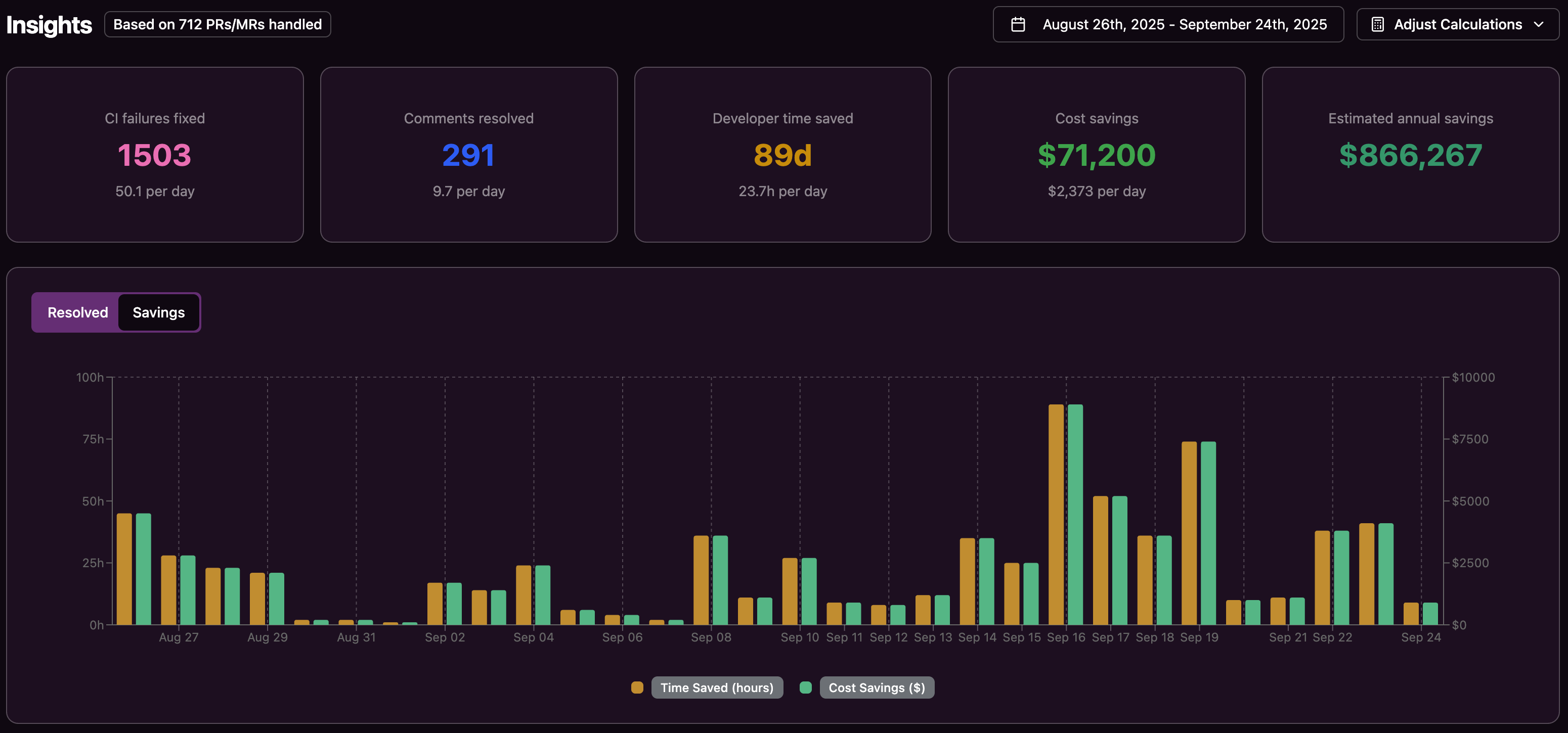
Ready to save time and money? Install Gitar to automate fixes and improve productivity.
Why Gitar’s Healing Engine Outshines Basic Suggestion Tools
|
Feature/Capability |
Gitar (CI Healing Engine) |
AI Suggestion Engines |
Manual Processes |
|
Automated Fix Application |
Yes (Commits fixes directly) |
Often requires manual steps |
No (Developer fixes manually) |
|
Validation Against Full CI |
Yes (Confirms builds pass) |
Sometimes lacks testing |
Yes (Waits for CI results) |
|
Full Environment Replication |
Yes (Supports complex setups) |
Varies by tool |
Manual per developer |
|
Latency Reduction |
Significant via automation |
Depends on manual speed |
High delays |
The difference between healing and suggestion tools lies in their approach. Suggestion tools might point out issues but often rely on developers to apply fixes. This creates delays in moving from problem to solution.
Gitar, as a healing engine, manages the entire fix process. It detects issues, resolves them, tests the solution, and aims for passing builds. This Reduces delays and supports effective pipeline monitoring.
Common Questions About Clear Pipeline Monitoring with Gitar
How Does Gitar Offer Better Pipeline Visibility?
Gitar doesn’t just track failures; it fixes them and provides details on what was resolved. This proactive approach keeps your pipeline healthy without constant manual oversight, unlike traditional tools that only notify you of issues.
Can Gitar Manage Complex Enterprise Setups?
Yes, Gitar handles intricate workflows, supporting specific JDK versions, multi-SDK builds, and tools like SonarQube or Snyk. Its fixes are tailored to fit the unique needs of enterprise environments.
How Is Gitar Different from Other AI Code Review Tools?
Many AI review tools offer suggestions that need manual application. Gitar acts as a healing engine, applying fixes automatically and validating them in your CI system to maintain build reliability.
How Does Gitar Help Developer Morale?
Gitar cuts down on repetitive tasks like fixing CI errors or addressing minor feedback. This lets developers focus on meaningful work, reducing frustration and supporting a better workflow.
What If Gitar Applies the Wrong Fix?
Gitar includes rollback options and clear records of all changes, explaining what was altered and why. If a fix fails, teams can undo it easily. Its adjustable settings also let teams start with suggested fixes for review before full automation.
Make CI/CD Issues a Thing of the Past
CI/CD failures don’t have to be part of development. The costs, like $1 million yearly for a 20-developer team, lost focus, delayed releases, and frustration, can be reduced with autonomous tools.
Gitar shifts pipeline management from reactive to proactive. By detecting and fixing issues automatically while keeping processes transparent, it helps turn CI/CD into a reliable system for clear monitoring.
Benefits include better developer focus, faster merges, lower costs, and improved reliability for growing teams. Most importantly, it rebuilds trust in CI/CD, letting teams focus on creating impactful software.
Ready to upgrade你的 pipeline? Try autonomous fixes with Gitar today.