
Key Takeaways
- CI/CD has become a primary bottleneck as AI-assisted coding accelerates code creation, shifting constraints from writing code to validating and merging it.
- Pre-merge CI failures, slow feedback, and constant context switching erode developer focus and create large hidden productivity and financial costs.
- Autonomous CI pipeline management turns CI from a reactive process into a self-healing system that diagnoses, fixes, and validates failures without blocking developers.
- A phased rollout that starts in suggestion mode, then expands to auto-commit for trusted failure types, helps teams build confidence and measure ROI.
- Teams can use Gitar to automatically fix broken builds, reduce CI toil, and keep developers focused on high-value work.
The Unseen Cost: How Traditional CI/CD Kills Developer Flow and Focus
Traditional CI/CD creates a hidden tax on engineering productivity that extends beyond time spent fixing red builds. Developers lose up to 30% of their time on CI/CD problems, which can translate to roughly $1M in annual productivity loss for a 20-developer team.
Pre-merge CI/CD phases show a 5:3 failure rate compared to post-merge checks, with 15 times more checks running pre-merge. Developers encounter most CI friction while actively working, which intensifies the impact on flow and attention.
Context switching amplifies this cost. A developer submits a pull request, moves to a new task, then must rebuild the entire mental model when a CI failure arrives later. A quick fix on paper often expands into an hour of regaining context, re-opening tools, and re-understanding code.
Distributed teams feel this even more. A PR opened in one time zone and reviewed in another can turn simple CI issues into multi-day delays. Long feedback cycles and unreliable automation create uncertainty around delivery dates and planning.
The Shift to Autonomous CI: A Strategic Imperative for 2026
The industry has reached an inflection point where writing code is faster, but validating and merging that code is slower. Teams with pipelines under ten minutes deploy about twice as often as teams with slower pipelines, which directly affects responsiveness to customers and market shifts.
Autonomous CI management supports several concrete outcomes:
- Competitive speed: Faster, more predictable pipelines enable more frequent, reliable releases.
- Developer retention: Engineers spend less time on repetitive CI debugging and more on challenging work.
- Cost control: Fewer failed runs and retries reduce both time spent and infrastructure usage.
Install Gitar to begin turning CI from a bottleneck into a predictable, low-friction part of your delivery process.
Gitar: Unlocking Developer Flow with Self-Healing CI
Gitar moves beyond suggestion-only AI tools and operates as an autonomous agent inside your CI workflows. Instead of alerting developers that a build is broken, it focuses on diagnosing and fixing the problem so developers can keep moving.
Key Capabilities of Automated CI Pipeline Management
Gitar acts as a healing engine for CI pipelines with these core capabilities:
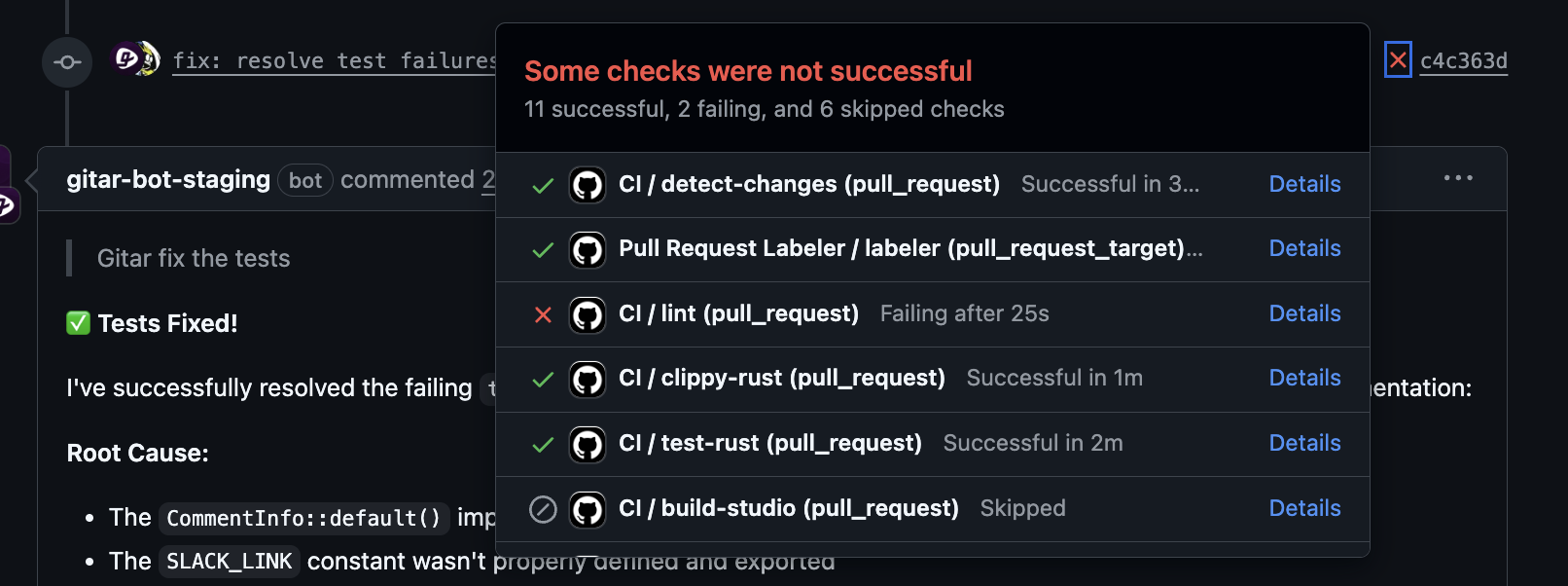
- End-to-end autonomous fixing: When checks fail, Gitar analyzes logs, proposes or applies code changes, re-runs checks, and updates the pull request. Common cases include lint violations, failing tests, and build errors.
- Environment-aware execution: Gitar emulates complex CI environments, including language runtimes, multi-SDK setups, security scans such as SonarQube and Snyk, and snapshot or integration tests, so fixes reflect real conditions.
- Configurable trust levels: Teams can start in suggestion-only mode, then move to auto-commit for selected failure categories once they are comfortable with accuracy and impact.
- Broad CI integration: Gitar connects with platforms such as GitHub Actions, GitLab CI, CircleCI, and Buildkite to provide consistent behavior across different stacks.
|
Capability |
Manual Debugging |
AI Code Reviewers |
Gitar Autonomous CI |
|
Failure Detection |
Manual monitoring |
Suggestion-only |
Automatic resolution |
|
Fix Implementation |
Developer required |
Developer required |
Autonomous commits |
|
Validation Process |
Retry and hope |
No end-to-end validation |
Full CI environment |
|
Time to Resolution |
30–60 minutes |
15–30 minutes |
2–5 minutes |
Gitar closes the feedback loop by detecting, fixing, and validating CI failures without forcing developers to step away from their current work.
Implementing Autonomous CI: A Phased Approach to Preserving Focus
Phase 1: Installation and Trust Building
Teams can start with a conservative rollout. Install Gitar as a GitHub App on a small group of non-critical repositories, then enable suggestion-only mode through the web dashboard so developers can review fixes before they land.
Useful early metrics include the percentage of accepted suggestions, time saved per failure type, and qualitative feedback on fix quality. These data points help make the case for expanding usage.
Phase 2: Expanding Automation with Confidence
Teams usually gain confidence once they see repeated, accurate fixes for routine issues such as linting, formatting, and simple test failures. At that point, they can enable auto-commit for low-risk categories while keeping manual approval for complex changes.
Developers benefit from fewer interruptions, and reviewers can focus on design and architecture rather than mechanical comments.
Phase 3: Advanced Workflows for Distributed Teams
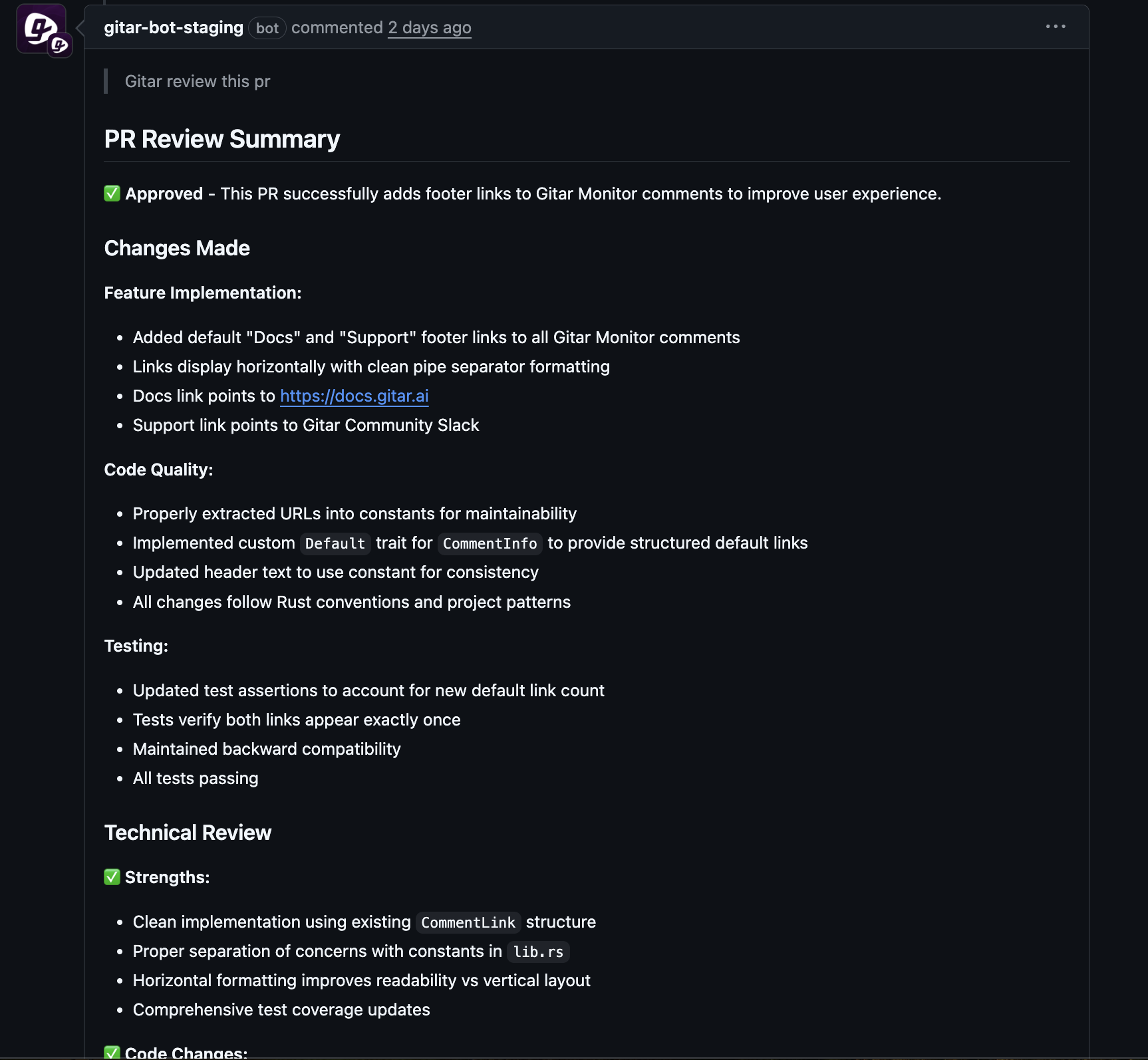
More advanced usage turns review comments into executable instructions. A senior developer can leave feedback like “Use a map here instead of a loop for better performance,” and Gitar can implement the change, push a commit, and document what it did.
Distributed teams gain particular value because feedback left at the end of one time zone’s day can already be implemented and validated when teammates start work elsewhere.
Maximizing ROI: Quantifying the Benefits of Automated CI Pipeline Management
Developer Productivity and Flow Preservation
Developers feel the impact of pipeline bottlenecks most strongly during pre-merge phases through job failures, long waits, and manual debugging. Autonomous CI reduces these interruptions and keeps attention on feature work.
For a 20-developer team, a simple model shows the impact:
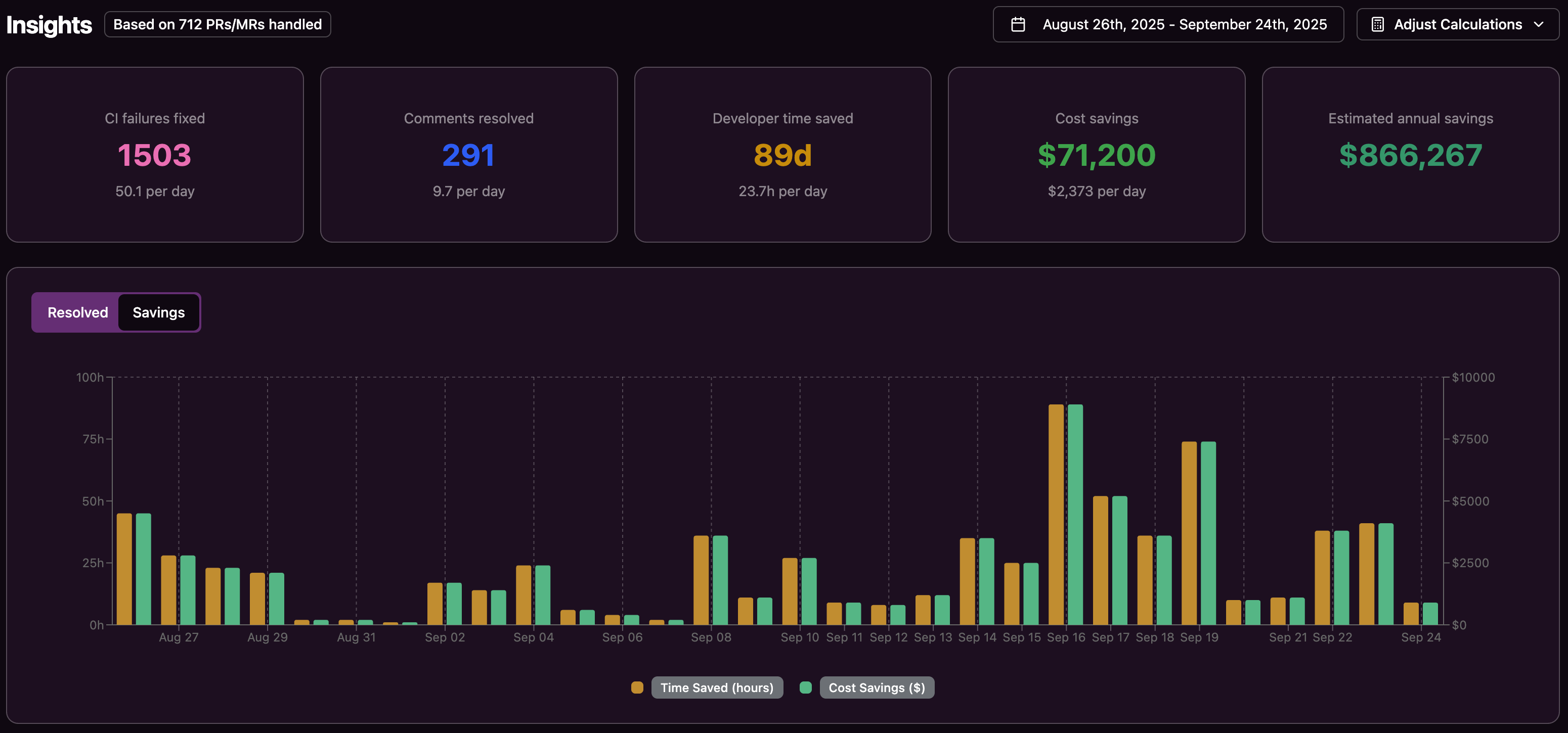
- Time: 20 developers × 1 hour per day × 250 workdays = 5,000 hours per year tied up in CI issues.
- Cost: 5,000 hours × $200 loaded hourly cost ≈ $1M in productivity.
- Potential savings: Even a 50% reduction in CI toil yields about $500K in value while improving morale.
Faster Releases and Fewer Rollbacks
Higher change failure rates and frequent rollbacks extend time-to-release for final products. By fixing issues earlier and stabilizing pipelines, autonomous CI supports shorter cycles and more frequent, reliable deployments.
Lower Operational and Infrastructure Costs
Redundant pipeline runs consume compute and licensing resources. Common failure types such as syntax errors, misconfigurations, flaky tests, and environment mismatches often trigger multiple retries. Automated fixing reduces these repeat runs and the associated costs.
Avoiding Common Pitfalls
- Sudden full automation without a trust-building phase can create resistance; gradual rollout works better.
- Shallow environment modeling can cause green builds in CI but failures in production, so accurate replication of enterprise setups is important.
- Undervaluing distributed team benefits can lead to underinvestment, even though time zone gaps make automation especially valuable.
Install Gitar to reduce CI friction while avoiding these common implementation issues.
Frequently Asked Questions (FAQ)
How does autonomous CI pipeline management differ from AI code review tools?
Autonomous CI management focuses on fixing and validating failures, not just suggesting changes. Gitar analyzes failing jobs, proposes or applies code updates, and re-runs checks so builds are green before developers revisit the pull request. Traditional AI reviewers stop at recommendations and leave implementation and validation to humans.
Can automated CI fixes be trusted for production code?
Teams control trust levels through configuration. Many organizations begin with suggestion-only mode, then enable auto-commit for limited categories once they see consistent results. Every fix still passes through the full CI workflow, including tests and security scans, before it is considered successful.
How does autonomous CI management handle complex enterprise environments?
Gitar is built to mirror real CI setups, including specific JDK versions, multi-language projects, security scanners like SonarQube and Snyk, snapshot tests, and custom build steps. This environment awareness helps ensure that fixes behave the same way in CI as they will in production.
What is the impact on distributed teams?
Distributed teams gain faster feedback loops because reviewers can leave actionable comments that Gitar executes while teammates are offline. Simple change requests no longer wait for multiple back-and-forth cycles, which shortens overall lead time.
How can teams measure ROI from autonomous CI pipeline management?
Useful metrics include time saved per developer per day, reduction in failed or retried pipeline runs, change failure rate, deployment frequency, and developer satisfaction. Many teams observe six-figure annual savings once they scale automation across active repositories.
Conclusion: Use Automated CI Pipeline Management to Unlock Developer Potential
Autonomous CI pipeline management shifts CI from a manual, reactive process into an always-on system that keeps pipelines healthy with minimal developer involvement. As AI tools increase code volume, this approach helps teams protect focus, improve reliability, and release more often.
Organizations that adopt autonomous CI in 2026 can expect clearer delivery timelines, less burnout from repetitive debugging, and better use of senior engineering time.
Install Gitar to automatically fix broken builds, reduce CI toil, and keep your engineering team focused on building valuable features.