
Key Takeaways
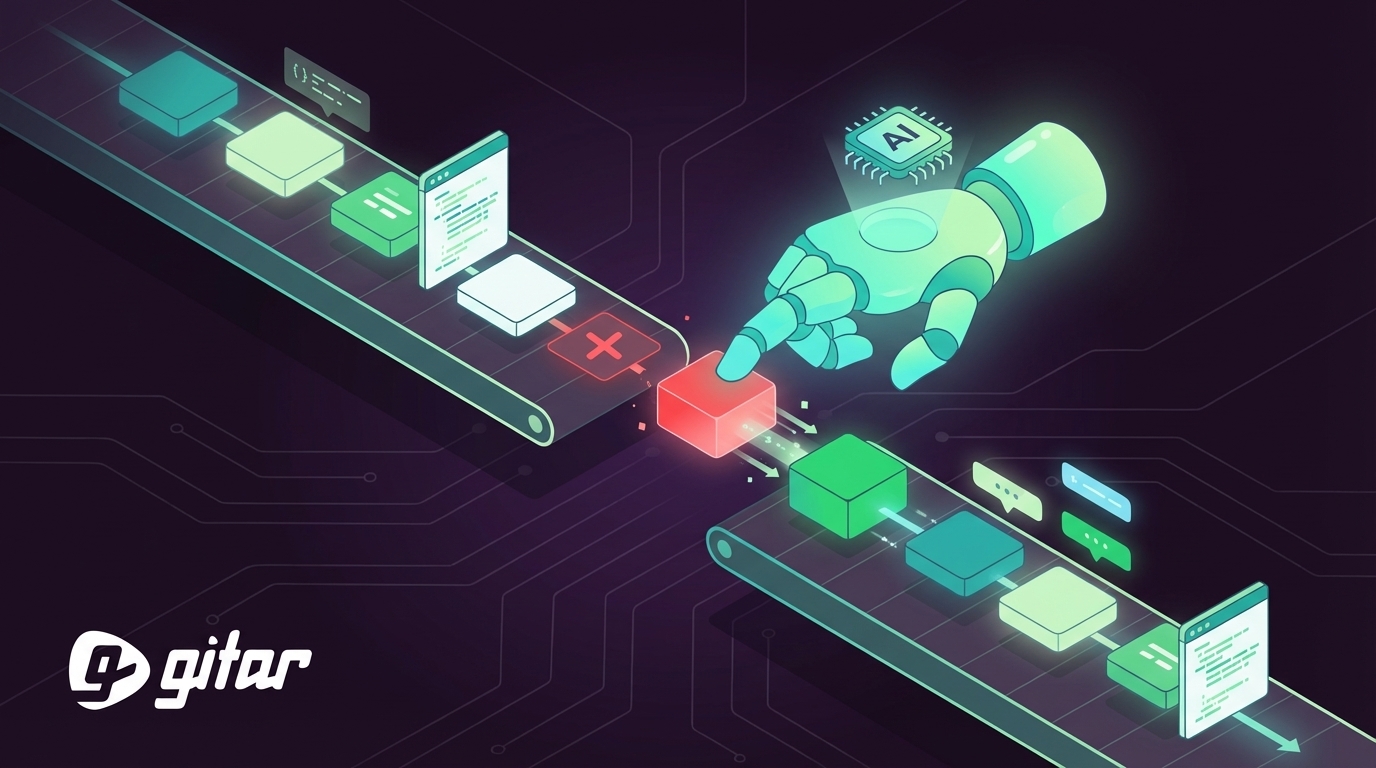
- CI has become a primary delivery bottleneck in 2026 as AI-assisted coding increases code volume and pre-merge checks grow more complex.
- Manual debugging and basic AI suggestion tools create costly context switching and do not scale for modern CI/CD environments.
- Self-healing CI uses autonomous AI to analyze failures, apply fixes, and validate results in the real pipeline, which reduces time-to-merge and operational risk.
- Successful adoption requires a phased rollout, clear ROI metrics, and careful attention to environment replication and supply chain security.
- Gitar provides autonomous CI failure resolution and code review automation so teams can keep pipelines green and focus on higher-value work. Get started with Gitar.
Why CI Pipeline Failure Resolution Has Become a Strategic Bottleneck
Modern development teams ship more code than ever, but CI validation has not kept pace. Pre-merge CI phases now fail more often, with a 5:3 failure ratio versus post-merge, and run 15 times more checks annually. This pattern slows delivery and blocks developer progress.
The cost impact is substantial. Developers can lose up to 30% of their time dealing with CI and CD problems, which can reach roughly $1 million in annual productivity loss for a 20-person team. Slower feedback and longer queues translate into slower shipping cycles and less time spent on product work.
Complex CI environments increase this burden. Teams frequently face automation bottlenecks, inconsistent environments, security gaps, and process friction. Each failure consumes developer attention, even when the underlying fix is minor.
Right-shift bottlenecks add further pressure. Tools like GitHub Copilot accelerate code creation, but validation steps such as CI checks and code reviews often cannot absorb the extra volume. The more code that ships into the pipeline, the more time teams spend untangling broken runs.
Where Current CI Failure Resolution Approaches Fall Short
Manual debugging remains the default for many organizations. Developers pause feature work, scan logs, reproduce failures locally, apply fixes, and push commits while hoping the next run passes. That workflow interrupts focus and turns simple fixes into long delays.
AI-assisted suggestion tools improve diagnosis, but they still depend on manual application and validation of fixes. Developers must review suggestions, change code, rerun CI, and verify that the fix works in their specific environment. This approach still ties resolution speed to human availability.
Security requirements raise the stakes. The OWASP 2025 A03 Software Supply Chain Failures category highlighted compromised CI and CD systems as a major attack vector. Third-party breaches have reached around 30%, with average costs of $4.44 million per incident. Fixes that work technically but bypass security checks can introduce serious risk.
How Self-Healing CI Uses Autonomous AI To Resolve Failures
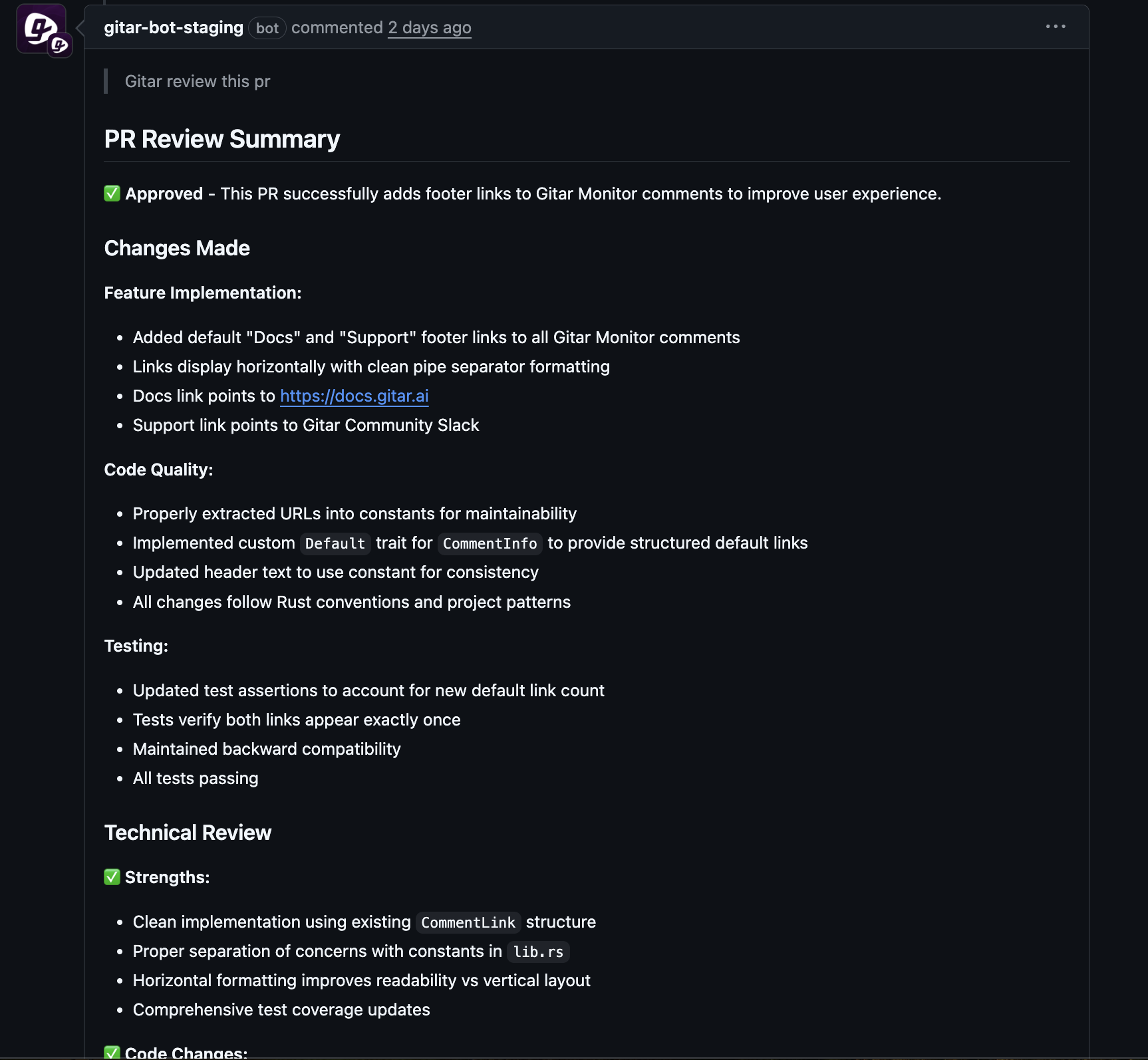
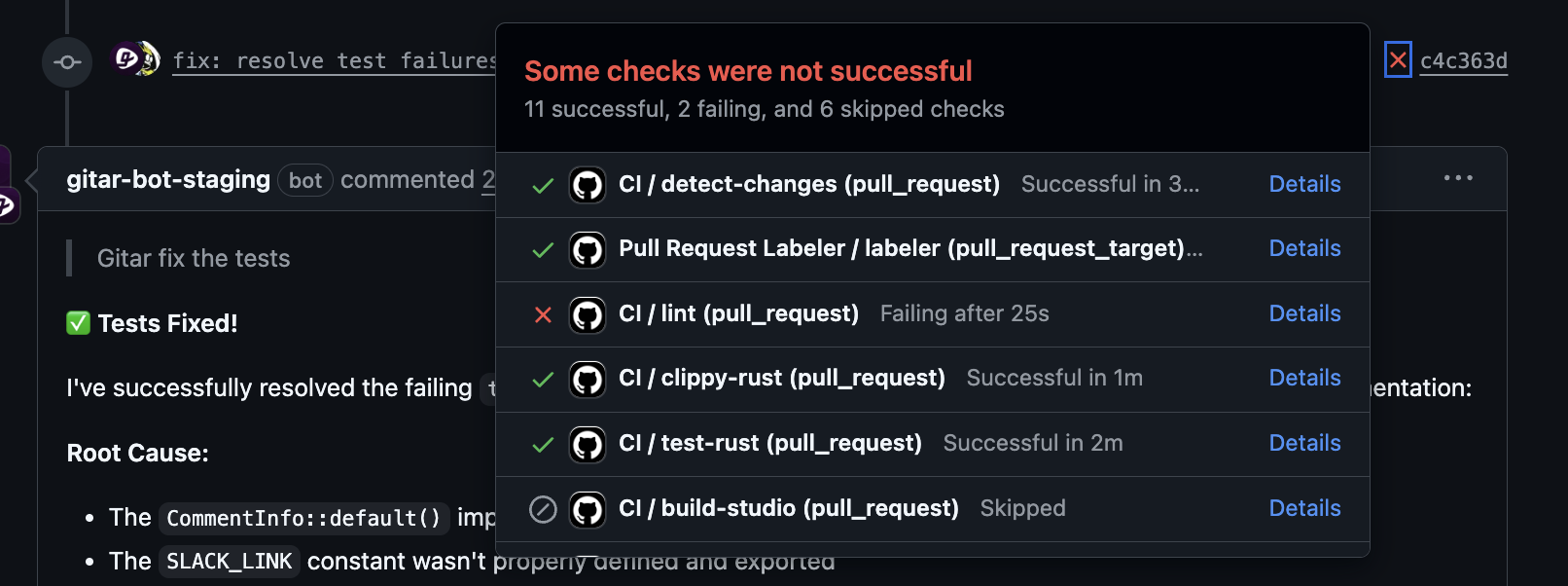
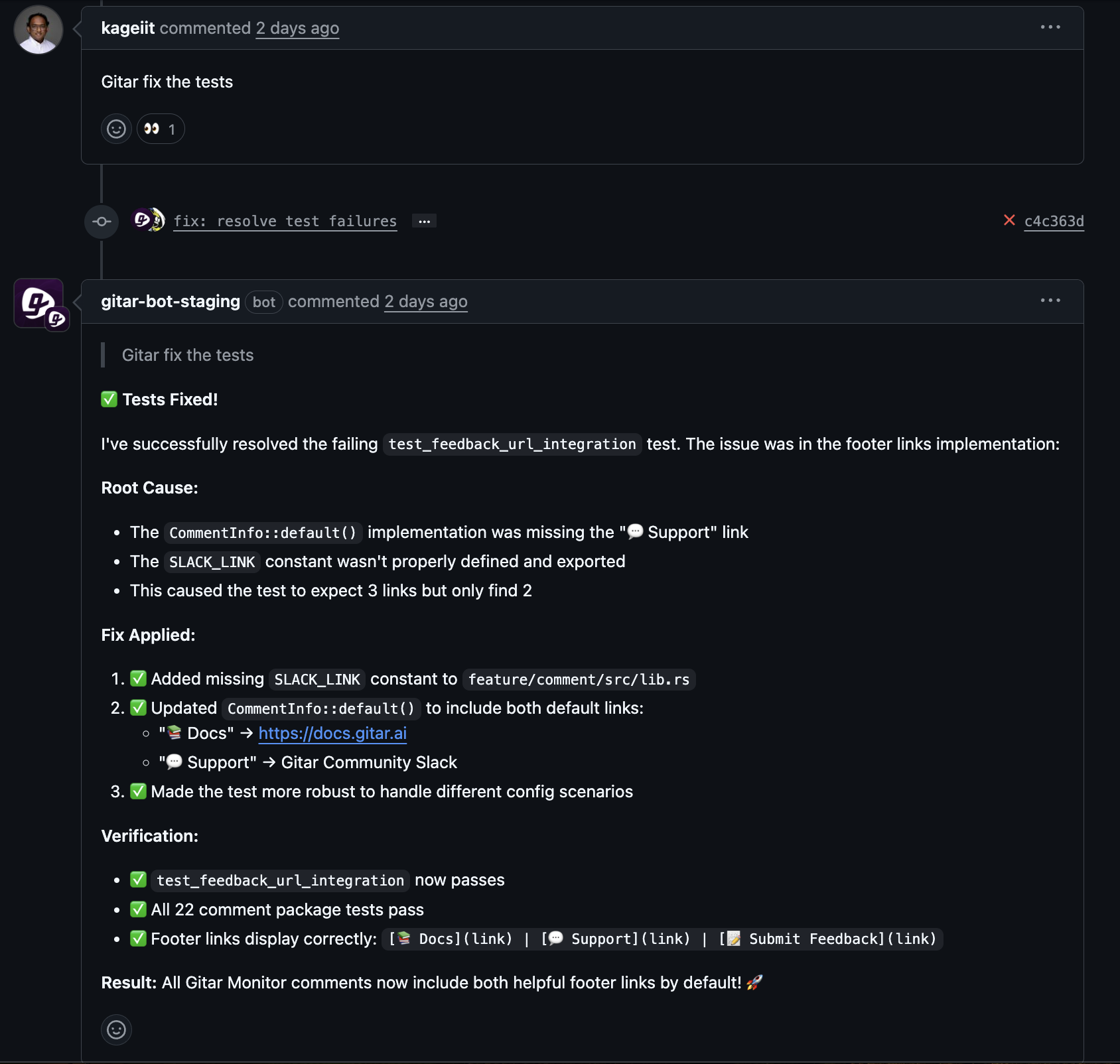
Self-healing CI describes systems that diagnose pipeline failures, generate fixes, apply changes, and rerun validation automatically. The goal is a closed loop where pipelines return to a green state with minimal developer involvement.
Gitar uses this autonomous pattern through several capabilities that matter for day-to-day work:
- End-to-end fixing that applies changes directly, runs the full CI workflow, and only presents green pull requests once all checks pass.
- Full environment replication that respects real JDK versions, language runtimes, dependency graphs, and tools such as SonarQube and Snyk so fixes match production pipelines.
- A configurable trust model that ranges from suggestion-only modes to direct commits with rollback controls.
- Code review assistance that takes reviewer comments and turns them into concrete commits, which reduces back-and-forth across time zones.
- Support for major CI platforms such as GitHub Actions, GitLab CI, CircleCI, and Buildkite.
Software integrity failures in CI and CD pipelines can expose systems to unauthorized access, so validated automated fixes are not only a productivity gain but also a security control.
See how self-healing CI works in your own pipelines with Gitar.
How To Implement Self-Healing CI In Your Organization
Step 1: Quantify CI Pain And Identify Fast Wins
Teams benefit from understanding where CI currently consumes the most time. Syntax errors, flaky or failing tests, and misconfigured pipelines from simple mistakes often account for a large share of failures. These issues provide good starting points for automation.
A simple cost model helps build a business case. Multiply the number of developers by the average daily time lost to CI issues, then apply an average loaded hourly rate. For a 20-person team losing one hour per day per developer, the annual cost often approaches $1 million, which makes targeted automation straightforward to justify.
Step 2: Use A Phased Rollout To Build Trust
Teams usually start Gitar in a conservative mode. The system proposes fixes as comments or pull requests, and developers approve changes with one click. Over time, repeated accurate fixes reduce concern about automation.
A typical path looks like this:
- Initial phase with suggestion-only automation on lower-risk repositories or branches.
- Expanded coverage once teams see consistent success across many small fixes.
- Autonomous mode for common failure classes, with guardrails such as rollback and required reviews for high-risk areas.
Step 3: Track ROI And Developer Experience
Clear metrics help demonstrate impact and guide further rollout. Useful measures include:
- Average time from first CI failure to green build.
- Time-to-merge for typical feature branches.
- Number of failures resolved without human intervention.
- Developer satisfaction with CI and code review processes.
Teams often see around $500,000 in annual savings for a 20-person engineering group when they reduce context switching and unblock merges more quickly.
How Autonomous AI Compares To Other CI Resolution Approaches
|
Feature |
Autonomous AI (Gitar) |
AI Suggesters |
On-Demand AI |
Manual Work |
|
Resolution type |
Automated and validated fixes |
Suggestions only |
Fixes when explicitly triggered |
Fully manual |
|
CI integration |
End-to-end pipeline interaction |
Limited to code review or snippets |
Requires human initiation |
Relies on human effort |
|
Context awareness |
Replicates full environment |
Varies by tool |
Varies by tool |
Depends on individual experience |
|
Trust model |
Configurable automation levels |
Varies by tool |
Varies by tool |
Human judgment only |
|
Developer interruption |
Low once configured |
Medium |
Medium |
High |
|
Time-to-merge |
Significantly reduced |
Improvement depends on usage |
Improvement depends on usage |
Slowest |
Common CI Automation Pitfalls And How To Avoid Them
Some teams try to assemble their own automation platforms from generic AI and internal scripts. This do-it-yourself approach often requires substantial effort to manage context, integrate with CI providers, and validate changes, which diverts engineering time away from product work.
Environment replication is another common challenge. Inconsistent environments and fragile CI and CD implementations make root-cause analysis harder. Systems that do not mirror production CI conditions may show green locally while failing in shared pipelines.
Pre-merge optimization also deserves focus. Pre-merge phases run far more checks annually and form the main bottleneck, so automation that keeps these runs green has outsized impact on throughput.
Security must remain part of the design. An organization’s security posture now depends heavily on the weakest link in its supply chain. Automated systems should apply, not bypass, existing security controls and should operate with clear audit trails.
Install Gitar to avoid these pitfalls and move toward self-healing CI.
Using Autonomous AI To Turn CI Into An Advantage
In 2026, CI failure resolution now plays a central role in overall engineering effectiveness. Manual approaches and lightweight AI suggestions cannot keep up with the scale and security demands of modern pipelines.
Autonomous systems such as Gitar give teams a way to keep pipelines healthy while preserving developer focus for higher-value work. Self-healing CI reduces time-to-merge, improves reliability, and supports a stronger security posture.
Explore Gitar to see how autonomous fixes can keep your CI pipeline green.
Frequently Asked Questions About CI Automation And Failure Resolution
How Gitar’s self-healing CI handles complex enterprise environments
Gitar emulates the full enterprise build and test environment, including language versions, multiple SDKs, and security or quality tools such as SonarQube and Snyk. This approach ensures that fixes are validated against the same checks that run in production pipelines and that changes respect organizational quality gates.
How Gitar maintains trust and developer control
Teams choose their preferred automation level. Many start with conservative settings where Gitar proposes fixes as comments or pull requests. Developers review and approve these changes, then gradually allow more automated commits as confidence grows. Rollback options and repository-level controls keep ownership with the team.
How Gitar supports teams that already use AI coding tools
Tools like GitHub Copilot increase code throughput but often increase CI and review load. Gitar closes this gap by resolving many CI failures automatically and by implementing routine review feedback. This combination keeps validation stages from becoming the new bottleneck.
How autonomous CI supports a more secure software supply chain
Gitar operates inside existing CI pipelines and follows the same security policies that already apply to human changes. The system consistently applies checks and validations, which reduces the chance that hurried manual fixes skip required security steps.
What ROI engineering leaders can expect from self-healing CI
Organizations often see fewer blocked branches, faster merges, and measurable reductions in time spent on CI firefighting. For a 20-person team, reclaiming even one hour per day per developer for focused work can represent hundreds of thousands of dollars in annual productivity gains, alongside better developer experience and more predictable delivery.