
Key Takeaways
- Inefficient CI pipelines consume large amounts of developer time, create context switching, and slow release cycles, which increases both direct costs and business risk.
- Autonomous CI shifts pipelines from reactive troubleshooting to self-healing operation, so common failures are diagnosed and fixed before developers need to intervene.
- Engineering leaders need a clear view of build-versus-buy tradeoffs, organizational readiness, and ROI to select CI pipeline efficiency software that fits long-term goals.
- Teams that plan phased rollouts, align stakeholders, and avoid automating broken processes see faster gains and higher trust in CI automation.
- Gitar provides autonomous CI fixes across code review and pipelines, helping teams reduce failed builds and ship higher quality software faster; you can explore it at https://gitar.ai/fix.
Why CI Pipeline Efficiency Now Drives Competitive Advantage
Inefficient CI pipelines now carry clear economic consequences. For a 20-person engineering team, recurring CI failures can add up to roughly $1M in annual productivity loss when each developer spends about an hour a day debugging and fixing broken builds.
AI-assisted coding has multiplied the number of pull requests and increased pressure on CI workflows. Many companies report project delays tied to CI and CD failures, which directly affect time from first commit to merge and time to market. Slow or unstable pipelines also erode developer focus and increase burnout, which harms retention and innovation capacity.
Teams that manage CI as a strategic capability, rather than a background utility, gain an advantage. Faster, more reliable pipelines shorten feedback loops, stabilize release cadence, and support more ambitious product roadmaps.
Install Gitar to automatically fix broken builds and reduce CI interruptions for your team.
What Autonomous CI Means For Your Pipelines
Autonomous CI moves beyond traditional optimization toward self-healing pipelines. Instead of only flagging issues, advanced systems identify failures, apply fixes, validate changes in a representative environment, and confirm green builds before surfacing results.
Many AI review tools still operate as suggestion engines. They leave developers to interpret advice, implement changes, push new commits, and wait for fresh CI results. This process interrupts flow and often repeats when suggestions do not match real CI conditions.
Autonomous healing engines aim to remove this loop. They run within or alongside CI, test fixes in the full pipeline context, and only present developers with validated outcomes. CI becomes more of a background service that protects productivity rather than an active source of work.
How The CI Pipeline Efficiency Software Landscape Breaks Down
Manual Troubleshooting: High Effort, Slow Feedback
Many organizations still depend on manual log inspection and ad hoc debugging. Developers replicate environments locally, tweak configuration files, and iterate through multiple commits just to stabilize a single build. This approach consumes hours for problems that more automated systems could fix in minutes.
Monolithic pipelines and complex configuration files concentrate knowledge in a few specialists. Those specialists become bottlenecks, and debugging grows harder as teams add tools, services, and test suites.
AI Suggestion Engines: Helpful, But Still Manual
AI suggestion tools add structure to code review and CI troubleshooting, yet they typically stop short of execution. Developers still assume responsibility for applying and testing proposed changes.
Differences between local and CI environments limit suggestion accuracy. Dependency conflicts, environment drift, and flakiness often cause suggested fixes to fail on the next run, which sends developers back into another cycle of edits and reruns.
Autonomous Healing Engines: Directly Reducing CI Work
Autonomous healing engines focus on resolution, not just identification. They emulate the CI environment, apply likely fixes, re-run affected portions of the pipeline, and confirm that builds pass before updating pull requests or branches.
These systems work best when they understand full workflows, including third-party scanners, specific SDK versions, and project-level conventions. By diagnosing and addressing issues inside the actual CI context, they reduce guesswork and limit the number of failed runs developers ever see.
Key Strategic Considerations Before You Adopt Autonomous CI
Leaders evaluating CI pipeline efficiency software need to balance capability, cost, and organizational fit.
Building an internal autonomous CI solution requires specialized skills in distributed systems, orchestration, and AI. Teams have to manage concurrency, asynchronous events, and state across many pipelines and projects. In practice, these efforts often expand far beyond original estimates and distract from core product work.
Organizational readiness matters as much as technical maturity. Teams need agreement on what the AI is allowed to do, how it communicates changes, and how developers override or escalate decisions. Change management, clear ownership, and documentation help avoid friction and confusion.
ROI should include more than raw debugging hours. Benefits also come from less context switching, smoother onboarding for new developers, and more reliable release planning. Over time, these compounding gains can outweigh direct infrastructure or license savings.
How Gitar Supports Autonomous CI Fixes
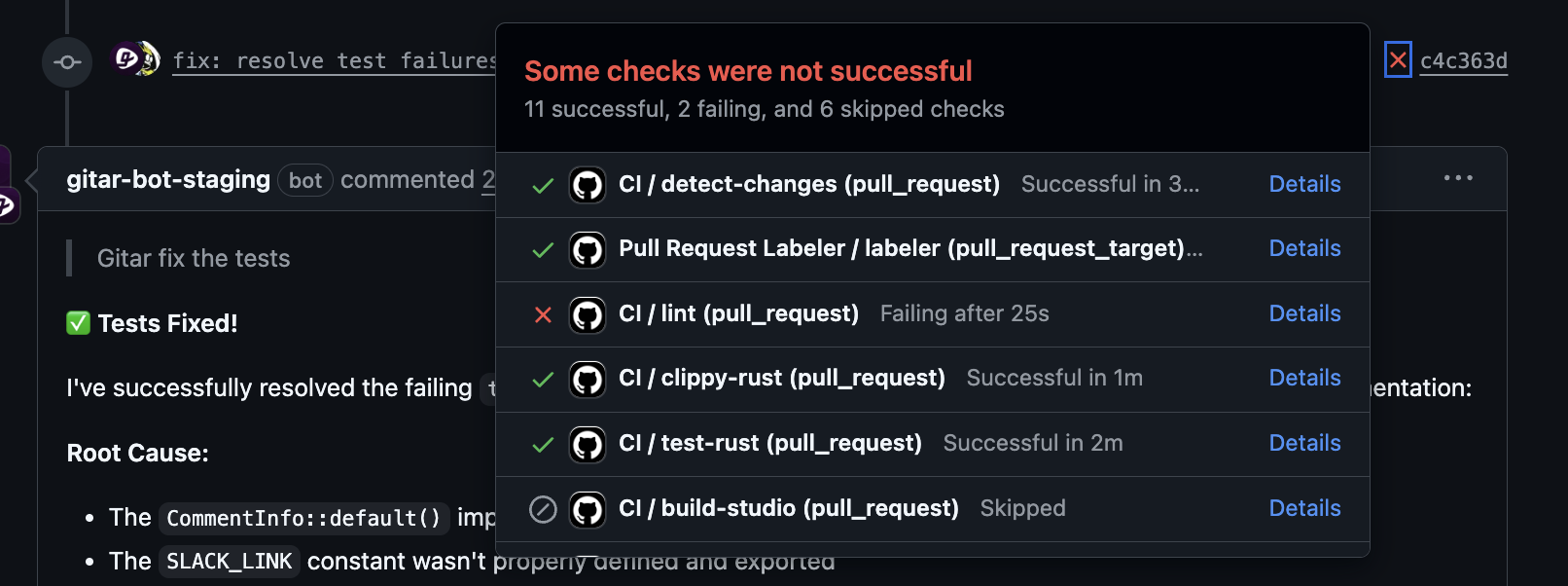
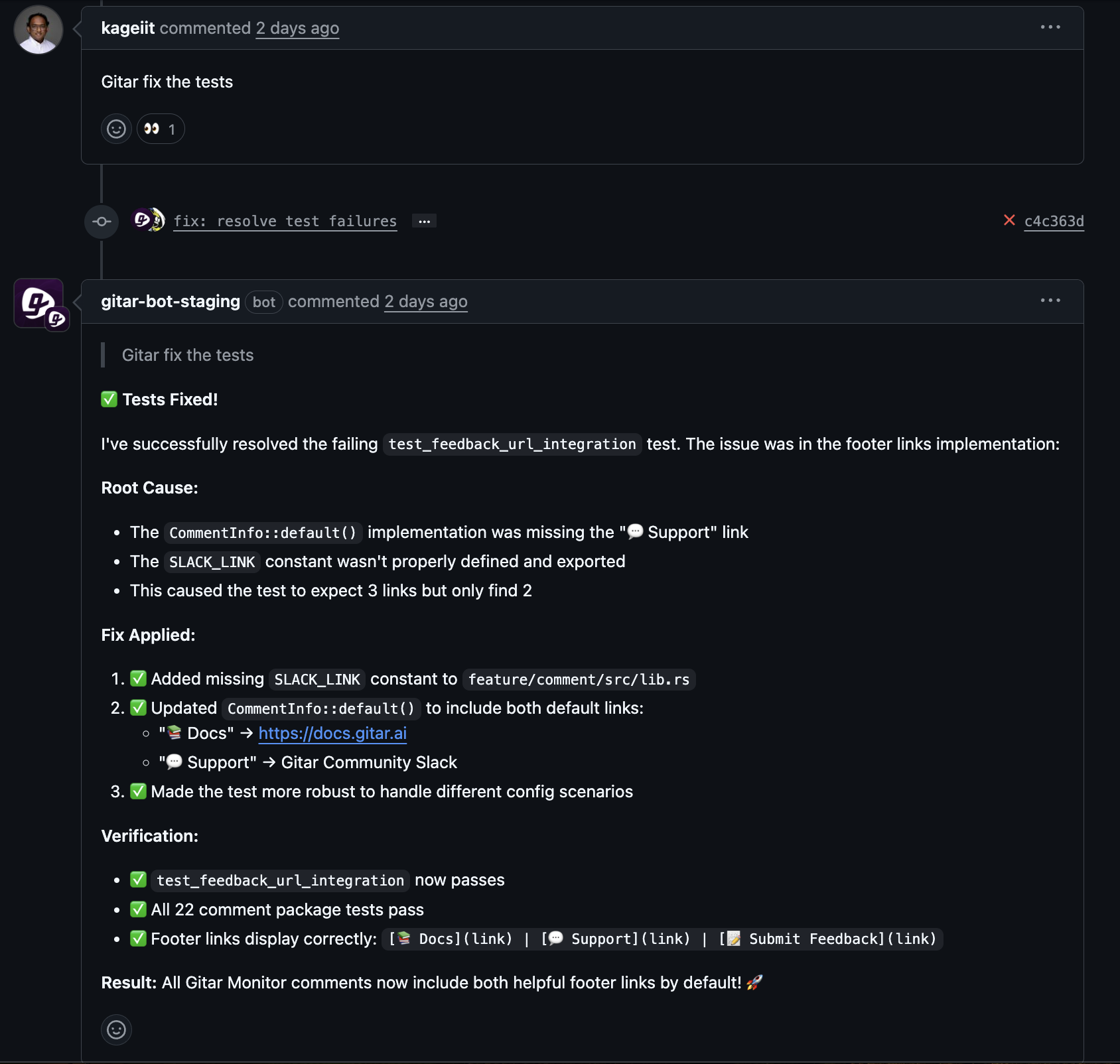
Gitar focuses on making CI and code review workflows more reliable by applying autonomous fixes rather than only suggestions.
- End-to-end autonomous fixing across CI and code review, covering lint errors, formatting issues, test failures, and many build problems.
- Full environment replication that accounts for SDK versions, configuration, and tools such as static analyzers or security scanners.
- A configurable trust model that supports suggestion-only modes, developer approval workflows, or controlled auto-commit behavior with rollback options.
- Support for common CI platforms, including GitHub Actions, GitLab CI, CircleCI, and Buildkite, which reduces lock-in to any single provider.
- Context-aware intelligence that uses project history and current pipeline state to propose fixes that reflect your actual workflows.
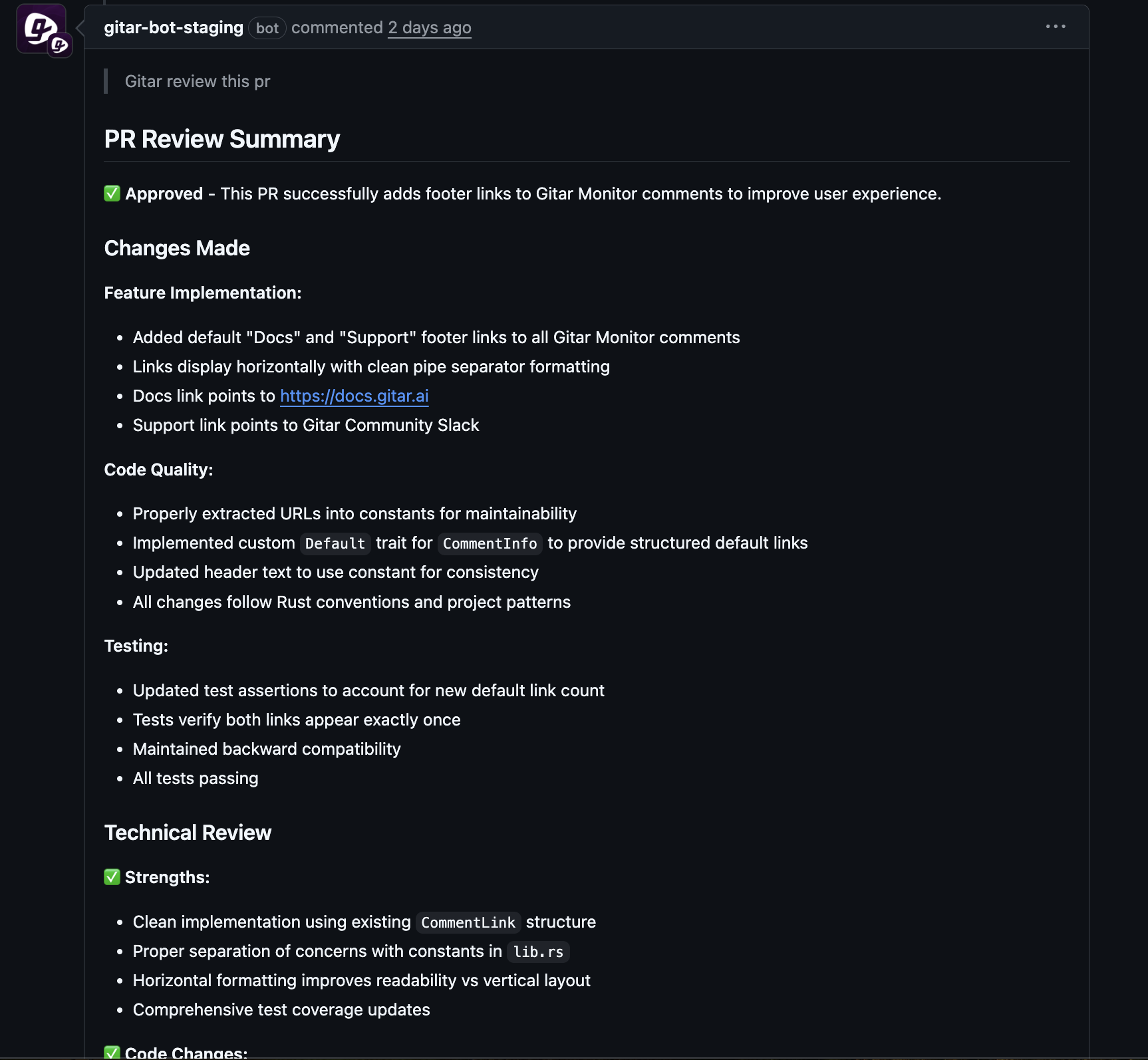
See how Gitar applies and validates fixes directly in your CI pipelines.
Preparing Your Organization For Autonomous CI
Assess CI Maturity And Baseline Metrics
Teams benefit from measuring current CI performance before introducing autonomous fixes. Useful metrics include build and test duration, mean time to resolution for CI failures, the number of failed runs per pull request, and time developers spend on CI-related work.
Toolchain complexity also affects outcomes. Organizations with multiple CI systems, heterogeneous environments, or frequent configuration drift often gain the most from centralized autonomous healing. Consistent environments across development, staging, and production make it easier to trust automated fixes.
Use A Phased Rollout Strategy
Gradual rollout helps teams build confidence in autonomous CI. Many organizations start in suggestion-only mode, where the system proposes fixes and developers approve or edit them before merge.
Low-risk repositories and simple failure classes, such as lint and formatting errors, provide a good initial scope. As developers see successful fixes, teams can extend automation to more complex tests, higher-value services, and controlled auto-commit modes.
Measure Outcomes And Refine The Approach
Clear metrics allow teams to evaluate whether autonomous CI delivers value. Common measures include reduced mean time to resolution for failures, higher merge frequency, fewer re-runs per pull request, and lower reported frustration with CI in developer surveys.
Financial estimates can use saved developer hours, lower CI infrastructure usage from fewer repeated runs, and earlier delivery of features. For a 20-person team, even cutting CI-related interruptions in half can free hundreds of hours per month for core product work.
Common Pitfalls To Avoid In CI Optimization
Teams often run into similar issues when modernizing CI pipelines. Awareness of these risks helps avoid wasted effort.
Organizations sometimes automate poorly designed processes instead of improving them first. When workflows contain unnecessary steps or unclear ownership, automation can harden those problems and create new bottlenecks.
Pipeline fatigue can grow when suggestion-based tools surface many partial or low-confidence recommendations without addressing underlying environment issues. Developers lose trust when automated advice frequently fails because of configuration drift, flaky tests, or dependency conflicts.
Insufficient change management also slows adoption. Successful teams define how AI systems access code, how actions are logged, how rollbacks work, and who maintains the automation. Security and compliance teams usually need visibility into permissions and audit trails before granting broad CI access.
Overreliance on suggestion engines can delay adoption of autonomous options that directly reduce CI workload. Periodic reviews of tool effectiveness help teams decide when to move from advisory tools to self-healing systems.
Install Gitar to reduce manual CI firefighting and stabilize your delivery workflow.
Conclusion: Turning CI Into A Reliable, Low-Overhead System With Gitar
CI pipeline efficiency has become a core part of software delivery strategy in 2026. Manual investigation of broken builds and repetitive code review feedback now impose clear costs on both teams and businesses.
Organizations that adopt autonomous healing engines gain more predictable pipelines, shorter feedback loops, and fewer context switches for developers. By focusing on validated fixes instead of raw suggestions, Gitar helps teams move toward CI that runs reliably in the background.
Explore Gitar to see how autonomous CI fixes can fit into your engineering workflow.
Frequently Asked Questions (FAQ)
How does Gitar differ from other AI reviewers for CI pipeline efficiency?
Many AI reviewers propose code changes but do not ensure that pipelines pass afterward. Gitar applies fixes, runs them through the CI workflow, and reports results only after validation, which reduces the number of failed runs developers need to handle.
Can Gitar handle a complex and unique CI setup?
Gitar is designed to work with real project environments, including specific dependencies, SDK versions, and tools such as SonarQube and Snyk. This environment awareness helps it produce fixes that match your actual CI configuration.
How can teams control automatic commits from Gitar?
Teams configure Gitar’s behavior to match their risk tolerance. Many start with suggestion-only or approval-required modes, then move to auto-commit in scoped areas once they are comfortable with the quality of fixes.
What CI/CD inefficiencies can CI pipeline efficiency improvement software address?
These tools focus on long build and test times, flaky tests, environment inconsistencies, and the manual effort spent on debugging and fixing failures. Autonomous systems reduce mean time to resolution and cut down on repeated failures, which raises overall pipeline throughput.
How does autonomous CI differ from traditional CI/CD optimization?
Traditional optimization improves configuration and test strategy but usually keeps humans in the loop for diagnosis and fixes. Autonomous CI adds self-healing behavior, where the system detects, analyzes, and resolves many failures without developer intervention, which reduces context switching and keeps pipelines flowing.