
Key Takeaways
- Manual CI repair and review cycles interrupt developer focus and slow deployments across modern engineering teams.
- Context switching, time zone gaps, and growing code volume from AI generation tools place increasing pressure on CI pipelines.
- Autonomous CI repair tools analyze failures, generate fixes, and validate changes in CI, which reduces repetitive manual remediation work.
- Gitar operates as a CI healing engine that applies fixes inside real enterprise environments and supports gradual rollout with configurable trust levels.
- Teams can install Gitar to automate CI fixes, reduce bottlenecks, and improve deployment speed.
Manual CI Repair and Reviews Slow Your Team Down
Many teams face the same pattern: a pull request looks ready, the pipeline runs, and a wave of failures appears. Developers then dig through logs, reopen local environments, patch code, push updates, and wait again for CI to complete. Each cycle adds delay and fragments attention.
CI Interruptions Reduce Developer Focus
CI failures and review feedback interrupt deep work. Developers step away from their current task, recall context for an earlier change, and then switch back again. This recurring context switching raises cognitive load and reduces the time available for focused feature work.
Inefficient CI Pipelines Increase Costs
Interruptions do not only affect productivity metrics. A 20-person engineering team can lose substantial value when developer time shifts from planned feature delivery toward CI troubleshooting. Slower pipelines often delay releases, which affects project timelines and can raise operational costs.
Distributed Teams Feel Delays More Strongly
Distributed teams experience longer feedback cycles. A developer on the US West Coast who submits a pull request for review by a colleague in Bangalore often waits at least one full workday for feedback. Tools that only suggest changes still require humans to implement and re-run CI, which stretches review cycles across multiple days.
More Generated Code Increases CI Load
AI code generation tools such as GitHub Copilot and Cursor make it easier to create code quickly. The extra throughput increases the number of pull requests, tests, and potential CI failures. The bottleneck shifts to validation and merging, so shipping code to production becomes the main constraint instead of writing it.
Gitar Enables Autonomous CI Repair for Self-Healing Pipelines
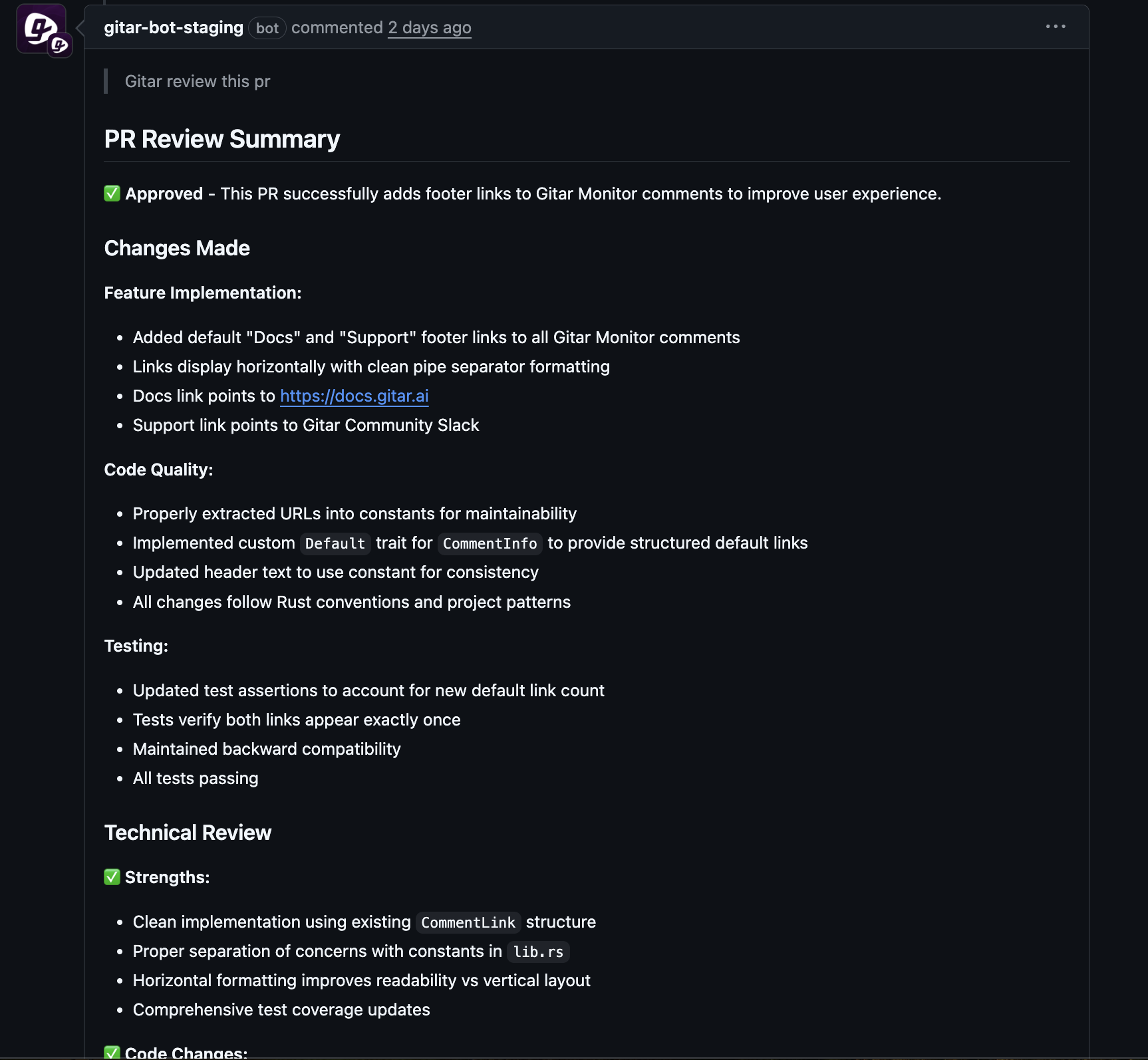
Gitar provides autonomous CI repair by analyzing failures, proposing fixes, and applying them directly to branches. When a pull request fails CI or receives review feedback, Gitar reviews the context, prepares a change, validates it in CI, and updates the branch with minimal human involvement.
Key capabilities that define Gitar as an autonomous CI repair tool include:
- End-to-end autonomous fixing, where Gitar applies and validates fixes against full CI workflows so teams can aim for consistent green builds with less manual work.
- Full environment replication that mirrors enterprise setups, including SDK versions, dependencies, and scanners such as SonarQube and Snyk, which supports context-aware fixes.
- A configurable trust model that supports suggestion-only modes, one-click acceptance, and auto-commit modes with rollback, so teams can adopt automation at their own pace.
- An intelligent code review assistant that implements requested changes from reviewers and reduces back-and-forth during the review process.
- Cross-platform support for providers such as GitHub Actions, GitLab CI, CircleCI, and BuildKite, which helps teams standardize behavior across different CI systems.
Install Gitar to begin automating fixes for broken builds.
How Autonomous Repair Tools Improve CI/CD Workflows
Autonomous CI repair fits naturally into modern development workflows. These tools reduce repetitive toil, keep pipelines moving, and allow developers to focus on design and problem-solving rather than routine remediation.
Autonomous Fixes Reduce Toil and Context Switching
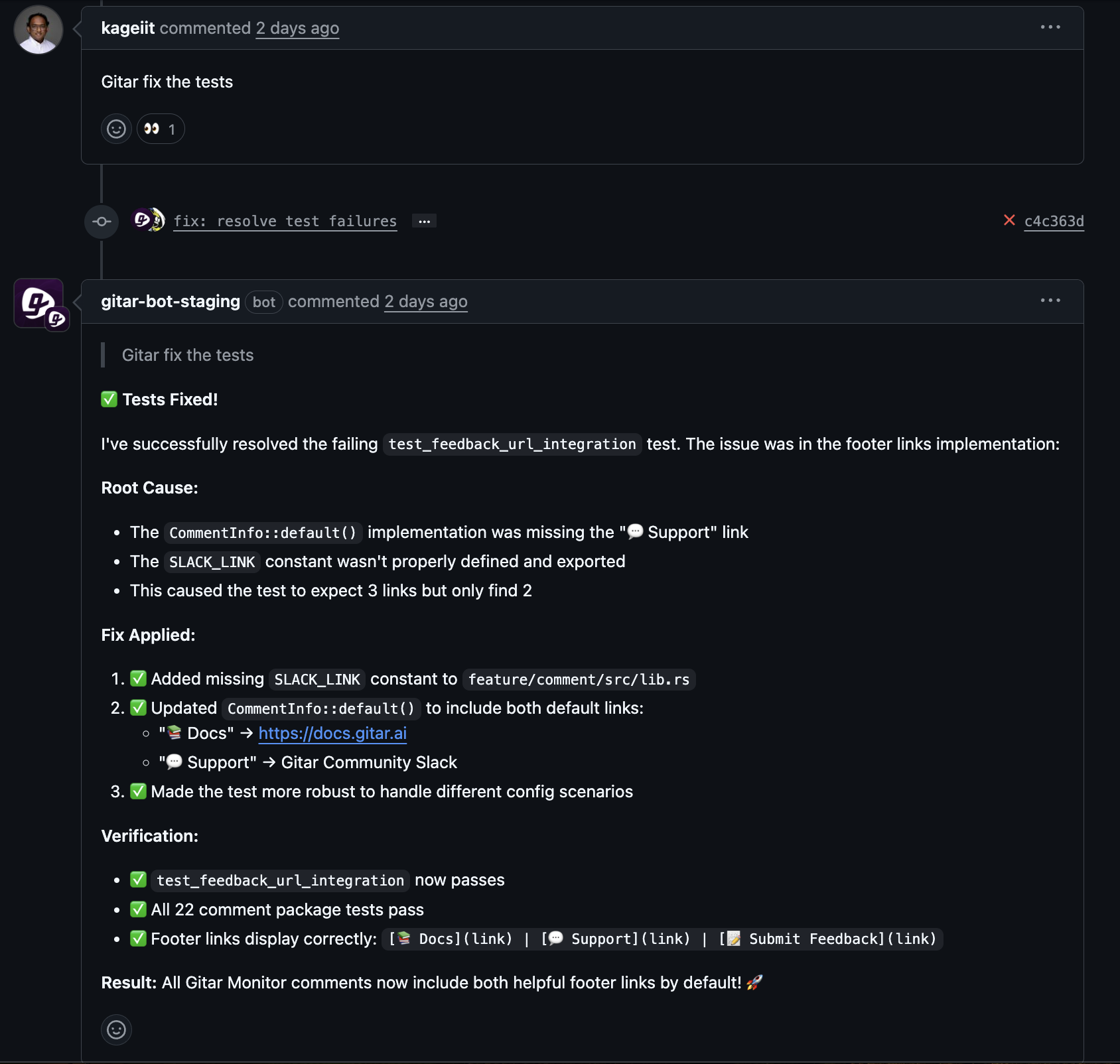
Gitar addresses failures for linting, formatting, tests, and builds. When a CI check fails, the system inspects the logs, identifies the cause, prepares a code change, and commits it back to the pull request branch in aggressive modes. Developers stay focused on their current task while Gitar manages routine fixes.
Faster Fixes Improve Deployment Velocity
Shorter feedback loops help teams ship faster. Automated fixes reduce the traditional cycle of noticing a failure, reproducing it locally, patching, and re-running the pipeline. Pull requests move through CI more quickly, which supports faster merges and more responsive delivery to customers.
Self-Healing CI Improves Developer Experience
CI automation also affects team morale. Developers spend less time on repetitive debugging and more time on design, experimentation, and complex problem-solving. Reduced friction in daily workflows often leads to higher satisfaction and can lower burnout risk.
Healing Engines Compared with Suggestion Engines
Many tools analyze code and provide suggestions, but still rely on developers to apply changes and validate them. Gitar instead operates as a healing engine that applies and verifies changes inside the CI pipeline.
Key differences between Gitar and suggestion-oriented tools include:
|
Feature |
Gitar (Healing Engine) |
Suggestion Engines (for example, CodeRabbit) |
|
Action type |
Applies and validates fixes |
Provides suggestions and analysis |
|
Resolution outcome |
Aims for a green build before handing work back to developers |
Leaves validation and final fixes to developers |
|
Developer interruption |
Low, especially in auto-commit modes |
Higher, because developers must apply and re-run changes |
|
Environmental context |
Replicates full enterprise CI environments |
Often limited to code context inside a file or pull request |
Use Gitar as a CI healing engine to reduce manual remediation work.
Common Questions about CI Pipeline Autonomous Repair
Gitar Builds Trust with Engineering Teams for Automated CI Fixes
Gitar supports several levels of automation. Teams can begin in a conservative mode where the tool posts fixes as suggestions for human review and one-click acceptance. Once results look reliable, teams can enable more aggressive auto-commit modes, with rollback controls that keep changes reversible.
Gitar Supports Complex Enterprise-Grade Environments
Complex CI environments remain a core focus for Gitar. The tool can emulate full enterprise stacks, including specific JDK versions, language runtimes, multiple SDKs, and integrations with scanners such as SonarQube and Snyk. This behavior helps ensure that generated fixes align with the actual environment in which CI runs.
Gitar Compared with AI Code Review Tools and IDE Assistants
IDE assistants such as GitHub Copilot help developers write code inside local editors. Many AI review tools focus on inline feedback and suggestions on pull requests. Gitar instead operates on remote repositories and CI workflows, where it detects failures and applies fixes with minimal human intervention in higher-aggression modes.
CI Failures Gitar Can Resolve Automatically
Gitar can handle a wide range of common failures, including:
- Linting and formatting violations that block merges.
- Test failures such as outdated snapshots, fragile assertions, or minor data changes.
- Build errors related to dependency changes, configuration issues, or failing scripts.
Awareness of the full CI environment allows Gitar to generate fixes that respect project-specific tooling and configuration.
Gitar in Distributed Team Workflows
Distributed teams can reduce time zone delays by allowing Gitar to act on review feedback while teammates are offline. A reviewer can leave comments or requests for changes, and Gitar can implement those changes and update the branch. Colleagues in other regions then see a ready-to-merge pull request at the start of their workday.
Conclusion: Use Autonomous CI Repair to Improve Deployment Velocity in 2026
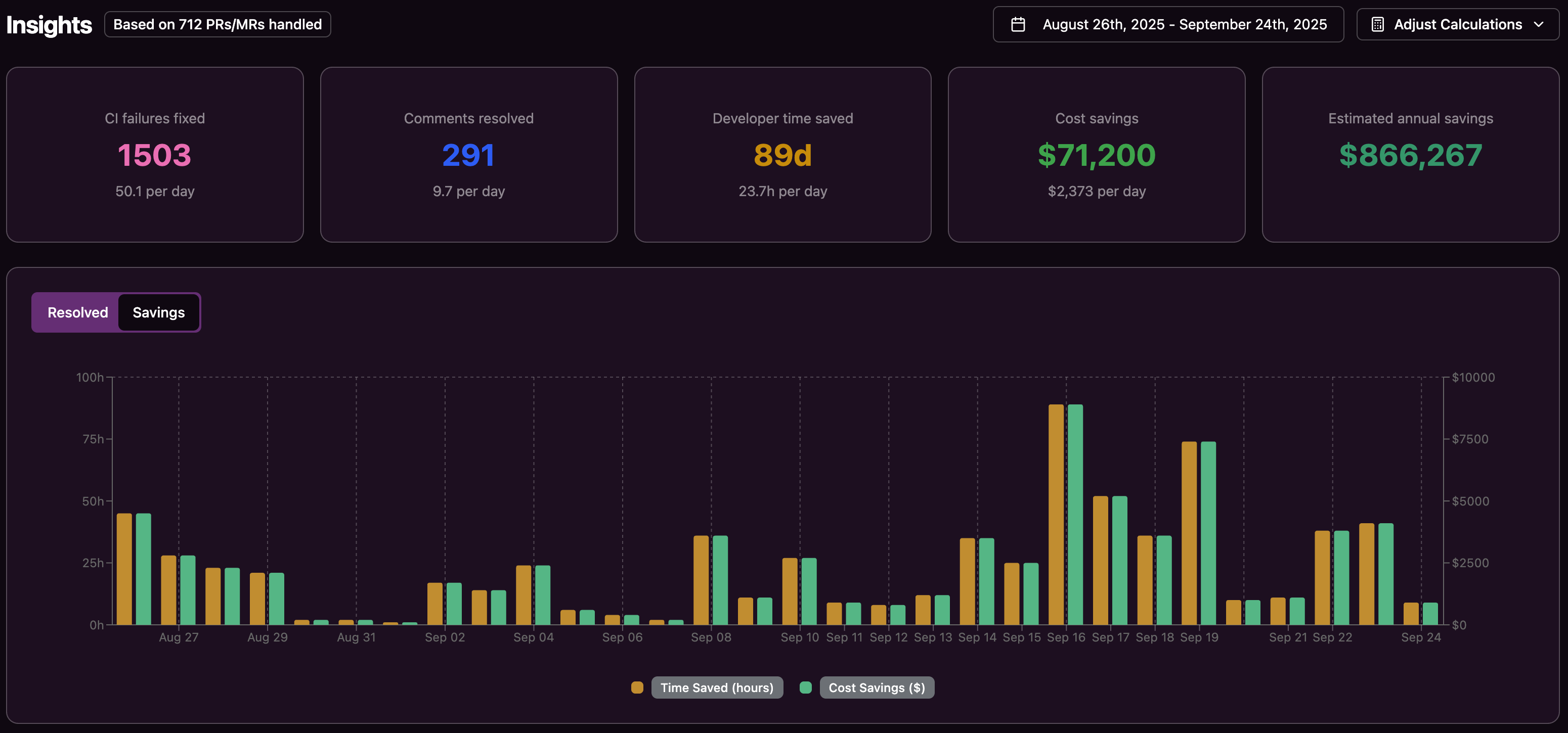
Manual CI repair creates real bottlenecks for modern engineering teams. Each failed pipeline, context switch, and delayed review slows delivery. Autonomous CI repair offers a practical path to reduce this drag by turning pipelines into systems that can address many issues on their own.
Gitar helps teams reclaim developer time, limit interruptions, and keep changes moving steadily from pull request to production. In 2026, teams that adopt CI healing engines can better handle growing code volume, distributed collaboration, and complex environments.
Install Gitar to address CI pipeline bottlenecks and begin automating fixes for broken builds.