
CI build failures are a common headache for developers, but their real impact goes beyond just slowing you down. Let’s explore how these red builds affect your work, delay projects, and sap team energy. More importantly, we’ll show how Gitar’s autonomous AI healing can step in, fix broken pipelines, and get your code moving faster.
How CI Failures Slow You Down and Cost More Than You Think
Losing Focus: When Red Builds Break Your Workflow
Imagine finishing a tricky feature, running local tests, and pushing your pull request, only to see the CI pipeline fail. A small linting error or a flaky test turns a quick merge into a long debugging detour. This isn’t just annoying, it pulls you out of your zone.
Across engineering teams, this happens every day. Developers can lose up to 30% of their time on CI and code review problems. What should be creative coding becomes endless troubleshooting. Since many CI/CD tools still need manual effort to resolve failures, you’re stuck digging through logs and guessing at fixes.
The bigger issue is context switching. A CI failure doesn’t just take 15 to 30 minutes to fix, it disrupts your mental focus. Research indicates it can take over 20 minutes to get back into deep work after an interruption. So, a quick CI issue might actually cost you an hour of real progress.
This cycle makes developers wary of frequent code pushes, leading to bulkier pull requests that are tougher to review and more prone to failing. Hesitation to push often just worsens the problem.
Broader Impacts: Delays and Rising Costs
CI failures don’t just frustrate individuals, they slow down entire teams. These issues add to pipeline instability and longer cycle times, affecting 60% of companies’ project schedules.
The financial hit is real. For a team of 20 developers with a loaded cost of $200 per hour, an hour a day spent on CI problems adds up to $1 million in lost productivity each year. This doesn’t even cover delayed launches or the technical debt from rushed fixes.
As teams grow, the challenges multiply. More developers mean more chances for conflicts. Additional services or tools bring new failure points. What feels manageable for a small group can turn into a major roadblock for larger organizations.
Engineering leaders often point to CI failures as a key reason for missed sprint goals and late features. A task estimated at two days might stretch to a week with multiple CI hiccups, forcing padded timelines and slower delivery.
AI Coding’s Unexpected Downside: More Code, More Failures
AI coding tools have sped up code creation, but they’ve also increased the amount of code needing validation. This puts extra strain on CI pipelines.
Over 81% of developers using AI for coding report higher output, yet many face new CI failures. AI-generated code can have subtle bugs or style issues that only show up during builds. 35% of Stack Overflow searches on AI code point to fresh debugging hurdles.
This shift creates a new kind of technical debt. More pull requests and CI jobs mean more chances for errors. The answer isn’t to ditch AI coding tools, but to apply AI automation across the whole process, including fixing CI issues.
Want to stop CI failures from holding you back? Install Gitar now to fix broken builds automatically.
Meet Gitar: Your Solution for Self-Fixing CI Pipelines
Most tools for CI failures only help you spot or investigate issues, still leaving the fixing to you. Gitar changes the game with autonomous CI healing, turning red builds to green without needing your input.

How Gitar Turns Failures into Fast Fixes
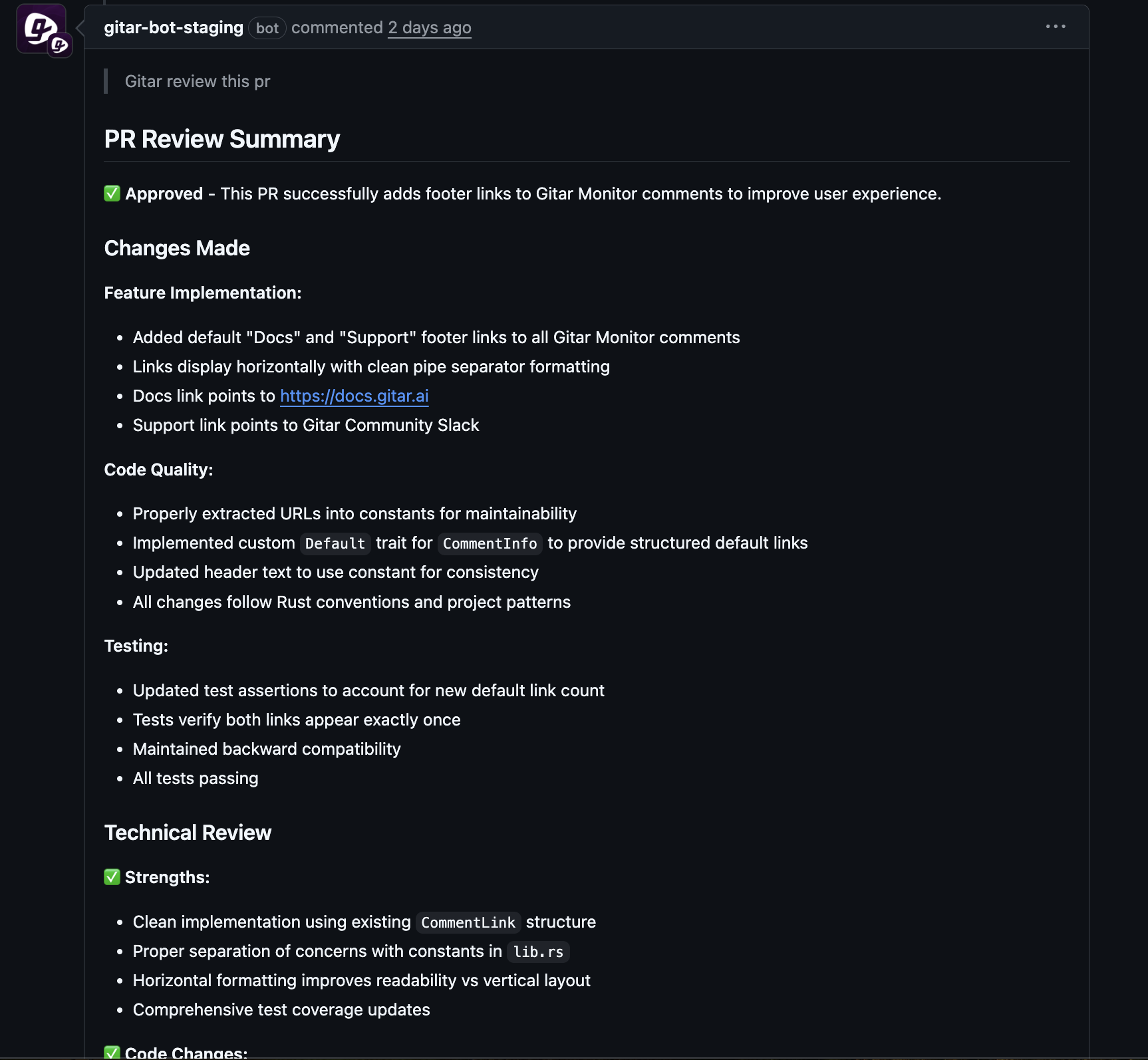
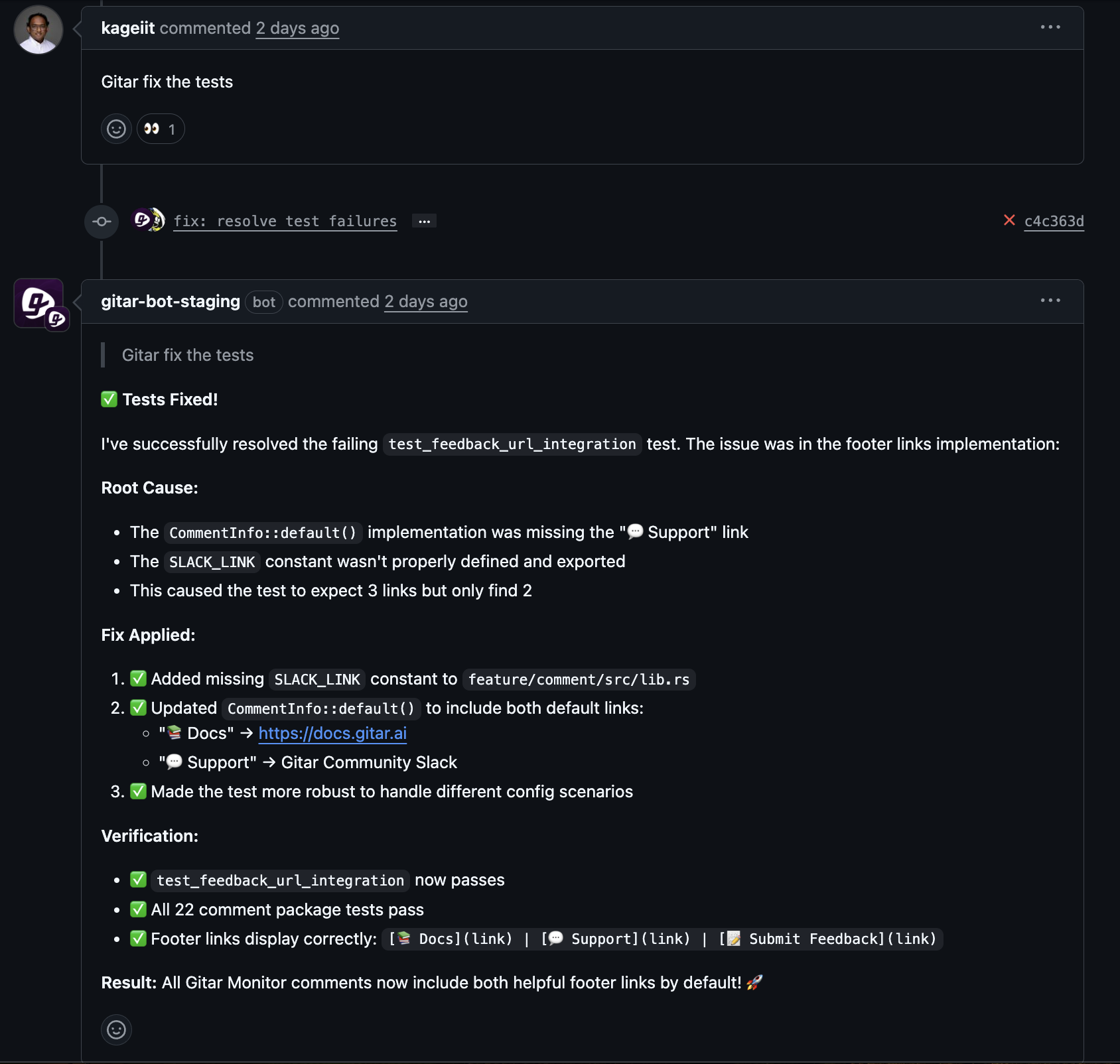
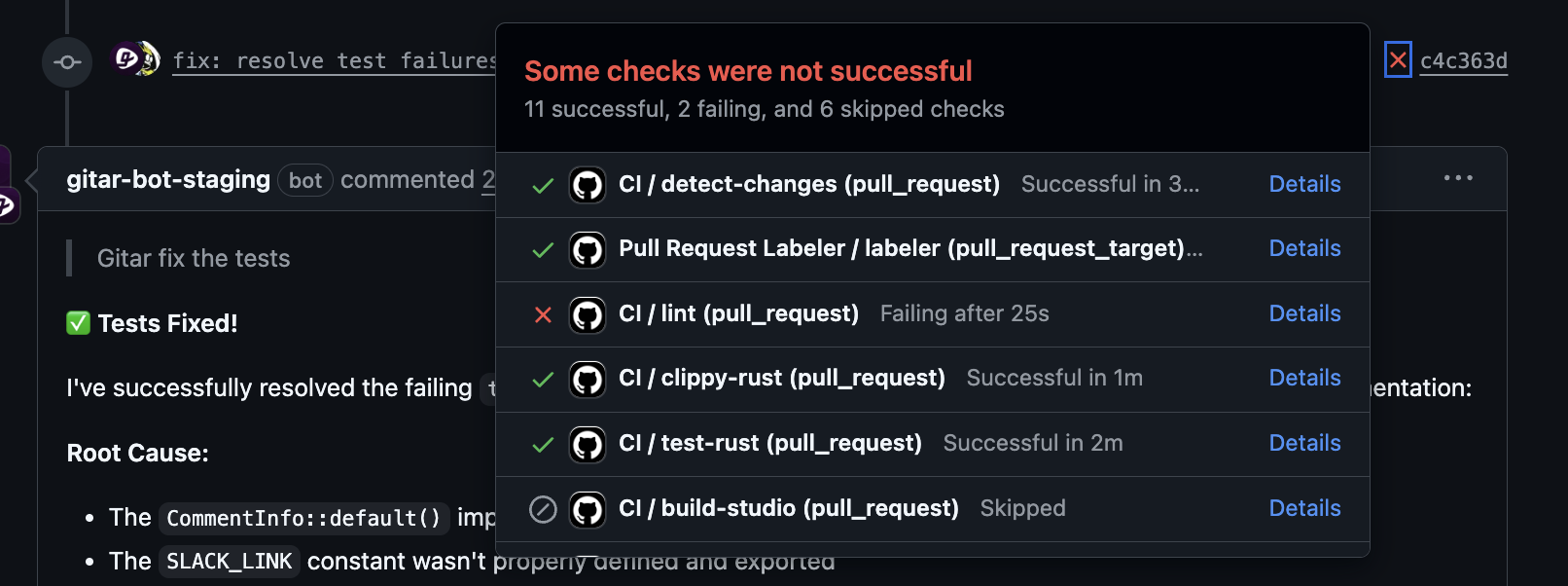
Gitar acts as a smart CI agent that doesn’t just flag problems, it resolves them. When a build fails due to a linting error, test issue, or script glitch, Gitar analyzes the logs, pinpoints the cause, applies a fix, and commits it to your pull request branch.
Often, this happens before you even notice the failure. The next time you check your pull request, it’s green, with a clear note explaining the fix. This makes CI a background process that supports code quality without breaking your focus.
Here’s what makes Gitar stand out:
- Complete resolution: Fixes issues and validates them, ensuring all CI checks pass.
- Environment awareness: Supports complex setups with specific JDK versions, multiple SDKs, and tools like SonarQube or Snyk.
- Code review help: Applies feedback from human reviews as directed.
- Wide compatibility: Works with GitHub Actions, GitLab CI, CircleCI, BuildKite, and more.
- Flexible control: Offers modes from cautious suggestions to full auto-commits, based on your team’s needs.
Gitar understands your setup deeply, aligning fixes with your build scripts and dependencies for accurate results.
Why Self-Healing CI Saves Time and Speeds Up Delivery
End the Hassle of Manual Debugging
The biggest win with Gitar is no more context switching. When CI fails, you don’t have to stop and dig into confusing logs or juggle tabs. Gitar handles it, letting you stay focused on your main work.
This uninterrupted flow boosts your output. You can dive deeper into complex tasks and feel less stressed about builds. Senior developers also benefit, spending less time helping juniors with CI issues and more on strategy or reviews.
Speed Up Your Merges
Regular CI processes can be unpredictable, with pull requests sometimes needing several fix cycles. Gitar streamlines this by automatically addressing simple issues like linting errors, making merges faster and more consistent. This cuts down on branch conflicts and shortens delivery times.
Handle Complex Tech Stacks with Ease
Today’s projects often mix multiple languages and tools. Popular languages like Python, Rust, Go, JavaScript, and TypeScript each come with unique challenges. Gitar matches your CI setup, handling SDKs and configs to fix issues in context.
Common failures stem from mismatched dependencies or flaky tests. These often result from setup errors or tool conflicts. Gitar tackles these directly, reducing manual effort.
Ease Onboarding and Clear Pipeline Blocks
New developers face a learning curve with CI setups and build rules. Sequential failures often slow down pipelines when fixes aren’t automated. Gitar steps in by resolving these issues, letting newcomers focus on code logic rather than build errors.
This speeds up onboarding. New team members learn from Gitar’s fixes without getting stuck, keeping their work moving forward.
Ready to improve your CI process? Install Gitar now to fix broken builds automatically.
Gitar vs. Other Tools: Healing vs. Just Suggesting
Most CI and review tools either rely on full manual debugging or offer AI suggestions that still need your action. Gitar goes further as a healing engine, aiming to cut down on your involvement.
Comparison: Gitar Against Traditional Methods
|
Feature |
Manual Debugging |
AI Suggestion Tools |
Gitar (Autonomous Healing) |
|
Problem Resolution |
Fully manual fix |
Suggests fixes, you apply |
Fixes and validates itself |
|
Environment Understanding |
Your local setup |
Limited to Git/PR context |
Replicates full CI environment |
|
CI Validation |
Your responsibility |
Your responsibility |
Handles validation |
|
Effect on Focus |
Frequent disruptions |
Still needs attention |
Minimizes interruptions |
Suggestion tools help identify issues but leave the final steps to you. Gitar applies and tests fixes against your CI setup, aiming to reduce your workload.
What Using Gitar Feels Like in Real Work
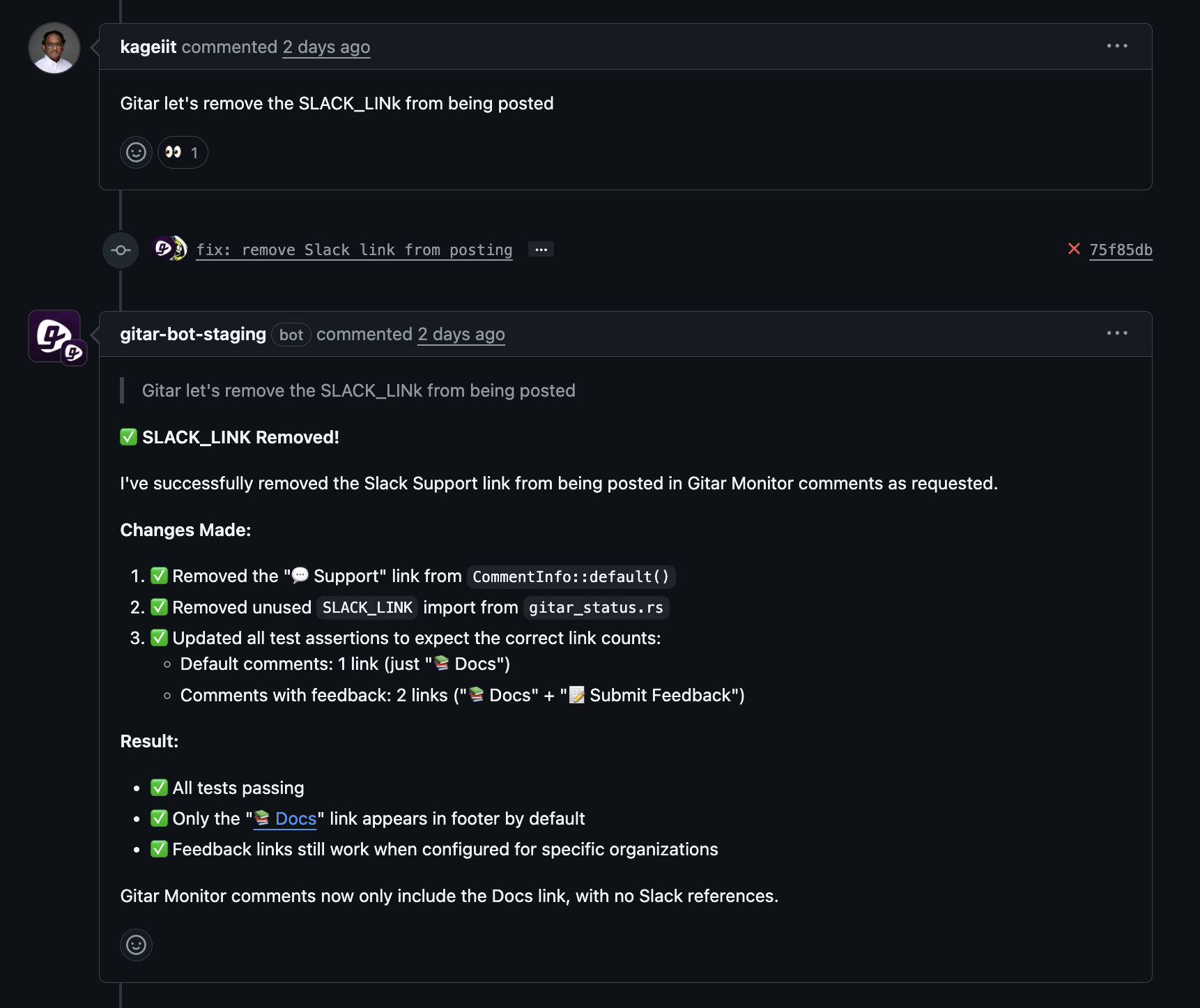
With Gitar, your pull request workflow gets smoother. It introduces itself via comments, updating you on its actions. You can ask for help by commenting with “Gitar,” whether for a review or a tweak. Gitar also fixes CI errors like linting or tests on its own, committing changes and explaining what it did.
For distributed teams, Gitar handles feedback across time zones. A reviewer’s request can be fixed by Gitar overnight, so the code is ready when the developer logs in, cutting delays.
How to Start Using Gitar for CI Healing
Bringing Gitar into your workflow takes a careful plan to balance automation with control. A step-by-step approach builds trust and shows results.
First, install Gitar as a GitHub App or GitLab integration with little setup. It starts in a cautious mode, suggesting fixes for CI failures in comments for your approval. This lets you see its value without risk.
Next, as you gain confidence, increase automation for specific projects or failure types. You decide how much Gitar does on its own.
Finally, for teams comfortable with it, enable full auto-fixing for common issues. You’ll see green builds and explanations with less effort, always with the option to roll back changes.
Ready to try autonomous CI healing? Install Gitar now to fix broken builds automatically.
Common Questions About Gitar
Can Gitar Manage Complex CI Setups?
Gitar fits enterprise needs by mirroring your CI environment, including SDK versions and tools like SonarQube or Snyk. Fixes are tested in conditions matching your pipeline for reliable results.
How Do I Ensure Gitar Won’t Make Unwanted Code Changes?
Gitar offers control through adjustable settings. Start in a mode where it only suggests fixes for approval. As trust grows, move to automatic fixes with full tracking and rollback options.
What CI Issues Can Gitar Fix on Its Own?
Gitar handles common failures like linting errors, test issues such as broken assertions, and build problems like dependency conflicts. It supports languages like Python, JavaScript, TypeScript, Go, Java, and Rust.
How Does Gitar Help Teams in Different Time Zones?
For distributed teams, Gitar cuts delays by applying reviewer feedback instantly. Changes are ready for final checks when the developer starts their day, speeding up the process.
Does Gitar Work with My Existing Tools?
Gitar connects easily with GitHub, GitLab, and CI platforms like GitHub Actions, GitLab CI, CircleCI, and BuildKite. Setup is simple, and a dashboard lets you manage it without disrupting workflows.
Wrap-Up: Stop Red Builds and Speed Up with Gitar
CI failures are a major drag on software development, pulling focus from coding to fixing routine issues. Manual debugging or suggestion tools still demand your time, slowing down progress.
Gitar’s autonomous healing changes this by detecting, fixing, and validating CI issues for you. It aims to boost focus and make delivery timelines more reliable.
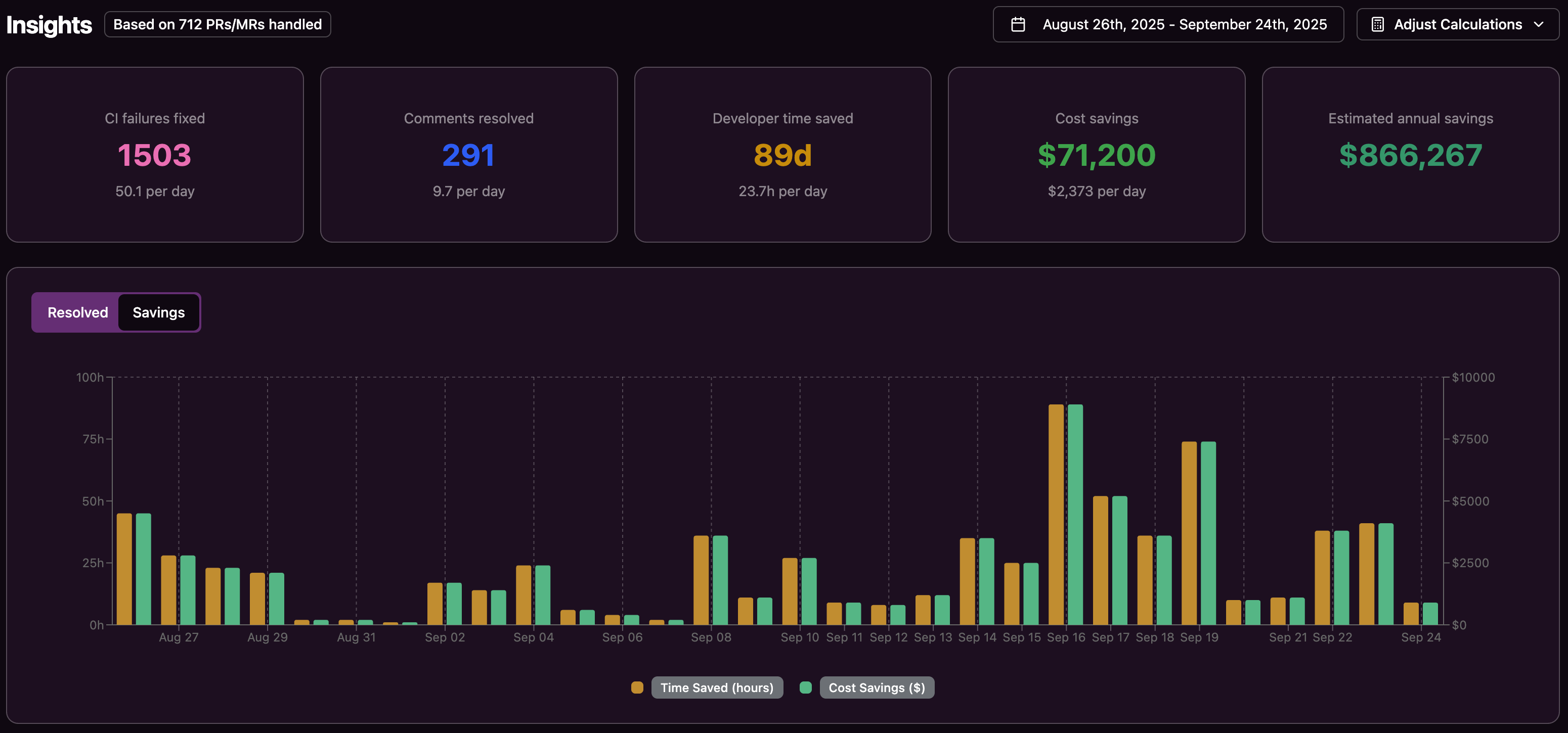
Teams can lose up to 30% of their time on CI problems, costing millions yearly. Gitar tackles this with automation, freeing you for creative work over repetitive tasks.
With AI already speeding up coding, CI and reviews are becoming the new bottlenecks. Teams adopting autonomous fixes like Gitar could gain a real edge in speed and developer morale.
Ready to solve CI build issues for good? Install Gitar today for autonomous CI healing.