
Written by: Ali-Reza Adl-Tabatabai, Founder and CEO, Gitar
Key Takeaways
- AI code generation increased PR merge rates 98% YoY, but review times rose 91%, so sprint velocity remains flat despite 3-5x faster coding.
- Bitbucket native automations like CODEOWNERS, Pipelines, and merge checks save 6-9 hours weekly per team with about 45 minutes of setup.
- Gitar’s healing engine auto-fixes CI failures, applies reviewer feedback via @gitar commands, and delivers verified green builds instead of only comments.
- Teams reach 10x faster reviews with Gitar, cutting CI and review time from 1 hour per developer per day to 15 minutes and reducing failed reruns by 60%.
- Transform your Bitbucket code reviews today by enabling automatic fixes with Gitar to ship higher quality software faster.
Bitbucket Automations That Create a Strong Foundation
Bitbucket provides several built-in features that establish baseline automation for code reviews. These foundational tools create the necessary structure, including automated reviewer assignment, quality gates, and standardized workflows that advanced AI solutions depend on to work effectively.
Essential Bitbucket Automation Checklist:
- Add CODEOWNERS file – Place a .github/CODEOWNERS or .bitbucket/CODEOWNERS file in your repository root to automatically assign reviewers based on file paths.
- Configure Pipelines YAML for scans – Set up bitbucket-pipelines.yml with automated testing, linting, and security scans that run on every push.
- Set merge checks – Enable branch permissions that require successful builds and approvals before merging.
- Create PR templates – Use .bitbucket/pull_request_template.md to standardize PR descriptions and checklists.
These four features deliver strong returns on minimal time investment, as shown in the following breakdown:
|
Feature |
Setup Time |
Time Saved Weekly |
|
CODEOWNERS |
15 minutes |
2-3 hours |
|
Merge Checks |
10 minutes |
1-2 hours |
|
PR Templates |
20 minutes |
3-4 hours |
AI Code Review Agents and Their Limits
AI code review tools promise faster reviews but most deliver only suggestions without fixes. CodeRabbit supports GitHub and GitLab with line-by-line comments and severity rankings.
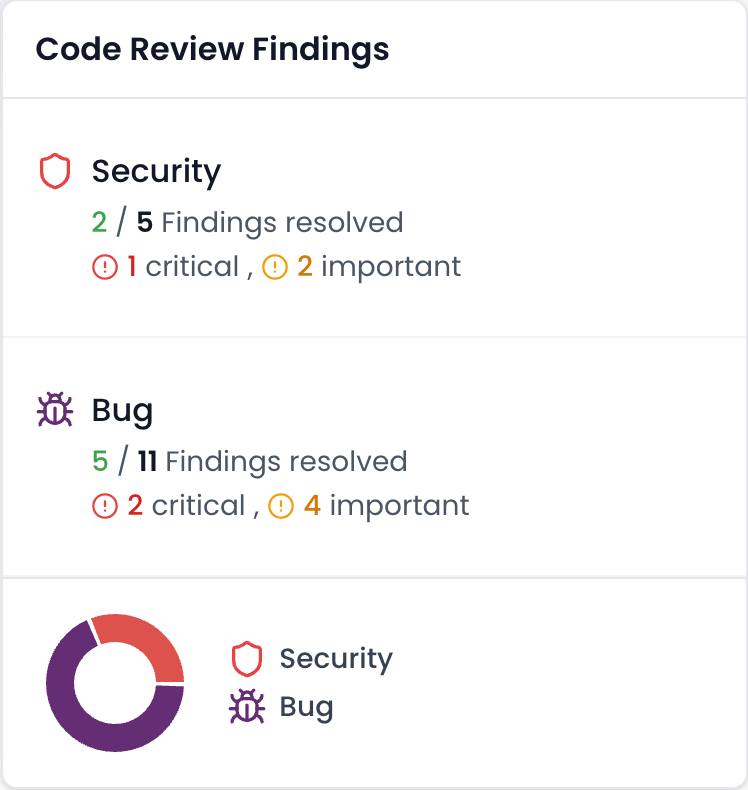
The critical limitation is clear: these tools analyze and suggest but do not validate fixes against CI. Gitar’s CI failure analysis automatically analyzes failures and provides insights in the dashboard comment, updating dynamically with new commits. Gitar’s healing engine then implements fixes and validates them in your actual CI environment. See the Gitar documentation for details.
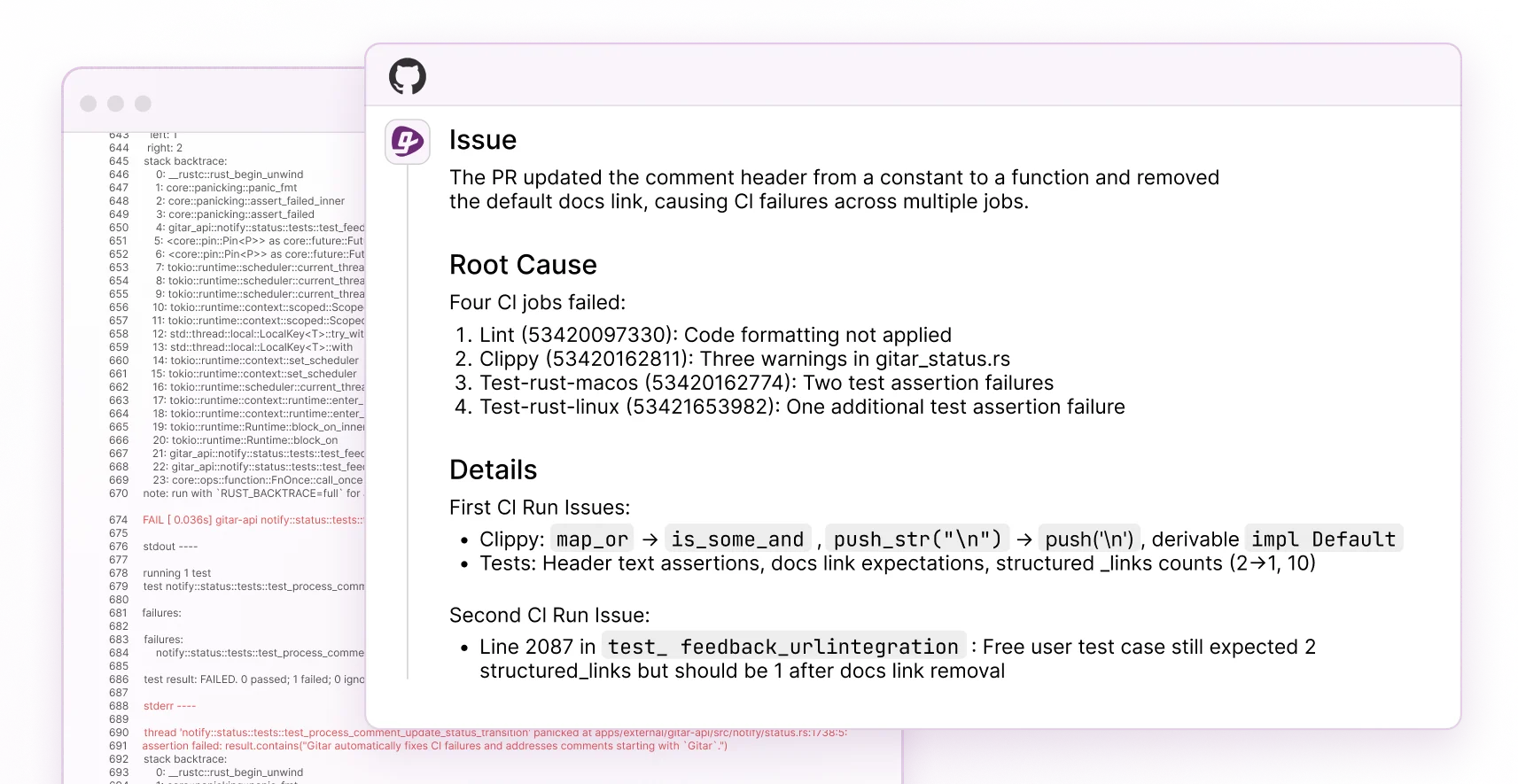
Gitar uses a single dashboard comment that consolidates high-value insights, stays updated in real time, and minimizes noise, while many competitors scatter inline comments across diffs.
Streamline Reviewers and Quality Gates
Beyond AI-powered analysis, effective review automation also requires strategic reviewer assignment and quality enforcement to ensure the right people see the right PRs at the right time. Effective review automation requires strategic reviewer assignment and quality enforcement. Start by distributing reviews efficiently through reviewer groups and load balancing based on expertise and availability.
Then layer in quality gates. Integrate CI/CD insights from tools like SonarQube and Snyk to block merges on critical findings. Enforce green CI requirements to prevent broken builds from reaching production. Add Jira-linked checks to verify PRs address their intended ticket requirements before approval.
Together, these controls ensure the right people review the right code, and only quality-verified changes move forward.
Gitar: Auto-Fix Code Reviews in Minutes
Gitar transforms code reviews from suggestion-driven to fix-driven workflows. Follow this implementation to enable automatic CI failure resolution and review feedback implementation.
Step 1: Install Gitar App
Visit https://gitar.ai/ and start your 14-day Team Plan trial. Connect your GitHub or GitLab workspace.
Step 2: Add to Repository
Navigate to your repository settings and enable Gitar integration. Grant necessary permissions for PR access and CI pipeline integration. Refer to the Gitar documentation for detailed setup instructions.
Step 3: Configure CI Integration
Configure Gitar for your CI system (GitHub Actions, GitLab CI, CircleCI, Buildkite). See CI integration docs.
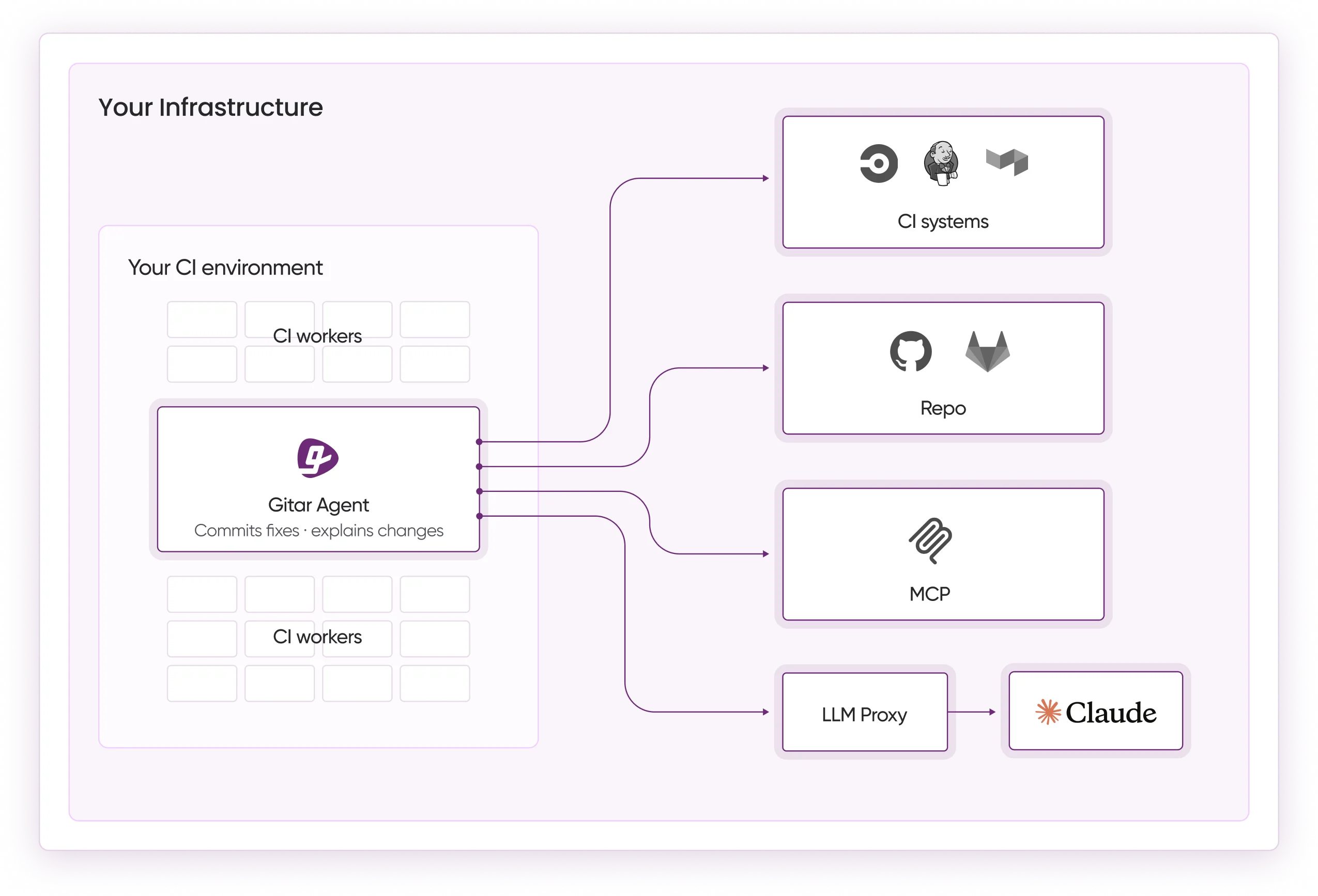
Step 4: Enable Auto-Fix and Healing
In Gitar settings, configure auto-fix preferences. Start with lint errors and test failures, then expand to build issues as confidence grows. Details in auto-fix configuration.
Step 5: Activate @gitar Feedback Implementation
Enable the feature that allows reviewers to comment “@gitar refactor this to use async/await” and have Gitar implement changes automatically. Learn more at feedback implementation docs.
Step 6: Test on Sample PR
Create a test PR with intentional lint errors or failing tests. Watch Gitar analyze failures, implement fixes, and update the dashboard comment with results.
Step 7: Go Live
Enable configurable PR merge blocking based on code review verdict severity and begin using Gitar across all active PRs.
ROI: 10x Faster Reviews with Gitar
Building on the baseline improvements mentioned earlier, AI code review tools provide 30-40% cycle time improvements for pull requests under 500 lines. Gitar’s auto-fix capabilities deliver stronger results by removing manual implementation cycles entirely.
The following metrics demonstrate the concrete time and cost savings teams achieve:
|
Metric |
Before Gitar |
After Gitar |
Annual Savings |
|
Time on CI/review issues |
1 hour/day/dev |
15 min/day/dev |
$750K for 20-dev team |
|
Context switching interrupts |
Multiple/day |
Near-zero |
25% productivity gain |
|
Failed CI reruns |
3-5 per PR |
0-1 per PR |
60% CI cost reduction |
Customer testimonials highlight Gitar’s impact. Tigris team noted PR summaries are “more concise than Greptile/Bugbot,” while Collate’s engineering lead emphasized the value of “unrelated PR failure detection” for distinguishing infrastructure issues from code bugs.
Gitar vs Other Code Review Tools
The code review tool market divides between suggestion engines and healing engines. The critical difference appears in four capabilities that determine whether a tool merely identifies problems or actually solves them:
|
Capability |
CodeRabbit/Qodo/Rovo |
Gitar |
|
Auto-fix CI failures |
Partial/Limited |
Yes |
|
Validate fixes against CI |
Partial/Limited |
Yes |
|
Single updating comment |
No |
Yes |
|
Guarantee green builds |
No |
Yes |
Gitar’s healing engine validates fixes actually work, while many competing tools still leave implementation and verification to developers. See the full Gitar documentation for feature details.
Custom Workflows with Natural Language Rules
Gitar allows defining custom checks and automations in natural language through .gitar/rules/*.md files. Example security workflow:
This approach replaces complex YAML configurations with readable markdown rules. Teams gain sophisticated automation workflows that adapt to their specific requirements while staying easy to maintain.
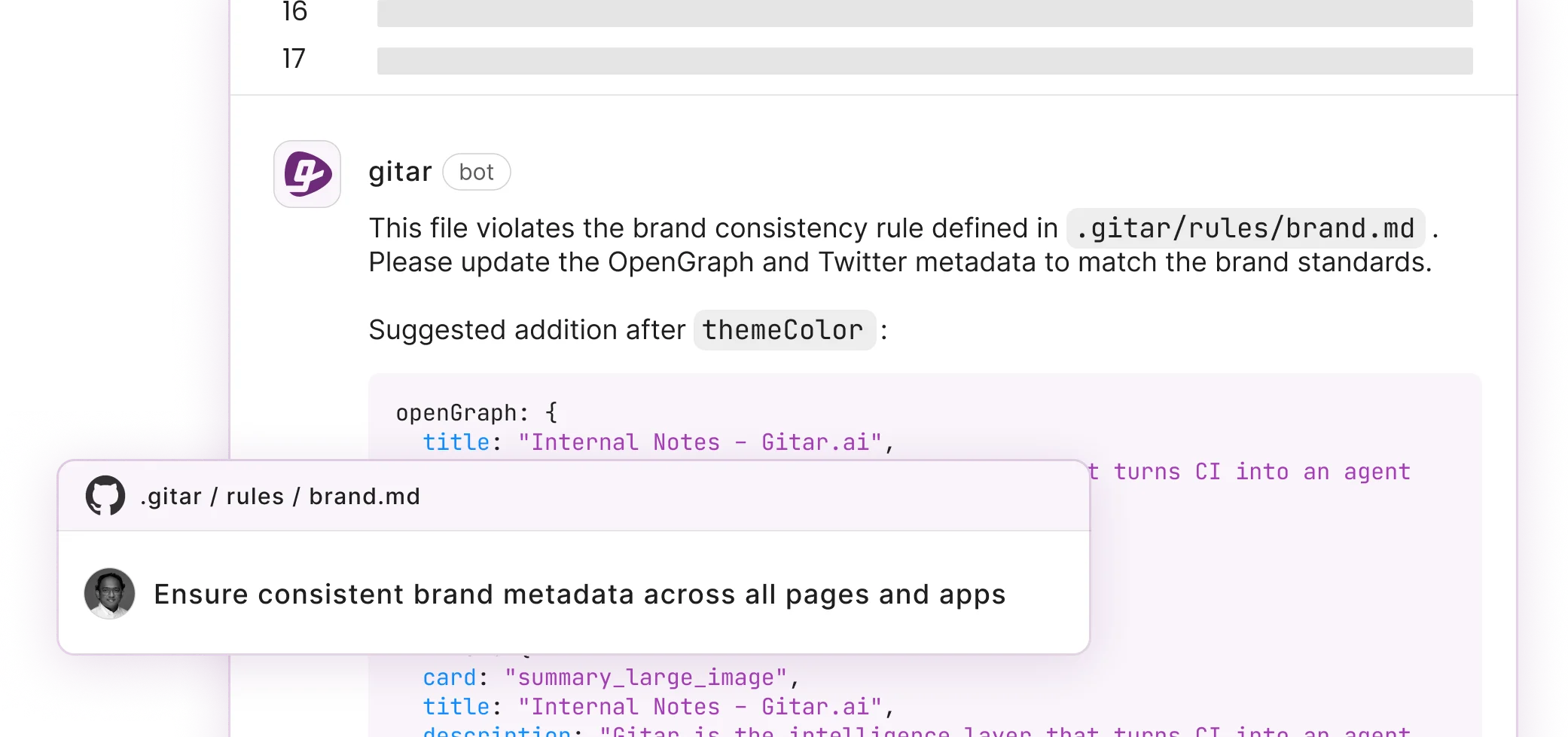
Define your team’s custom rules in plain English—start your Gitar trial today.
FAQ
How does Atlassian’s Rovo compare to Gitar?
Rovo provides AI-powered code generation, creating draft PRs with implementations for review. Gitar goes further by automatically implementing fixes, validating them against CI, and delivering green builds. While Rovo accelerates development through generated code, Gitar removes review cycles by resolving issues before human reviewers see them.
Is auto-commit safe for production repositories?
Gitar’s auto-commit feature is fully configurable with multiple safety layers. Teams can start in suggestion mode where every fix requires approval, then gradually enable auto-commit for specific failure types like lint errors or test fixes. The system validates all fixes against your actual CI environment before committing, ensuring changes work in your specific setup. Enterprise deployments run the agent inside your own CI pipeline with access to your secrets and configurations, maintaining complete control over the automation level.
Can Gitar handle complex CI environments?
Gitar excels with complex CI setups by emulating your full environment, including specific SDK versions, multi-dependency builds, and third-party integrations. The platform maintains context from PR creation to merge, understanding your team’s patterns and infrastructure requirements. Unlike tools that analyze code in isolation, Gitar’s agent architecture handles real-time events like force pushes, concurrent operations, and pipeline state changes while maintaining consistency across your development workflow.
How quickly can teams set up Gitar automation?
Gitar integration takes minutes. The setup process involves installing the app, adding repository permissions, configuring CI integration, and enabling auto-fix preferences. Most teams see immediate results on their next PR, with full automation capabilities active within the first day. The 14-day trial provides complete access to test all features before committing to a paid plan.
What’s the difference between AI code review and AI healing?
AI code review tools analyze pull requests and provide suggestions through comments, requiring developers to manually implement changes and hope they work. AI healing engines like Gitar automatically implement fixes, validate them against CI, and commit working solutions.
The distinction matters for ROI: suggestion tools reduce analysis time but maintain implementation overhead, while healing engines eliminate entire review cycles by resolving issues autonomously. Teams using healing engines report 70% faster review cycles compared to 30-40% improvements from suggestion-focused tools.
The opening problem is clear: AI code generation increased PR volume 98% YoY, but review times spiked 91%, creating a bottleneck that cancels out coding speed gains. Tools that only comment on code cannot solve this because they add analysis without removing implementation work.
Gitar breaks the bottleneck by transforming reviews from suggestion-driven to fix-driven workflows, automatically implementing fixes, validating them against CI, and delivering green builds. The review time spike mentioned earlier will not resolve through incremental tweaks to existing processes. Teams need a shift from commentary to verified fixes. Make the shift to fix-driven reviews—try Gitar free for 14 days.