
Written by: Ali-Reza Adl-Tabatabai, Founder and CEO, Gitar
Key Takeaways
- Top vibe coding color schemes like Tokyo Night, Catppuccin, and Aurora Borealis reduce eye strain in VSCode, Cursor, and IntelliJ using the 60-30-10 color rule.
- Dark themes lead 2026 with deep backgrounds, readable secondary text, and vibrant accents that support visual hierarchy during AI-assisted coding.
- Quick 3-color stacks like Calm (#0f0f23), Sleek (#0B1426), and Mint (#2c2f2c) give fast productivity gains across modern dev tools.
- Popular themes reach millions of installs and include features like bracket colorization and WCAG compliance for long sessions.
- Pair eye-friendly themes with Gitar’s auto-fix CI healing to remove build bottlenecks and keep your coding flow smooth.
Why Vibe Coding Color Schemes Matter for Modern Dev Tools in 2026
Developers report eye strain from dark mode marathons during AI-assisted UI prototyping sessions in Cursor and v0. This strain problem has driven massive adoption of eye-friendly themes like Night Owl, which has become one of the most popular options for extended coding sessions. Developer focus statistics show 84% AI adoption rates and a 91% increase in PR review time, so developers now spend more continuous hours staring at code than ever. To handle these longer sessions, evaluate color schemes through your real workflows, preview compatibility across tools, and test how themes interact with automated code review overlays.
Quick 3-Color Vibe Stacks for Fast Theme Tweaks
These GitKraken and Reddit-trending color trios follow the 60-30-10 principle for immediate visual improvement. Use these stacks when you want to customize an existing theme instead of installing a full theme package. They give you a clear palette for background, text, and accent colors that you can adjust manually in your editor settings.
| Vibe | Dominant (60%) | Secondary (30%) | Accent (10%) |
|---|---|---|---|
| Calm | #0f0f23 | #a8b0d2 | #ff6b9d |
| Sleek | #0B1426 | #64FFDA | #B388FF |
| Mint | #2c2f2c | #98fb98 | #00ff7f |
| Cosmic | #1a0b2e | #4c956c | #d94d9a |
| Arctic | #0b0f1c | #00f5d5 | #8a2be2 |
Top 10 Vibe Coding Color Schemes for Modern Dev Tool UIs
#1 Tokyo Night
Tokyo Night delivers one of the cleanest modern dark designs with balanced contrast and a restrained color palette, earning a 5/5 rating and 2,620,552 installs on the VSCode Marketplace. The 60-30-10 breakdown uses deep navy (#1a1b26) as the dominant background, soft blue-grays (#a9b1d6) for secondary text, and vibrant cyan (#7dcfff) accents. Install it through the VSCode Extensions marketplace, then import JSON settings for Cursor compatibility.
| Color | Hex | Use |
|---|---|---|
| Background | #1a1b26 | 60% dominant |
| Foreground | #a9b1d6 | 30% secondary |
| Accent | #7dcfff | 10% highlights |
#2 Catppuccin
Catppuccin provides soothing pastel tones in four flavors from light to dark and has quickly gained popularity with 1,145,019 installs and a perfect 5/5 rating. The Mocha variant uses charcoal (#1e1e2e) backgrounds, lavender (#cba6f7) text, and peach (#fab387) accents. You can use it across VSCode, Cursor, and IntelliJ with consistent theming.
| Color | Hex | Use |
|---|---|---|
| Base | #1e1e2e | 60% dominant |
| Text | #cba6f7 | 30% secondary |
| Peach | #fab387 | 10% accent |
#3 Aurora Borealis
Aurora Borealis features a deep Arctic Night background (#0B1426) with vibrant Aurora Green (#64FFDA) and Mystical Purple (#B388FF) accents, creating an energetic, alive vibe with high-contrast harmony for focus. The theme includes elegant bracket pair colorization that uses aurora gradients in both Cursor and VSCode, which helps you track nested code structures during rapid AI-assisted development.
| Color | Hex | Use |
|---|---|---|
| Arctic Night | #0B1426 | 60% dominant |
| Aurora Green | #64FFDA | 30% secondary |
| Mystical Purple | #B388FF | 10% accent |
#4 Dracula Official
Dracula features an intuitive UI with high contrast colors for easier reading, Dark and Darker options, and over 6.6 million installs on the VSCode marketplace. The classic purple-pink palette uses dark purple (#282a36) backgrounds, light foreground (#f8f8f2), and hot pink (#ff79c6) accents for a stable, cross-platform experience.
| Color | Hex | Use |
|---|---|---|
| Background | #282a36 | 60% dominant |
| Foreground | #f8f8f2 | 30% secondary |
| Pink | #ff79c6 | 10% accent |
#5 Maroza Zen Pro
Maroza Zen Pro features warm, muted colors tuned for eye health, balanced contrast for long coding sessions, and reduced cognitive load through clear visual hierarchy. Released January 7, 2026, this variant focuses on extended session comfort with carefully calibrated contrast ratios.
| Color | Hex | Use |
|---|---|---|
| Warm Base | #2d2a2e | 60% dominant |
| Muted Text | #fcfcfa | 30% secondary |
| Zen Accent | #a9dc76 | 10% highlights |
#6 Night Owl
Night Owl is tuned for late-night coding with careful contrast and token colors that remain readable during extended sessions, earning a 4.9/5 rating and 3,448,480 installs. The theme uses deep blue (#011627) backgrounds with calibrated syntax highlighting that reduces eye strain during marathon coding sessions.
| Color | Hex | Use |
|---|---|---|
| Deep Blue | #011627 | 60% dominant |
| Light Text | #d6deeb | 30% secondary |
| Cyan | #80cbc4 | 10% accent |
#7 Shades of Purple
Shades of Purple offers bold purple shades, is open source, and has over 1.7 million installs on the VSCode marketplace. The expressive purple-first design provides strong contrast and colorful syntax highlighting beyond default dark themes. You can pair this visual boost with Gitar’s CI auto-fix engine to keep your builds healthy while you enjoy the vivid palette.
| Color | Hex | Use |
|---|---|---|
| Purple Base | #2d2b55 | 60% dominant |
| Light Purple | #a599e9 | 30% secondary |
| Bright Purple | #ff9800 | 10% accent |
#8 Charcoal Mint
Charcoal Mint combines eye-friendly charcoal backgrounds (#2c2f2c, #262826) with refreshing mint greens: Fresh Mint (#98fb98) primary accents, Sea Foam (#9fe2bf) secondary, Spearmint (#00ff7f) constants. The theme evokes calm, growth-associated vibes for reduced eye strain and steady productivity, with WCAG AA compliance for accessibility.
| Color | Hex | Use |
|---|---|---|
| Charcoal | #2c2f2c | 60% dominant |
| Fresh Mint | #98fb98 | 30% secondary |
| Spearmint | #00ff7f | 10% accent |
#9 Cosmic Nebula
Cosmic Nebula provides a dramatic cosmic vibe with deep-space purple gradient backgrounds (#1a0b2e primary to #0f061e tertiary), Cosmic Green (#4c956c) for strings, and Stellar Blue (#5e60ce) for functions. The theme supports semantic highlighting and bracket colorization that help maintain developer flow in both Cursor and VSCode.
| Color | Hex | Use |
|---|---|---|
| Deep Space | #1a0b2e | 60% dominant |
| Cosmic Green | #4c956c | 30% secondary |
| Nebula Pink | #d94d9a | 10% accent |
#10 GitHub Theme
GitHub Theme has 11 million installs on the VSCode marketplace, mimics the GitHub UI, is open source, and offers Dark, Light, and Color Blind options. The familiar interface keeps your editor and GitHub UI visually aligned, which reduces context switching during code review workflows.
| Color | Hex | Use |
|---|---|---|
| GitHub Dark | #0d1117 | 60% dominant |
| Gray Text | #c9d1d9 | 30% secondary |
| Blue Link | #58a6ff | 10% accent |
Now that you have a shortlist of themes that match your coding style and environment, you can install them across your main editors.
Step-by-Step Theme Installation for VSCode, Cursor & IntelliJ
VSCode: Open Extensions (Ctrl+Shift+X), search the theme name, and click Install. You can also download JSON settings from theme repositories and import them through File > Preferences > Color Theme.
Cursor: Open Settings > Themes, import VSCode-compatible themes, or use the built-in theme marketplace. Most VSCode themes work smoothly with Cursor’s interface.
IntelliJ: Go to File > Settings > Appearance & Behavior > Appearance, choose a theme from the dropdown, or install plugins from JetBrains Marketplace for options like Dracula or Material themes.
Test each theme in your typical AI workflow environments. Confirm that syntax highlighting works with your primary languages and that inline comments from automated code review tools stay readable. Once your visual setup feels stable for long sessions, the next productivity limit usually comes from build failures and code quality issues.
Boost Productivity with Gitar in Your Vibe Setup
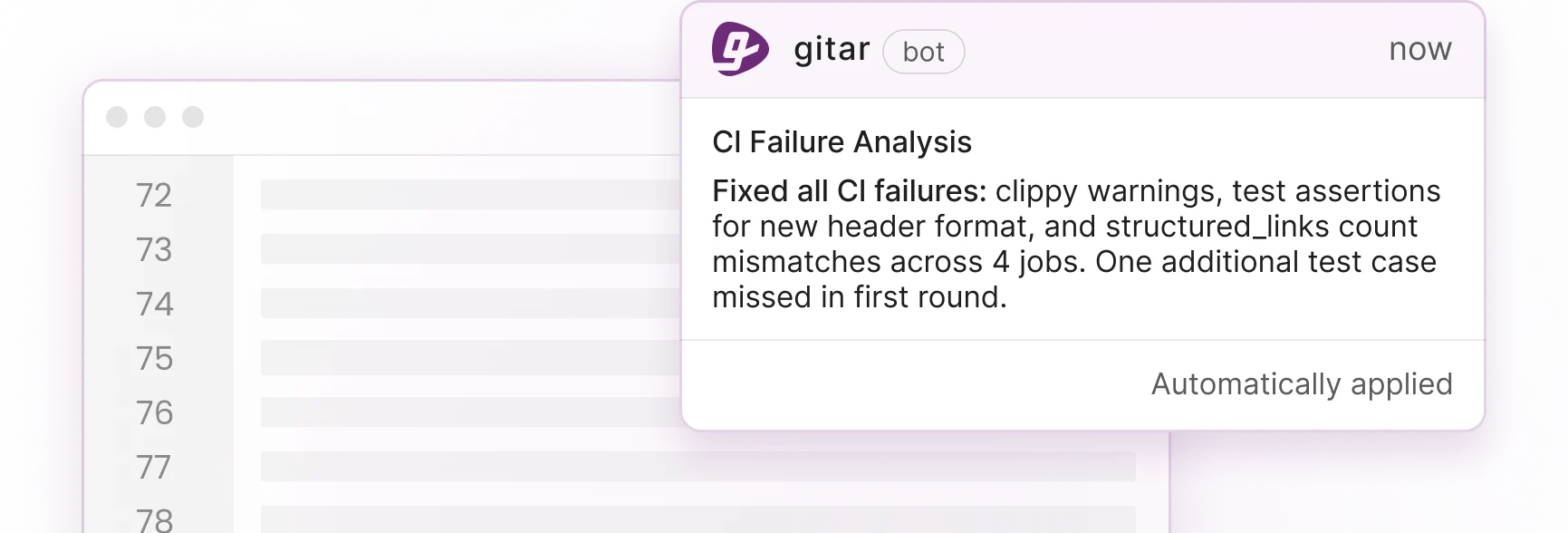
Eye-friendly themes solve the visual strain problem, but CI failures still slow AI-generated code workflows. Gitar’s healing engine automatically fixes broken builds, while suggestion-only competitors stop at comments. To compare tools like Gitar, CodeRabbit, and Greptile, focus on how each one handles implementation, validation, and cost.
| Capability | CodeRabbit/Greptile | Gitar |
|---|---|---|
| Auto-apply fixes | No | Yes (Trial/Team) |
| CI auto-fix | No | Yes |
| Green builds | No | Guaranteed |
| Price | $15-30/dev | 14-day trial |
The key difference is simple: suggestion-only tools leave implementation work to you, while Gitar applies and validates fixes automatically. Gitar keeps your CI green while you focus on writing vibey code in your perfectly themed environment. See the Gitar documentation for setup details.
Conclusion: Pair Visual Comfort with Automated CI Healing
The strongest vibe coding color schemes for 2026 combine eye-friendly palettes with layouts that support focus and flow. Tokyo Night, Catppuccin, and Aurora Borealis stand out for modern dev tools, yet themes alone cannot remove CI bottlenecks in AI-heavy workflows. Complete your productivity stack with Gitar’s auto-fix engine so broken builds resolve in the background while you keep shipping higher quality software.
FAQ
What makes a color scheme good for vibe coding in 2026?
Effective vibe coding color schemes follow the 60-30-10 rule and use contrast ratios that reduce eye strain during extended AI-assisted coding sessions. Strong themes rely on deep, muted backgrounds (60%), readable secondary text colors (30%), and vibrant but controlled accent colors (10%) for syntax highlighting. Modern schemes like Tokyo Night and Catppuccin also respect WCAG accessibility standards while keeping an aesthetic that keeps developers engaged during long coding marathons.
How do I choose between dark and light themes for extended coding sessions?
Dark themes usually work better for extended coding sessions in low-light environments because they reduce blue light exposure and eye strain. Your choice still depends on your workspace and personal preference. Dark themes like Night Owl and Dracula shine for late-night coding, while light variants such as Catppuccin Latte can feel better in bright offices. Focus on consistent contrast ratios and avoid pure black or pure white backgrounds, which can cause fatigue.
Can I use the same color scheme across VSCode, Cursor, and IntelliJ?
Most popular themes like Dracula, Tokyo Night, and Catppuccin offer ports across multiple editors, which keeps your visual experience consistent. VSCode themes often work directly in Cursor because of compatibility, while IntelliJ needs specific ports or plugins. The color palettes stay similar, although syntax highlighting and UI elements can vary slightly between editors. For the smoothest setup, choose themes that officially support every tool you use.
What is the difference between suggestion-based and auto-fix code review tools?
Suggestion-based tools such as CodeRabbit and Greptile analyze code and leave comments with recommended fixes, but developers must implement these suggestions manually and then hope they pass CI. Auto-fix tools like Gitar go further by applying fixes, validating them against CI, and ensuring green builds. This approach removes manual rework and uncertainty, which matters most when you handle AI-generated code that changes often and needs frequent testing.
How do modern color schemes integrate with AI coding workflows?
Modern color schemes support the increased code volume from AI tools like Cursor and v0. They use clear visual hierarchy to separate AI-generated code from human-written code, provide consistent syntax highlighting across many file types, and lower cognitive load during rapid context switching. The strongest themes also keep automated code review comments readable against the palette, so suggestions stay visible without adding visual noise.