
Key Takeaways
- AI now produces a large share of new code, so CI and code review have become the main constraints on delivery speed.
- Self-healing CI uses autonomous agents to diagnose, fix, and validate issues inside pipelines, not just flag them.
- Healing engines extend beyond suggestion tools by closing the full loop from detection to green builds and merged code.
- Gitar helps teams cut context switching, shorten time-to-merge, and reduce CI-related costs while preserving quality standards.
- Teams can adopt autonomous fixes gradually and start improving delivery speed today with Gitar’s self-healing CI.
The New Reality of Code Delivery: Why Speed Matters More Than Ever in 2026
AI-driven development in 2026 has shifted the bottleneck from writing code to validating and merging it. Developers now lose significant time to failed builds and slow reviews, and delays in delivery reduce the impact of new features on the business.
AI is now responsible for a large share of new code across many engineering teams. This acceleration increases PR volume and error surface area, which quickly overloads traditional CI and review workflows.
Elite engineering organizations already demonstrate short Cycle Times, frequent deploys, and high merge throughput. These benchmarks set expectations for teams that want both speed and reliability.
AI-generated PRs in many organizations now wait longer for review than human-only PRs. The constraint has effectively moved downstream, from coding to validation, creating a right-shift bottleneck that blocks the value of AI-assisted development.
Teams that want to reduce these delays can start by using Gitar to automatically fix broken builds and keep work flowing.
Beyond Traditional CI/CD: Understanding the Healing Engine Paradigm
Modern CI/CD stacks evolved from simpler pipelines that handled modest code volume. That earlier tooling now strains under rapid AI-generated changes and complex enterprise environments. Current development environments focus strongly on IDE performance and coding speed, but this focus often stops before CI and review.
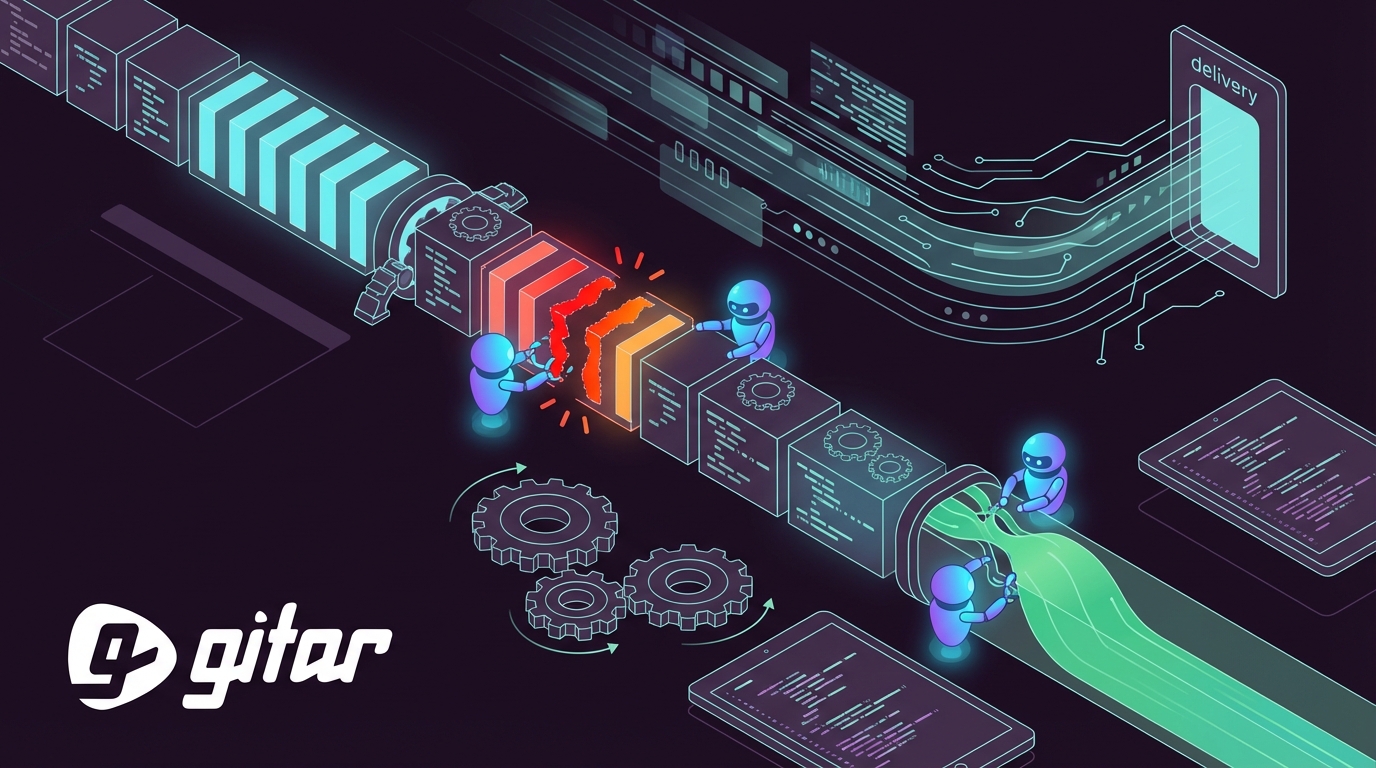
A healing engine extends beyond static checks and review suggestions. It handles four steps inside the pipeline: detection, remediation, validation, and delivery. Many code analysis tools now automate detection and enforce quality gates, yet they still depend on humans to implement and validate fixes.
Healing engines close that gap. They identify issues, generate targeted changes, run the full CI workflow, and surface only validated fixes. This approach ensures that faster code generation also results in faster, reliable delivery instead of longer queues and repeated failures.
Introducing Gitar: The Autonomous AI Agent for Self-Healing CI
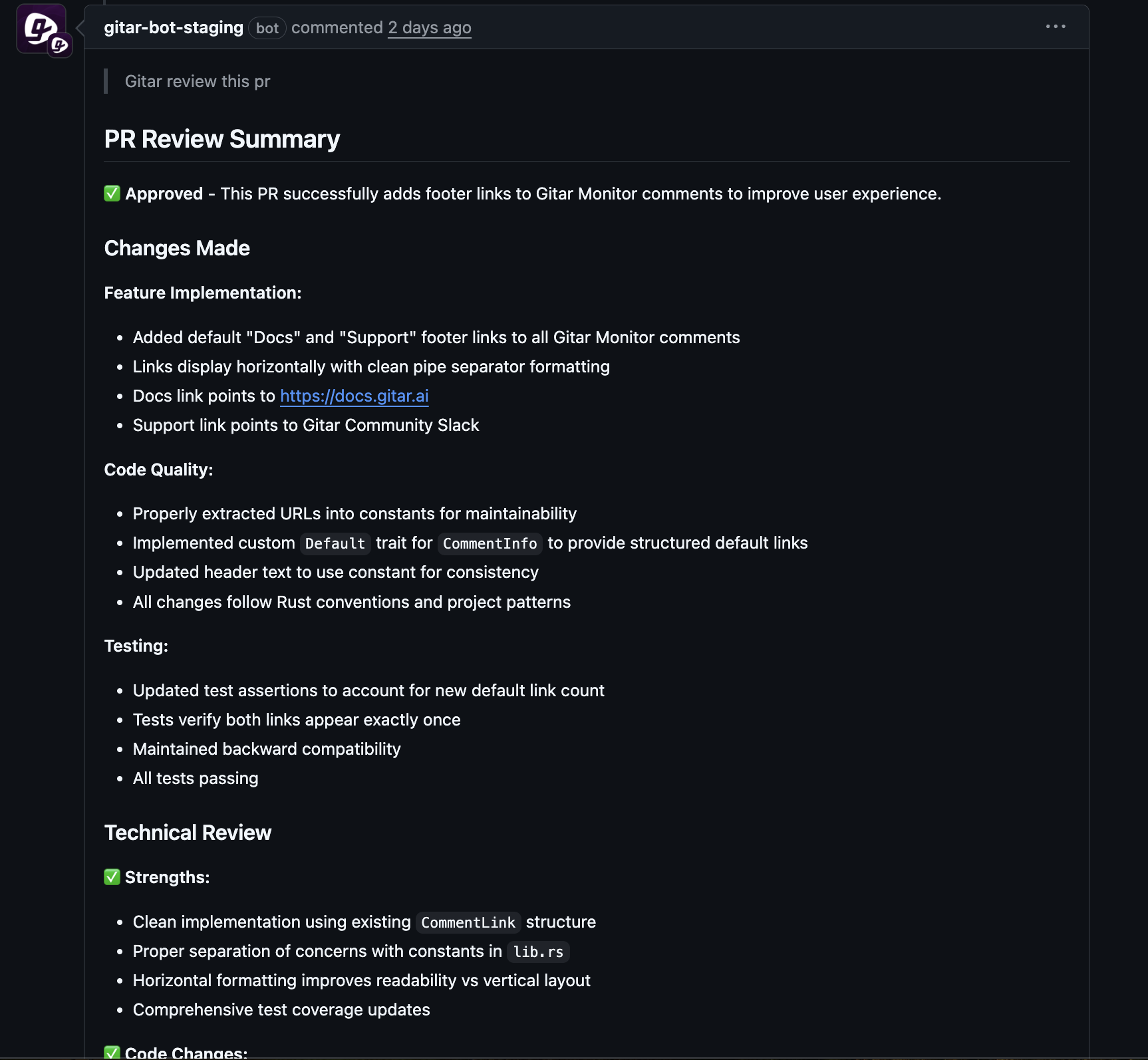
Gitar functions as a healing engine for software delivery. It focuses on broken builds and review-driven changes, turning them into validated commits without constant developer attention.
Key capabilities include:
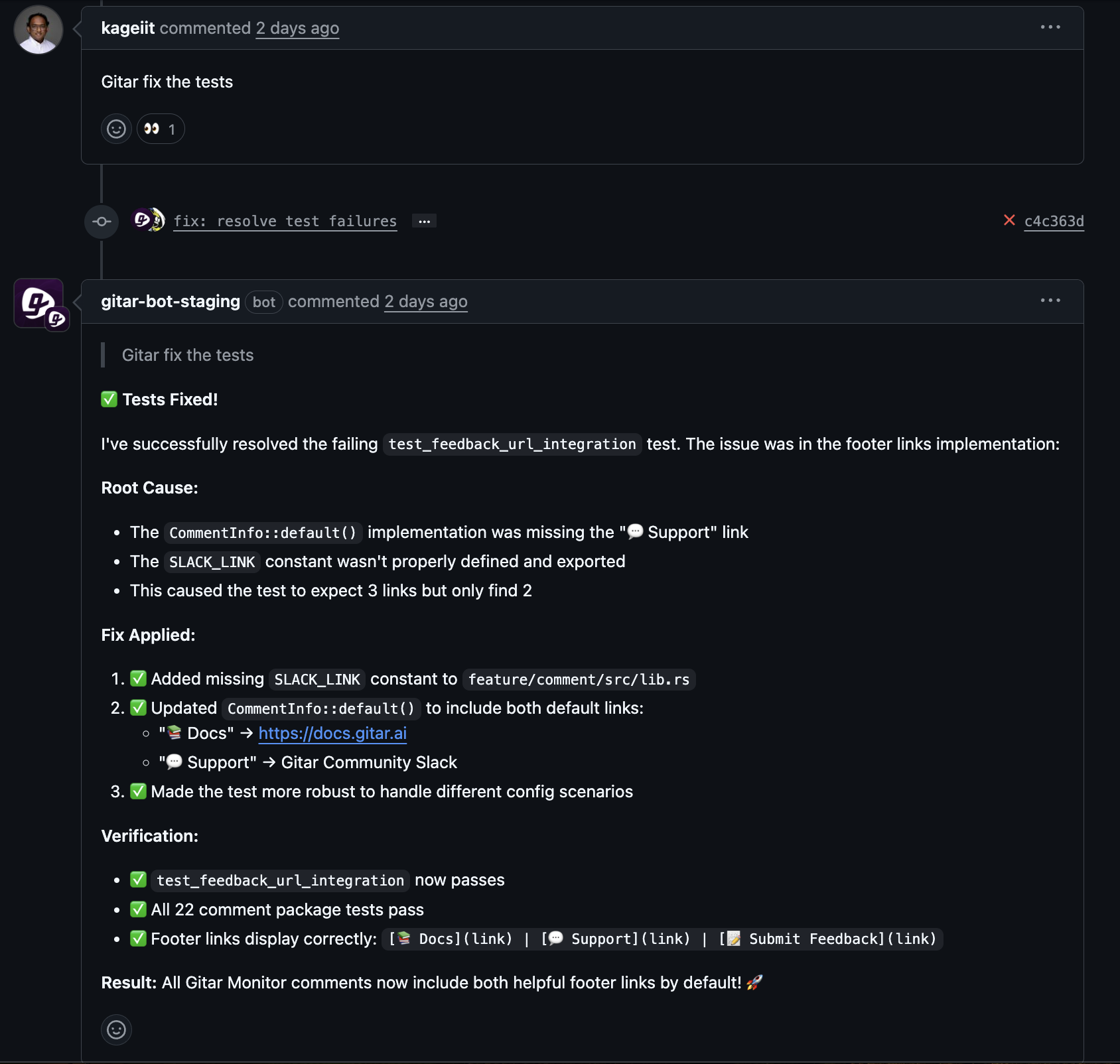
- End-to-end fixing: Applies changes, runs CI, and ensures the pipeline passes before surfacing results.
- Full environment replication: Mirrors complex CI environments, including tools, dependencies, and checks used in production pipelines.
- Intelligent code review assistance: Reads review comments, understands intent, and implements requested changes.
- Configurable trust model: Supports modes from suggestion-only to autonomous commits, with rollback options.
- Cross-platform support: Integrates with GitHub Actions, GitLab CI, CircleCI, BuildKite, and other common CI systems.
Teams can see these capabilities in practice by starting with Gitar’s self-healing CI for their existing pipelines.
Strategic Advantages of Gitar for Engineering Leaders and Teams
Reclaiming Developer Flow and Productivity
Developer focus suffers every time CI fails or a small review change interrupts deep work. The time cost includes not only the fix but also the effort to regain context. Gitar takes on routine CI and review-driven fixes, so engineers stay focused on design, architecture, and complex problem-solving instead of repeated cleanups.
Accelerating Time-to-Merge and Delivery Velocity
Delivery speed depends on short feedback loops. Cycle Time and Deployment Frequency strongly correlate with business agility. Gitar shortens those loops by turning review feedback and CI failures into validated commits, often overnight or between time zones, so PRs move from open to merged with fewer idle hours.
Driving Measurable ROI and Cost Savings
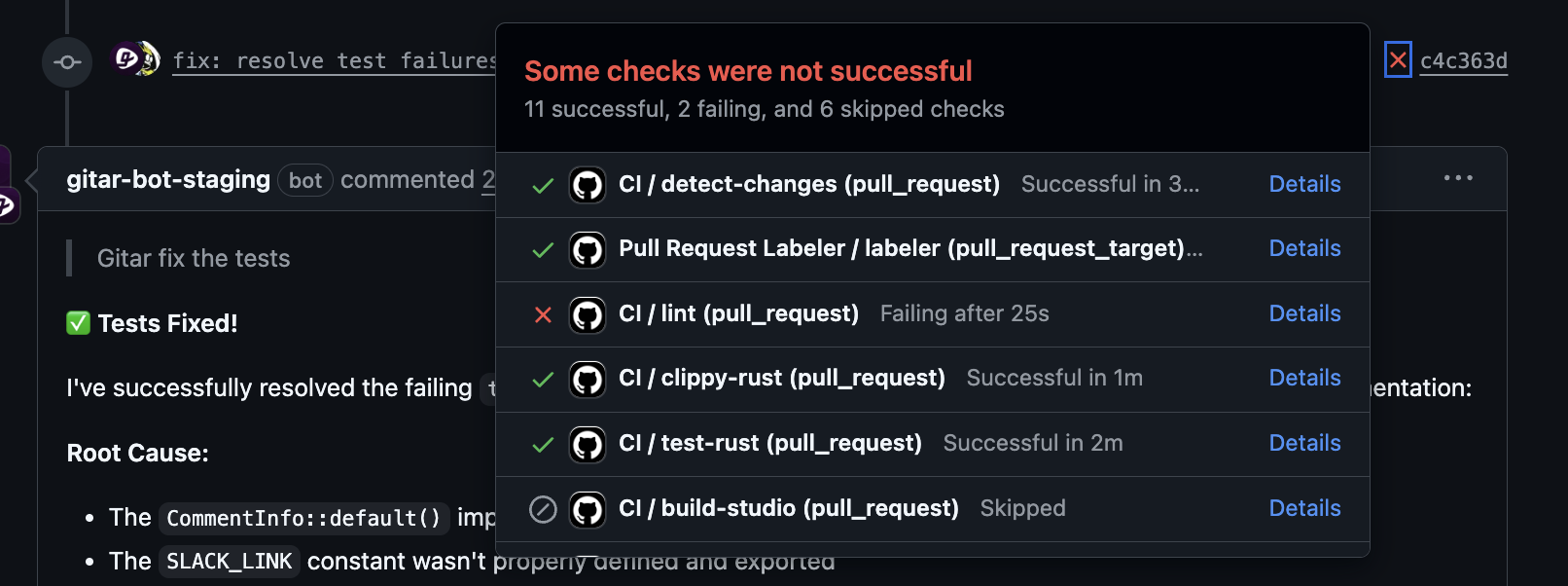
Frequent CI failures lead to extra compute costs, additional pipeline runs, and more manual effort. Even modest reductions in failed runs and context switching add up quickly for teams with many developers. By resolving common failures autonomously, Gitar helps reduce reruns, shortens queues, and converts previously lost time into active development.
Enhancing Pipeline Reliability and Quality
Reliable pipelines depend on consistent standards. Modern code quality stacks rely on automated enforcement and close integration. Gitar fits into that stack by preserving existing checks while generating fixes that pass the same gates. Environment replication allows Gitar to respect security scans, snapshot tests, and compliance rules instead of bypassing them.
Gitar vs. The Status Quo: Why Manual and Suggestion Engines Fall Short
|
Feature/Tool |
Manual Work (Status Quo) |
AI Code Reviewers (e.g., CodeRabbit) |
Gitar (Autonomous AI Agent) |
|
Problem Resolution |
Developer manually fixes and validates |
Suggests fixes, sometimes with one-click application |
Automatically fixes, validates, and ensures green CI |
|
Context Switching |
High |
Lower, due to in-workflow suggestions |
Minimal, because fixes run autonomously |
|
CI Integration |
Manual testing after each change |
Integrates with CI/CD for quality enforcement |
Replicates full environment for precise fixes |
|
Trust Model |
Direct human ownership of each fix |
AI suggestions with human review and approval |
Configurable, from suggestions to auto-commit with rollback |
Frequently Asked Questions (FAQ)
How does Gitar build trust for teams hesitant about automated fixes?
Gitar uses a configurable aggression model that lets teams start cautiously. In conservative mode, Gitar posts fixes as suggestions that developers can review and accept. After teams observe consistent, accurate changes, they can move toward more autonomous modes that allow auto-commits, always with rollback options.
Can Gitar handle customized CI setups with unique dependencies and tools?
Gitar is designed for complex CI environments. It replicates the build environment, including SDK versions, language runtimes, dependencies, and tools such as SonarQube, Snyk, and snapshot testing frameworks. This replication helps ensure that generated fixes match real pipeline behavior rather than a simplified local environment.
How is Gitar different from existing AI code reviewers or on-demand AI fixers?
Most AI code reviewers act as suggestion engines. They highlight issues or propose patches, but developers still apply changes, run CI, and validate results. Gitar operates as a healing engine that analyzes failures, implements changes, runs the full CI workflow, and commits validated fixes, which reduces both manual work and waiting time.
Conclusion: From Bottlenecks to Autonomous Delivery
AI-driven development in 2026 demands faster, more reliable delivery than traditional CI and review processes can usually provide. Manual fixes and suggestion-only tools often leave teams with long queues, repeated failures, and frequent context switching.
Gitar offers a practical path toward self-healing CI by closing the loop from detection to validated fixes. Teams that adopt this model can improve delivery speed, reduce interruption-driven waste, and maintain strong quality standards. To explore this approach in your own pipelines, start with Gitar’s autonomous CI fixes.