
Key Takeaways
- AI coding tools now generate code 3-5x faster, yet PR review times have increased 91%, especially in complex monorepos where diff-only tools like Qodo fall short.
- Gitar ranks first as a free AI healing engine that auto-fixes CI failures, test breaks, and review feedback using full hierarchical repository context, scaling to more than 50 million lines of code.
- Alternatives such as Augment Code, Greptile, and CodeRabbit provide context or suggestions but lack Gitar’s guaranteed auto-fixing and free, unlimited monorepo support.
- Monorepo teams now handle PRs that are 33% larger from AI code, see 30% rejection rates, and experience 60% of delays from CI failures, which requires tools that understand deep dependency chains.
- Teams can start with Gitar’s free tier for immediate ROI through automated fixes, shorter review cycles, and higher quality releases.
Monorepo Challenges in 2026
Modern monorepos now carry unprecedented complexity and risk. AI-generated code has increased median PR size by 33%, which creates cascading dependency issues that traditional review tools cannot track. The data is clear: 30% of AI-suggested code is rejected, and 60% of project delays come from CI pipeline failures.
Engineering teams now prioritize code healing over raw code generation. They need tools that deliver working fixes, not just suggestions that still require manual debugging.
How We Evaluated Qodo Alternatives
Our evaluation focused on real-world monorepo needs. We prioritized hierarchical memory for full repository context, auto-fix support for CI failures, accessible pricing with free tiers, scalability to 50 million or more lines of code, and integrations with CircleCI, Buildkite, and Jira.
We reviewed 2026 benchmarks from GitHub issues, Reddit discussions in r/ChatGPTCoding, and enterprise feedback from companies such as Tigris and Pinterest. We also incorporated insights from Faros AI’s Productivity Paradox Report.
Top 7 Qodo Alternatives for Complex Monorepos
1. Gitar – Free AI Healing Engine
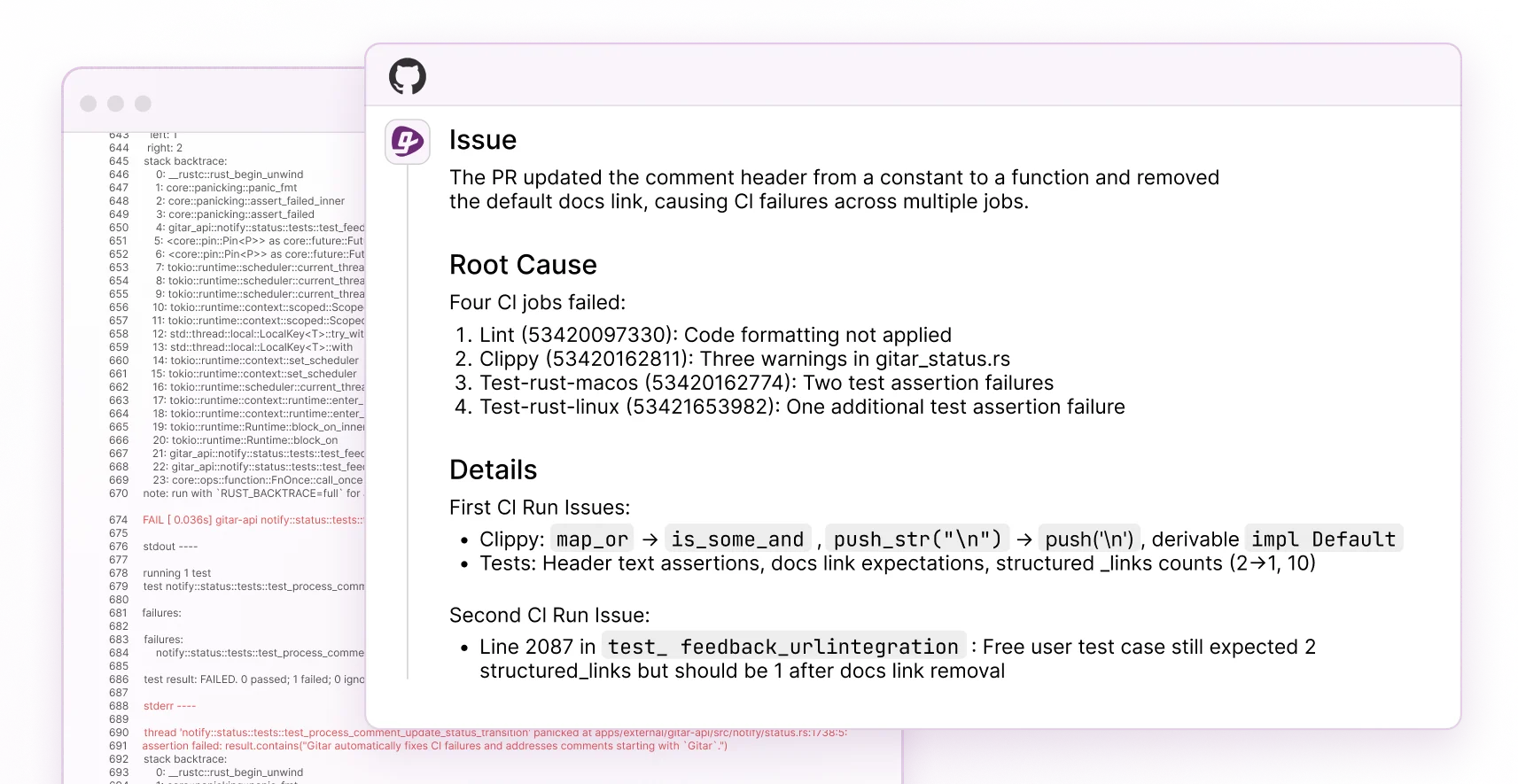
Gitar stands out as a free AI code review platform that fixes your code instead of only suggesting edits. Unlike Qodo’s diff-only analysis, Gitar uses hierarchical memory that tracks context at the line, PR, repository, and organization levels.
The healing engine automatically resolves CI failures, applies review feedback, and commits working fixes. It keeps a single, updating dashboard comment, which reduces notification noise for reviewers. Gitar already supports Pinterest-level scale with more than 50 million lines of code and thousands of daily PRs, which confirms its enterprise readiness.
Key features include unlimited repositories on the free plan, a 14-day autofix trial, and a 30-second GitHub app installation.
Strengths: guaranteed fixes instead of suggestions, broad CI integration, and no cost barrier. Limitations: none identified for monorepo scenarios. Best for: scale-up teams that manage complex dependency chains.
2. Augment Code – Enterprise Context Leader
Augment Code focuses on deep contextual analysis for enterprise-scale codebases. Forrester’s Total Economic Impact study reported a 376% ROI over three years for its enterprise AI code generation platform. The product centers on paid suggestions instead of auto-fixing, which limits its value for teams that need immediate CI failure resolution.
3. Greptile – Deep Search Capabilities
Greptile offers repo-wide search and analysis at $30 per developer, which helps teams understand large codebases. It does not provide auto-fix features. Monorepo context support is solid, but developers still must apply changes manually, which recreates the same bottleneck that Qodo users face.
4. CodeRabbit – OSS-Friendly Option
CodeRabbit gives open source projects free AI code reviews and some auto-fixing, yet its free tier restricts private repositories. The platform often produces many inline comments instead of consolidated feedback, which increases cognitive load for reviewers.
5. Snarktank AI – Stacked PR Specialist
Snarktank AI supports stacked PR workflows reasonably well but lacks the deep CI integration that Gitar delivers. It addresses a subset of monorepo issues, and its auto-fix features remain partial when compared with Gitar’s guaranteed healing approach.
Snarktank AI vs Gitar for Stacked PRs
Teams that manage stacked PRs in monorepos gain more reliability from Gitar’s hierarchical context system. Gitar tracks cross-PR dependencies across the full repository, which enables accurate fixes that consider the entire change stack. Snarktank AI offers basic stacked PR support but does not match this level of context.
6. Cirolini GenAI – Basic Review Coverage
Cirolini GenAI delivers generative AI reviews with limited monorepo awareness. It lacks deep dependency analysis for complex enterprise codebases and does not include auto-fix capabilities.
7. Graphite – Stacked PR Management
Graphite focuses on stacked PR organization and workflow. It does not provide comprehensive auto-fixing. The tool helps teams manage PR structure but leaves CI failure resolution, which causes most delays, largely unaddressed.
Side-by-Side Comparison of Qodo Alternatives
| Tool | Monorepo Context | Auto-Fix CI | Pricing |
|---|---|---|---|
| Gitar | Hierarchical (full repo/org) | Yes (guaranteed) | Free |
| Augment Code | High | No | Paid |
| Greptile | Repo-wide | No | $30/dev |
| CodeRabbit | Multi-file | Limited | $15/dev |
| Snarktank AI | Stacked | Partial | Paid |
| Cirolini GenAI | Basic | No | Free (OSS + API costs) |
| Graphite | Stacked | No | Paid |
Why Gitar Leads Free AI Code Review for Monorepos
Gitar’s hierarchical memory keeps context across the entire development workflow and learns team patterns and repository structure over time. The platform supports natural language rules in .gitar/rules/*.md files, which lets teams automate workflows without complex YAML files.
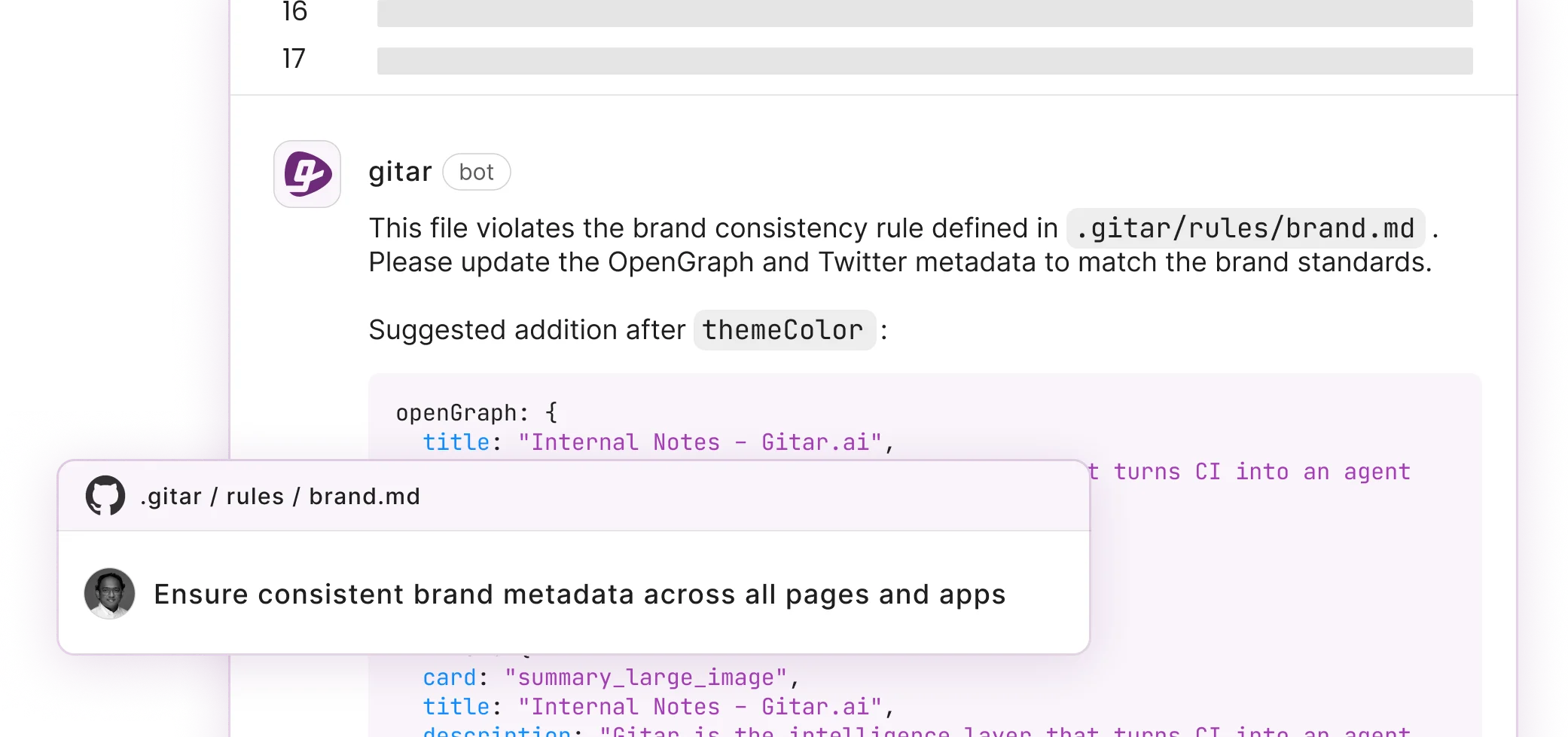
Gitar’s healing engine validates fixes inside your real CI environment before committing changes, unlike Qodo’s suggestion-only model. Setup takes about 30 seconds through the GitHub app, with no account creation or credit card required. Teams that feel cautious about automated commits can begin in suggestion mode and then enable auto-fixing for trusted failure categories.
Key Buying Considerations and Tradeoffs
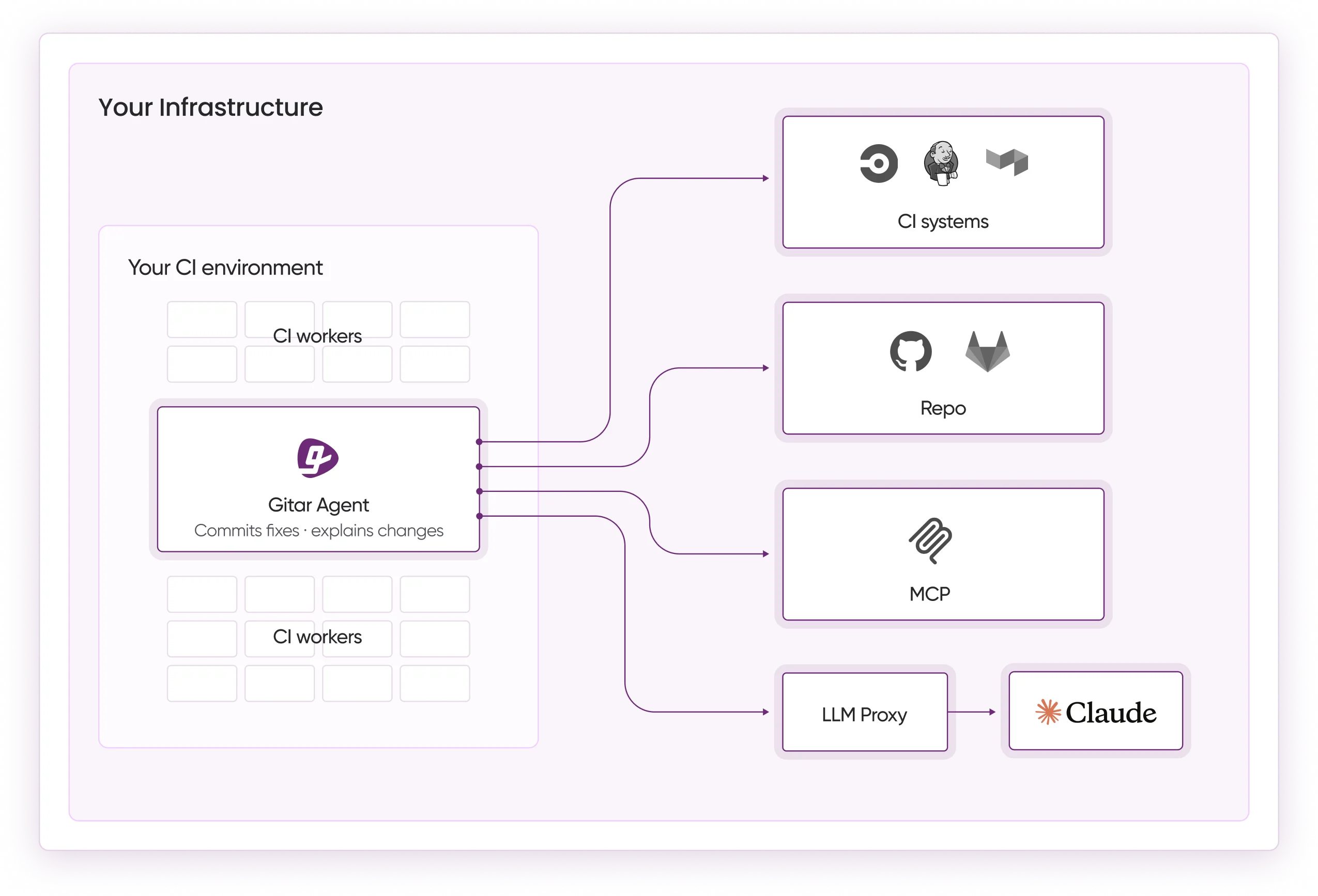
Budget-conscious teams gain the most value from Gitar’s free tier, which offers full code review with no seat limits. Enterprise teams that prioritize security can run Gitar’s agent inside their own CI pipeline, which keeps all code and secrets within existing infrastructure. Total cost of ownership is clear: Gitar costs $0, while competing tools often exceed $450 each month, before counting productivity lost to suggestion-only workflows.
Migration from existing tools remains straightforward. Most teams report immediate benefits from Gitar’s single consolidated comment and the sharp drop in notification noise.
Frequently Asked Questions
Best free AI code review tool for monorepos
Gitar offers the most complete free AI code review for monorepos, with unlimited repositories, auto-fixing during the 14-day trial, and hierarchical context that scales to enterprise codebases. Competing tools often charge $15 to $30 per developer for basic suggestions, while Gitar’s healing engine resolves CI failures and applies review feedback automatically.
Qodo vs Gitar for stacked PR workflows
Qodo’s diff-only analysis cannot fully capture the complex dependencies in stacked PRs and often misses context that spans multiple commits. Gitar’s hierarchical memory tracks the entire PR stack, which supports more accurate fixes and lowers the chance of breaking changes across dependent PRs.
Expected ROI from AI code review tools
Teams often save around $1 million each year by cutting time spent on CI and review issues from one hour to 15 minutes per developer per day. A 91% reduction in PR resolution time, combined with fewer context switches, compounds productivity gains. Even at half that effectiveness, ROI can exceed $375,000 annually for a 20-developer team.
How Gitar manages CI complexity in monorepos
Gitar emulates your full CI environment, including SDK versions, multi-dependency builds, and third-party security scans. The enterprise tier runs the agent inside your CI pipeline with access to secrets and caches, which ensures that fixes succeed in production environments instead of only in isolated tests.
Details of Gitar’s free tier
Gitar’s core code review features stay free, with no limits on seats or repositories. The business model centers on advanced capabilities such as enterprise analytics, custom workflow automation, and dedicated support. Auto-fix features include a 14-day free trial, after which teams can continue using free code review or upgrade to keep full healing functionality.
Conclusion: Gitar as the Clear Qodo Alternative
Gitar turns monorepo code review from a bottleneck into a growth driver by pairing free AI analysis with guaranteed fixes that handle more than 50 million lines of code. Competing platforms charge premium prices for suggestion engines, while Gitar delivers a complete healing system that resolves CI failures and applies review feedback automatically.
Use the comparison table above to weigh alternatives. For teams that want to remove the post-AI coding bottleneck, Gitar’s zero cost, comprehensive auto-fixing, and enterprise-grade scalability make it the leading choice for complex monorepo environments.