
Key Takeaways
- Large engineering teams lose significant productivity to failing CI pipelines, slow reviews, and context switching, which increases cost and delays releases.
- Traditional version control workflows rely on manual debugging and reviews, which do not scale well as pull requests, services, and contributors grow.
- AI suggestion tools improve code review quality, but they still depend on developers to apply and validate fixes, so much of the manual work remains.
- Autonomous CI healing tools such as Gitar reduce technical debt and protect developer focus by automatically fixing CI failures and implementing review feedback.
- Teams that want to cut CI toil and speed up merges can use Gitar to autonomously fix failures and ship code faster.
Why Traditional Version Control Breaks Down for Large Teams
Effective version control serves as the backbone of modern software delivery, especially once teams span multiple squads, services, and time zones. As repositories, contributors, and pipelines scale, small inefficiencies in CI and review workflows compound into major delays and cost.
Modern version control provides a single source of truth for managing code changes and enabling distributed collaboration. That foundation helps, but process and tooling choices still determine how much real throughput teams achieve.
Recent industry analysis estimates that CI failures and debugging consume up to 30 percent of developer time. For a 20 developer team, this lost time can approach one million dollars per year in fully loaded engineering cost.
Slow merge times create another drag. Each failing pipeline pauses progress, pulls developers out of their current work to investigate logs and edge cases, then triggers another CI run and more waiting. In distributed teams, asynchronous reviews in distributed teams can stretch simple fixes across multiple days.
Technical debt also grows quietly. Rushed hotfixes, inconsistent lint and security standards, and issues postponed “until later” all pile up. Traditional workflows usually react to problems after they appear in CI, instead of preventing or resolving them proactively.
Install Gitar to reduce CI firefighting and help your team ship stable code faster.
How Gitar Uses Autonomous AI To Stabilize CI for Large Teams
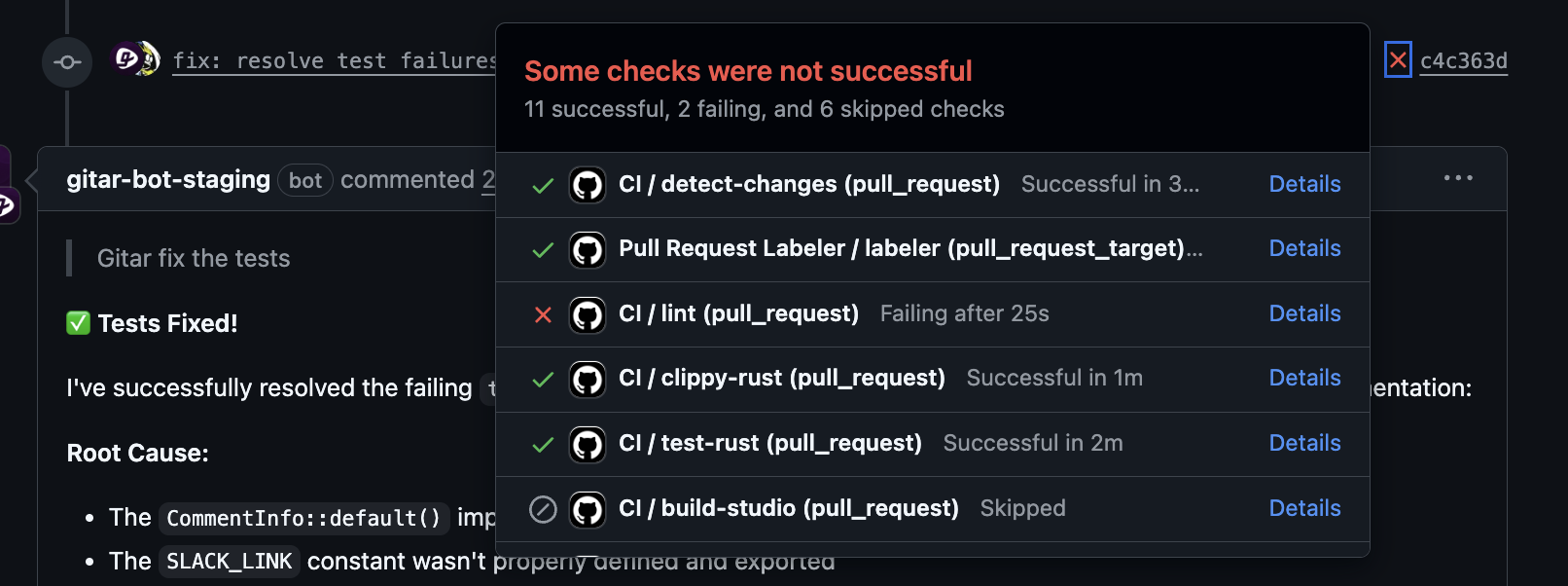
Gitar shifts CI management from manual reaction to autonomous remediation. The platform monitors CI failures and code review feedback, then generates, applies, and validates fixes directly on pull or merge requests.
When a pipeline fails or a reviewer requests a change, Gitar inspects logs and diffs, understands the failure, proposes a fix, and runs the relevant checks. Successful fixes update the branch so that developers return to passing builds instead of spending cycles on investigation.
Key capabilities for large teams include:
- End to end autonomous fixing that not only suggests changes, but also applies and revalidates them in CI.
- Environment replication for complex stacks, including specific JDK versions, multiple SDKs, and tools such as SonarQube and Snyk, so fixes match production like conditions.
- A configurable trust model that supports suggestion only, approval required, or auto commit modes, depending on team preference and maturity.
- Support for distributed teams, since Gitar can implement review feedback while the original author is offline, keeping work moving across time zones.
- Compatibility with CI systems such as GitHub Actions, GitLab CI, CircleCI, and Buildkite, which lets teams adopt Gitar without reworking pipelines.
Request a demo to see autonomous CI healing in your own workflows.
How Different Version Control Approaches Scale for Large Teams
Version control processes fall into three broad categories: traditional manual workflows, AI suggestion tools, and autonomous CI healing. Each approach affects developer focus, lead time, and technical debt in different ways.
Traditional Version Control and Manual Workflows
Manual workflows place the full burden of CI failures on developers. Each failure forces a context switch to inspect logs, recreate the issue locally, craft a fix, and push new commits for validation. This approach offers full control, yet it does not scale across dozens of active branches and services.
Every broken build delays not only the author, but also reviewers and dependent teams. Cascading queuing effects increase cycle time as more pull requests wait on red pipelines.
|
Feature or criterion |
Traditional version control |
Gitar autonomous CI healing |
|
Developer flow state |
Frequently interrupted for debugging and log review |
Preserved while Gitar investigates and fixes failures |
|
Time to merge |
Slows down due to repeated CI runs and manual fixes |
Improves as pipelines self heal after failures |
|
Technical debt |
Grows as teams push quick fixes under time pressure |
Declines as fixes stay consistent and validated |
|
Distributed team efficiency |
Suffers when feedback waits for local working hours |
Improves as Gitar applies changes across time zones |
AI Powered Suggestion Engines for Code Review
Tools such as CodeRabbit and other AI code reviewers enhance traditional workflows with automated comments and refactoring suggestions. These systems flag potential bugs or style issues, but developers usually remain responsible for applying and testing fixes.
Large teams still spend considerable time reading AI comments, choosing which to apply, and pushing new commits. Suggestions help quality, yet they rarely eliminate CI toil.
|
Feature or criterion |
AI suggestion engines |
Gitar autonomous CI healing |
|
Issue resolution |
Identifies issues and proposes fixes, usually requires manual edits |
Generates, applies, and validates fixes on the branch |
|
Validation |
May rely on separate CI runs and manual review |
Runs fixes through existing CI workflows automatically |
|
Developer effort |
High for applying, testing, and re running pipelines |
Low, configurable by trust level and policy |
|
Scope of automation |
Focuses on review comments and style issues |
Covers CI failures and code review feedback |
On Demand AI Fixers and IDE Assistants
On demand AI fixers and IDE assistants, such as Anthropic GitHub Actions or GitHub Copilot, help during local development. They excel when a developer actively prompts them for help, yet they usually lack full awareness of the CI environment and post commit context.
These tools remain valuable for authoring code, but they do not fully replace the need for a system that monitors pipelines and autonomously repairs failures in shared branches.
Why Gitar Fits Large Engineering Organizations
Gitar complements IDE assistants and suggestion tools by operating directly inside CI and version control workflows. The platform integrates with existing pipelines, replicates complex environments, and uses a trust model that allows teams to gradually move from suggestions to autonomous commits.
What ROI Large Teams See From Autonomous CI Fixes
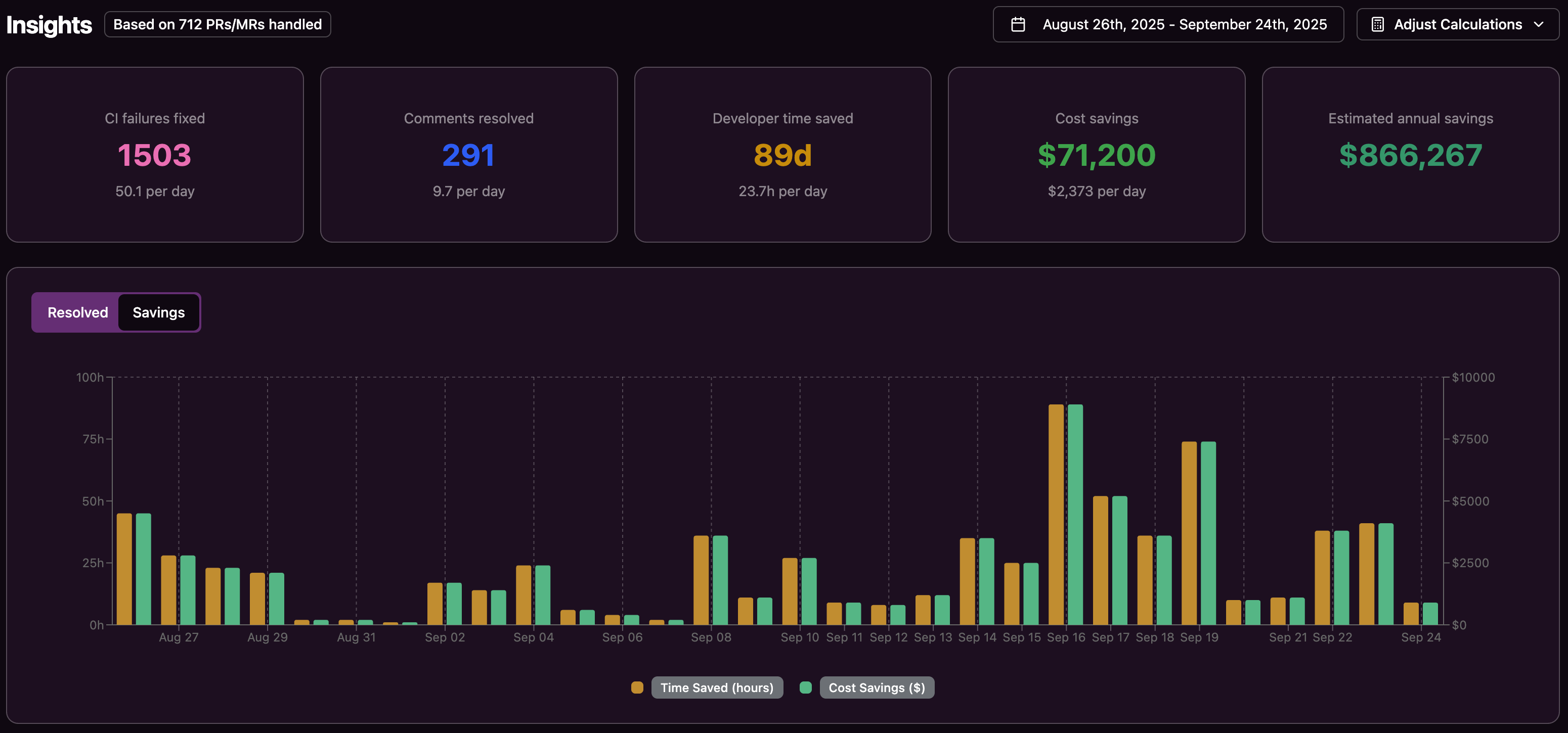
Autonomous CI healing affects engineers, managers, and platform teams in different ways, with shared business benefits across the organization.
Software engineers gain longer uninterrupted focus blocks. Fewer pipeline emergencies mean more time spent designing features and less time debugging flaky tests or configuration drift. Reduced context switching also lowers cognitive load and burnout risk.
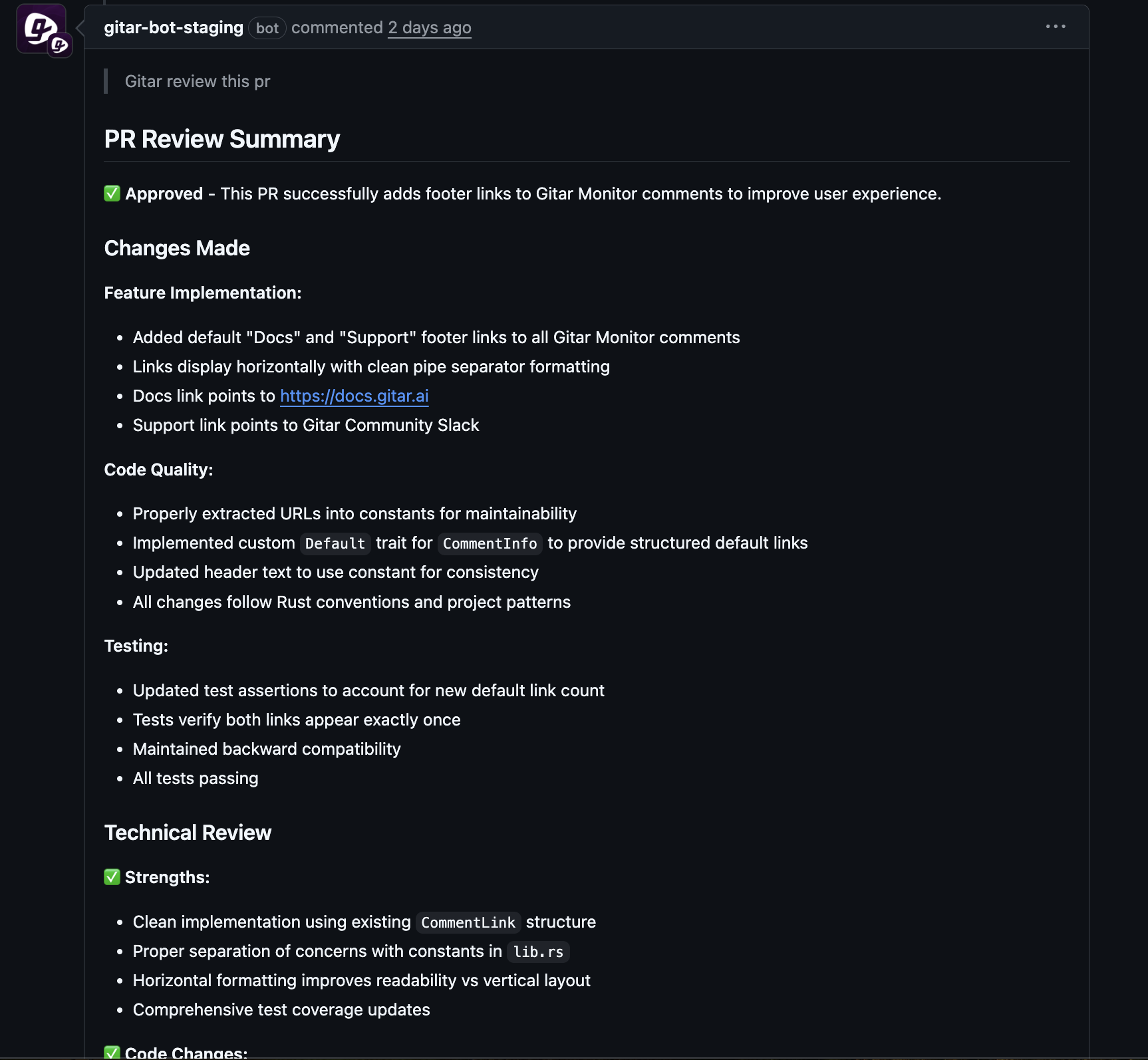
Engineering leaders see measurable cost savings and faster delivery. A team of 20 developers that spends one hour per day on CI and review issues incurs roughly one million dollars per year in lost productivity. Cutting even part of this time through automation yields meaningful ROI and shorter lead times for product initiatives.
DevOps and platform engineers benefit from healthier pipelines. Gitar keeps builds green more often, enforces consistent standards, and reduces the manual effort required to maintain complex CI configurations across many repositories.
Speak with a Gitar expert about ROI for your engineering organization.
Frequently Asked Questions (FAQ) about Version Control for Large Teams
How Gitar Builds Trust in Automated Fixes for Large Engineering Teams
Gitar supports a phased adoption model. Teams can start with suggestion only mode, review and approve changes manually, then move toward auto commit once results prove reliable. This gradual path helps build confidence and align automation with internal policies.
How Gitar Handles Complex, Enterprise Grade CI Environments
Gitar replicates the full CI environment, including language runtimes, SDK versions, and third party tools such as SonarQube and Snyk. This replication ensures that fixes account for real dependencies and integration rules, not just isolated unit tests.
How Gitar Reduces Context Switching for Developers
Gitar analyzes failing pipelines and review comments as they appear, then works in the background to resolve them. Developers return to pull requests that already include proposed or applied fixes, which reduces the need to pause current work for CI triage.
How Gitar Differs from AI Code Reviewers That Only Suggest Changes
Many AI code reviewers focus on identifying problems and adding comments. Gitar focuses on healing. The system generates changes, applies them to the branch when configured to do so, and validates results through the existing CI pipeline, so teams spend less time translating suggestions into working code.
How Gitar Supports Distributed Teams Across Time Zones
Gitar operates continuously, so reviewers in one region can leave comments while Gitar implements the requested changes before the original author returns. This approach shortens feedback loops that would otherwise span multiple workdays in distributed settings.
How To Modernize Version Control With Autonomous AI in 2026
Modern software teams need version control practices that keep pace with growing codebases, complex stacks, and distributed collaboration. Manual workflows and suggestion only tools help, yet they often leave CI firefighting and review rework untouched.
Autonomous CI healing with Gitar upgrades version control from a passive record of changes into an active system that protects build health and developer time. Teams that adopt this approach reclaim hours each week, reduce technical debt, and improve delivery predictability.
Request a Gitar demo and see how autonomous CI fixes can support your team in 2026.