
Key Takeaways
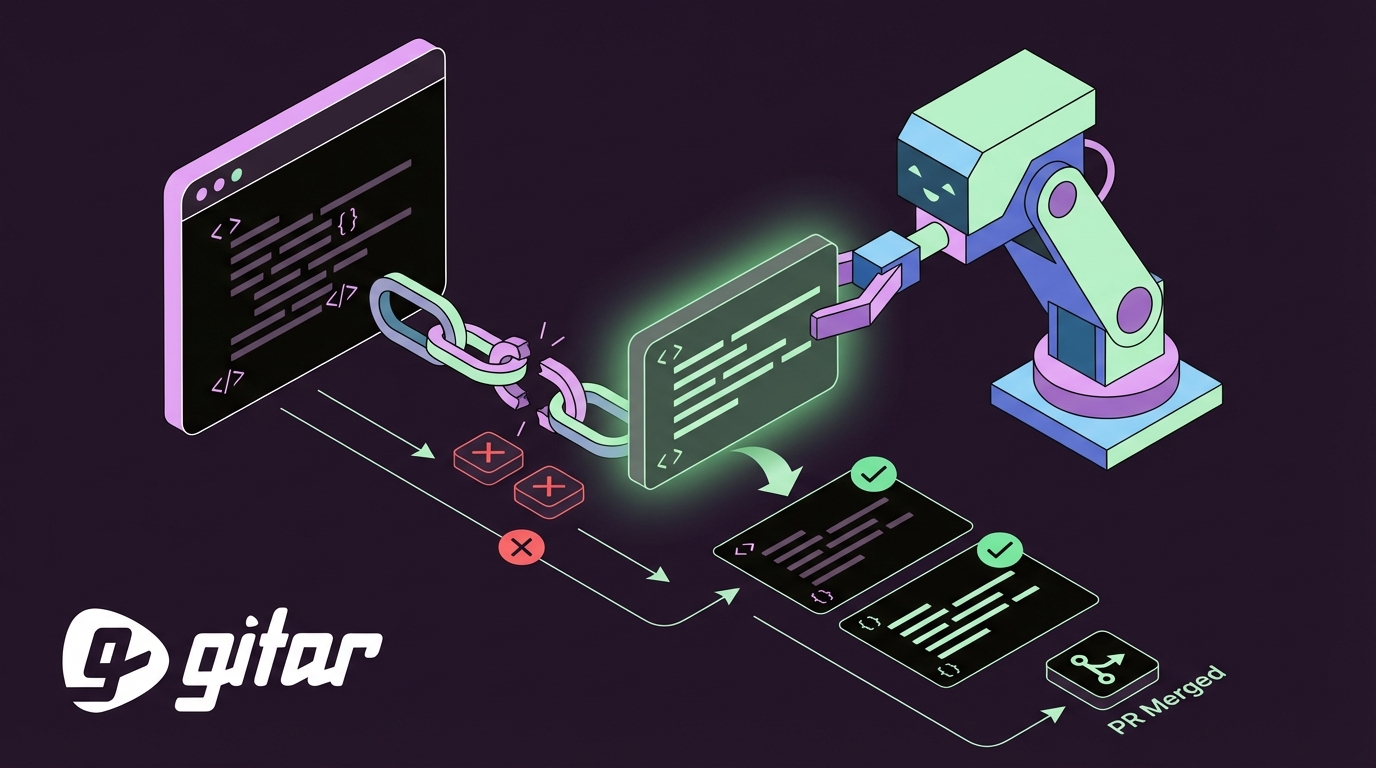
- AI tools generate code 3 to 5 times faster, yet PR review times have jumped 91% because CI failures and lint errors still need manual fixes.
- CI validation and auto-commits from Gitar outperform paid competitors like CodeRabbit and GitHub Copilot.
- DeepSource and Snyk provide targeted fixes but do not match Gitar’s full CI integration and automatic commit workflow.
- Teams can save $750,000 or more per year by cutting CI resolution time from 1 hour to 15 minutes per developer each day with validated autofix tools.
- Install Gitar now for free AI code review that guarantees green builds and speeds up software delivery.
How We Compared Automated PR Fix Tools
Our rankings focus on autofix depth, CI failure handling, platform integrations, pricing, notification noise, and measurable ROI from faster green builds. We distinguish between simple suggestions and validated commits that pass real CI checks. Evaluation sources include GitHub developer forums, Greptile’s benchmark data showing 90%+ fix rates, enterprise studies showing 31% cycle time reduction, and vendor documentation from Pinterest-scale deployments.
Top 8 Tools for Automated Code Fixes in Pull Requests
1. Gitar: Free AI Autofix That Keeps CI Green
Gitar acts as a healing engine that resolves lint errors, test failures, and build breaks without human intervention. It analyzes CI logs, generates fixes with full codebase context, validates changes in your actual CI environment, and commits directly to pull requests. Installation takes about 30 seconds through a GitHub app, with no credit card required, and includes free code review plus a 14-day autofix trial.
Gitar maintains 90%+ fix success rates at enterprise scale, including Pinterest’s 50+ million lines of code and thousands of daily PRs. A single updating comment keeps feedback organized and reduces notification spam, while hierarchical memory learns team patterns over time.
Install Gitar now to automatically fix broken builds and ship higher quality software faster.
2. DeepSource: Static Analysis with Autofix Suggestions
DeepSource offers static analysis with automated fixes delivered through pull requests. It supports more than 100 rules across several languages and lets developers apply fixes with one click. Setup connects to GitHub or GitLab and includes a free tier, with paid plans starting around $10 per seat each month.
DeepSource performs well on code quality issues but does not provide full CI validation or automatic commit flows. Developers still need to review and apply suggested changes manually.
3. SonarQube: Quality Gates and Security Scanning
SonarQube enforces quality gates that can fail CI pipelines when issues appear, combining SAST scanning with remediation guidance. Teams deploy it via Docker or CI integration, using either the free Community edition or paid commercial tiers. It supports many languages and offers deep security analysis.
SonarQube highlights problems and suggests improvements, yet developers must apply fixes themselves. It does not generate or commit patches automatically.
Install Gitar now to automatically fix broken builds and ship higher quality software faster.
4. GitHub Copilot Autofix: Inline AI Suggestions
GitHub Copilot’s 2026 release adds Next Edit Predictions and automated PR review for Copilot-generated code. It brings repository-aware reasoning, CLI integration, and tight alignment with native GitHub workflows. Pricing is $10 per developer each month, with strong appeal for teams already committed to GitHub.
Copilot offers limited automatic fixes and does not guarantee CI success. Its primary focus remains code generation, not validated CI repair and auto-commits.
5. CodeRabbit: AI Review Comments with One-Click Fixes
CodeRabbit reviews code changes on GitHub and GitLab, posting structured feedback with severity levels and suggested fixes. The platform has processed more than 13 million PRs and charges about $15 per developer monthly. CodeRabbit is the most widely installed AI code review tool today.
CodeRabbit operates as a suggestion engine and does not provide CI autofix or validated commits. Multiple inline comments can create notification overload for busy teams.
Install Gitar now to automatically fix broken builds and ship higher quality software faster.
6. Snyk: Security-Focused Autofixes via PRs
Snyk’s Agent Fix retests security vulnerabilities and generates validated patches across more than 19 programming languages. It integrates with CI pipelines and GitHub workflows, offering free open-source scanning plus paid commercial features. Snyk delivers strong, security-specific fixes with high accuracy.
The platform concentrates on vulnerabilities rather than general CI failures or broader code quality issues, so coverage remains focused on security.
7. Greptile: High-Context PR Analysis
Greptile achieves 82% bug catch rates in benchmarks, beating many competitors on analysis accuracy. It plugs directly into GitHub pull requests and costs about $30 per developer monthly. Greptile shines when teams need deep codebase context and strong bug detection.
Greptile still functions mainly as a suggestion tool. It does not provide validated autofix or commit automation and can create noisy comment threads in large PRs.
Install Gitar now to automatically fix broken builds and ship higher quality software faster.
8. Ellipsis: Simple Refactor Autofix from Mentions
Ellipsis automates mechanical code changes triggered by @tag mentions in GitLab and GitHub pull requests. It focuses on straightforward refactors and repetitive edits, with paid pricing tiers for teams. Ellipsis handles simple modifications well but does not act as a full agent.
The tool lacks deep CI integration and cannot manage complex failure resolution across large pipelines.
Side-by-Side Comparison of Autofix Capabilities
| Tool | Autofix | CI Integration | Pricing |
|---|---|---|---|
| Gitar | Validated | Full | Free |
| DeepSource | Yes | Partial | Paid |
| SonarQube | Yes | Partial | Free-Paid |
| GitHub Copilot | Yes | Limited | Paid |
| CodeRabbit | Yes | No | Paid |
| Snyk | Yes | Security | Paid |
| Greptile | No | None | Paid |
| Ellipsis | Yes | None | Paid |
Match Each Tool to Your PR Bottleneck
Pick by Role: Developer, Manager, or Platform Engineer
Individual developers want low-noise tools that avoid constant context switching, so Gitar’s single-comment model fits well. Engineering leaders care about throughput and cost, which makes free tools with proven ROI especially attractive. Platform and DevOps engineers look for self-healing CI systems that cut rerun costs and maintenance work through natural language configuration instead of complex YAML files.
Real ROI: Cut CI Time by 85%
A 20-developer team can save $750,000 annually by shrinking CI failure resolution from 1 hour to 15 minutes per developer each day. Enterprise studies show a 31.8% drop in PR review cycle time, with top adopters shipping 61.3% more production code. Free tools like Gitar often beat $15 to $30 per developer suggestion engines on both cost and impact.
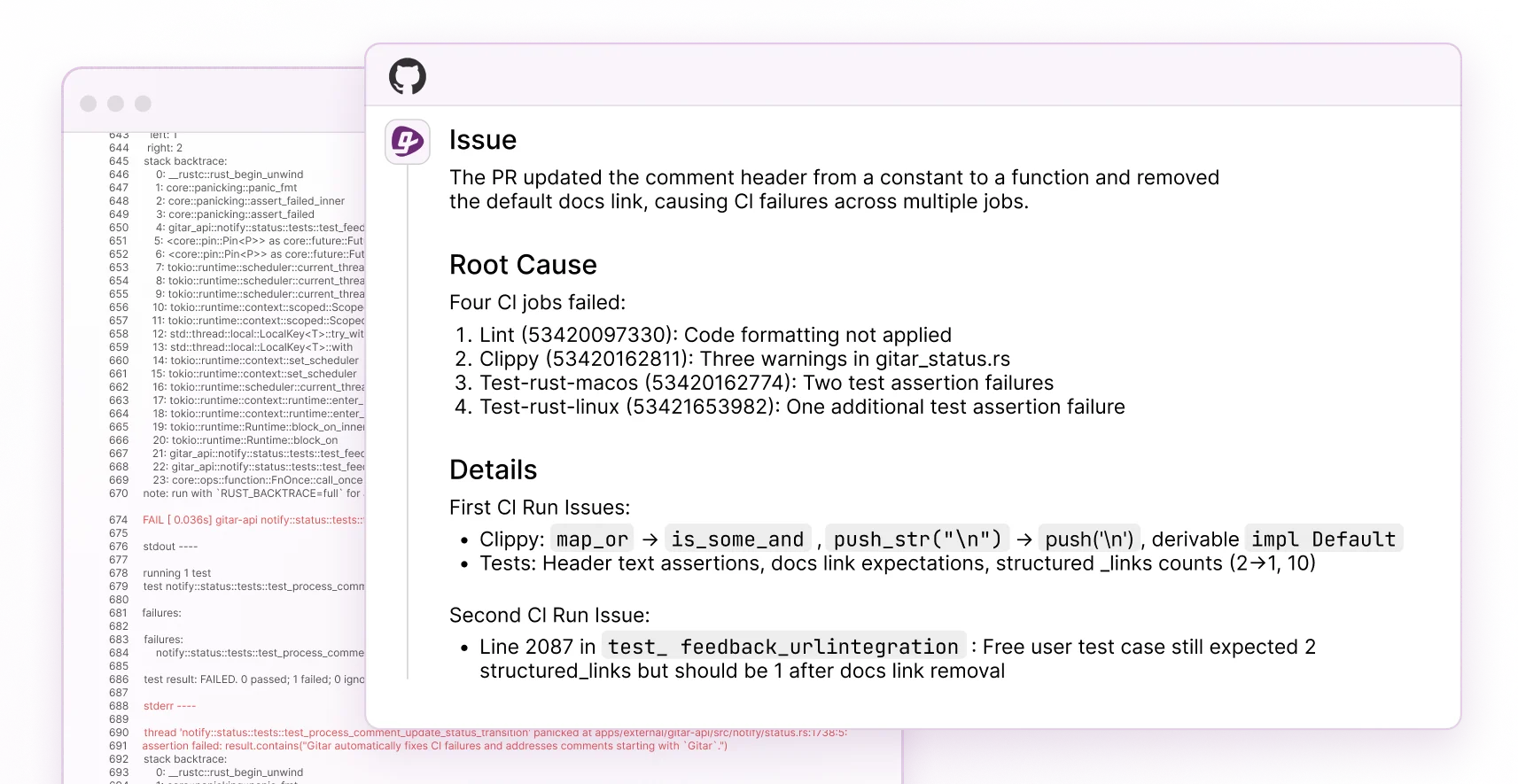
Set Up AI Autofix in GitHub or GitLab
Gitar setup starts with a 30-second GitHub app installation that immediately adds comments to open PRs. Teams then tune autofix aggression levels, define repository rules using natural language, and connect Jira or Slack for cross-platform context. This configuration keeps fixes aligned with team standards while keeping developers in their existing workflows.
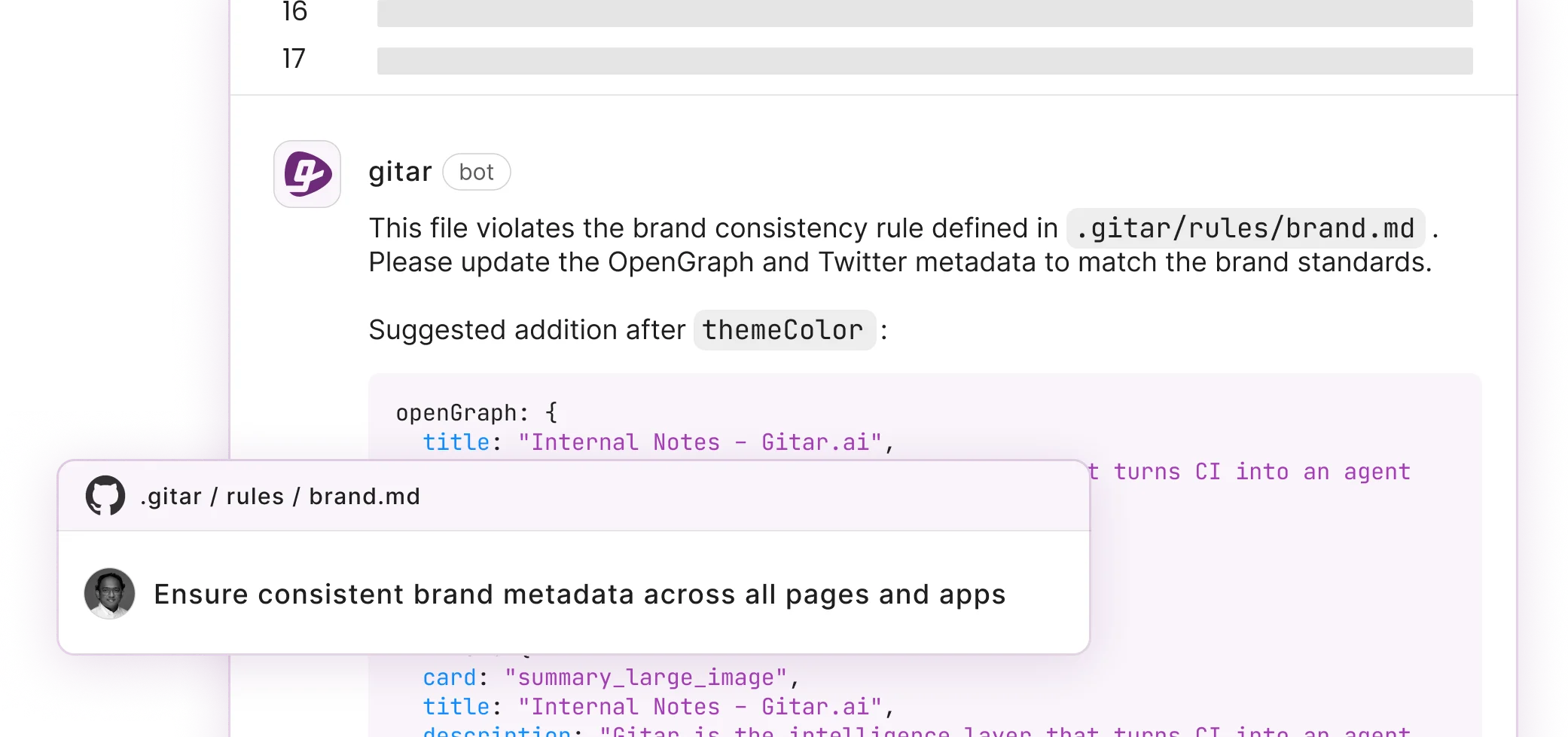
Use AI to Repair CI Failures Automatically
Effective automated repair requires CI log analysis, environment emulation with the right SDK versions, validation against real build conditions, and automatic commits with clean notifications. Gitar’s validation engine confirms that fixes succeed in production-like environments, not just in isolated tests.
Install Gitar now to automatically fix broken builds and ship higher quality software faster.
Frequently Asked Questions
What is the best free tool for automated PR fixes?
Gitar stands out as the leading free option, with 90%+ fix success rates and green build guarantees. Paid competitors often stop at suggestions, while Gitar implements, validates, and commits working fixes directly to pull requests. It supports enterprise workloads, including Pinterest’s 50+ million lines of code, while keeping core code review features free.
Does GitHub Copilot automatically commit code fixes?
GitHub Copilot offers limited automatic fix suggestions through Next Edit Predictions but does not provide full auto-commit coverage for CI failures. Its main role is code generation assistance, not end-to-end fix implementation. Gitar closes this gap by reading CI logs, generating contextual fixes, validating them in your build environment, and committing working changes.
How do you measure automated code fix ROI?
Teams measure ROI by tracking higher green-build rates and reduced time spent on manual fixes. A 20-developer team that spends 1 hour per day on CI issues loses about $1 million in annual productivity. Tools that cut this time by 85% can return $750,000 or more each year.
Additional signals include fewer context switches, faster PR merges, and lower frustration from recurring red builds.
What integrations and security does Gitar support?
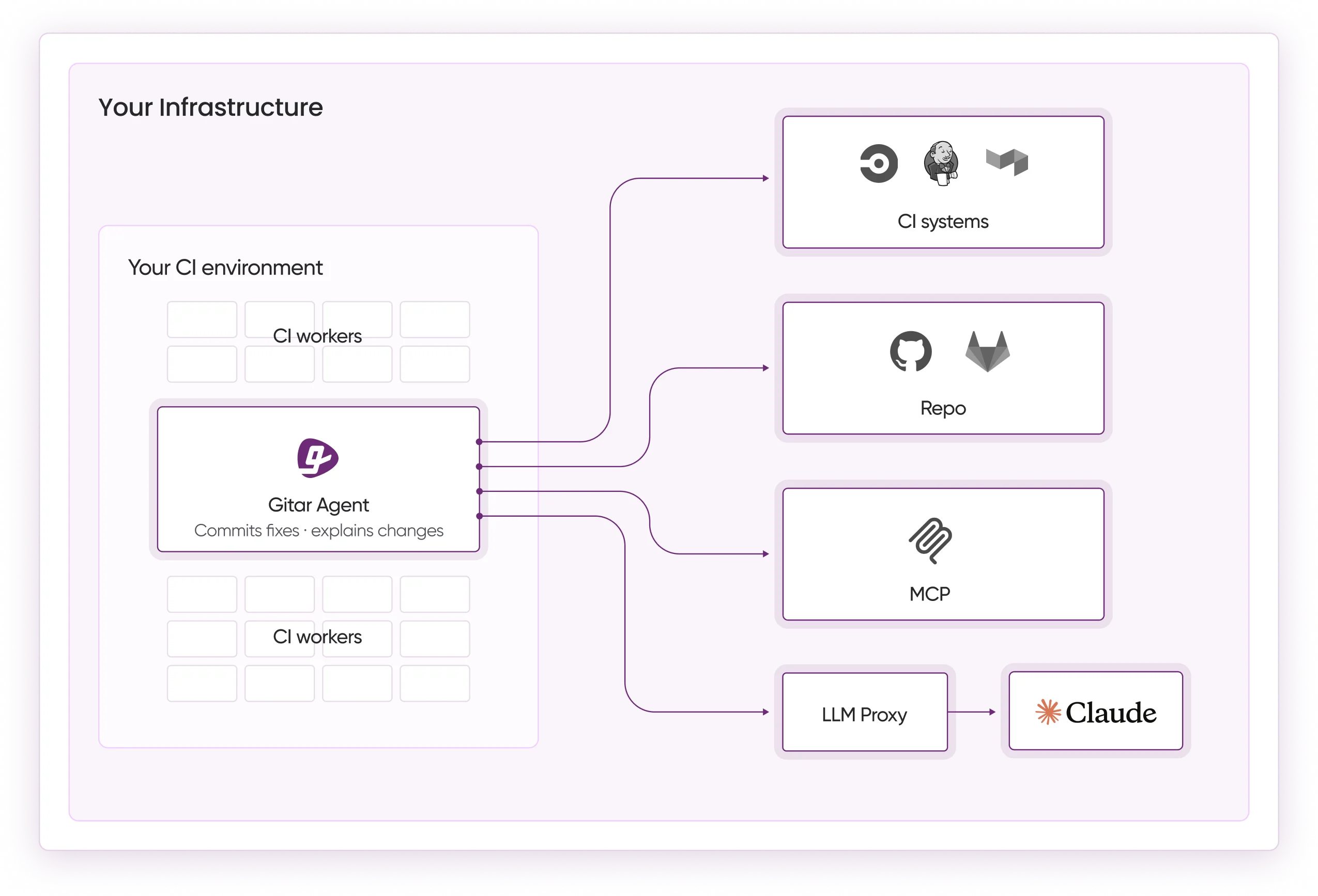
Gitar integrates with GitHub, GitLab, CircleCI, Buildkite, GitHub Actions, and GitLab CI pipelines. Security features include configurable autofix aggression, SOC 2 Type II certification, and enterprise deployment options where agents run inside your own CI infrastructure. It also supports natural language rule configuration, Jira and Slack connections, and hierarchical memory that adapts to team behavior.
How do you switch from CodeRabbit to Gitar?
Teams usually install Gitar’s GitHub app alongside CodeRabbit, then compare fix quality and noise levels on active PRs. They then phase out CodeRabbit while keeping Gitar’s free code review and validated autofix in place. Most teams see immediate gains from single updating comments instead of many inline messages.
The switch also removes $15 to $30 per developer monthly costs while upgrading from suggestions to working fixes.
Conclusion: Gitar Leads Automated PR Fixing in 2026
In 2026, Gitar leads automated code fixing with free, proven autofix that relies on CI-validated commits and green build guarantees. Competing tools often charge premium prices for commentary, while Gitar delivers the complete workflow teams need to keep pipelines healthy.
Install Gitar now to automatically fix broken builds and ship higher quality software faster.