
Key Takeaways
- PR-Agent focuses on deep PR analysis, security detection, and has 10,000+ GitHub stars, which suits GitHub-centric teams.
- Tabby delivers privacy-first, self-hosted code review with real-time suggestions across 40+ languages and supports both GitHub and GitLab.
- OSS tools like Hexmos, OneDev, and Aider provide specialized features but lack auto-fix capabilities and still require GPU infrastructure.
- Open source solutions remove licensing costs but often struggle with CI integration, automatic fixes, and long-term maintenance overhead.
- Gitar offers free AI code review with auto-fixes and delivers production-ready automation that goes beyond OSS limitations.
Top 3 Self-Hosted OSS AI Agents for Code Review
#1 PR-Agent
Best For: GitHub teams that want comprehensive PR analysis backed by a large community with 10,000+ GitHub stars. Features: Automated PR summaries, inline code suggestions, security vulnerability detection, and performance improvement recommendations. Setup: Docker Compose deployment with either OpenAI API or local LLM integration. Benchmarks: Processes 1,000 LOC PRs in under 2 minutes on an RTX 3060 with 8GB VRAM minimum for Llama3 models. Pros: Active development, extensive documentation, and multi-platform support. Cons: Provides suggestions only, with no automatic fix application or native CI integration.
#2 Tabby
Best For: Self-hosted code completion and review with a strong focus on GitLab workflows. Features: Real-time code suggestions, repository-aware context, inline chat, error detection, repair suggestions, and a privacy-first architecture with zero external API calls. Setup: Single binary deployment with Ollama integration for local LLMs. Benchmarks: Requires 8GB VRAM for strong performance and supports GitHub and GitLab webhooks across multiple IDEs and more than 40 languages. Pros: Complete data sovereignty, lightweight resource usage, and broad platform support. Cons: Less tailored to PR workflows than dedicated pull request review tools.
#3 Hexmos LiveReview
Best For: GitLab-native teams that already use Ollama for local LLM deployment. Features: Live PR monitoring, contextual code analysis, and GitLab CI integration. Setup: GitLab runner configuration with an Ollama backend. Benchmarks: Requires at least 8GB VRAM for self-hosted deployment. Pros: Native GitLab integration and real-time feedback on merge requests. Cons: Limited GitHub support and a smaller community than PR-Agent or Tabby.
Full List of 8 Open Source AI Tools for Automated Code Review
#4 OneDev
Best For: Integrated DevOps platforms that want all-in-one Git hosting with AI review capabilities. Features: Built-in Git server, issue tracking, CI/CD pipelines, and AI-powered code analysis. Setup: Single JAR deployment with minimal configuration. Benchmarks: Runs efficiently on systems with 4GB RAM. GitHub Stars: 13,000+ with active enterprise adoption.
#5 Gitea AI Plugins
Best For: Lightweight Git hosting where teams want modular AI review extensions. Features: Plugin-based architecture, customizable review workflows, and low overhead. Setup: Standard Gitea installation with AI plugin configuration through the web interface. Benchmarks: Extremely lightweight, with 2GB RAM sufficient for small teams.
#6 Aider Review Mode
Best For: Agentic code fixes with interactive review sessions in the terminal. Features: Command-line driven reviews, automatic fix generation, and Git integration. Setup: Python package installation with either local or cloud LLM configuration. Benchmarks: Resource usage varies based on the chosen LLM backend.
#7 OpenDevin Agents
Best For: Multi-agent code review where teams want specialized task distribution. Features: Agent orchestration, specialized review agents for security, performance, and style, and an extensible architecture. Setup: Docker-based deployment with configuration files for each agent. Benchmarks: Higher resource requirements because of the multi-agent design.
#8 Bito OSS Fork
Best For: Quick PR analysis with very low setup overhead. Features: Fast PR summaries, basic security scanning, and simple webhook integration. Setup: Single container deployment with environment variable configuration. Benchmarks: Prioritizes speed over depth and processes PRs in under 30 seconds.
| Tool | Min GPU/VRAM | Setup Time | GitHub Stars | GitLab Support |
|---|---|---|---|---|
| PR-Agent | 8GB | 15min | 10,000+ | Yes |
| Tabby | 8GB | 10min | 21,000+ | Yes |
| OneDev | None | 5min | 13,000+ | Built-in |
| Aider | Variable | 2min | 20,000+ | Yes |
Try Gitar’s free AI code review, beyond OSS with automatic healing.
GitLab and Azure DevOps Integrations with Community Picks
GitLab CI integration typically uses webhook configuration in the .gitlab-ci.yml file. PR-Agent supports GitLab through environment variables and merge request triggers. Developer forums consistently highlight data sovereignty concerns, and Tabby and PR-Agent often appear as privacy-focused alternatives to cloud-based tools. Azure DevOps support remains limited across most OSS tools, and OneDev currently offers the most complete alternative hosting experience.
Why OSS AI Review Hits Limits and When to Upgrade to Gitar
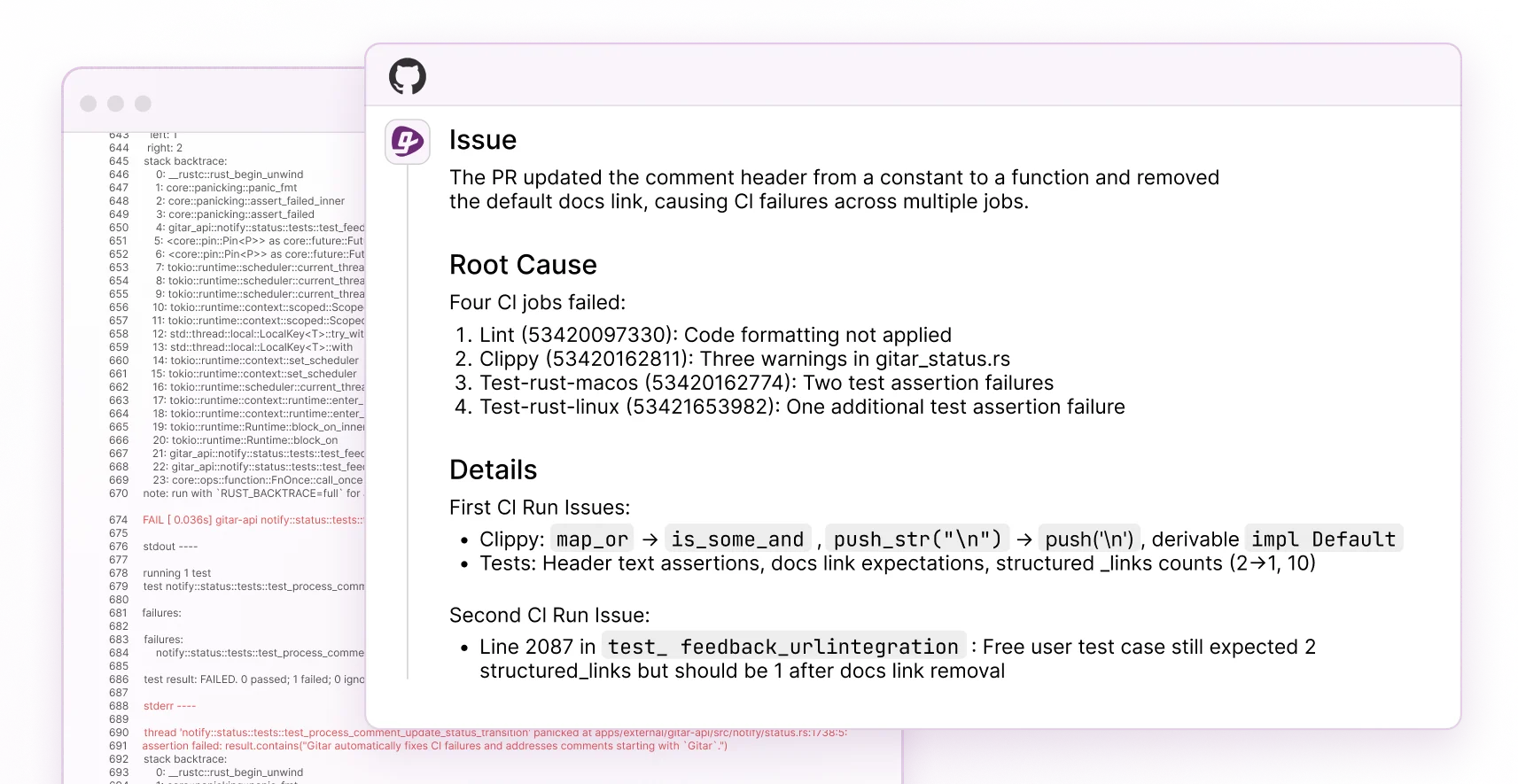
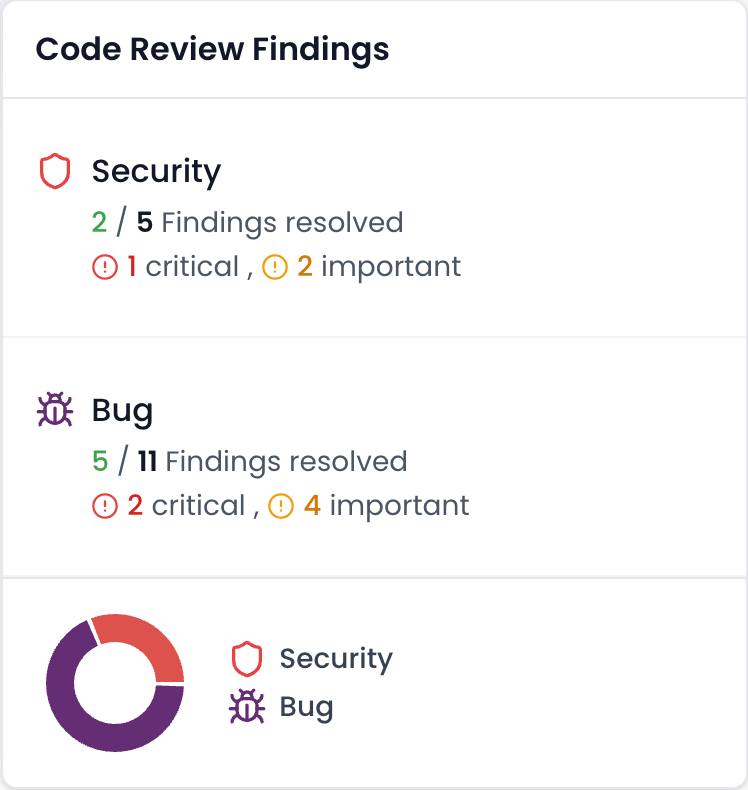
Open source AI code review tools face several hard limits. Teams often pay more than $1,000 per year for GPU infrastructure, receive suggestions without automatic fix application, and lack CI failure context. Independent benchmarks show varying F-scores across tools when tested on real-world codebases.
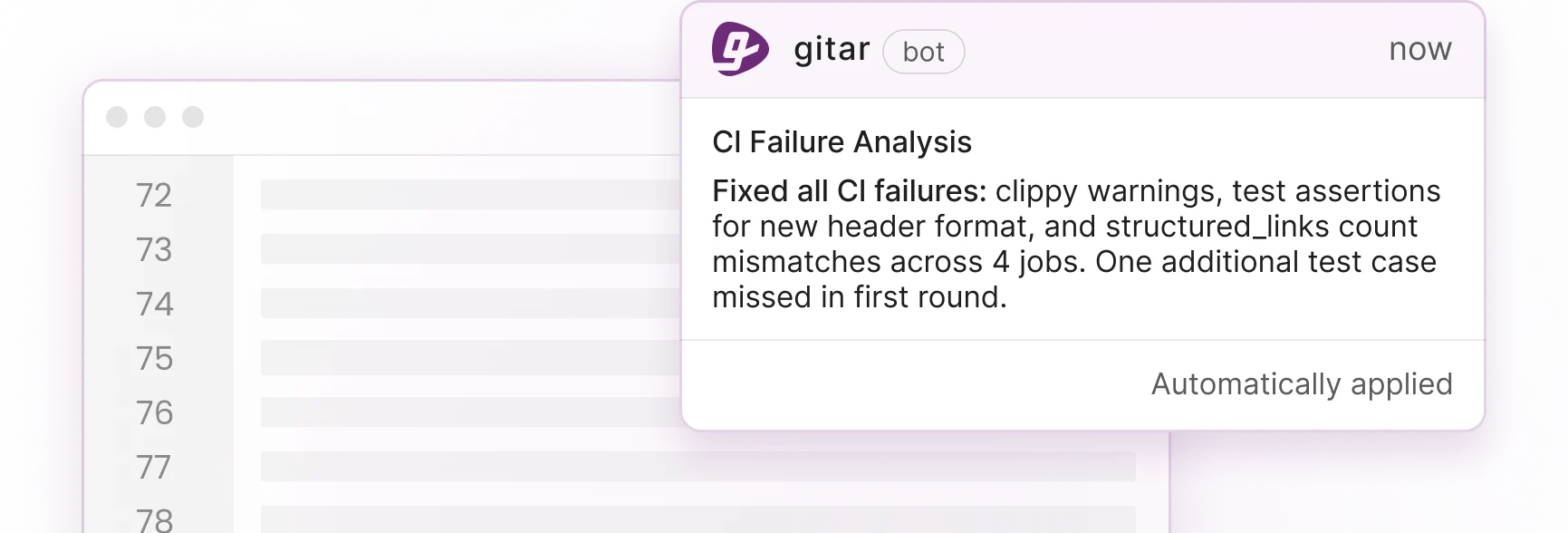
Gitar stands out as a stronger choice and provides free comprehensive code review plus autofix features with a 14-day free trial. The platform turns suggestions into validated, working solutions that ship to production.
| Capability | Top OSS (PR-Agent/Tabby) | Gitar |
|---|---|---|
| PR Summaries | Yes | Yes (Free) |
| Auto-apply Fixes | No | Yes (14-day free trial) |
| CI Auto-fix | No | Yes (14-day free trial) |
| Cross-platform | Yes | GitHub + GitLab + CircleCI |
The ROI case for Gitar stays clear. Gitar saves about 45 minutes per developer every day through automated CI healing and fix validation. For a 20-developer team, that time savings translates to roughly $375,000 in annual productivity gains, while OSS tools still require infrastructure spending without any guarantee of accurate fixes. Install Gitar free and move beyond OSS with guaranteed green builds.
2026 AI Code Review Trends and Selection Guide
Agentic quality control becomes standard in 2026, and AI agents now handle large-scale code review that exceeds human capacity. Teams choose between self-hosted OSS and managed platforms like Gitar based on privacy, control, and speed. Tabby fits teams that prioritize maximum privacy, PR-Agent suits teams that value community support, and Gitar serves teams that want production-ready automation with no infrastructure overhead.
| Team Type | Recommendation |
|---|---|
| Solo Developer | Tabby (lightweight) |
| Small Team | PR-Agent (community) |
| Enterprise | Gitar (auto-healing) |
Frequently Asked Questions
Best open source AI tool for GitLab code review
Tabby and Hexmos LiveReview currently offer the strongest GitLab integration among open source tools, with native merge request support and GitLab CI webhook compatibility. Gitar still delivers stronger GitLab support overall, with automatic fix application and CI healing features available at no cost.
GPU requirements for running PR-Agent locally
PR-Agent needs at least 8GB of VRAM when you run local LLM models such as Llama3. Teams that want smoother performance, especially on large codebases or concurrent PR analysis, should plan for 16GB VRAM. CPU-only deployment remains possible but runs significantly slower.
Alternatives to PR-Agent for automated code review
Tabby offers lightweight deployment and strong privacy controls. OpenDevin provides a multi-agent architecture for specialized review tasks. Aider focuses on interactive fix generation, and OneDev combines Git hosting with integrated AI review features.
Completely free AI code review tools
All listed open source tools are free to use, although they require infrastructure investment and technical setup. Gitar offers free comprehensive code review for unlimited repositories with full PR analysis, security scanning, bug detection, and performance review, with no seat limits and no credit card required.
Choosing between self-hosted OSS and a managed platform like Gitar
Self-hosted OSS gives maximum data control and privacy but demands GPU infrastructure, ongoing maintenance, and in-house expertise. Gitar delivers enterprise-grade features with zero infrastructure overhead, automatic updates, and guaranteed fix validation, which suits teams that prioritize delivery speed over complete self-hosting control.
Conclusion: Where OSS Fits and Where Gitar Wins
The leading open source AI tools for automated code review in 2026 include PR-Agent for deep GitHub integration, Tabby for privacy-focused deployment, and OneDev for integrated DevOps workflows. These tools still operate as suggestion-only systems and require meaningful infrastructure investment without any guarantee of working fixes. Start with Gitar’s free code review and 14-day auto-fix trial at https://gitar.ai/ for immediate productivity gains while you evaluate long-term OSS deployment strategies.