
Written by: Ali-Reza Adl-Tabatabai, Founder and CEO, Gitar
Key Takeaways
- AI coding tools have surged PR volumes to 43.2M monthly, while review times increased 91% due to CI failures and bottlenecks.
- Gitar.ai ranks #1 with AI healing that fixes CI failures and implements review feedback for guaranteed green merges.
- Traditional tools like Mergify and Graphite excel at merge queues but still require manual fixes when failures occur.
- GitHub native auto-merge is free but unreliable because of race conditions, CI flakes, and branch protection limitations.
- Teams achieve 75% faster CI and review cycles with Gitar. Start your 14-day free trial with Gitar to remove merge delays.
How We Evaluated These GitHub PR Automation Tools
Our evaluation criteria focus on automation depth across merge queues and auto-fix capabilities, GitHub integration quality, setup complexity, pricing scalability, CI system compatibility (GitHub Actions, CircleCI, Buildkite), security features, and 2026 community feedback. We analyzed vendor documentation, GitHub community discussions, and real-world deployment experiences from engineering teams using these tools in production.
Top Tools Overview
This ranking compares automated pull request merge tools by how far they go beyond simple coordination toward true failure healing and review automation.
|
Rank/Tool |
Key Strength |
Best For |
Pricing Tier |
|
#1 Gitar.ai |
AI healing (CI/review fixes) |
Velocity-stuck AI teams |
14-day Team trial (unlimited) |
|
#2 GitHub Native |
Free auto-merge/queues |
Basic setups |
Free/Pro/Enterprise |
|
#3 Mergify |
YAML rules/queues |
Complex conditions |
$10+/repo/mo |
|
#4 Graphite |
Stacked PRs |
Dependency chains |
$25/mo starter |
Gitar.ai leads this ranking because it is the only platform that guarantees green builds through AI-powered CI failure resolution and automatic review feedback implementation.
#1: Gitar.ai – AI Healing Engine
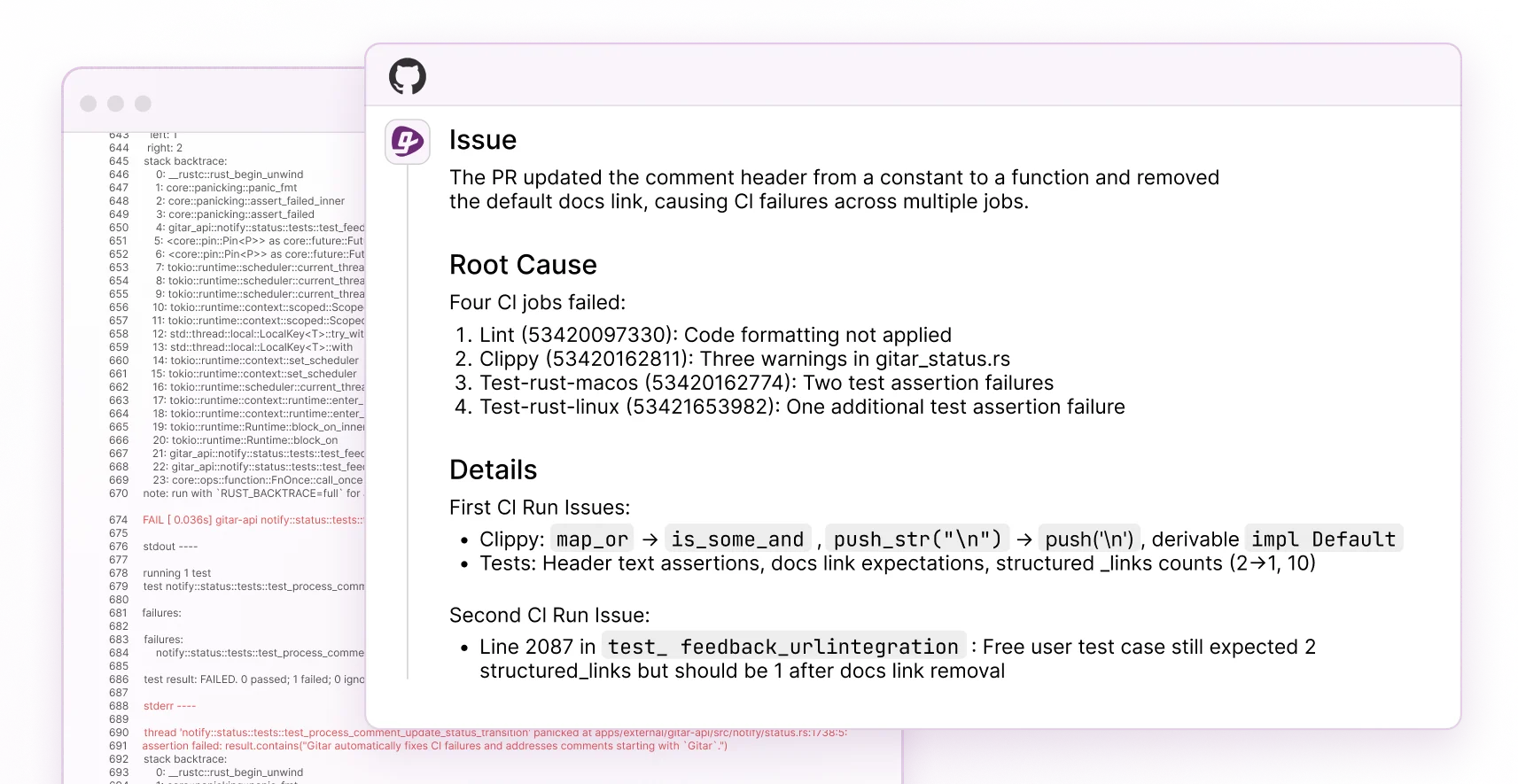
Gitar.ai delivers the next generation of PR automation by moving from suggestions to actual code healing. When CI fails, Gitar analyzes failure logs, generates validated fixes, and commits them directly to your PR. When reviewers leave feedback, Gitar implements the requested changes autonomously.
The platform uses natural language rules stored in .gitar/rules/*.md files, so teams define automation policies without complex YAML configuration. This simplicity extends to setup, because you only need to install the GitHub App or add a short YAML snippet for GitHub Actions integration, with full implementation guidance available in the Gitar documentation.
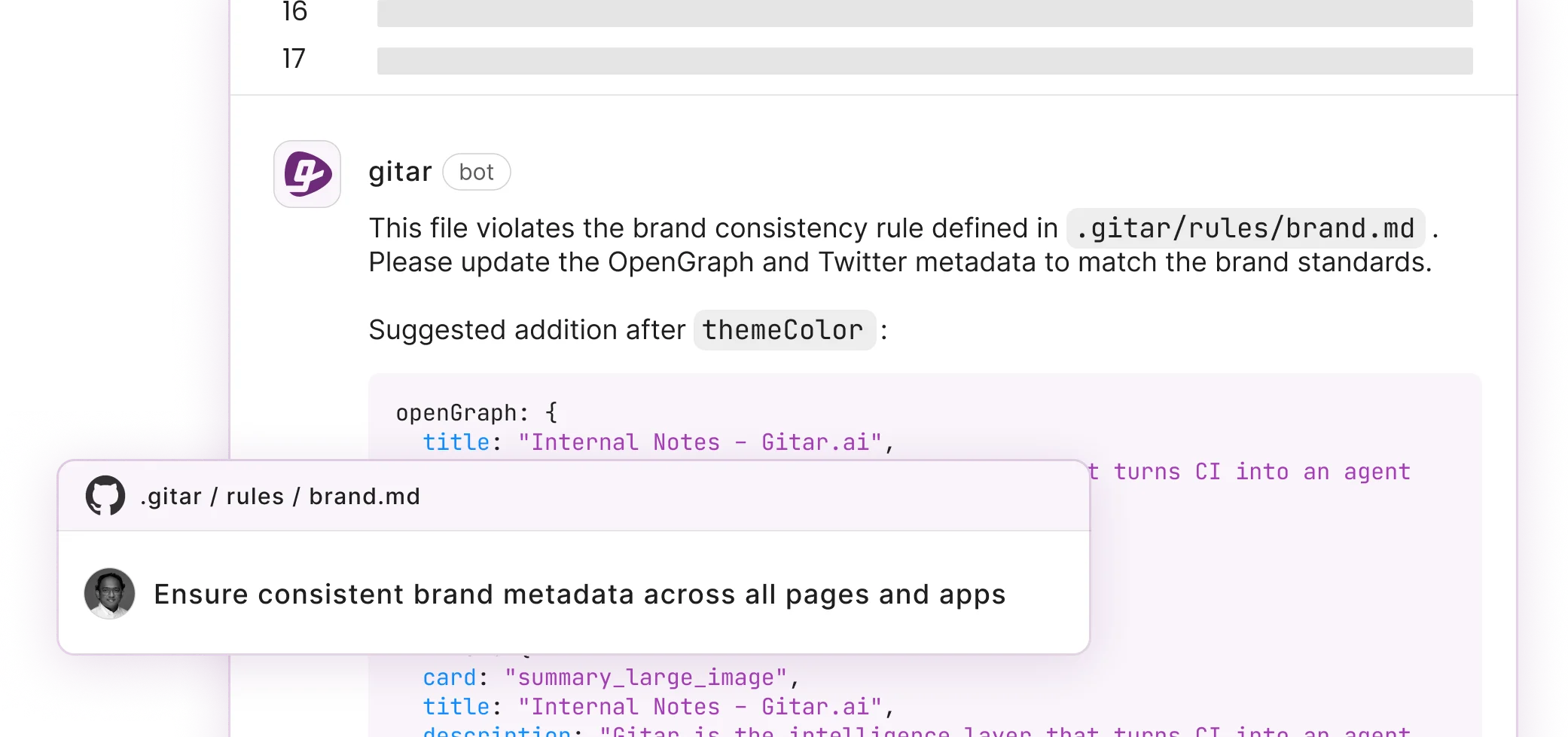
Key advantages include single-comment updates that prevent notification spam, deep integrations with Jira and Slack, and guaranteed green builds instead of suggestion-only workflows. Given the industry-wide review bottleneck mentioned earlier, Gitar’s autonomous healing directly addresses the core problem created by AI coding tools.
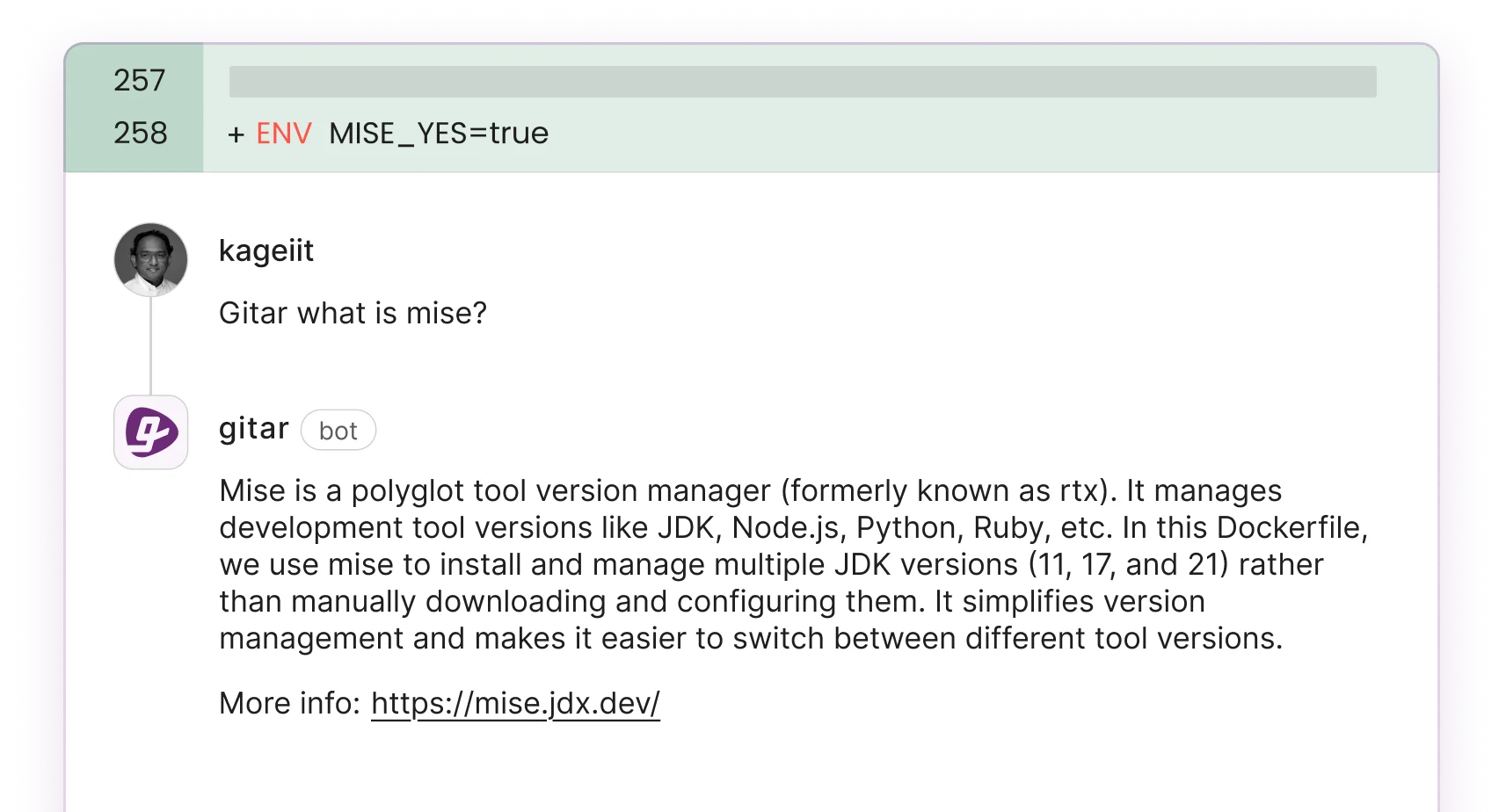
The platform maintains hierarchical memory per line, per PR, per repo, and per organization, and it learns team patterns over time. Competing tools start fresh on every PR, while Gitar’s context awareness improves fix accuracy and reduces false positives.
Install Gitar now for a risk-free 14-day Team Plan trial at gitar.ai.
#2: GitHub Native Auto-Merge & Actions
GitHub’s native auto-merge enables automatic PR merging when all requirements are met by using the “allow automatic merge when builds pass” setting. GitHub Actions workflows can also merge Dependabot PRs and approved PRs with specific labels through the gh pr merge –auto –squash command.
GitHub’s native approach remains free and tightly integrated with the platform. However, auto-merge can suddenly stop working even when enabled, and automated approvals from GitHub Actions bots do not satisfy branch protection rules that require human reviews. Race conditions and CI flakes frequently cause merge failures, and GitHub provides no healing capabilities.
#3: Mergify – YAML-Based Automation
While Gitar leads with AI healing, traditional tools like Mergify still help teams that want rule-based coordination without autonomous fixing. Mergify provides robust merge queue management through YAML configuration files. Teams define complex conditional logic for automatic merging based on approvals, CI status, and custom criteria. A typical configuration enables auto-merge when PRs receive required approvals and pass all status checks.
The platform handles merge conflicts well and coordinates sequential PR landing through its queue system. Pricing starts at $10 or more per repository per month, which works for smaller teams but becomes expensive at scale. Mergify does not include AI-powered failure resolution, so developers still step in when CI breaks or conflicts appear.
#4: Graphite – Stacked PR Workflows
Graphite is GitHub-only and requires full team adoption of stacked workflows, and it provides merge queues that coordinate landing changes in dependency order. The platform excels at managing complex PR relationships and rebasing operations.
Pricing starts at $25 per month for the Starter annual plan. Teams that commit to stacked workflows benefit from Graphite’s coordination features. However, Graphite requires significant workflow changes and still lacks AI-powered CI failure resolution, which limits its value for teams with frequent failures.
Feature Comparison Across PR Automation Tools
Now that we have examined each tool individually, this side-by-side comparison reveals the core market split: traditional tools focus on merge coordination, while only Gitar adds AI-powered failure resolution that removes manual intervention.
|
Feature |
Gitar.ai |
Mergify/Graphite |
GitHub Native |
|
Auto-merge |
Not specified |
Yes |
Yes |
|
Merge Queues |
Not specified |
Yes |
Enterprise only |
|
AI CI-Fix |
Yes (Guaranteed) |
No |
No |
|
Review Implementation |
Automatic |
Manual |
Manual |
Key Buying Considerations and ROI of AI Healing
Choosing the right tool depends on team size and automation needs. Startups with simple workflows may rely on GitHub’s native features, but as teams scale and CI complexity grows, the manual work required by traditional merge queues becomes a bottleneck. This is where Gitar’s comprehensive automation proves its value, because the 14-day trial period lets scaling teams test whether AI healing removes enough manual work to justify the investment.
Common pain points like “GitHub auto-merge not working” often come from CI flakes and race conditions that only AI-powered tools such as Gitar can detect and resolve. The ROI for automated PR healing is substantial, because teams using Gitar reduce daily CI and review overhead from one hour to fifteen minutes per developer, which translates to roughly $750K annual savings for a 20-person team.
|
Metric |
Before Automation |
After Gitar |
|
CI/Review Time per Developer |
1 hour/day |
15 minutes/day |
|
Annual Team Cost (20 devs) |
$1M |
$250K |
|
Context Switching |
Multiple/day |
Near-zero |
Install Gitar now to automatically fix broken builds and start shipping higher quality software faster. Get started with your free trial.
Frequently Asked Questions
What is the best free GitHub PR merge tool for small teams?
GitHub’s native auto-merge features provide basic functionality at no cost and work well for teams with simple workflows and low CI failure rates. Teams that need AI-powered failure resolution can use Gitar’s 14-day free trial with full Team Plan access to evaluate advanced capabilities before committing to paid plans.
How can I automate stacked pull requests effectively?
Graphite specializes in stacked PR workflows with dependency management and coordinated merging. It requires team-wide workflow adoption and does not include AI-powered CI failure resolution. Gitar focuses on AI-powered CI failure resolution and review feedback implementation that fix failures automatically instead of relying on manual intervention.
What is the difference between Gitar and traditional tools like Mergify?
Traditional tools like Mergify provide rule-based automation through YAML configuration but only handle merge coordination. When CI fails or conflicts appear, developers still need to intervene. Gitar’s AI healing engine automatically analyzes failures, generates validated fixes, and commits them directly, delivering the guaranteed green builds that set it apart from traditional merge queue managers.
How can I fix GitHub auto-merge failures and race conditions?
GitHub’s native auto-merge often fails because of CI flakes, race conditions, and infrastructure issues that appear unrelated to code changes. Gitar’s unrelated failure detection identifies when problems come from infrastructure instead of actual code bugs, then resolves CI issues automatically and prevents false merge blocks that waste developer time.
What are the best AI-powered PR automation tools in 2026?
Gitar leads the AI-powered PR automation space by providing comprehensive healing capabilities that move beyond suggestions to actual code fixes. Other tools like CodeRabbit and Qodo offer AI-powered reviews, but they lack the autonomous fixing capabilities and CI integration depth that make Gitar the most effective choice for high-velocity teams using AI coding tools.
Conclusion & Next Steps
The automated pull request merge landscape in 2026 is dominated by tools that handle basic coordination, while only Gitar provides the AI healing capabilities needed to address the modern bottleneck created by AI coding tools. Given the dramatic surge in PR volumes and review times documented earlier, teams need more than merge queues and require autonomous systems that guarantee green builds.
Traditional solutions still depend on manual intervention when failures occur, while Gitar’s healing engine resolves CI failures and implements review feedback automatically. Teams that want to maintain high velocity in the AI era gain a clear advantage with Gitar.
Install Gitar now for a risk-free 14-day Team Plan trial, automatically fix broken builds, implement review feedback, and guarantee green merges to ship faster. Try Gitar free for 14 days.