
Written by: Ali-Reza Adl-Tabatabai, Founder and CEO, Gitar
Key Takeaways for Choosing AI Auto-Fix Tools
-
AI coding assistants speed up code generation 3-5x but increase PR review time by 91%, creating “refactor hell” with constant manual fixes.
-
Tools like Gitar provide true auto-commit capabilities, fixing CI failures hands-free with GitHub, GitLab, and CircleCI integration.
-
Gitar leads with a 14-day unlimited Team Plan trial, the highest auto-fix success rates, and autonomous PR feedback implementation.
-
Evaluate tools by auto-commit success on test suites with lint and test failures. Cursor and Codeium work well for individuals but fall short on CI autonomy.
-
Teams save $750K+ annually on debugging. Install Gitar’s trial to move toward guaranteed green builds and faster shipping with a free 14-day testing period.
How To Evaluate Auto-Fix AI Tools for Your Team
Start by focusing on auto-commit success rates instead of suggestion quality. Measure how many CI failures each tool resolves without manual intervention. Pay attention to CI integration depth, setup time under 5 minutes, unlimited PR support during trials, and language coverage for your stack.
Create a 10-PR test suite that mixes legacy code, AI-generated code, and intentional CI failures. Track what percentage each tool fixes hands-free. Leading tools like Gitar handle lint and test failures through automatic analysis and applied fixes, while traditional suggestion engines like Cursor reach 70-80% and still depend on manual commits.

The following nine tools fit these evaluation criteria and illustrate different levels of autonomy, CI depth, and trial flexibility.
Top 9 AI Tools with Free Trials to Automatically Refactor and Fix Code
1. Gitar: Autonomous CI Healing for Teams
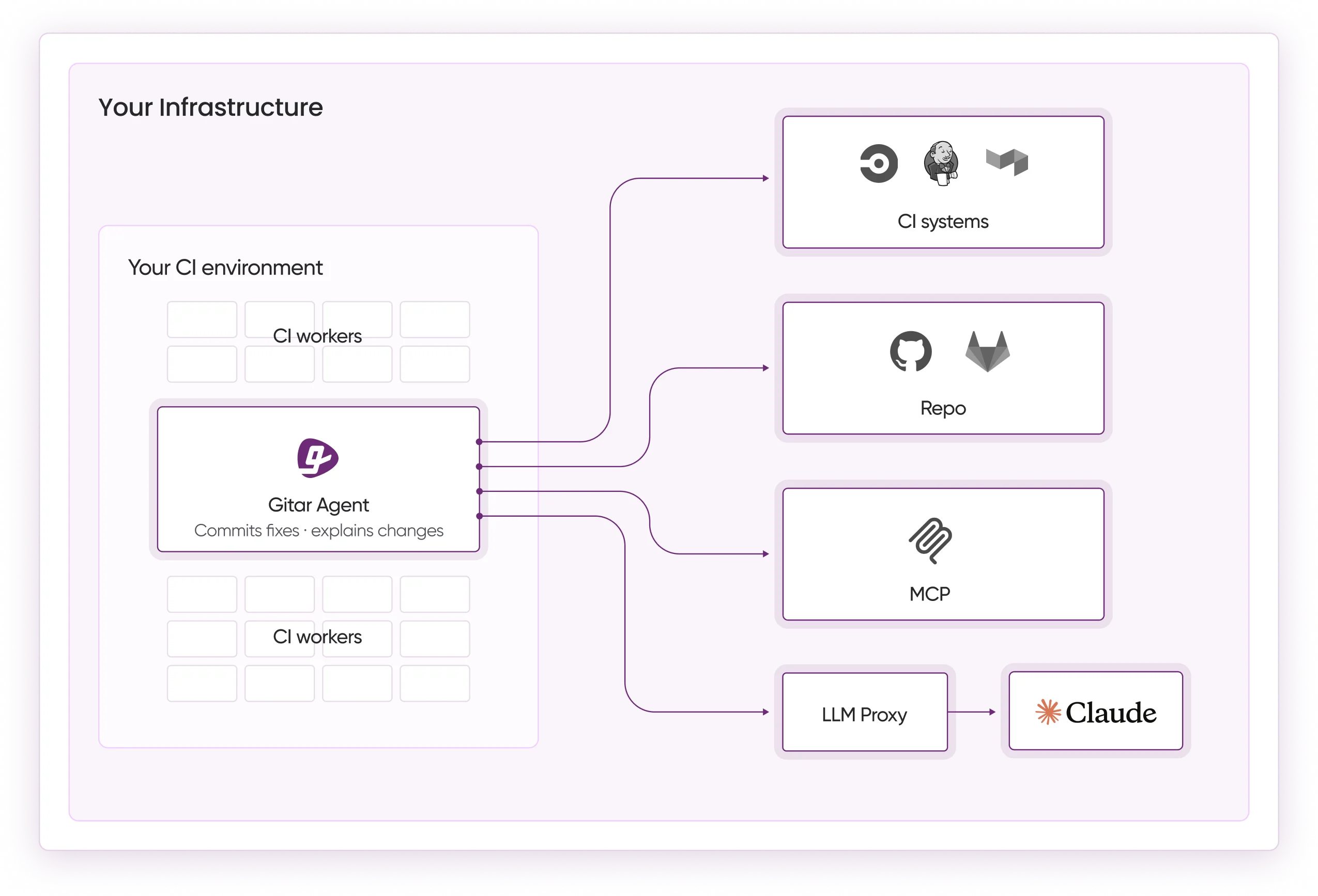
Gitar centers on a healing engine that automatically fixes CI failures, implements PR feedback, and validates changes against your full environment. The trial mentioned above provides unlimited seats and PRs, so teams can test Gitar on real workloads instead of sample projects.
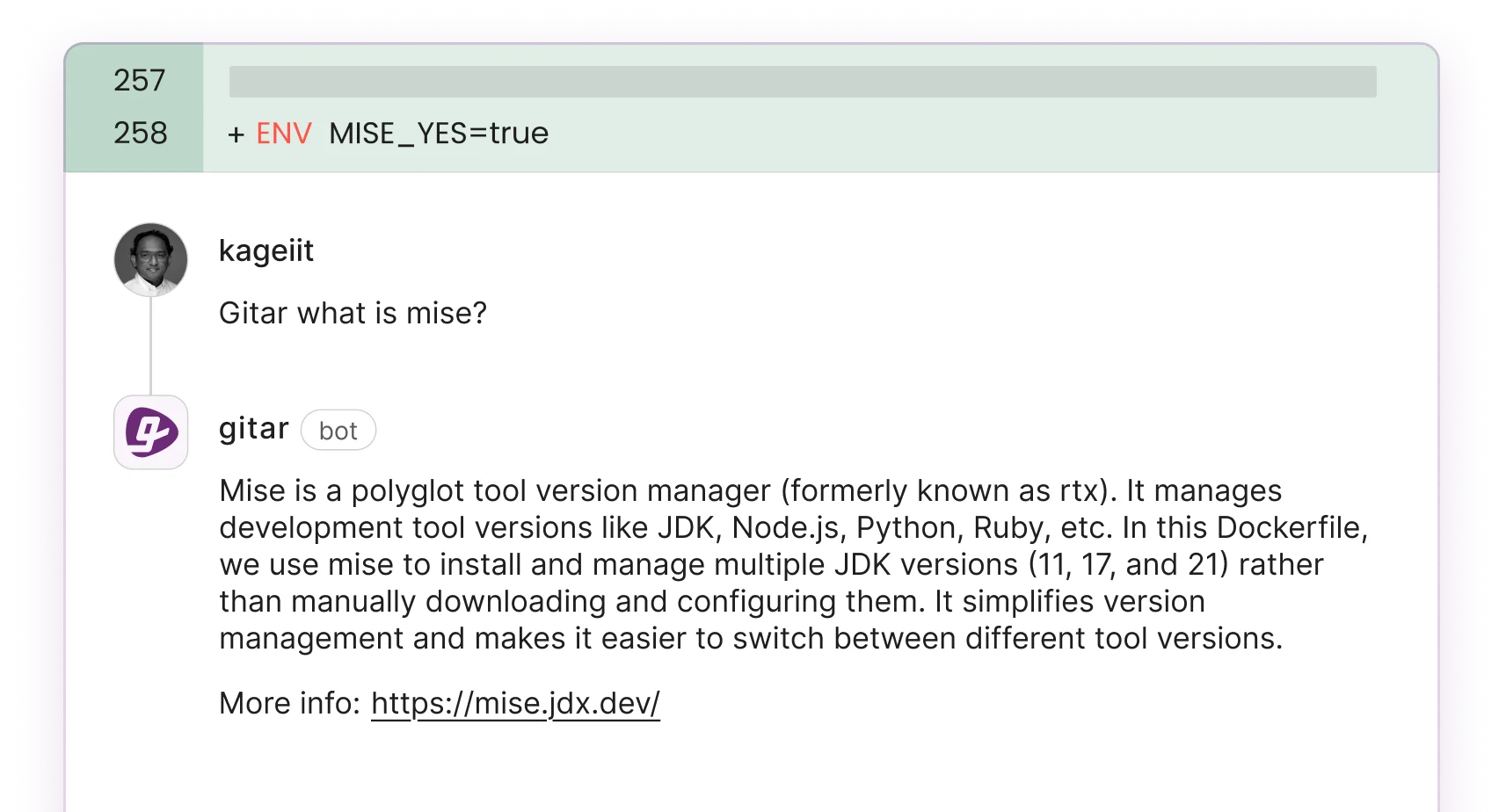
Gitar’s CI agent maintains context from PR creation to merge, finds root causes, and implements fixes. When reviewers comment “@gitar refactor this to use async/await,” the tool applies the change directly and validates it in CI instead of only suggesting edits.
Gitar’s strengths center on auto-commit validation and deep CI integration across GitHub, GitLab, and CircleCI. These capabilities allow a single dashboard comment to replace noisy notification threads. The main limitation is that these features require a paid plan after the trial, so it fits teams that need guaranteed CI resolution and can invest in autonomous review implementation.
Start your 14-day Team Plan trial to experience autonomous CI healing.
2. Cursor AI: IDE-Centric Refactoring for Individuals
Cursor’s Tab feature refactors code blocks instantly, while Composer manages multi-file edits across entire projects. LocalAimaster’s testing shows 70-80% success rates on legacy Python and JavaScript refactoring, with 55% average productivity improvements.
The VS Code-based editor provides repository-wide context and autonomous task completion inside a familiar interface. The free Hobby plan includes 200 completions and 50 requests monthly after a 2-week Pro trial, which suits regular but not heavy use.
Pros include deep codebase analysis, multi-file refactoring, and a familiar VS Code experience. Cons include a limited free tier and the need for manual validation and commits. Cursor works best for individual developers who handle complex legacy modernization directly in the editor.
3. Codeium (Windsurf): Budget-Friendly Autocomplete and Refactors
Codeium provides unlimited autocomplete and multi-file editing with zero data retention. Testing shows 35-40% acceptance rates and 32% productivity improvements across more than 70 programming languages.
The Windsurf IDE offers Cursor-like autonomous agents with repository context and built-in test generation. The free tier includes unlimited autocomplete and 25 Cascade credits monthly, which supports frequent coding sessions.
Pros include no-cost use for individuals, strong privacy guarantees, and broad language support. Cons include lower autonomy than premium tools and a smaller training dataset. Codeium suits budget-conscious developers who want reliable autocomplete and occasional multi-file refactors.
See how Gitar’s auto-commit approach compares to suggestion-based tools.
4. Qodo (formerly CodiumAI): Test Generation and Quality Gates
Qodo focuses on bug detection and test generation while also supporting PR review. The analysis engine identifies code quality issues and suggests targeted refactoring improvements that strengthen reliability.
The free tier is generous for test generation, with Pro plans at $19 monthly. Integration covers GitHub and GitLab with an emphasis on quality gates and technical debt reduction.
Pros include strong analytical capabilities, a comprehensive free tier, and a quality-focused approach. Cons include suggestion-heavy workflows and limited auto-commit features. Qodo fits teams that prioritize code quality and test coverage over full autonomy.
5. MutableAI: Maintenance and Documentation Automation
MutableAI automates refactoring and documentation generation with multi-file editing. It handles code cleanup tasks and keeps style consistent across large codebases through IDE plugins.
Key features include automated documentation updates, code style enforcement, and legacy code modernization. Integration supports VS Code and JetBrains environments with repository-wide analysis that surfaces patterns and issues.
Pros include a focus on maintenance tasks, solid IDE integration, and documentation handling. Cons include limited public benchmarking data and a smaller user base. MutableAI works well for maintenance-heavy projects that need consistent documentation and style.
6. Replit AI Agent: Browser-Based Full-Stack Development
Replit AI Agent 3 supports autonomous debugging and deployment inside a browser-native IDE. Rokt built 135 internal applications in 24 hours using the platform, which demonstrates its full-stack capabilities.
The free Starter plan provides daily Agent credits with limited intelligence. Replit supports more than 50 languages, GitHub integration, and one-click deployment for rapid iteration.
Pros include browser-based convenience, autonomous features, and deployment integration. Cons include public project constraints on the free tier and compute-based billing for heavier use. Replit suits rapid prototyping and full-stack experiments.
Try Gitar’s healing engine on your actual CI failures.
7. Amazon Q Developer: AWS-Aware Refactoring
Amazon Q Developer delivers code transformations and refactoring with deep AWS context. The free tier supports 50 agentic requests and 1,000 lines monthly for automated transformations.
Capabilities include security scanning, dependency updates, and framework migrations that align with AWS services. The tool excels at cloud-native refactoring and infrastructure-aware code changes that respect existing deployments.
Pros include tight AWS ecosystem integration, a security focus, and strong transformation features. Cons include limited free usage and an AWS-centric design. Amazon Q Developer works best for teams already committed to AWS infrastructure.
8. Aider CLI: Git-First Refactoring from the Terminal
Aider, with 39,000+ GitHub stars, excels at repository-wide refactoring through git-first workflows where every AI edit becomes a reviewable commit. The open-source tool supports more than 100 programming languages with full codebase mapping.
Each change generates descriptive commit messages on separate branches, which creates an auditable trail of AI modifications. Usage is unlimited when paired with user-provided LLM API keys, though those keys typically cost $2-50 monthly depending on volume.
Pros include an open-source model, effectively unlimited usage, a git-centric workflow, and broad language coverage. Cons include a terminal-only interface, API costs, and setup complexity. Aider fits command-line developers who want tight git integration for refactoring.
9. SonarQube Community Edition: Quality Gates and Technical Debt
SonarQube delivers static analysis and quality gates with CI and CD integration for technical debt tracking. The Community Edition offers broad code quality analysis with automated rule enforcement.
Features include security vulnerability detection, code smell identification, and technical debt quantification. Integration covers major CI systems and can block merges when quality gates fail.
Pros include comprehensive analysis, mature CI integration, and an established ecosystem. Cons include a lack of auto-commit capabilities and an analysis-only model. SonarQube suits teams that need quality measurement and gate enforcement rather than automated fixes.
Side-by-Side Comparison: Top 5 Auto-Fix Performers
The following comparison highlights differences in auto-commit success rates, CI integration depth, trial limits, and setup speed. Focus on how each factor affects hands-free CI resolution versus ongoing manual work.
|
Tool |
Auto-Commit % |
CI Integration |
Free Limits |
Setup Time |
|---|---|---|---|---|
|
Gitar |
Leading |
Full (GitHub/GitLab/CircleCI) |
14-day unlimited Team |
<5 min |
|
Cursor AI |
75% |
Partial |
200 completions/month |
<5 min |
|
Codeium |
40% |
Multi-IDE |
Unlimited |
<5 min |
|
Qodo |
60% |
PR analysis |
Generous |
5 min |
|
Replit AI |
70% |
Browser/CI |
Daily credits |
Instant |
Gitar stands out with guaranteed green builds supported by comprehensive CI integration and validation across real pipelines.
Key Questions Answered About AI Refactoring
Best AI Tool for Refactoring: Gitar’s healing engine delivers the highest auto-fix success during its 14-day Team Plan trial and outpaces suggestion-based alternatives.
Can AI Do Code Refactoring: AI can refactor code effectively, but results vary widely. Tools like Gitar validate and commit changes automatically, while others only suggest edits that still require manual implementation.
Best Free AI for Coding Fixes: Start with Gitar’s trial for comprehensive auto-fixing, then evaluate Cursor for individual development and Codeium for unlimited autocomplete needs.
Key Considerations When Picking an Auto-Fix Tool
Solo developers should prioritize easy-setup tools like Cursor and Codeium because individual workflows rarely need complex CI integration. Teams, by contrast, need CI-scale solutions like Gitar that handle collaborative workflows and shared pipelines. Legacy codebases add another dimension and benefit from tools with strong context memory and repository-wide analysis that understand existing patterns before suggesting changes.
The savings mentioned earlier, $750,000 annually for a 20-developer team, come from reduced manual debugging time and faster sprints. Higher auto-fix success rates in CI translate directly into fewer blocked developers and more predictable delivery.
Frequently Asked Questions
How to Test Free AI Auto-Fixers?
Create a test repository with intentional CI failures such as lint errors, test failures, and build breaks. Trigger those failures and measure what percentage each tool resolves without manual intervention. Gitar excels at resolution through automatic analysis and applied fixes, while suggestion-based tools still require humans to implement recommended changes.
What Makes Gitar Different from CodeRabbit?
Gitar implements fixes and commits changes automatically, while CodeRabbit focuses on suggestions in comments. The trial described earlier lets entire teams experience autonomous code healing instead of manual fix implementation. Gitar’s single dashboard comment also reduces notification spam that many traditional review tools generate.
Are There Free Limits for Teams?
Gitar offers unlimited seats and PRs during its trial period, which supports full-team evaluation. Codeium provides unlimited autocomplete for individual developers. Most other tools impose monthly request limits or use per-seat pricing for team features.
Is Auto-Fix Safe for Production CI?
Modern auto-fix tools support configurable approval workflows that protect production. Start in suggestion mode to build trust, then enable auto-commit for specific failure types such as lint errors. Tools emulate your environment, including SDK versions and dependencies, to keep fixes aligned with production contexts.
How Does Gitar Compare to Cursor?
Gitar focuses on CI and PR workflows with leading auto-fix capabilities, while Cursor excels at IDE-based development with strong autonomous task completion. Gitar validates fixes against your actual CI environment, while Cursor operates primarily inside the editor context.
Conclusion: Move From Refactor Hell to Autonomous Healing
Benchmarks from 2026 show Gitar’s healing engine delivering unmatched auto-fix capabilities for teams overwhelmed by refactor hell. The trial period provides a low-risk way to compare true autonomous code healing against suggestion engines that still depend on manual work.