
Written by: Ali-Reza Adl-Tabatabai, Founder and CEO, Gitar
Key Takeaways for Choosing an AI Code Formatter
-
AI code formatters reduce PR review bottlenecks by automating formatting, refactoring, and CI fixes beyond tools like Prettier.
-
Gitar leads with automated CI failure fixes and a healing engine that keeps builds green during its 14-day Team Plan trial.
-
Cursor supports multi-file refactoring for solo developers, while Codeium offers unlimited usage across 70+ languages with style matching.
-
Privacy-focused tools such as Tabnine and open-source options like CodeGeeX fit specific workflows but do not provide full CI auto-fix coverage.
-
Teams merge faster with Gitar’s 14-day Team Plan trial, which removes manual linting and helps maintain production-ready code.
How To Evaluate Free AI Code Formatters for Your Development Workflow
Choose AI code formatters by focusing on formatting intelligence, automation depth, and integration with your existing tools. Test formatting intelligence with real snippets that contain inconsistent styles. The strongest options adapt to your current patterns instead of forcing rigid new rules.
Move beyond basic formatting and check whether tools can auto-refactor code. The gap between automated fixes and suggestion-only workflows determines how much time your team actually saves. Integration testing then becomes essential. Verify VS Code extensions, GitHub or GitLab compatibility, and CI pipeline support across your stack.
Review free tier limits such as monthly caps, feature restrictions, and team size rules so you understand long-term viability. Benchmark speed and accuracy with JavaScript, Python, and Go samples to confirm support for your primary languages. These benchmarks work best when you test against real-world code instead of synthetic examples.
Use production code samples from open-source repositories to measure format consistency, refactor accuracy, and CI integration success rates. Rely on sources such as vendor documentation, developer forums, and 2026 benchmark data to ground your evaluation in current, practical results.
1. Gitar: AI Code Review With Automated Lint and CI Fixes
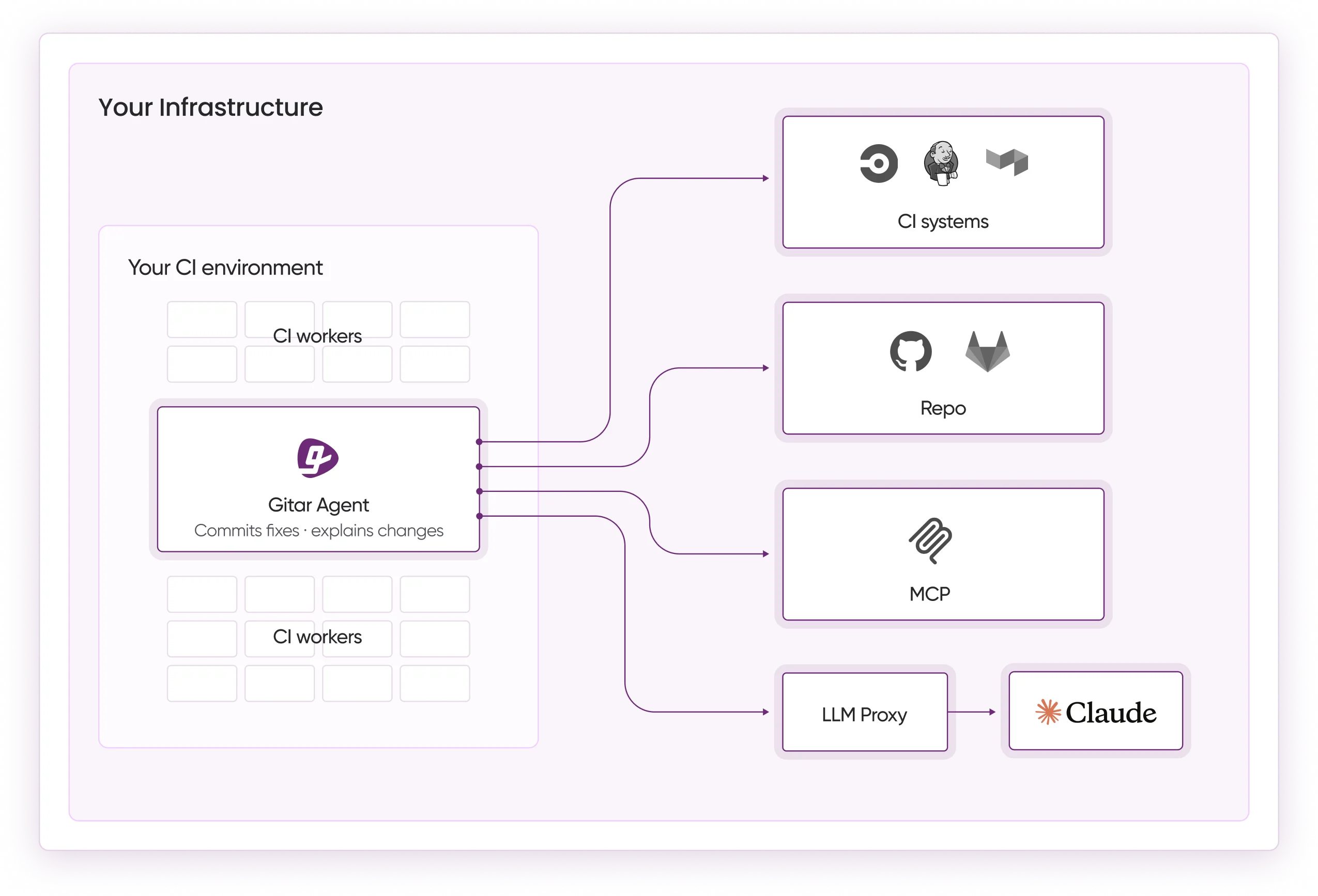
Gitar operates as an AI code review platform that keeps builds green through its healing engine. This guarantee is possible because Gitar’s CI agent maintains full context from pull request creation to merge, continuously tracking failures, root causes, and fixes. This continuous monitoring means that when lint errors, test failures, or build breaks occur, Gitar can immediately analyze logs, generate validated fixes, and commit them to your PR without waiting for manual input.
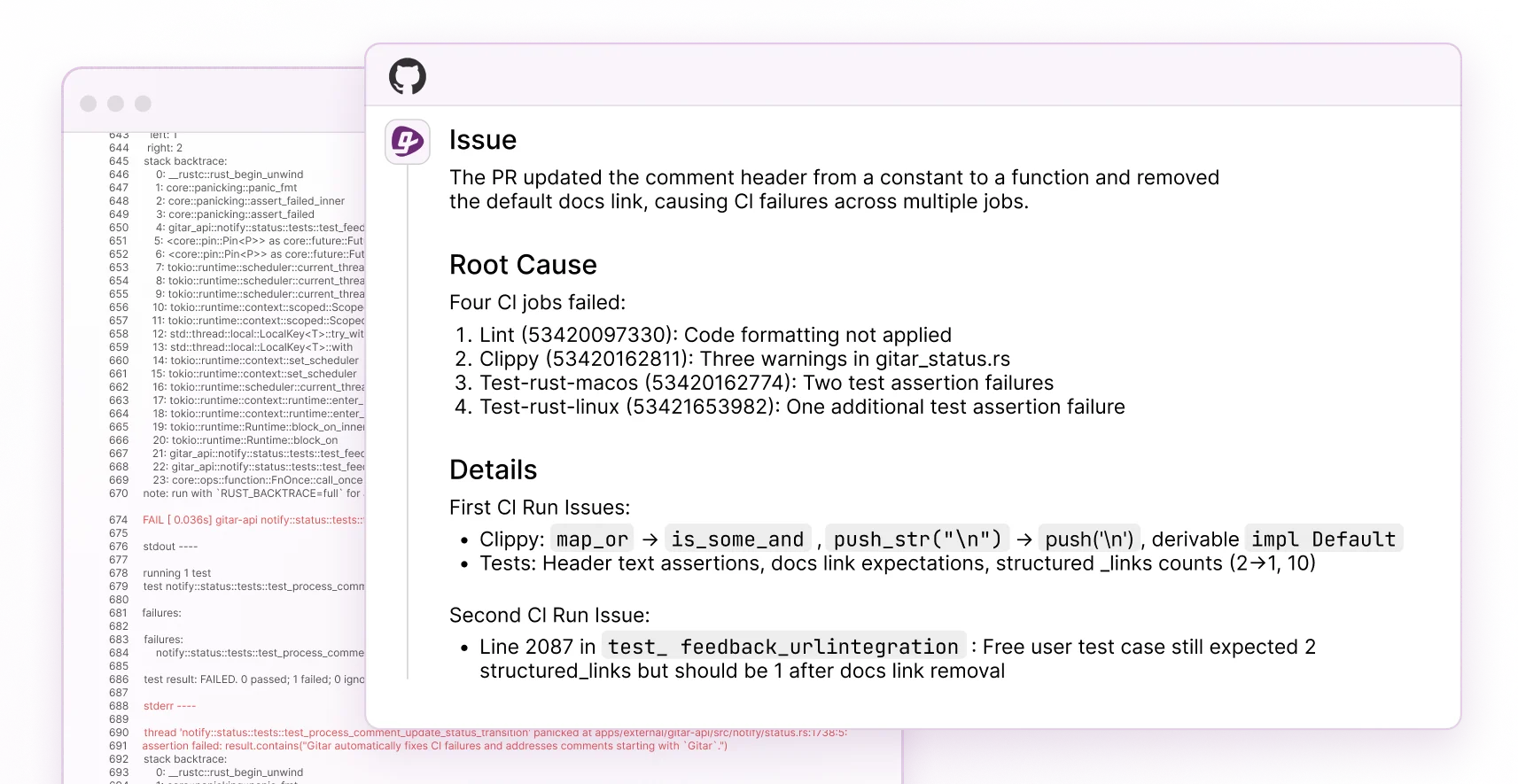
The platform consolidates findings into a single dashboard comment that updates in real time, which removes notification noise. Gitar’s CI Failure Analysis deduplicates failures across jobs, surfaces causes without log digging, and keeps information current. Installation only requires adding the GitHub App and starting a 14-day Team Plan trial for your whole team.
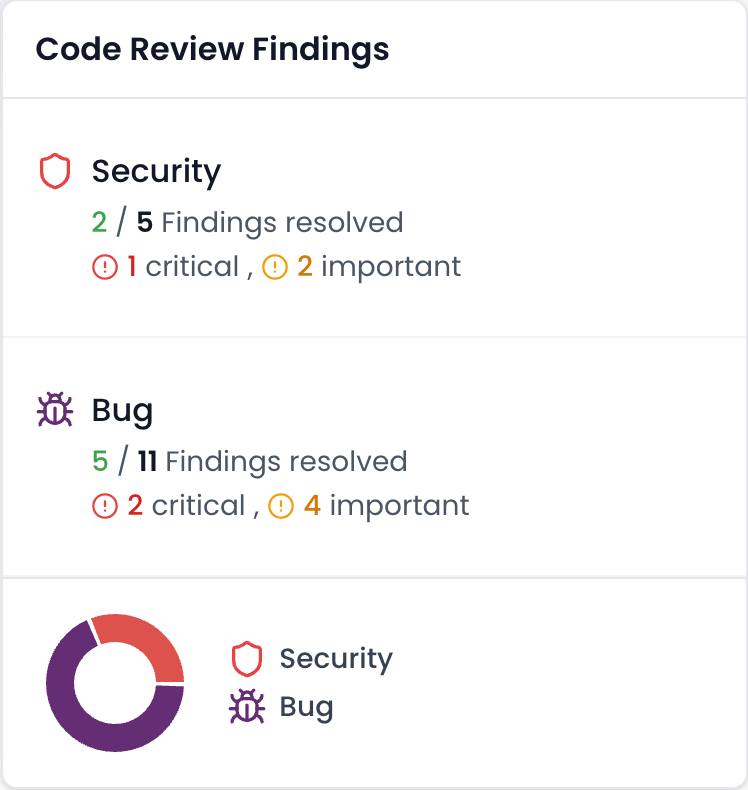
Pros: Auto-applies fixes, supports green builds, full team access during trial, natural language repository rules
Cons: None identified in testing
Best for: Solo developers and teams that need reliable CI automation
See Gitar’s healing engine in action on your own CI failures.
2. Cursor: AI Editor for Multi-File Refactoring
Cursor functions as a complete AI-powered code editor built on VS Code, with strong refactoring through its Tab and Composer features. The free Hobby plan includes unlimited “slow” requests on standard models and 50 “fast” premium requests each month, plus Tab for instant block refactors and Composer for multi-file edits. Cursor handles project-wide context and large-scale pattern updates effectively for smaller repositories.
Cursor AI lacks the deeper architectural tracking needed for complex cross-file dependencies in very large codebases. The 100,000 token context window can also cause incomplete updates during heavy refactors.
Pros: Project-level context, multi-file editing, VS Code integration
Cons: Limited fast requests, no CI auto-fix, dependency tracking gaps
Best for: AI-assisted coding workflows for solo developers on small to mid-size projects
3. Codeium: Copilot-Style Assistant With Style Adaptation
Codeium provides broad AI coding assistance without usage caps and supports more than 70 languages with style-aware completions. Codeium offers context-aware completions that match existing style, inline chat for debugging and ideation, semantic search, and enterprise options for local model hosting. It integrates with VS Code, JetBrains IDEs, and browser environments.
Codeium excels at suggestions, completions, and agentic editing through features such as Codeium Command for multi-file transformations. It does not, however, match the depth of specialized CI auto-fixing that dedicated CI healing platforms provide.
Pros: Unlimited usage, 70+ language coverage, local privacy options, style matching
Cons: Limited specialized CI integration, not focused on CI automation
Best for: AI coding workflows that require broad language support and long-term no-cost usage
Reduce manual CI cleanup by pairing Codeium with automated fixes from Gitar
4. Tabnine: Privacy-Focused Code Completion
Tabnine centers on privacy through local model execution while still delivering fast, accurate completions. It supports local models for security, integrates with VS Code, JetBrains IDEs, Sublime Text, and Neovim, and adapts to each developer’s style. This approach keeps code on your own infrastructure.
Tabnine focuses on completions and light refactoring rather than full formatting and CI automation. It suggests improvements but does not apply systematic fixes across your pipeline.
Pros: Local privacy, fast completions, multi-IDE support, style adaptation
Cons: No automatic application of fixes, no CI integration
Best for: Privacy-conscious developers who want secure inline assistance
5. Qodo: Formatter With Code Quality and Testing Insights
Qodo targets code quality and automated test generation alongside formatting. It analyzes code against industry standards and recommends refactors that improve maintainability and performance. Qodo identifies code smells and suggests structured improvements that go beyond simple style fixes.
The free tier includes limited monthly usage and operates mainly in suggestion mode. Teams that need guaranteed CI success must still apply and validate each recommendation manually.
Pros: Quality-focused analysis, testing integration, standards alignment
Cons: Limited free usage, suggestions only, minimal CI integration
Best for: Teams that track code quality metrics and testing coverage
6. Kodezi: Project-Wide Refactoring as an “AI CTO”
Kodezi positions itself as an “AI CTO” that scans entire projects and proposes broad refactoring strategies. It reviews codebases for architecture improvements, performance gains, and adherence to standards. Kodezi’s auto-format features extend into structural organization, not just syntax.
The platform offers CI and CD integration with autonomous auto-fix through an always-on system. Many teams still prefer CI tools that specialize in end-to-end healing and explicit green build guarantees.
Pros: Project-wide analysis, architectural guidance, auto-format features, CI integration
Cons: Limited free tier, configuration effort for strong CI workflows
Best for: Teams that want high-level codebase analysis and refactor planning
7. Tabby: Self-Hosted Open-Source Formatter
Tabby gives teams a self-hosted AI formatting option with full infrastructure control. As open source, it allows customization of formatting rules, model choices, and deployment setups. It supports several languages and connects to common development environments.
Self-hosting makes Tabby better suited to teams with DevOps capacity. It focuses on suggestions and does not provide automated CI integration or fix application.
Pros: Self-hosted control, open-source customization, no external dependency
Cons: Infrastructure overhead, manual setup, no automated CI fixes
Best for: Teams that require self-hosted AI with maximum control
8. Continue.dev: VS Code and JetBrains Refactoring Assistant
Continue.dev brings AI-powered refactoring into VS Code and JetBrains through lightweight extensions and a CLI. It focuses on context-aware improvements and supports multiple AI models for different tasks. Installation stays simple, with minimal configuration for basic use.
Continue.dev supports CI and CD integration through its CLI and headless mode. Write operations require confirmation by default for safety, although teams can adjust permissions for more automation.
Pros: Multi-IDE support, multiple AI models, CI and CD capabilities, lightweight setup
Cons: Confirmation prompts for writes by default, configuration needed for full automation
Best for: VS Code and JetBrains users who want flexible AI refactoring
9. CodeGeeX: Open-Source Multi-Language Formatter
CodeGeeX is a free open-source AI code generator that supports languages such as Python, JavaScript, Java, C++, and Go, offers cross-language translation, and provides inline completions with options for fine-tuning or local hosting. It works well for cross-language workflows and custom formatting rules.
Its open-source nature enables deep customization but requires technical expertise for setup and tuning. CodeGeeX focuses on intelligent suggestions and does not provide automated fix application or tight CI integration.
Pros: Multi-language support, code translation, open-source flexibility, local execution
Cons: Configuration complexity, suggestions only, limited CI integration
Best for: Cross-language coding projects that need open-source control
10. GitHub Copilot Free Tier: Native GitHub Integration
GitHub Copilot’s individual free tier includes 2,000 completions and 50 chat messages each month inside VS Code and related IDEs, and it functions as a fast, security-aware assistant. It integrates natively with GitHub and adapts to each user’s coding style.
Monthly caps limit Copilot for heavy users, and its focus remains on completions instead of full formatting and refactoring. Like other suggestion-based tools, it requires developers to implement every change manually.
Pros: Native GitHub integration, mature ecosystem, personalized learning
Cons: Usage caps, suggestion-only workflow, limited free features
Best for: Occasional coding assistance inside GitHub-centric setups
Stop manually fixing CI failures and let Gitar automate your review pipeline.
Best Free AI Code Formatters Compared
The comparison below highlights how each tool handles automation, CI support, and free access. Notice that Gitar combines auto-fix with CI validation, while most alternatives focus on suggestions or editor assistance.
|
Tool |
Free Tier |
Auto-Fix/Format |
IDE/CI Support |
Best For |
|---|---|---|---|---|
|
Gitar |
14-day Team trial |
Auto-fix + CI validation |
GitHub/GitLab + CI |
Guaranteed green builds |
|
Cursor |
Unlimited slow + 50 fast |
Code editing + multi-file |
VS Code fork |
Multi-file refactoring |
|
Codeium |
Unlimited usage |
Agentic editing + suggestions |
Multi-IDE |
70+ language support |
|
Tabnine |
Limited completions |
Suggestions + refactoring |
Multi-IDE |
Privacy-focused |
|
GitHub Copilot |
2,000 completions/month |
Suggestions only |
Multi-IDE |
GitHub integration |
|
CodeGeeX |
Open-source |
Suggestions only |
VS Code + others |
Cross-language projects |
|
Qodo |
Limited monthly |
Suggestions only |
Limited |
Code quality focus |
|
Kodezi |
Limited free tier |
Auto-format + refactor |
CI/CD support |
Project-wide analysis |
|
Tabby |
Open-source |
Suggestions only |
Editor plugins |
Self-hosted control |
|
Continue.dev |
Free extension |
Refactor suggestions |
VS Code + JetBrains + CI |
IDE-first workflows |
Developers should benchmark these tools against real workloads. Test Gitar on lint failures and CI runs, then compare resolution time and success rates with suggestion-based tools that still require manual edits.
Best Free AI Code Formatters for Solo Developers and Small Teams
Solo developers and small teams gain the most from tools that provide full-featured trials instead of strict monthly caps. Gitar’s 14-day Team Plan trial grants complete access to auto-fix, CI integration, and collaboration features without seat limits. This window gives teams enough time to measure real productivity gains before choosing a paid plan.
Teams that prioritize immediate CI success should focus on platforms that guarantee green builds rather than suggestion-only assistants. Student and solo workflows benefit from automated fixes that demonstrate correct patterns while keeping projects moving forward.
Frequently Asked Questions
What’s the best free AI code formatter for developers in 2026?
Gitar leads during its 14-day Team Plan trial because it automatically fixes code issues instead of only suggesting changes. Other tools such as Cursor, Codeium, and Tabnine provide intelligent suggestions, but Gitar’s healing engine handles CI failures end to end. The trial includes full auto-fix access, CI integration, and team features without limits, which suits developers who need reliable green builds and clean PRs.
How does Codeium compare to other free AI code formatters?
Codeium stands out by offering unlimited usage across more than 70 languages, while tools like GitHub Copilot and Cursor enforce caps. It adapts to your style and supports local deployment for privacy-sensitive teams. Codeium still works as a suggestion-based assistant, so developers must apply fixes manually. Teams that want automated CI healing often pair Codeium with a platform such as Gitar that applies validated changes directly.
Are there good free AI coding tools for students and solo developers?
Several tools work well for students and solo developers. Gitar’s 14-day Team Plan trial delivers a complete experience with auto-fix and CI integration. For longer-term no-cost usage, Codeium offers unlimited completions across many languages, and CodeGeeX provides open-source flexibility for experimentation. Automated fixes help students see production-grade patterns in context, which makes Gitar’s trial especially useful for learning modern workflows.
How should developers test AI code formatters before choosing one?
Developers should test tools on real projects instead of trivial examples. Use repositories that already contain style inconsistencies and CI issues to evaluate formatting intelligence and automation. Confirm IDE integration with your primary editor and verify CI compatibility. Compare suggestion quality against any auto-applied fixes and track time saved on manual cleanup. For team trials, run Gitar for 14 days to experience full automation, then compare that baseline with suggestion-only alternatives.
What makes Gitar different from other AI code review tools?
Gitar’s healing engine architecture focuses on fixing code, not just commenting on it. When CI fails, the platform applies the same analyze, repair, and commit cycle described earlier, which replaces manual triage. This approach contrasts with tools such as CodeRabbit or Greptile that charge per developer for suggestions that still require human effort. Gitar also consolidates findings into a single updating comment and supports natural language repository rules, which removes noisy threads and complex YAML setups.
Conclusion and Next Steps for Selecting an AI Code Formatter
Your choice among these ten tools should reflect your workflow priorities and constraints. Teams that need guaranteed green builds with minimal manual intervention gain the most from Gitar’s healing engine during the 14-day Team Plan trial. Developers who value unlimited long-term usage across many languages may favor Codeium, while privacy-focused teams can evaluate Tabnine’s local execution.
Organizations that require self-hosted or open-source solutions should consider Tabby or CodeGeeX, and those centered on GitHub may prefer Copilot’s native integration. Start by testing Gitar’s automation on your current CI failures, then decide whether suggestion-based or self-hosted alternatives meet your needs if full auto-fix is not essential.
Start your 14-day Gitar Team Plan trial to experience guaranteed green builds in your own pipeline. For setup details and advanced configuration, visit docs.gitar.ai.