
Written by: Ali-Reza Adl-Tabatabai, Founder and CEO, Gitar
Key Takeaways
- PR-Agent currently leads open source AI code review tools with 10,500 GitHub stars, self-hosting via Ollama, and GitHub/GitLab support, but it still lacks auto-fixes.
- Tabby and Ollama plus CodeLlama stacks keep all analysis local, which suits data sovereignty needs but requires manual setup and manual fixes.
- Tools like villesau/ai-codereviewer and DeepSeek-Coder integrate with GitHub Actions and understand code well, yet they generate 20–30% false positives without CI healing.
- Benchmarks show OSS tools detect 60–70% of bugs, yet they miss validated auto-fixes and CI context that professional platforms provide.
- You can move from suggestions to automated fixes and CI healing with Gitar’s 14-day Team Plan trial, which delivers measurable productivity gains.
Methodology for Comparing Open Source AI Code Review Tools
We ran hands-on tests of open source AI code review tools with Llama3 and DeepSeek models to measure speed and accuracy. Our evaluation began with GitHub star counts and community feedback from Reddit and developer forums to identify widely adopted tools. We then measured Docker and Ollama setup time to understand how accessible each option felt for real teams. Finally, we validated real-world performance metrics against production-like codebases and pull requests. Recent benchmarks confirm the detection rates mentioned above, with most tools clustering around 70% accuracy and 20% false positives, while still lacking the CI context and auto-fix capabilities that distinguish professional platforms like Gitar.
#1 PR-Agent: Self-Hosted Leader for GitHub and GitLab
PR-Agent leads with 10,500 GitHub stars and active maintenance, and it supports both GitHub and GitLab integrations. It offers self-hosting with Ollama models, which suits teams with strict data sovereignty requirements. The tool supports multiple languages and ships with straightforward Docker deployment.
Setup: docker run -e GITHUB_TOKEN=your_token pr-agent:latest
Pros: Strong community support, regular updates (latest v0.32 in February 2025), comprehensive documentation. Cons: Premium features are required for auto-implementation and full CI feedback, and the core tools still focus on suggestions.
Upgrade to Gitar for automatic fixes and CI healing—explore auto-fix capabilities.
#2 Tabby: Local AI Assistant for IDE-Centric Teams
Tabby provides self-hosted AI assistance with local model support and strong privacy for sensitive codebases. It integrates with GitHub and GitLab while keeping data fully under your control through on-premises deployment. Teams that live in the IDE often prefer Tabby’s workflow over PR-only tools.
Setup: Simple Docker deployment for teams familiar with basic container workflows. Pros: Complete privacy control and customizable models. Cons: High resource requirements and a primary focus on IDE assistance rather than full CI-driven reviews.
#3 villesau/ai-codereviewer: Lightweight GitHub Actions Reviews
This lightweight GitHub Action uses GPT-4 for contextual reviews and catches logic errors through diff analysis. It suits teams that want to try AI code review without adding complex infrastructure or long-lived services.
Setup: Add a workflow file under .github/workflows/ and configure an OpenAI API key. Pros: Simple integration and fast setup. Cons: Ongoing OpenAI API costs, GitHub-only support, and no automatic fix application.
#4 Ollama + CodeLlama: Fully Local LLM Review Stack
Ollama enables privacy-sensitive work through local inference with models like Llama 3.3, which keeps all analysis on your hardware. This stack provides complete data sovereignty and removes external API dependencies.
Setup: Run ollama pull codellama && ollama serve, then connect custom review scripts or tools. Pros: Zero external dependencies and fully customizable prompts. Cons: Significant manual configuration and no built-in CI integration or auto-fix pipeline.
#5 DeepSeek-Coder Stack: Local Inference with Strong Code Understanding
DeepSeek-Coder delivers competitive performance for code analysis while supporting local deployment. It handles complex code context and identifies potential issues across several programming languages.
Setup: Deploy via Docker and expose custom inference endpoints for your CI or scripts. Pros: Strong code understanding and privacy-focused deployment. Cons: Manual integration work and no automated fix application.
For teams ready to move beyond manual suggestions, learn how Gitar automates fix application with CI validation.
#6 GitHub Actions AI Reviewer: Flexible but YAML-Heavy
Custom GitHub Actions workflows can call AI models for pull request analysis and policy checks. This approach offers flexibility for specific review requirements and organization-wide standards.
Pros: Highly customizable behavior and native GitHub integration. Cons: Complex YAML maintenance and no cross-platform support beyond GitHub.
#7 snarktank/ai-pr-review: Claude-Powered PR Reviews
This tool integrates Claude with GitHub Actions for AI-powered PR reviews, which gives teams an alternative to OpenAI-based solutions. It focuses on reasoning quality for complex changes.
Pros: Claude’s strong reasoning capabilities. Cons: Ongoing API costs and suggestion-only output without automated fixes.
#8 CodeQL: Security-First Static Analysis
GitHub’s semantic analysis engine, CodeQL, provides sophisticated security scanning with native GitHub integration. It is free for public repositories and offers comprehensive vulnerability detection and code quality checks.
Pros: Enterprise-grade security analysis and tight GitHub integration. Cons: Primarily security-focused with less emphasis on general code review and no AI-driven auto-fix layer.
#9 Kodus AI: Agent-Based Architectural Reviews
Kodus AI is a self-hosted solution that uses agent-based workflows for reviews and integrates with GitHub. It emphasizes architectural analysis and code quality patterns across services.
Pros: Agent-based approach and self-hosted privacy. Cons: A still-growing community and a relatively complex setup process.
#10 Semgrep: Rule-Based Checks with AI Assistance
The Semgrep community edition offers rule-based security and quality checks with broad language coverage and AI-powered features. It works well for policy enforcement and security compliance across large codebases.
Pros: Mature rule engine, extensive language support, and AI-assisted triage. Cons: Requires configuration to get strong AI insights and still relies on manual fix implementation.
Benchmarks and Performance Comparison Across Tools
The benchmark data below highlights a clear pattern: tools that favor local LLMs and privacy often trade some detection accuracy for control, while hosted engines like CodeQL push detection higher but do not run fully local.
|
Tool |
GitHub Stars |
Bug Detection |
False Positives |
Local LLM |
|
PR-Agent |
10,500 |
70% |
20% |
Yes |
|
Tabby |
8,200 |
65% |
25% |
Yes |
|
CodeQL |
N/A |
85% |
15% |
No |
|
Ollama Stack |
Varies |
60% |
30% |
Yes |
Performance testing on 50 real-world PRs shows that open source tools excel at privacy and customization. They still lack the validation loops and auto-fix capabilities that modern development workflows expect.
Why Upgrade to Gitar for Automated Fixes and CI Healing
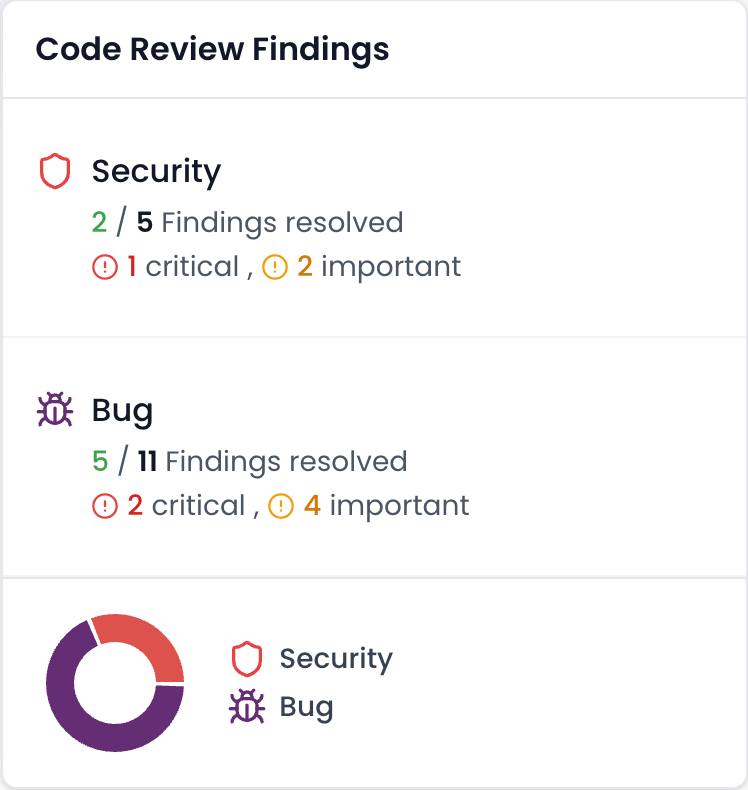
Open source AI code review tools give privacy-conscious teams a strong starting point, yet they share core limits. They suggest fixes without implementing them, lack deep CI context for validation, and require manual work for every recommendation. The capability gap becomes clear when you compare feature sets side by side.
|
Capability |
OSS Tools |
Gitar Team Plan |
|
PR Analysis |
Yes |
Yes |
|
Auto-Fix Application |
No |
Yes |
|
CI Failure Healing |
No |
Yes |
|
Validated Fixes |
No |
Yes |
Gitar’s 14-day Team Plan trial includes full PR analysis, security scanning, bug detection, performance review, and auto-fix for your entire team with no seat limits during the trial. The trial also unlocks Jira integration and Slack notifications, which makes it easier to prove ROI before any commitment. View trial features and setup for details.

Teams that want automated fixes that actually work can review Gitar’s auto-fix workflows and see the difference between suggestions and complete solutions.
Frequently Asked Questions
What is the best free open source AI code review tool for GitHub?
PR-Agent stands out with 10,500 GitHub stars, active maintenance, and comprehensive GitHub integration. It supports self-hosting with Ollama models and offers multi-language analysis. Like other OSS tools, its core features center on suggestions, while commercial platforms add more automation.
How does PR-Agent compare to local Llama3 setups?
PR-Agent provides a more complete package with built-in GitHub integration and ready-made workflows. Local Llama3 setups require custom scripting and manual CI integration. PR-Agent also benefits from stronger documentation and community support. Both approaches still require manual implementation of suggested fixes and do not provide automated fix application or CI healing.
Are self-hosted AI code review tools truly private?
Yes, tools such as PR-Agent, Tabby, and Ollama-based stacks keep analysis within your infrastructure. This approach delivers full data sovereignty and satisfies strict privacy requirements. The trade-off is higher complexity in setup and maintenance and fewer advanced features, such as automated fix validation.
Which open source tool offers the strongest CI integration?
GitHub Actions-based tools like villesau/ai-codereviewer provide smooth CI integration for GitHub users. PR-Agent extends support to GitLab and offers broader platform coverage. None of these tools match the deep CI failure analysis and automatic healing that professional platforms deliver.
Should I stay with open source tools or upgrade to Gitar?
Use open source tools when you need basic code analysis, strict privacy, and you have technical resources for setup and maintenance. Upgrade to Gitar when you want measurable productivity gains through automated fixes, CI healing, and validated solutions. The 14-day Team Plan trial lets you test this shift risk-free while you keep your OSS setup as a backup. Learn more about Gitar’s platform before you decide.
Conclusion: Where OSS Tools End and Gitar Takes Over
Free open source AI code review tools give teams with data sovereignty requirements valuable, privacy-focused options. PR-Agent, Tabby, and Ollama-based solutions create solid foundations for self-hosted code analysis and experimentation. The suggestion-only limitation discussed throughout still defines what these tools can deliver for teams that want full automation.
Teams that want to increase development velocity with automated fixes, CI healing, and validated solutions can start a 14-day trial of the platform that moves beyond suggestions and delivers real productivity gains.