
Key Takeaways for 2026 Engineering Leaders
- AI coding tools boost code generation 3-5x but create PR review bottlenecks, so teams need advanced analytics for DORA metrics like deployment frequency and change failure rate.
- Gitar leads as the top free development analytics tool with CI failure categorization, PR analytics, and AI-powered code healing for unlimited repositories.
- Competitors like LinearB, Swarmia, and Jellyfish cover DORA metrics but charge $15-40 per developer monthly and lack Gitar’s automated fix capabilities.
- Teams cut 50-75% of CI and review time, saving $375K-$1M annually for 20-developer teams when they adopt tools like Gitar.
- Start with Gitar’s free AI analytics and code healing to unblock sprints, track DORA metrics, and increase engineering velocity in 2026.
Core DORA Metrics Every Team Should Track
Four core DORA metrics define elite engineering performance as of 2025. These metrics focus on deployment speed, stability, and reliability.
- Deployment Frequency: Elite teams deploy daily or multiple times per day and track how often code reaches production.
- Lead Time for Changes: Elite teams keep the time from commit to production deployment under one day.
- Failed Deployment Recovery Time: Elite teams restore service in under one hour when failures occur.
- Change Failure Rate: Elite teams keep fewer than 15% of deployments from causing production issues.
Why DORA Metrics Matter in 2026
AI coding tools now shift bottlenecks to review and deployment phases. AI-generated code shows 1.7× more defects without proper code review, so DORA metrics become critical for tracking how AI affects deployment frequency, recovery times, and failure rates.
Teams rely on PR analytics, flow efficiency tracking, and cycle time measurements to improve the entire development pipeline, not just code generation speed.
Top 10 Development Analytics and Metrics Tools for 2026
This comparison highlights leading development analytics platforms based on DORA coverage, pricing accessibility, and capabilities that matter for 2026 engineering teams.
| Tool | DORA Coverage | Pricing/Free Tier | Unique Edge |
|---|---|---|---|
| Gitar | CI failure categorization and PR analytics | Free code review, 14-day autofix trial | AI healing engine with CI autofix |
| LinearB | DORA + workflow metrics | Starts at $29/contributor/month | Investment tracking and planning |
| Swarmia | Flow efficiency focus | Starts at ~$30/developer/month, free tier for <10 devs | GitHub-native integration |
| Jellyfish | Engineering intelligence | Custom pricing (contact sales) | Cross-platform visibility |
| Waydev | Git analytics + DORA | Starts at ~$29-37/developer/month | Individual developer insights |
| Datadog | Infrastructure + deployment | $15/host/month | Full-stack observability |
| Jira Insights | Project metrics only | Included with Jira | Native Atlassian integration |
| GitClear | Code quality metrics | ~$35/contributor/month | Line-level code analysis |
| Pluralsight Flow | Engineering efficiency | Starts at ~$40-50/developer/month | Skills correlation analysis |
| Oobeya | Value stream mapping | Starts at ~$30-40/user/month | Business outcome tracking |
Install Gitar, the top free development analytics tool with AI autofix capabilities.
Why Gitar Leads Free Development Analytics in 2026
Gitar operates as a free AI code review platform that grows into a full development intelligence solution with deep analytics. Competitors often charge $15-30 per developer for suggestion-only tools, while Gitar delivers complete PR analysis, security scanning, bug detection, and performance review at no cost for unlimited repositories.
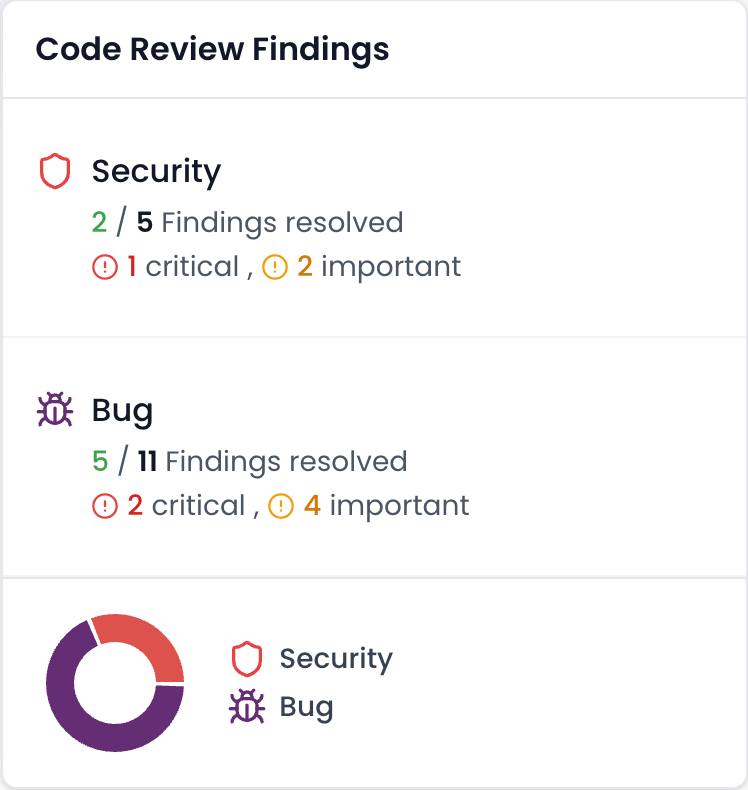
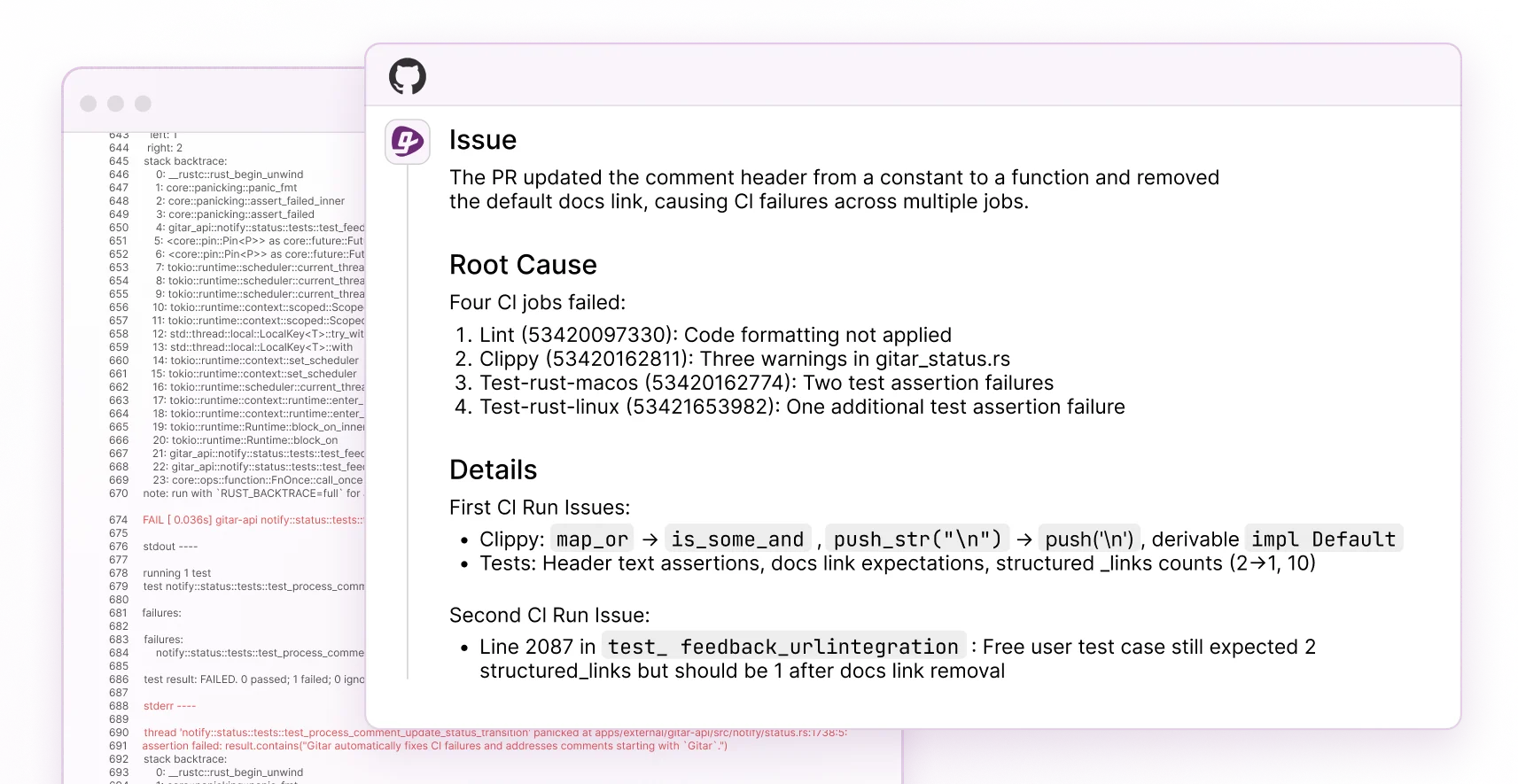
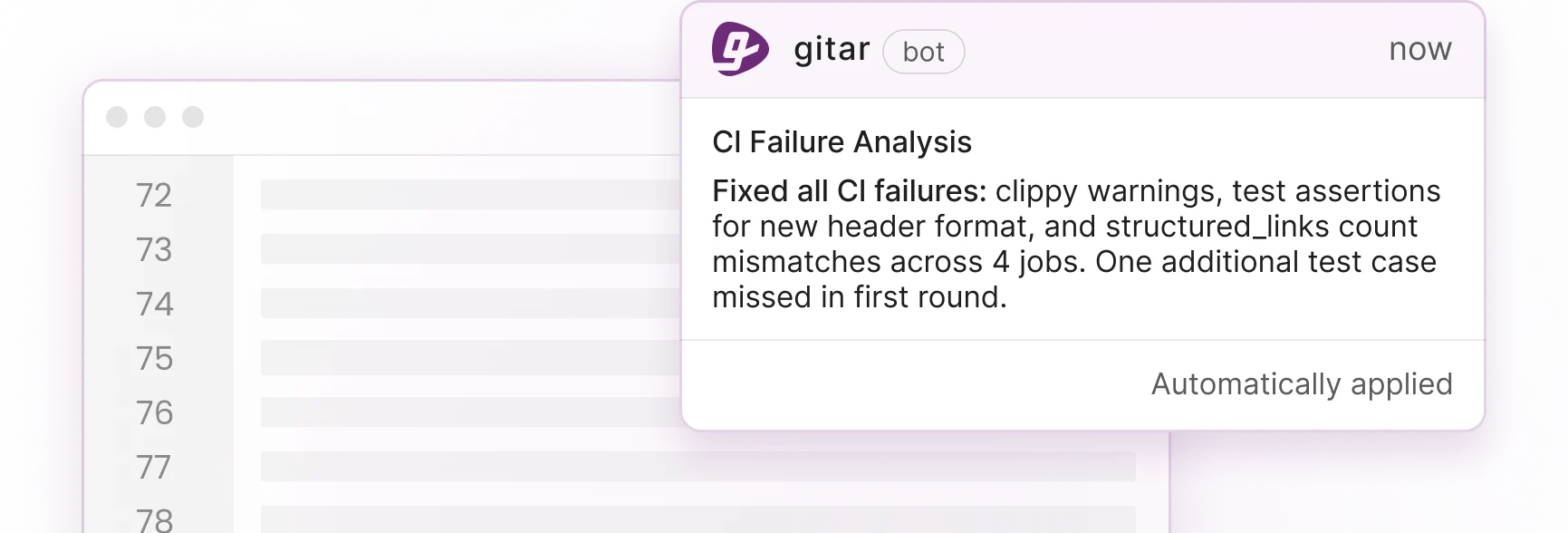
The platform’s healing engine resolves CI failures by reading failure logs, generating validated fixes, and committing corrections directly to PRs. This workflow cuts time spent on CI issues and shortens feedback loops. Gitar’s dashboard rolls all findings into a single updating comment, which reduces notification noise and still provides CI failure categorization, PR timing analysis, and velocity tracking.
Key features include natural language workflow rules, Jira and Slack integrations, and 30-second installation across GitHub, GitLab, CircleCI, and Buildkite. The platform scales to enterprise workloads, handling 50+ million lines of code and thousands of daily PRs. For a 20-developer team, Gitar’s automated CI fixes and review acceleration can deliver about $1M annually in productivity savings. Complete documentation and setup guides support fast rollout without extra DevOps effort. See Gitar documentation for details.
How Gitar Compares to Leading Alternatives
LinearB provides comprehensive DORA tracking with workflow features such as PR automations and starts at $29 per contributor monthly. The platform excels at investment tracking and planning correlation with some automation support.
Swarmia focuses on flow efficiency with GitHub and GitLab integration plus CI/CD support, priced from about $30 per developer monthly with a free tier for small teams. It offers strong visualization of development bottlenecks but emphasizes analytics instead of CI autofix.
Jellyfish delivers engineering intelligence across multiple platforms with custom pricing and broad visibility into development processes. It focuses on reporting and leaves teams to resolve identified issues manually.
Waydev offers detailed Git analytics and DORA metrics starting at about $29-37 per developer monthly, with strong individual developer insights. It concentrates on measurement and does not provide automated remediation features.
| Tool | DORA Coverage | Autofix Capability | Free Tier |
|---|---|---|---|
| Gitar | CI analytics + PR metrics | Yes (CI + review) | Full code review free |
| LinearB | Complete | PR automations (credit-based) | Limited trial |
| Swarmia | Flow-focused | No | Yes (<10 devs) |
| Jellyfish | Broad coverage | No | None |
This comparison shows a clear gap. Alternatives provide valuable analytics, while Gitar combines free comprehensive code review and analytics with AI-powered healing that fixes the problems it finds.
Start with Gitar’s free development analytics and experience automated code healing.
ROI and Rollout Plan for Engineering Metrics Tools
Engineering metrics tools create measurable ROI through less context switching, faster issue resolution, and higher deployment velocity. For a typical 20-developer team, the productivity impact comparison below shows clear cost savings.
| Metric | Before Gitar | After Gitar |
|---|---|---|
| Daily CI/review time per developer | 1 hour | 15 minutes |
| Annual productivity cost | $1,000,000 | $250,000 |
| Tool licensing cost | $450-900/month | $0 |
| Context switching interrupts | Multiple daily | Near zero |
Teams can follow a four-phase rollout. Phase 1 covers 30-second installation with immediate dashboard comments on PRs. Phase 2 builds trust through suggestion mode where teams review and approve fixes. Phase 3 enables automation for trusted fix types with repository rules. Phase 4 expands into analytics dashboards, custom workflows, and enterprise deployment options.
DevEx, Flow Efficiency, and Bottleneck Visibility
Developer Experience (DevEx) metrics complement DORA by capturing cognitive load, tool friction, and developer satisfaction. Flow efficiency tracking shows where work items sit in queues versus active development, which reveals systemic bottlenecks that velocity metrics alone miss.
Gitar’s concise autofix approach reduces cognitive overhead while preserving full bottleneck visibility through a unified dashboard. Teams gain both a calmer day-to-day experience and clearer insight into where work slows down.
FAQs on Development Analytics Tools
What is the best free DORA metrics tool for engineering teams?
Gitar provides free AI code review with deep analytics that include CI failure categorization and PR insights. Unlike paid alternatives that only suggest fixes, Gitar automatically resolves CI failures and applies review feedback while offering development intelligence at no cost for unlimited repositories.
How do development analytics tools integrate with GitHub and CI pipelines?
Modern development analytics tools connect through GitHub Apps, GitLab webhooks, and CI system APIs to collect deployment data, PR metrics, and failure information. Gitar supports GitHub, GitLab, CircleCI, Buildkite, and GitHub Actions with 30-second installation that keeps existing workflows unchanged.
What ROI can engineering teams expect from development analytics tools?
Teams often see a 50-75% reduction in time spent on CI failures and review cycles, which translates to $375K-750K in annual savings for 20-developer teams. DORA metrics provide baseline measurements that quantify improvements in deployment frequency, lead times, and recovery speed, so teams can refine development processes with data.
Should teams choose free or paid development analytics tools?
Free tools like Gitar can outperform paid alternatives by focusing on core functionality without artificial limits. Paid tools that charge $15-30 per developer usually provide suggestions without automated fixes, which makes them less cost-effective than free platforms that resolve identified issues automatically.
How do development analytics tools ensure security and compliance?
Enterprise-grade development analytics tools maintain SOC 2 Type II and ISO 27001 certifications and often support on-premises deployment. Gitar offers secure cloud deployment with zero data retention for free plans and enterprise options that run agents inside customer CI pipelines, so code never leaves internal infrastructure.
Conclusion: Use Gitar to Win on Velocity in 2026
Development analytics and metrics tools now play a central role in managing AI-accelerated development workflows. Gitar stands out as the top free choice, combining code review with deep analytics, CI failure categorization, and automated code healing that competitors charge premium prices to suggest but never implement.