
Key Takeaways
- AI coding tools have increased PR volumes by 23% YoY, shifting bottlenecks from code writing to review and CI validation. Teams now need auto-fix platforms instead of suggestion-only tools.
- Gitar leads as the #1 free AI code review platform with unlimited repo support, deep analysis, and a healing engine that auto-fixes CI failures directly in PRs.
- Greptile ($30/seat) excels in a codebase context but requires manual fixes. Qodo Merge offers partial automation. SonarQube provides free OSS analysis. CodeAnt focuses on enterprise security.
- Prioritize tools with CI integration, auto-applied fixes, and low setup complexity. Gitar supports GitHub, GitLab, CircleCI, and Buildkite with natural language rules that scale.
- Teams report $375K annual savings with Gitar’s free reviews and 14-day autofix trial. Install Gitar now to auto-fix builds and ship faster.
How We Evaluated CodeRabbit Alternatives
Our evaluation focuses on capabilities that matter for modern teams: PR analysis depth, auto-fix strength, CI integration, setup effort, scalability, and pricing. We prioritize tools that handle the full outer loop from code review through CI failure resolution instead of suggestion-only platforms. User feedback from industry reports, Reddit threads, and G2 reviews informs real-world performance and ROI.
Snapshot of the Top CodeRabbit Competitor Platforms
The leading CodeRabbit alternatives in 2026 take different paths to AI code review.
Gitar stands out as a free AI code review platform that actually fixes code by resolving CI failures and addressing review feedback, with autofix features available through a 14-day free trial.
Greptile offers a strong codebase context at $30 per seat but still relies on manual implementation of suggestions.
Qodo Merge focuses on workflow automation with partial auto-fix support.
SonarQube delivers open-source static analysis and adds AI-powered auto-fix features in enterprise tiers.
CodeAnt AI targets enterprise security with broad integrations and one-click fix capabilities.
1: Gitar – Free AI Code Review That Fixes Code for You
Gitar changes AI code review by pairing deep analysis with a healing engine that automatically fixes problems. Competing tools often charge $15-30 per developer for suggestion-only features. Gitar delivers full PR analysis, security scanning, bug detection, and performance review for free across unlimited repositories, with autofix available on a 14-day trial.

The platform’s core advantage is its ability to read CI failures, generate validated fixes, and commit them directly to pull requests. When lint errors, test failures, or build breaks appear, Gitar resolves them without developer intervention. This healing engine removes the manual rework that traditional suggestion-based tools still require.
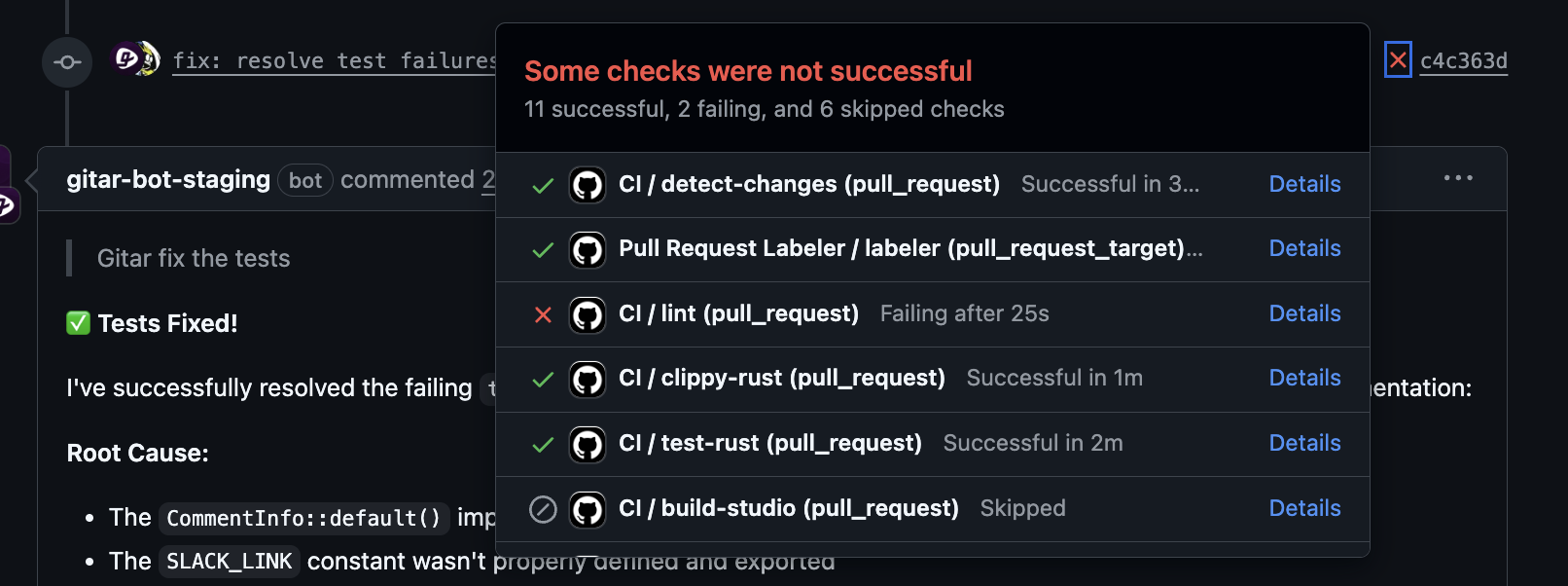
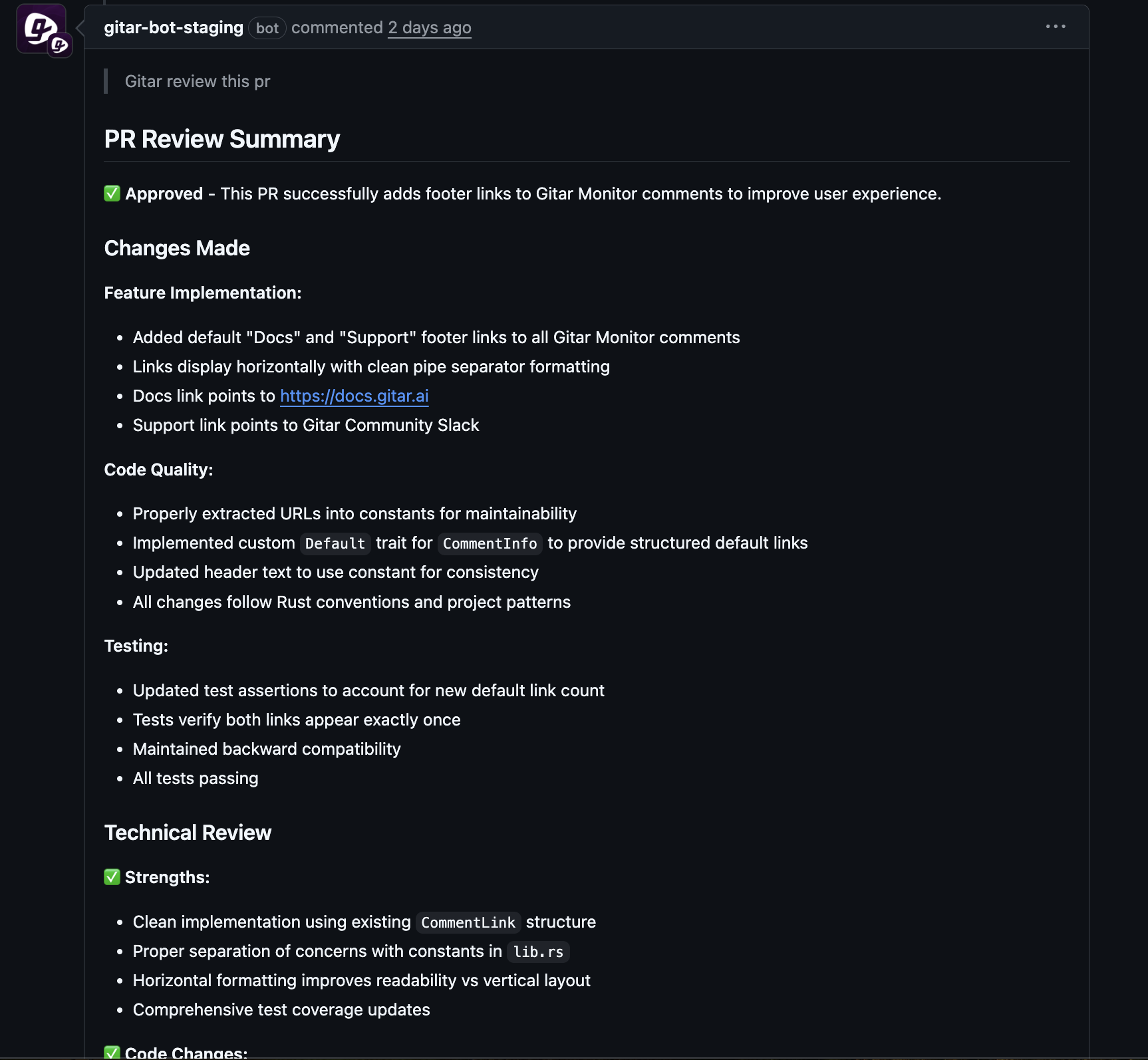
Gitar consolidates findings into a single, continuously updated dashboard comment instead of scattering notes across the diff. This approach reduces cognitive load, cuts notification fatigue, and keeps progress easy to track. The platform integrates with GitHub, GitLab, CircleCI, and Buildkite, and it supports natural language workflow rules that replace complex YAML files.
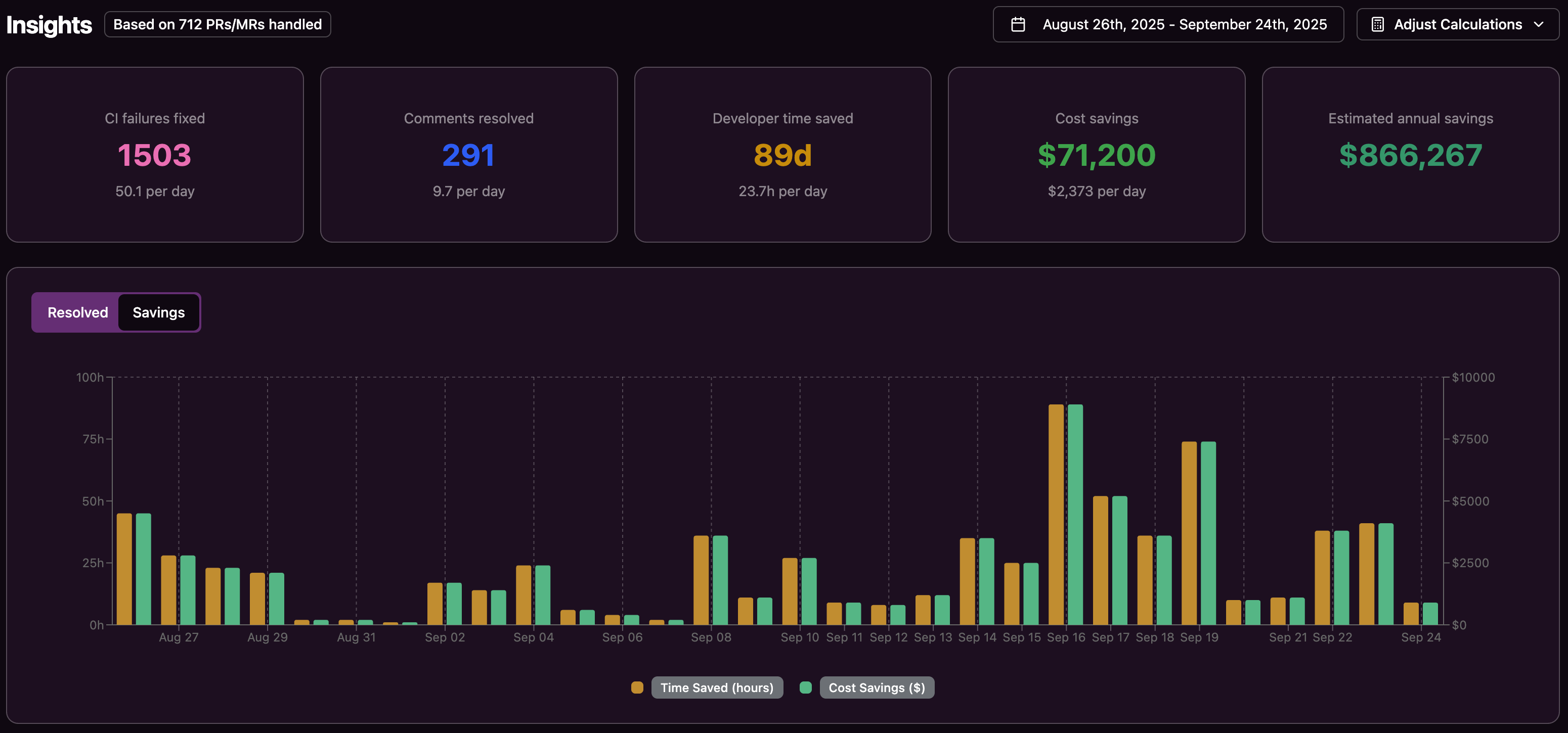
Enterprise teams have validated Gitar on more than 50 million lines of code and thousands of daily PRs. Teams with 20 developers report large savings through fewer context switches and automated CI resolution. Gitar’s hierarchical memory system keeps context at the line, PR, and repository level and learns team patterns over time.
2: Greptile – Deep Context Without Auto-Fix
Greptile delivers a comprehensive codebase context for AI code reviews by understanding entire repositories instead of only modified files. The platform detects 3x more bugs than manual reviews and speeds up merges by up to 4x through its contextual analysis.
Key capabilities include full repository indexing, semantic code understanding, and integration with GitHub and GitLab. Greptile shines at spotting architectural issues and offering suggestions based on broad codebase patterns. The tool still acts as a suggestion engine, so developers must manually apply fixes and validate them against CI.
Teams must complete account setup and configuration, and pricing starts at $30 per developer each month. Greptile offers stronger context than diff-only tools, but teams still carry the manual burden of implementing suggestions and confirming CI success.
Greptile’s strengths include thorough bug detection and architectural insight. Its main drawbacks are the lack of auto-fix capabilities and higher pricing compared with free tools that deliver similar or stronger outcomes.
3: Qodo Merge – Workflow Automation With Partial Auto-Fix
Qodo Merge (formerly Codium) centers on PR workflow automation and offers moderate auto-fix capabilities. The platform provides multi-repo context, rules enforcement, and more than 15 PR workflows that support enterprise compliance requirements such as SOC2 and GDPR.
Core features include basic static analysis, workflow automation, and integrations with GitHub, GitLab, and Jira. Qodo supports partial auto-fix, but does not match the full CI healing of more advanced platforms. The tool performs well for standard review tasks but shows limited context awareness and surface-level depth that can miss architectural problems.
Implementation requires moderate setup effort, and pricing ranges from $15 to $30 per seat each month. Qodo delivers strong compliance and workflow automation, yet its auto-fix abilities remain incomplete compared with full healing engines.
Qodo’s strengths include enterprise compliance support and flexible workflows. Its limitations include partial auto-fix coverage and mid-range pricing for workflows that still rely heavily on suggestions.
Install Gitar now, automatically fix broken builds, and start shipping higher quality software faster: https://gitar.ai/
4: SonarQube – Open-Source Static Analysis With Enterprise AI
SonarQube offers open-source static code analysis with broad language coverage and customizable rule sets. The platform identifies code quality issues, security vulnerabilities, and technical debt across large codebases without per-seat licensing for core features.
Key capabilities include detailed static analysis, custom rule configuration, and integration with GitHub workflows. SonarQube supports more than 25 programming languages and provides quality metrics that help teams track long-term code health. Enterprise tiers add AI-powered contextual analysis and auto-fix features such as AI CodeFix.
Teams must handle infrastructure setup and configuration. The open-source edition is free, while enterprise tiers require paid licenses for advanced functionality. SonarQube delivers strong static analysis and AI remediation, but some issues still need manual fixes based on how teams configure rules and workflows.
SonarQube’s strengths include deep static analysis and open-source access. Its main limitations involve manual configuration for full AI capabilities and enterprise pricing for advanced features.
5: CodeAnt AI – Enterprise Security and One-Click Fixes
CodeAnt AI combines code review, security scanning, and quality analysis in a platform built for enterprises. The tool delivers high-accuracy reviews with broad integrations across GitHub, GitLab, Bitbucket, and Azure DevOps, along with SOC 2 and ISO 27001 compliance.
Core capabilities include AI-powered security scanning, AST-based contextual analysis, and support for more than 30 programming languages. CodeAnt AI focuses on enterprise security needs with strong compliance certifications, advanced threat detection, and one-click fix options.
Implementation usually involves enterprise-level setup and custom pricing for advanced features. CodeAnt AI delivers powerful security analysis and wide platform coverage, with an emphasis on security gates and one-click fixes alongside suggestions.
CodeAnt AI’s strengths include its security-first design and broad integration support. Its main drawback is enterprise-focused pricing that may not fit smaller teams.
Side-by-Side Comparison Table: CodeRabbit Alternatives
|
Tool |
Auto-Apply Fixes |
CI Integration |
Pricing |
|
Gitar |
Yes (14-day trial) |
GitHub/GitLab/CircleCI/Buildkite |
Free Review (Unlimited) |
|
Greptile |
No (Suggestions Only) |
Limited |
$30/seat/month |
|
Qodo Merge |
Partial |
Basic |
$15-30/seat/month |
|
SonarQube |
Yes (Enterprise) |
GitHub Actions |
Free OSS/Paid Enterprise |
How to Choose the Right CodeRabbit Alternative
Teams should favor platforms that fix code automatically instead of only suggesting improvements. Free tools like Gitar deliver full functionality without per-seat fees, which suits growing teams. Enterprise buyers should weigh security and compliance needs, where tools such as CodeAnt AI provide SOC 2 coverage.
Integration complexity also matters. Platforms that demand heavy YAML configuration create long-term maintenance overhead compared with tools that use natural language rules. Total cost of ownership includes both license costs and developer time spent applying suggestions manually.
Frequently Asked Questions
What are the best free CodeRabbit alternatives?
Gitar stands out as the leading free CodeRabbit alternative. It offers full AI code review for unlimited repositories and users with no seat limits or credit card requirements. Automatic fix implementation is available through a 14-day free trial. SonarQube provides free open-source static analysis but does not include AI-powered contextual reviews and broad auto-fix in its free tier. Most other tools, including Greptile and Qodo Merge, charge $15-30 per developer each month for suggestion-only features.
How do Gitar and CodeRabbit differ in fixing CI failures?
Gitar reads CI failure logs, generates validated fixes, and commits them directly to pull requests through its healing engine. CodeRabbit adds suggestions and comments, but developers still need to implement fixes manually and hope they resolve CI problems. Gitar validates fixes against the live CI environment and aims for consistently green builds, while CodeRabbit’s suggestions may not fully address complex CI failures.
What are the top open-source CodeRabbit alternatives?
SonarQube leads open-source options with comprehensive static analysis, custom rule support, and coverage of more than 25 programming languages. Semgrep offers open-source security and style scanning with YAML-based custom rules, and AI features such as Semgrep Assistant for contextual remediation guidance. These tools focus on static analysis and may not match the full CI healing capabilities of newer AI platforms.
Do these alternatives integrate with GitLab and CircleCI?
Gitar integrates natively with GitLab, CircleCI, GitHub Actions, and Buildkite and provides full CI healing across these platforms. Most alternatives, including Greptile and Qodo Merge, support GitHub and GitLab but do not offer deep CircleCI integration. SonarQube connects with many CI systems, but often needs manual configuration. CodeAnt AI supports multiple platforms, including GitLab, and focuses primarily on security scanning instead of full CI automation.
How can teams measure ROI from AI code review tools?
Teams can measure ROI by tracking time saved from automated fixes, fewer context switches, and faster PR merges. Organizations using Gitar report $375,000 in yearly savings for 20-developer teams through reduced manual CI fixes and fewer review bottlenecks. Helpful metrics include CI failure resolution time, daily developer interruptions, and sprint velocity changes. Comparing tool costs against these productivity gains shows that free tools like Gitar deliver immediate positive ROI, while paid suggestion-only tools may struggle to justify per-seat pricing.
Conclusion: Free Auto-Fixes Dominate 2026 Code Review
The AI code review market has moved beyond suggestion-only tools that charge premium prices for manual follow-up work. Platforms that automatically fix code deliver stronger ROI than expensive comment generators. For engineers who want fast productivity gains, Gitar’s free healing engine removes CI bottlenecks without per-seat fees. Engineering leaders can improve delivery speed while avoiding the $500-plus monthly tool costs common with older alternatives.