
Last updated: February 1, 2026
Key Takeaways for 2026 AI Code Review
- AI coding tools speed up code generation 3-5x, yet PR review times are now 91% longer and CI queues stall delivery.
- Gitar ranks as the top free AI code review tool with autonomous autofix for CI failures, keeping builds green without manual work.
- CodeRabbit, Qodo, and Greptile focus on suggestions only, lack true autonomous fixing, and charge $15-30 per developer seat.
- Gitar supports enterprise codebases over 50M lines, with a single-dashboard comment that cuts context switching and large productivity losses.
- Start with Gitar’s free unlimited reviews and 14-day autofix trial to remove review bottlenecks and ship faster.
How We Evaluated Autonomous Workflow Tools
We evaluated autonomous developer workflow tools against 2026 realities for teams flooded with AI-generated code. Our criteria focused on CI autofix capability, cross-platform integrations, pricing transparency, scalability for 50M+ line codebases, and measurable ROI. Developers pushed 986 million commits in 2025, so tools must handle production scale while cutting the 30% of developer time usually lost to CI friction and review delays.
#1: Gitar as the Leading Free Autonomous Workflow Platform
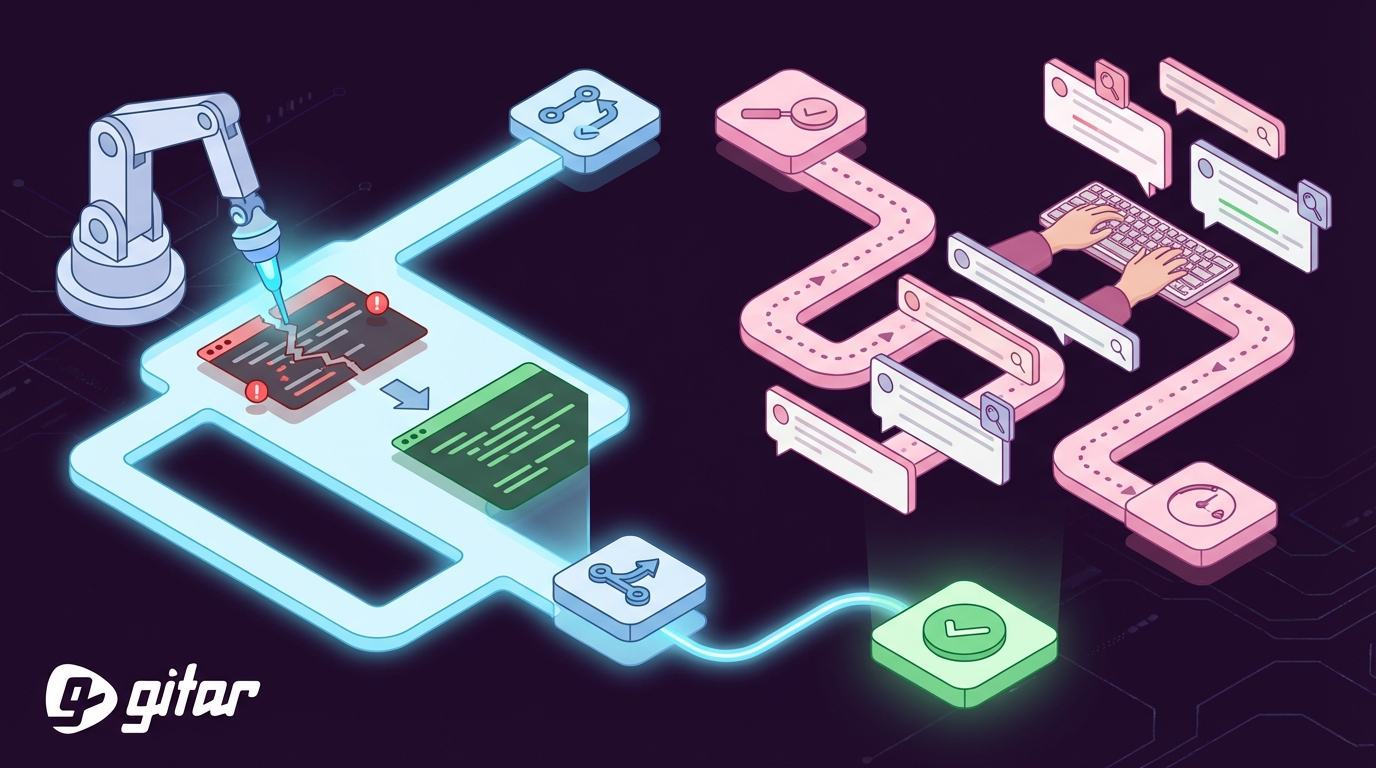
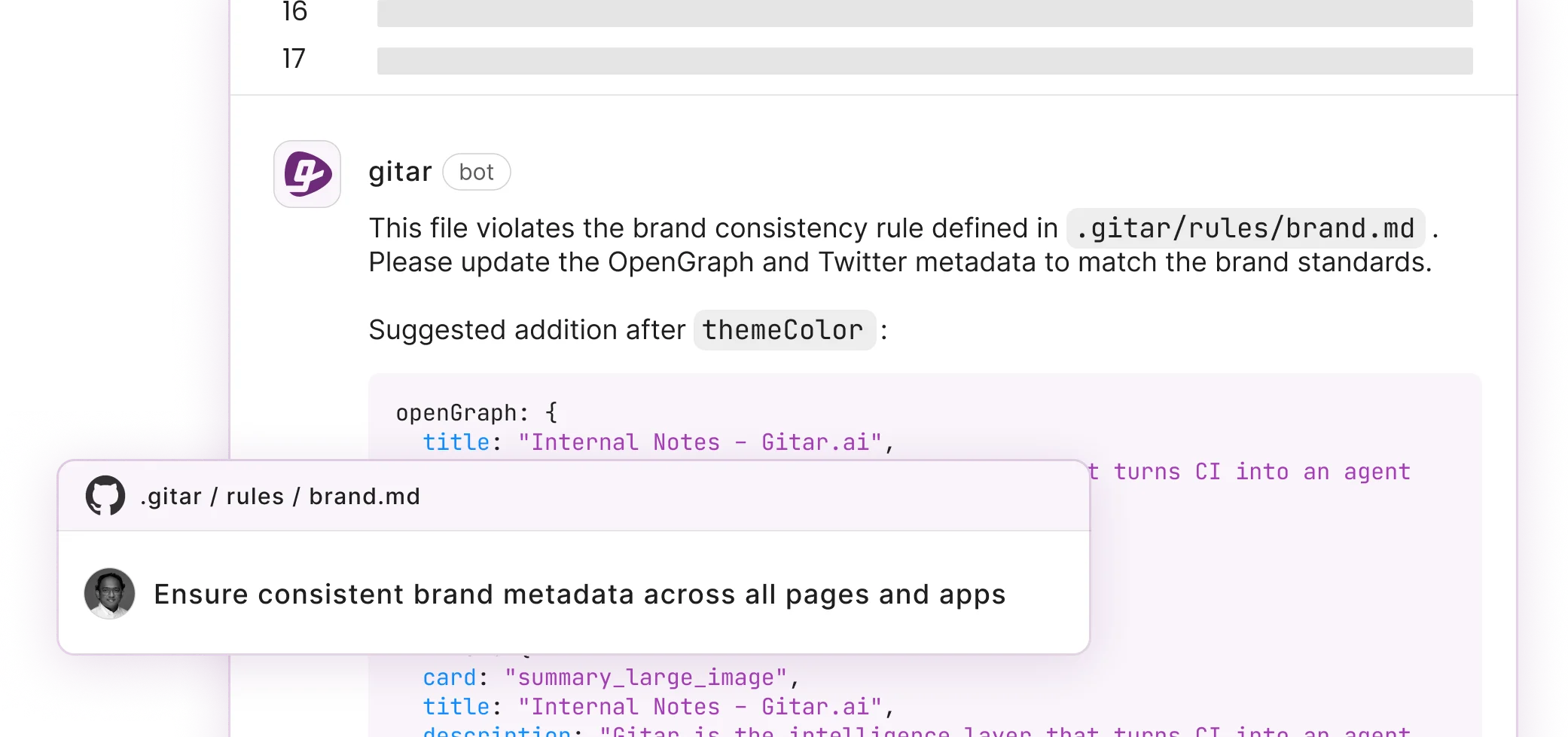
Gitar stands out as a free AI code review platform that fixes code automatically and keeps pipelines moving. It resolves CI failures, applies review feedback, and automates routine development workflows without extra clicks. When CI fails from lint errors, test failures, or build breaks, Gitar’s healing engine reads the logs, generates validated fixes, and commits changes to your pull request with a green-build guarantee.
Gitar includes unlimited free code review for public and private repositories, plus a single updating dashboard comment that replaces noisy comment threads. You also get a 14-day free trial of autofix features and native integrations with Jira, Slack, and Linear. Instead of scattering inline comments across diffs, Gitar gathers findings into one clean, updating interface that stays in sync as issues are resolved.
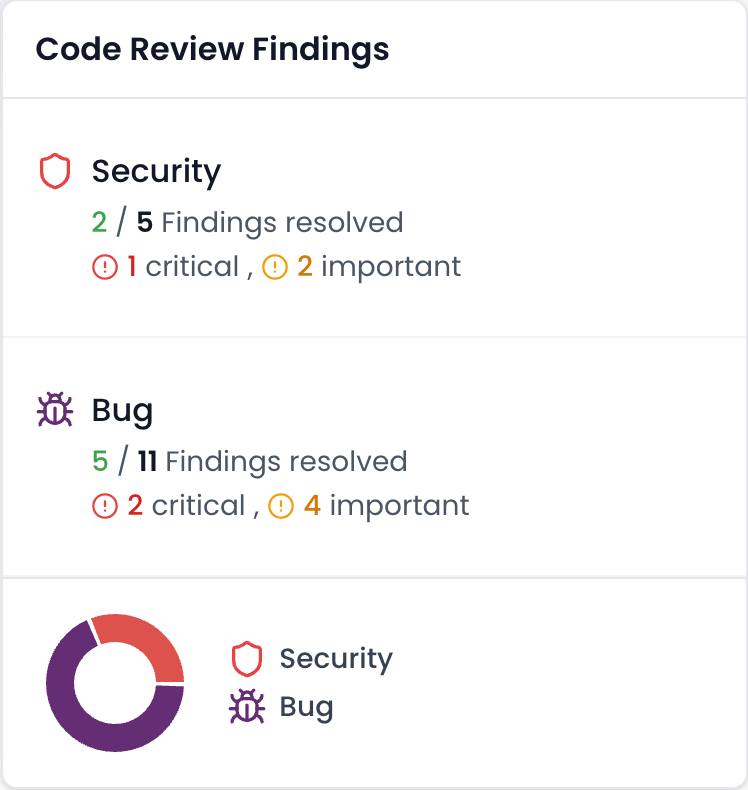
The platform supports enterprise workloads and handles codebases with more than 50M lines and thousands of daily pull requests. Gitar’s hierarchical context memory learns team patterns over time. Natural language workflow rules replace complex YAML files and keep configuration simple for busy teams.
|
Metric |
Before Gitar |
After Gitar |
|
Time on CI/review issues |
1 hour/day/dev |
~15 min/day/dev |
|
Annual productivity cost (20-dev team) |
$1M |
$250K |
|
Tool cost |
$450-900/month |
$0 |
|
Context switching interrupts |
Multiple/day |
Near-zero |
Install Gitar now, automatically fix broken builds, start shipping higher quality software, faster
#2: CodeRabbit for High-Quality Suggestions
CodeRabbit provides AI-powered code review with a focus on pull request summaries and inline suggestions. It delivers context-aware analysis and fast summaries, which helps teams that want quick insight into each change.
Its core strengths include actionable feedback with fewer false positives than many alternatives, a GitHub-focused integration, and pricing at $15-30 per developer seat. Teams often choose CodeRabbit for its refined suggestion quality and straightforward setup.
However, CodeRabbit only produces suggestions and does not implement fixes autonomously. Developers must apply every recommendation manually. The platform also lacks CI failure autofix and creates many inline comments, which can increase notification fatigue.
#3: Qodo (formerly CodiumAI) for Deep Context and Compliance
Qodo positions itself as an agentic AI code review tool with deep contextual understanding powered by Retrieval-Augmented Generation. It targets enterprises that need broad codebase analysis and security-focused reviews.
Key features include one-click remediation suggestions, multi-repository context awareness, and enterprise-grade security scanning at $15-30 per developer seat. Qodo performs well at spotting business logic issues and compliance gaps across large systems.
The main tradeoff is cost. Higher per-seat pricing can become expensive for large teams with uneven activity, even though Qodo supports CI/CD integrations and pull request automation.
#4: Greptile for Full-Repository Context
Greptile focuses on full-repository context for AI-assisted code review and offers deep analysis of large codebases. It serves teams that need a strong understanding of code relationships and dependencies.
Its feature set includes extensive repository-wide context, detailed dependency tracking, and rich code relationship mapping at $30 per developer seat. Greptile is effective at understanding complex codebases and surfacing subtle integration problems.
However, Greptile produces significantly more false positives (11) than CodeRabbit’s 2, which leads to noisier reviews. It also lacks autonomous fix capabilities and has slower review times, averaging 288 seconds compared with faster competitors.
Side-by-Side Comparison of Autonomous Workflow Tools
|
Capability |
Gitar |
CodeRabbit |
Qodo |
Greptile |
|
PR summaries |
Yes (Free) |
Yes |
Yes |
Yes |
|
Inline suggestions |
Yes (Free) |
Yes |
Yes |
Yes |
|
Auto-apply fixes |
Yes (14-day trial) |
No |
Limited |
No |
|
CI failure autofix |
Yes (14-day trial) |
No |
Limited |
No |
|
Green build guarantee |
Yes |
No |
No |
No |
|
Pricing |
Free |
$15-30/seat |
$15-30/seat |
$30/seat |
|
Cross-platform support |
GitHub/GitLab/CircleCI/Buildkite |
GitHub-focused |
Multi-platform |
GitHub/GitLab |
|
Enterprise scalability |
50M+ LOC |
Limited |
Yes |
Yes |
Install Gitar now, automatically fix broken builds, start shipping higher quality software, faster
How to Choose an AI Code Review Tool in 2026
Your team size, budget, and risk profile should guide your AI code review choice. Startups and cost-conscious teams gain the most from Gitar’s free, full-featured reviews and optional autofix trial. Enterprise teams that need custom agents and advanced compliance controls may still consider specialized tools, although Gitar’s enterprise tier supports in-pipeline deployment with full security compliance.
Total cost of ownership includes more than subscription fees. Tools that only suggest fixes create ongoing productivity costs because developers must implement every change. Autonomous platforms such as Gitar remove much of this hidden labor. Setup time also varies widely, with Gitar offering a 30-second installation while some competitors require detailed configuration.
Trust and control matter when you introduce autonomous tools into production workflows. Gitar addresses this with configurable aggression levels. Teams can begin in suggestion mode to build confidence, then enable auto-commit for specific failure types. Validation against full CI environments ensures that fixes work in real pipelines, not just in isolated tests.
People Also Ask: Autonomous Workflow and AI Code Review
What are the best free AI code review tools for GitHub?
Gitar leads the free AI code review space with unlimited repository access, full pull request analysis, security scanning, and bug detection at no cost. Competing tools charge $15-30 per developer for similar coverage. Gitar includes a 14-day autofix trial that resolves CI failures and applies review feedback automatically. It supports both GitHub and GitLab with no seat limits and no credit card requirement.
How do AI code review tools handle CI failures?
Most AI code review tools only flag CI failures and suggest potential fixes, so developers must apply changes and hope they pass. Gitar’s healing engine follows a different pattern. It analyzes failure logs, generates validated fixes, runs them against the full CI environment, and commits working solutions. This autonomous flow removes the repeated cycle of failed fixes and reruns that suggestion-only tools create.
Gitar vs. CodeRabbit: Which is better for autonomous workflows?
Gitar delivers free, comprehensive code review with autonomous fix implementation, while CodeRabbit charges $15-30 per seat for suggestions only. Gitar’s healing engine resolves CI failures and applies review feedback on its own. CodeRabbit still requires manual work after each suggestion. Teams that want true workflow automation, not just better comments, gain more from Gitar’s autonomous features at zero license cost.
Which AI tools improve developer workflows autonomously?
Gitar stands out as the most complete autonomous workflow platform for developers. It combines free AI code review, automatic CI failure resolution, natural language workflow rules, and deep integrations with Jira, Slack, and Linear. Other tools focus on suggestions or narrow areas such as security scanning. Gitar instead offers end-to-end workflow automation that learns team patterns and reduces manual intervention across the development lifecycle.
What impact has AI coding had on review bottlenecks?
AI coding tools created a strong right-shift bottleneck in modern development workflows. Developers now generate code 3-5x faster, but review capacity has not kept pace. Pull request review times are 91% longer, and teams face major productivity losses. Many 20-developer teams report more than $1M in annual costs from CI friction and review delays. Autonomous tools such as Gitar reduce this bottleneck by removing manual fix work and shortening review cycles through validated automatic corrections.
How does Gitar compare to Greptile and Qodo for enterprise teams?
Gitar offers free code review plus autonomous fixing, while Greptile and Qodo charge $15-30 or more per seat for suggestion-focused workflows with higher false positive rates. Gitar’s single updating comment design cuts notification noise compared with scattered inline comments from competitors. For large organizations, Gitar handles more than 50M lines of code in production and delivers stronger cost efficiency with autonomous workflow improvements that other tools do not match.
Conclusion: Move from Suggestions to Healing Engines
Modern AI-accelerated development requires tools that solve problems autonomously instead of only commenting on them. Many traditional review tools still charge premium prices for basic suggestions that leave manual work untouched. The market is shifting toward healing engines that ship working fixes and keep pipelines healthy.
Gitar represents this shift by combining free, comprehensive code review with autonomous CI failure resolution. It removes the review and CI bottlenecks that slow AI-boosted teams. Engineering leaders who want fast productivity gains without new license costs can trial Gitar’s autonomous features and directly address the right-shift bottleneck.
Install Gitar now, automatically fix broken builds, start shipping higher quality software, faster