
Last updated: January 23, 2026
Key Takeaways for Enterprise DevOps Leaders
- AI code generation now accounts for 41% of all code in 2026, yet PR review times increased 91%, creating a serious DevOps bottleneck for enterprises.
- Autonomous healing platforms like Gitar go beyond suggestion tools by automatically fixing CI failures, validating solutions, and committing working code.
- Gitar offers unlimited free code review, SOC 2 Type II compliance, and broad integrations (GitHub, GitLab, CircleCI, Jira) compared to competitors’ $15-30 per seat pricing.
- Enterprises achieve 75% CI time reduction and $750K annual savings with self-healing platforms that scale to 50M+ lines of code and thousands of PRs.
- A phased maturity model with Gitar’s 14-day free trial builds trust and leads to fully autonomous DevOps, so install Gitar now for enterprise velocity.
The 2026 Shift From Suggestions to Self-Healing DevOps Platforms
The 2026 autonomous DevOps market splits into two clear categories: suggestion engines and healing platforms. Suggestion engines like CodeRabbit ($15-30 per seat), Qodo, Augment Code, and Graphite analyze code and provide recommendations. These tools still require developers to implement fixes, validate changes, and manage the extra workflow overhead.
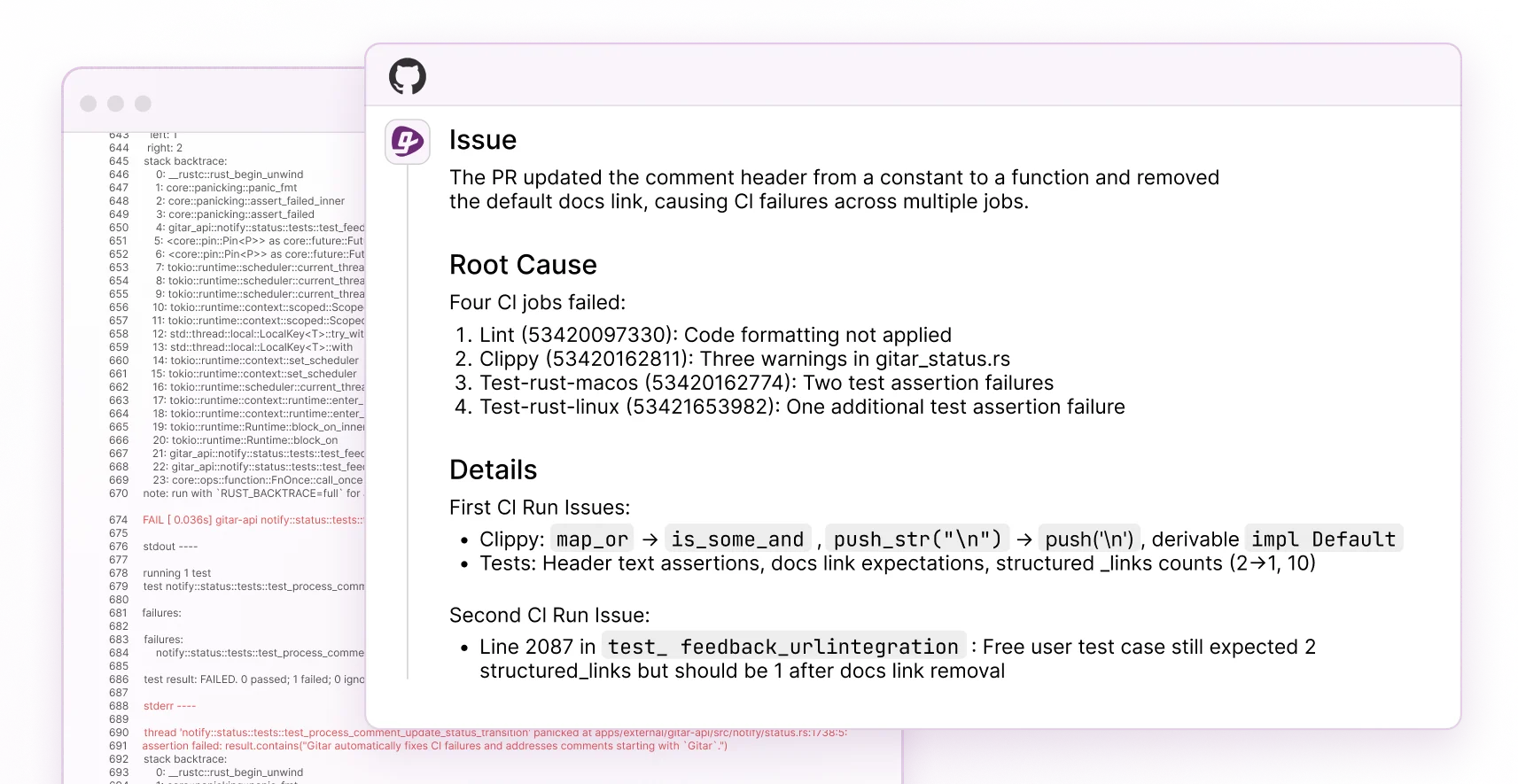
Healing platforms introduce a different architecture and workflow. These systems do more than identify problems, they autonomously resolve them. When CI fails because of lint errors, test failures, or build breaks, healing engines analyze the failure context, generate validated fixes, and commit working solutions directly to pull requests.
Market adoption now reflects this shift toward autonomy. Over half of enterprises (54%) now integrate generative AI into software development workflows, which increases demand for autonomous solutions. AIOps reduces alert fatigue by 70-90%, which supports the self-healing pipeline infrastructure that autonomous platforms require.
Traditional suggestion engines struggle in this environment because they lack CI context and cannot validate their recommendations. Developers receive notification spam from multiple inline comments and still must manually implement and test each suggested change. This model does not scale with AI-accelerated development velocity or enterprise-level PR volume.
Enterprise Buying Criteria for Autonomous DevOps Platforms
Enterprise selection of autonomous DevOps platforms depends on scale handling, security compliance, total cost of ownership, and measurable return on investment. Organizations managing 50M+ lines of code with thousands of daily PRs need platforms that maintain performance without seat-based pricing limits.
Security certifications such as SOC 2 Type II compliance now act as a baseline requirement for enterprise adoption. Platforms must support on-premises deployments, VPC installs, and zero data retention policies to satisfy regulatory standards across finance, healthcare, and other regulated industries.
Total cost of ownership analysis exposes large gaps between suggestion tools and autonomous platforms. Traditional suggestion engines charge $15-30 per developer monthly, which creates $450-900 monthly costs for 30-person teams and scales sharply with headcount. ROI calculations show potential savings of $750K annually for 20-developer teams through 75% CI time reduction when teams adopt autonomous fixing platforms.
Integration breadth determines whether a platform fits complex enterprise environments. Large organizations require support for GitHub, GitLab, CircleCI, Buildkite, Jira, and Slack. Cross-platform compatibility keeps workflows consistent and reduces vendor lock-in risk.
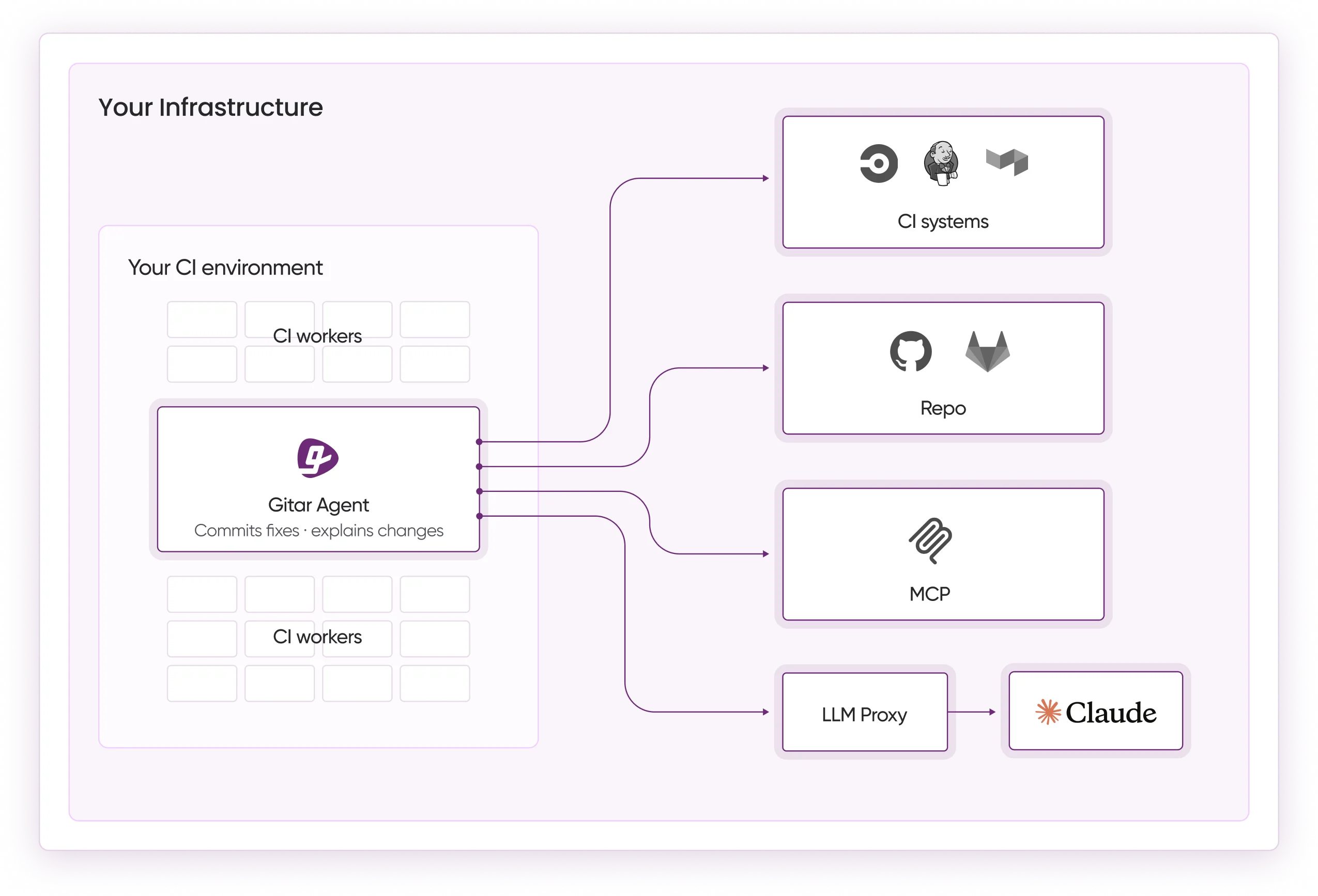
Gitar addresses these enterprise requirements with unlimited free code review for code review features, SOC 2 Type II compliance in the Enterprise Plan, and broad platform integrations. The single-comment interface reduces notification noise, and natural language rule configuration removes the need for complex YAML maintenance. Install Gitar now, automatically fix broken builds, and start shipping higher quality software faster.
Gitar vs CodeRabbit, Qodo, and Graphite: Feature Comparison
|
Feature |
Competitors (CodeRabbit/Qodo/Graphite) |
Gitar |
|
Pricing |
$15-30/seat monthly |
Free (unlimited) |
|
CI Auto-Fix/Validation |
No/Suggestions only |
Yes (14-day free trial, green guarantee) |
|
Platform Support |
GitHub-focused |
GitHub/GitLab/CircleCI/Buildkite/Jira |
|
Interface |
Multiple inline comments |
Single updating comment |
CodeRabbit delivers detailed PR analysis but does not provide autonomous fixing capabilities. CodeRabbit features context-aware analysis and security support, yet developers must still implement every suggested change manually. The notification-heavy model increases cognitive load for development teams.
Qodo offers one-click remediation for simple fixes but cannot handle complex CI failures or validate solutions against full build environments. Qodo includes CI failure detection and traceability but stops before autonomous resolution and still depends on human intervention.
Gitar’s healing engine architecture focuses on validated fixes that guarantee green builds. The platform analyzes failure logs, generates contextual solutions, validates fixes against CI environments, and commits working code automatically with autofix features during the 14-day free trial. Enterprise customers like Pinterest manage 50M+ lines of code using Gitar’s scalable infrastructure and autonomous workflows.
Step-by-Step Rollout: Phased Maturity Model for Autonomous DevOps
Successful autonomous DevOps adoption follows a structured maturity path that builds trust while delivering value from the first week.
Phase 1: Foundation Setup starts with installing the platform and enabling suggestion mode. Teams review AI-generated recommendations without automatic implementation and gain confidence in the system’s analysis quality.
Phase 2: Trust Building introduces selective auto-fixing for low-risk issues such as lint errors and formatting problems. Teams see autonomous resolution of common failures while still controlling complex or high-risk changes.
Phase 3: Full Automation activates auto-commit functionality for validated fix categories. The platform now handles CI failures, applies review feedback, and manages routine maintenance tasks with minimal human involvement.
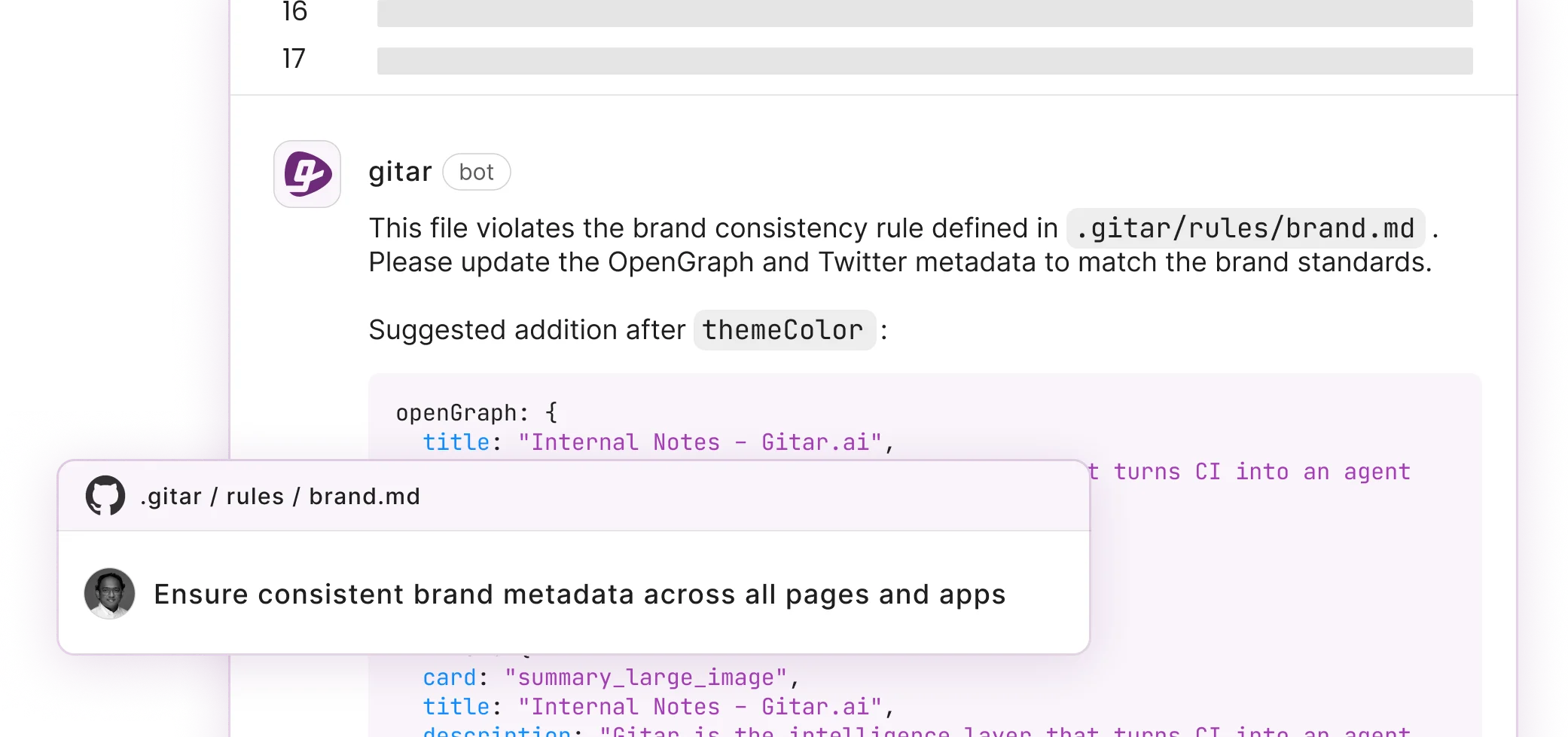
Phase 4: Advanced Workflows uses natural language rules, analytics dashboards, and cross-platform integrations to create a full development intelligence layer across repositories and teams.
|
Platform |
Fix Autonomy |
Cost |
Scale/Integrations |
|
Gitar |
Full autonomous fixing (14-day free trial) |
Free code review |
50M+ LOC, multi-platform |
|
CodeRabbit |
Suggestions only |
$15-30/seat |
GitHub-focused |
|
Qodo |
Limited one-click fixes |
$30/seat |
Multi-repo context |
|
Graphite |
Suggestions only |
$15/seat |
GitHub integration |
Common implementation pitfalls include relying on suggestion-only tools that fail to reduce manual workload and accepting vendor lock-in through GitHub-exclusive platforms. Organizations should prioritize platforms that deliver real autonomy, cross-platform support, and transparent pricing models that scale with repositories, not headcount.
Frequently Asked Questions
What are the best free AI code review tools for enterprises?
Gitar provides the most complete free AI code review platform for enterprises, with unlimited repository access, advanced security scanning, and performance analysis without seat limits or credit card requirements. Unlike paid alternatives that charge $15-30 per developer monthly, Gitar’s free tier includes full PR analysis, bug detection, and integration with major development platforms. The platform scales to 50M+ lines of code and thousands of daily PRs while maintaining enterprise-grade security compliance.
What are the best CodeRabbit alternatives for GitLab?
Gitar acts as the leading CodeRabbit alternative for GitLab environments, with native GitLab integration plus GitHub, CircleCI, and Buildkite support. CodeRabbit focuses mainly on GitHub workflows, while Gitar offers cross-platform compatibility and autonomous fixing capabilities that CodeRabbit does not provide. The single-comment interface reduces notification overhead compared to CodeRabbit’s multiple inline comments, and the healing engine architecture delivers validated fixes instead of suggestions that still require manual work.
How do autonomous DevOps platforms fix CI failures?
Autonomous DevOps platforms use AI agents to analyze CI failure logs, identify root causes within full codebase context, generate appropriate fixes, validate solutions against the actual build environment, and commit working code directly to pull requests. This workflow differs from suggestion engines that only highlight problems. The healing engine model ensures that fixes resolve issues in practice, not just in theory. Advanced platforms maintain context across lint errors, test failures, build breaks, and dependency conflicts.
What is the ROI of self-healing CI platforms?
Self-healing CI platforms deliver strong ROI through reduced developer context switching, faster build recovery, and removal of manual fix implementation. A typical 20-developer team that spends one hour daily on CI and review issues represents roughly $1M in annual productivity cost. Autonomous platforms can cut this overhead by 75%, which generates about $750K in annual savings while also eliminating tool costs of $450-900 monthly for suggestion-based alternatives. Teams also gain fewer CI reruns, higher developer satisfaction, and faster feature delivery.
How should enterprises evaluate autonomous DevOps platforms?
Enterprise evaluation should focus on scale handling capabilities such as 50M+ lines of code support, security certifications like SOC 2 Type II compliance, integration breadth across GitHub, GitLab, CircleCI, Jira, and Slack, and proof of autonomous fixing and validation. Platforms must handle thousands of daily PRs without performance issues and provide audit trails for compliance. Cost analysis should consider total cost of ownership, including seat-based pricing limits versus unlimited access models. Phased rollout options and natural language configuration reduce adoption friction for large teams.
Conclusion: Gitar as the Autonomous DevOps Choice for Enterprises
The 2026 autonomous DevOps landscape separates suggestion engines that keep manual workflows in place from healing platforms that deliver real automation. Competitors charge premium prices for commentary, while Gitar offers free comprehensive code review with autonomous fixing that scales to demanding enterprise environments.
Organizations that want to remove the AI-driven PR bottleneck need platforms that move beyond suggestions and deliver validated, working solutions. Gitar’s healing engine architecture, cross-platform integrations, and unlimited free access position it as the clear choice for modern enterprise development teams.
Install Gitar now, automatically fix broken builds, start shipping higher quality software, faster.