
Key Takeaways
- AI coding tools accelerate development but create code review bottlenecks, with 43M+ monthly GitHub PRs still needing manual validation.
- Gitar leads as a free platform that auto-fixes code, resolves CI failures, and guarantees green builds, unlike suggestion-only competitors.
- Most alternatives like CodeRabbit ($15-30/dev) and DeepSource provide analysis but no validated auto-apply or CI healing capabilities.
- Gitar’s free unlimited tier, single dashboard comments, and 14-day autofix trial cut review toil by 75%, saving teams $750K+ annually.
- Install Gitar today for automated code quality review that fixes issues and scales with AI-driven PR volume.
How We Compared Automated Code Review Tools
Our evaluation criteria weighted autofix depth at 30%, including CI analysis, validation, and auto-commit capabilities. Integrations with CI, VCS, and project management tools accounted for 20%, pricing and free tier access for 20%, scalability for unlimited repositories and users for 15%, and noise reduction through consolidated notifications for 10%. We analyzed vendor documentation, GitHub Octoverse data, community forums, and real-world implementations including Pinterest’s 50+ million lines of code deployment.
Gitar consistently outperformed competitors in validated testing, with high fix acceptance rates and guaranteed green builds. Most alternatives still act as suggestion engines that require manual implementation.
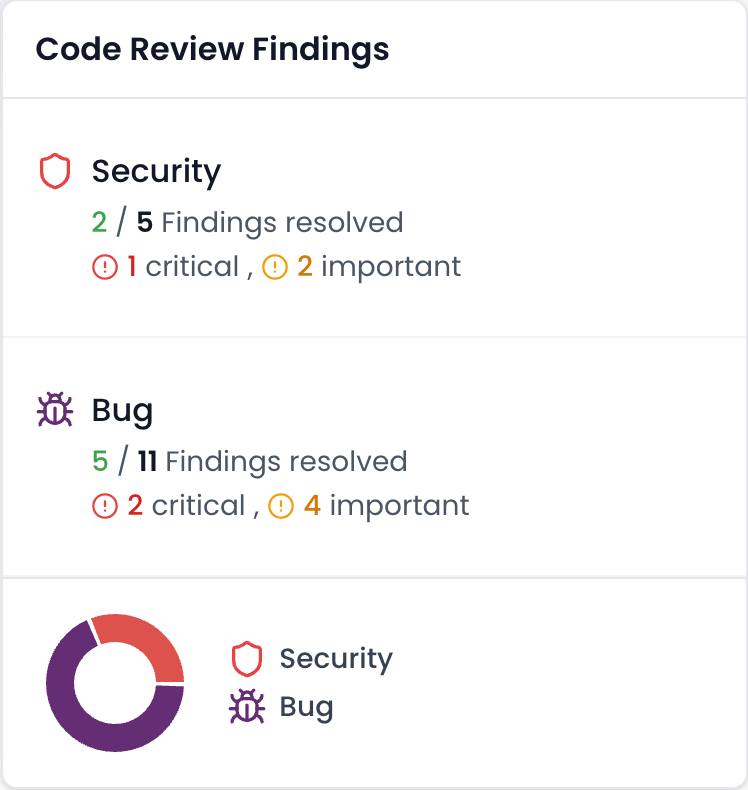
Top Automated Code Quality Review Platforms for 2026
1. Gitar: Automated Fixes and CI Healing
Gitar provides free AI code review with real code fixing capabilities, not just suggestions. The platform automatically resolves CI failures, addresses review feedback, and validates fixes against your complete CI environment.
Key Features:
- Free unlimited code review for public and private repositories
- CI auto-fix with 14-day free trial that analyzes, fixes, and validates changes
- Natural language workflow rules in .gitar/rules/*.md files
- Single dashboard comment that updates in place, reducing notification spam
Setup: 30-second GitHub app installation with no credit card required.
Pricing: $0 for core features, 14-day autofix trial, team plans available.
Strengths: High fix acceptance rate, green build guarantee, enterprise-scale validation at Pinterest.
Ideal for: Teams that want true automation with validated fixes instead of suggestion-only tools.
Install Gitar, the top automated code quality review platform that actually fixes your code.
2. CodeRabbit: Contextual Suggestions Without Healing
CodeRabbit offers AI-powered code review with contextual learning across 40+ programming languages. The platform provides line-by-line analysis with GitHub, GitLab, and Azure DevOps integrations.
Key Features:
- Contextual code understanding that learns from previous reviews
- Inline suggestions with example fixes
- Multi-repository context awareness
- Integration with major version control platforms
Pricing: $15-30 per developer monthly.
Strengths: Broad language support and strong contextual awareness.
Limitations: High noise levels with many comments per PR, no CI failure healing, suggestion-only approach.
Ideal for: Teams that prioritize detailed code analysis over automated fixes.
3. DeepSource: Static Analysis With Security Focus
DeepSource combines static analysis with security scanning and automated issue detection across multiple programming languages, with CI/CD pipeline integration.
Key Features:
- Static analysis with security vulnerability detection
- Automated fix suggestions for common issues
- Quality gates and metrics tracking
- Enterprise security compliance
Pricing: Freemium model with paid enterprise features.
Strengths: Strong security coverage and comprehensive static analysis.
Limitations: Limited auto-apply capabilities and no CI failure resolution.
Ideal for: Security-focused teams that require compliance features.
4. CodeAnt AI: Enterprise Security and AST Analysis
CodeAnt AI provides AST-based code analysis with SOC 2 and ISO 27001 compliance, focusing on enterprise security requirements and CI/CD integration.
Key Features: Advanced AST analysis, security compliance, CI/CD integration.
Limitations: Autofix capabilities exist but remain more limited than Gitar’s comprehensive CI healing.
5. Qodo (formerly Codium): Tests First, Review Second
Qodo offers automated test generation alongside code review, using a multi-agent framework and persistent codebase intelligence across repositories.
Key Features: Test generation, multi-repo context, 15+ automated workflows.
Limitations: Primarily test-focused, with code review as a secondary capability.
6. Aikido Security: Security-Centric Code Review
Aikido Security provides AI-powered code review that covers security vulnerabilities, logic bugs, maintainability, and compliance monitoring for enterprise environments.
Key Features: Security vulnerability scanning, code quality analysis, compliance reporting.
Limitations: Less emphasis on comprehensive CI failure healing.
7. Snyk Code: SAST With Targeted Auto-Fix Suggestions
Snyk Code delivers AI-powered static application security testing with auto-fix suggestions for security vulnerabilities and license compliance.
Key Features: SAST scanning and vulnerability auto-fix suggestions.
Limitations: Security-focused coverage with limited general code quality analysis.
8. Greptile: Deep Context With Higher Noise
Greptile offers full codebase context understanding with advanced contextual feedback, though benchmarks show higher false positive rates (11 vs. 2 for CodeRabbit).
Pricing: $30 per developer monthly.
Limitations: Higher noise levels, suggestion-only approach, and premium pricing.
9. SonarQube: Enterprise Static Analysis Without Autofix
SonarQube provides enterprise-grade static analysis with code smell detection, maintainability rules, and custom quality gates for large organizations.
Key Features: Enterprise static analysis, quality gates, metrics tracking.
Limitations: No automated fixing capabilities.
Auto-Fix Capability Matrix
|
Platform |
Free Tier |
Auto-Apply Fixes |
CI Failure Healing |
|
Gitar |
Yes (Unlimited) |
Yes (14-day trial) |
Yes |
|
CodeRabbit |
No |
No |
No |
|
DeepSource |
Limited |
Suggestions only |
No |
|
CodeAnt AI |
Limited |
Limited auto-apply |
No |
|
Qodo |
Limited |
Yes (one-click) |
No |
|
Greptile |
No |
No |
No |
|
SonarQube |
Community Edition |
No |
No |
Free vs Paid: Real Cost of Manual Review
A 20-developer team that spends 1 hour daily on CI and review issues burns about $1 million annually in productivity. Gitar’s 75% toil reduction saves roughly $750,000 each year, while competitors charge $450-900 monthly for suggestion-only tools that keep the manual workload.
|
Metric |
Before Gitar |
After Gitar |
|
Daily CI/review time per developer |
1 hour |
15 minutes |
|
Annual productivity cost |
$1,000,000 |
$250,000 |
|
Tool cost (monthly) |
$450-900 |
$0 |
Best AI Platform for Fixing Code
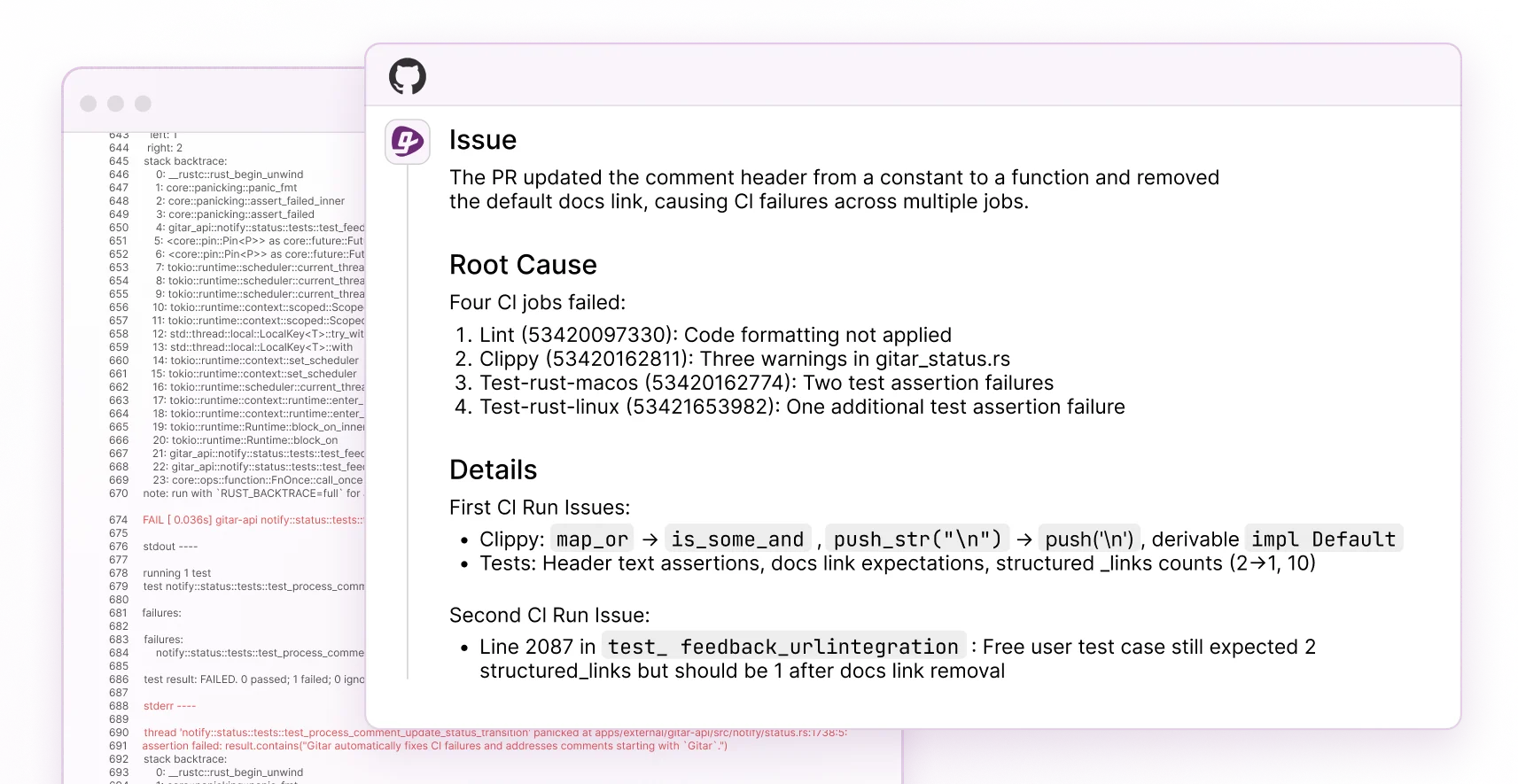
Gitar stands alone in providing validated code fixes instead of unverified suggestions. Competitors analyze and comment, while Gitar analyzes, fixes, validates against CI, and commits working solutions. The platform’s healing engine guarantees green builds through comprehensive environment emulation.
Best Choice for CI Failures and Code Review Automation
Gitar’s unrelated failure detection separates infrastructure flakiness from genuine code bugs, which saves significant debugging time. The @gitar natural language feedback implementation lets reviewers request changes that Gitar automatically implements and validates.
2026 Trend: PR Volume Requires Healing Platforms
GitHub Copilot now contributes 46% of all code written by its users, while GitClear analysis shows AI-generated code has 41% higher churn rates and more logic issues. The industry now requires healing platforms, not more suggestion engines.
Frequently Asked Questions
Can code review be fully automated?
Yes, with proper validation and CI awareness. Gitar demonstrates full automation by analyzing CI failures, generating fixes, validating them against your complete environment, and committing working solutions. The key difference from suggestion tools is validation, because Gitar guarantees fixes work before applying them.
CodeRabbit vs Gitar: Which fits better?
Gitar provides free code review with actual fixes, while CodeRabbit charges $15-30 per developer for suggestions that still require manual implementation. Gitar’s single dashboard comment removes the notification spam that makes CodeRabbit noisy, and the healing engine delivers validated solutions instead of hope-based suggestions.
What is the best free AI code review tool?
Gitar offers the most comprehensive free tier with unlimited repositories, unlimited users, complete PR analysis, security scanning, and bug detection. The 14-day autofix trial provides full healing capabilities at no cost, while competitors either charge immediately or restrict free tiers.
Does GitHub Copilot review code?
No, GitHub Copilot generates code but does not review it. Copilot pairs well with Gitar, because Copilot accelerates code generation while Gitar ensures the generated code passes review and CI validation. This combination covers both sides of the AI coding workflow.
What integrations and security does Gitar provide?
Gitar integrates with GitHub, GitLab, CircleCI, Buildkite, Jira, Slack, and Linear. The platform maintains SOC 2 Type II and ISO 27001 certifications, with enterprise deployment options that keep code within your infrastructure while still providing full CI context access.
Which platform works best for CI auto-fix?
Gitar uniquely provides CI failure healing by running agents within your CI environment and accessing your specific configurations, secrets, and caches. This complete context enables fixes that work in production, not just in isolation, which separates Gitar from suggestion-only alternatives.
Conclusion: Ship Faster With Healing Automation
The automated code quality review market splits into suggestion engines that preserve manual toil and healing platforms that deliver real automation. Gitar leads the healing category with free comprehensive review, validated auto-fixes, and enterprise-scale deployment proven at organizations managing 50+ million lines of code.
Teams evaluating options can start with Gitar’s free tier to experience true automation, then compare it against paid alternatives that charge premium prices for basic commentary. The productivity gains and cost savings make the choice clear.