
CI build failures drain developer time, even with strong tools like Dagger.io. While Dagger.io helps define portable pipelines, it doesn’t address the manual work of debugging issues when they arise. This article compares CI automation options, showing how Dagger.io fits in and why Gitar AI offers a valuable addition by automating fixes, speeding up merges, and freeing engineers from repetitive troubleshooting.
CI Challenges: Pipeline Setup vs. Failure Fixes
Software development faces a bottleneck. Tools like GitHub Copilot speed up coding, but validating and merging that code remains slow. You’ve likely experienced it: you submit a PR, confident it’s ready, only to see a failed build from a missing dependency, a broken test, or a minor style error.
Suddenly, you’re stuck decoding logs, switching back to your local setup, making a small change, committing, pushing, and waiting for the pipeline to rerun. This process eats time and disrupts focus, often turning a quick fix into a major delay. Developers can lose up to 30% of their day on CI and review issues, creating a costly bottleneck for teams.
For distributed teams, the problem grows. A PR pushed by someone in Seattle might need input from a teammate in Berlin, stretching a simple review across days due to time zones. Many AI review tools only suggest fixes, still leaving the actual work to you.
Tools like Dagger.io ensure pipelines run consistently, focusing on workflow execution. However, they don’t solve what happens when builds break. That’s the difference between setting up pipelines and automatically fixing failures, two steps that work best together.
Ready to speed up delivery and save developer time? Install Gitar AI now to fix broken builds automatically and ship quality software faster.
How Dagger.io Helps: Flexible and Reliable Pipelines
Key Benefits of Dagger.io for CI Workflows
Dagger.io stands out for teams wanting custom, consistent CI/CD pipelines. It creates fast, isolated environments for testing and deployment, speeding up feedback compared to shared setups.
Here’s what makes Dagger.io effective:
- Consistency Across Environments: Pipelines run the same way locally and in platforms like GitHub Actions, avoiding the “it works on my machine” problem.
- Language Flexibility: Teams can define pipelines in familiar languages like Go or Python instead of complex YAML files.
- Reusable Components: Modules let you build libraries of pipeline parts, cutting redundancy across projects.
- Stable Execution: Running pipelines as OCI containers ensures they behave the same on any platform.
Why Teams Choose Dagger.io
Dagger.io offers clear gains for engineering workflows. It cuts build times significantly, as seen with users like OpenMeter, especially in test-heavy setups. It also reduces dependency on specific CI providers, letting teams switch platforms easily. This flexibility avoids being locked into one system. Additionally, its remote execution handles complex deployment needs while keeping pipeline logic unified.
The Missing Piece: Fixing Failures Automatically
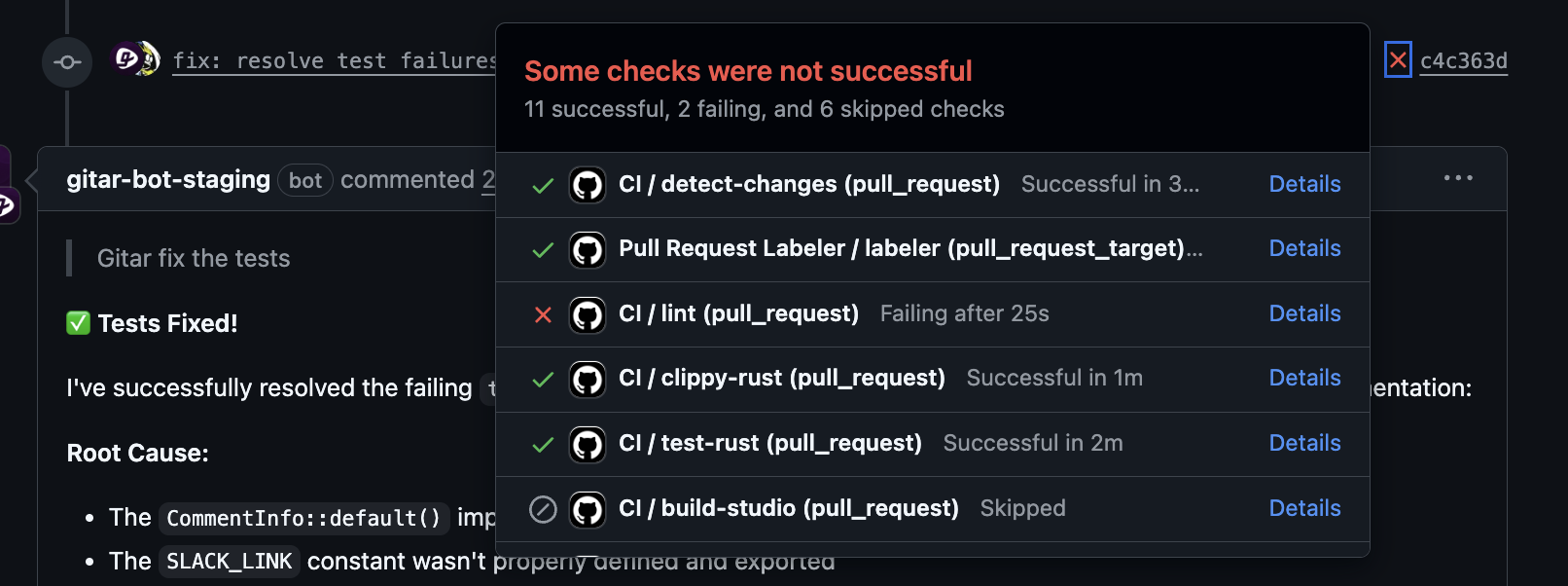
Dagger.io builds reliable pipelines, but when a build fails due to a lint error, broken test, or dependency issue, you’re still left debugging manually. Even with a well-designed pipeline, the process often looks like this:
- Submit code to a consistent pipeline.
- See a failure for a small issue like formatting.
- Stop your work to analyze the error.
- Apply a fix locally.
- Commit, push, and wait for another run.
- Check if the fix worked or caused new issues.
This loop of debugging and waiting doesn’t change, no matter how well the pipeline is set up. The gap isn’t in running the workflow, it’s in solving problems when they happen.
Pipeline tools like Dagger.io focus on execution. Solutions for fixing failures focus on resolving issues to ensure builds pass. These two approaches complement each other. Meanwhile, AI reviewers often stop at pointing out problems, leaving you to apply and test fixes yourself.
Comparing Tools: Options for Handling CI Failures
When looking at tools to manage CI failures, keep in mind that they don’t replace Dagger.io’s pipeline design. They address the separate issue of fixing builds, no matter which system you use. Below is a comparison of different approaches.
Overview of CI Solutions for Build Fixes
|
Feature/Metric |
Gitar AI (Automated Fixes) |
Dagger.io (Pipeline Design) |
CI/CD Tools (e.g., GitHub Actions) |
AI Review Tools (e.g., CodeRabbit) |
|
Primary Focus |
Automatic Fixes and Resolution |
Pipeline Setup and Execution |
Job Running and Results |
Code Quality Feedback |
|
Main Benefit |
Self-repairing CI, no manual fixes |
Consistent, portable pipelines |
Workflow automation |
Spot issues, suggest improvements |
|
Fix Process |
Applies changes, checks against CI |
User fixes failures manually |
User fixes failures manually |
User applies suggested fixes |
|
Control Level |
Adjustable: Suggestions or auto-commits with rollback |
User controls pipeline fully |
User controls workflow fully |
User chooses to accept suggestions |
How Gitar AI Solves CI Issues Differently
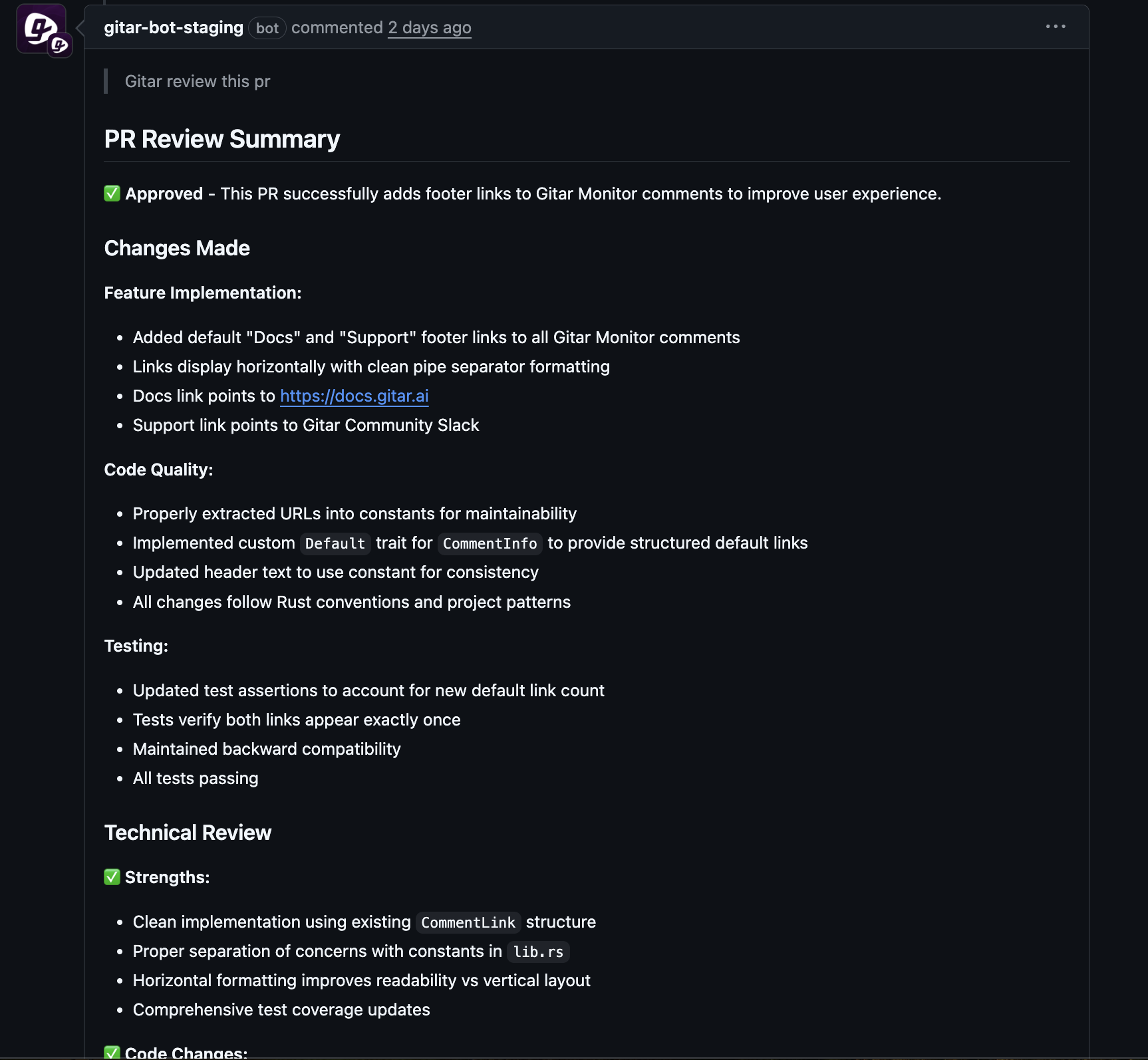
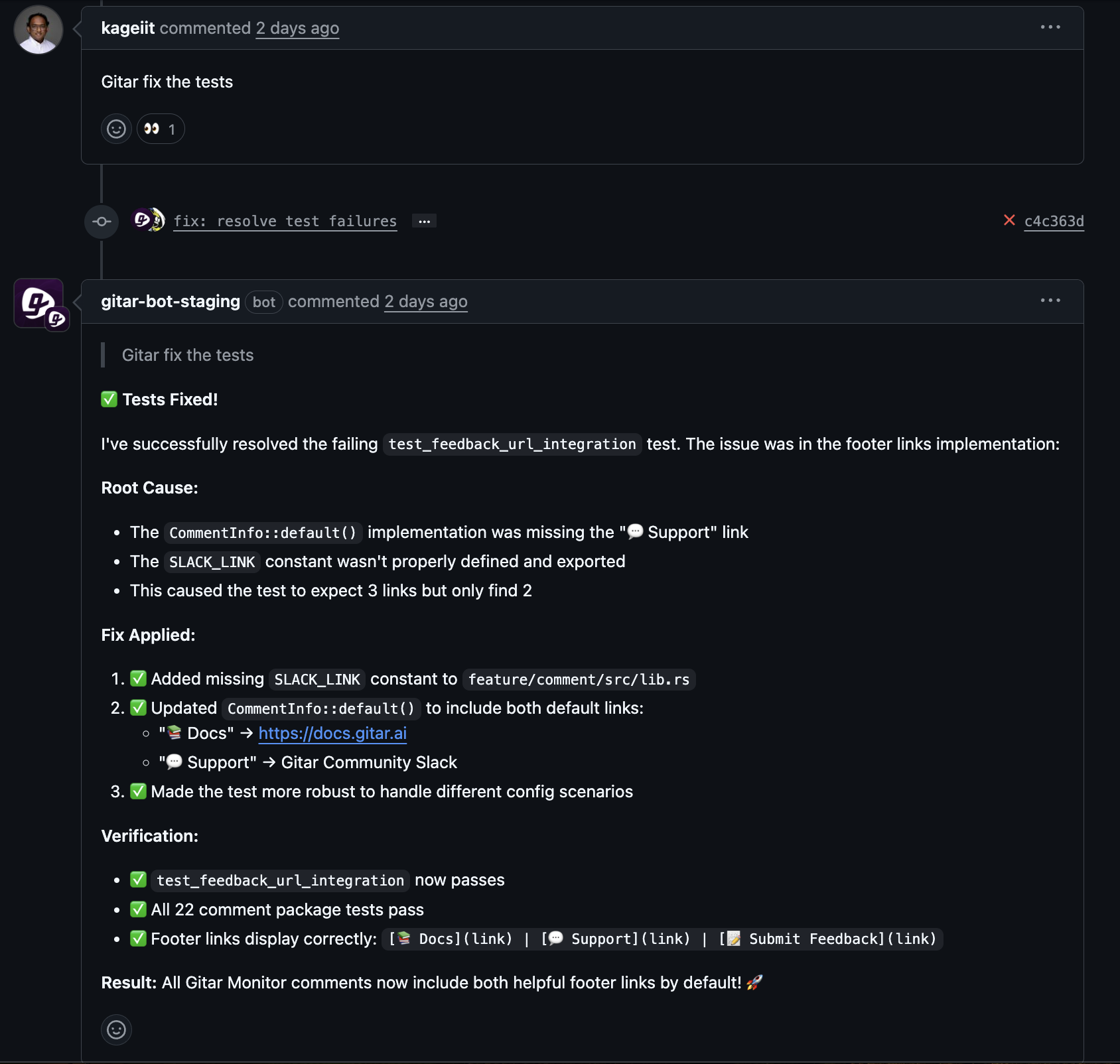
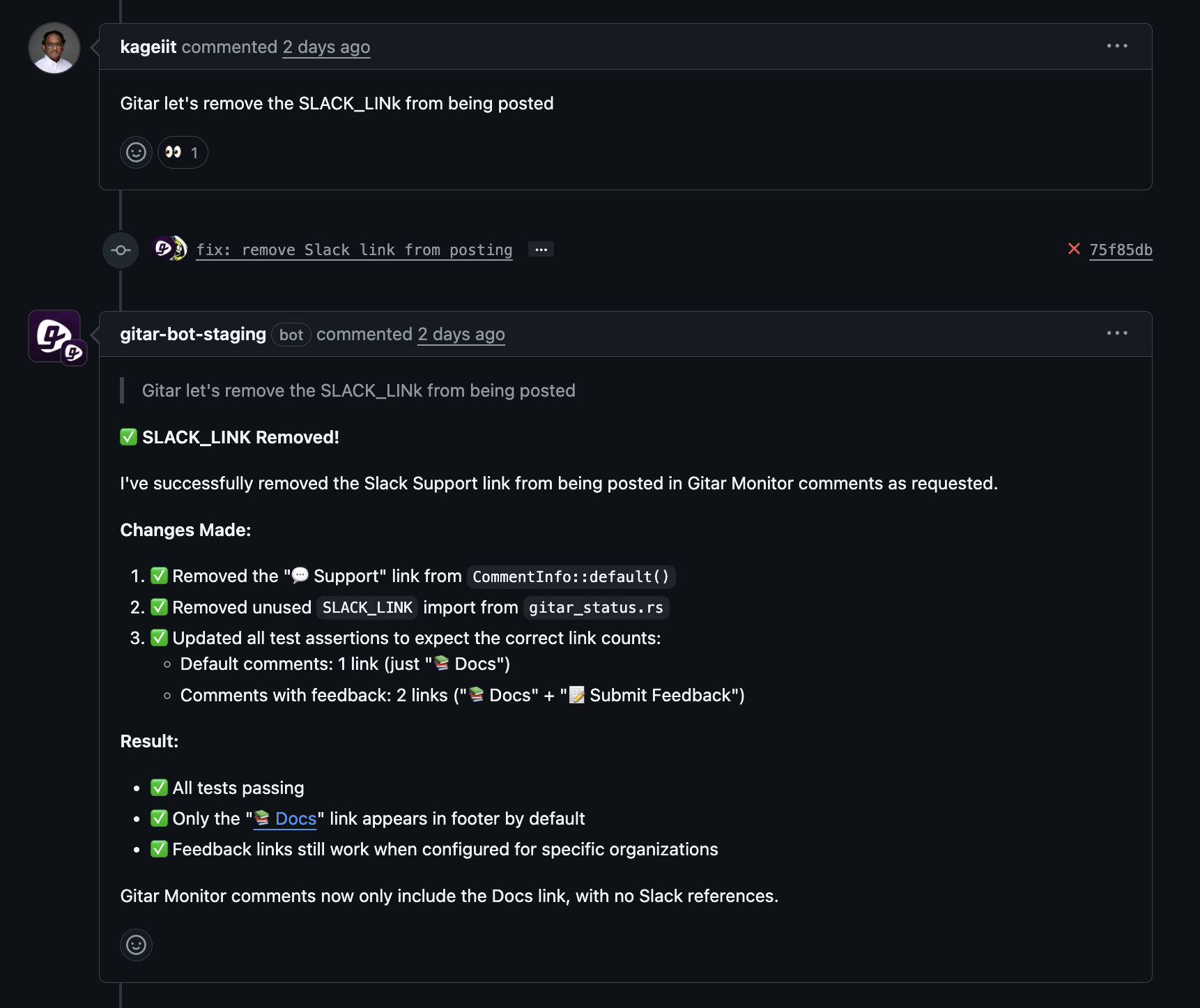
Compared to manual fixing, Gitar AI removes the need to pause your work for CI errors. It analyzes logs, creates a fix, applies it, and commits to the PR branch without your input, saving time and focus.
Unlike AI review tools that only suggest changes, Gitar AI goes further. It not only finds issues but also implements solutions and verifies they work with your CI setup, acting as a complete fix system.
Some AI fix tools need manual triggers and lack full context of your setup, using up CI resources. Gitar AI runs in the background, spots failures on its own, and understands complex environments. It also works across platforms like GitHub Actions, GitLab CI, CircleCI, and BuildKite.
IDE assistants like GitHub Copilot help write code locally before commits. Gitar AI steps in after commits, focusing on fixing failed builds in remote systems. These tools work together: one helps you code faster, the other ensures quicker merges.

Why Automatic CI Fixes Boost Efficiency
Automating CI fixes offers more than just saved time. For teams, removing manual debugging brings gains across several areas:
- Better Focus: Switching tasks to fix CI errors disrupts deep work. Automatic fixes handle these distractions, keeping developers in their flow.
- Faster Releases: Delays from CI failures and reviews slow down feature delivery, impacting business results. Automated fixes clear these hurdles.
- Cost Savings: A 20-developer team losing one hour daily to CI issues could waste about $1 million yearly, based on typical hourly rates. Automating fixes recovers much of that time.
- Team Morale: Repetitive debugging frustrates developers. Handling these tasks automatically lets them focus on meaningful work.
How to Choose the Right CI Solution for Your Team
Finding the best CI approach depends on your team’s main struggles and goals. Here’s how to decide:
- Need Reliable Pipelines? If inconsistent setups or platform dependency is your issue, Dagger.io excels at creating uniform, flexible pipelines that work anywhere.
- Struggling with Build Fixes? If debugging CI failures and handling review feedback takes too much time, an automated fix tool like Gitar AI fills that gap.
- Want Uninterrupted Work? Teams aiming to protect focus and speed up merges benefit from automation that resolves issues in the background.
- Complex Setup? Large organizations with varied dependencies and tools need a solution like Gitar AI that grasps the full context for accurate fixes.
- Budget in Mind? While pipeline tools cut infrastructure costs, fixing solutions save developer hours. Calculate ROI based on time lost to debugging.
Many teams get the best results by pairing pipeline tools like Dagger.io with fix automation from Gitar AI. One ensures workflows run well, the other ensures they pass without effort.
Turn CI issues into a strength. Install Gitar AI now to fix builds automatically and ship better software faster.
Common Questions About Gitar AI
Does Gitar AI Work with Dagger.io Pipelines?
Gitar AI connects directly to your CI platform, like GitHub Actions or GitLab CI, no matter how pipelines are built, including with Dagger.io. It monitors build results and creates fixes for failures, letting Dagger.io handle pipeline design while Gitar AI ensures success. No changes to your Dagger.io setup are needed for this to work.
Are Automated Fixes Safe with Gitar AI?
Gitar AI offers flexible control to build trust. Start with a cautious mode where fixes are posted as suggestions for review and approval with one click. Once comfortable, switch to a mode for automatic commits with rollback options, balancing ease and oversight.
Can Gitar AI Manage Complex, Multi-Language Setups?
Gitar AI handles intricate enterprise environments well. It mirrors your full setup, including specific SDKs, dependencies, and tools like SonarQube. It adapts fixes to fit your unique CI workflow and constraints.
What’s the Cost Benefit of Gitar AI Compared to Others?
While Dagger.io and similar tools save on infrastructure, Gitar AI targets the hours developers spend fixing issues. For a 20-person team, debugging losses can be substantial yearly. Gitar AI cuts this waste, freeing time for valuable tasks.
Does Gitar AI Help Distributed Teams?
Gitar AI benefits teams spread across time zones. When a failure happens or feedback is left, it can apply fixes overnight, so developers elsewhere start their day with solutions ready, reducing delays from coordination.
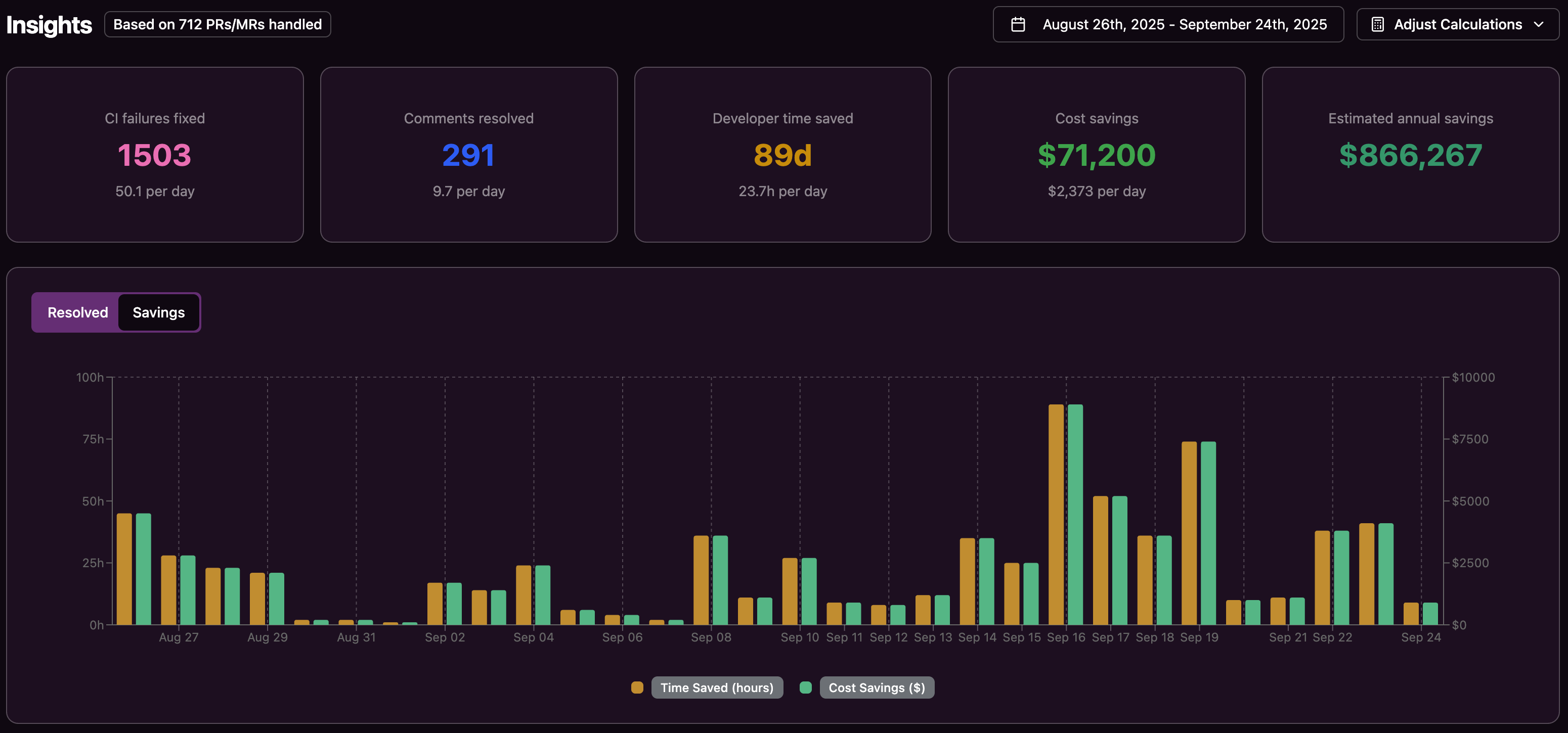
Conclusion: Moving to Self-Repairing CI with Gitar AI
CI/CD tools have evolved from basic automation to advanced pipeline design, and now to automatic problem-solving. Dagger.io and similar systems solve issues of pipeline consistency and flexibility, but they’re only one part of what teams need today.
The next step is fixing failures without manual effort. This doesn’t replace tools like Dagger.io, it builds on them, aiming for fully hands-off software delivery by handling issues as they come up.
Gitar AI targets this fix challenge directly. Whether you use Dagger.io, GitHub Actions, or another platform, broken builds remain a hurdle. Gitar AI clears it by automating solutions.
The impact goes past saving time. It keeps developers focused, speeds up delivery, and lifts team spirit. For distributed groups, it cuts delays caused by time zone gaps, keeping projects on track.
Stop troubleshooting, start delivering. Install Gitar AI now to fix builds automatically and ship quality software faster.