
Key Takeaways
- AI-generated code has increased PR review time by 91%, so teams now need intelligent test automation with reliable self-healing.
- Gitar ranks #1 as the free platform that fixes CI failures, validates solutions, and commits working code to guarantee green builds.
- Leading platforms like TestSprite and Mabl excel in autonomous test generation and E2E testing, but most start at $15-49 per seat.
- 2026 trends favor agentic AI systems over suggestion tools, with natural language rules and zero-configuration CI integration as core expectations.
- Teams shipping AI code should install Gitar now for free enterprise-grade CI healing across unlimited repositories.
How We Ranked 2026’s Top Intelligent Test Automation Platforms
Our evaluation focuses on real-world effectiveness instead of marketing claims. We assessed platforms across eight dimensions: AI autonomy and self-healing, CI/CD integration depth, including autofix, scalability for enterprise environments handling millions of lines of code, pricing accessibility, zero-configuration setup, enterprise security compliance, user satisfaction from verified reviews, and measurable ROI through flakiness reduction.
Data sources include vendor documentation, GitClear’s 2026 code duplication analysis, G2 and Capterra reviews, GitHub community feedback, and direct testing with enterprise-scale repositories. We placed special emphasis on handling AI-generated code, including the 4x increase in code duplication and 75% rise in logic errors in modern development workflows.
Top 11 Intelligent Test Automation Platforms in 2026
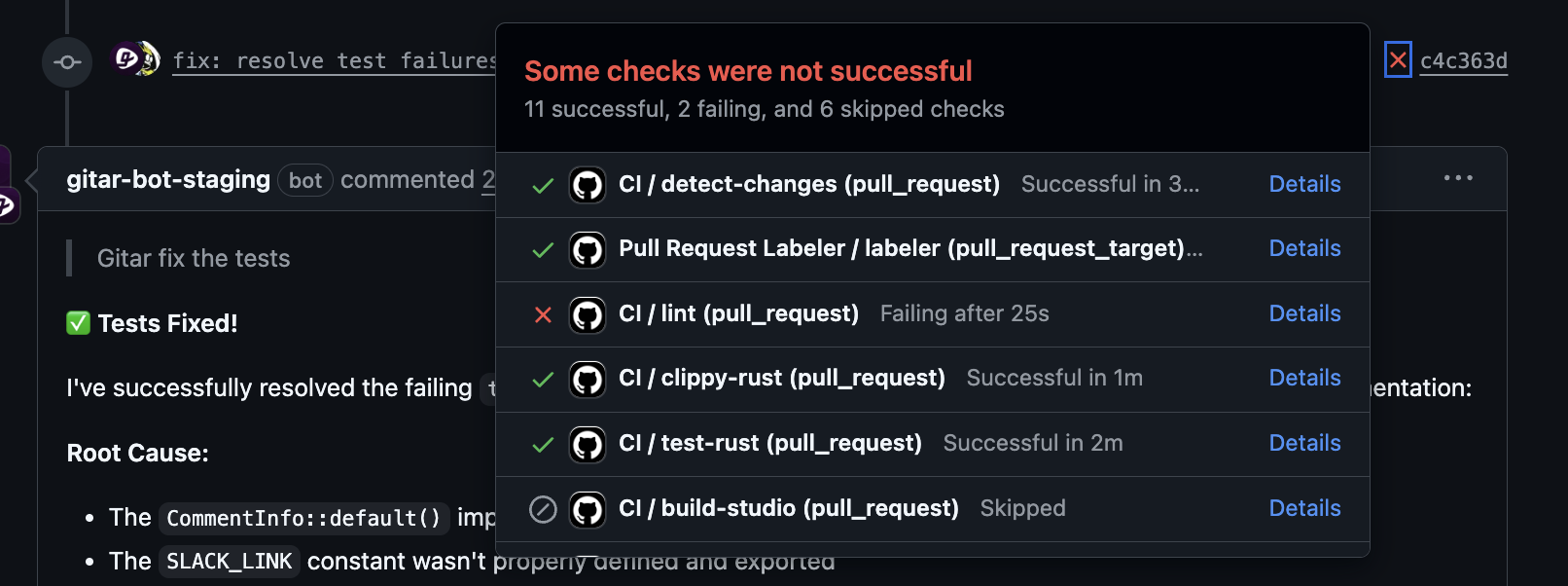
1. Gitar: Free AI code review platform that fixes CI failures, implements review feedback, and guarantees green builds. It supports natural language workflow rules, unlimited repositories, and cross-platform CI integration.
2. Mabl: AI-native platform for smoke, regression, and E2E testing with accessibility compliance and performance testing integrated into CI/CD workflows.
3. Applitools: Visual AI validation specialist with automatic locator adaptation and GitHub-focused integration, but without full CI healing capabilities.
5. Testsigma: Cross-platform automation tool for agile teams with web, mobile, and API coverage.
The leading platforms now favor agentic AI systems that autonomously create, execute, and heal tests instead of suggestion-only tools. 2026 marks the broad adoption of AI-powered testing, with autonomous agents acting as active testing partners that prioritize tests, diagnose failures, and implement fixes.
Install Gitar now, automatically fix broken builds, start shipping higher quality software, faster
Why Gitar Ranks #1 for CI Healing
1. Gitar: Free AI Code Review with CI Healing
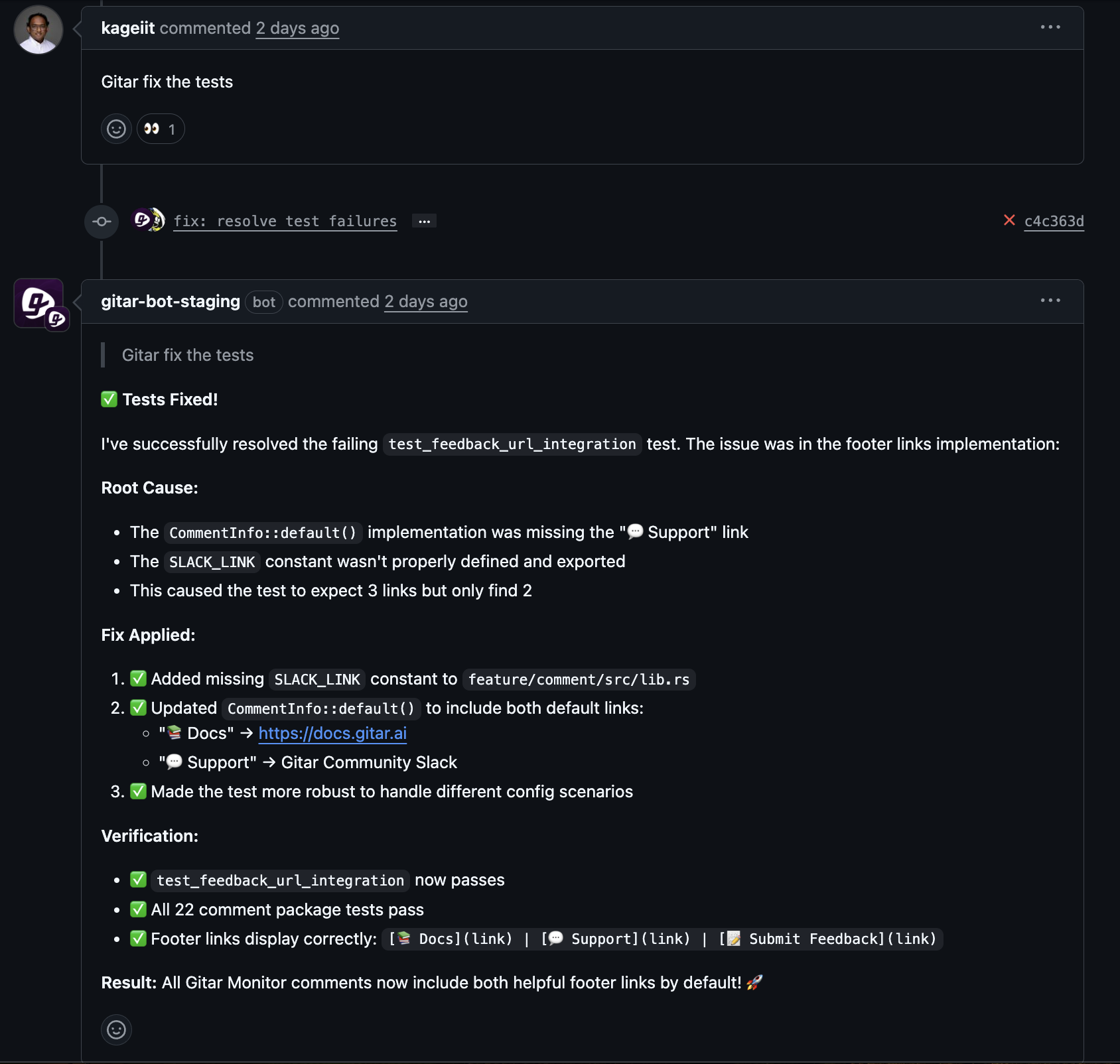
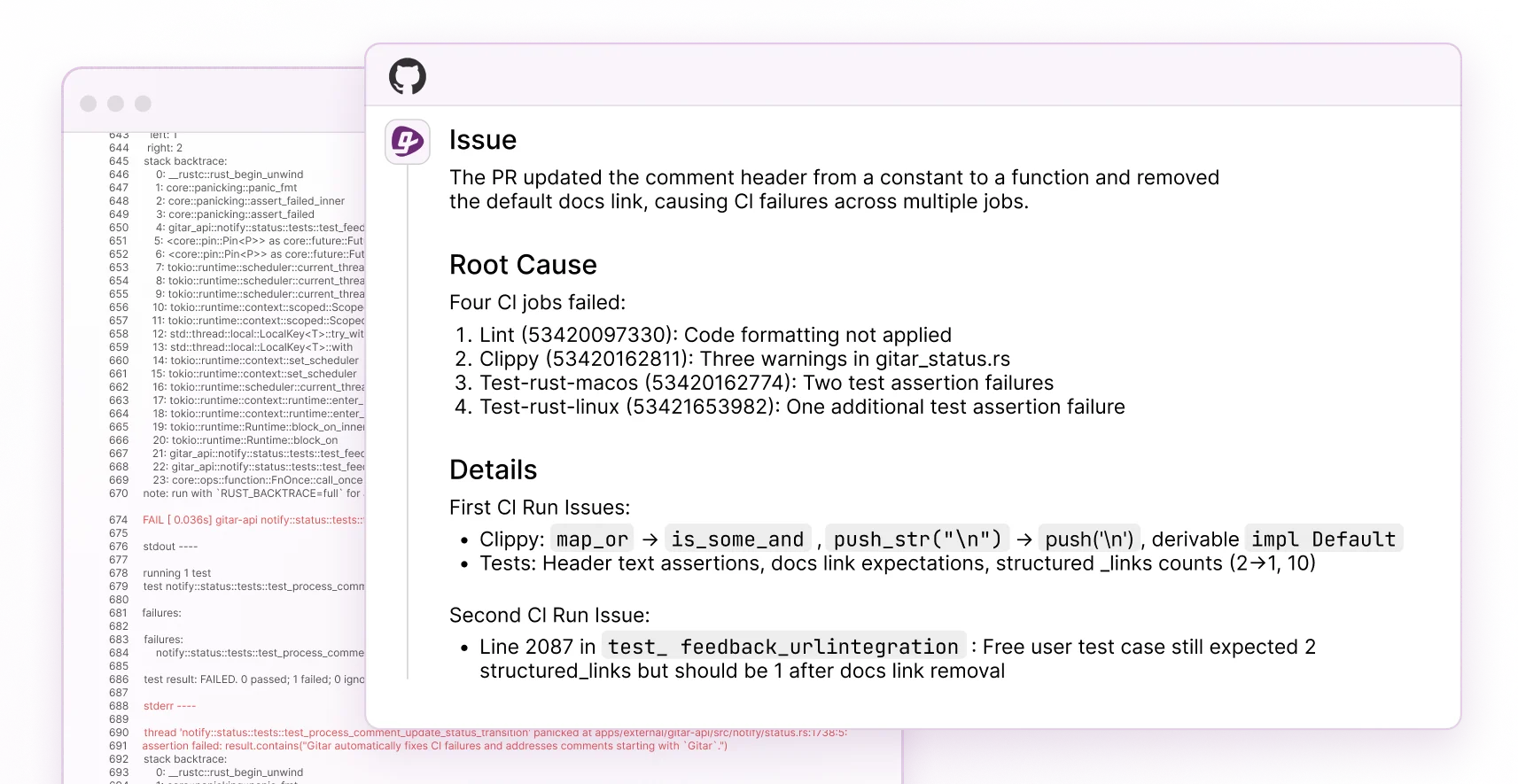
Gitar delivers a free AI code review that resolves CI failures instead of only suggesting changes. When builds break, lint errors appear, or tests fail, Gitar analyzes failure logs, generates context-aware fixes, validates them in the full CI environment, and commits working code directly to pull requests. This healing engine removes the manual implementation step that slows traditional tools.
The natural language workflow system lets teams define automation rules without YAML complexity. A single dashboard comment consolidates findings and replaces the notification spam common with competitor tools. Enterprise validation includes support for Pinterest’s 50+ million lines of code and thousands of daily PRs while keeping setup zero-configuration. The free tier covers unlimited repositories and users, plus a 14-day trial of autofix features.
2. Mabl: AI-Native Testing Platform
Mabl automates end-to-end testing workflows with AI-driven accessibility checks, performance monitoring, and advanced E2E coverage. The platform offers detailed analytics such as screenshots, HAR files, and DOM snapshots for faster root cause analysis. It also includes AI-powered auto-healing that adapts tests when applications change. Pricing starts at $30 per seat.
3. Applitools: Visual AI Specialist
Applitools specializes in visual validation through AI-based screenshot comparison and automatic locator adaptation. It integrates smoothly with GitHub workflows and supports strong visual regression testing. Pricing begins at $49 per seat. The platform does not provide comprehensive CI healing and mainly serves as a focused visual testing solution instead of a full intelligent automation suite.
4. Testim: ML-Powered Stability
Testim applies machine learning to create smart locators that adapt to UI changes and reduce test maintenance. The platform improves flakiness through intelligent element identification. Pricing starts at $25 per seat, and its notification-heavy workflows can overwhelm development teams.
5. Katalon: Broad Coverage Platform
Katalon Studio offers all-in-one testing across web, API, desktop, and mobile with recording features and extensive CI/CD integrations. The low-code platform provides broad coverage and self-healing locators with straightforward setup, starting at $15 per user.
Install Gitar now, automatically fix broken builds, start shipping higher quality software, faster
Side-by-Side Comparison of AI Autonomy and CI Integration
|
Platform |
AI Autonomy Level |
CI Auto-Fix |
Pricing |
|
Gitar |
Full Agentic Healing |
Yes, validates and commits |
Free |
|
TestSprite |
Autonomous Generation |
Limited |
Contact Sales |
|
Mabl |
Agentic Workflows |
Auto-healing adaptation |
$30+/seat |
|
Applitools |
Visual AI Adaptation |
No |
$49+/seat |
|
Testim |
ML Smart Locators |
No, manual implementation |
$25+/seat |
|
Katalon |
Self-Healing Locators |
No |
$15+/user |
Scalability and Depth of Self-Healing
|
Platform |
Enterprise Scale |
Cross-Platform CI |
Self-Healing Depth |
|
Gitar |
50M+ LOC validated |
GitHub, GitLab, CircleCI, Buildkite |
Full CI environment |
|
Mabl |
Enterprise ready |
Major CI systems |
Test-level only |
|
ACCELQ |
Cloud scalable |
DevOps integration |
Autonomous logic |
|
LambdaTest |
3000+ browser matrix |
Jenkins and CI integration |
Infrastructure level |
Buying Guide for Automated Testing and AI Tools
Agentic AI and codeless automation now dominate 2026 testing trends, with deep neural networks powering self-healing and NLP reshaping test creation. Engineering leaders focus on ROI through lower maintenance overhead, while developers want quiet interfaces that avoid notification fatigue.
Platform teams increasingly select tools that support natural language rule definition instead of complex YAML. The key decision often sits between free healing engines like Gitar and paid suggestion tools that still require manual implementation. Nearly one-third of organizations now adopt enterprise-wide test automation with AI, and 10% use generative AI to create up to 75% of test scripts.
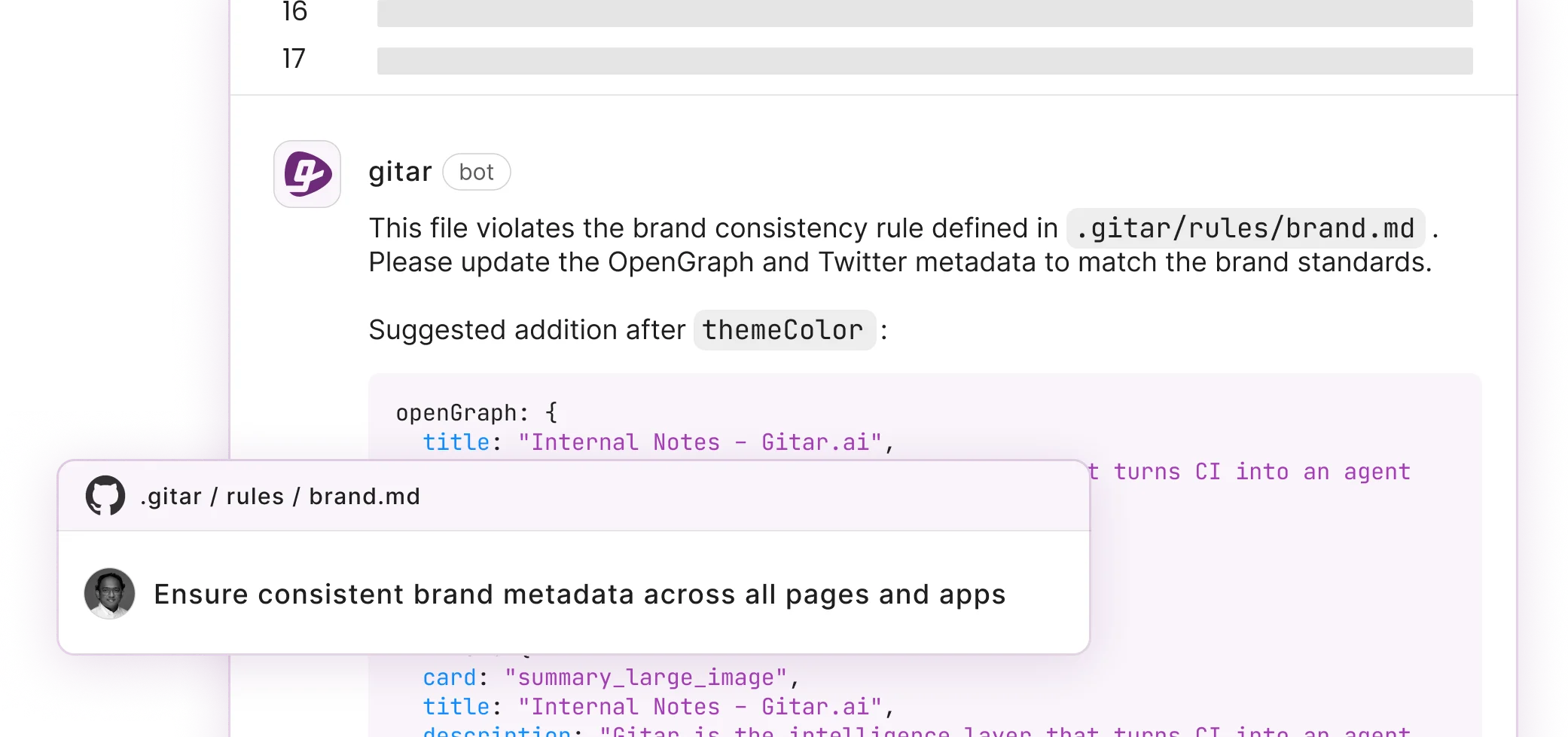
Teams evaluating no-code solutions often choose Gitar or ACCELQ for natural language capabilities, while open-source tools like Selenium remain useful for heavy customization. The main differentiator is whether platforms only identify issues or actively resolve them inside CI environments.
Install Gitar now, automatically fix broken builds, start shipping higher quality software, faster
FAQs on Intelligent Test Automation and CI Healing
What are the Best AI tools for Automation Testing in 2026?
Gitar stands out as a leading free AI code review tool that fixes CI failures. Traditional tools often charge $15-30 per seat for comments and recommendations.
Gitar instead provides free comprehensive code review, implements fixes, validates them against your CI environment, and commits working solutions. This approach removes the manual implementation bottleneck and works especially well for teams facing AI-generated code issues.
What Platform has the Strongest QA Automation Capabilities?
Gitar delivers strong QA capabilities through AI code review, automatic CI failure resolution, and natural language workflow automation. The platform supports enterprise repositories with millions of lines of code while keeping setup zero-configuration. Its single dashboard comment model removes notification spam. Cross-platform CI support covers GitHub Actions, GitLab CI, CircleCI, and Buildkite without separate integrations or complex YAML.
What are the most Popular Test Automation Frameworks in 2026?
Popular frameworks now blend traditional reliability with AI features. Gitar leads in agentic CI healing for code review automation, and Katalon dominates all-in-one platform adoption.
Selenium remains widely used for its ecosystem, and Cypress continues to grow among JavaScript-focused teams. Adoption trends favor platforms with natural language test creation and self-healing, as teams move away from maintenance-heavy frameworks toward tools that adapt automatically to code changes.
How does Intelligent Platforms Integrate with CI and Prove ROI?
Modern intelligent platforms integrate through quick, low-friction installations that work across multiple CI systems. Gitar follows this pattern with 30-second GitHub or GitLab app installs that immediately start analyzing PRs and fixing CI failures.
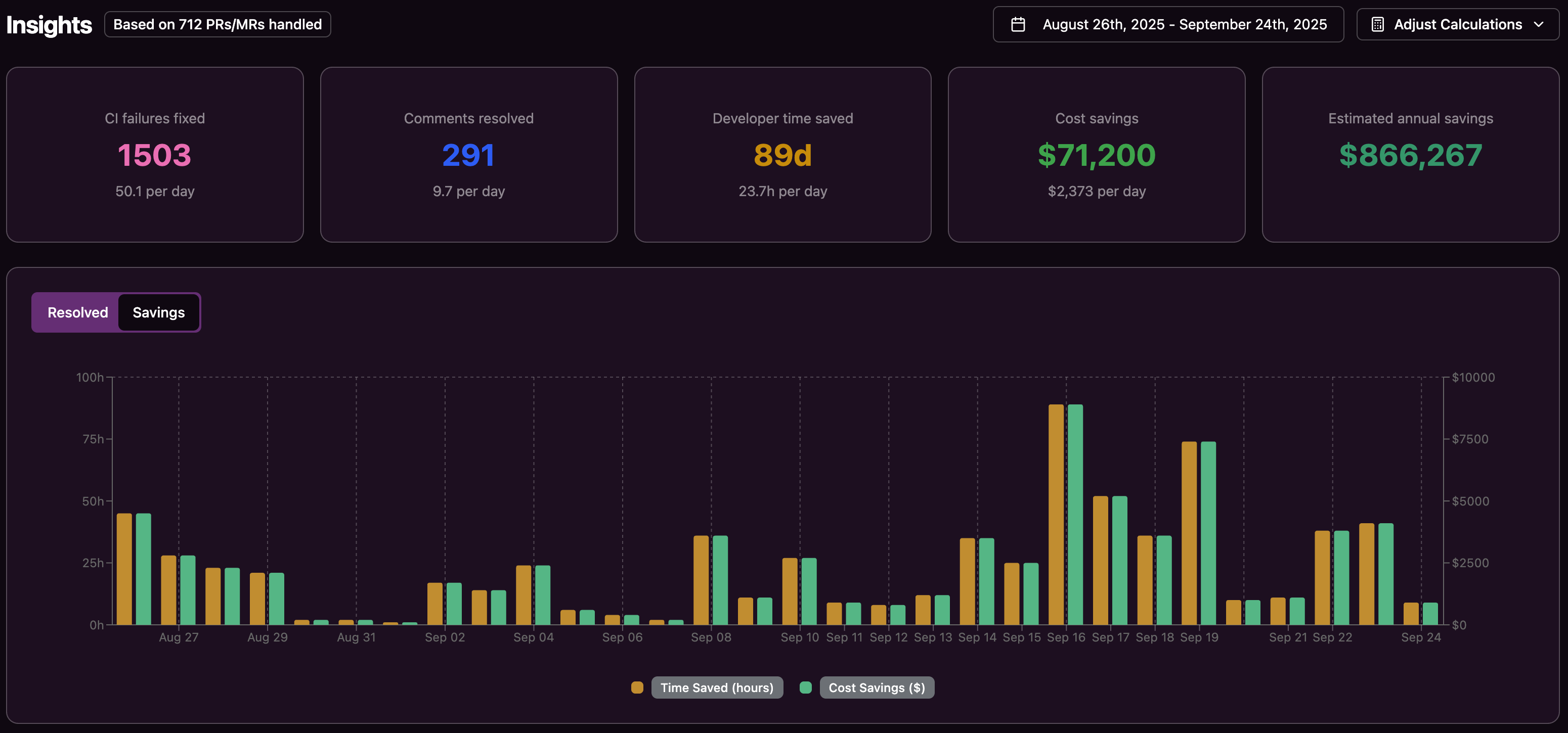
ROI comes from reduced context switching, fewer reruns, and faster development velocity. Teams report up to 75% flakiness reductions and major cuts in CI maintenance time, with enterprise customers seeing productivity gains worth hundreds of thousands of dollars annually.
How trustworthy are Free Intelligent Test Automation Platforms?
Free platforms can support enterprise needs when they offer configurable automation and transparent behavior. Gitar provides SOC 2 Type II security and lets teams start in suggestion mode before enabling automatic commits.
The platform has been validated at enterprise scale, with companies like Pinterest running millions of lines of code through the system. Teams control automation aggression and keep full visibility into all changes, which makes free platforms a realistic alternative to expensive suggestion-only tools.
What is the Migration Path from Legacy Tools to Intelligent Platforms?
Migrating to intelligent platforms like Gitar usually requires minimal disruption because of zero-configuration setup. Teams install the GitHub or GitLab integration in under 30 seconds and keep existing tools active for parallel evaluation.
They start with suggestion mode, then gradually enable automatic fixes for specific failure types such as lint errors and build breaks. The platform learns team patterns over time, and natural language rules remove the need for complex YAML migrations or heavy training.
Conclusion: Gitar as the Clear 2026 CI Healing Leader
The 2026 intelligent test automation market splits between expensive suggestion engines and true healing platforms. While many competitors charge premium prices for tools that still require manual implementation, Gitar offers free AI code review that fixes code, validates solutions, and guarantees green builds.
Its enterprise validation, cross-CI support, and zero-configuration setup make it a strong choice for teams tackling AI-generated code at scale.
AI coding tools have created a productivity crunch that traditional testing cannot absorb. Teams now face a 91% increase in PR volume and 4x higher code duplication, which strains legacy workflows. Gitar’s agentic healing engine represents the next stage of intelligent CI automation, moving from incremental improvements to a fundamental shift in how teams ship software.
Install Gitar now, automatically fix broken builds, start shipping higher quality software, faster